
September camping arrives with a specific quality that July doesn’t have. The mornings carry an edge, the light sits lower, and every good weekend feels like one of the last ones worth using properly. What earns a spot in the car changes. It stops being about what’s most impressive and starts being about what actually works when the temperature drops and the fire needs to stay going longer than planned.
This list covers five pieces of gear built for car camping and overlanding weekends: a radio, a grill, a shelter, a power source, and a pillow. Each one was chosen for the same reason — not because it leads its category on a spec sheet, but because it solves a specific friction point that camping has quietly accepted for too long as part of the deal.
1. Camp Napper
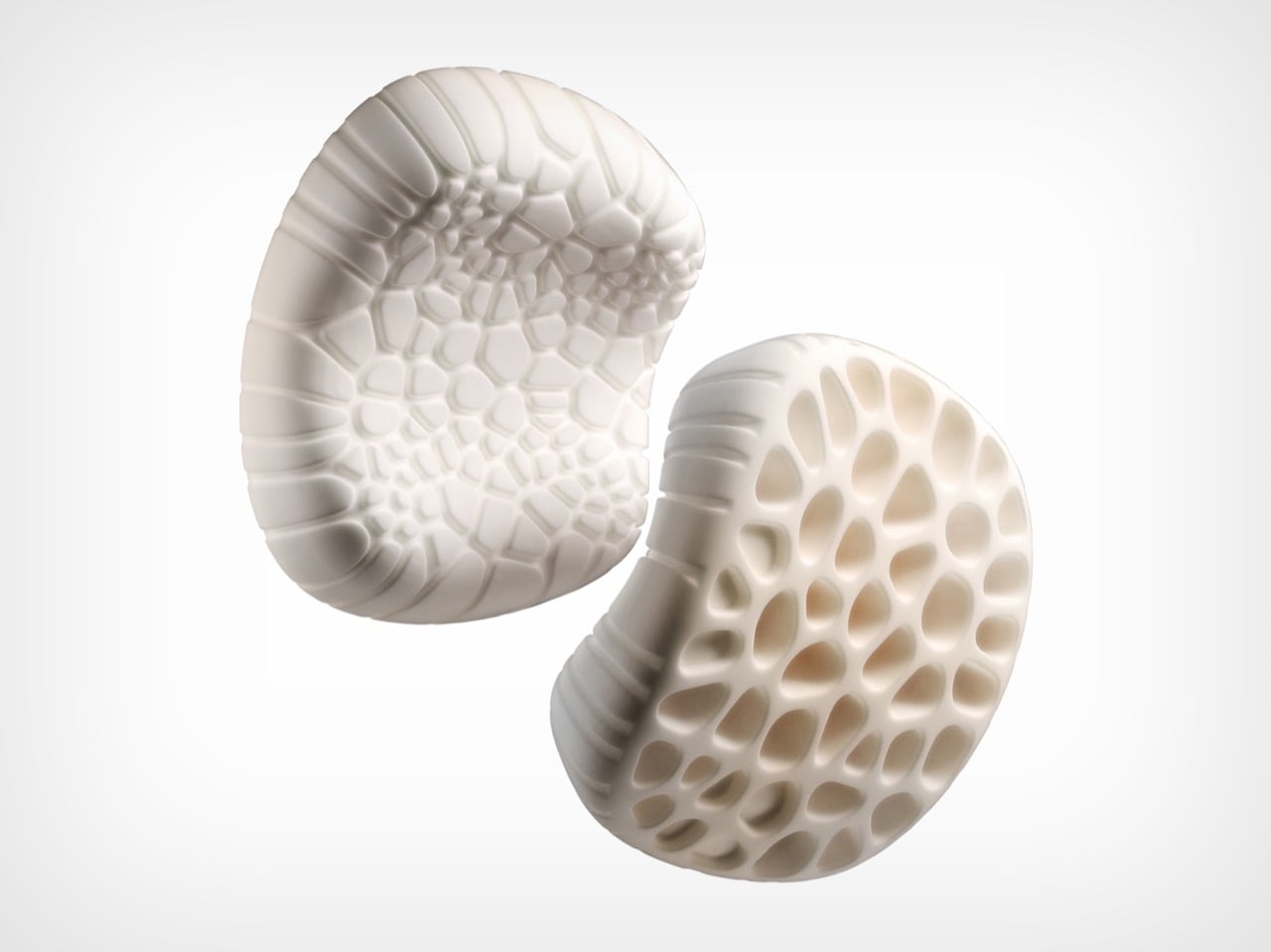

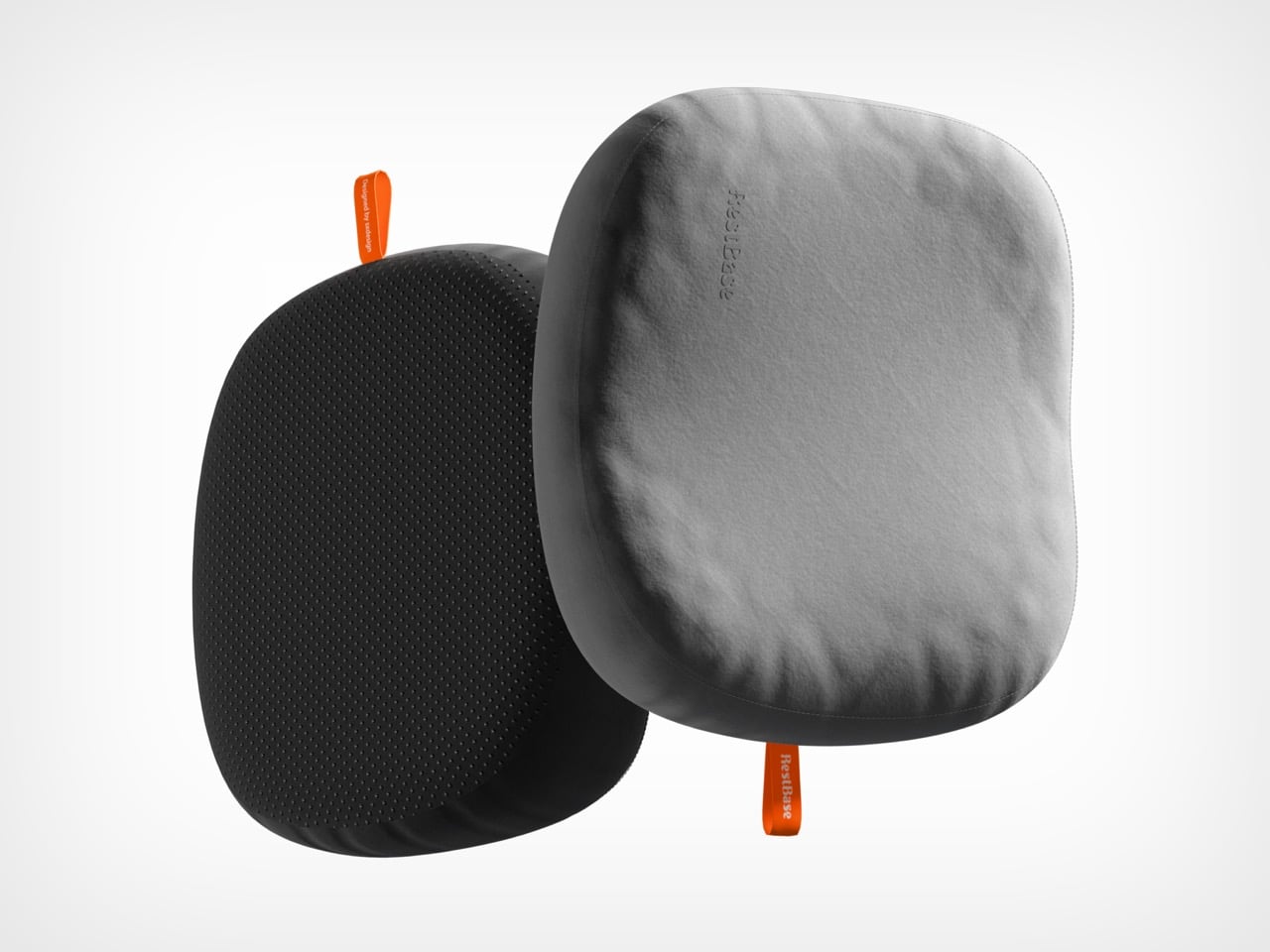
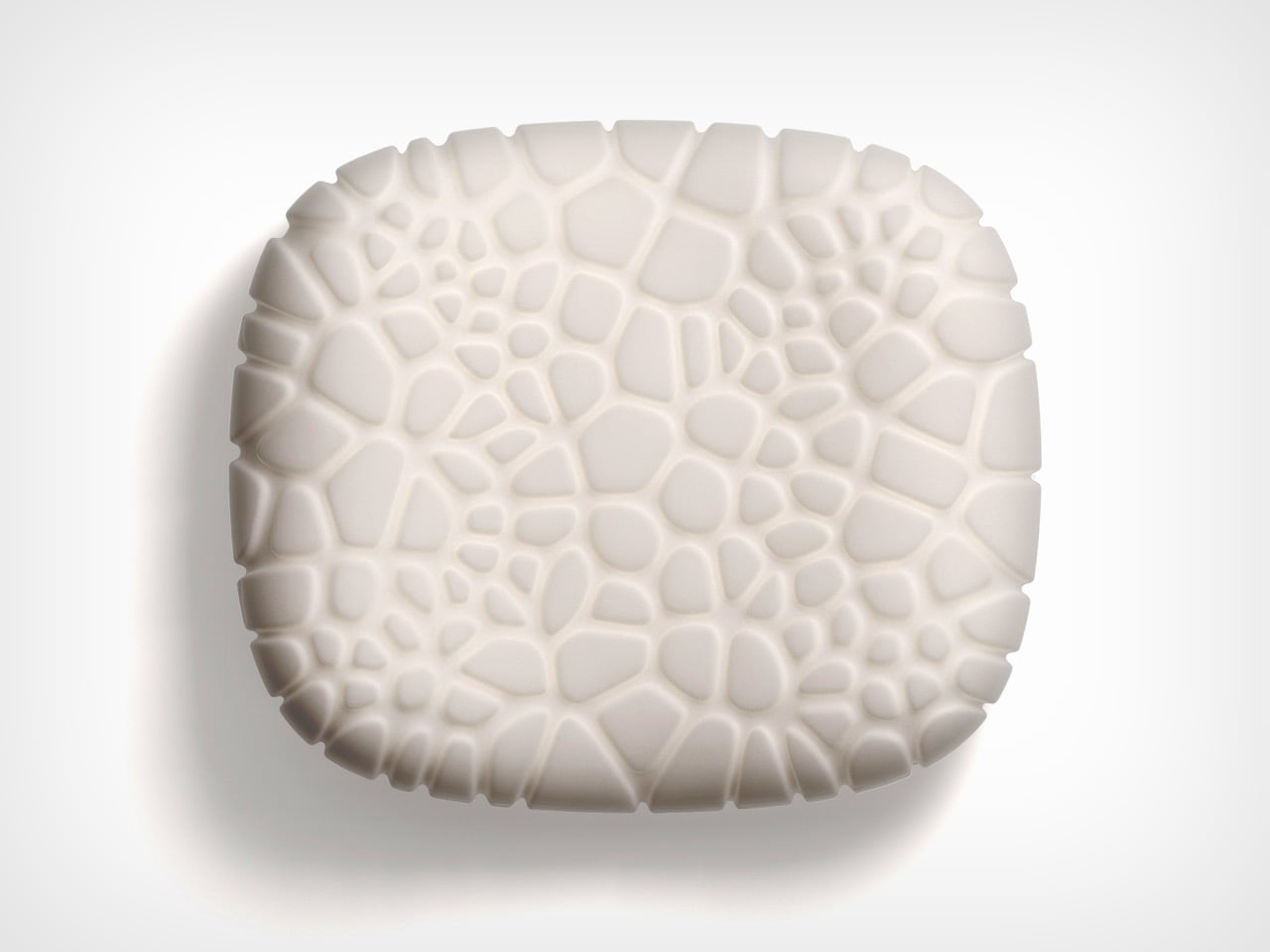
Inflatable camping pillows fail in a consistent pattern: they sound like pool floats each time you shift, lose pressure by 3 a.m., and pack into a shape that takes up more space than it deserves. Designer Chen Xu, working for RestBase, treated the camping pillow as an engineering problem instead. The Camp Napper’s surface geometry is derived from fungal spore texture, mapped through Voronoi polygon modelling across real pressure data from volunteer sleepers. Trypophobia alert: the surface is visually distinctive.
The internal structure mirrors hollow plant stem geometry, shedding mass without losing the ability to hold form under repeated compression. Total weight is 400 grams. Packed size is roughly the dimensions of a water cup. Memory foam conforms to different sleepers without nightly pressure adjustments, and anti-slip rubber particles on the base keep it in place across sleeping pads, camp chairs, and car seats equally. Note: retail price was not confirmed at time of writing — verify before purchasing.
What we like
- Voronoi-modelled surface and bionic internal structure represent engineering at a level the camping pillow category hasn’t previously applied
- 400 grams compressed to water-cup dimensions is genuinely packable, not just marketed as such
What we dislike
- The cellular surface texture warrants a trypophobia alert before gifting or introducing to someone who hasn’t seen it
- Retail price was unconfirmed at the time of writing; verify availability before purchasing
2. RetroWave 7-in-1 Radio
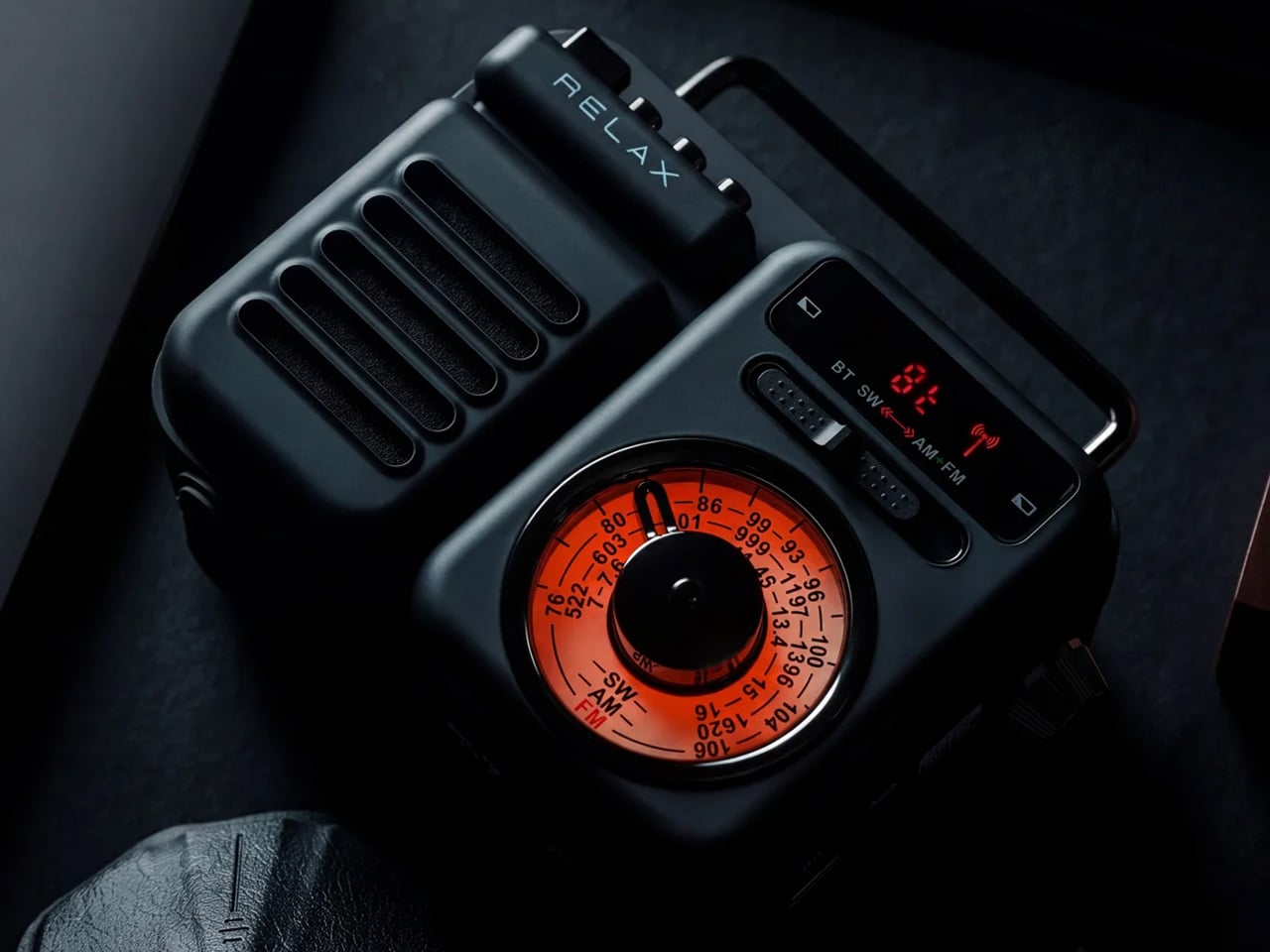
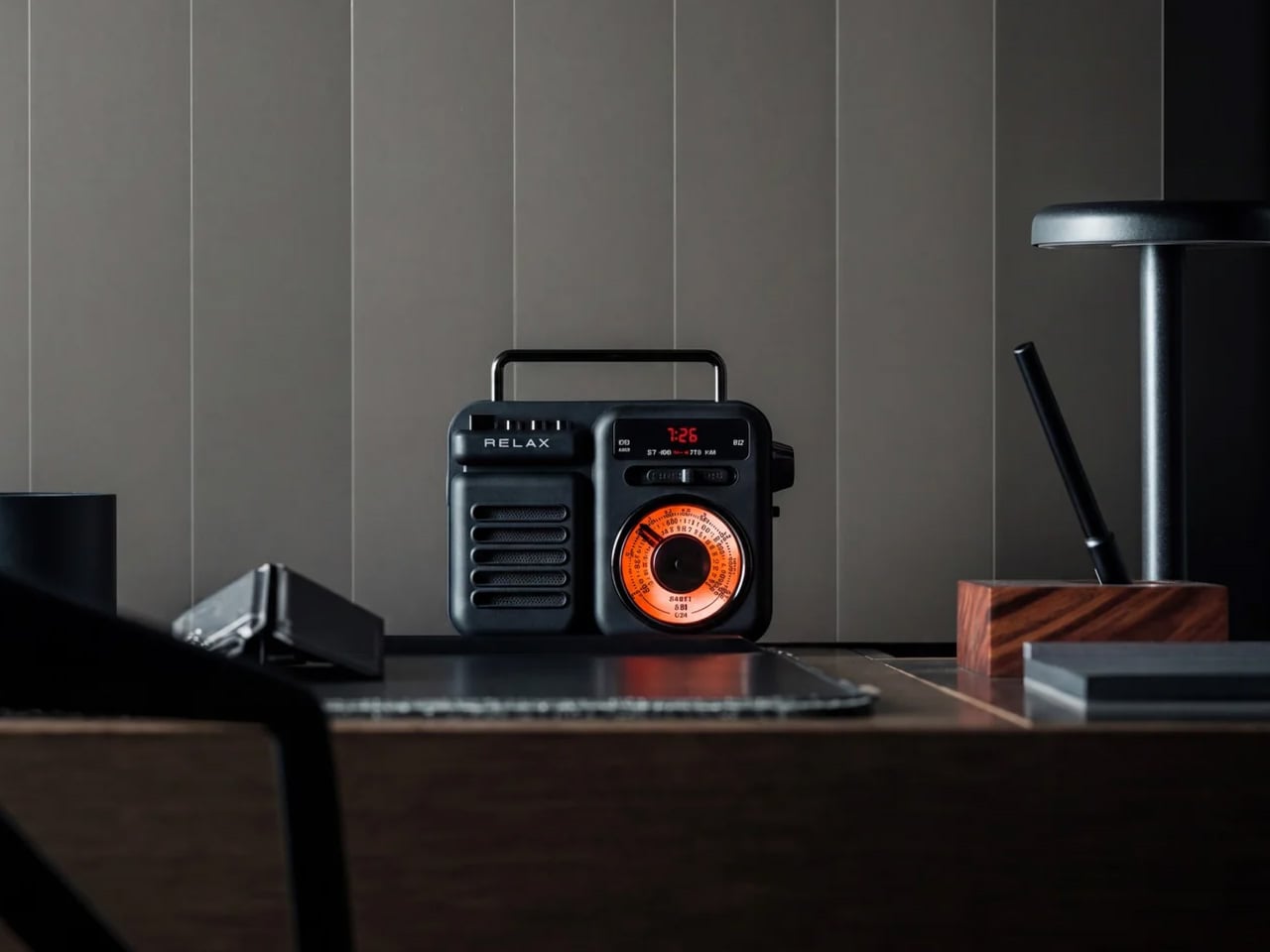
The RetroWave earns its place not through specifications but through atmosphere. It’s a 7-in-1 radio with solar charging and a hand-crank backup, both of which keep it running off-grid without a charged battery or a Bluetooth pairing screen. It simply works when it’s turned on, which is a lower bar than it sounds and one that a surprising amount of audio gear fails to clear by the second day of a trip.
The solar panel handles afternoon charging on any reasonable day. The hand crank handles everything else. Shortwave reception varies with terrain, so dense forest or mountain valleys will limit broadcast range — worth knowing before the trip rather than during it. For weather, local stations, and background sound that makes a campsite feel inhabited rather than silent, it performs without hesitation.
What we like
- Solar and hand-crank charging eliminate any dependency on outlets or other devices’ battery reserves
- Seven band frequencies in one object requiring no phone, no app, and no pairing sequence to operate
What we dislike
- Shortwave reception degrades noticeably in heavily forested or mountainous terrain
- The retro form tends to read as decorative to first-time buyers who haven’t yet used it in the field
3. Puffer Tent
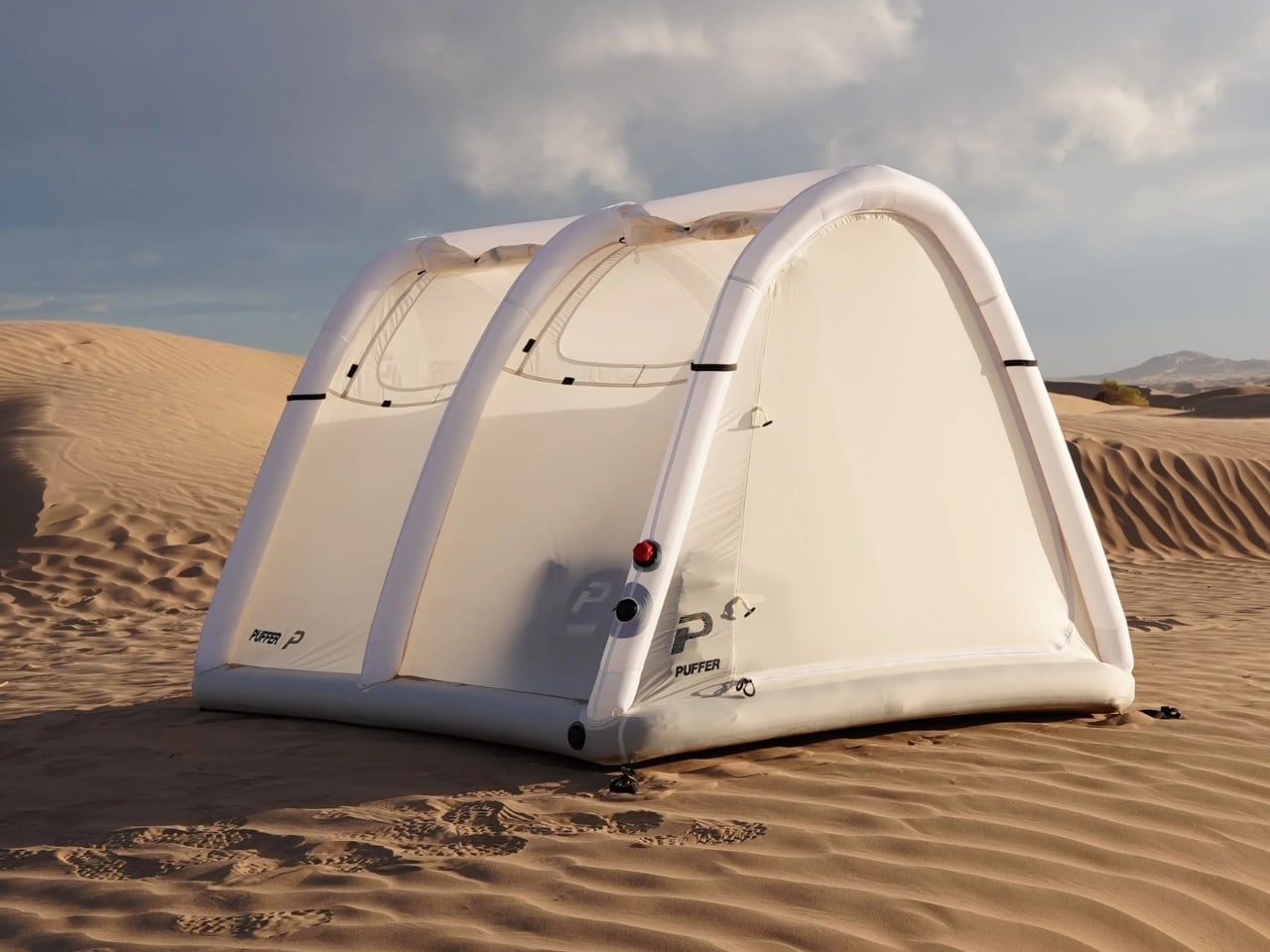
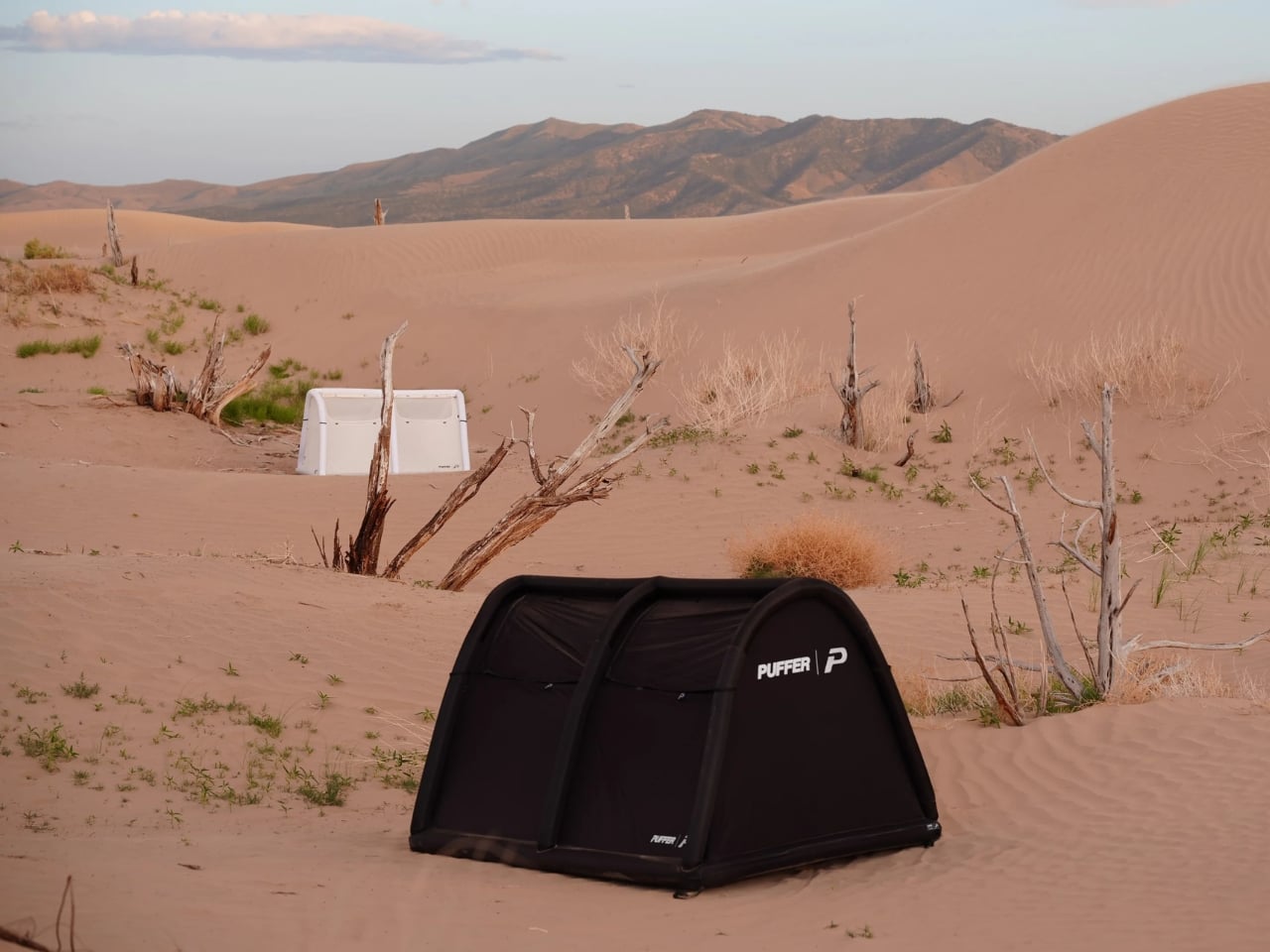
The standard camping shelter setup involves a sequence of separate problems: tent, sleeping pad, sleeping bag, and then the 2 a.m. realignment when everything shifts. The Puffer tent collapses that sequence into a single bag. It’s an inflatable A-frame with the mattress built into the structure — shelter and bed arriving together, packed into 10 × 25 × 10 inches, with firmness adjustable from soft to firm to hard.
Founder Sam Peery spent five years prototyping this, which explains why the details feel intentional rather than approximate: valve placement, pressure labeling, pump connection. At 18.2 pounds, it’s a car camper and overlander’s tent, not a backpacker’s — a distinction the brand makes honestly. Priced at $649.99 with the electric pump included, the more instructive comparison is against a rooftop tent setup, not a $40 nylon shelter from a big box store.
What we like
- Tent and mattress in a single integrated system removes the multi-piece setup sequence that opens most camping trips
- Adjustable firmness from soft to hard gives sleepers real control over the sleeping surface
What we dislike
- At 18.2 pounds, it’s unsuitable for backpacking trips where pack weight is a primary constraint
- The $649.99 price requires genuine commitment from anyone who already owns a functional shelter
4. All-in-One Grill
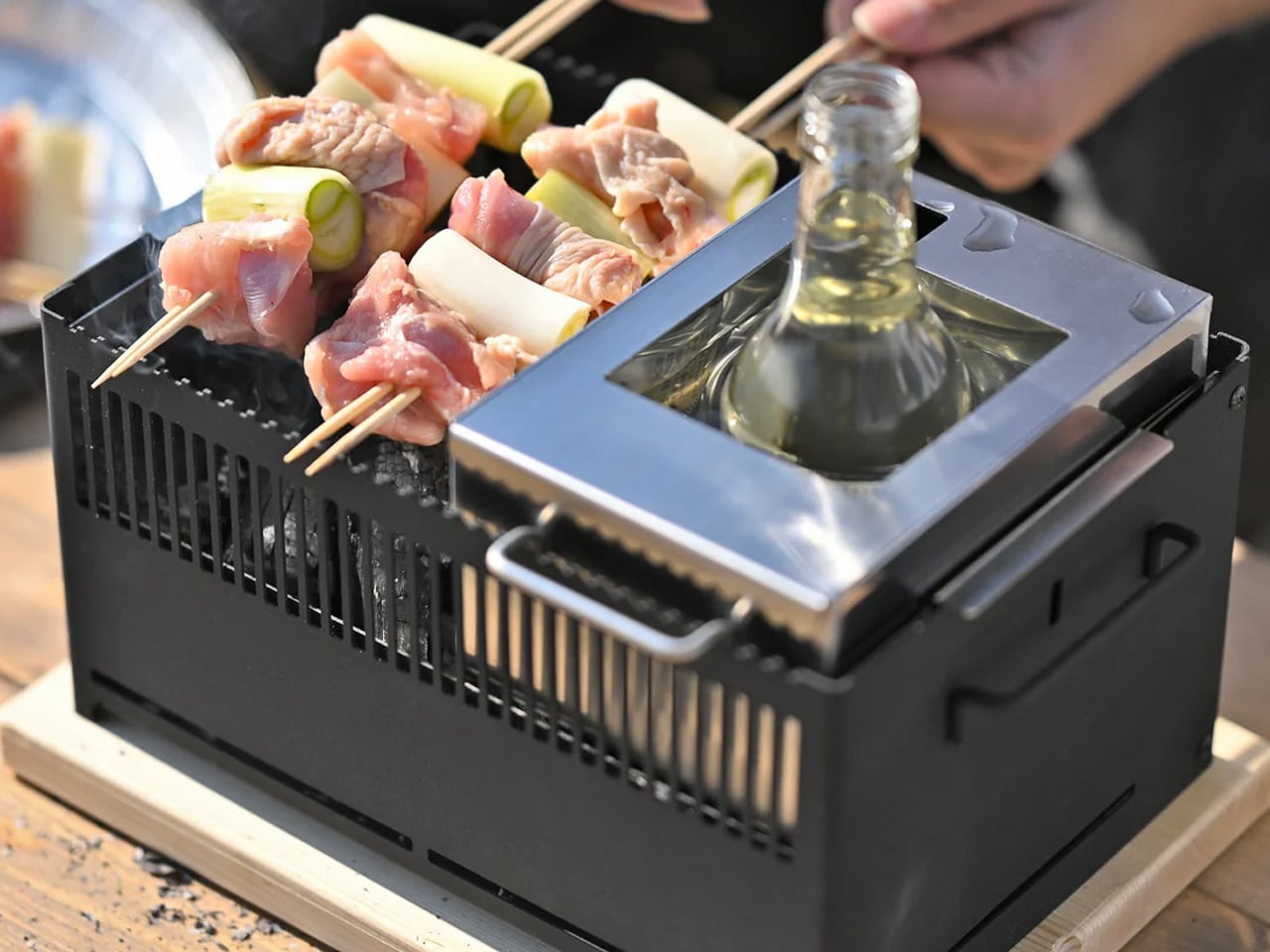
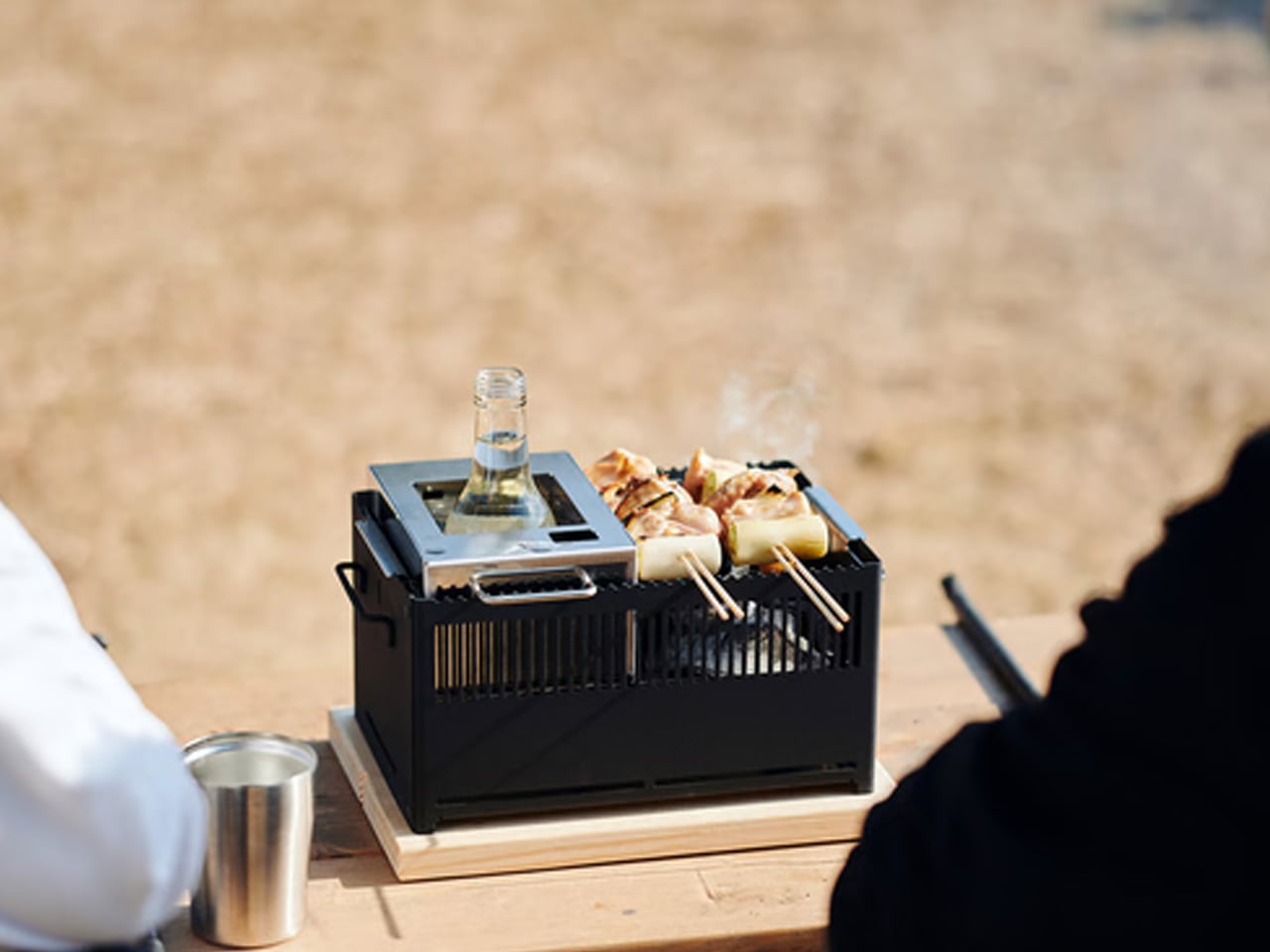
Bar grates collect residue from the first meal and carry it into every meal that follows. Cleaning them properly requires time and water that aren’t always conveniently available between the fire and the food. The All-in-One Grill’s flat tabletop surface removes that problem entirely — no gaps, no angles, nothing for debris to settle into. On a two-day trip with multiple meals, that difference compounds into something genuinely useful by Sunday morning.
Surface area fits two people cleanly, which covers the most common camping scenario without unnecessary bulk. Cooking for four or more requires staggering meals, adding real time to every camp dinner. There’s also no heat source included — this is a cooking surface that sits above a fire or stove, not a replacement for one. Within those parameters, it does its job at $449 with the kind of simplicity that makes a camp kitchen feel considered.
What we like
- Flat surface cleans in a fraction of the time a traditional bar grate requires, a gain that compounds across a multi-meal trip
- Tabletop sizing matches the most common two-person camping scenario without adding unnecessary pack weight
What we dislike
- Cooking for groups larger than two requires staggering meals, adding real time to every camp dinner
- No integrated heat source means it functions as a companion to a fire or stove, not a standalone cooking solution
5. Blavor PN-W43 Power Station + Camping Lantern
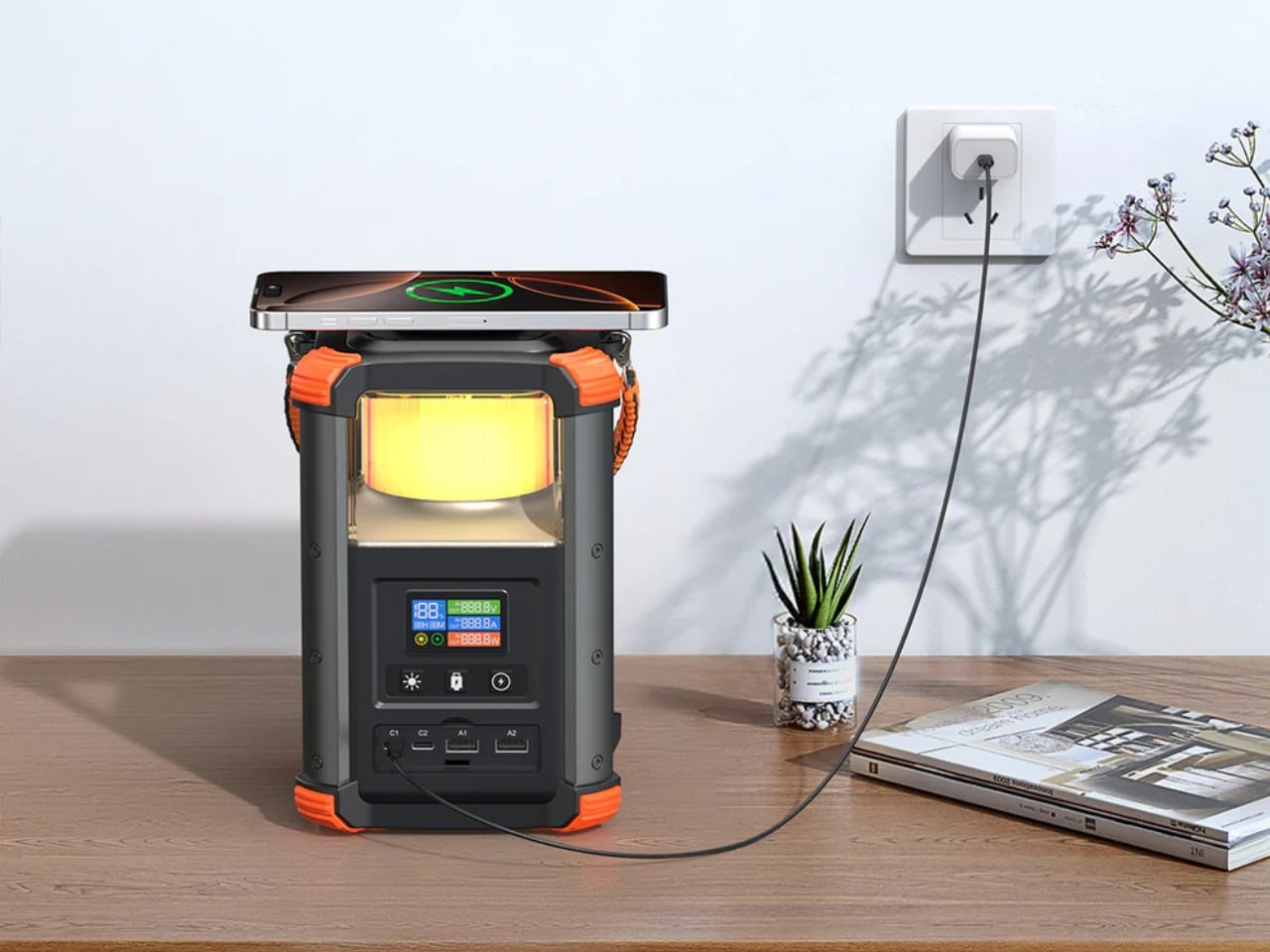
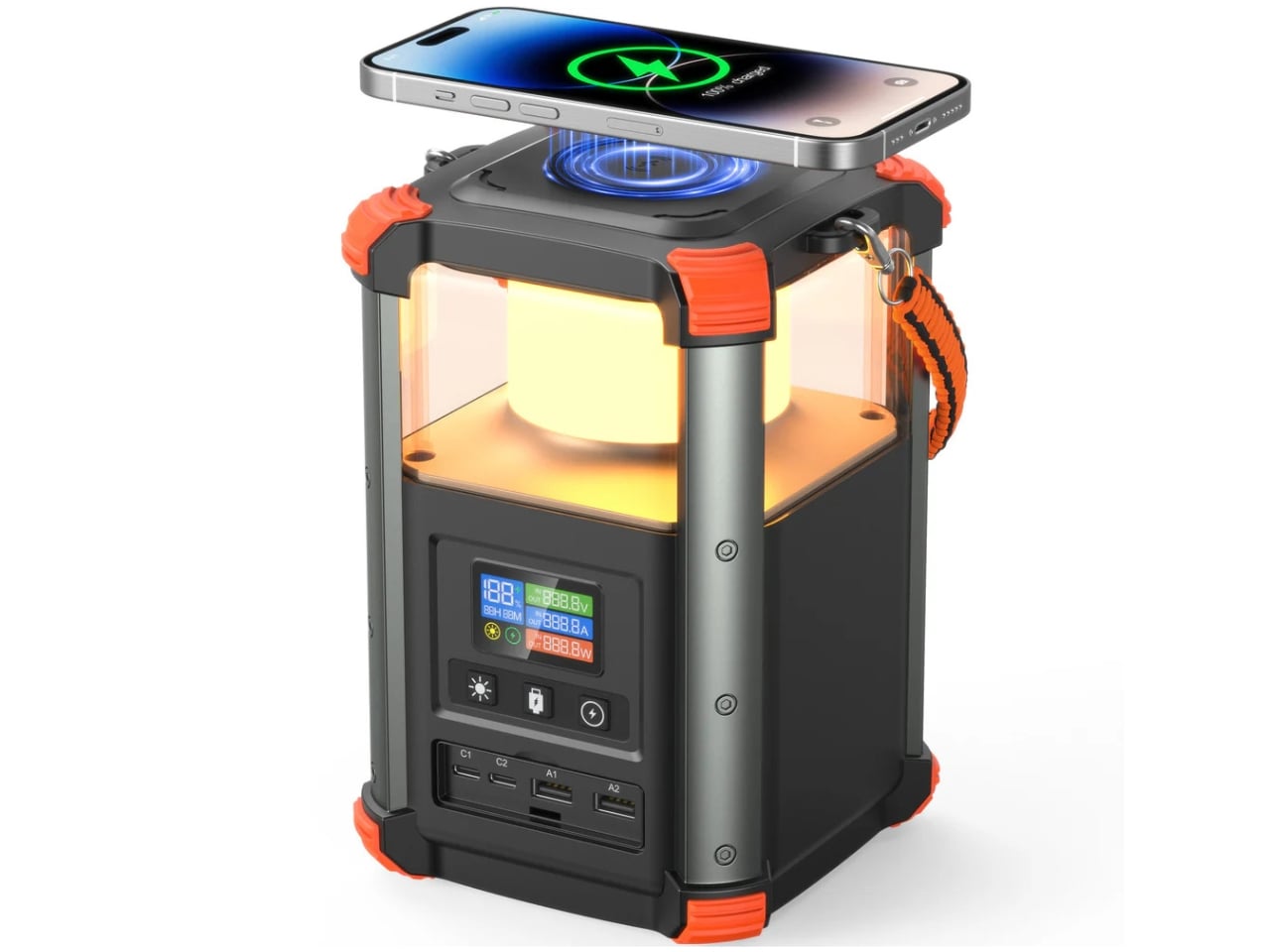
Most power stations are rectangular, featureless, and indifferent to the environment they’re meant to operate in. The Blavor PN-W43 builds a 4W LED lantern directly into the body, producing a 64,000mAh device barely larger than a tall water bottle that covers light and power from a single object. Five charging pathways — solar, AC, car adapter, USB-C, and micro USB — handle both off-grid and in-transit scenarios without adapter juggling.
At $135, it replaces two separate items, a lantern and a power bank, that together would cost more and occupy more space. It pairs naturally with the RetroWave Radio in this list: the radio’s solar charging handles daytime audio independently, while the Blavor manages device charging and nighttime light without overlap. At 236.8Wh, it’s sized for a weekend trip, not an extended off-grid expedition — which is exactly the use case this article is built around.
What we like
- Integrated 4W lantern eliminates a separate light source without adding meaningful size or weight to the kit
- Five charging pathways, including solar and AC, cover off-grid and in-transit scenarios without separate adapters
What we dislike
- 236.8Wh capacity suits two to three night trips; longer off-grid expeditions will need more headroom than this provides
- The cylindrical form sits awkwardly alongside flat gear in a structured pack and requires deliberate placement
The Trips You Actually Remember Are the Ones You Showed Up For
September has a way of making outdoor trips feel more deliberate than they do in the middle of summer. The season is moving and the weekends are numbered, which concentrates attention on what actually matters about being outdoors. The gear that earns a place in that context isn’t the most technically advanced option in its category. It’s the piece that makes the trip slightly better without making it harder to plan.
Each of these five picks does something specific. The RetroWave sets the tone without needing a phone. The All-in-One Grill removes the cleanup that makes cooking feel like a chore by day two. The Puffer Tent reduces setup to a single bag. The Blavor handles light and power as one object. The Camp Napper delivers actual sleep. None of them require the whole kit to change. Any one of them is enough of a reason to go.

