
September is where outdoor gear earns its reputation. The crowds thin, the trails go quiet, and what you carry starts to matter in ways summer rarely tests. This month’s roundup brings together five products that solve real, specific problems without padding your pack. From a Damascus steel knife engineering two independent sliders into a 0.6-inch body to a heated compression sack that pre-warms your sleeping bag, each pick here was chosen because it earns its weight.
None of these products are filling a trend cycle. Each one solves something that already bothered someone enough to design a better version. The price range is wide by design, from a $39 Kickstarter EDC knife to a $287 camp heater, because good gear is not always expensive and expensive gear is not always good. What connects everything on this list is the same thing: a refusal to treat function and design as separate conversations.
1. LUNARK Edge & Pop Dual

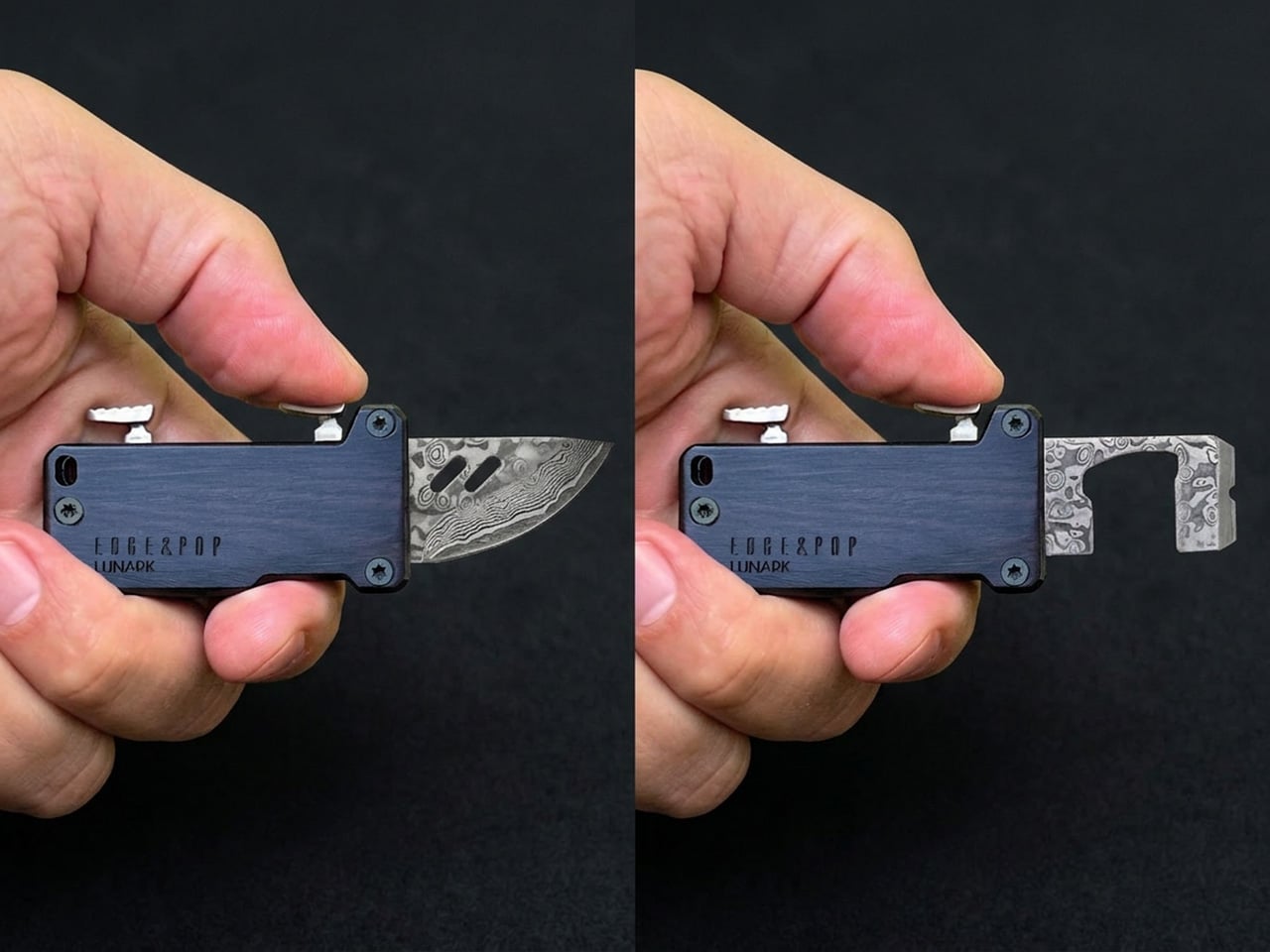
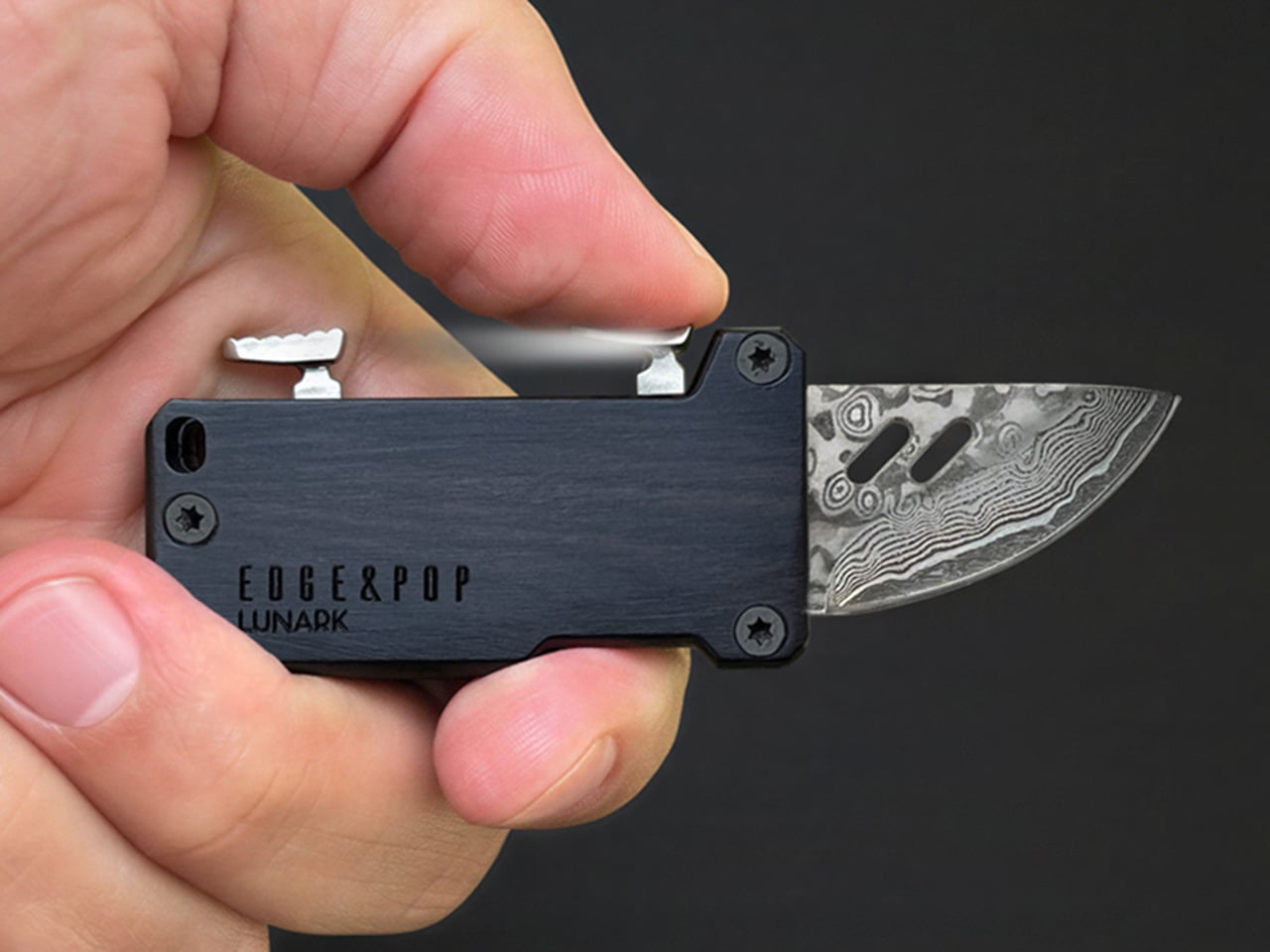
Most pocket knives pick a lane. The LUNARK Edge & Pop Dual doesn’t. Built from 27 individual parts compressed into a 0.6-inch body, it fits two independent sliding mechanisms into a frame most tools would reserve for a single blade. One slider deploys a 67-layer Damascus steel drop-point blade with a 9Cr18MoV core, rated 58 to 60 HRC. The other releases a dedicated bottle opener on its own thumb control. Neither mechanism touches the other.
The Dual weighs 2.5 ounces and measures 3.1 inches open, sitting flat in a pocket without announcing itself. The heat-treated 420 stainless steel frame comes finished in Ebony or Golden Sandalwood, and when you close both sliders, the body converts into a phone stand holding devices up to 8mm thick, flat or upright, without needing a third control to engage it. Three functions live inside the geometry of one tool you were already going to carry.
What We Like
- Two independent sliders for the blade and bottle opener, each on its own thumb control, so neither mechanism requires the other to move
- Closing both sliders activates a built-in phone stand that holds devices up to 8mm thick, adding a third function without any extra footprint
What We Dislike
- The phone stand has an 8mm device thickness limit, meaning cases on the thicker side may not be supported
2. BlackoutBeam Tactical Flashlight
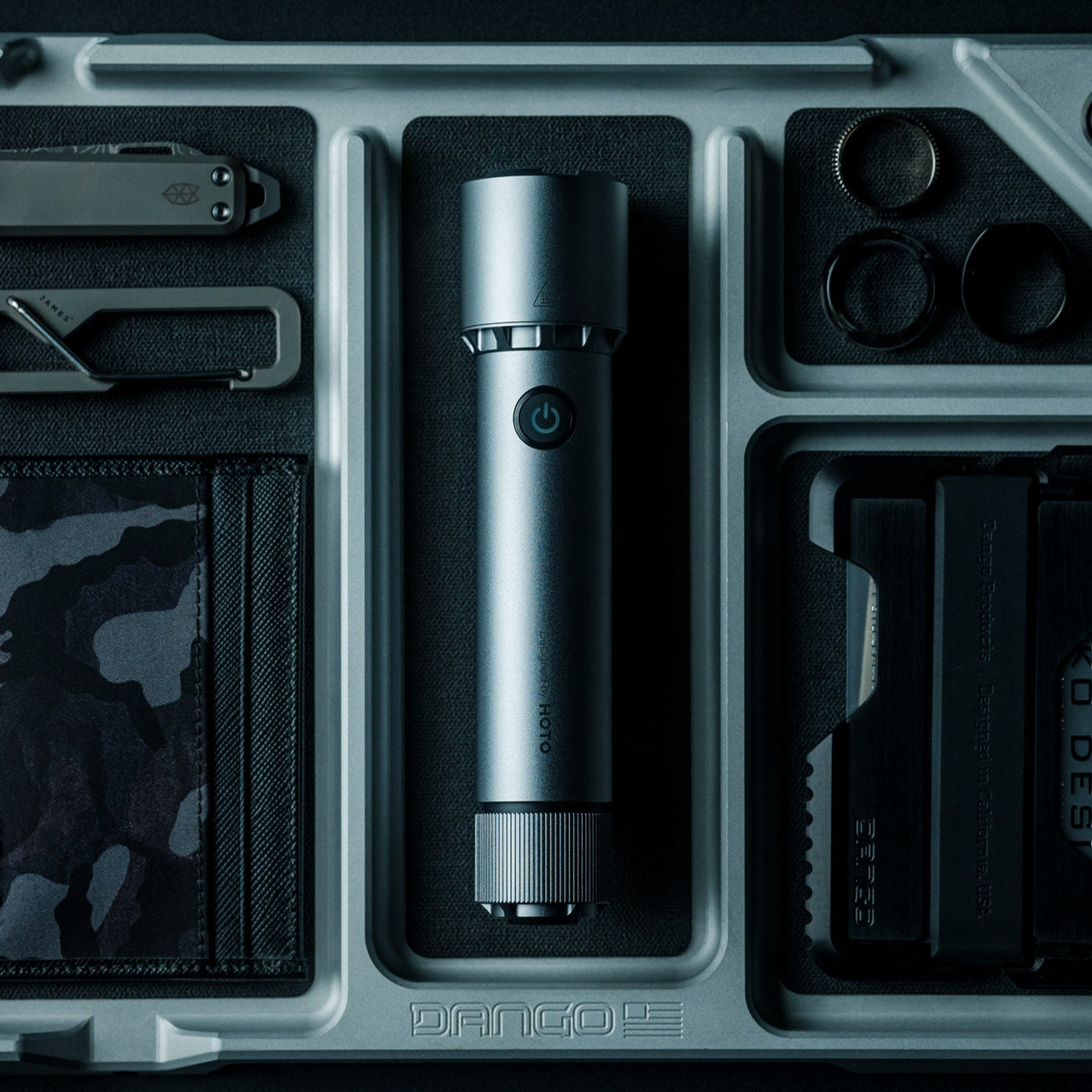

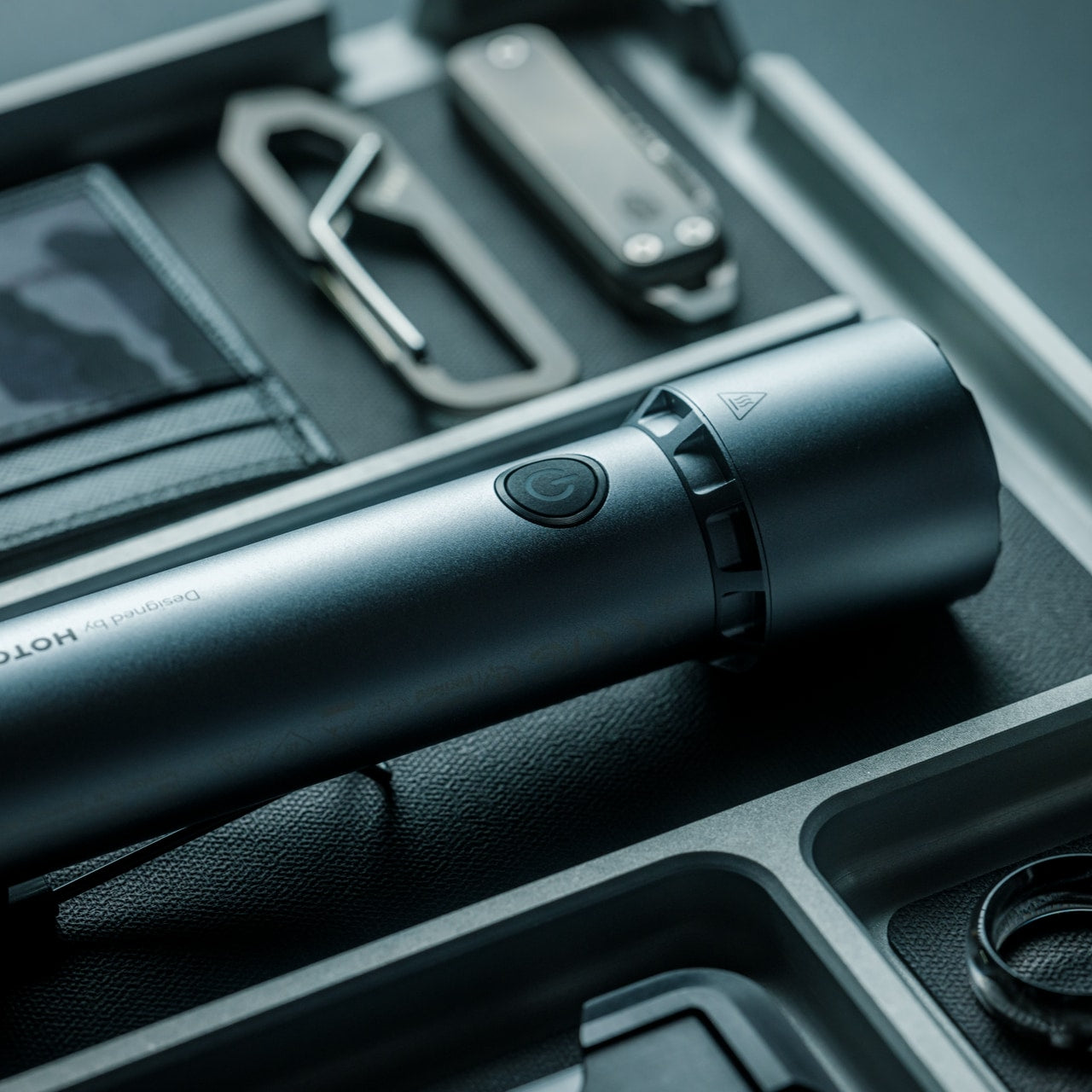
The BlackoutBeam makes a clear statement about what it does. With 2,300 lumens and a 300-meter beam throw, it outperforms most tactical flashlights twice its size. The number worth paying attention to is the 0.2-second activation time, the gap between reaching for a light and actually having one ready. Its IP68-rated aluminum construction keeps the body slim enough for a jacket pocket and durable enough for conditions where most everyday carry flashlights start to fall short.
A 6500K daylight beam is what separates it from tactical lights that chase raw output over real visibility. Three brightness levels cover close-up task lighting through long-range awareness, and a strobe mode adds flexibility when conditions shift fast. The flashlight you carry into a dark trail or a power outage should not be a compromise between how it works and how it looks. BlackoutBeam carries 100 international awards and a $90 price that, against what it delivers, sits exactly where it should.
What We Like
- 2,300 lumens and a 300-meter throw packed into an IP68-rated aluminum body narrow enough to slide into a jacket pocket
- A 6500K daylight beam with three brightness levels and a strobe mode gives you real tactical range, not just a headline output number
What We Dislike
- At $90, it sits at the higher end of the everyday carry flashlight price range for most budgets
- Stock is extremely limited, making this a purchase you need to act on rather than schedule for later
3. Hot Pocket
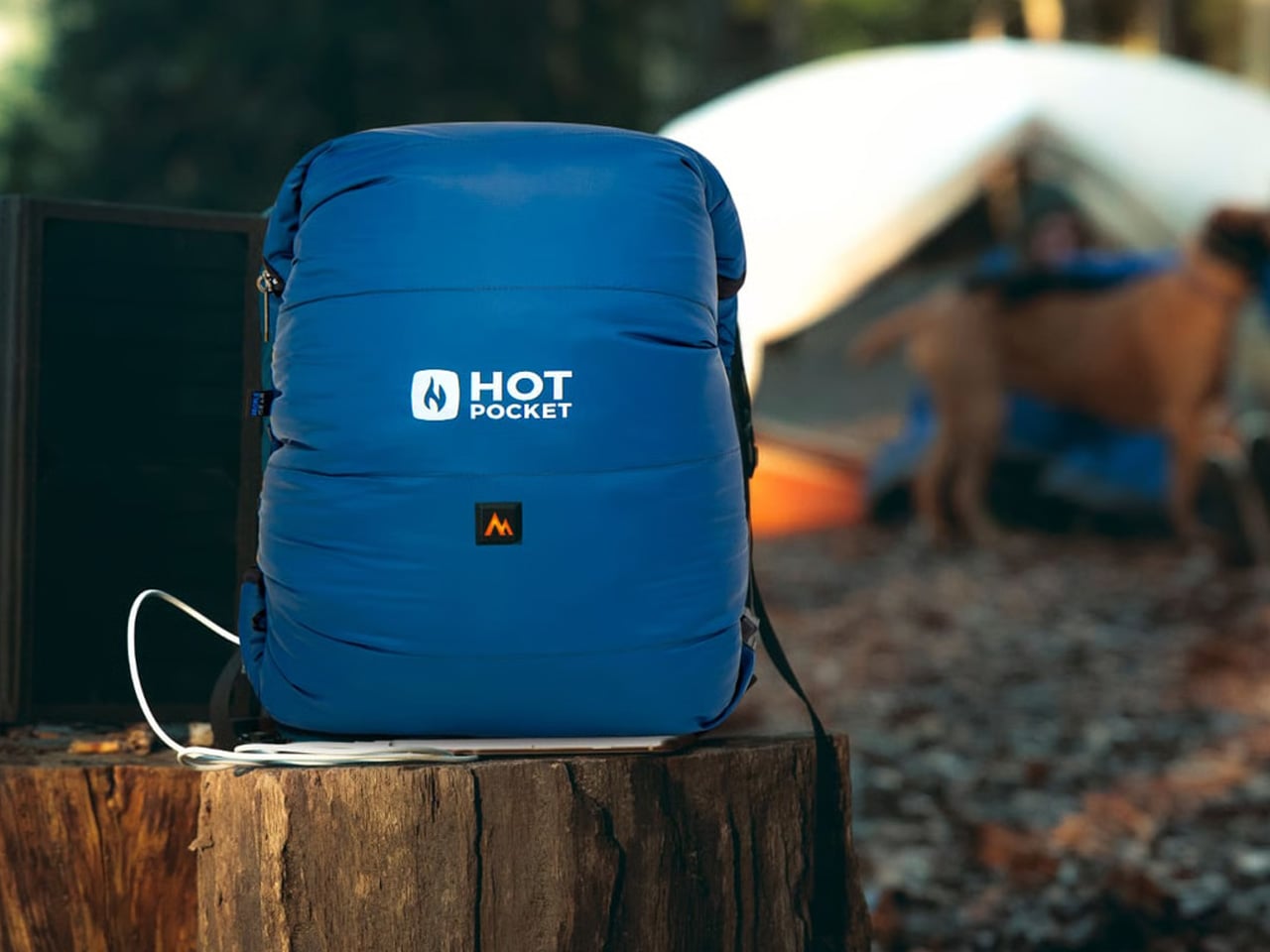
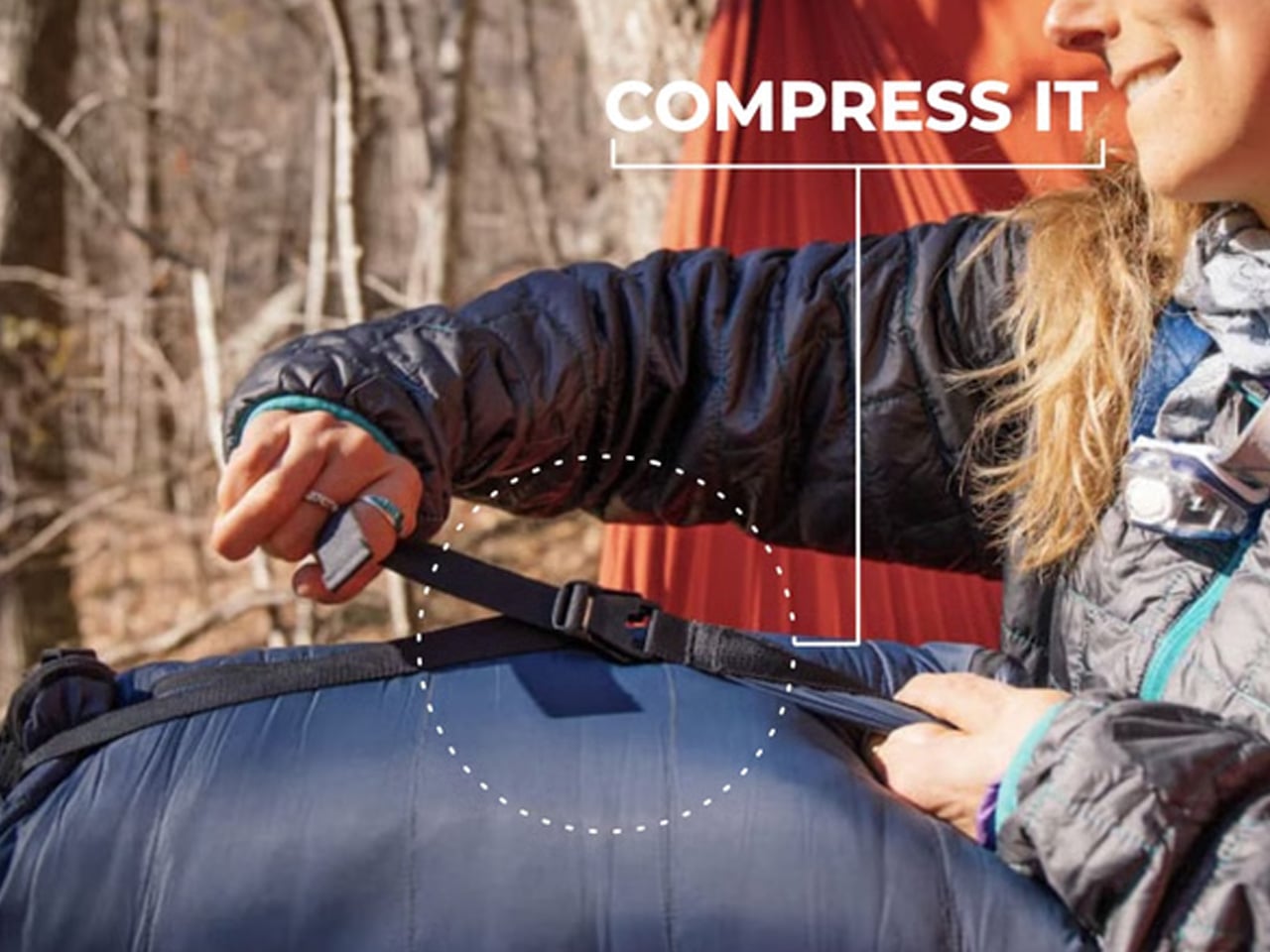
Sierra Madre Research built the Hot Pocket around one specific frustration: climbing into a cold sleeping bag. The world’s first ultra-light multifunctional camp heater uses twin graphene heat panels sewn directly into the compression sack fabric, powered by a high-capacity USB-C Power Pack. It stores and compresses your sleeping bag or quilt during the day, then pre-heats it before you are ready to sleep. That sequence- store, compress, heat- has never lived inside a single piece of gear before.
The Hot Pocket comes in three sizes: Small compresses to 10 by 11 inches, Medium to 13 by 12, and Large to 15 by 11. When you are ready for sleep, open it, slip the heated panels inside your bag, and let the graphene do the work. At $287, it asks for a real commitment, but 118 reviews at 4.99 out of 5 tell you what a spec sheet cannot. Cold-weather camping feels different when your bed is already warm.
What We Like
- Twin graphene heat panels pre-warm your sleeping bag before you get in, eliminating the cold start without hot water bottles or chemical packs
- Functions as a compression sack, storage bag, and camp heater in one piece of kit, replacing rather than adding to what you carry
What We Dislike
- At $287, the price asks for a committed cold-weather camper rather than a casual weekend tripper
- Requires a charged Power Pack to function, adding a battery dependency that needs planning before every trip
4. Loki-Nav
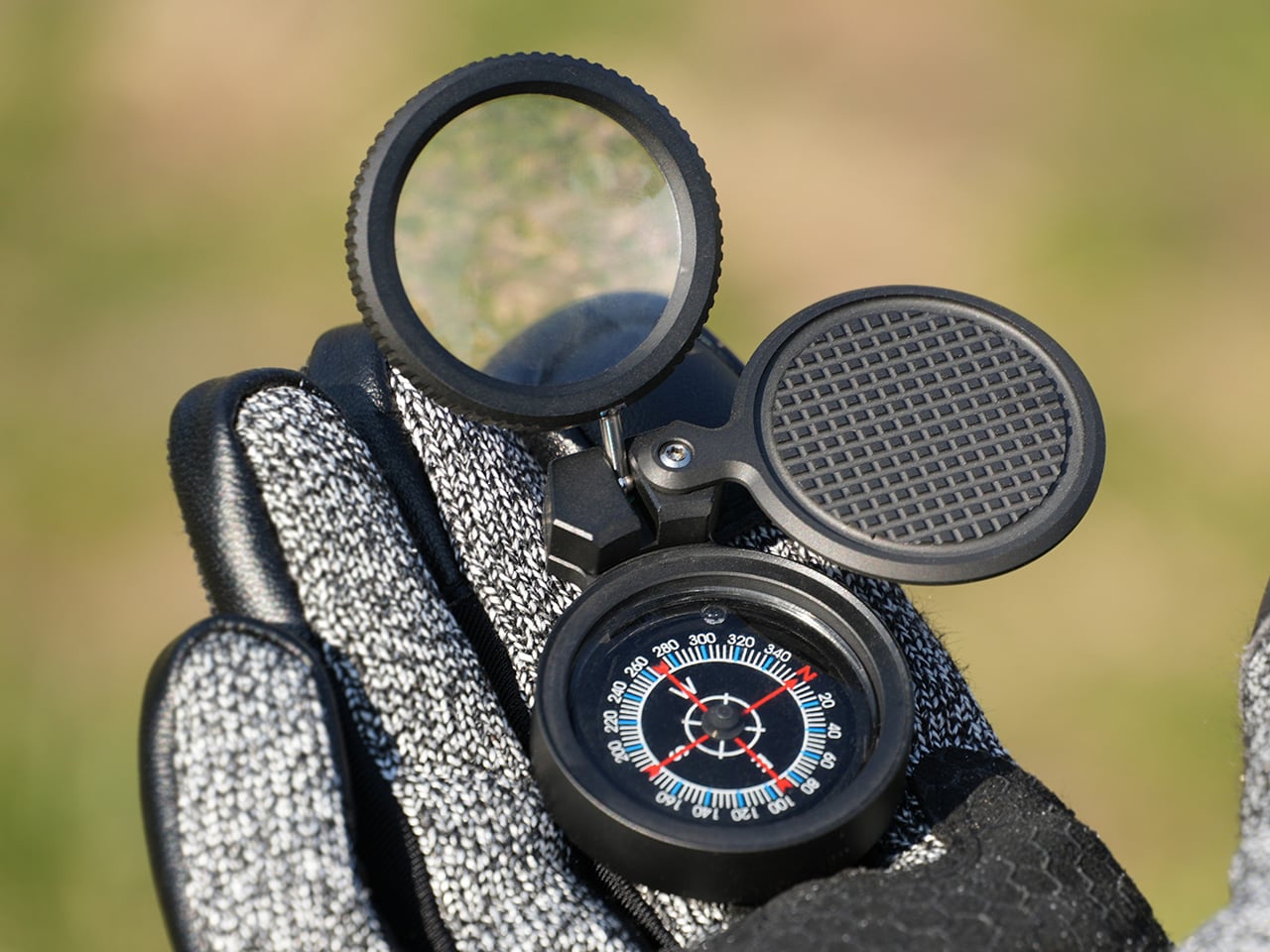


Most compass tools treat survival features as accessories. The Loki-Nav by EckDesign treats them as the whole point. Built from GR5 Titanium or Aluminum with an IPX8-rated oil-filled compass core, it pairs precise navigation with a foldable, rotatable 12x loupe and an emergency mirror inside a body small enough to ride on a keychain. The compass core is also replaceable, meaning you are not retiring the entire tool when one component wears out over years of sustained field use.
The 12x loupe folds flat and rotates into position, precise enough to read fine print and functional enough to focus sunlight to start a fire when conditions demand it. The oil-filled compass holds calibration in temperatures that would render a phone completely useless. For anyone navigating terrain without reliable signal, that matters more than any digital backup. The Loki-Nav does not try to replace a smartphone. It tries to be the thing that works when your smartphone is the problem.
What We Like
- The IPX8-rated oil-filled compass core is replaceable, extending the tool’s functional lifespan well beyond what a fixed-core design allows
- The 12x loupe folds flat, rotates into position, and can focus sunlight to start a fire, making it a genuine survival instrument, not just a navigation aid
What We Dislike
- The GR5 titanium version carries a premium price that may be difficult to justify for hikers who rarely venture off-grid
- As a multi-tool, each function will not match the precision depth of a dedicated standalone instrument
5. Portable Fire Pit Stand
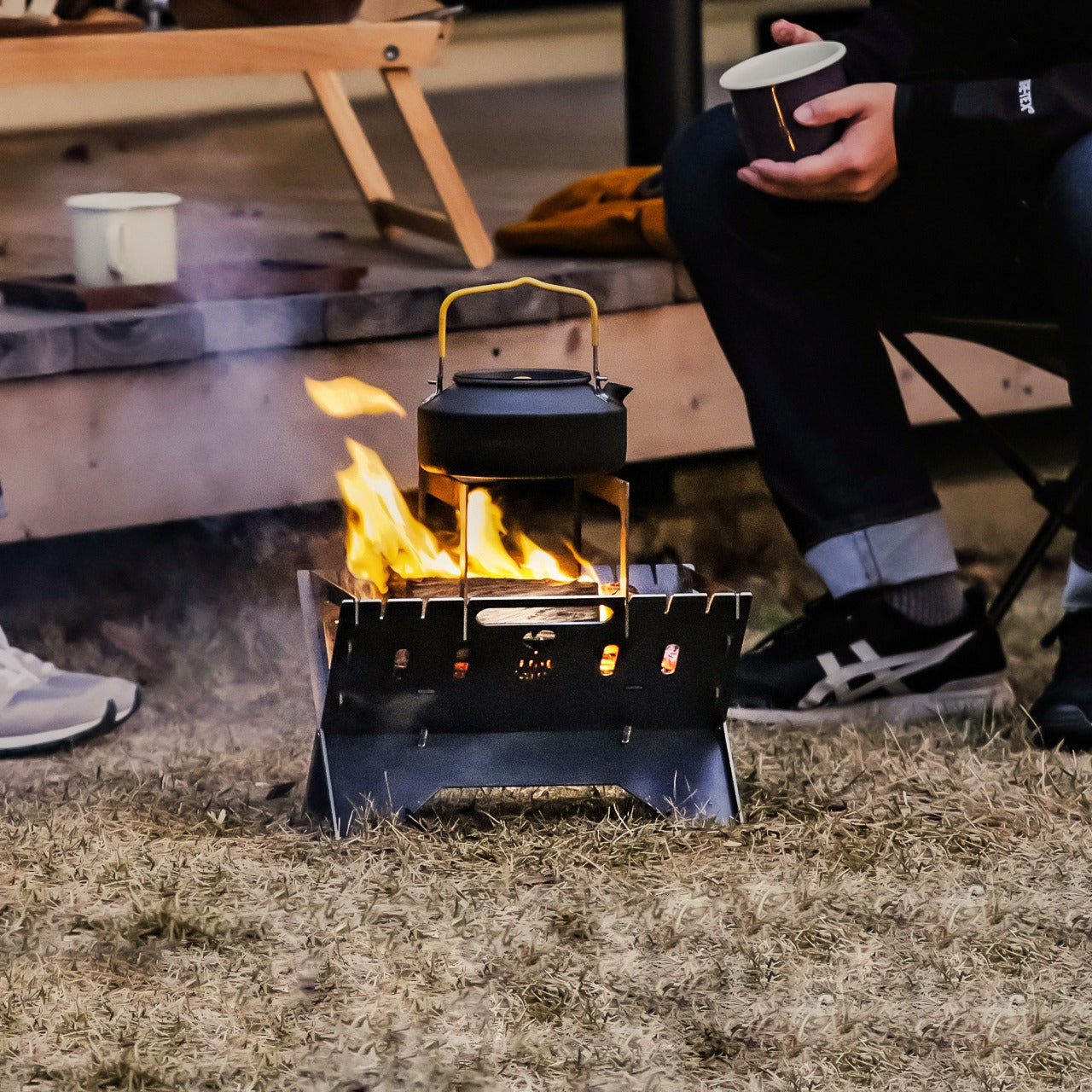

The Portable Fire Pit Stand treats setup and breakdown as part of the design, not an afterthought. Cut from SS400 black steel plate and engineered to resist warping under sustained heat, it assembles from flat-pack panels like puzzle pieces, no tools required. At 11.8 by 8.6 inches with a 7.8-inch height and a 22-pound load capacity, it holds through a full cooking session and compresses flat enough to leave camp without giving the pack-up a second thought.
The removable trivets are where it gets most useful for you in camp. Slot them in, and you have a raised platform for pots, pans, and kettles that covers grilling, frying, and boiling on the same rig. At $119, it brings Japanese material quality and a minimalist aesthetic to outdoor fire without the complexity most portable setups require. The flat black steel finish looks intentional around a campfire rather than improvised, and that distinction matters when everything else is stripped back.
What We Like
- SS400 black steel plate resists warping under sustained heat and assembles from flat-pack panels without any tools, keeping setup as clean as the design itself
- Removable trivets enable grilling, frying, and boiling on the same rig, adapting the stand to how you actually cook in camp
What We Dislike
- Steel plate construction adds real weight, making it less suited for ultralight or long-haul hiking setups
- At 11.8 by 8.6 inches, larger cooking arrangements may find the footprint limiting compared to wider grate setups
The Only Filter That Matters
September outdoor gear should earn its place in the bag rather than just fill it. Every piece on this list solves a real problem with design intention that goes well past the immediately obvious. The LUNARK Dual and the Loki-Nav push what a pocket-sized tool can actually carry. The BlackoutBeam reframes what activation speed means in practice. The Hot Pocket and the fire pit stand address the two most persistent annoyances in camp: sleeping cold and cooking without the right setup.
The price range here is deliberately wide. Not every pick suits every trip, and that is by design. What connects them all is the same refusal to separate how something works from how it is built. That is the shortest definition of good design, and the only filter this roundup used. Pick the one that fills the right gap in what you carry. That is where the value actually lives.

