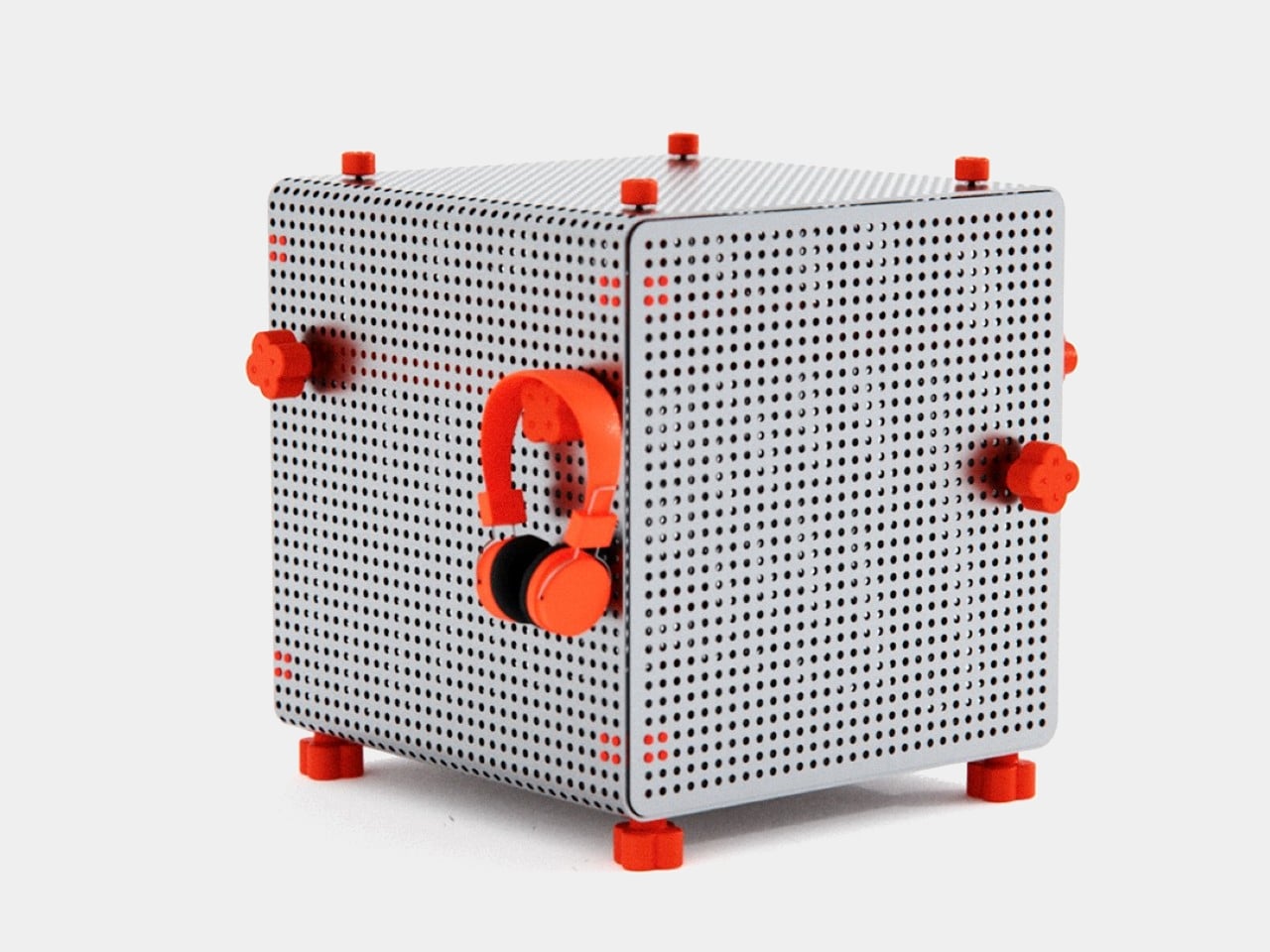

Most flat-pack furniture ships with a plastic bag full of different screws, dowels, and brackets, each one doing exactly one job and nothing else. The Holy Moly Cabinet throws that entire parts bag away in favor of a single connector, a clover-shaped orange fitting that turns into a door pull, a leg, a hinge, and a shelf bracket depending on where it gets mounted. One piece of hardware ends up doing the work an entire drawer of assorted fasteners usually handles.
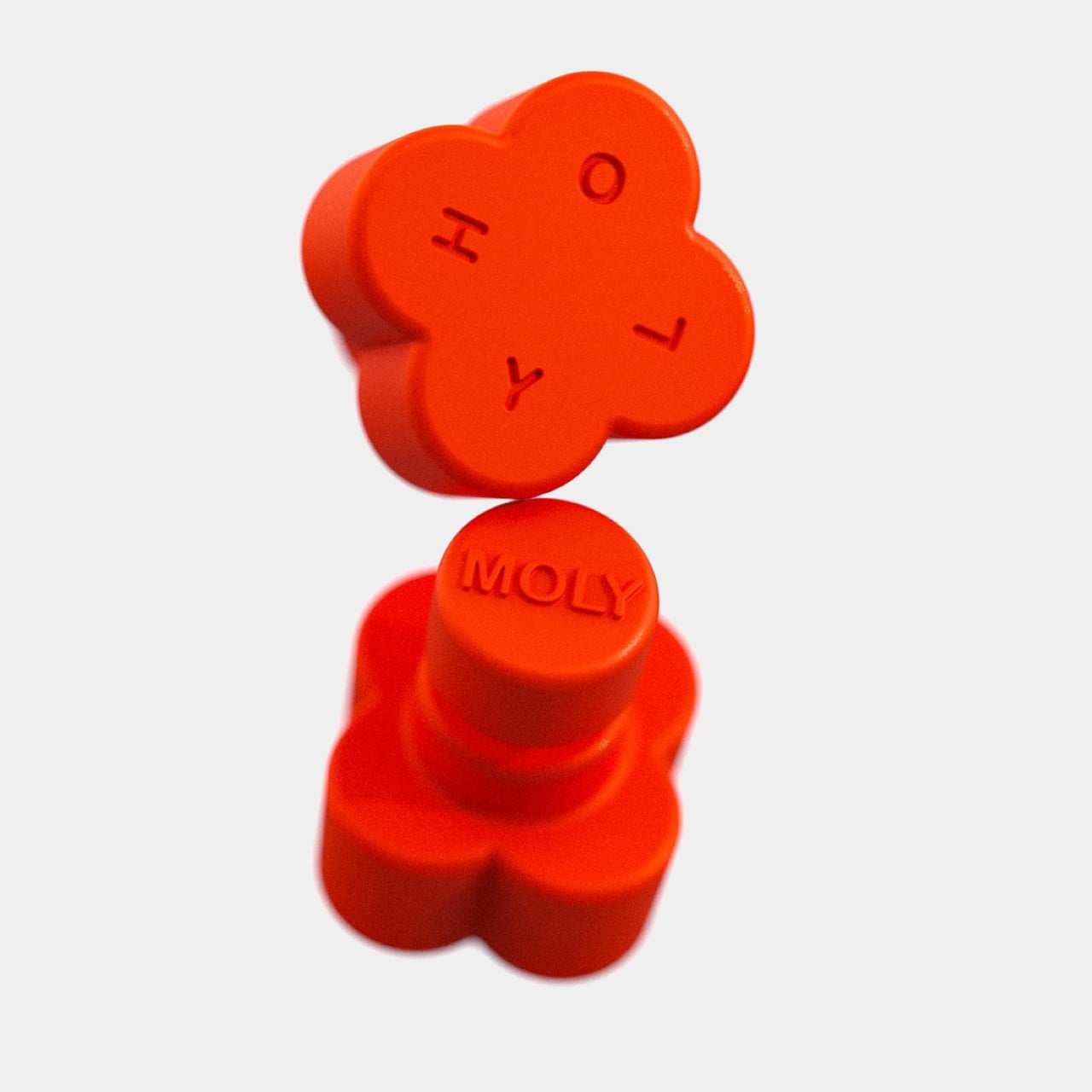
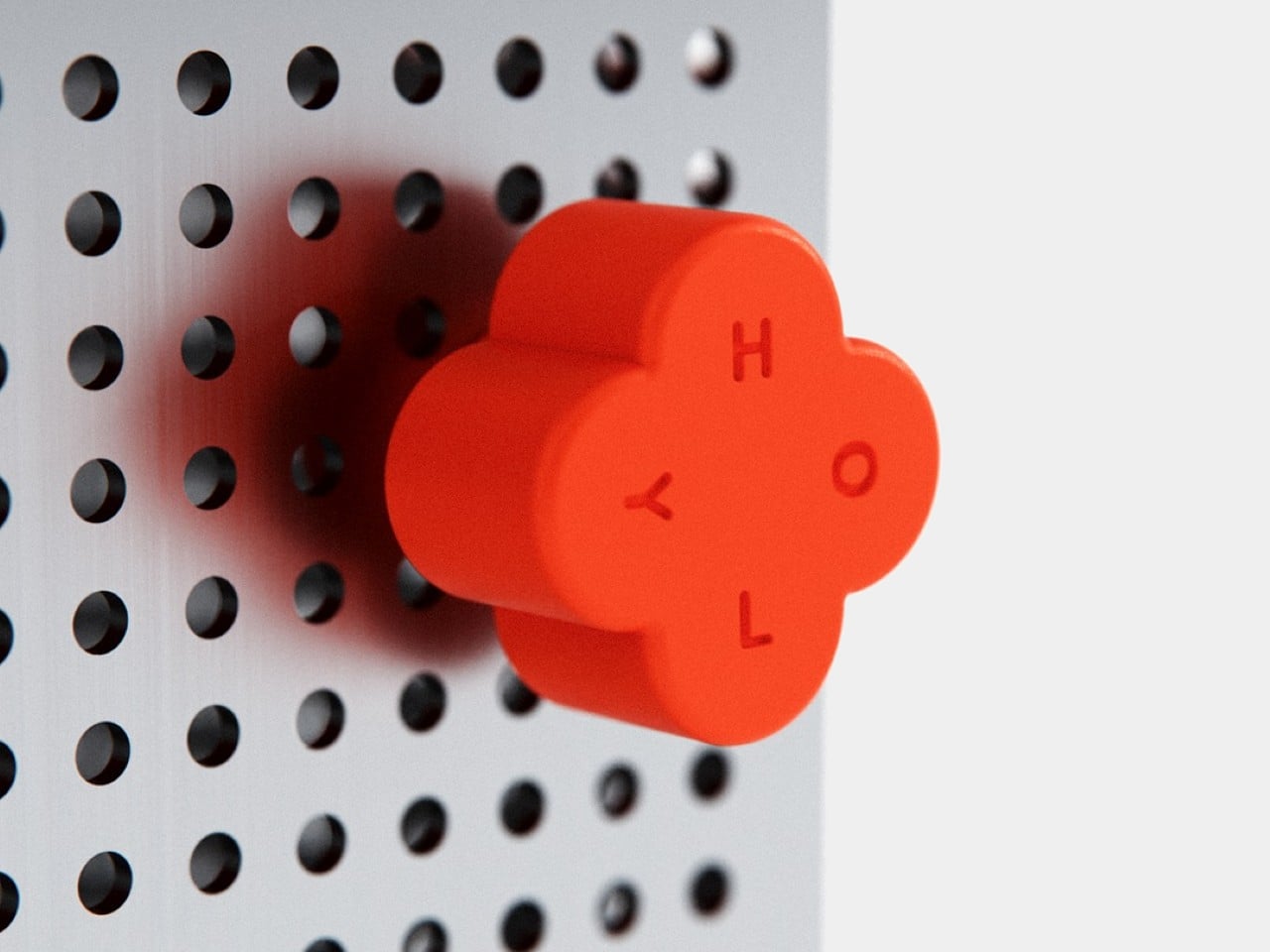
That fitting splits into two halves that snap together, and the design team baked its own name directly into the plastic rather than printing it on a box. The clover-shaped cap reads “HOLY” across its four petals, while the cylindrical stem underneath reads “MOLY” on its flat face. Pull the two apart, and the joke becomes obvious. Screw them together, and the joke disappears into a working piece of furniture hardware.
Designer: Liam de la Bedoyere (boredeye.design)
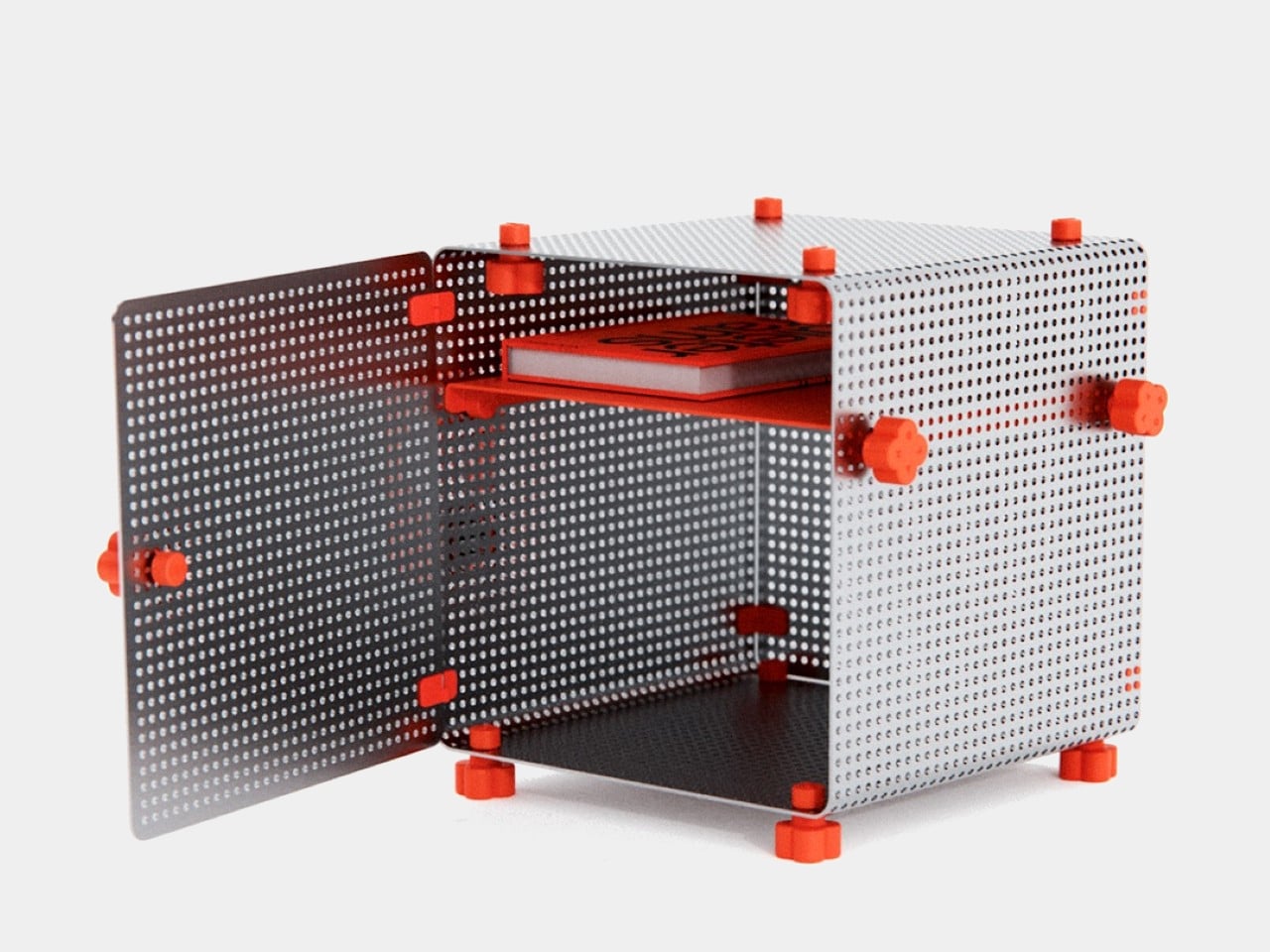
Every visible surface of the cabinet is a perforated steel panel, the kind of dense hole grid you’d expect on a pegboard rather than a piece of furniture. That choice turns the entire body into a mounting surface rather than just four solid walls, since the same connector can thread into practically any hole depending on where a shelf, a foot, or a door needs to land. Nothing about the placement is fixed once the manufacturing is done.

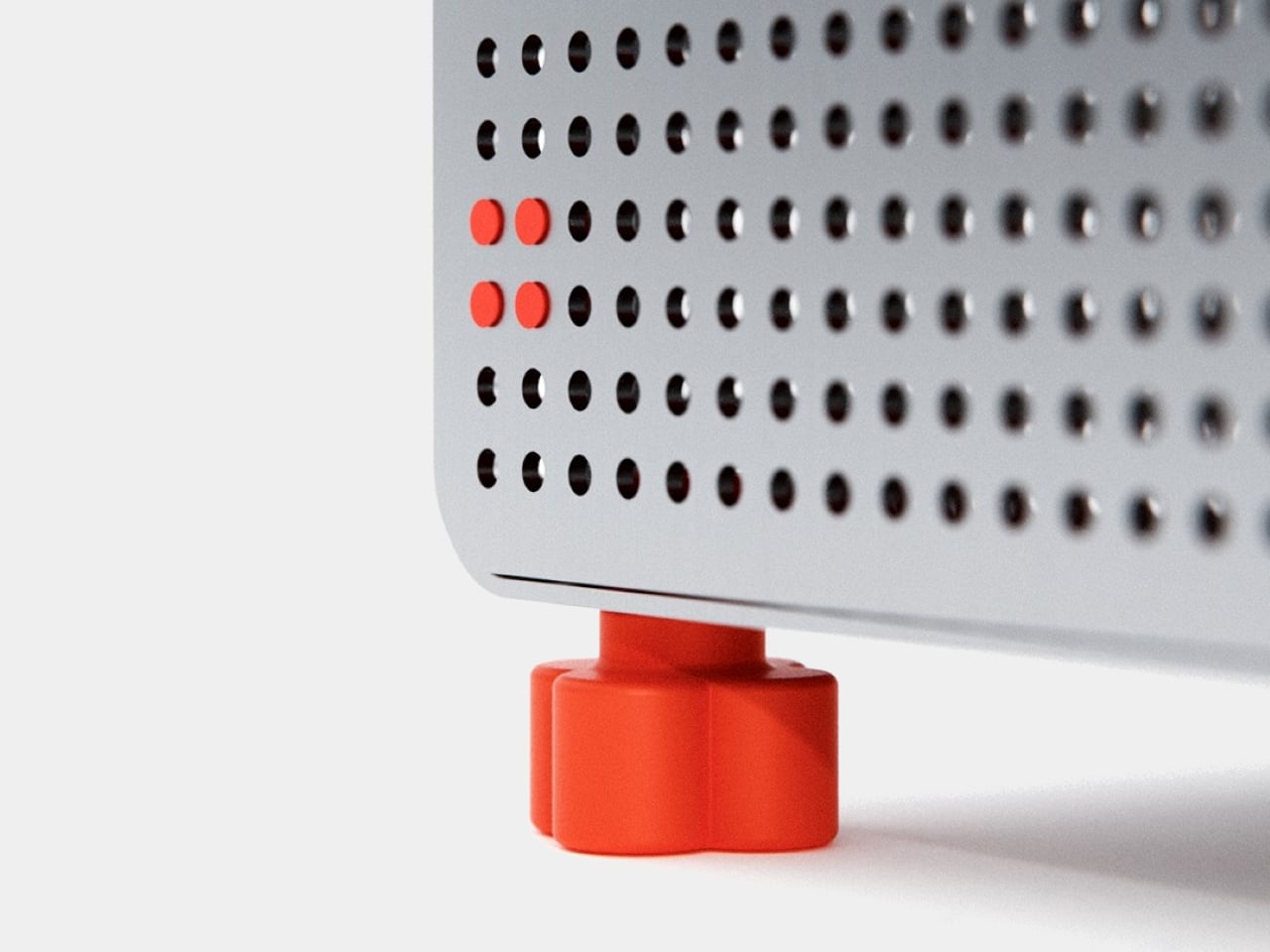
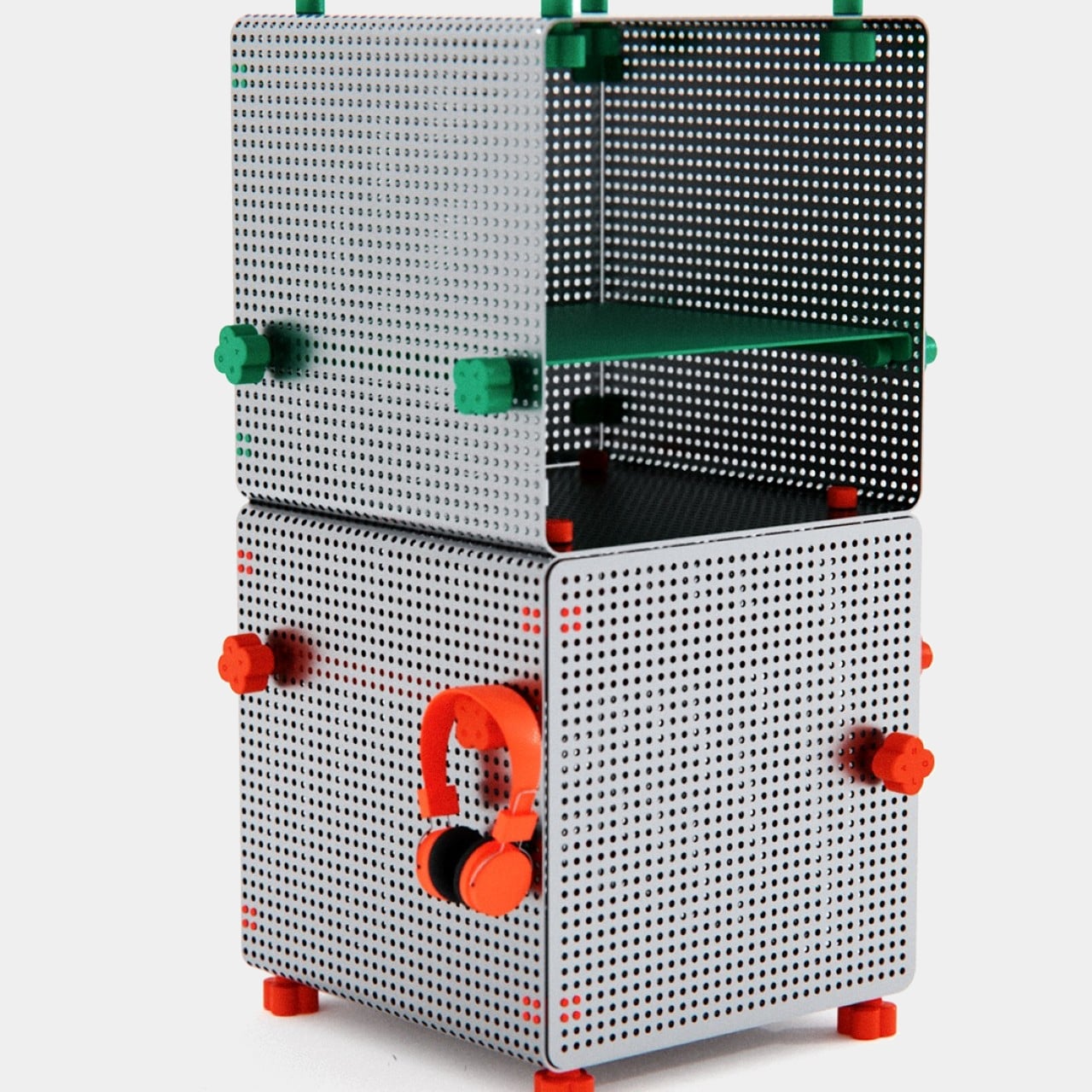
Standing the cabinet on its own four fittings turns it into a compact cube barely bigger than a nightstand, complete with a door pull mounted flush against the front panel and enough clearance underneath for airflow. Add a second cube on top using the same connectors at the seam, and the whole unit doubles in height without needing a different set of parts for the taller version. Scaling up means reordering the same hardware, not redesigning the furniture.
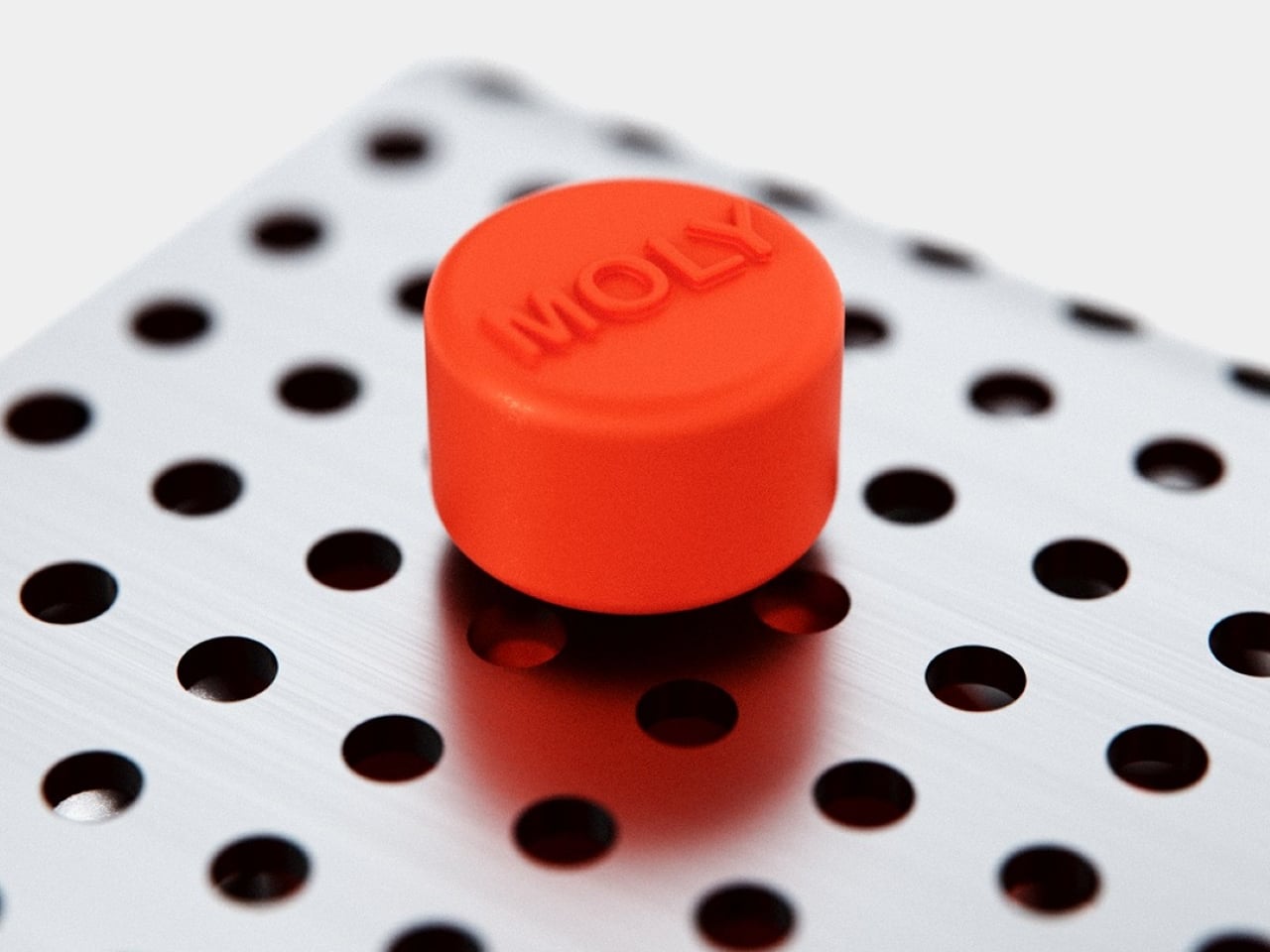
A shelf slots inside using that identical connector logic, locking into whichever row of holes puts it at the right height for whatever needs storing, whether that’s a stack of books or something taller that needs more headroom below it. Because the perforated steel body is the mounting surface everywhere, that shelf can move up or down later without drilling a single new hole or buying a different bracket to match a new position.
The perforation earns its keep beyond just anchoring the fittings. A pair of headphones hooks directly into the holes near the front panel with nothing extra required, treating the cabinet’s skin as a hanging surface the same way a pegboard in a garage holds tools. That’s a function most cabinets never offer, since a sealed door front usually has nowhere for anything to grab onto.
Reducing a whole cabinet’s hardware down to variations on one connector isn’t just a manufacturing shortcut. It changes how a piece of furniture ages in someone’s home, since a cracked foot or a worn door pull can be swapped using the exact same part sitting in a spare parts drawer, rather than hunting down a discontinued bracket from a company that stopped making that model years ago.

