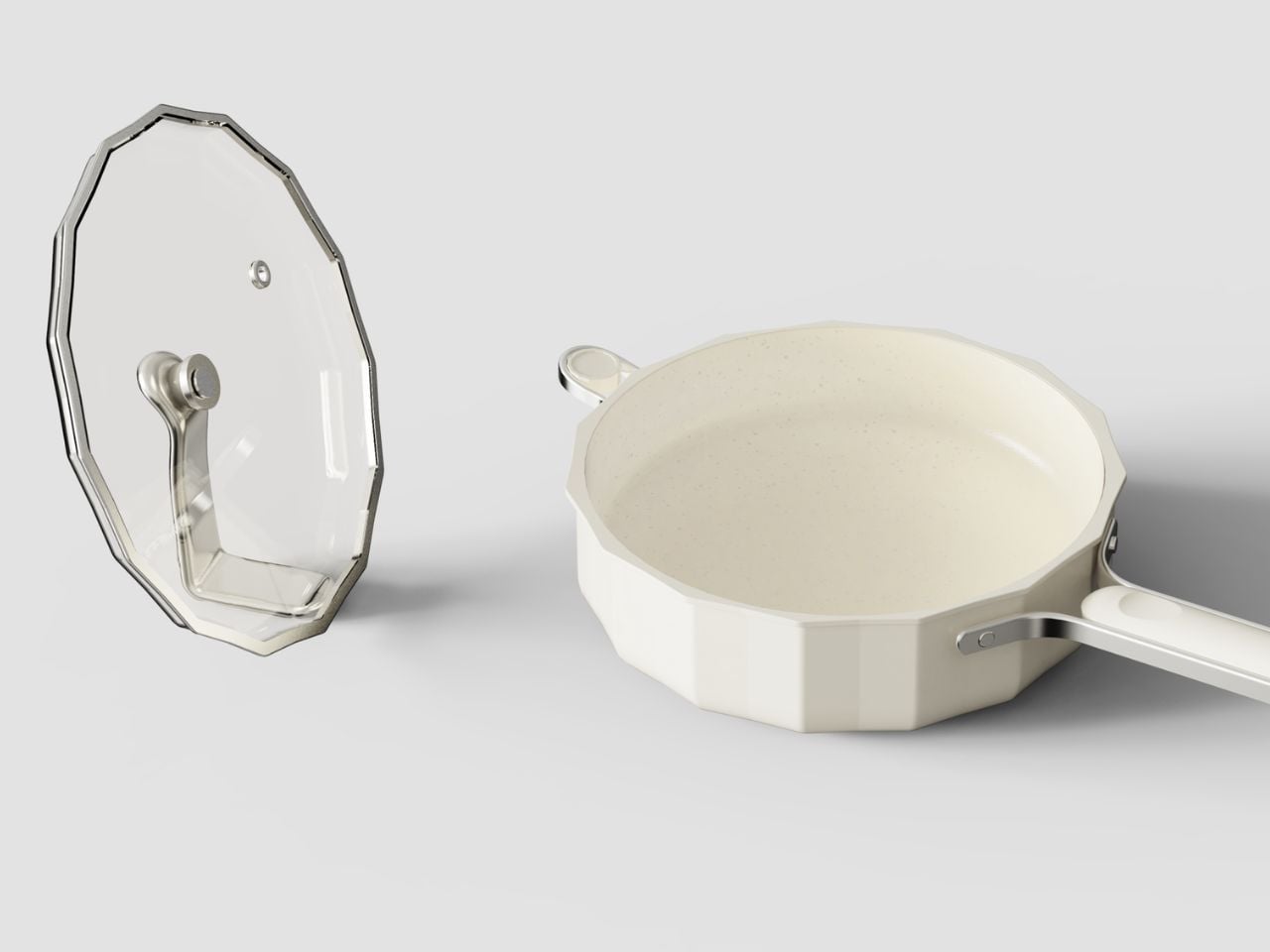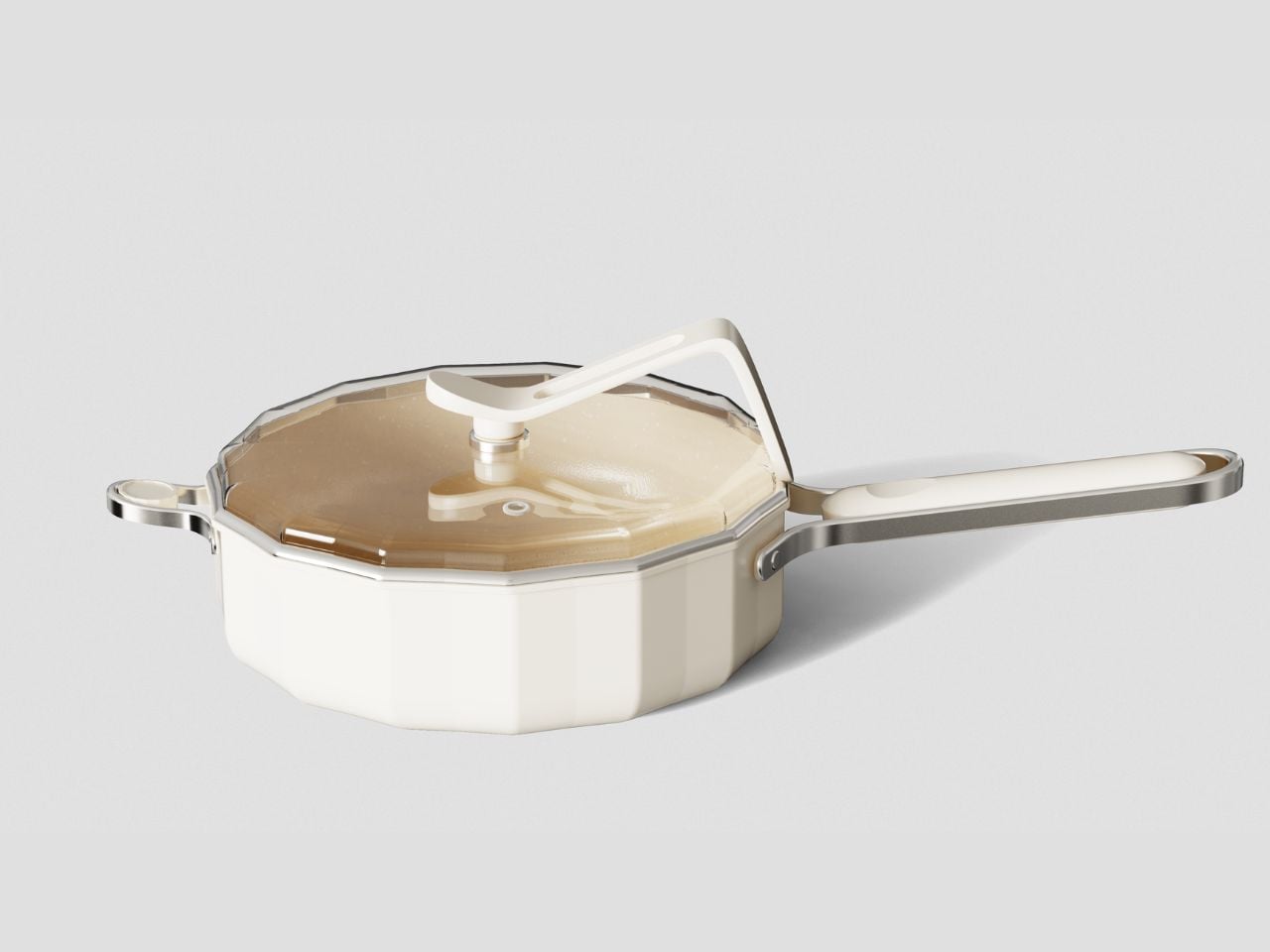

Cookware is one of those product categories where familiarity can easily disguise bad design. A pan heats up, a lid comes off, a handle gets held. These actions are so routine that small frustrations are often accepted as part of cooking. Gresland Benc Artisan Cast Cookware approaches the category differently, treating each of these familiar interactions as an opportunity to reconsider how cookware should perform, feel, and age in a contemporary kitchen.
The cookware, designed by Christophe Paul Gresland for Gresland Benc Technology, was recognized as a 2025 European Product Design Award winner in the Home and Kitchen Accessories category. Much of its innovation sits beneath a deliberately restrained exterior. Its revolutionary multi-layered core, developed through advanced metallurgy, achieves greater thermal responsiveness and retention, heating 40% faster and distributing heat 30% more evenly than traditional cast counterparts while eliminating hotspots. For the cook, those numbers translate into something much more tangible: less waiting, more predictable results, and fewer areas of the cooking surface demanding constant attention.
Designer: Gresland-Benc Technology (Foshan) Co., Ltd., United Kingdom
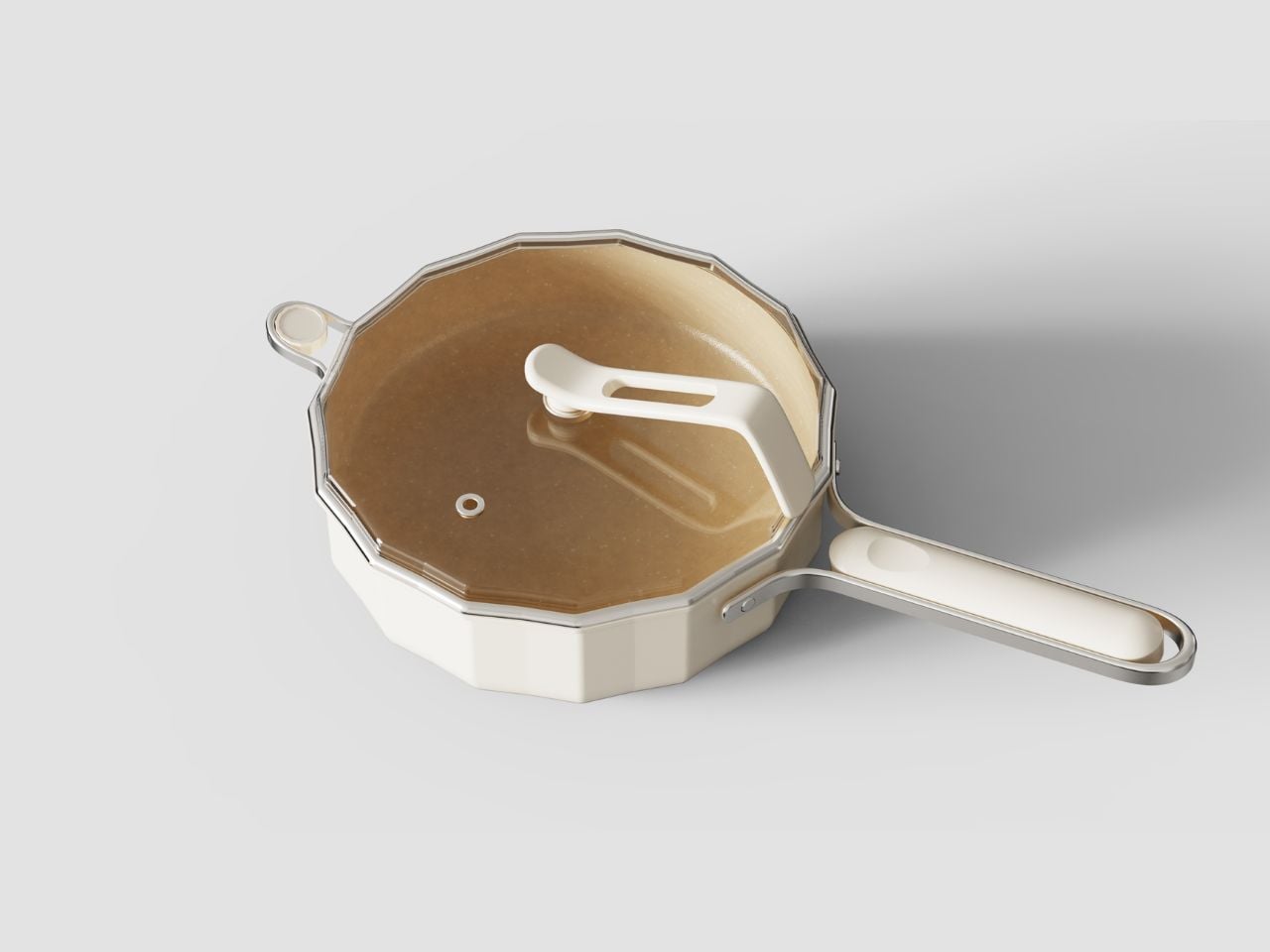
That performance is paired with some surprisingly thoughtful decisions around everyday use. The sculpted handle has been engineered for balance and comfort, but its more interesting contribution is how it responds to one of cooking’s most common and rarely addressed hazards. Removing a lid can release a concentrated burst of steam directly toward the hand. Here, the handle geometry has been considered specifically to reduce the risk of scalding from lid release steam. It is a small interaction, but one that reveals where the product’s priorities lie. Good kitchen design is rarely about adding more features. Often, it is about noticing where the user has quietly learned to compensate for the product.
The same thinking appears in details that are less dramatic but equally relevant. A flat base makes the cookware suitable for induction cooking ranges as well as conventional stovetops. It may seem like an expected feature today, yet it matters because cookware is usually purchased to last much longer than the appliance beneath it. Designing for different cooking environments makes the object more adaptable to changing kitchens and a broader range of users.
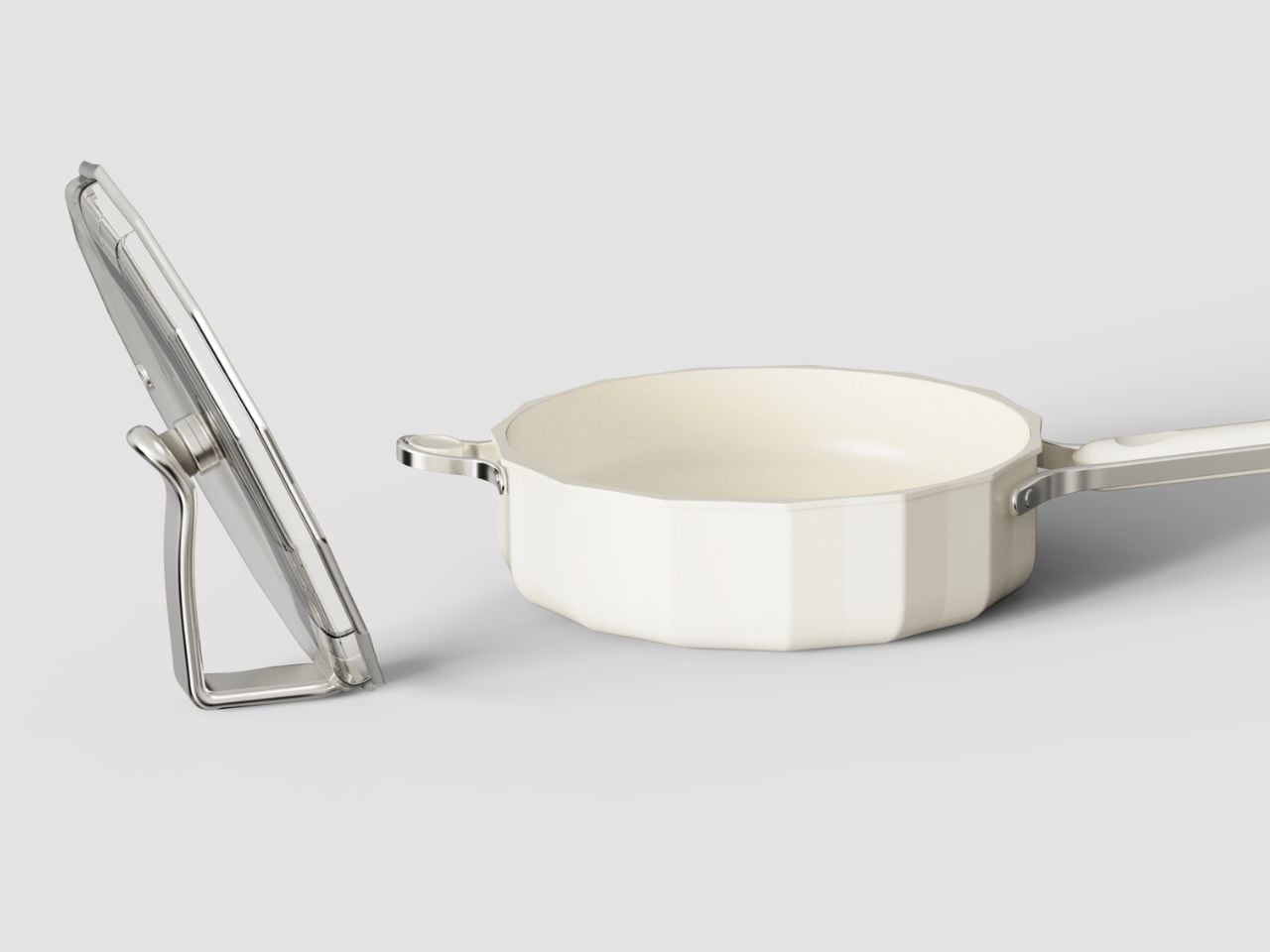
The external chamfered edges also bring function and form closer together. When the cookware is cold, the softened geometry provides a more comfortable surface to grip and maneuver. Visually, those edges prevent the form from appearing unnecessarily heavy, giving an otherwise substantial piece of cast cookware a more considered profile. It is an example of detailing that earns its place because it improves both handling and character.
Material choices extend that thinking beyond the immediate cooking experience. The cookware uses 85% recycled stainless steel alongside locally sourced components, while its zero-waste casting process is stated to meet B Corp environmental standards. For an object whose value is tied to durability, this feels particularly relevant. Sustainability is more convincing when it is embedded into how a product is manufactured rather than treated as an additional feature attached to it afterward.
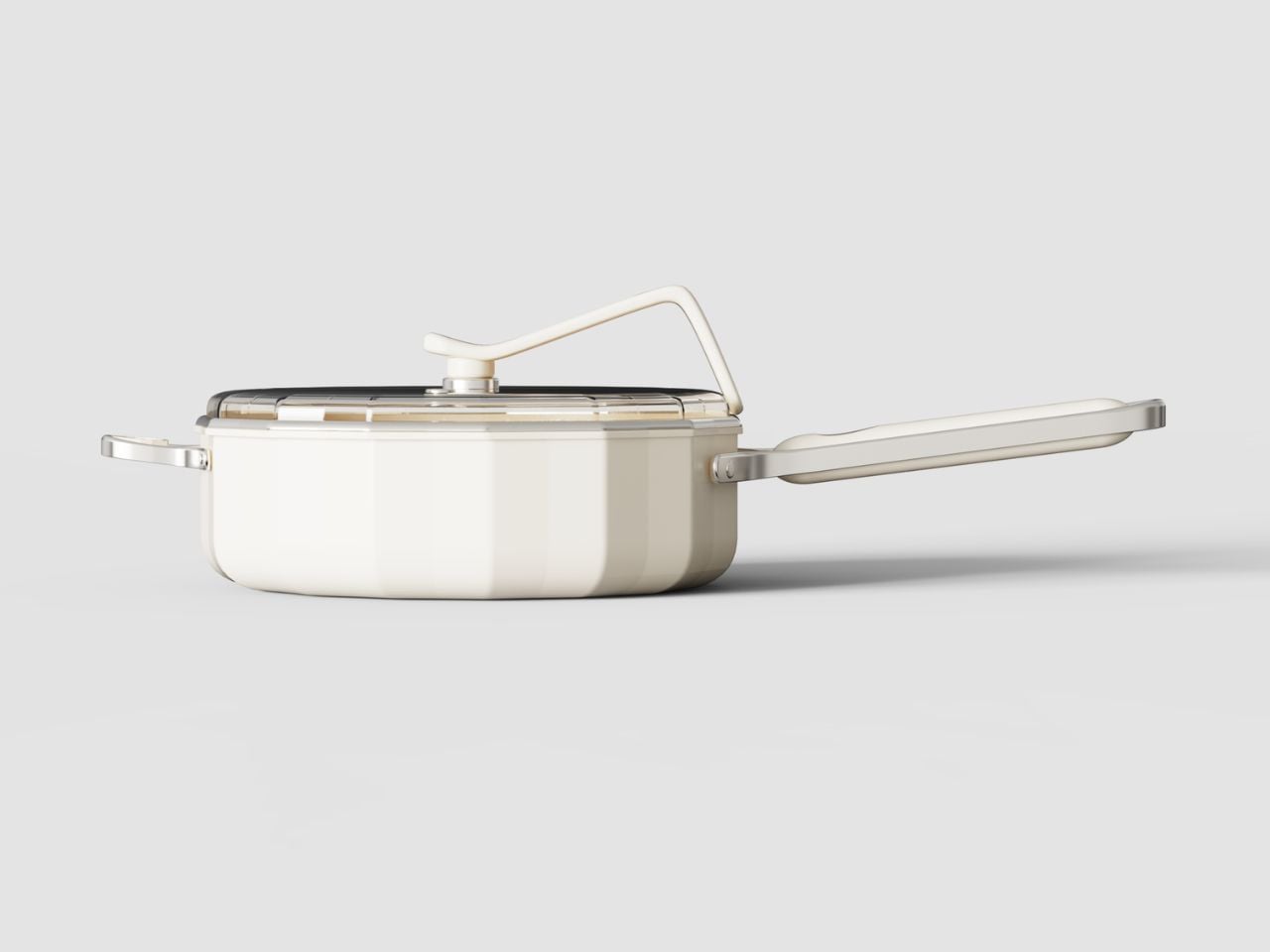
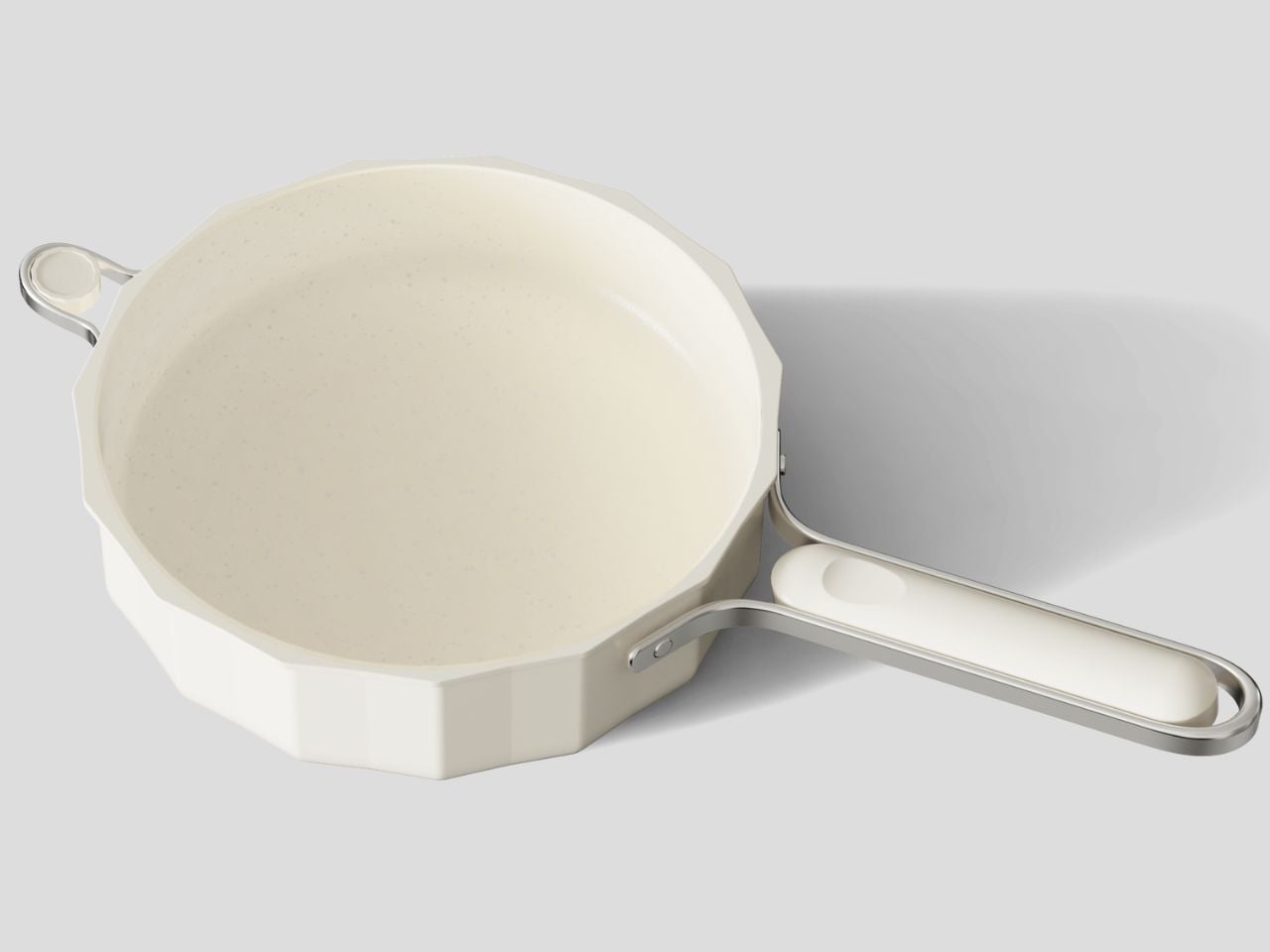
There is still one consideration that deserves attention. A metal handle can potentially absorb and retain heat during prolonged cooking. Depending on the final thermal isolation and construction of the handle, users may still need to remain aware of its temperature, particularly during extended stovetop use. It does not undo the strength of the design, but it is exactly the kind of practical behavior that matters in a product built around everyday physical interaction.
What makes Gresland Benc Artisan Cast Cookware compelling is that its most meaningful decisions are not limited to one headline innovation. Thermal performance, safer lid handling, induction compatibility, comfortable edges, material responsibility, and visual restraint all contribute to the same experience. It is cookware designed with an understanding that refinement often happens in the moments people barely notice, until someone designs them better.