
Some phone collaborations slap a logo on a box and call it a day. This one goes further, treating a smartphone like a prop pulled straight from the wizarding world rather than a branded accessory bolted onto existing hardware. The realme 16 Pro Harry Potter Edition rebuilds its entire back panel around Hogwarts iconography, then wraps the whole package in a trunk replica that plays the role of Harry’s own school luggage.
Underneath the theming sits the same hardware found in the standard realme 16 Pro: a Dimensity 7300 Max chipset, a 144Hz AMOLED display rated at 6,500 nits of peak brightness, and a 7,000mAh battery supporting 80W wired charging along with bypass and reverse charging. None of that changes here. What changes is how all of it gets dressed up, and that’s where the real story starts.
Designer: realme

A Back Panel Built Like a Wizard’s Chessboard
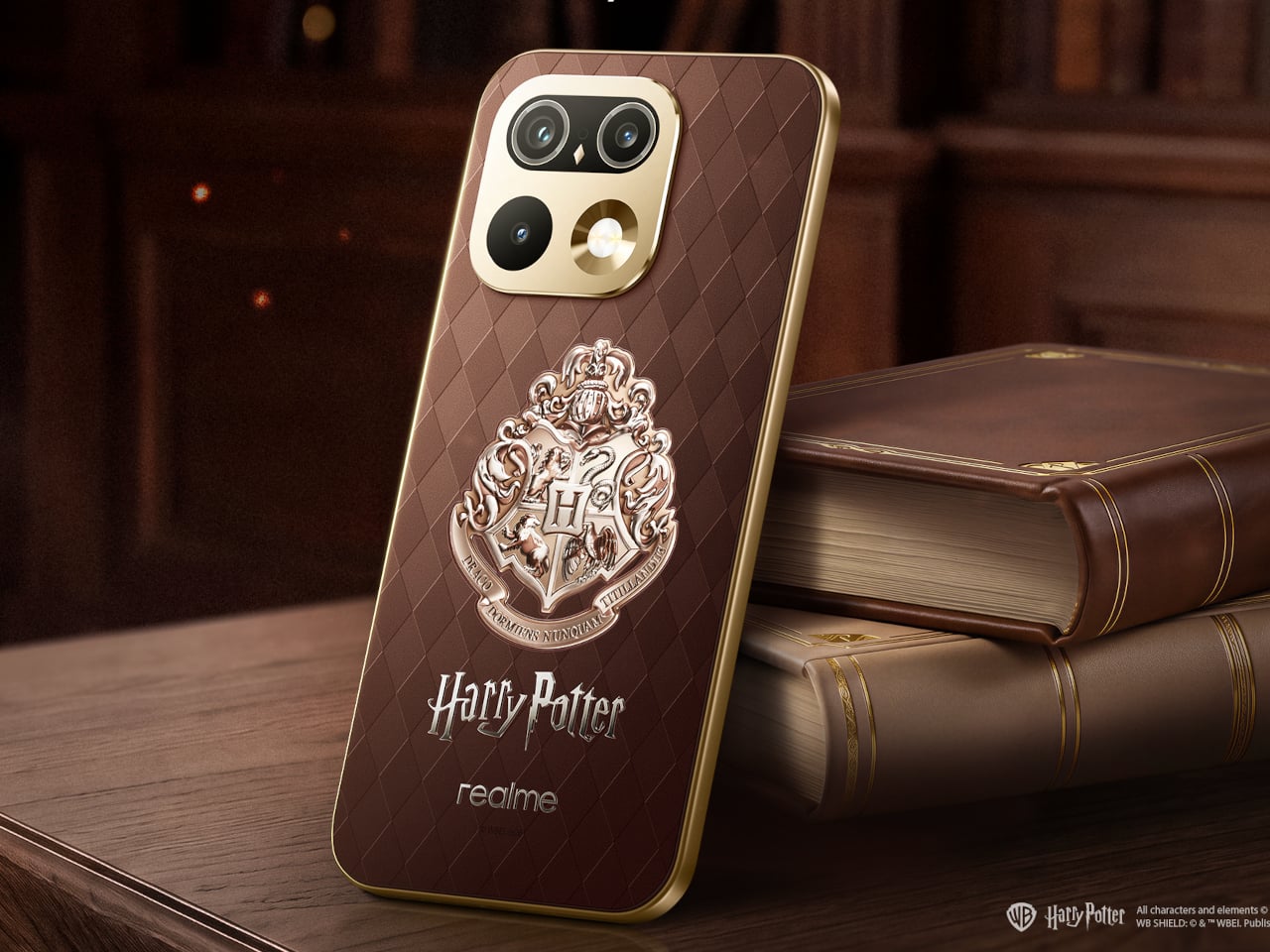
Flip the phone over, and the design leans on texture before it leans on imagery. A brown, leather-textured back panel carries an Argyle pattern lifted from the Wizard’s Chess scene, giving the surface a woven, tactile quality instead of a flat printed graphic. The Hogwarts Crests sit subtly at the center, small enough to reward a second look rather than shouting for attention from across a room.
The camera module gets its own quiet reinterpretation. Built on the standard 16 Pro’s Metal Mirror Camera Deco, the ring here is reshaped to resemble Hedwig’s eyes, turning a purely functional component into a character reference without needing an explicit illustration to sell the idea. It’s a detail that rewards fans who know the franchise while staying subtle enough not to alienate anyone who doesn’t.
A Frame That Whispers Instead of Shouts
The metallic mid-frame carries a laser-engraved “Welcome to Hogwarts” slogan, placed where a hand would naturally wrap around the device during a call or a photo. That kind of detail only reveals itself through use, not through a glance at a product photo, which fits the restrained tone running through the rest of the design.
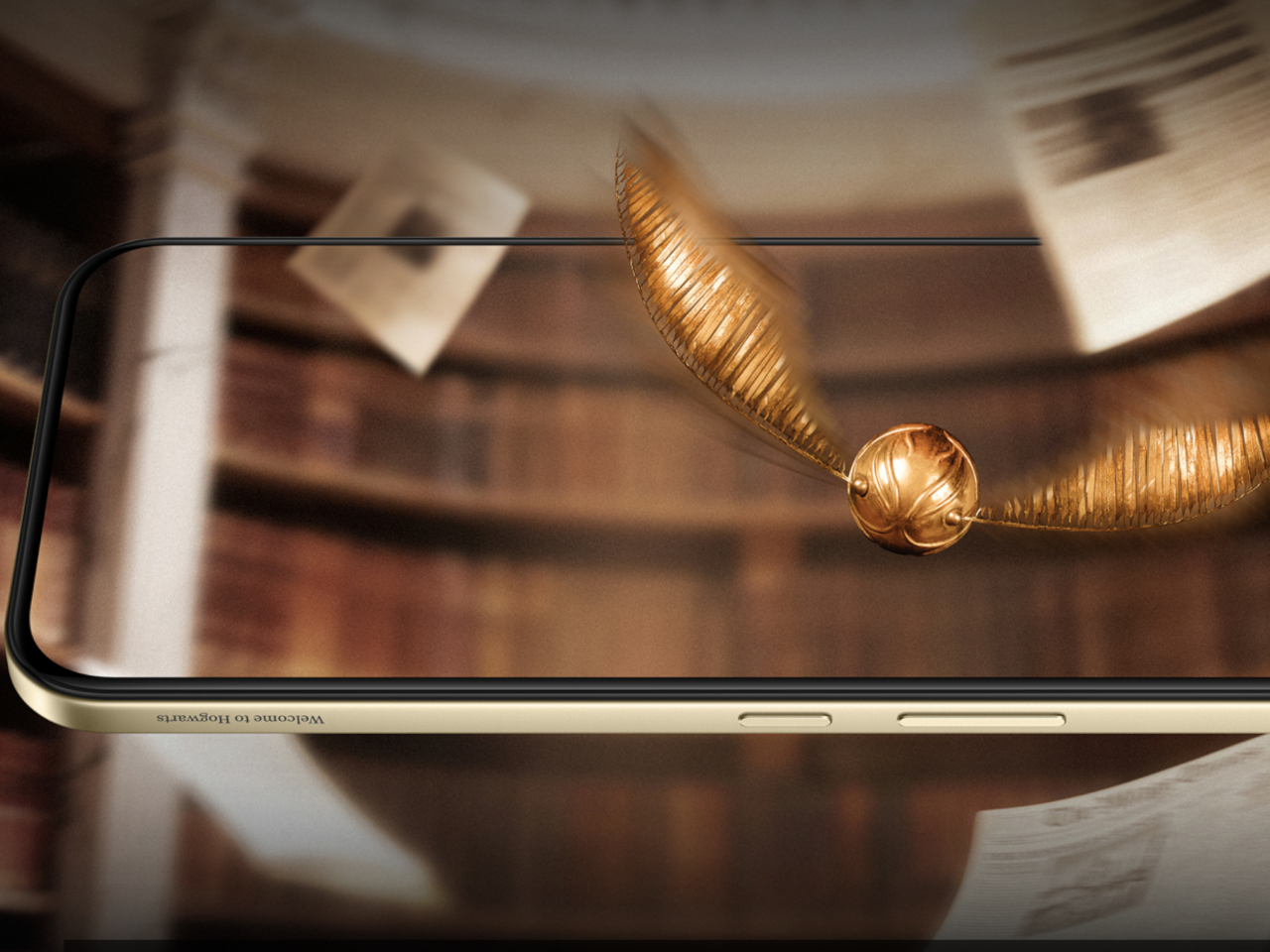
Nothing about the theming interferes with how the phone actually functions day to day. The engraving, the crest, the camera ring reshape, all of it layers onto hardware that still charges fast and still displays at a brightness most phones can’t match outdoors. The fantasy stays skin-deep in the best possible way, present without slowing anything down.
A Trunk Instead of a Box
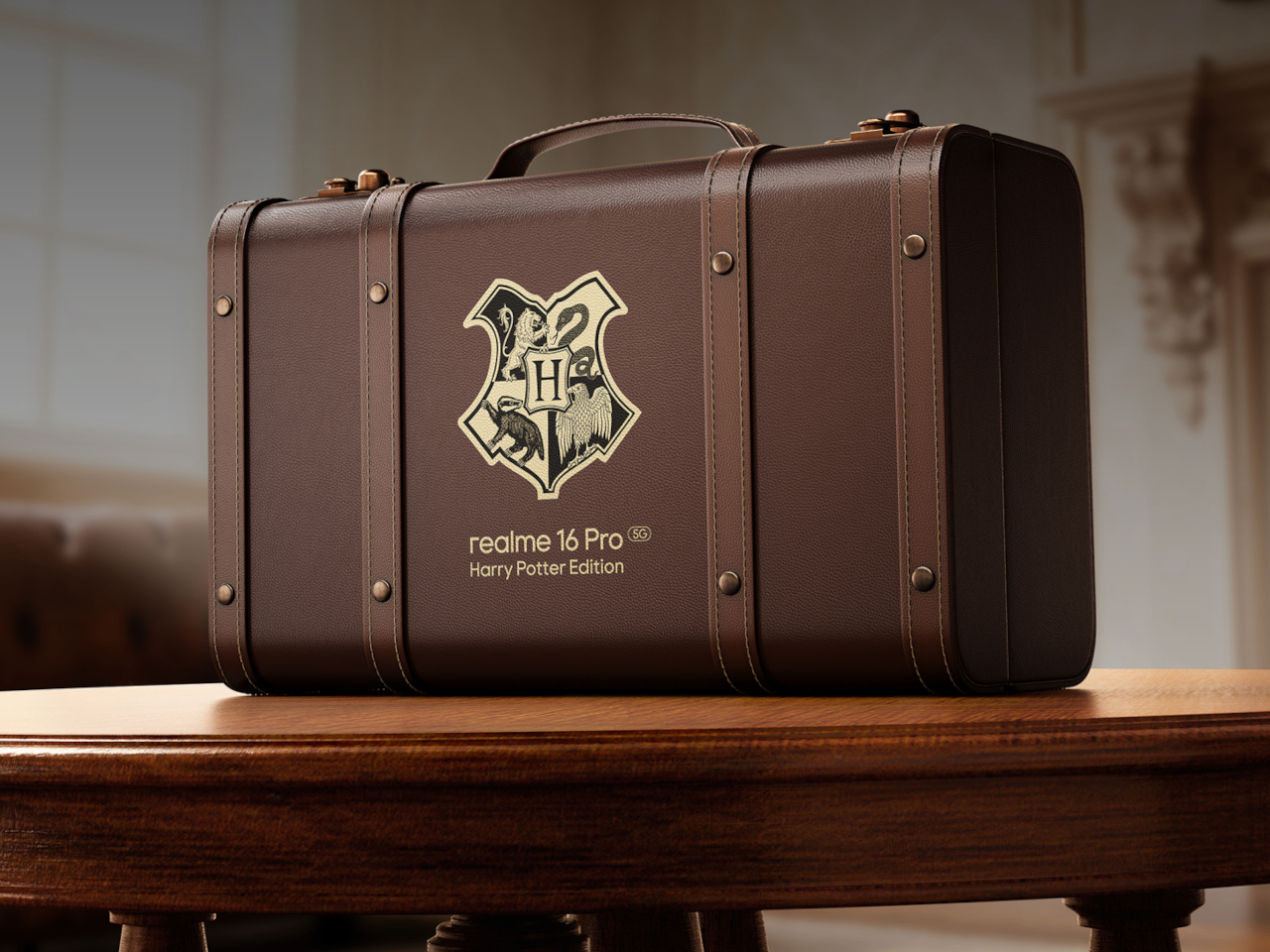
The packaging might be the boldest swing in the whole release. Instead of a standard retail box, this edition ships in a school-style trunk built as a 1:1 replica of Harry’s own luggage, the kind of object that turns unboxing into a small ceremony rather than a chore done over a kitchen counter. Only 5,000 units exist worldwide, immediately treating the box as collectible.

Open it, and the trunk holds a Hogwarts Welcome Pack rather than plastic filler. An acceptance letter and train ticket recreate the moment of becoming a first-year student, while house-crest bookmarks let a fan pick their allegiance and character postcards recreate Harry, Hermione, and Ron’s first steps into the castle. A logo-embossed phone case and a phone pin round out a set built for shelf display as much as daily use.
Merchandise That Understands Its Audience
None of these objects function as phone accessories in the traditional sense. The bookmarks and postcards exist purely as collectible ephemera, while the case is the one item pulling double duty as protection and display piece. That split matters because it treats the box as a keepsake first, with the phone itself as the technological anchor holding the theme together.
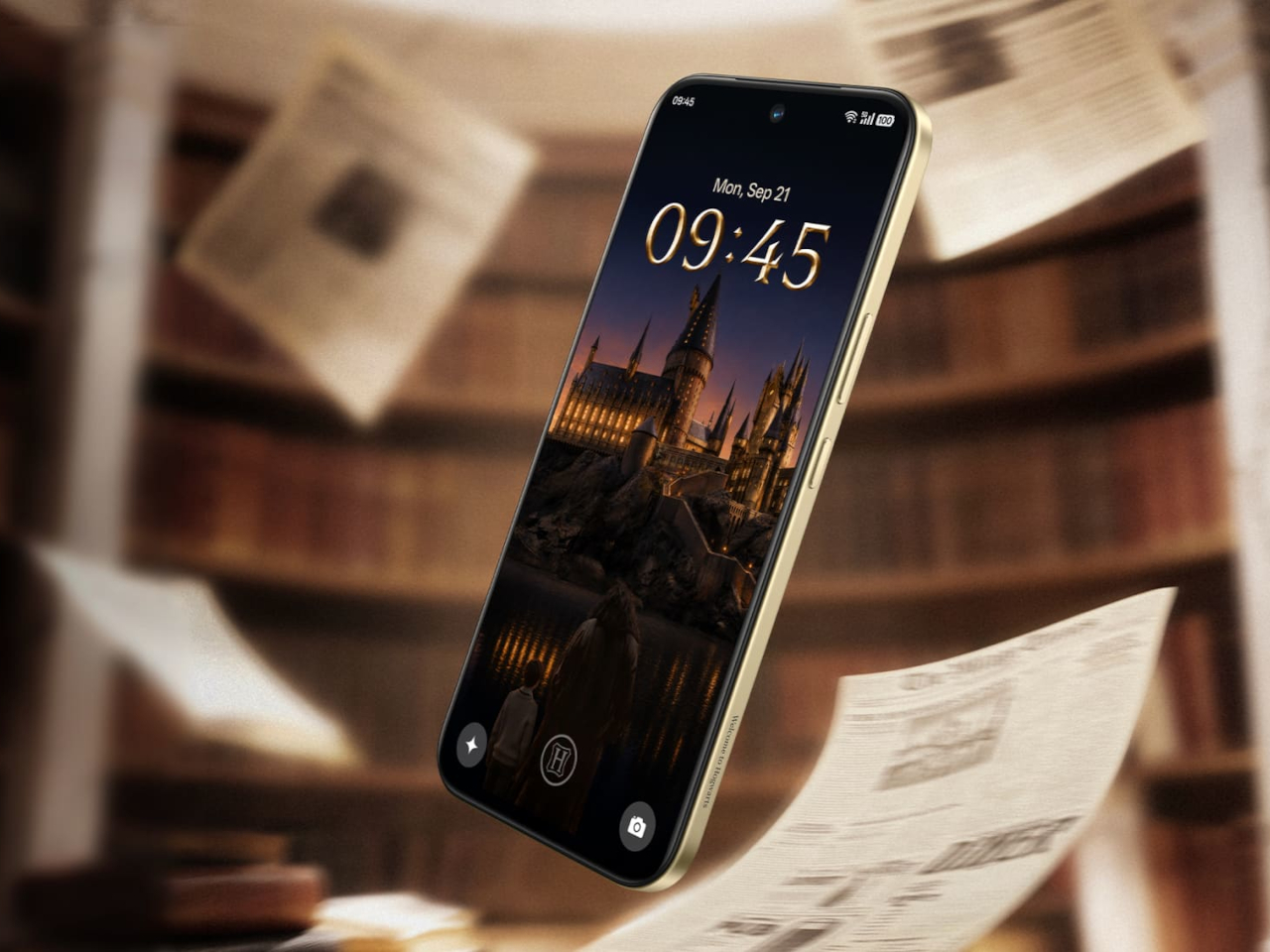
That approach reflects a broader shift in how phone makers court younger buyers who grew up with the franchise rather than discovering it as adults. Pairing a genuinely capable mid-range chipset and fast charging with a story-driven unboxing experience gives this edition a reason to exist beyond a seasonal marketing push, aimed at a generation that treats favorite franchises as identity rather than nostalgia.

