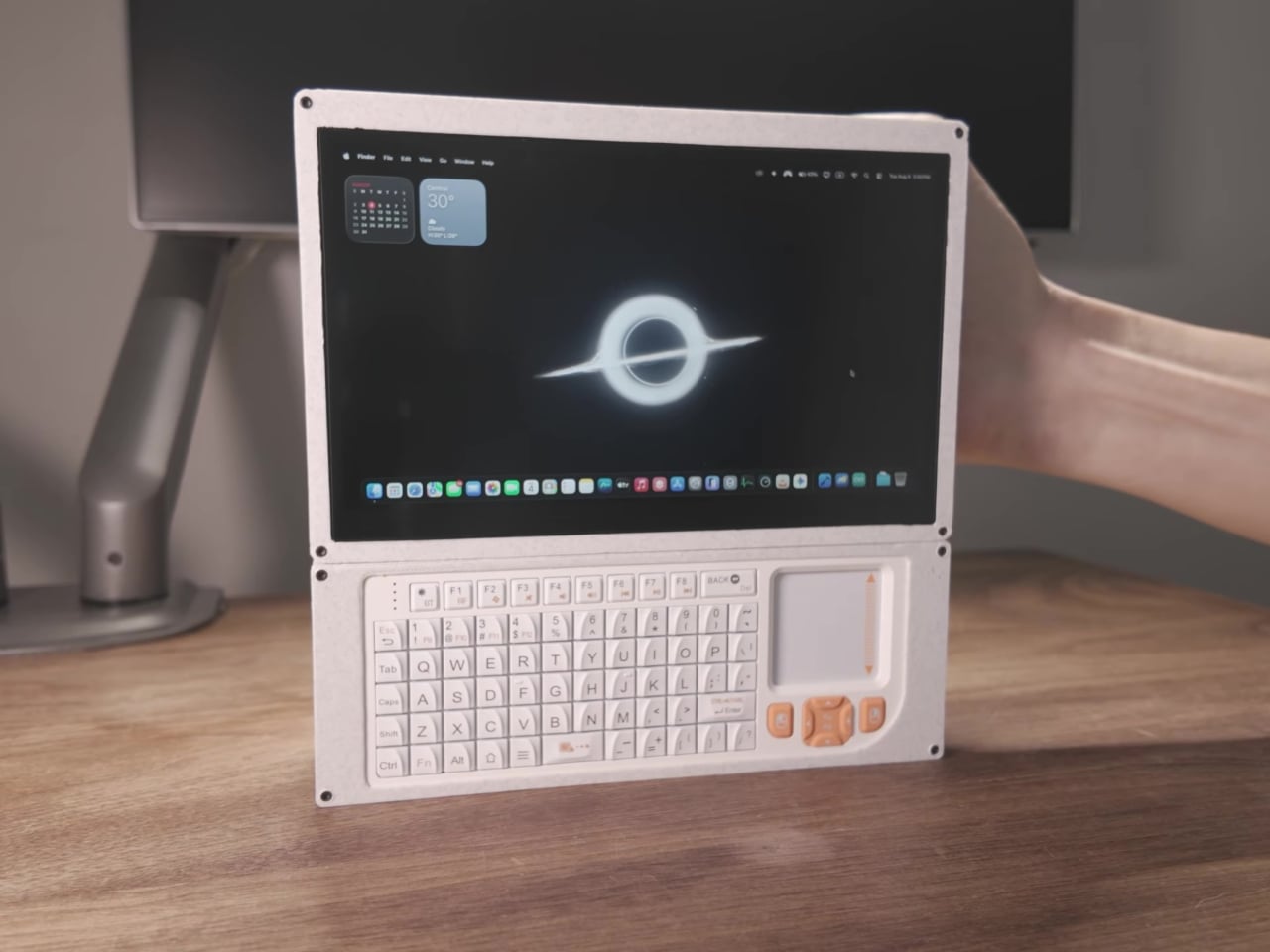
Most people who outgrow a Mac Mini just buy a bigger one. One builder went the opposite direction, gutting an M4 Mac Mini down to its bare motherboard and squeezing the entire machine into something you hold in two hands. The result runs full macOS, plays games with real controllers, and never touches a wall outlet, proving Apple’s desktop silicon was never actually tied to a desk in the first place.
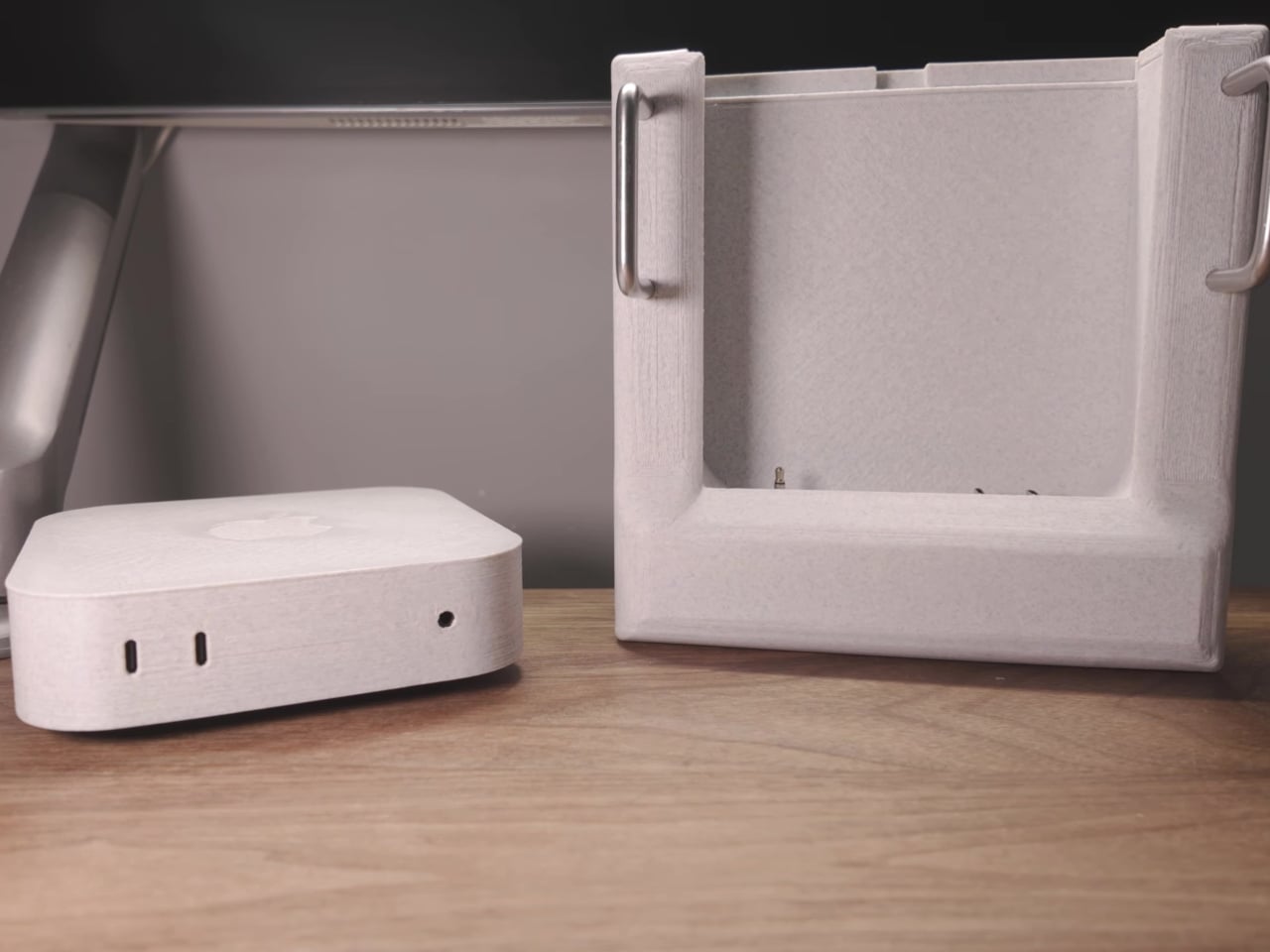
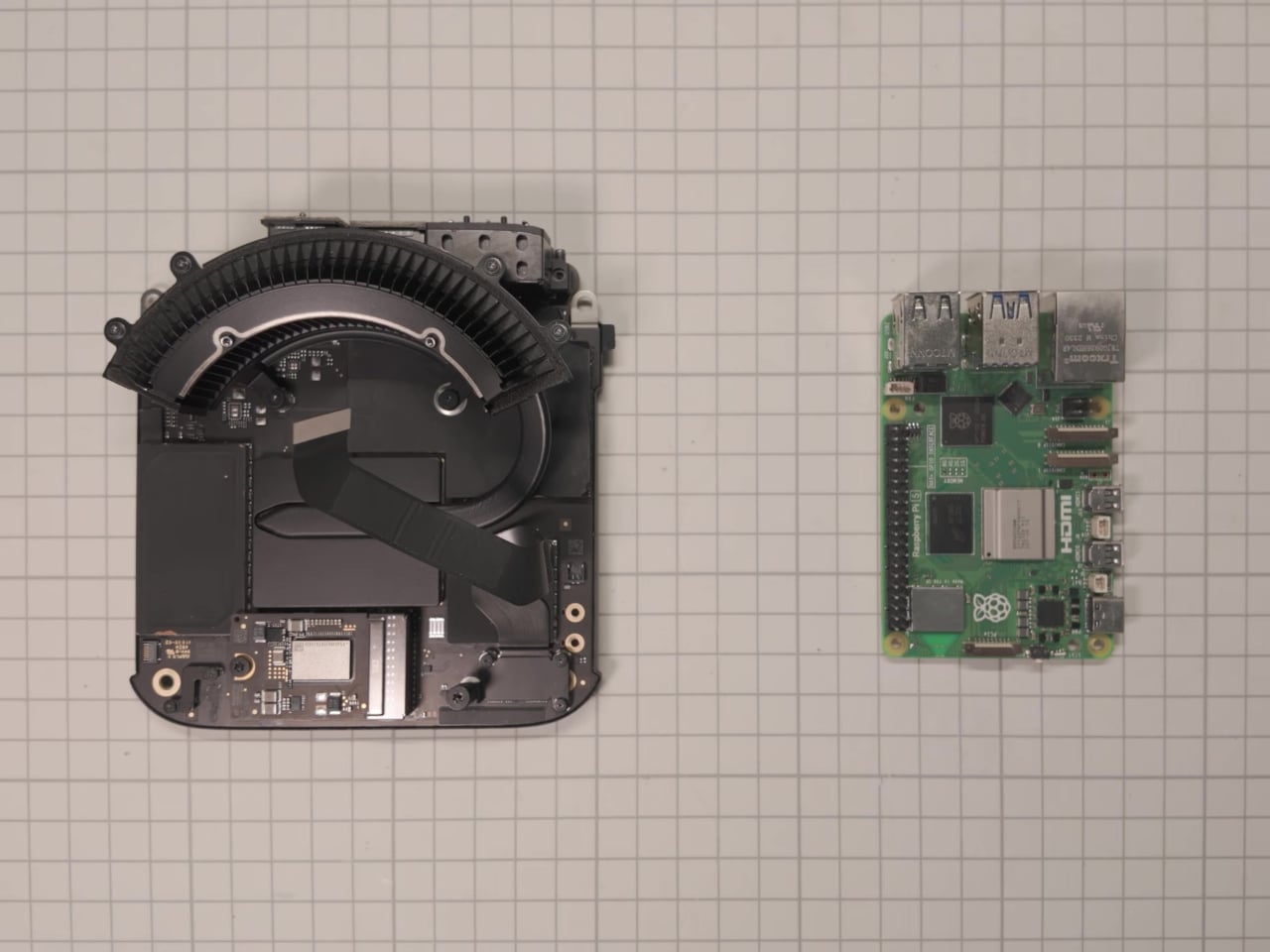
The trick starts with restraint rather than miniaturization. Instead of ripping out Apple’s factory heatsink and blower fan to save space, the build keeps that original cooling setup intact, letting the M4 chip run demanding workloads without throttling under heat. The motherboard and its cooling system then slide into a custom 3D-printed shell nicknamed the Mac Nano, treating Apple’s silicon less like a sealed product and more like a component waiting to be rehoused.
Designer: Shing Solutions

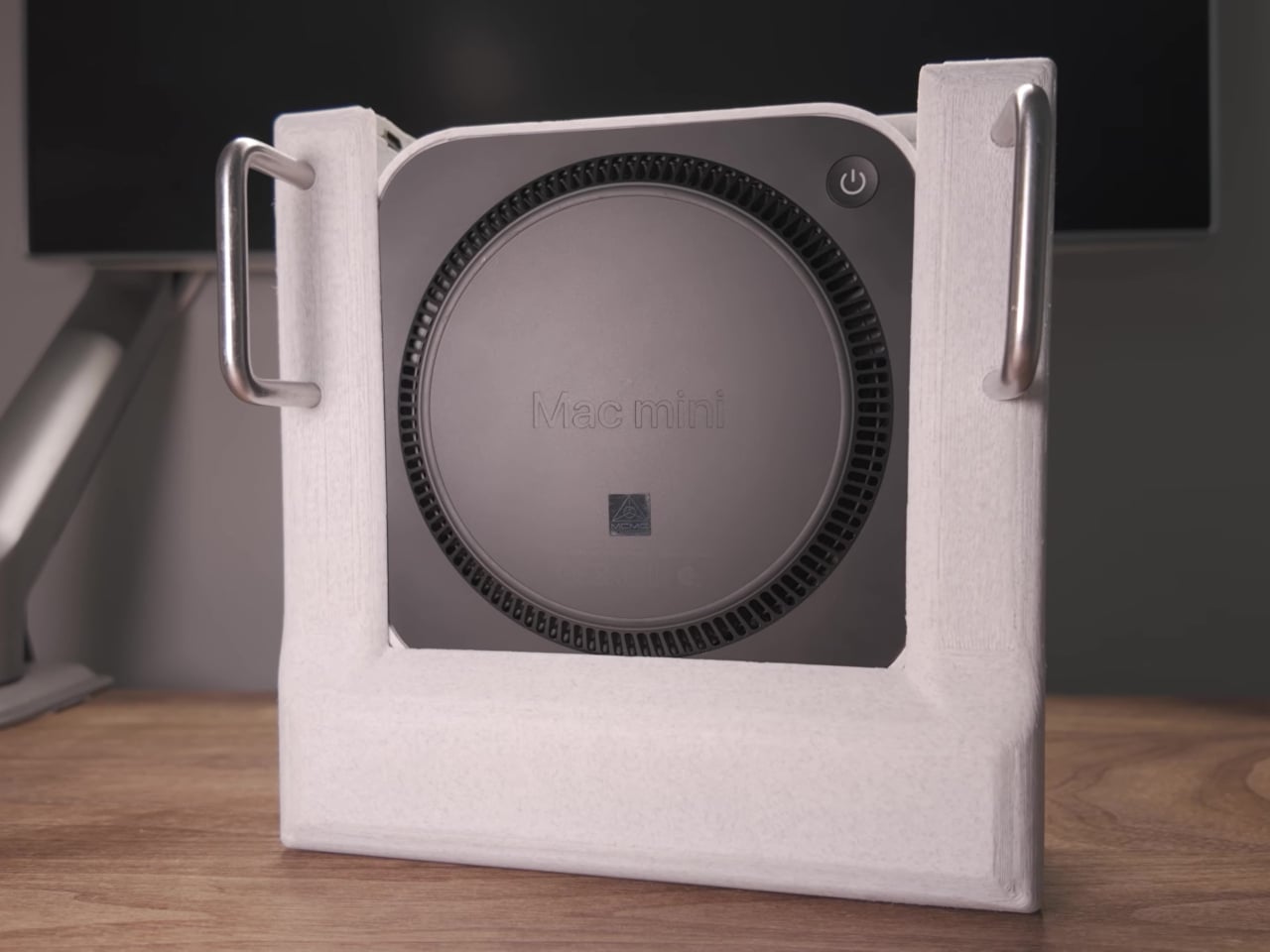
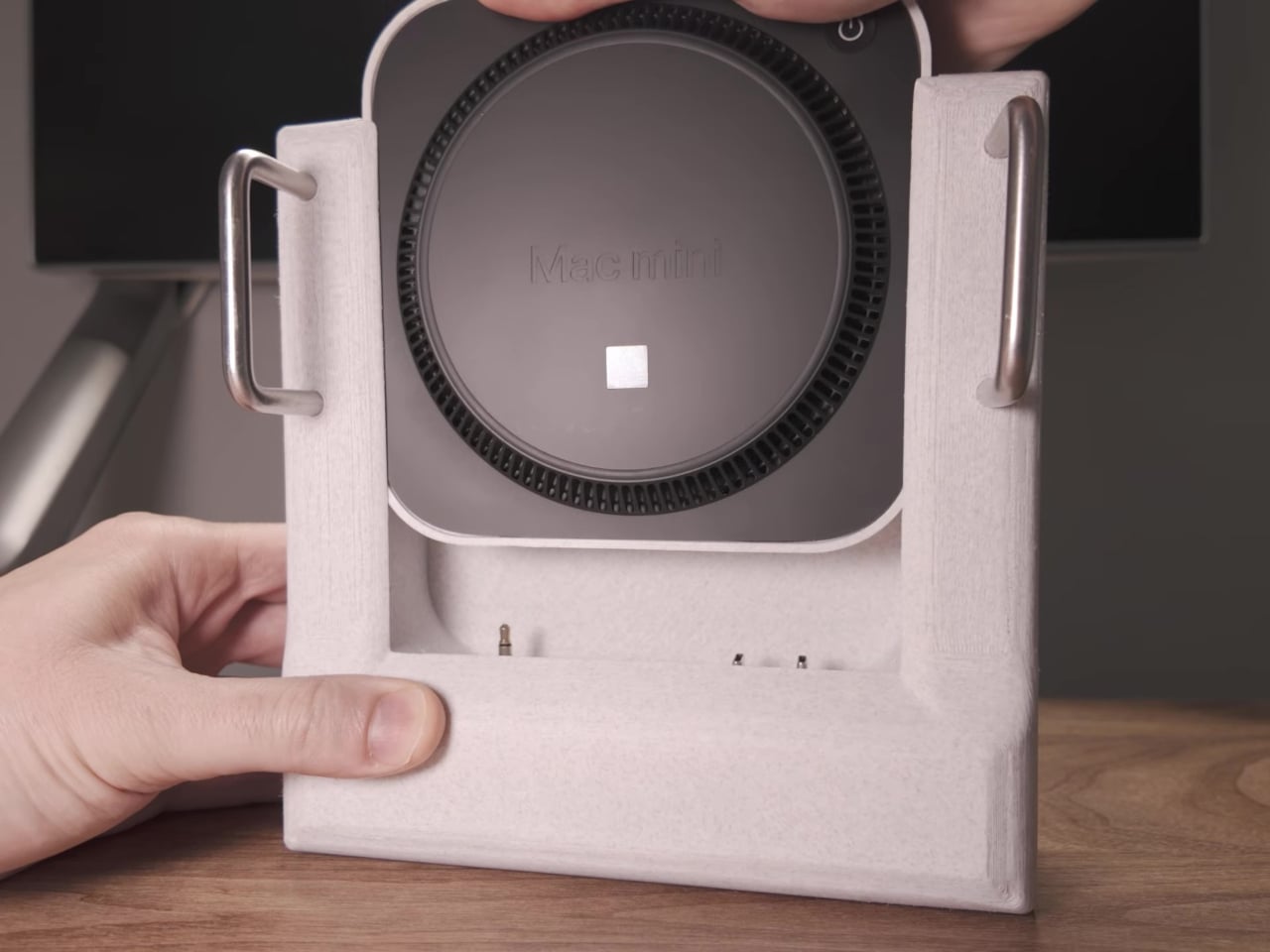
That shell doesn’t bolt permanently into the cyberdeck’s body. It slides in and out on rails instead, resembling something closer to a Game Boy cartridge than a soldered motherboard. Pull it free, and the rest of the handheld, its screen, its keyboard, its controllers, stays behind as a shell ready for whatever core gets slotted in next, whether that’s a repair, an upgrade, or an entirely different chip generation down the line.
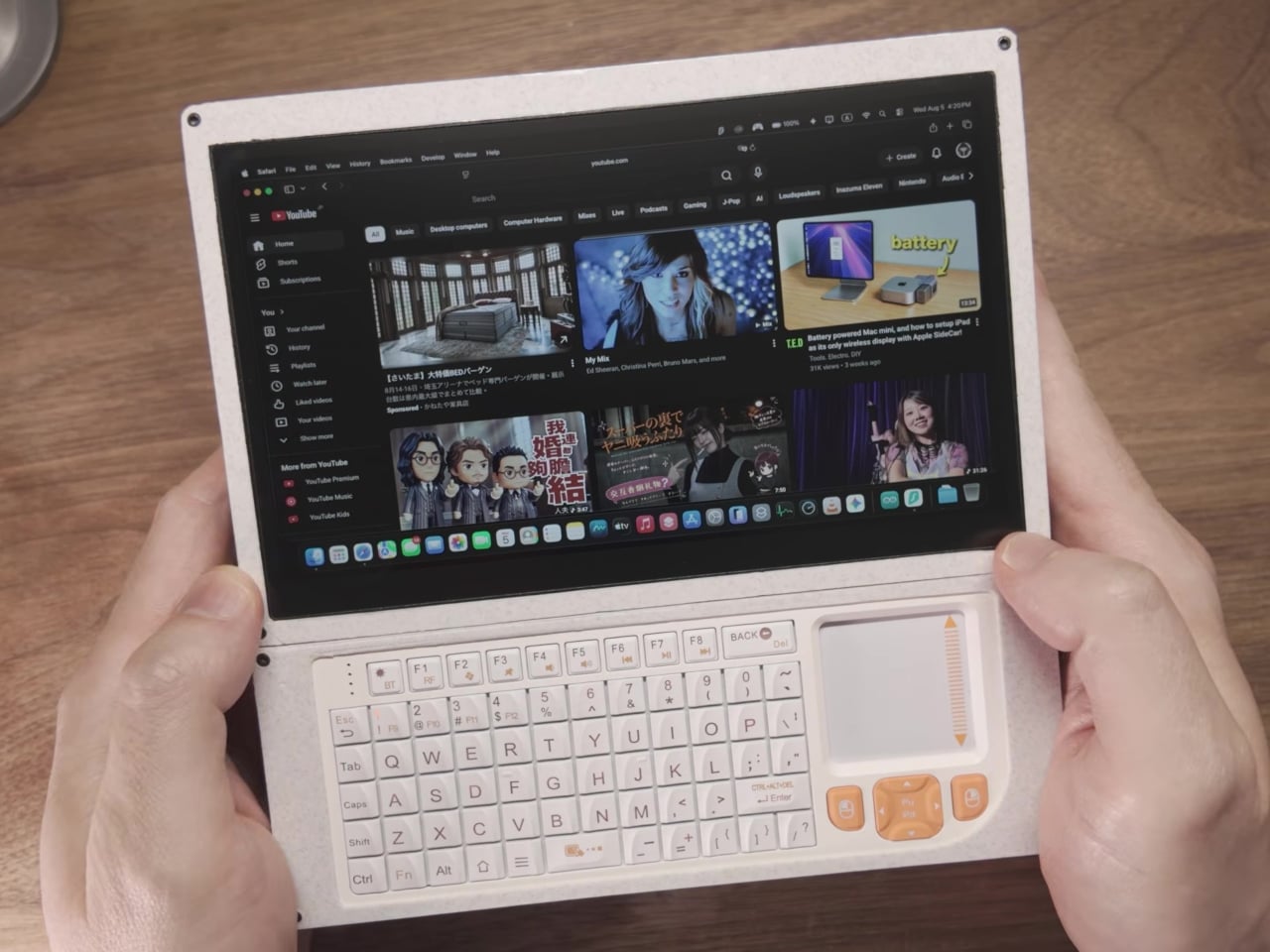
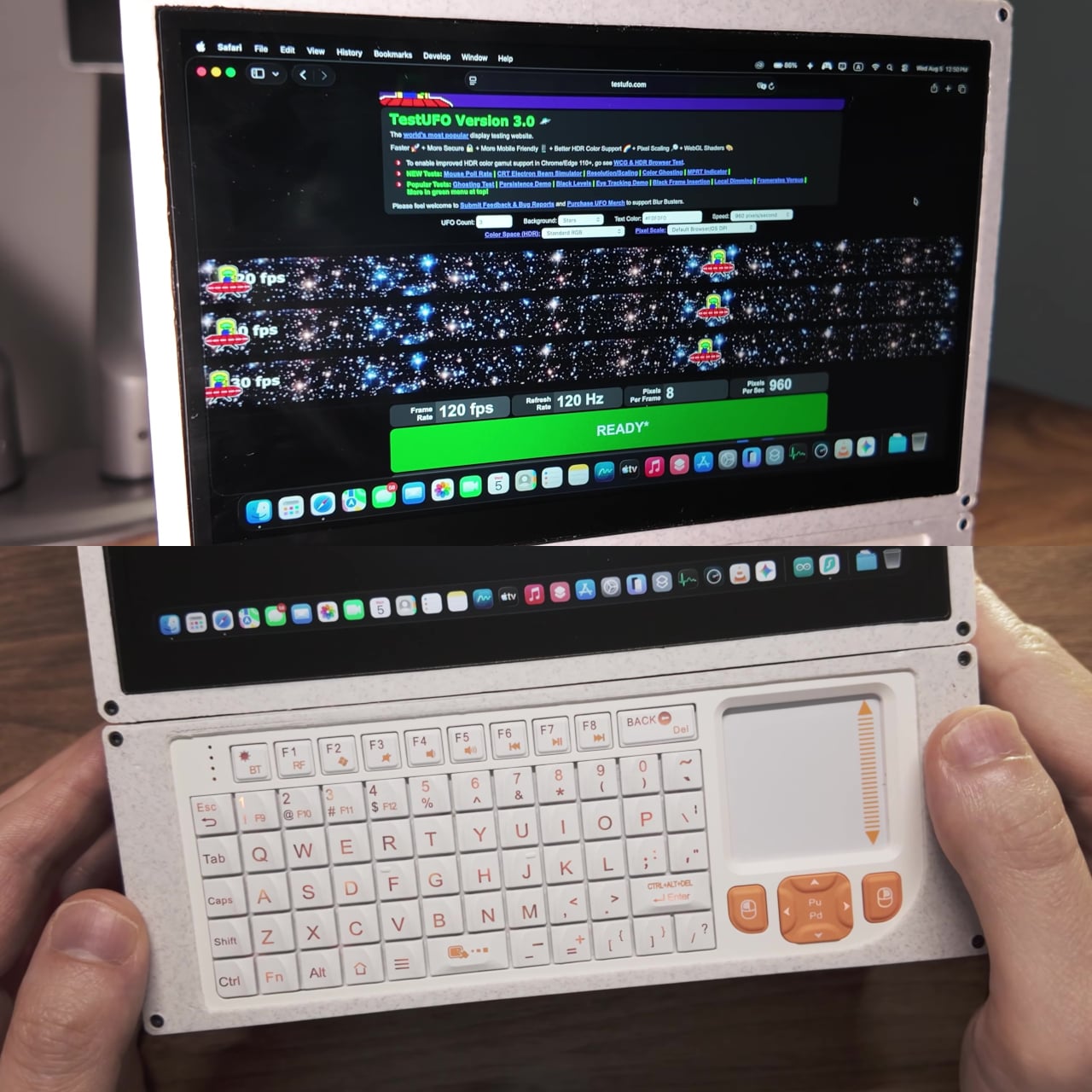
Up front sits a 7-inch touchscreen running at 120Hz, paired with a shrunken QWERTY keyboard that includes its own built-in touchpad. That keyboard began as a wireless accessory, but its battery got pulled and rewired to draw power straight from USB instead, trimming both weight and one more thing that could run out of charge mid-session.
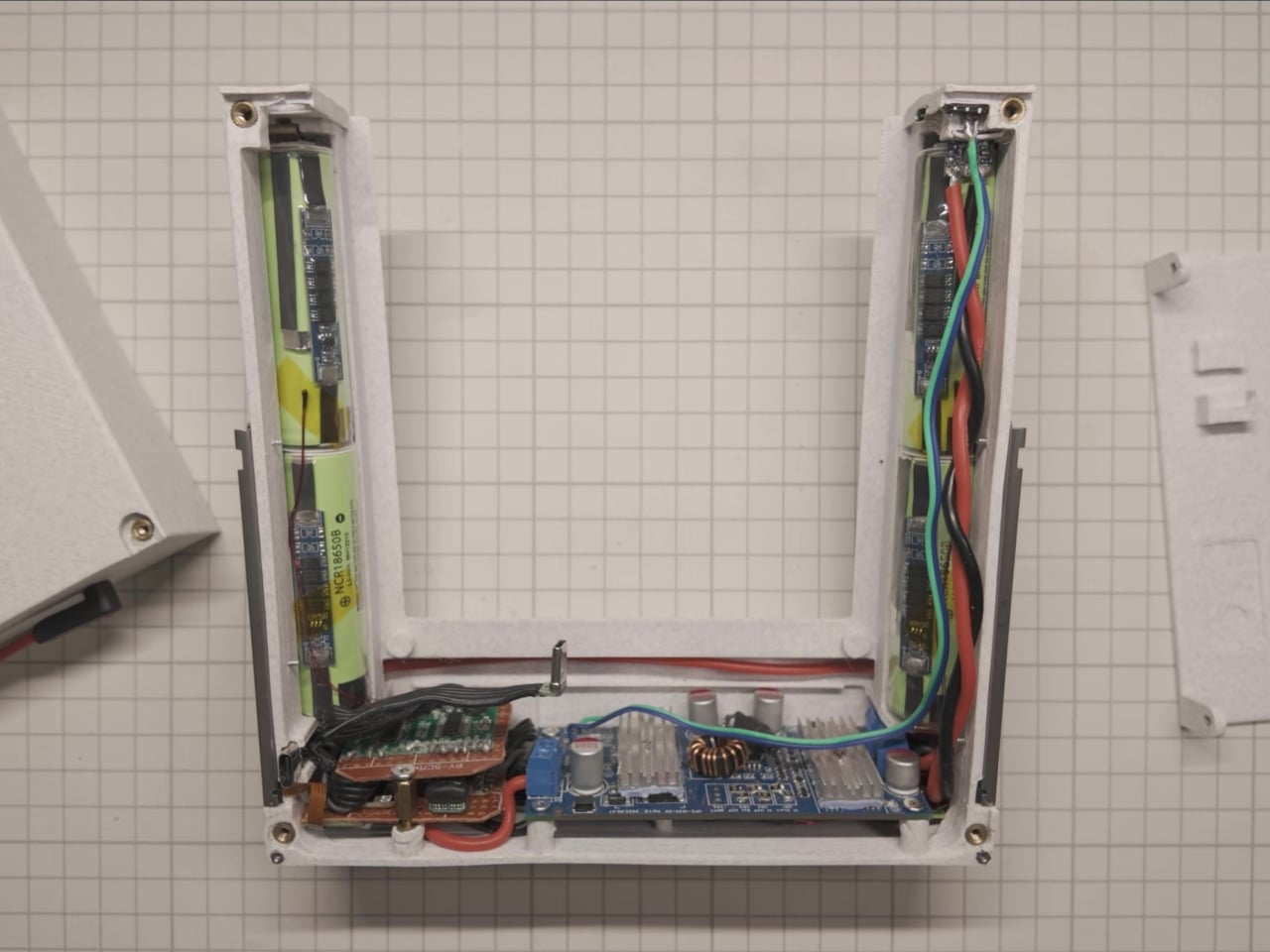
Gaming input came from an unexpected donor. Circuit boards pulled from genuine Nintendo Joy-Con charging grips now sit on rails built into both sides of the cyberdeck, wired directly rather than paired over Bluetooth. Since macOS has no native support for wired Joy-Cons, Steam’s controller mapping layer bridges that gap, turning what looks like a stripped-down laptop into something that plays games with console-grade tactile controls in hand.

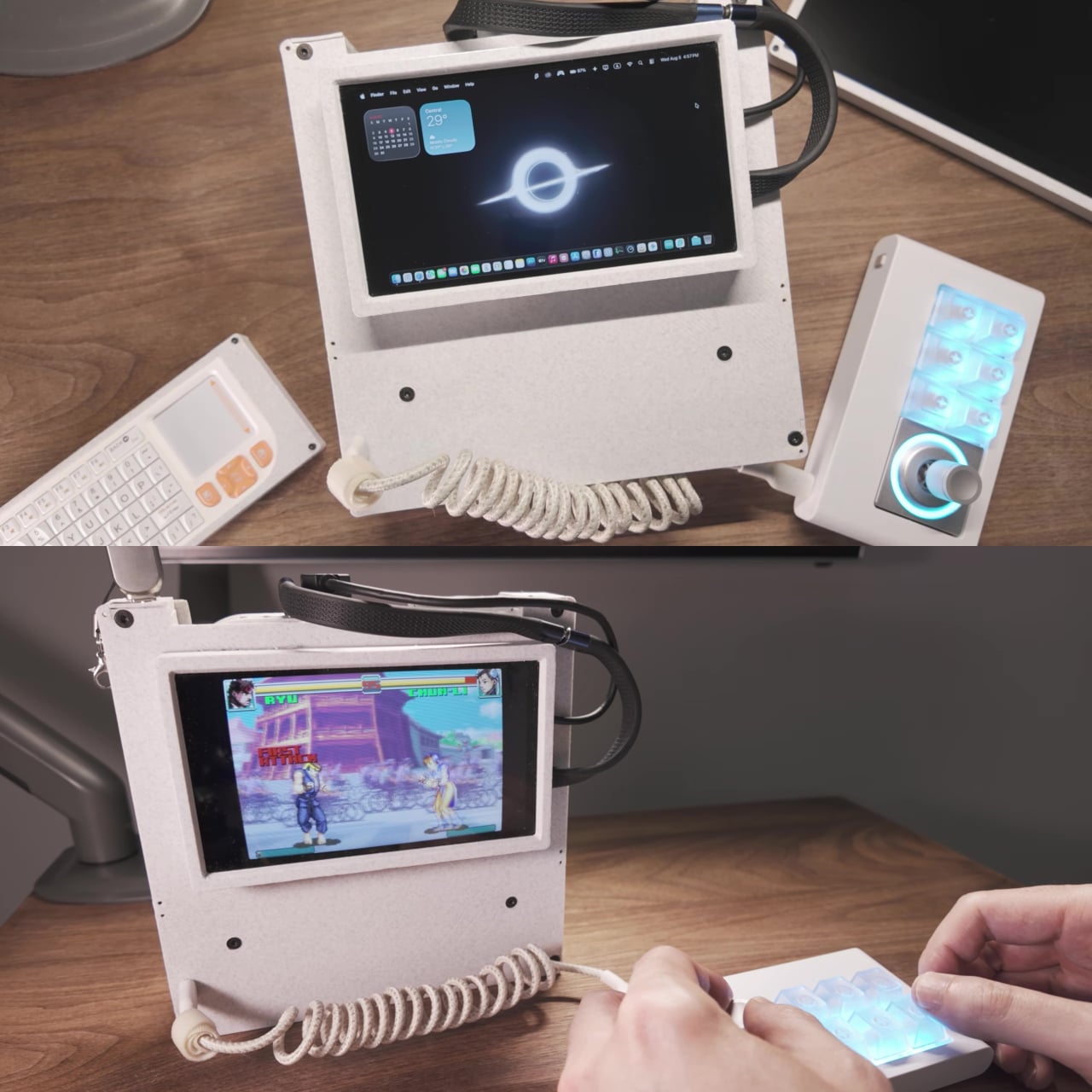
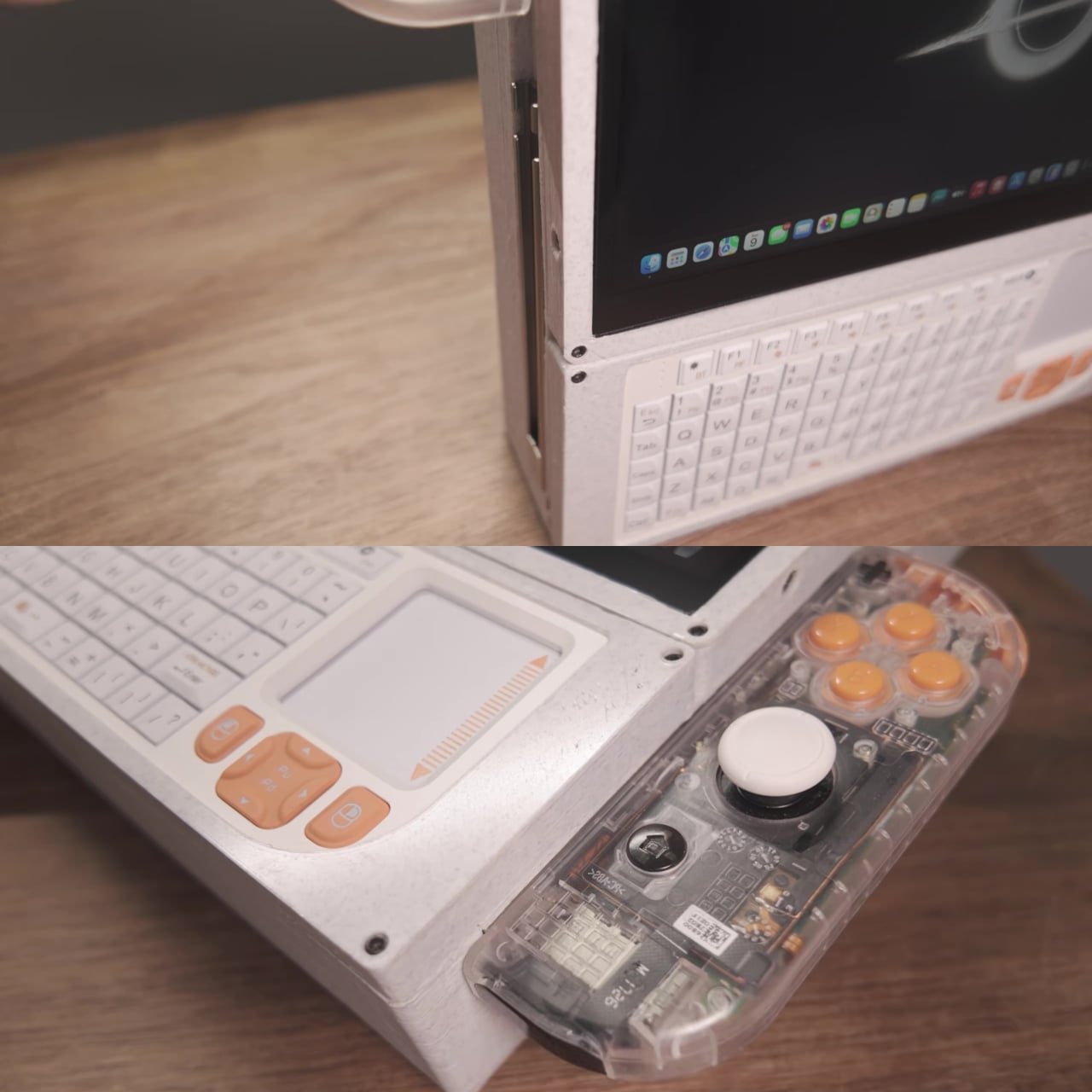
Wiring that many peripherals into one small chassis created its own bottleneck. The fix came from combining two miniature USB splitter boards into a single custom three-port hub, stripped of their bulky original connectors to fit the tight internal layout. A bank of rechargeable cells rounds out the build, feeding a custom power delivery setup that keeps the whole machine running for hours without a cable in sight.
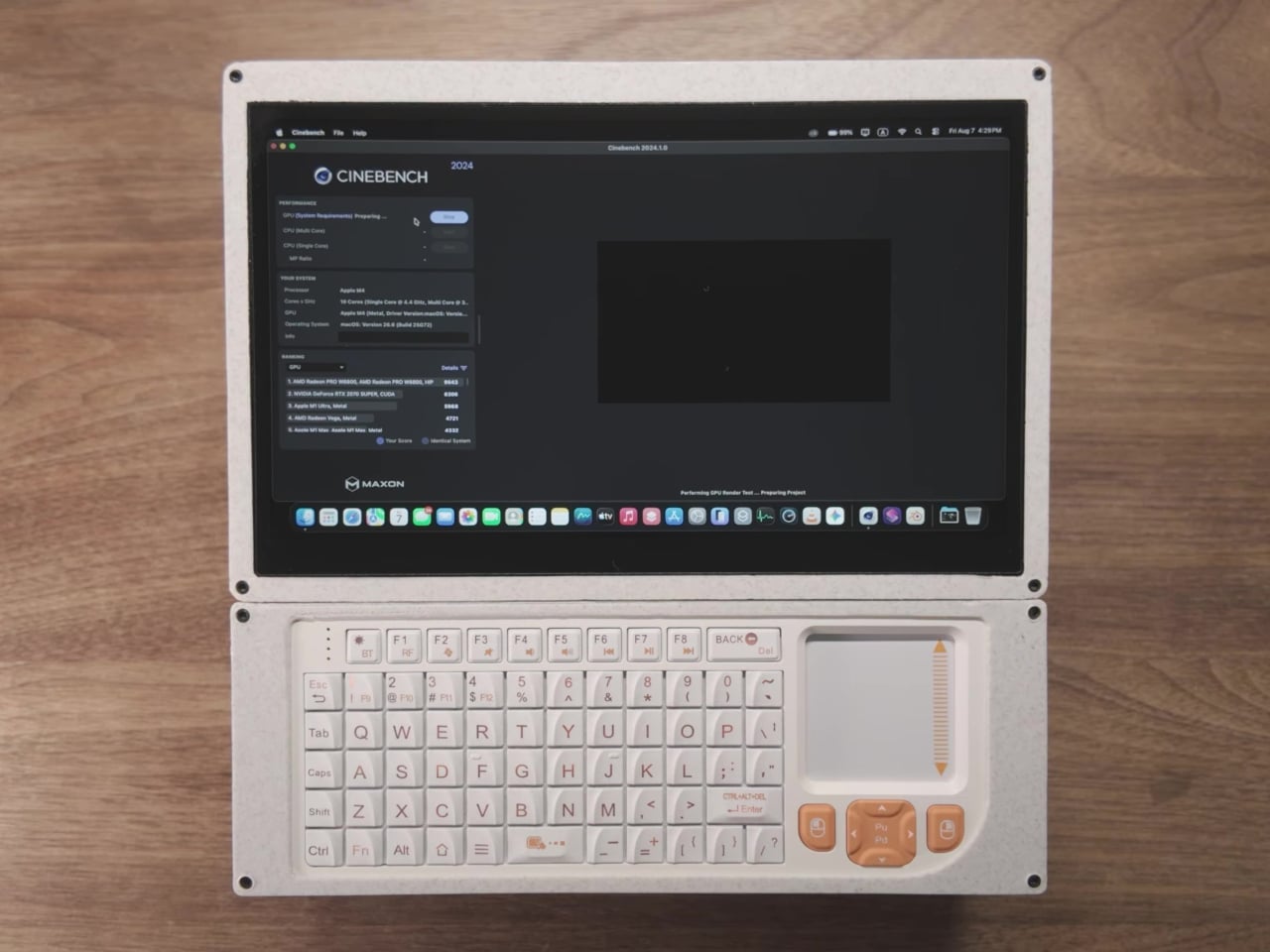
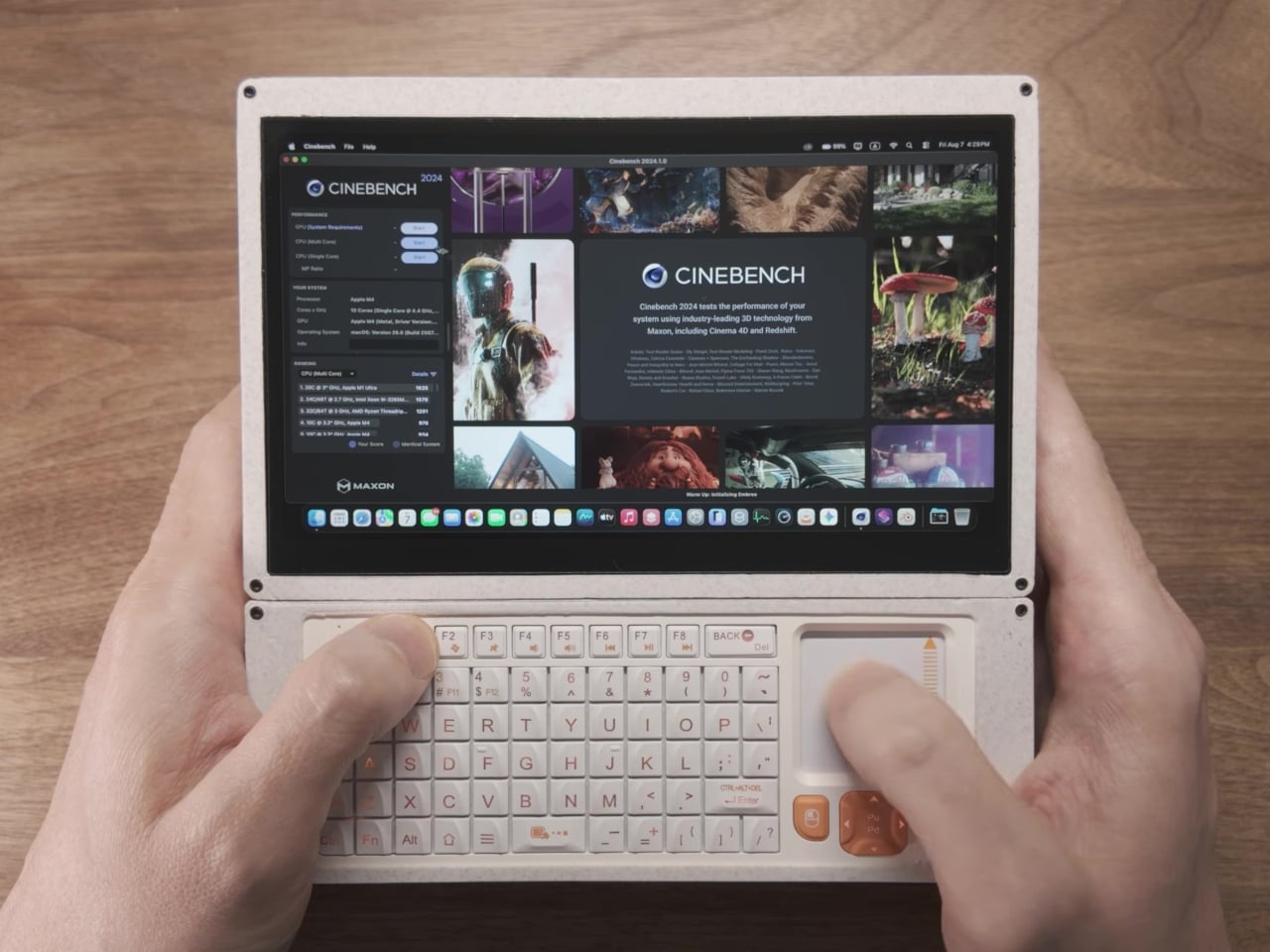
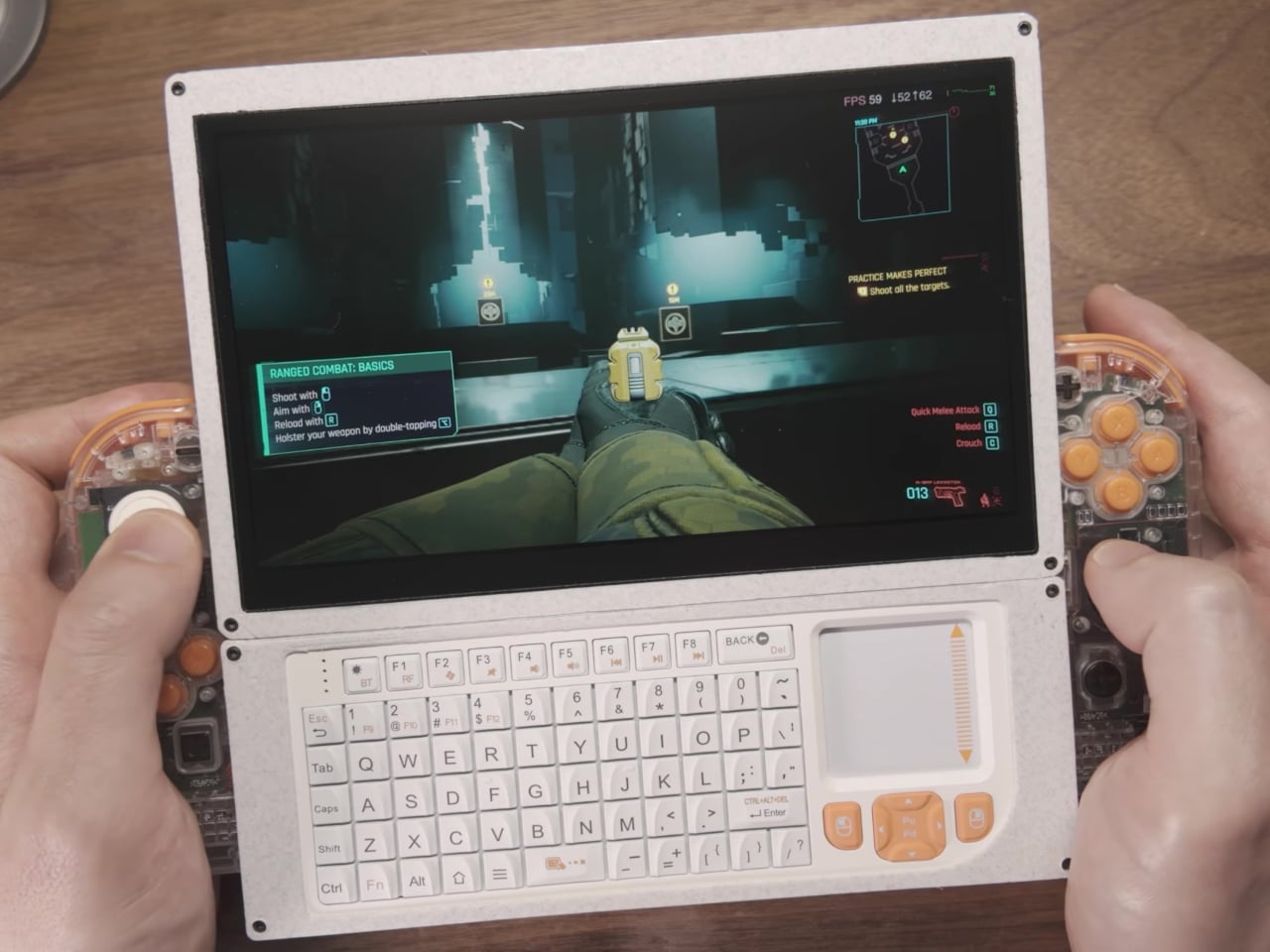
None of these choices were about making the smallest possible Mac Mini. They were about proving a desktop chip could be pulled apart, rehoused, and handed a battery without losing what made it worth owning in the first place. That kind of modular thinking, where the computer becomes a swappable cartridge rather than a sealed box, points toward a version of portable computing that upgrades in pieces instead of getting replaced whole.