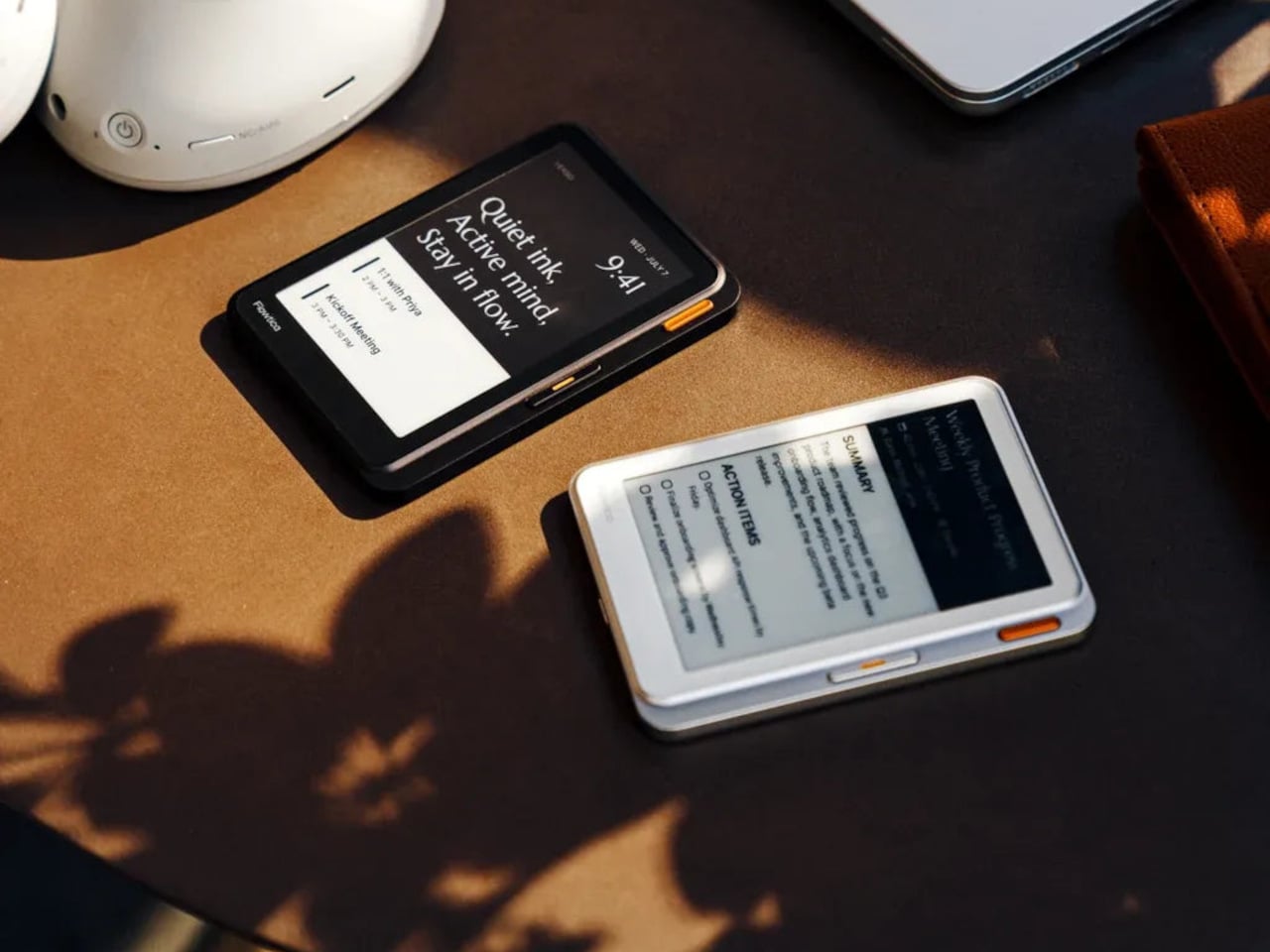
Phone screens have quietly become the default display for everything, including thoughts that never needed an app in the first place. The Flowtica Verso pushes back on that habit by giving your phone a second face, a card-sized panel with its own always-on e-paper screen. Snap it onto the back of a handset, and it starts listening, transcribing, and summarizing conversations without asking you to unlock anything.
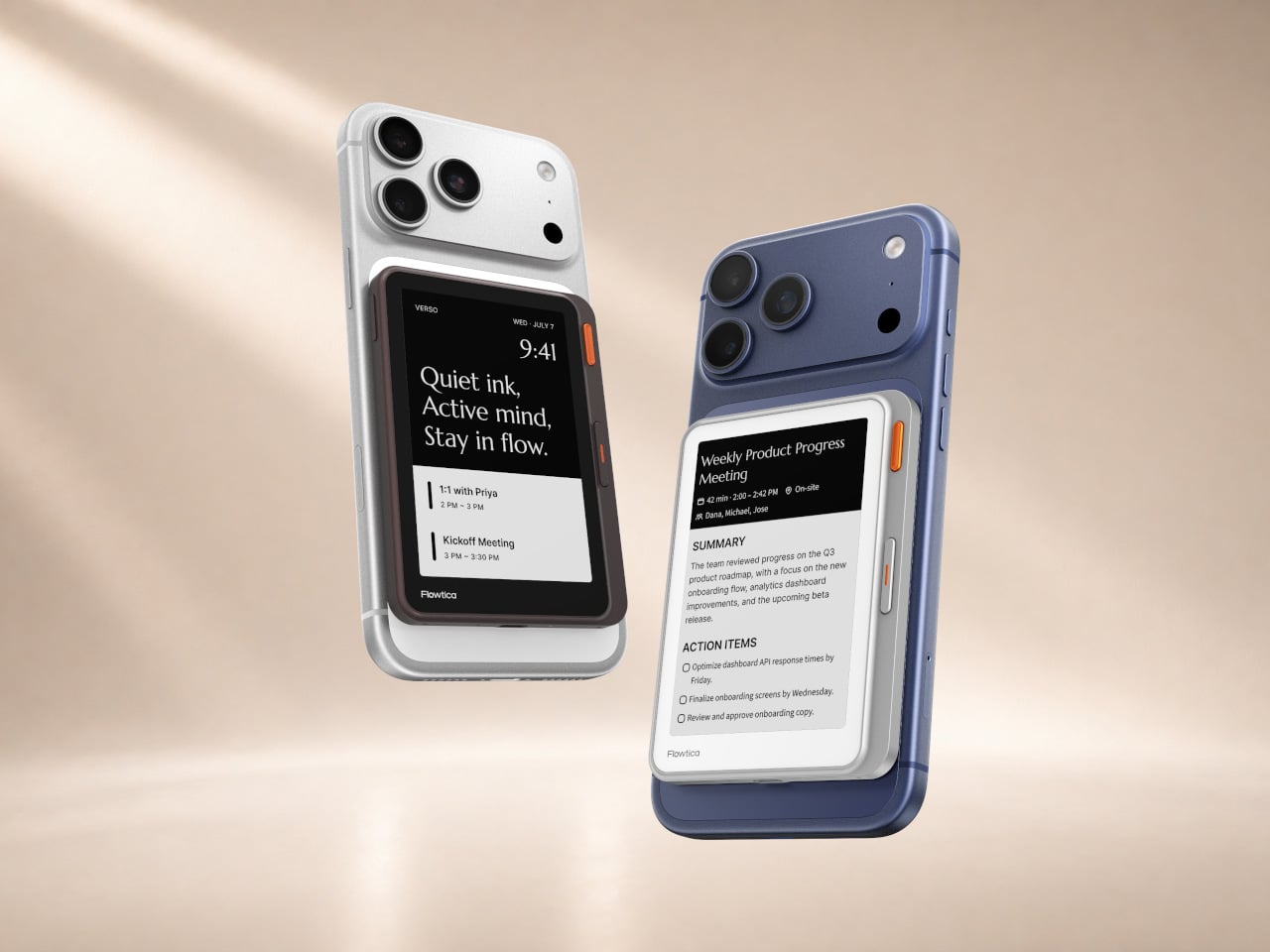
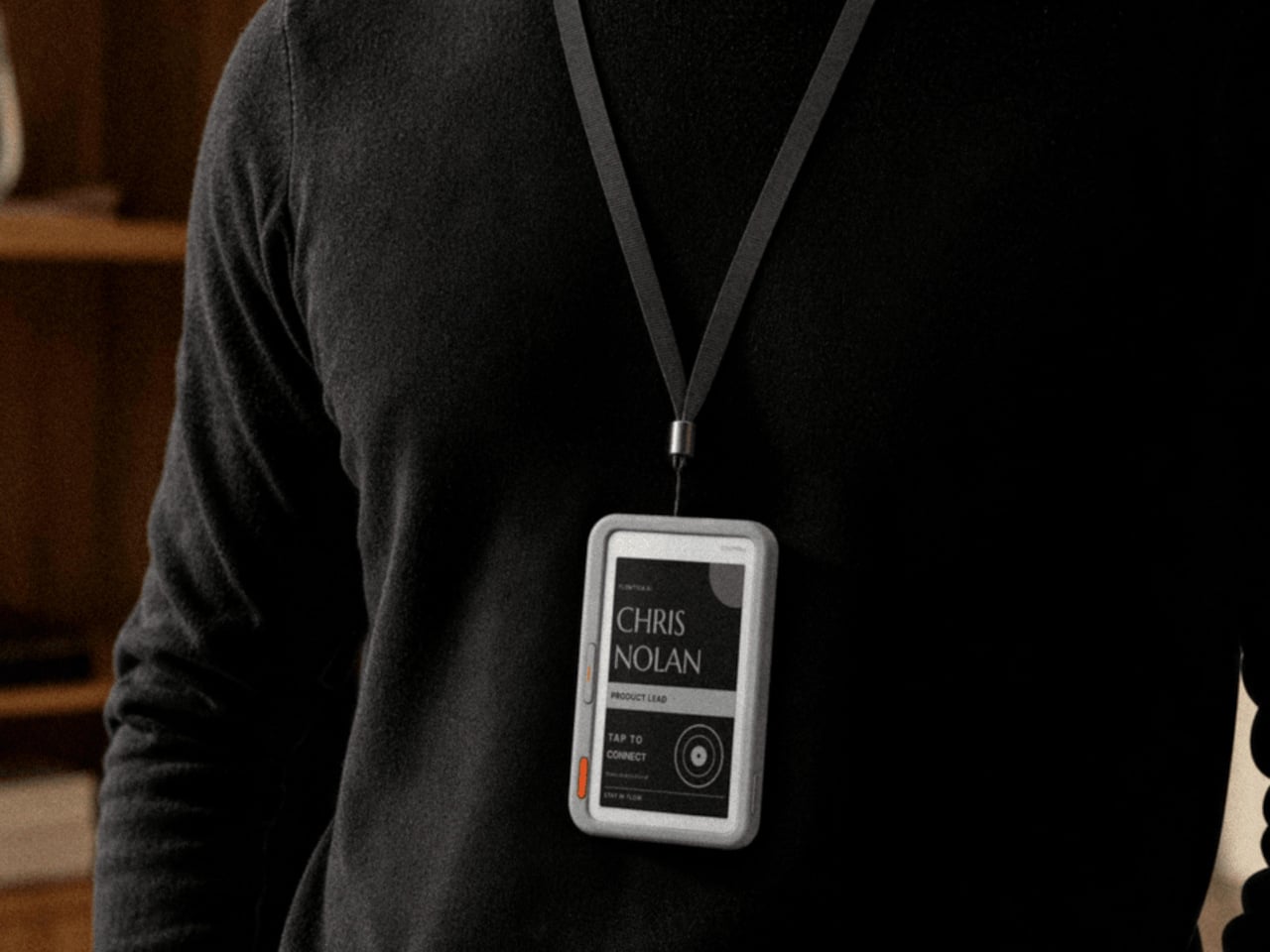
That panel is barely 6.5 millimeters thick, thinner than most phone cases, yet it holds a full touchscreen, a five-microphone array, and enough battery to run for up to 72 hours between charges. Magnets let it click onto a MagSafe-compatible phone, but that’s only one option. Hang it from a lanyard during a conference, or prop it on a desk stand next to a laptop instead.
Designer: Flowtica

When a Meeting Runs Long
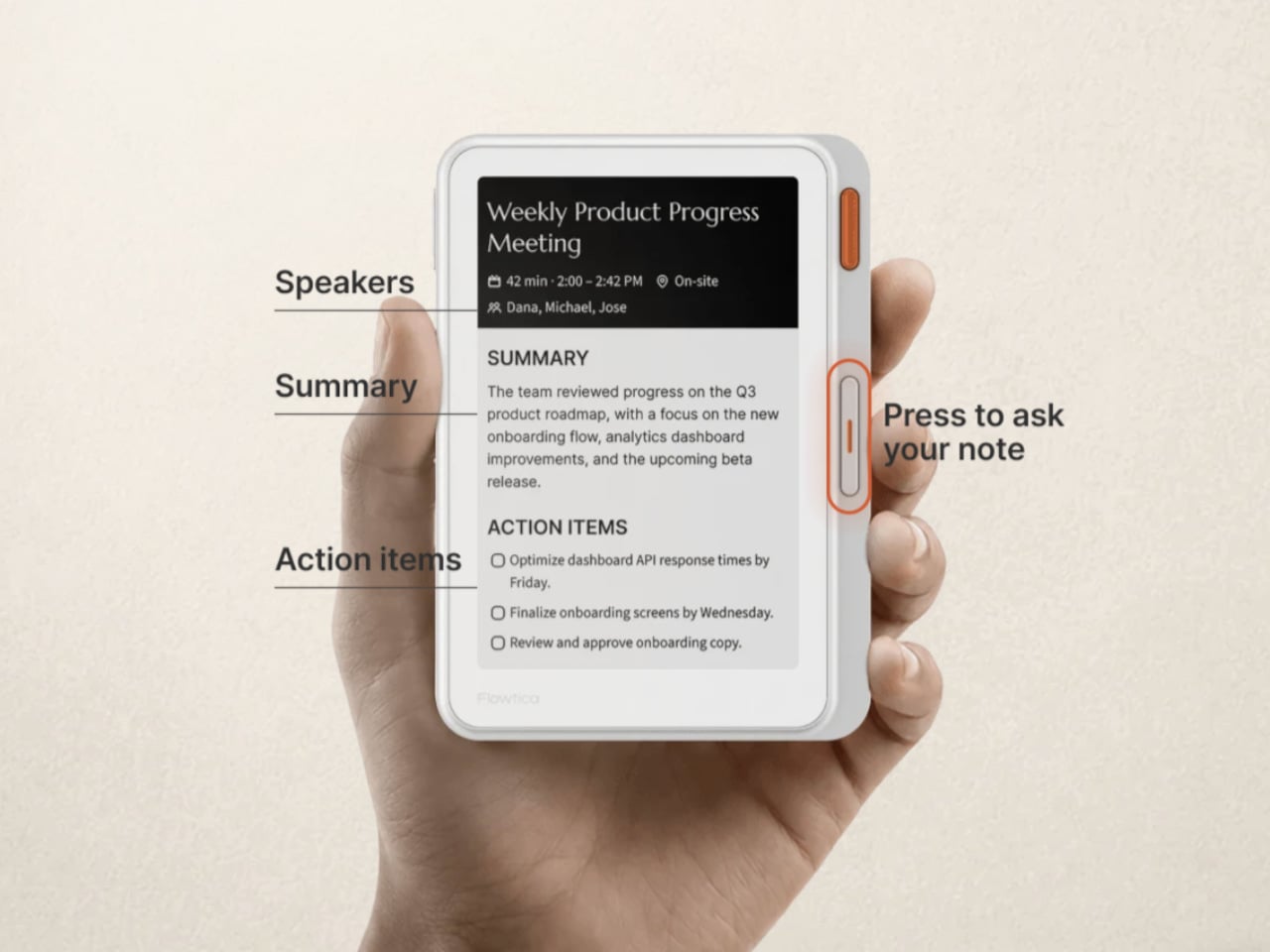
Picture a meeting that runs long and scattered, the kind where important details slip past because everyone’s phone is face down on the table. With the Verso clipped to a case, none of that gets lost. It records the discussion, then turns the audio into a clean summary with action items sitting right there on its screen, ready before anyone reaches for a notebook or a second device.

A second button turns the same panel into something closer to a conversation partner. Hold it down, ask a quick question about what just got discussed, and the answer appears on the e-paper face within seconds, no app switching required. That small design choice matters more than it sounds, because it keeps a person’s attention on the room instead of a glowing rectangle in their palm.
A Screen That Keeps Working After the Meeting Ends
Beyond a single meeting, the same panel doubles as a running dashboard for the day. It surfaces calendars, pending to-do items, and summaries pulled from earlier recordings, so checking on today’s schedule stops requiring a phone unlock at all. The device is priced at $299, positioning it closer to a dedicated tool than a phone accessory picked up on a whim.
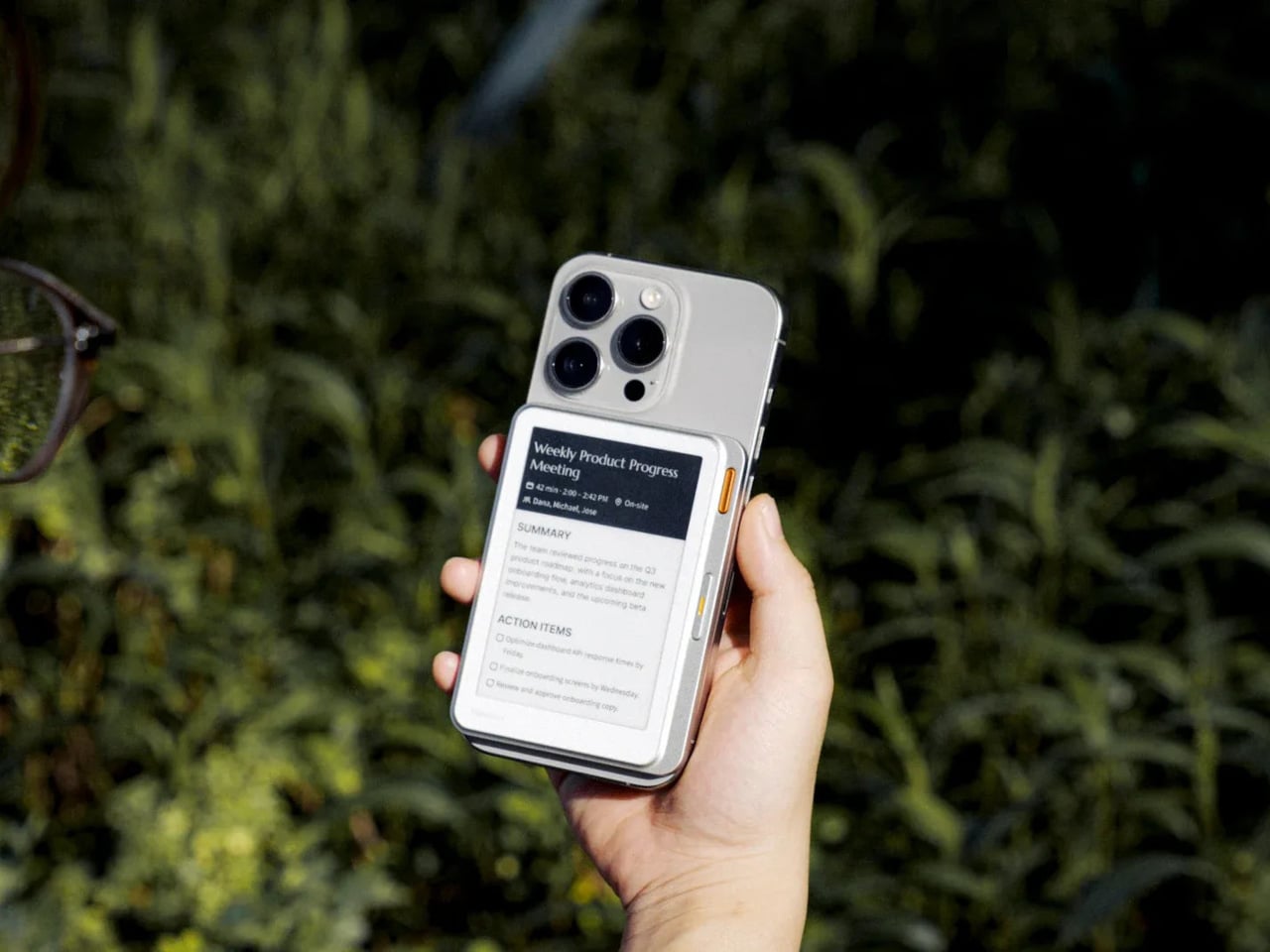
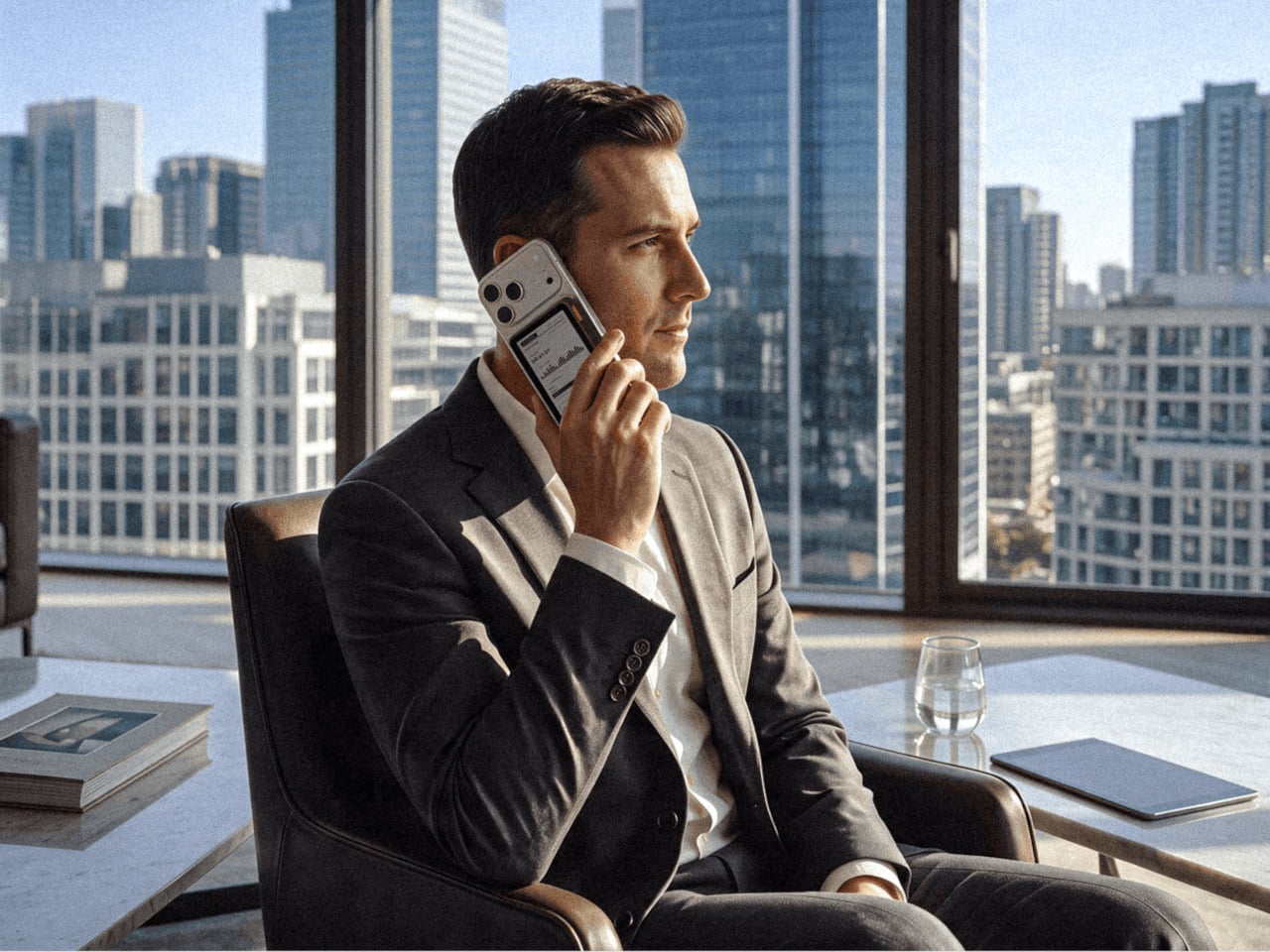
E-paper is the quiet advantage running through the whole design. Unlike an OLED display that drains a battery just by staying lit, the Verso’s screen holds its last update with almost no power draw, which is how it stretches to 72 hours of use. Text also stays legible outdoors under direct sun, somewhere most phone screens start to wash out and become unreadable within minutes.
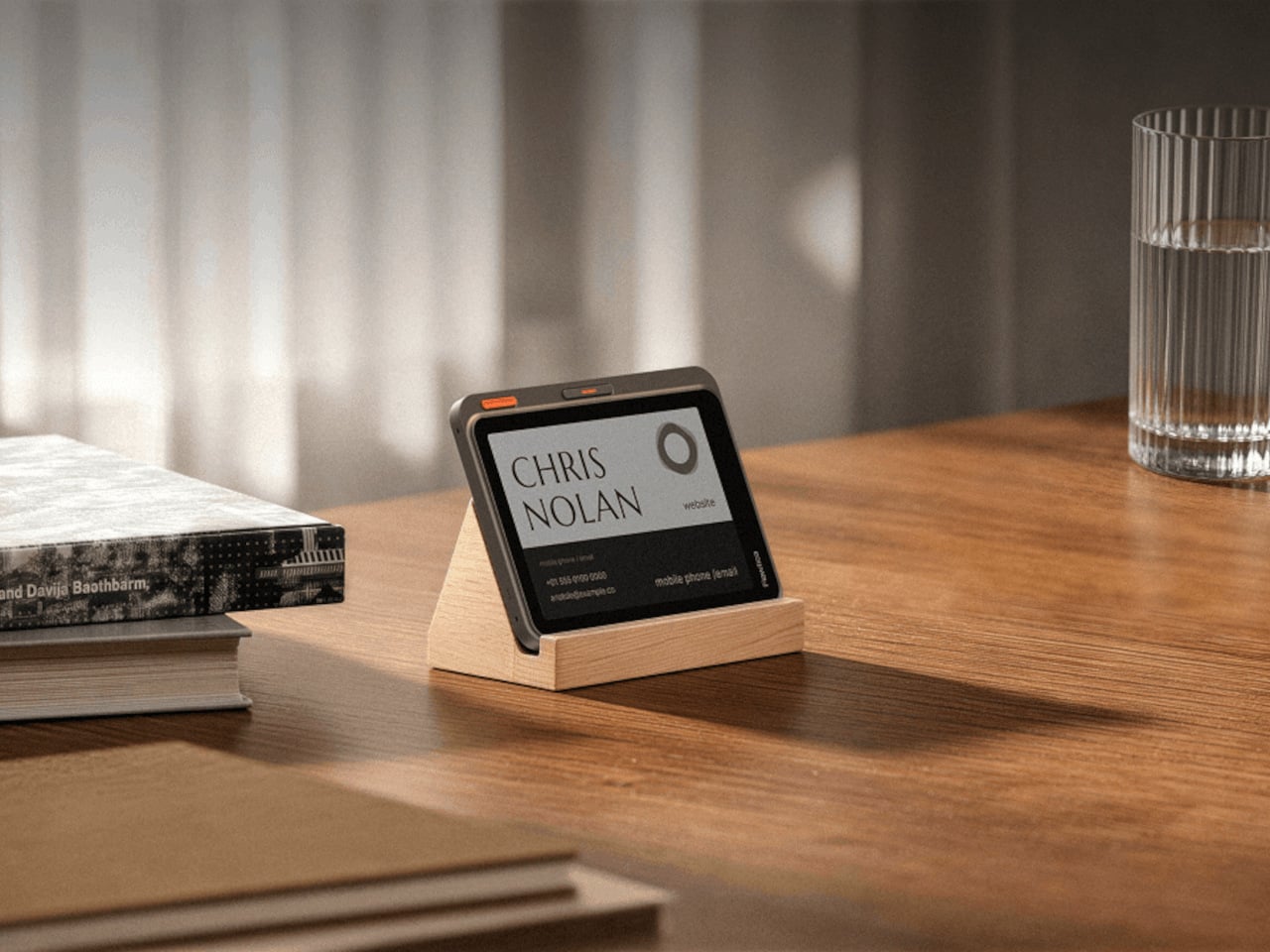
Shared Real Estate, Different Jobs
The back of a phone has quietly become contested real estate. Xteink’s X4 Classic strips a magnetic add-on down to page-turn buttons and nothing else at $79, while its X4 Pro version adds a front light for $99, and BOOX’s Picco shrinks a touchscreen reader to pocket size for around $100. Each one chases distraction-free reading. Verso claims the same magnetic footprint but points it at conversations instead of pages.
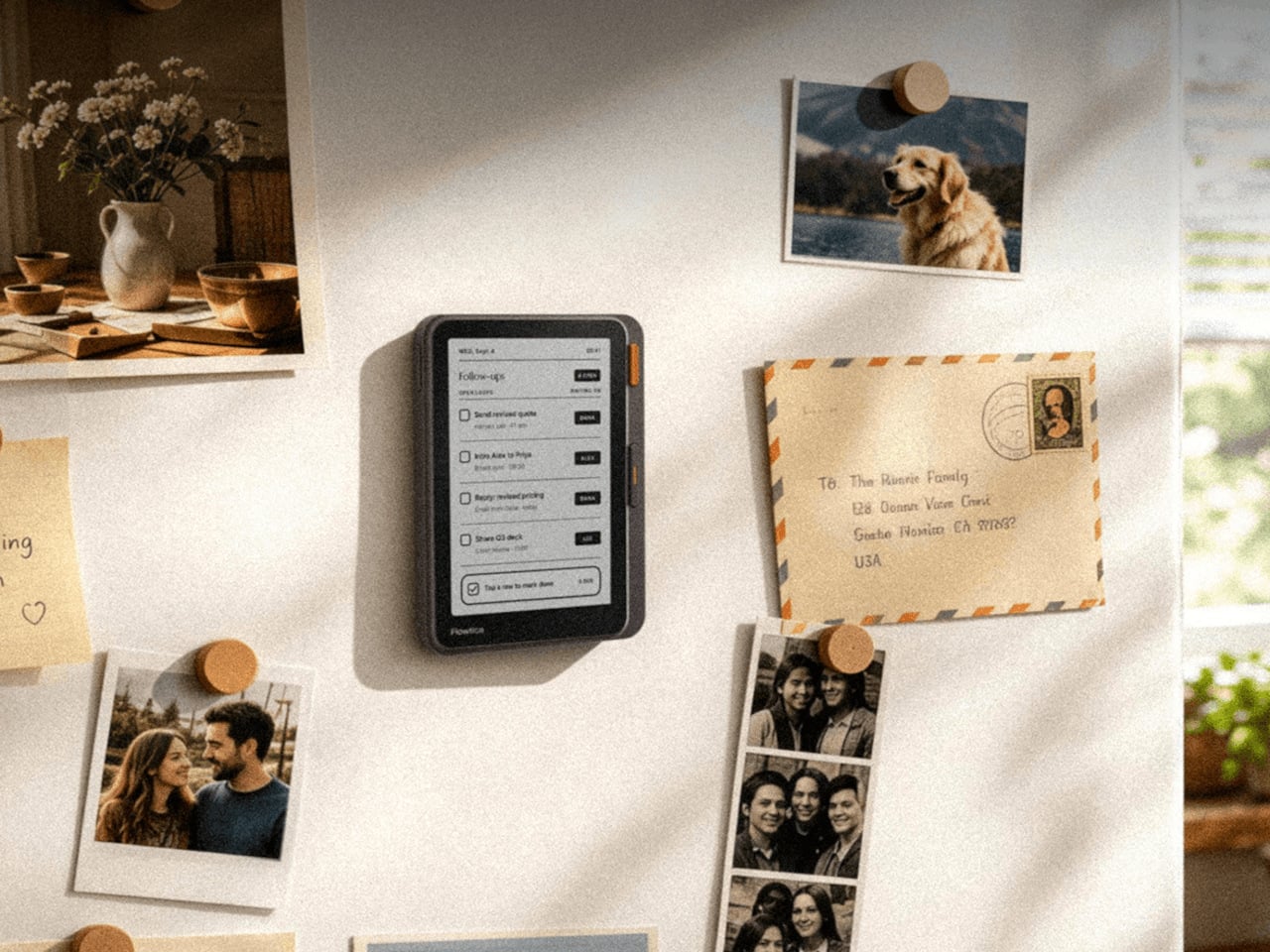

That distinction matters because a magnetic back panel is easy to copy, but the job it performs is not. Reading gadgets ask for stillness and a single task done well. Verso asks for the opposite, staying alert through scattered conversations and handing back organized thoughts before the moment passes. Both approaches treat a phone’s blank back as valuable space, just aimed at very different kinds of attention.