
There’s a moment when a technology stops being a proof of concept and starts being someone’s home. That moment arrived in Holstebro, Denmark, with the completion of Skovsporet — 36 student apartments built almost entirely by a robotic printer, making it one of the largest 3D-printed housing projects in the world.
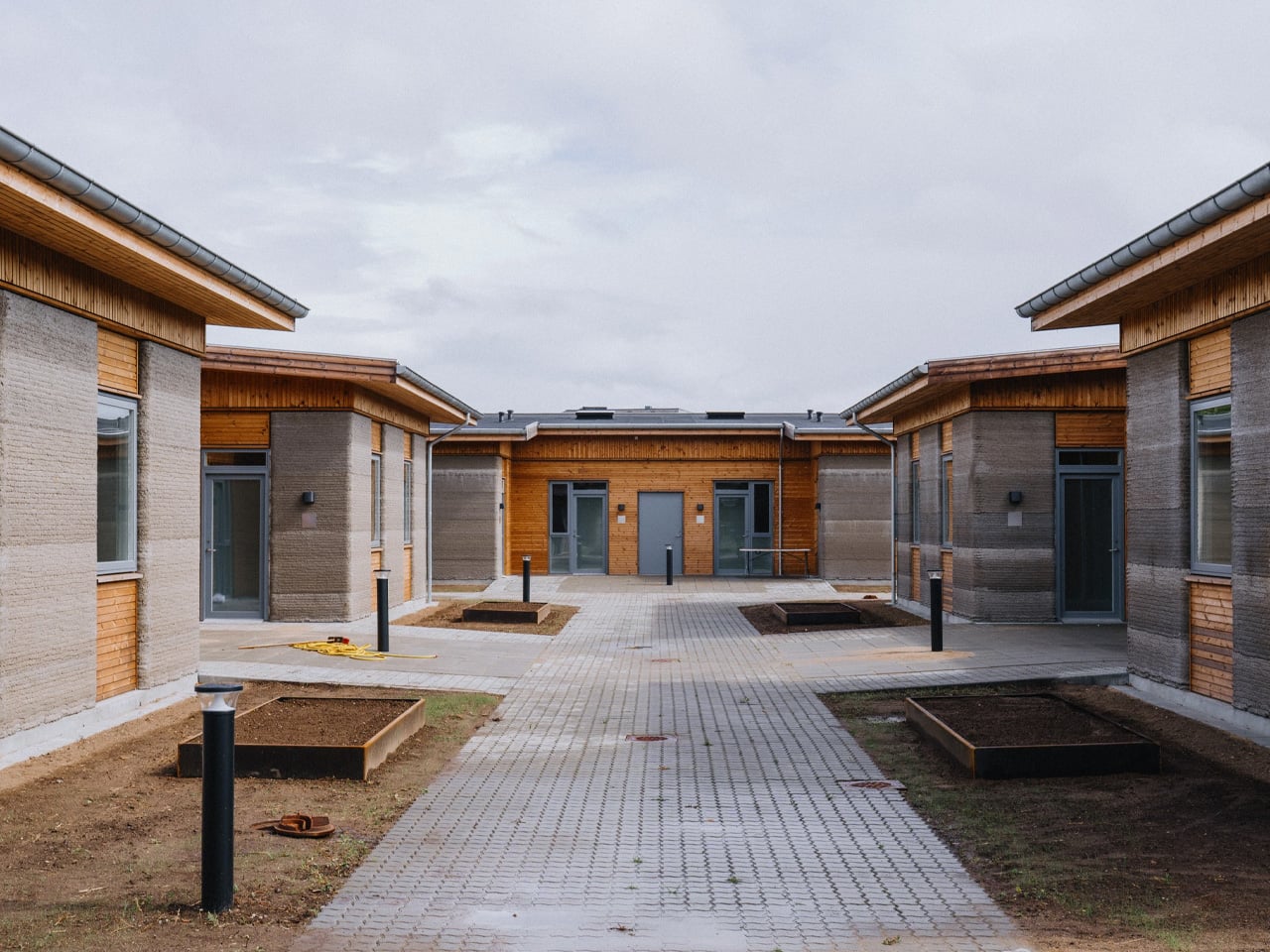
The project was commissioned by NordVestBO and delivered by 3DCP Group, with architecture from SAGA Space Architects and MS+. It sits close to VIA University College, which makes the location feel intentional rather than incidental — a student village that grew from the ground up, literally. The name Skovsporet translates loosely to “forest track,” and the design leans into that softness. Six low-rise clusters, each holding six apartments, wrap around shared courtyards and landscaped gardens. Walking paths and bicycle parking thread through the site, creating the kind of everyday rhythm that makes a place feel lived-in rather than installed.
Designer: 3DCP Group, SAGA Space Architects & MS+

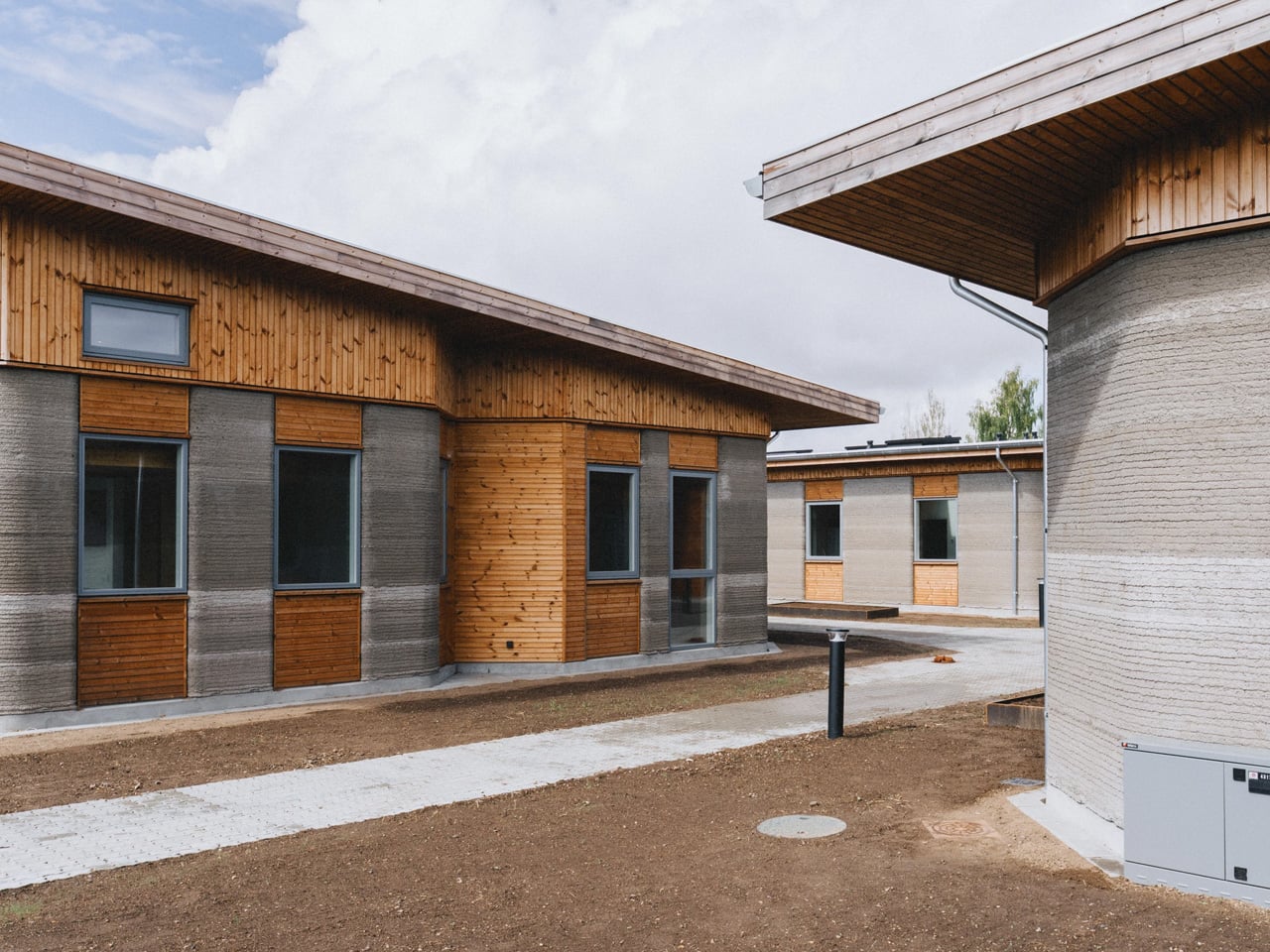
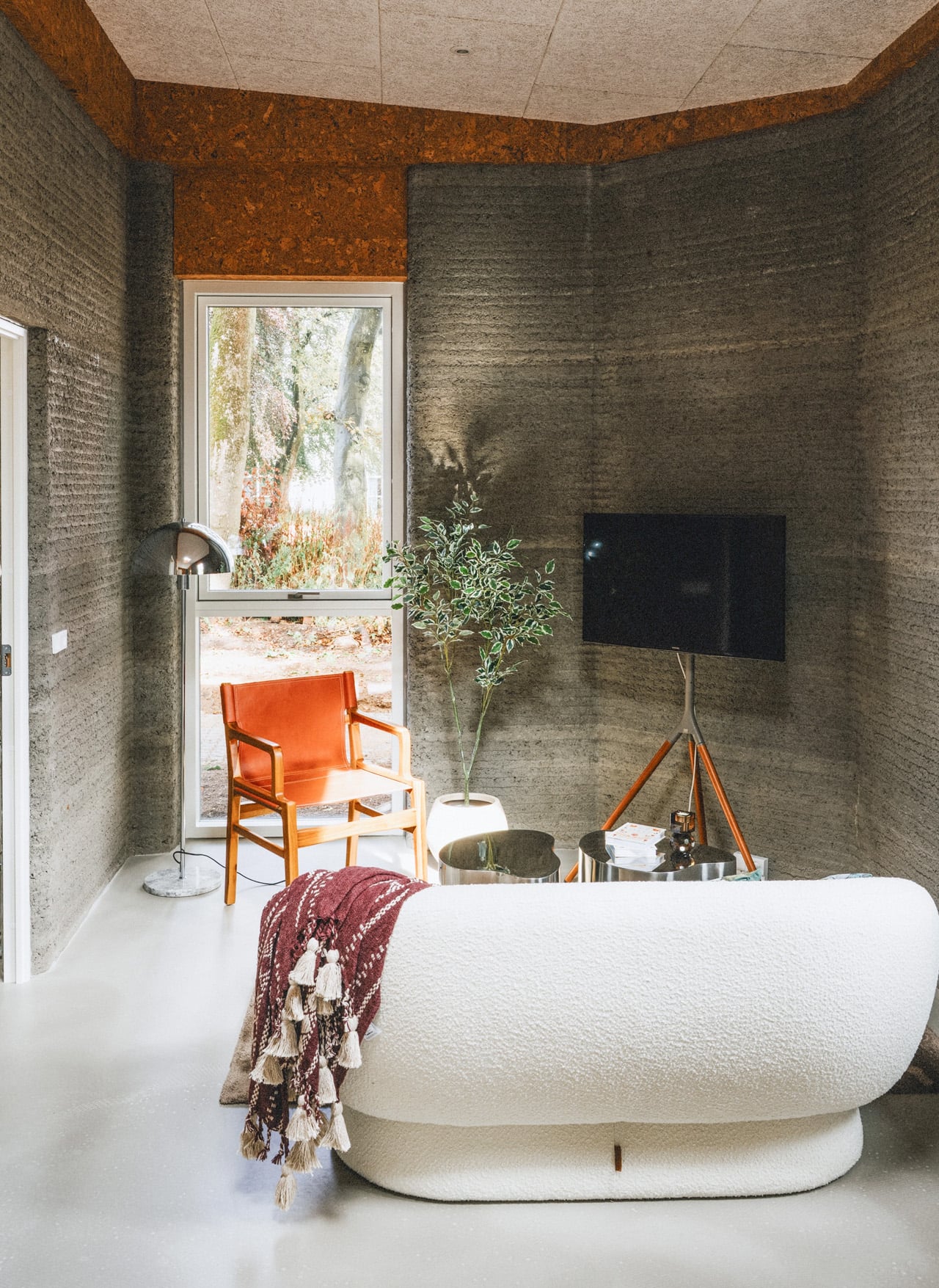
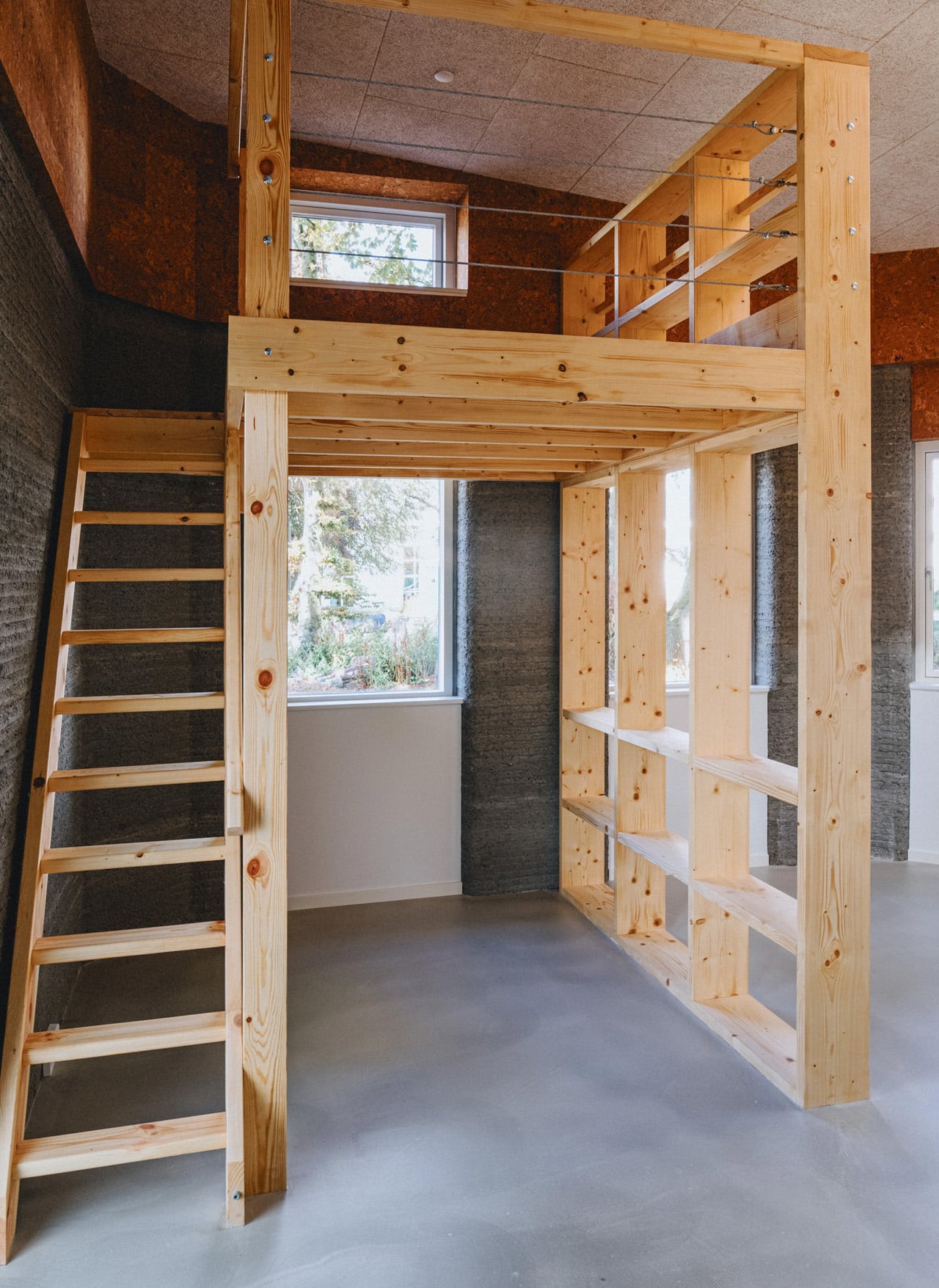
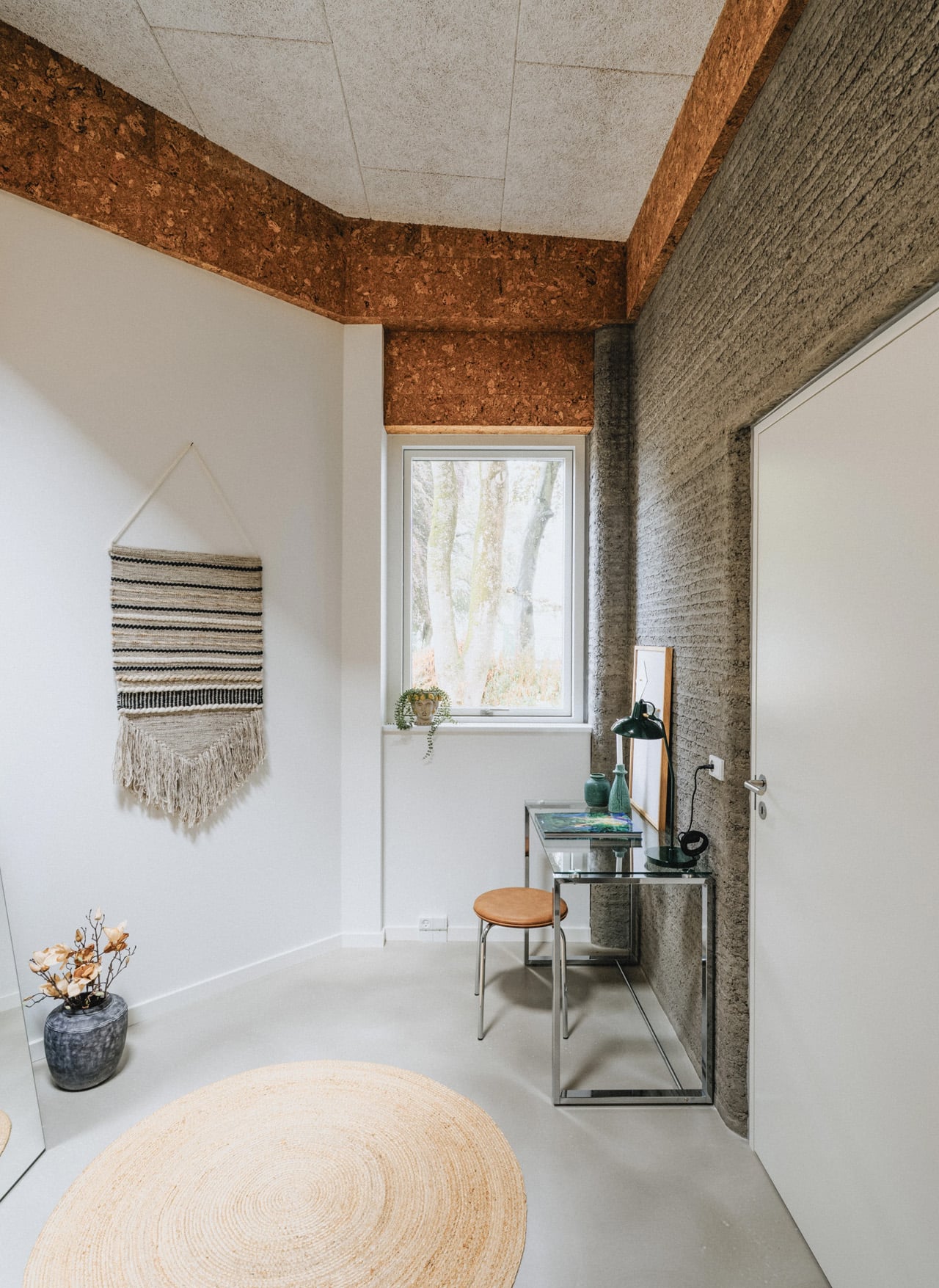
At 1,650 square meters across 36 units ranging from 39 to 50 square meters, the scale is modest by development standards. But that restraint is the point. Each apartment is self-contained — full kitchen, study area, sofa lounge, bathroom with shower, and a proper double bed. It’s everything a student actually needs, without excess. The architecture doesn’t perform ambition; it delivers it quietly.
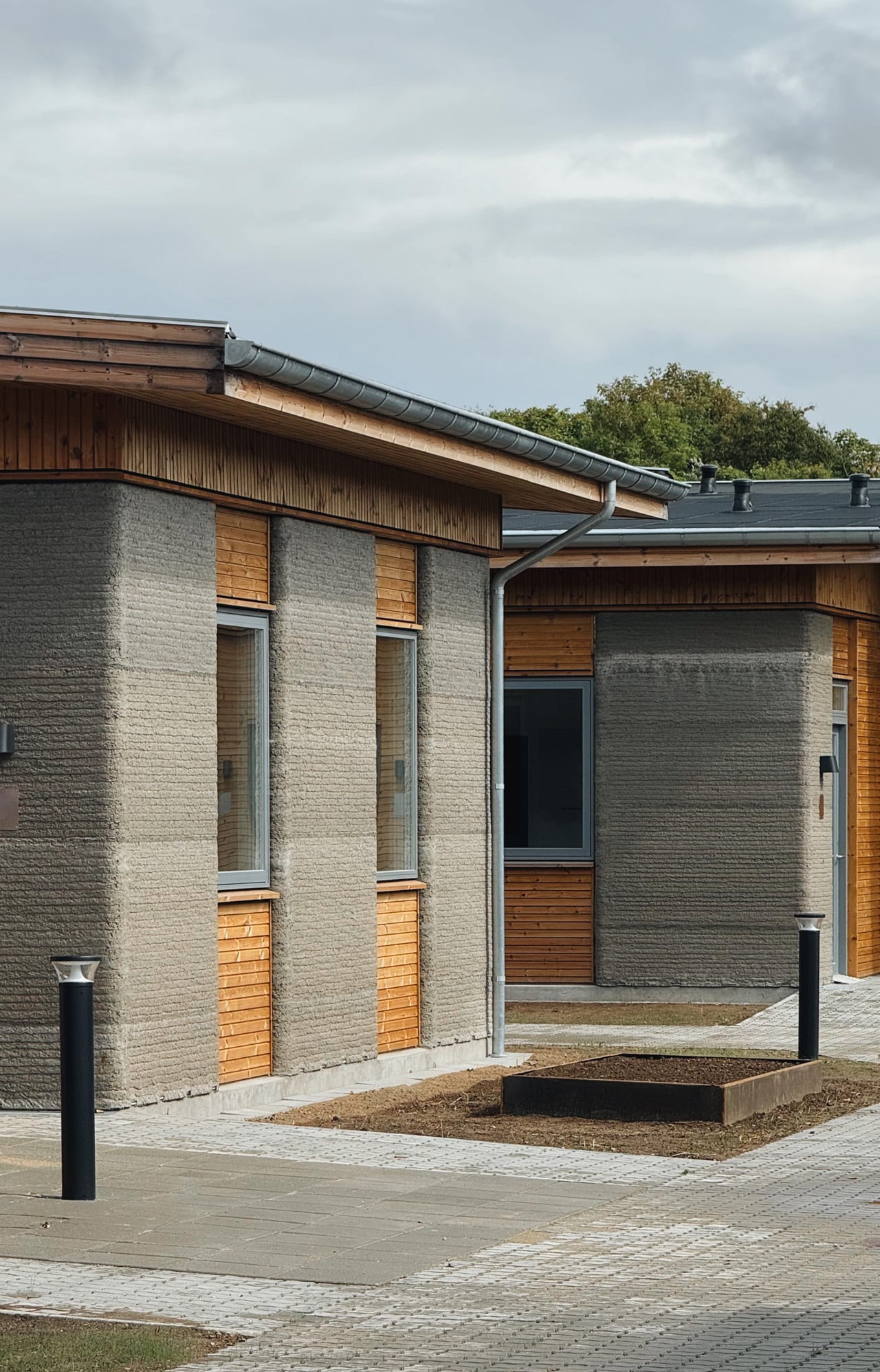
The structural walls were printed on-site using a COBOD BOD3 printer operated by a three-person team, achieving millimeter-level accuracy across the entire build. The concrete mix, D.fab, contains FUTURECEM — a lower-carbon cement developed by Aalborg Portland — reducing the environmental footprint without compromising structural integrity. The bicycle shed pushed things further, using 3D-printed elements containing zero cement, achieving an 84% reduction in CO₂ emissions compared to traditional concrete. That’s not a marketing footnote. That’s a material shift.
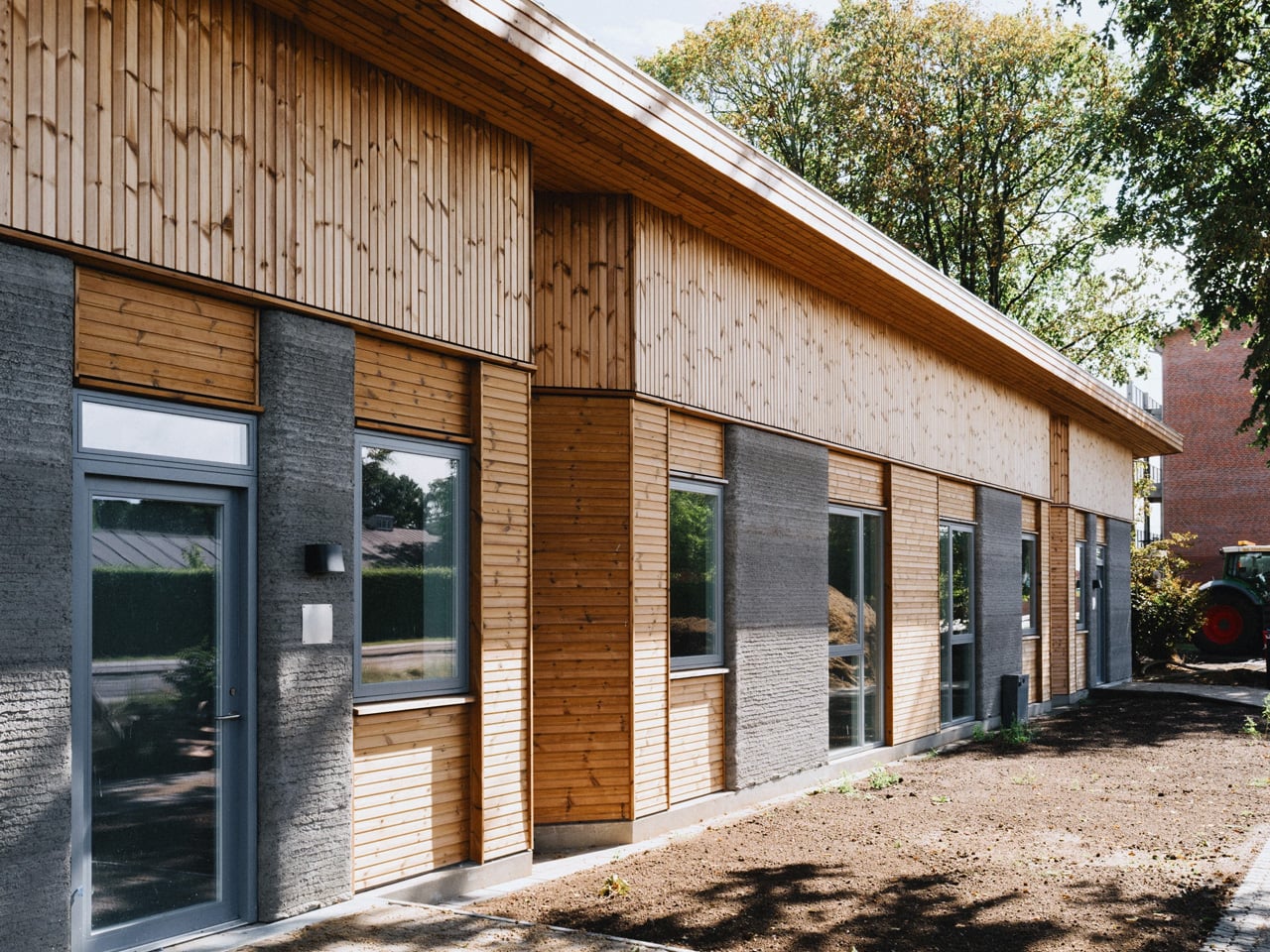

“We have gone from printing small prototypes to creating 36 real homes and an entire community. That is the scale where technology starts to matter as a serious tool for architecture,” – Sebastian Aristotelis, Co-Founder and Lead Architect of SAGA Space Architects, said it plainly. The technical breakthrough wasn’t a single successful print. It was repeating that success 36 times over 12 months without losing control of the outcome.
Construction is now complete, with students set to move in. 3DCP Group and SAGA are already researching new material configurations for future projects, treating Skovsporet not as a destination but as a baseline. That’s the right instinct. When a neighborhood built by robots starts to feel normal, you know the technology has finally grown up.