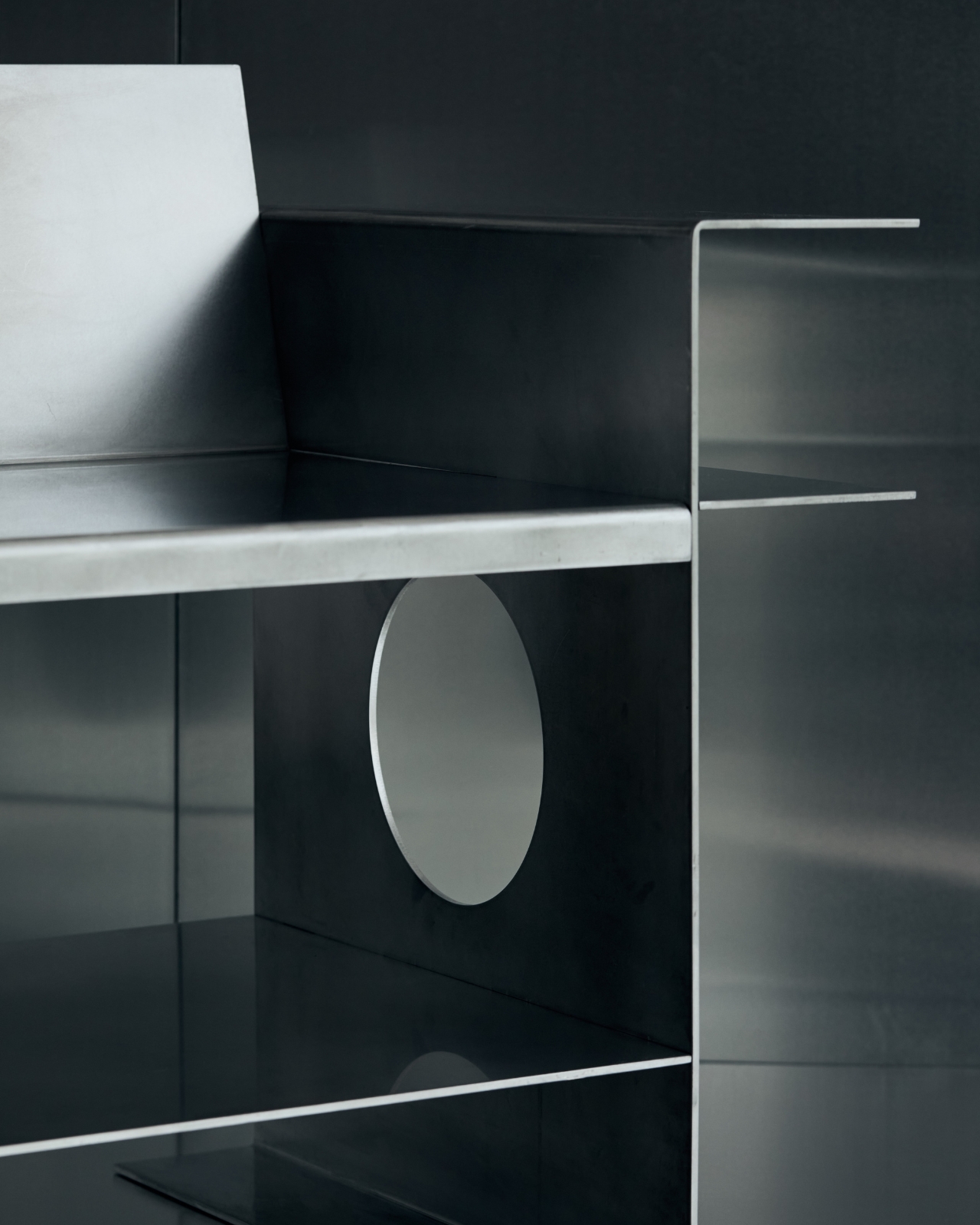

Most furniture design tells a story in layers. A frame, a cushion, an upholstery, a finish. By the time you sit down, you’re resting on a series of decisions stacked on top of each other, most of which you’ll never see. The 010 Lounge Chair by Athens-based OFAA does the opposite. It peels back every assumption about what a chair is supposed to be and hands you 5 mm of folded aluminium instead. That sounds cold. I know it does. And maybe that’s the point.
OFAA is a design practice founded by Christos Kalientzidis in Athens, Greece. The studio works primarily with stainless steel and aluminium, and its guiding philosophy is almost refreshingly blunt: the construction stays visible. Every joint, every fold, every structural decision is left exposed because it is the design. Nothing is concealed to make you feel more comfortable about how the thing was made. That kind of transparency is rarer in furniture than it should be.
Designer: OFAA
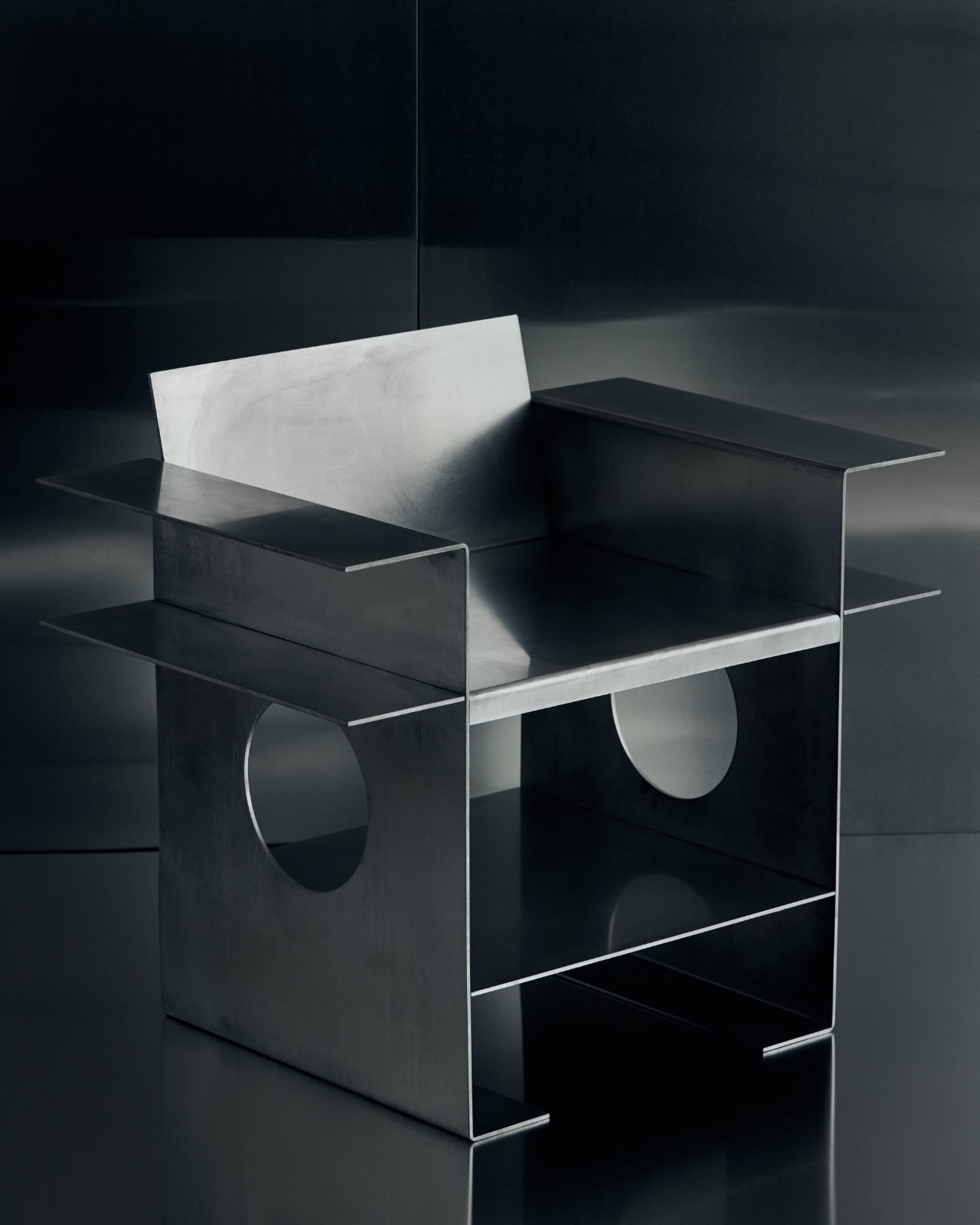

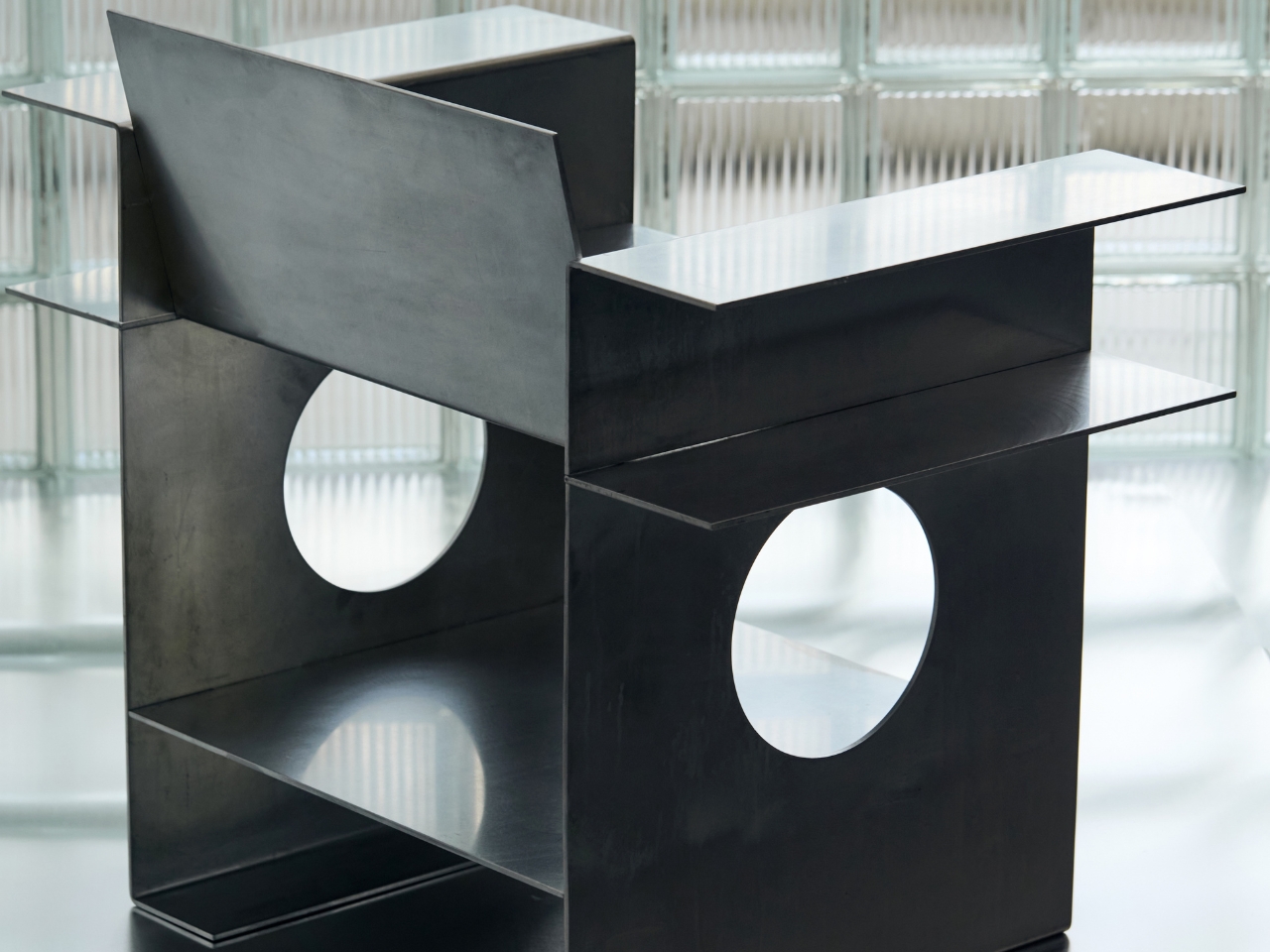
The 010 is a lounge chair in the most technical sense. It measures 800 × 500 × 600 mm and sits low to the ground with a wide, reclined geometry that reads as genuinely inviting. But it’s the material economy of the piece that stops you. Every element, the seat, the back, the sides, the structure, is formed from the same sheets of folded 5 mm aluminium. The same material that holds the chair together also holds you. There is no secondary skeleton hiding underneath. No hidden mechanism. Just geometry doing the work.
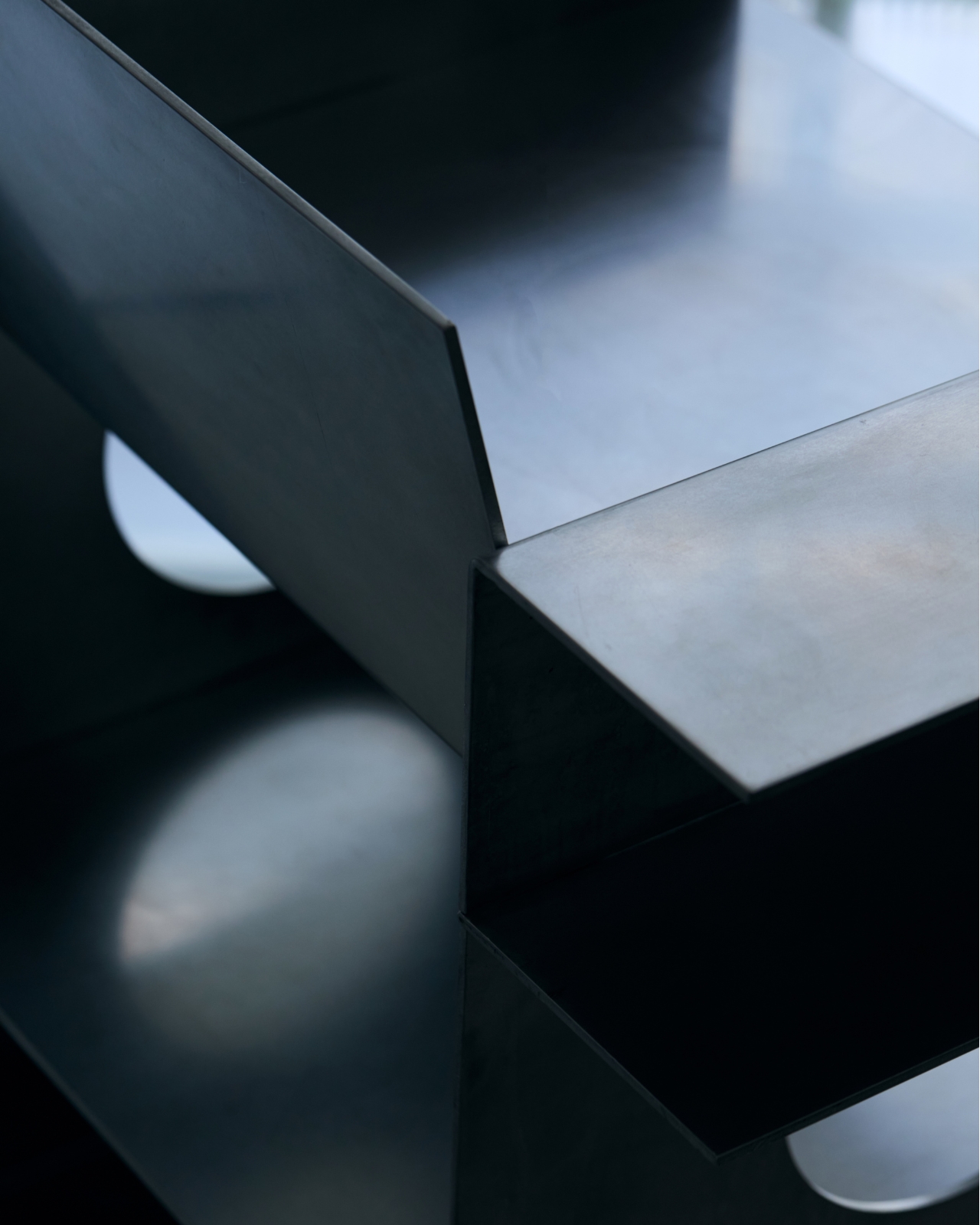
The circular cutouts on the sides deserve a moment. They punch clean through the aluminium panels, breaking what would otherwise be an imposing, closed form into something lighter and more considered. From certain angles, they frame the space behind them like a porthole onto the room, casting perfect circular shadows that shift with the light. They’re not decorative in a frivolous sense. They’re calculated. Structurally, they reduce weight. Visually, they introduce a softness into a piece that could have easily felt rigid and forbidding. It’s the kind of design decision that looks simple and isn’t.
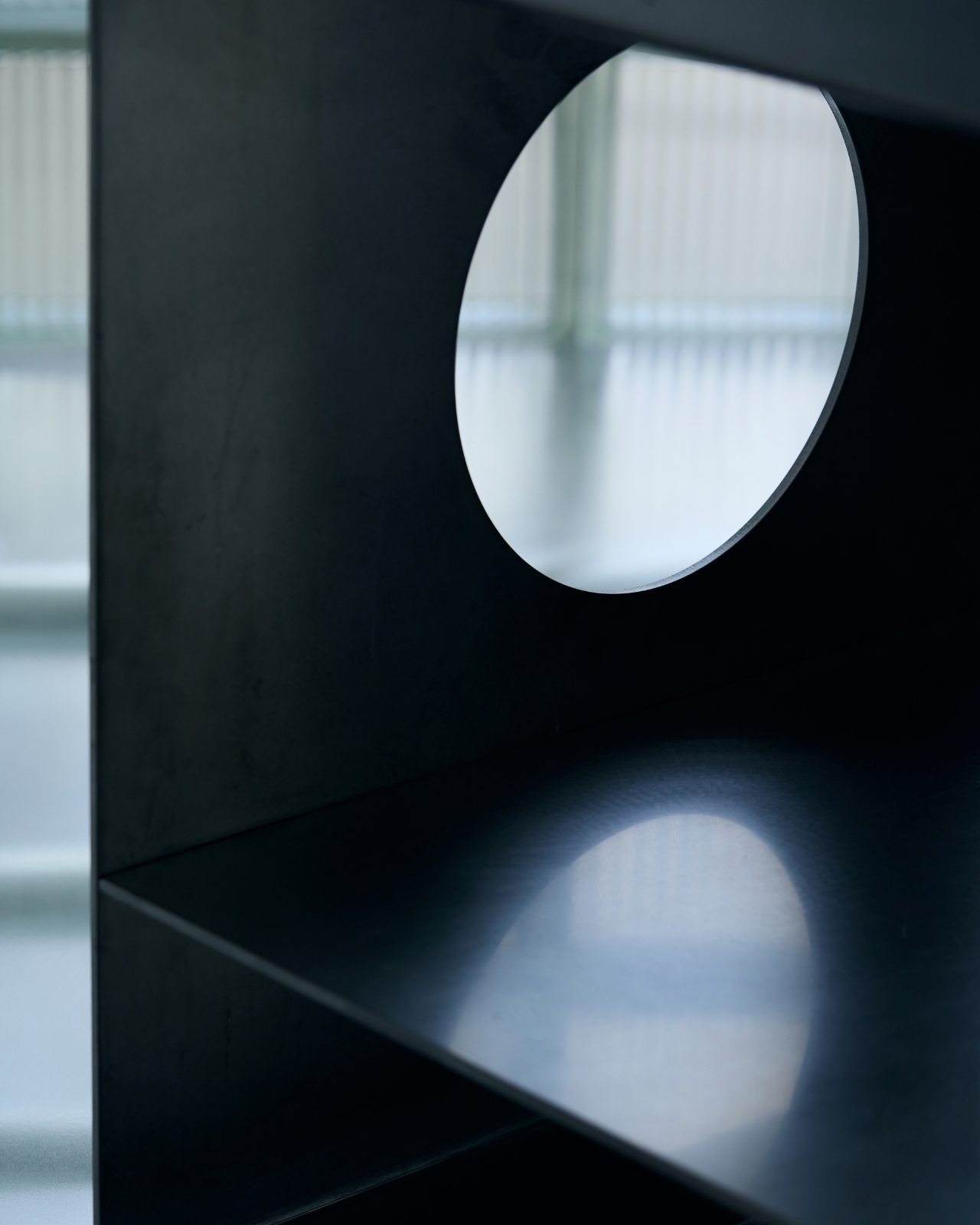
I’ll be honest about the comfort question, because it’s the one most people will ask. A flat aluminium seat is a hard sell. We are conditioned to expect padding, to expect a chair to meet us halfway, to cushion the difference between our bodies and the material. The 010 doesn’t do that. It asks you to trust the geometry instead, and that’s genuinely a different kind of invitation. Whether you accept it depends a lot on how you feel about design that prioritises rigour over softness. Personally, I find it compelling. Not because comfort is irrelevant, but because the idea that a single folded sheet can achieve both structural integrity and a seating function through precision alone is a design argument worth sitting with.
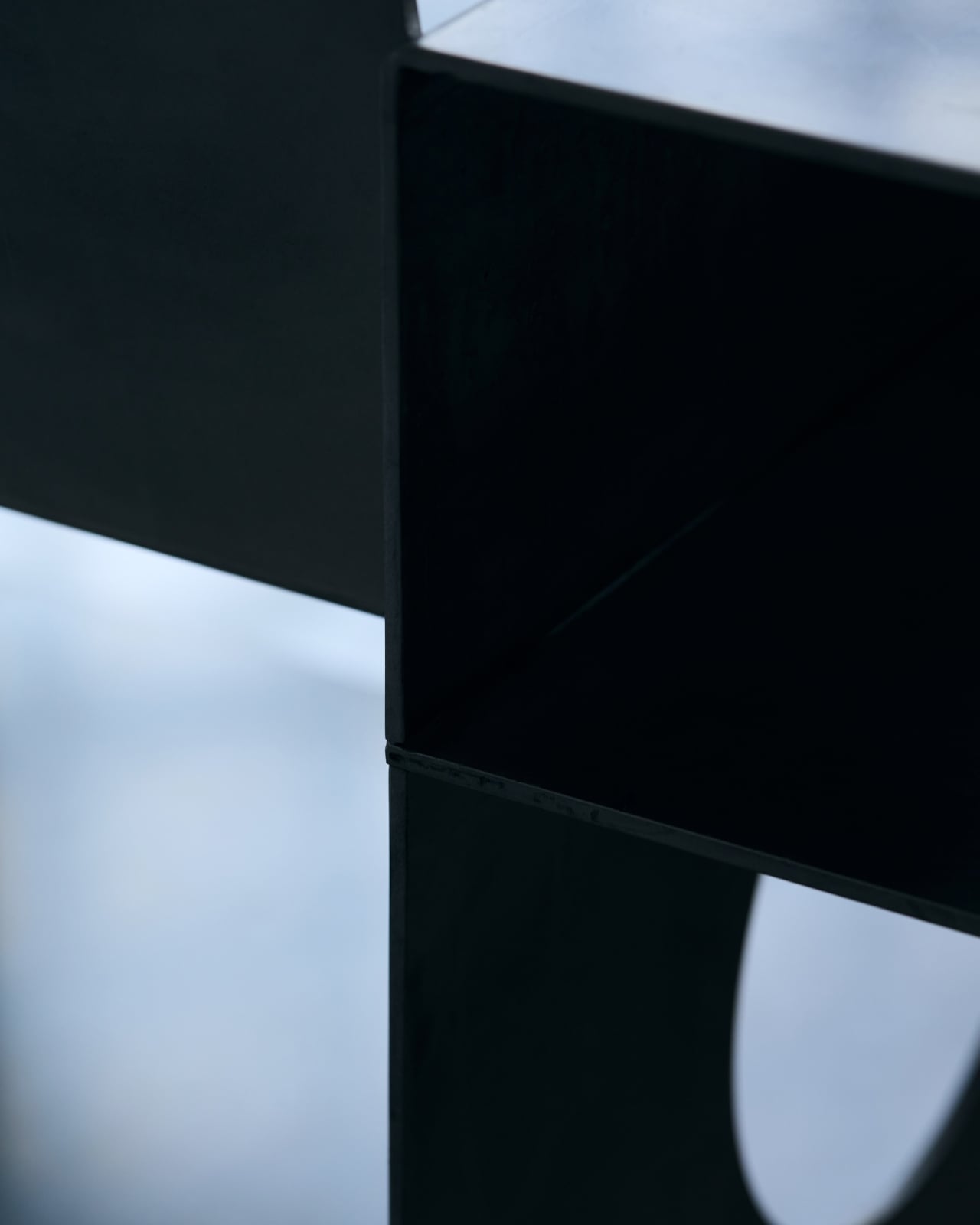
It also photographs beautifully in a specific, almost severe way. The images of the 010 in a dark studio setting, lit to emphasise its planes and shadows, feel more like architectural photography than furniture photography. That contrast is actually very telling. The chair has the kind of presence that makes a room look intentional simply by being in it. That’s not easy to manufacture.
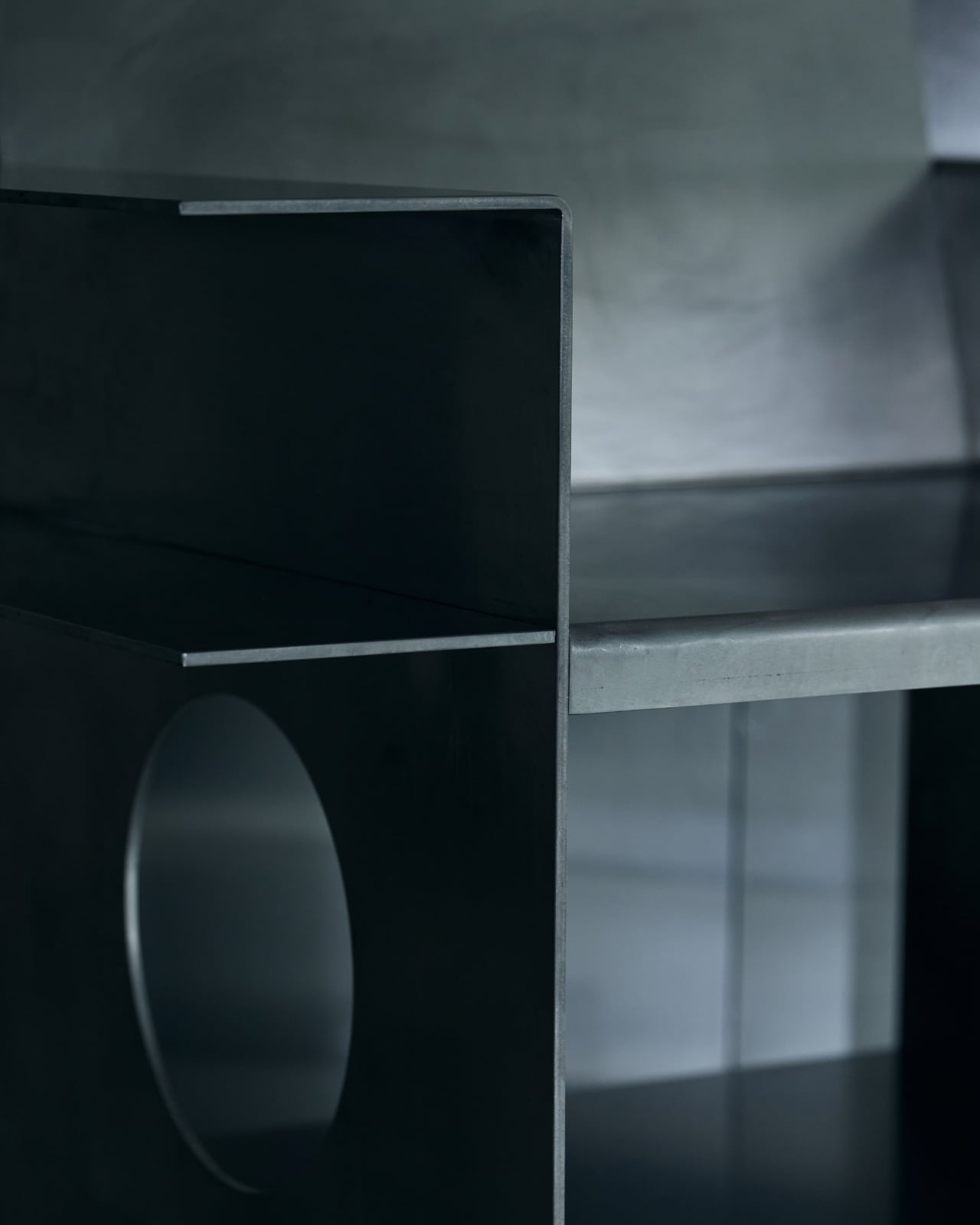
What Kalientzidis and OFAA are doing with this piece fits into a broader conversation happening right now in contemporary design: one about material honesty, about stripping back excess, about whether the most sustainable design is sometimes the one made from the least. The 010 is a persuasive contribution to that conversation. It doesn’t moralize or lecture. It just shows up as a folded piece of metal and asks you to reconsider what a lounge chair can actually be.
Whether it ends up being comfortable enough for a long Saturday afternoon is, I suppose, a question for someone lucky enough to sit in one. Until then, the photographs are doing more than enough to make the argument.