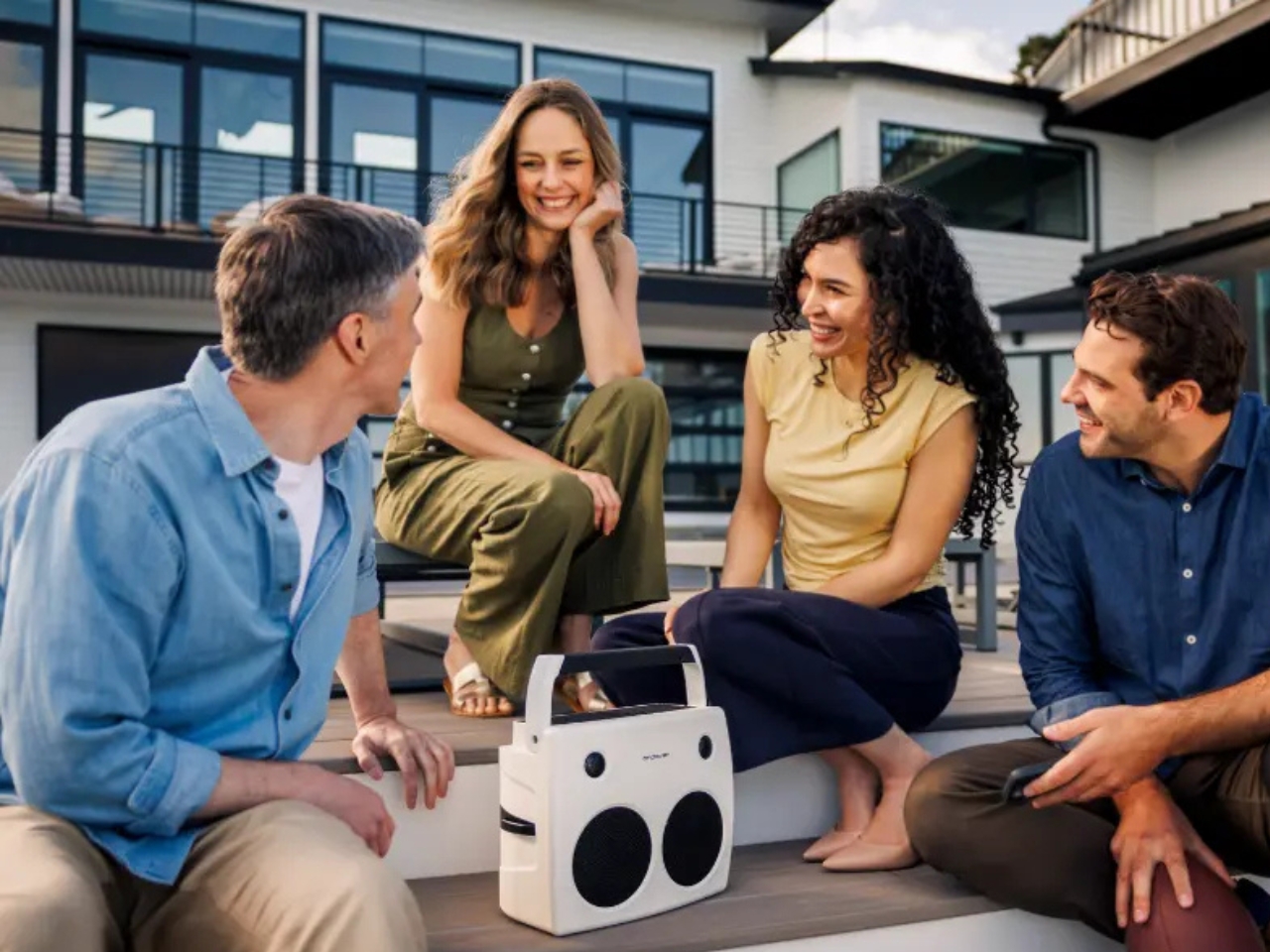
There’s a version of audio history where the boombox never went away. It just got smaller, cheaper, and unfortunately, a lot worse. The portable speaker category that exists today is essentially the boombox’s spiritual successor, and for most of its life, it’s been optimized for volume over everything else. Loud, plasticky, and designed to look tough rather than good. John Cusack’s character in Say Anything held that iconic box over his head because it was the most powerful sound system you could carry. Today’s equivalent should be doing better. The FreePlay, Andover Audio’s first portable speaker, makes a convincing argument that it finally is.
Andover Audio is a Boston-based brand that built its name on compact hi-fi systems, all-in-one record players, and powered speaker bases. Their entry point has always been “Hi-Fi for Modern Living,” which is a way of saying serious sound without the serious footprint. The FreePlay takes that same philosophy and adds a handle.
Designer: Andover Audio
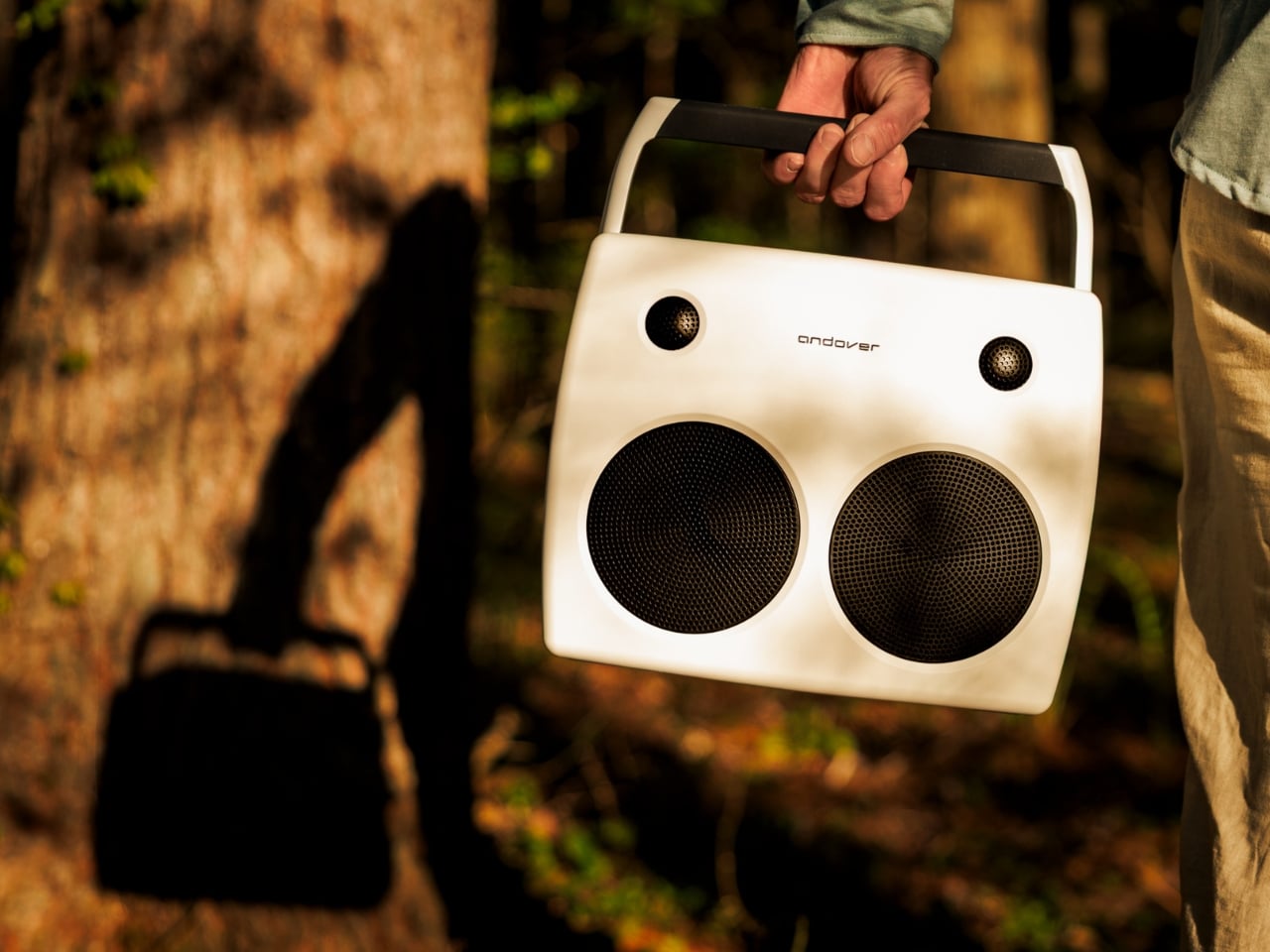

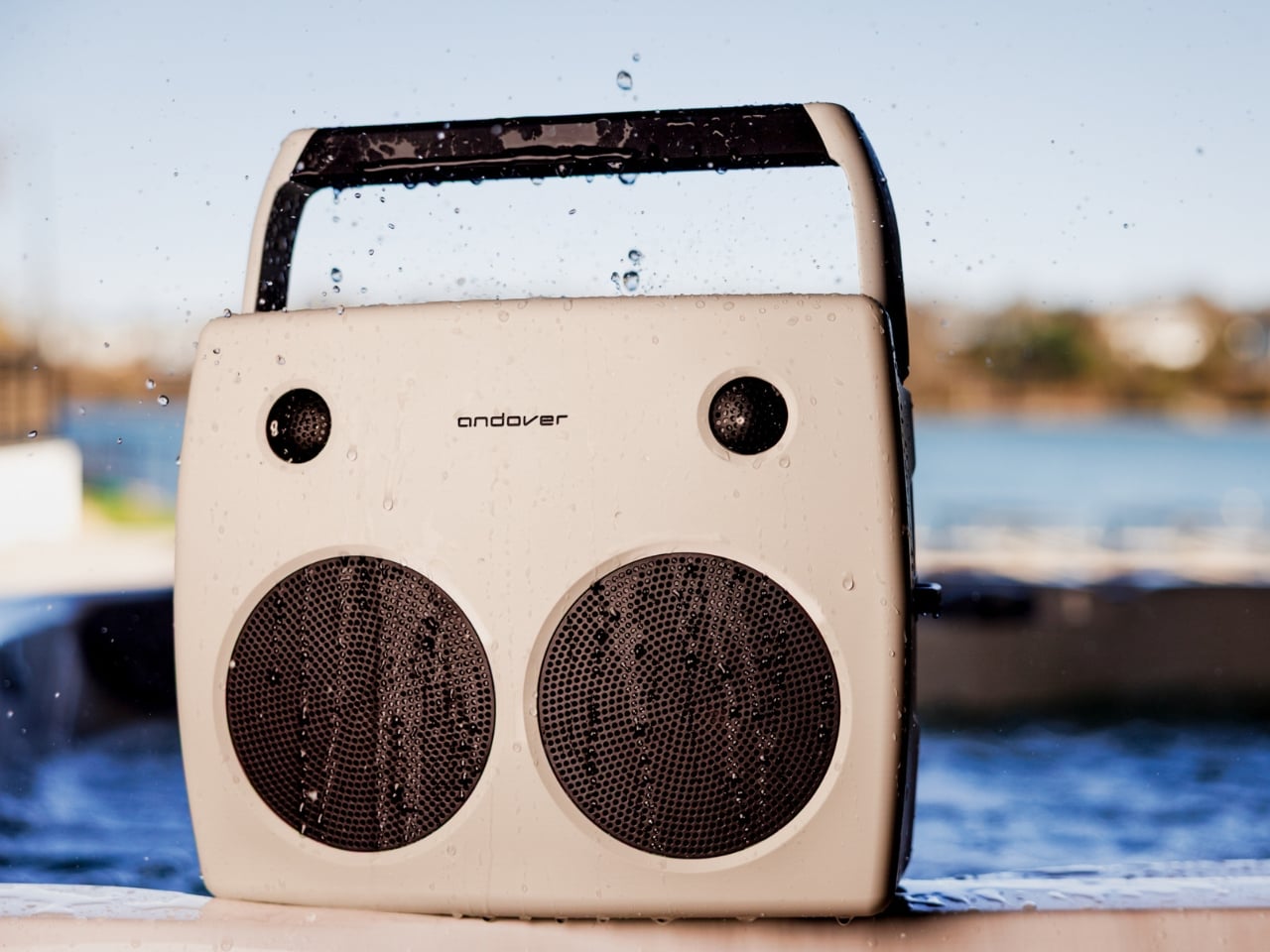
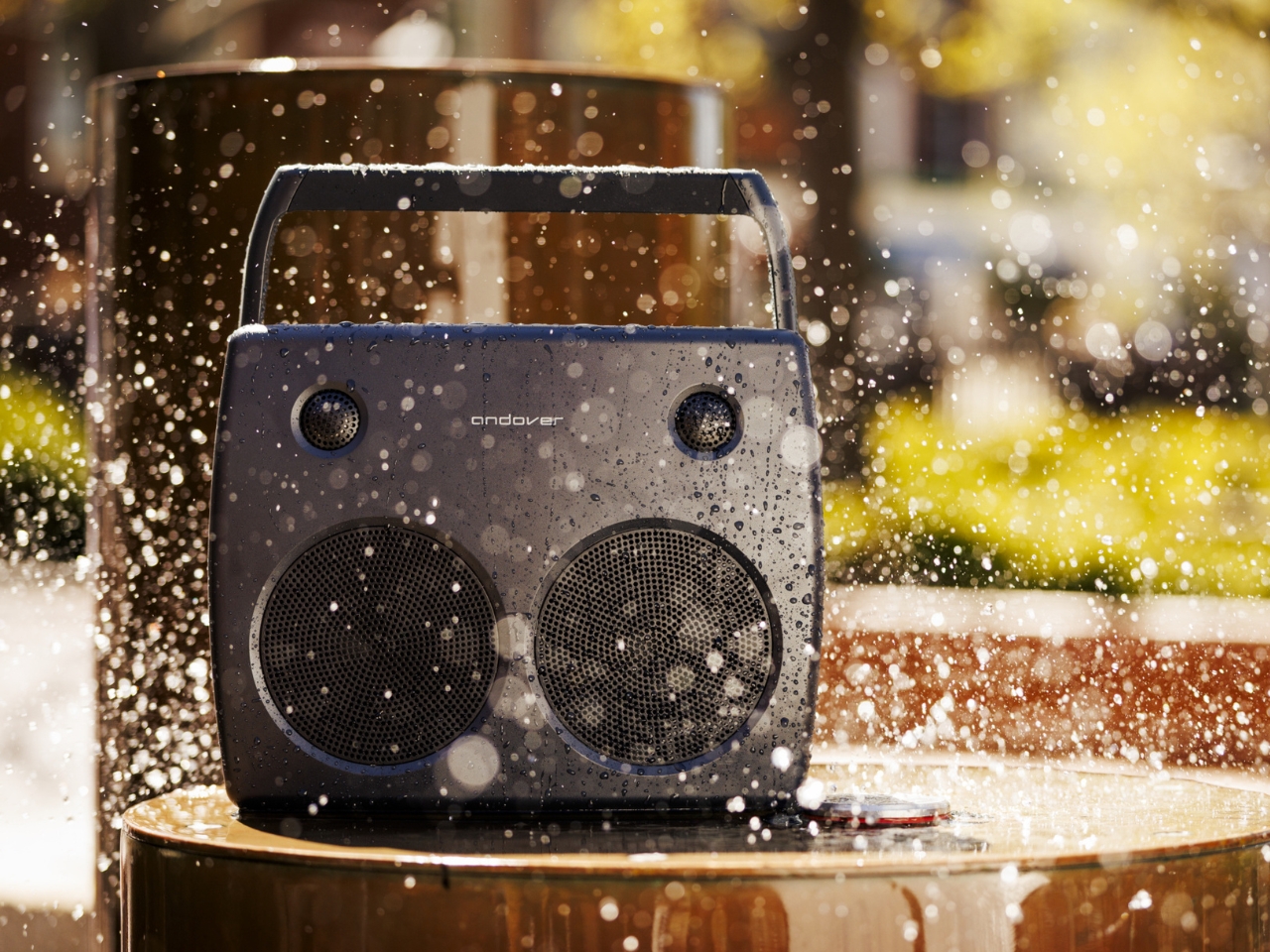
And it is a real handle. The FreePlay is not a pocket speaker. At 10 inches tall, 13 inches wide, 6.5 inches deep, and nine pounds, it occupies real space. Fold-down carry handle, utility tie-down bars on each side, IP67 dust and water resistance. It’s built to be moved, secured, taken somewhere, and left out in the rain without incident. A matching shoulder bag with a cinch-top closure ships with every unit. This is not the brand’s afterthought moment. The packaging alone signals that someone thought carefully about the full experience.
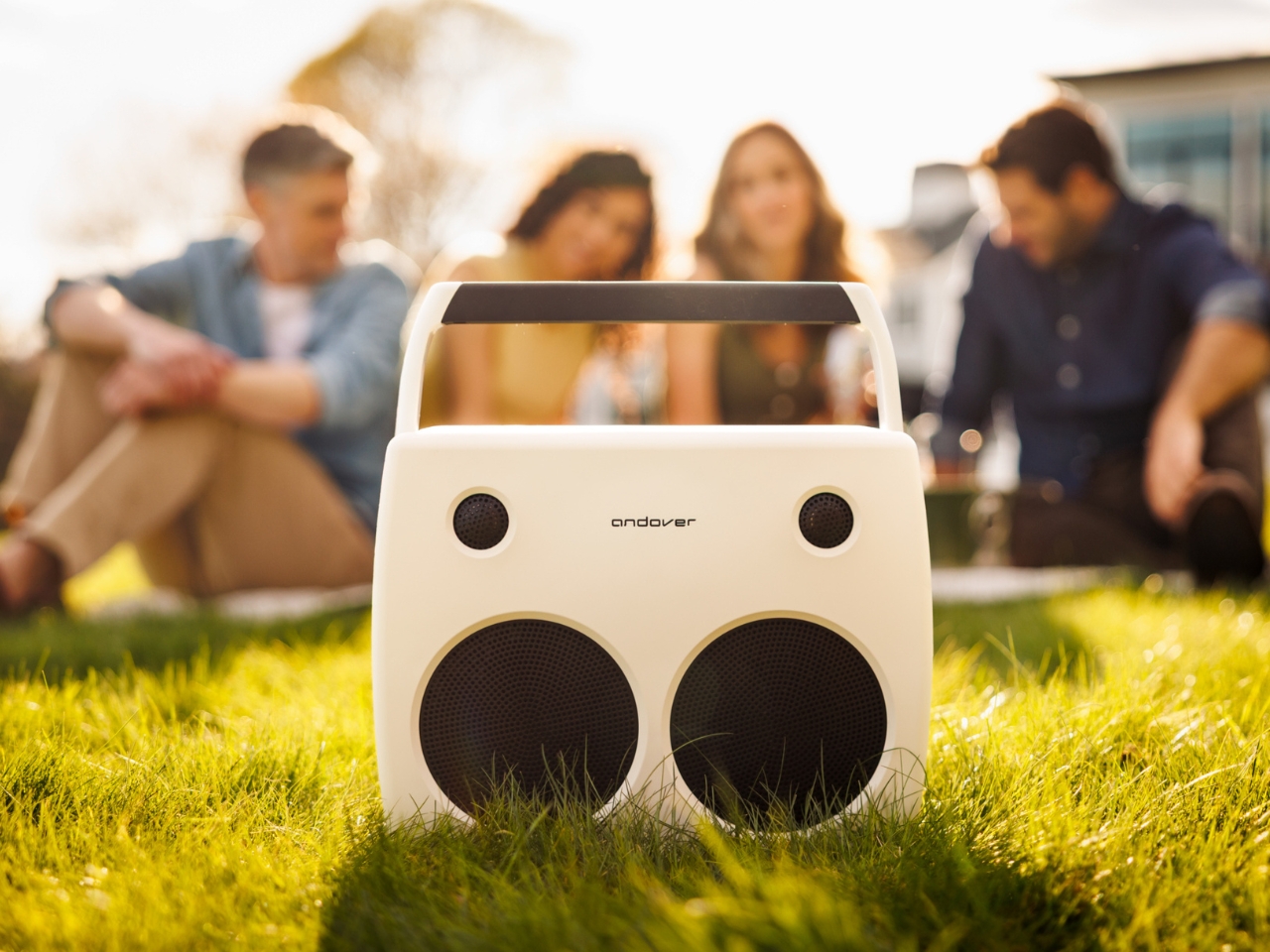
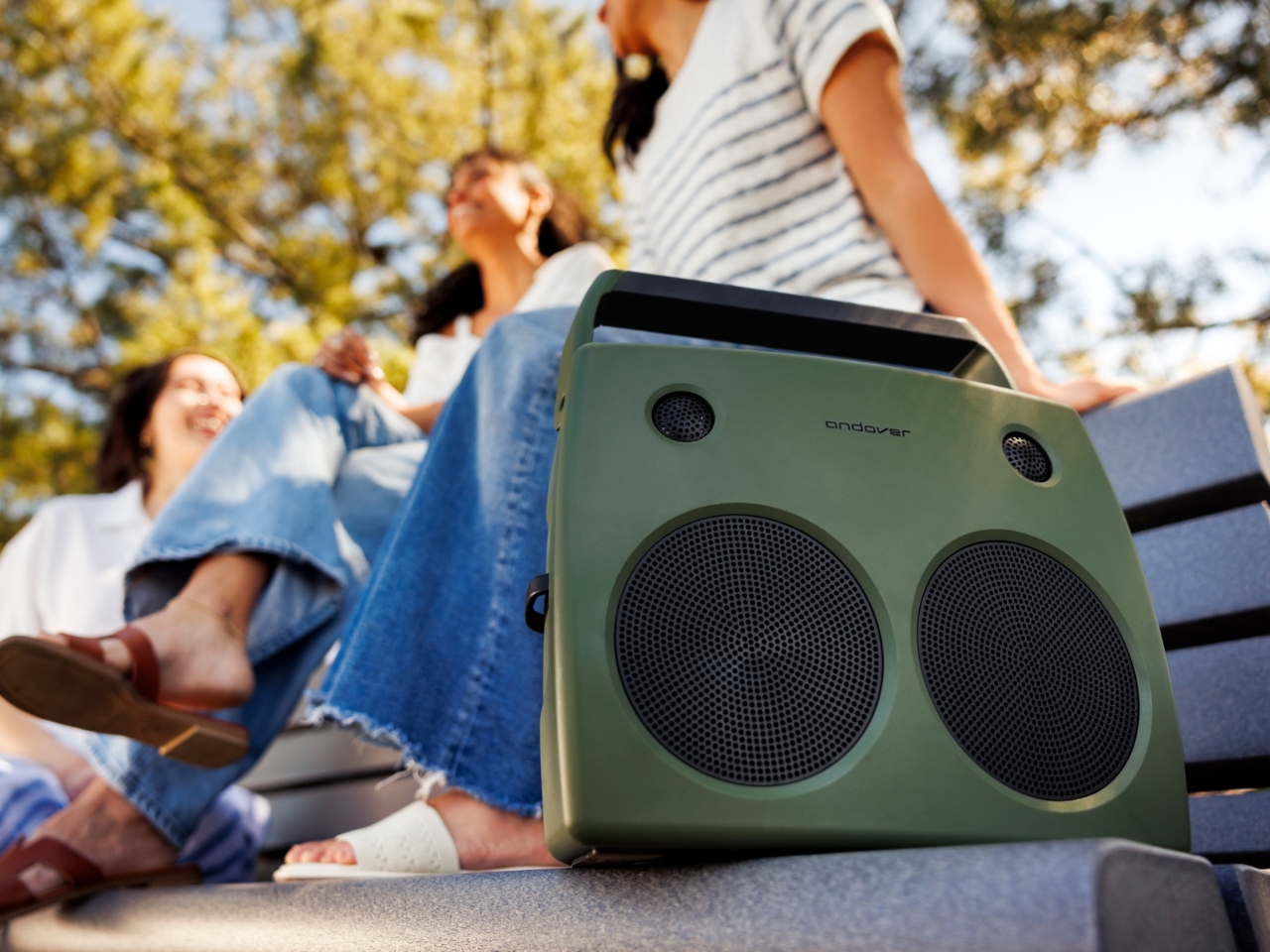
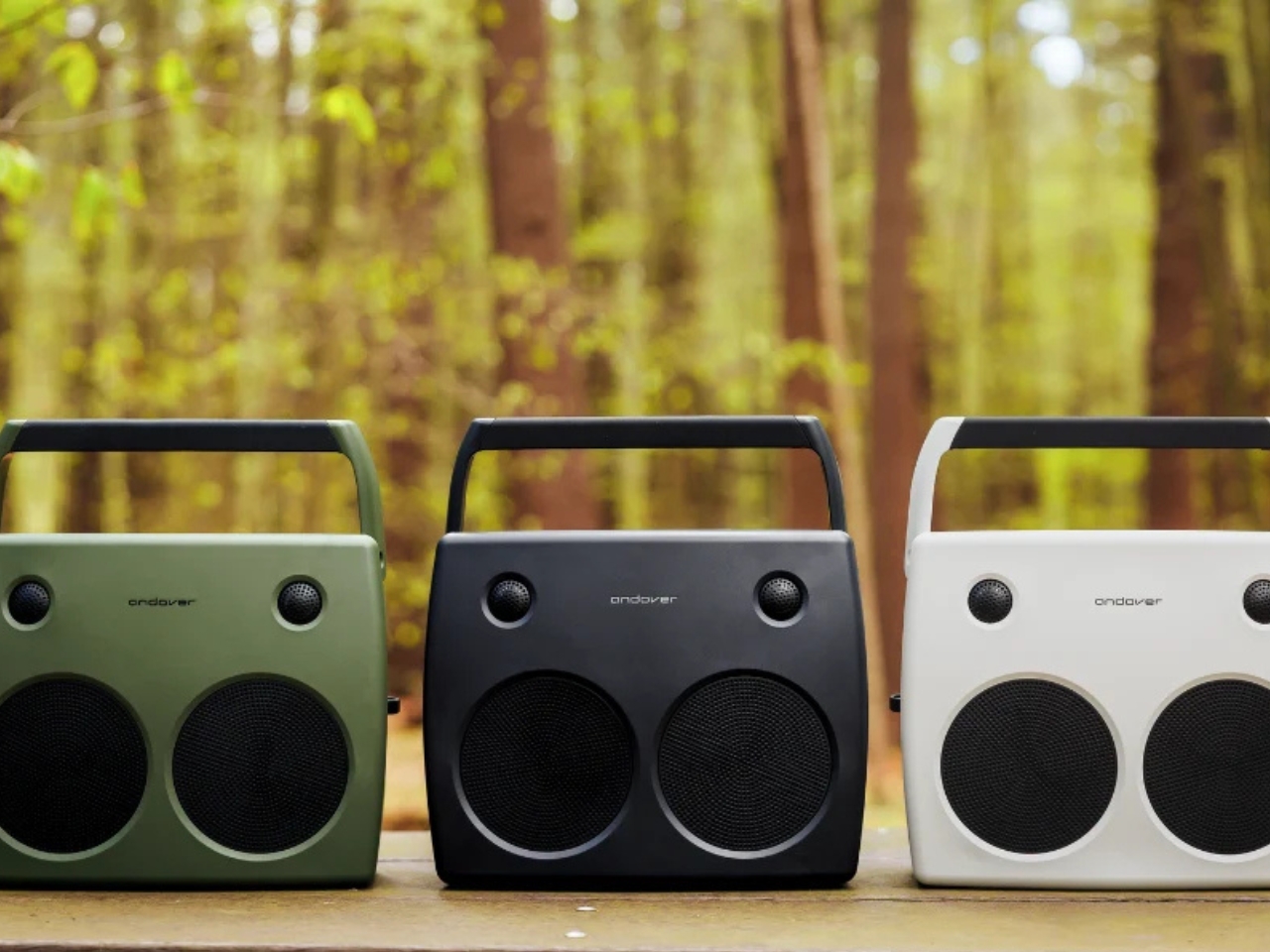
The design is where the FreePlay earns the most attention, and rightly so. Available in Ivory, Olive, and Slate, it reads less like a piece of outdoor gear and more like something from a well-considered interiors brand. The soft aesthetic and clean lines have more in common with Scandinavian furniture than the rugged-industrial styling that dominates this category. It looks appropriate on a bookshelf, on a kitchen counter, or on a patio table. That kind of design versatility is harder to achieve than it sounds, and most competitors don’t bother trying.
Inside, the FreePlay runs a true stereo architecture: dual 5.25-inch aluminum-cone woofers with neodymium magnets, twin 25mm dome tweeters, and a 160mm rear-mounted passive radiator. Frequency response runs from 55Hz to 20kHz. For a portable speaker, this is a serious driver setup, and the key word in all of it is stereo. Most portable speakers collapse a recording into a single mono channel to save space, which is why so much outdoor audio sounds flat, harsh, and fatiguing over time. The FreePlay keeps left and right channels separate, preserving the actual width and dimensionality of a stereo mix. Instrument separation, tonal depth, and bass weight are treated as requirements here, not extras.
There are two listening modes: Wide Range, which is the default hi-fi EQ, and a Loud Mode that adds 6dB of output for moments when the crowd and the wind are both working against you. It’s a practical concession, and having it as a toggle rather than a default keeps the sound quality intact until you actually need the boost.
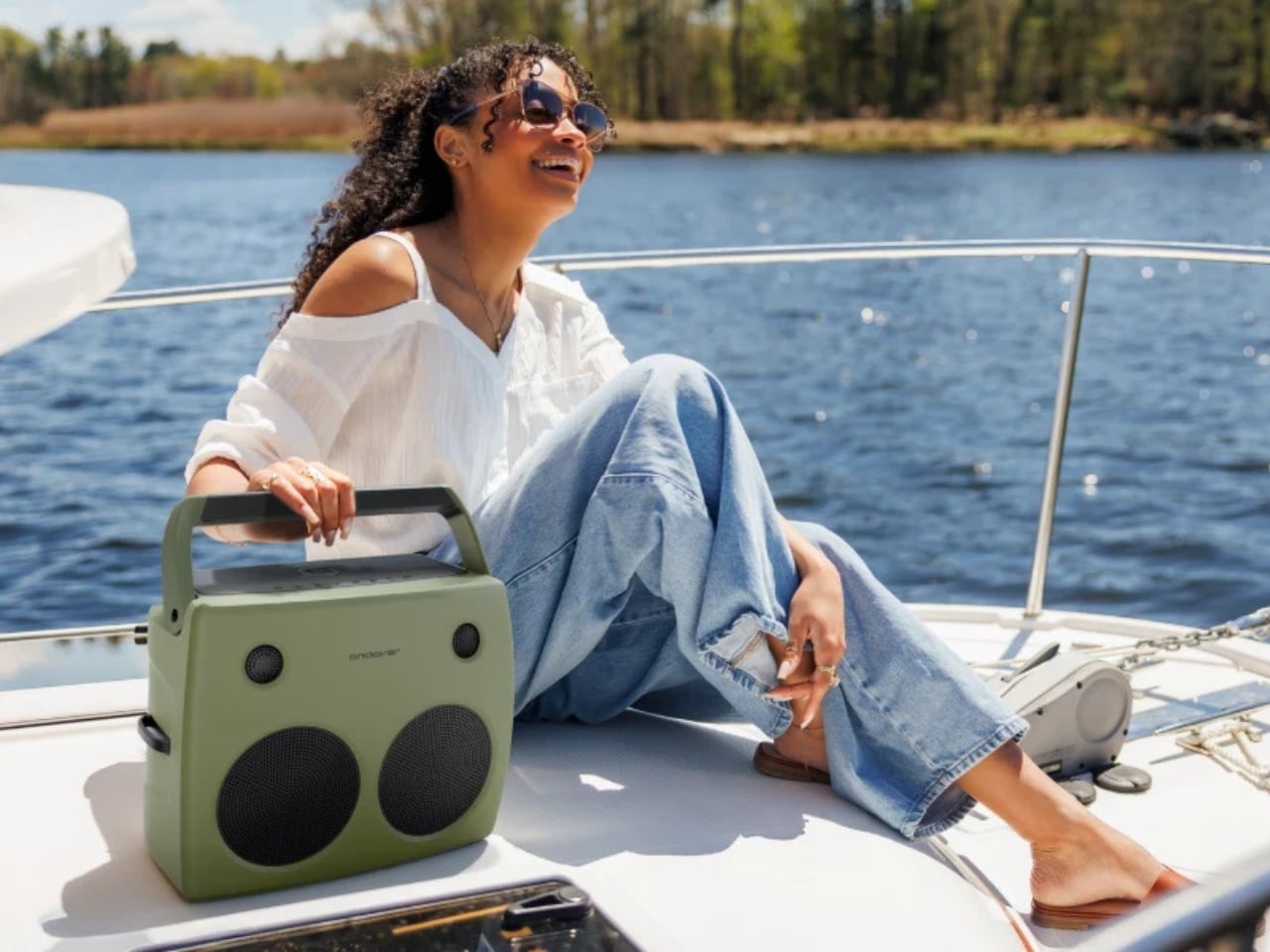
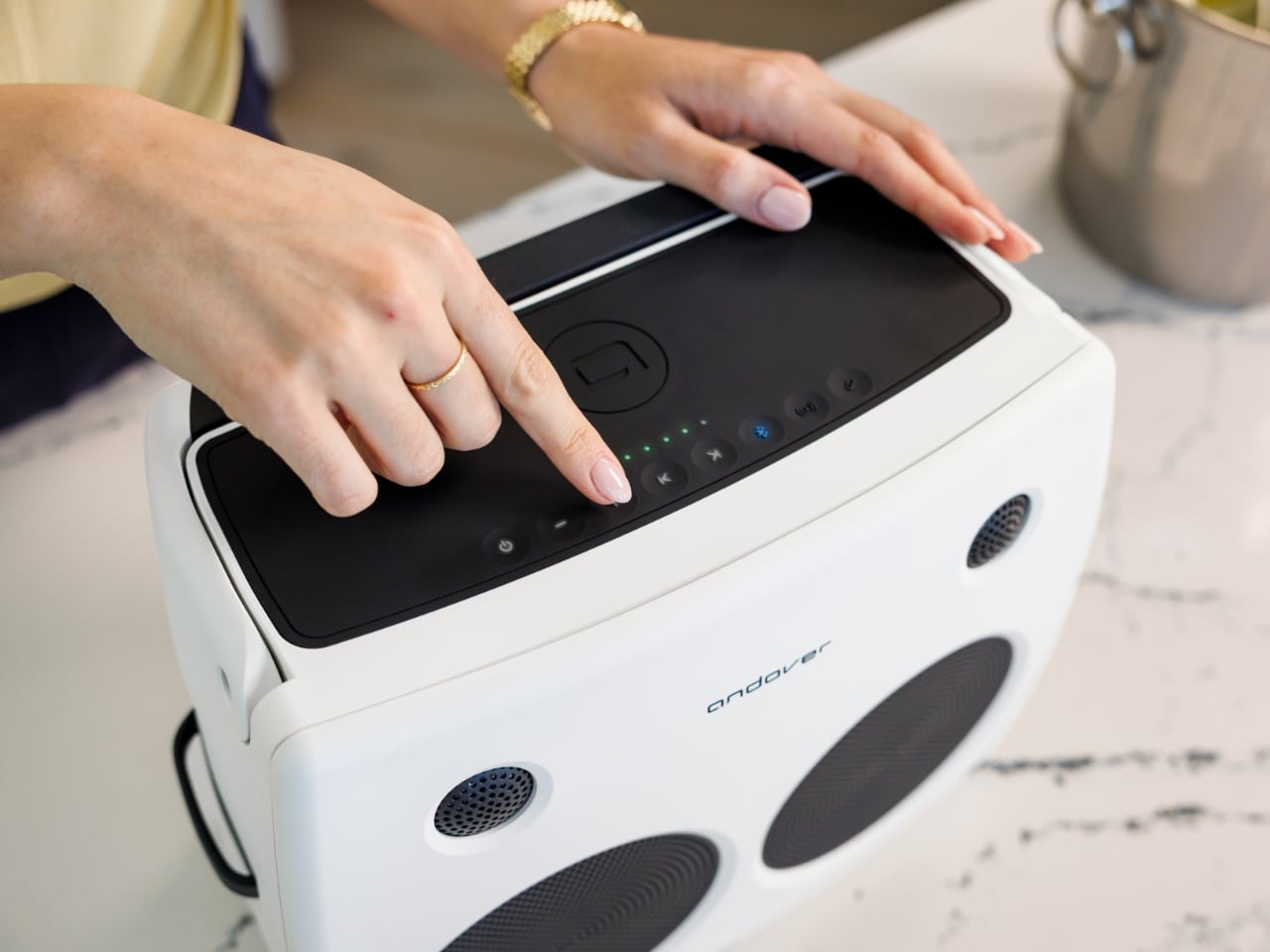
On the connectivity side, the FreePlay runs Bluetooth 6.0 with LE Audio and supports LC3, AAC, and SBC codecs, which covers stable wireless performance even in crowded environments. There’s a 3.5mm aux input, a microphone input, and a broadcast mode that can link up to 99 FreePlay units simultaneously for synchronized playback. Battery life is rated at 24 hours. The charging setup is genuinely impressive. A 45W USB-C port handles bidirectional fast charging, meaning it powers the speaker and can charge external devices. A 5W Qi wireless charging pad sits on the top deck so your phone charges while the music plays. A 45W wall charger ships in the box, which is more than most brands at this price point bother to include.
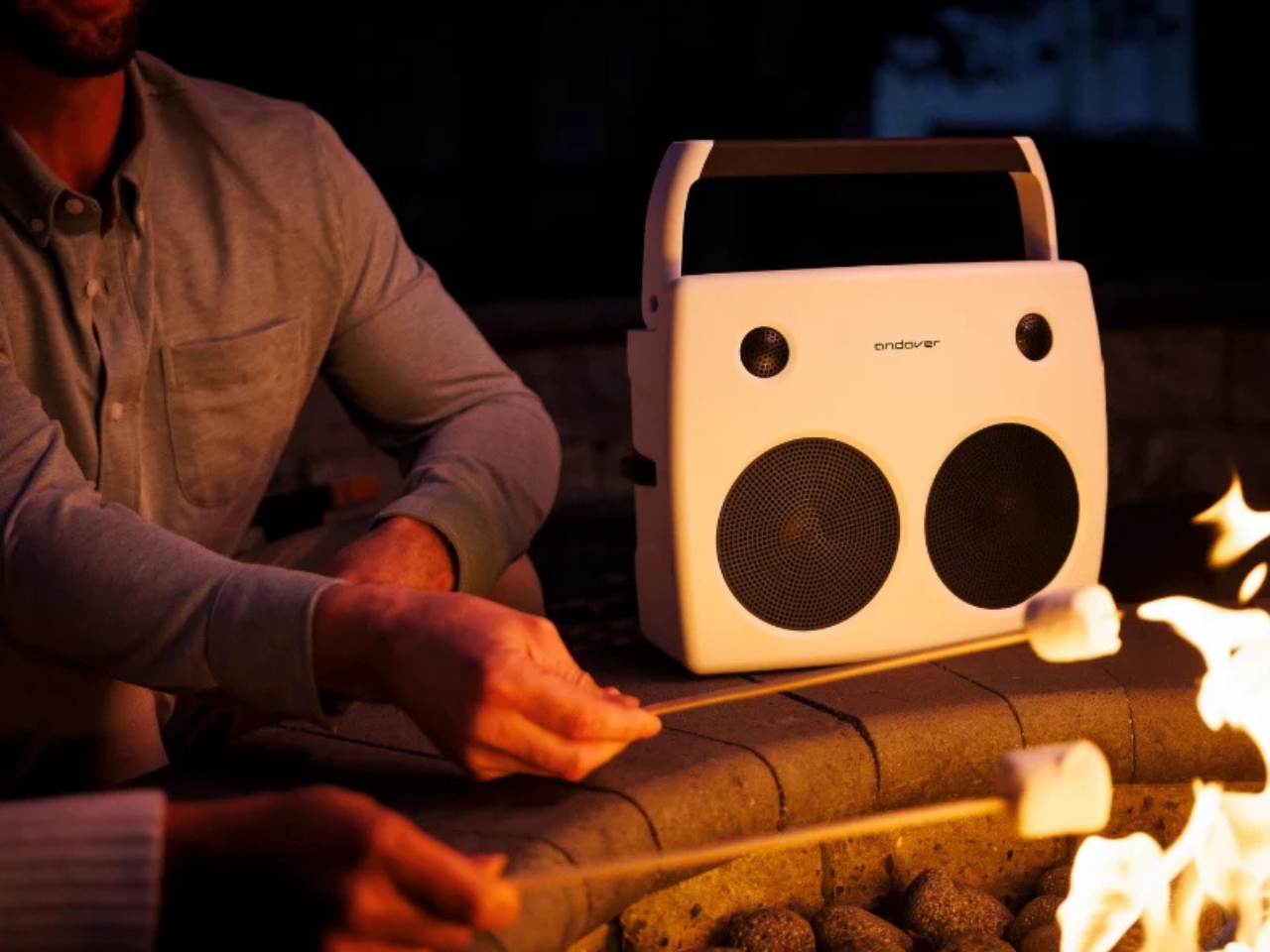
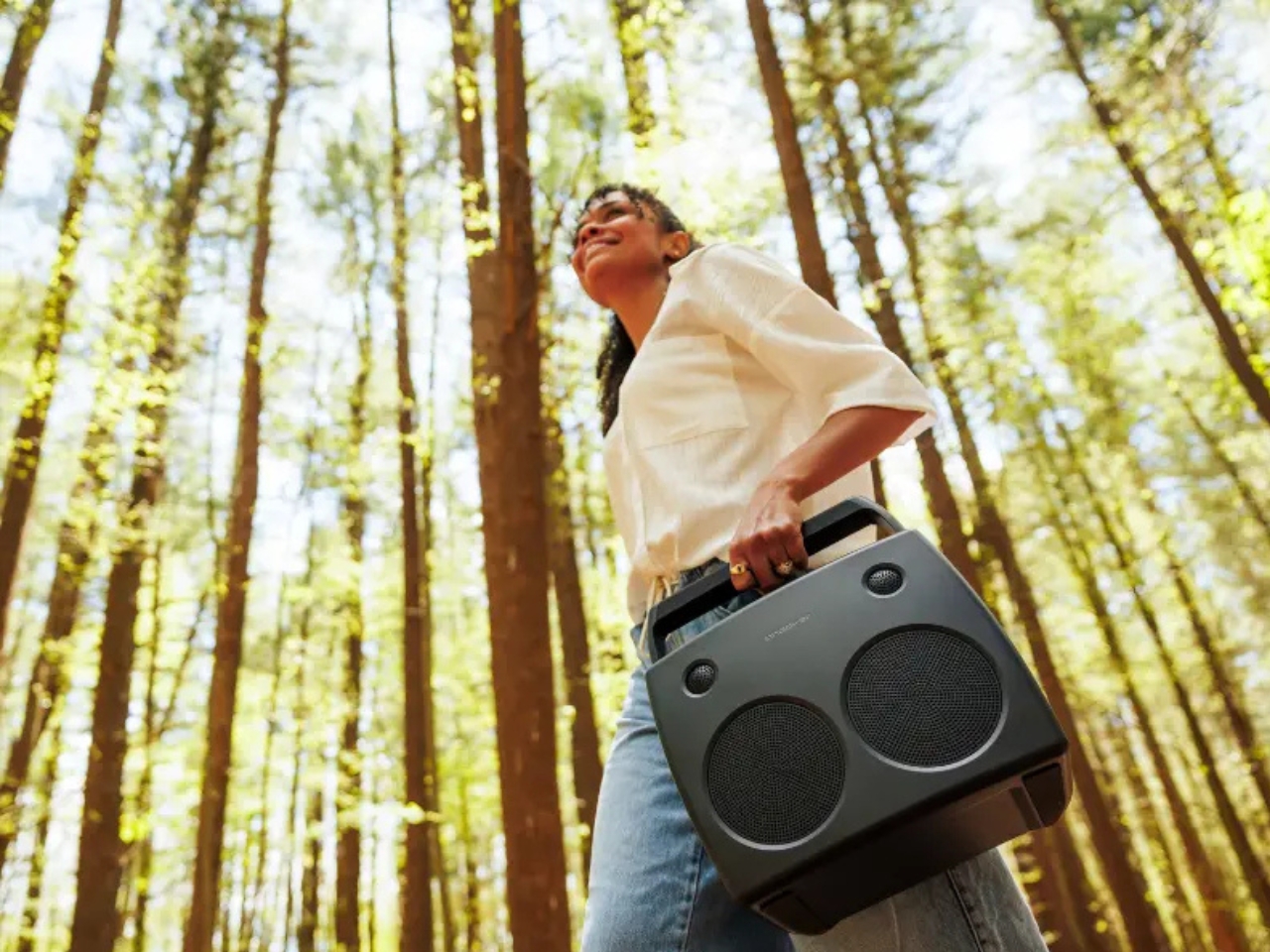
Controls live entirely on the top panel. Volume, track selection, pairing, battery status, listening modes are all accessible without opening an app. It’s a quiet design decision that respects the user’s time and attention in a way the category has long overlooked. The boombox was always about taking music somewhere it wasn’t supposed to go. The FreePlay understands that, and it adds everything the original couldn’t.