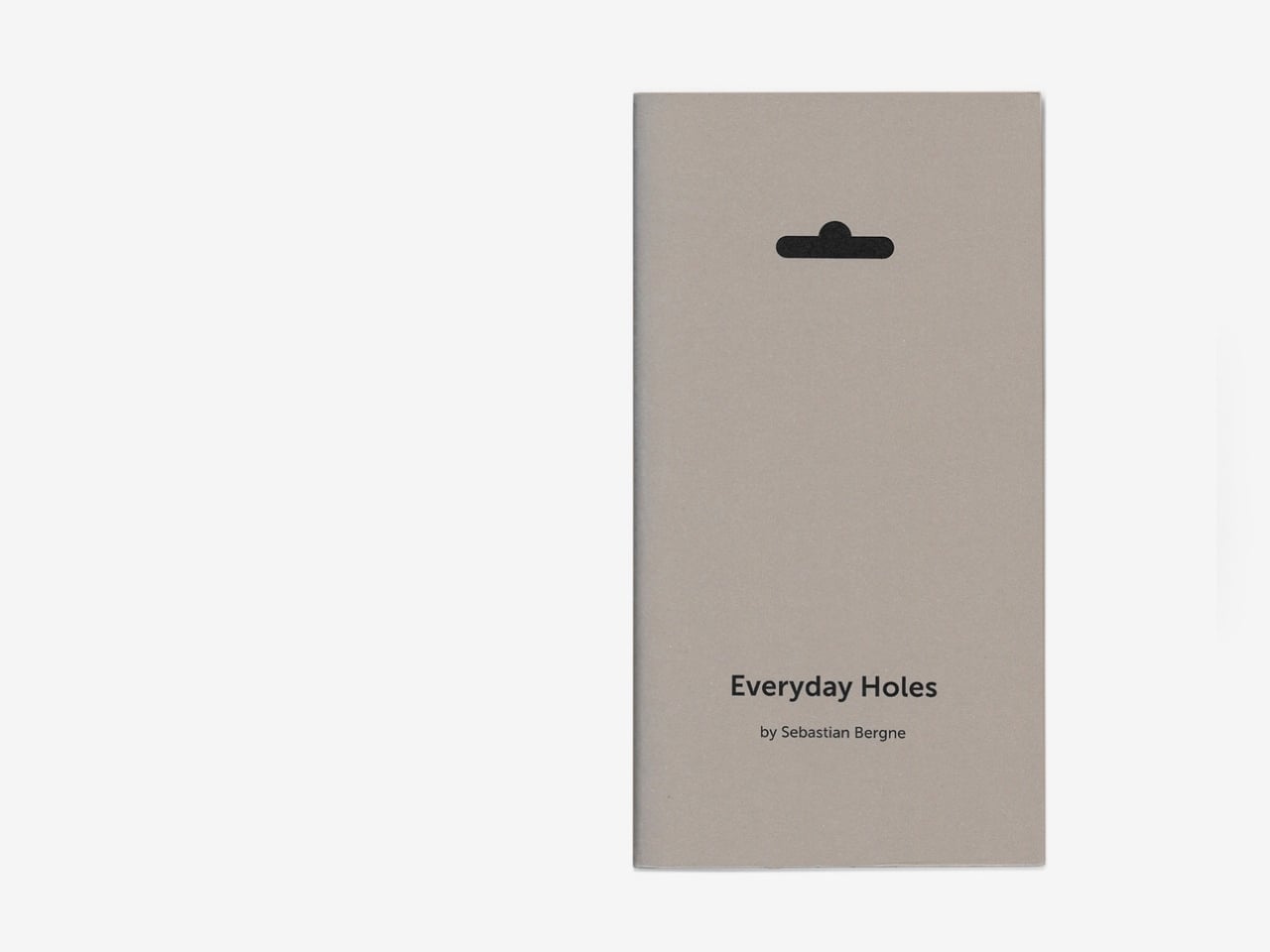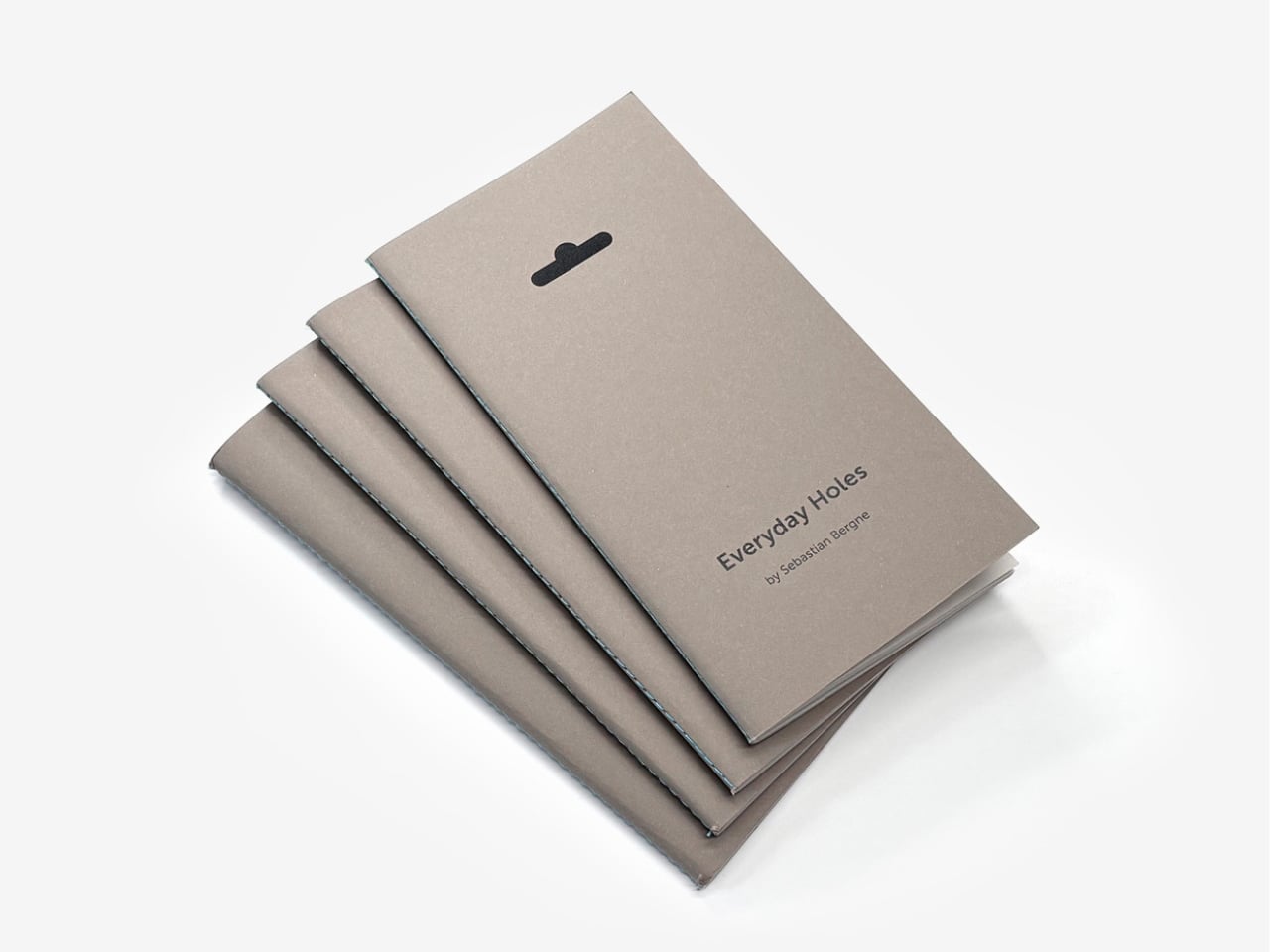

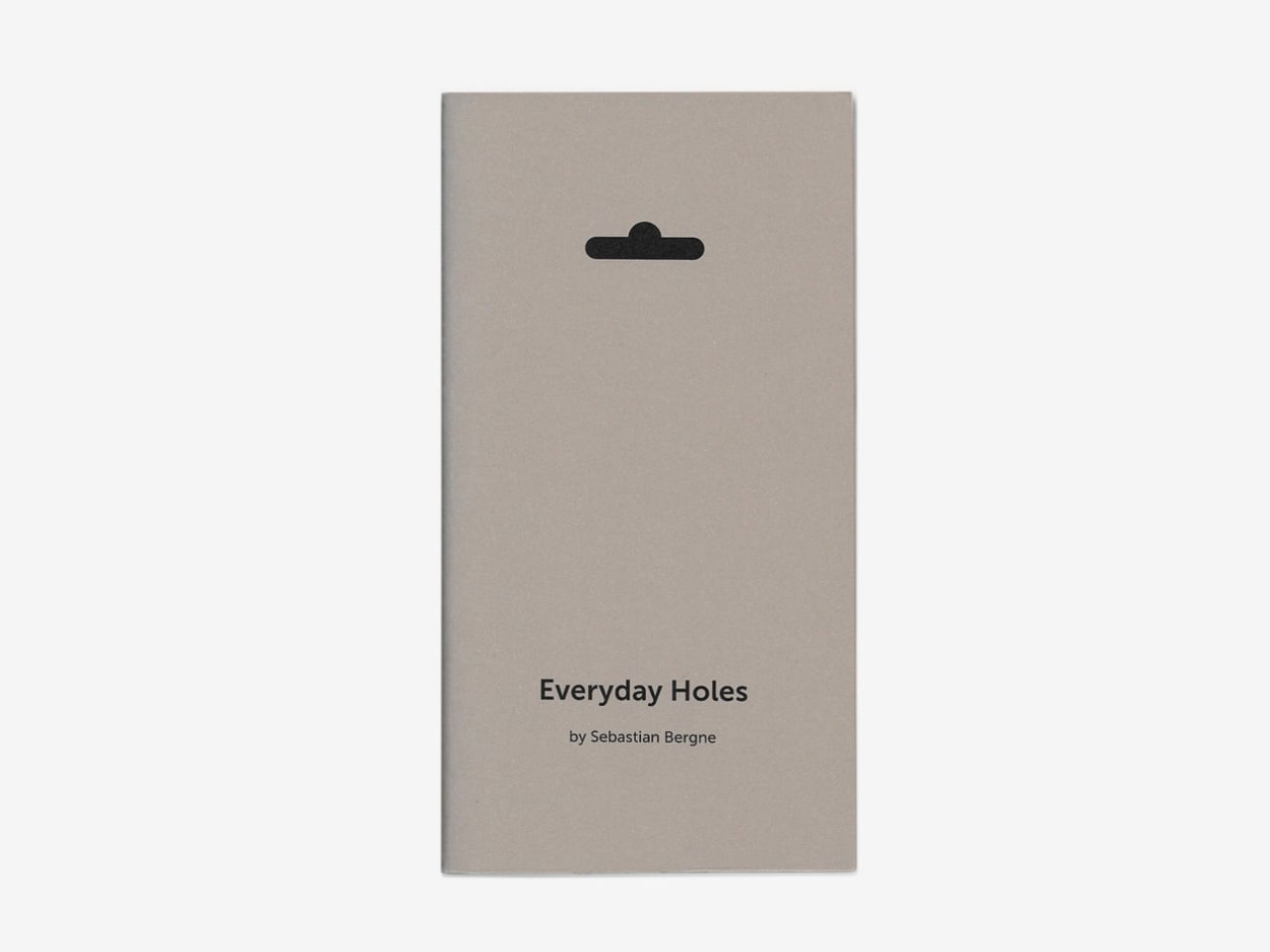
Pick up Sebastian Bergne’s latest publication and you’ll immediately notice what’s not there. No lengthy introduction. No glossy product photography. No dense paragraphs of design theory. Just a small, grey booklet with a punched slot on the cover and 24 pages of quiet, deliberate emptiness inside. It sounds like very little, and that’s exactly the point.
Everyday Holes is Bergne’s first self-published booklet, and it arrives with the kind of confidence that only comes from more than 30 years of experience. An award-winning product and furniture designer, Bergne is one of Britain’s most respected practitioners in the field, the kind of designer who has spent decades thinking carefully about how objects are made and why they look the way they do. A recurring subject in that body of work, it turns out, has been holes. Not as an afterthought, but as a deliberate design element: functional, beautiful, and sometimes quietly meaningful.
Designer: Sebastian Bergne
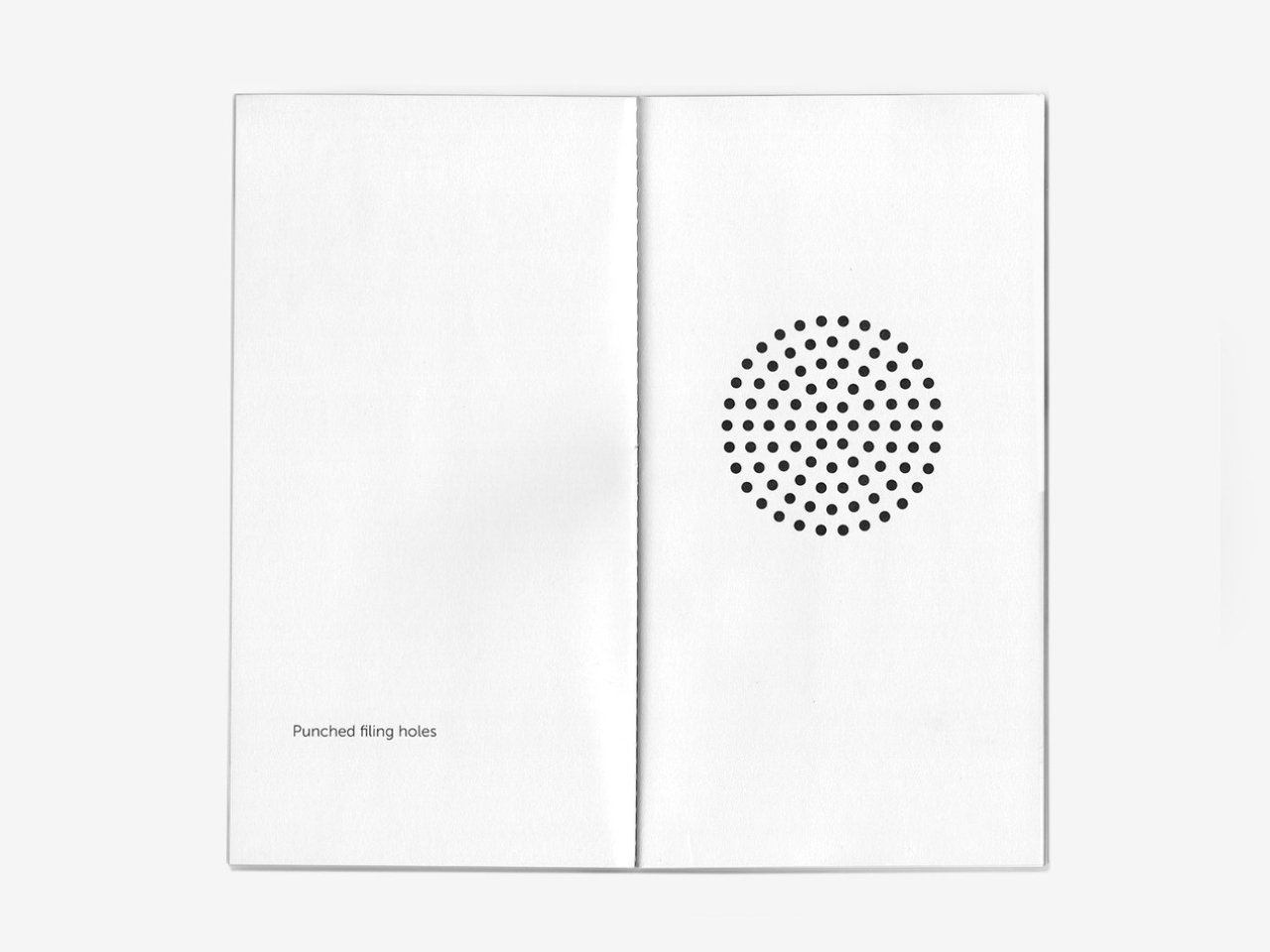
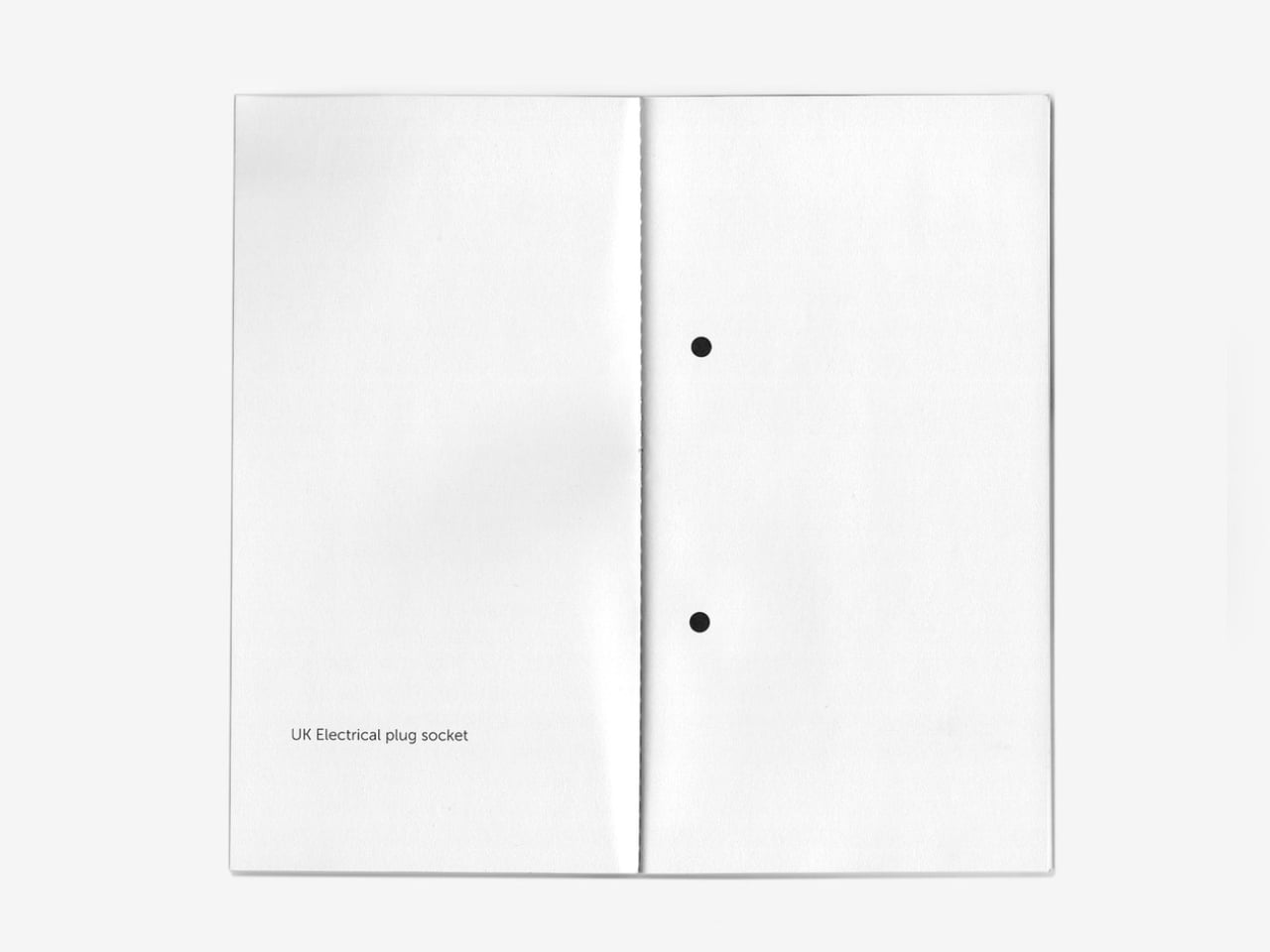
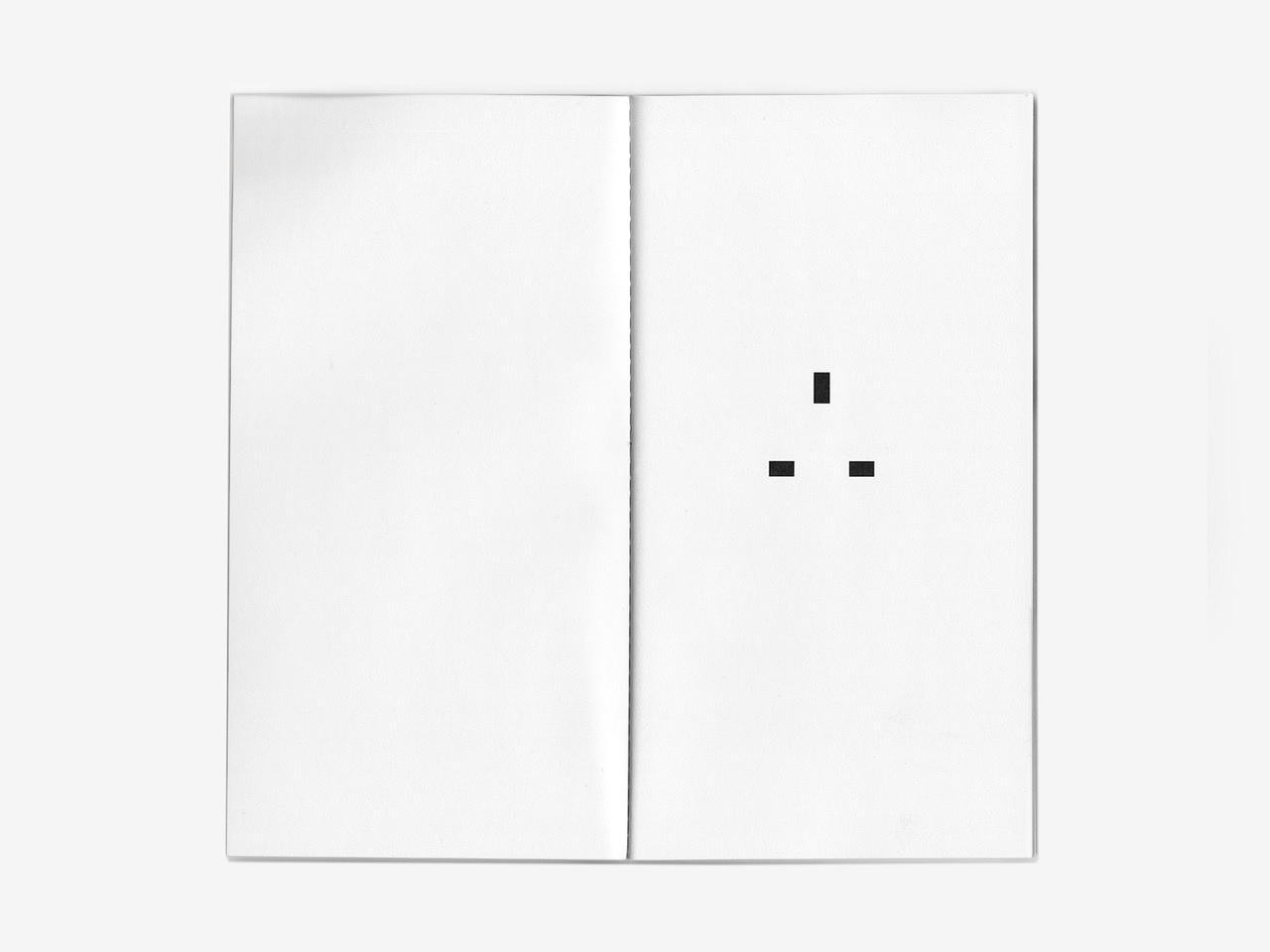
The book’s format is brilliantly simple. Each right-hand page shows a life-size illustration of a hole or a cluster of holes, with no label, no caption, no hint of any kind. Your job is to figure out where it comes from. The answer is printed on the reverse. That’s the whole game, and it works far better than it has any right to. The moment of recognition, when a familiar shape suddenly clicks into place, is genuinely satisfying. Two small rectangular slots become a plug socket. A dense cluster of dots resolves into a shower head or a speaker grille. Stripped of all their surrounding context, these shapes become strange and new again, like seeing a word repeated until it loses its meaning.
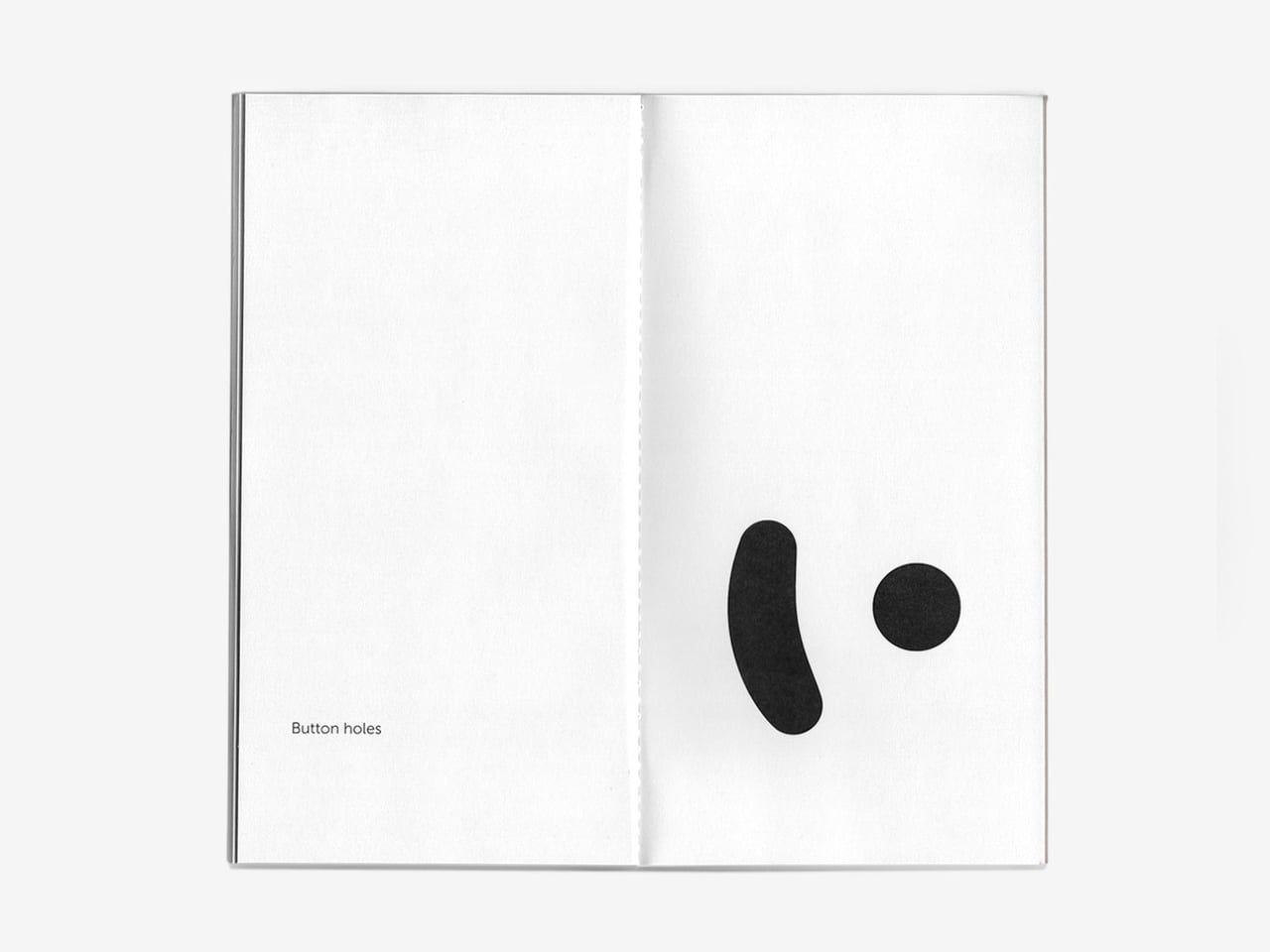
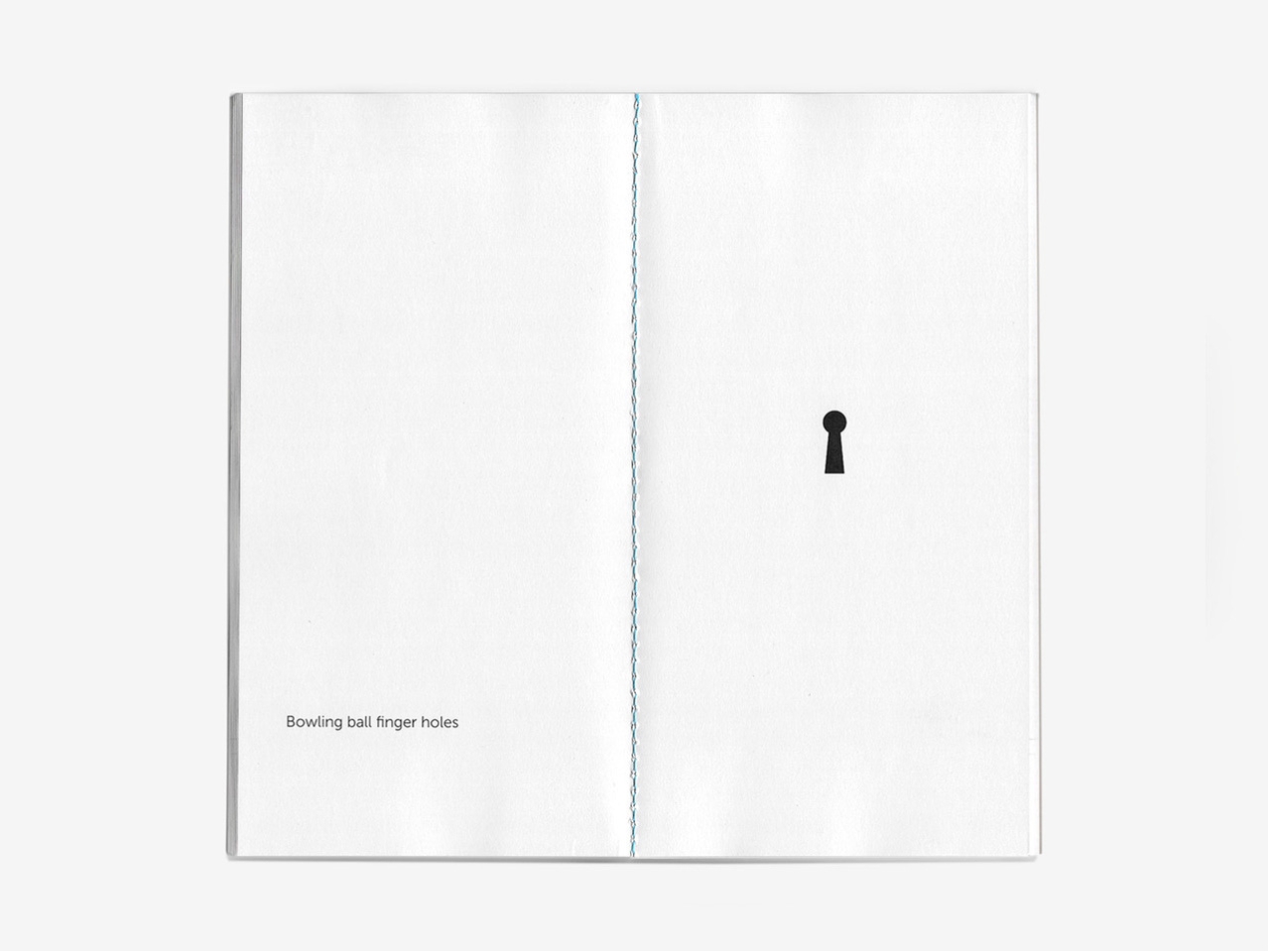
Bergne gives you 24 of these moments, and the small-format, minimal production keeps the focus entirely on the holes themselves. No distractions. No unnecessary colour or decoration. The cover’s punched hang-tag slot doubles as both a functional detail and a dry design joke, which tells you a lot about where Bergne’s head is at. He’s clearly enjoying himself here, and that enjoyment is contagious. It’s rare for a design object to be both rigorous and fun at the same time, and this one manages it easily.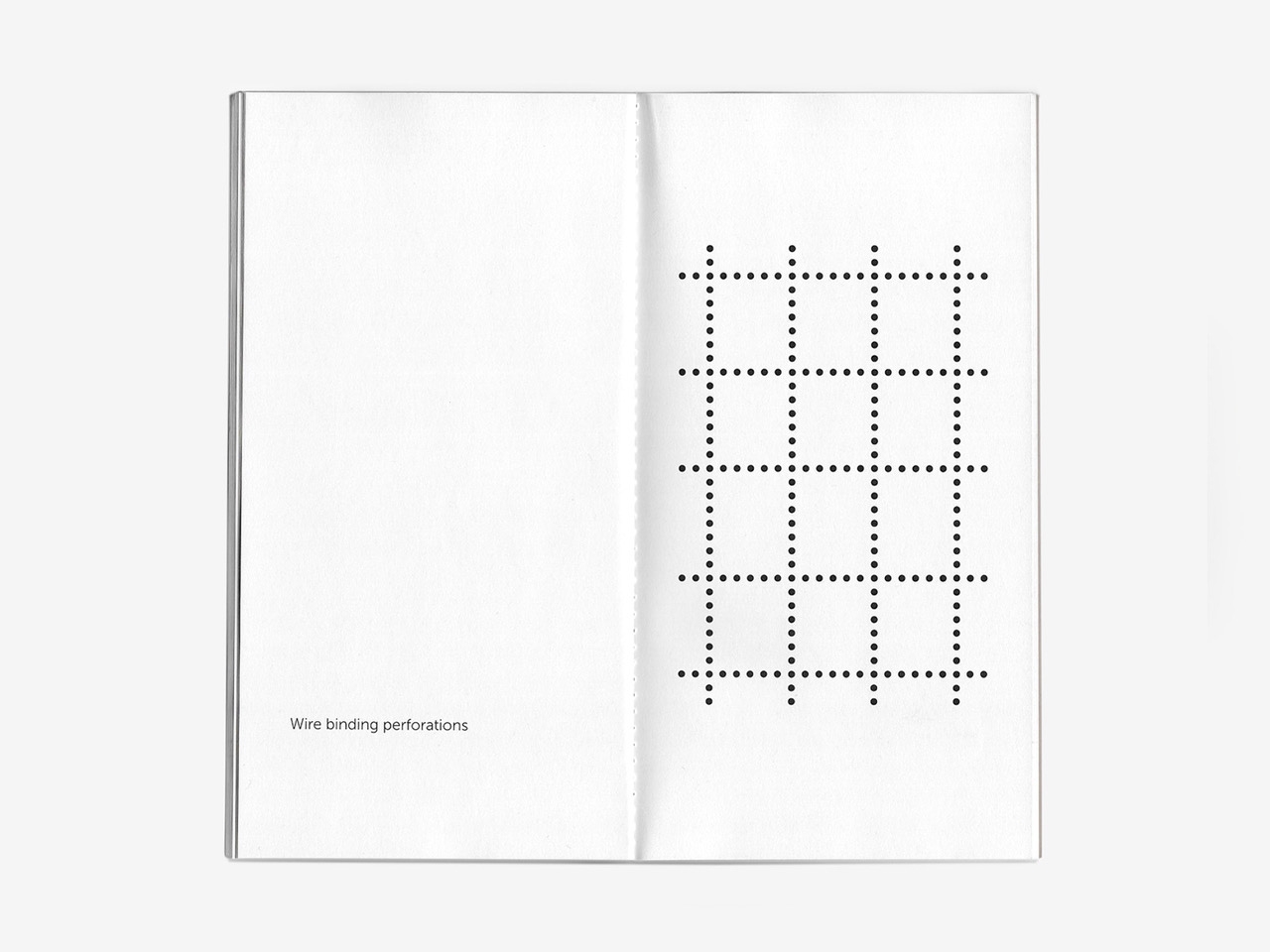
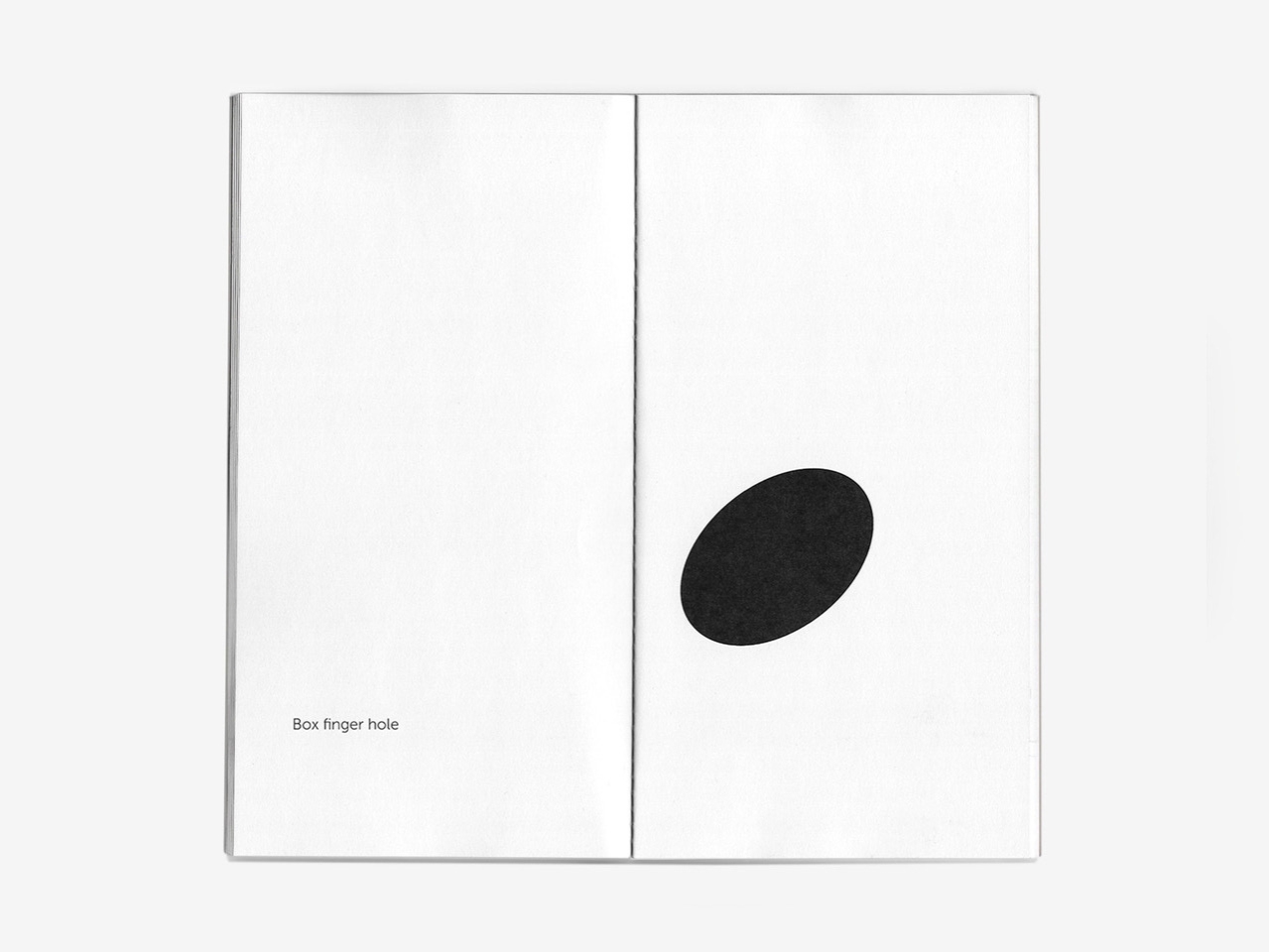
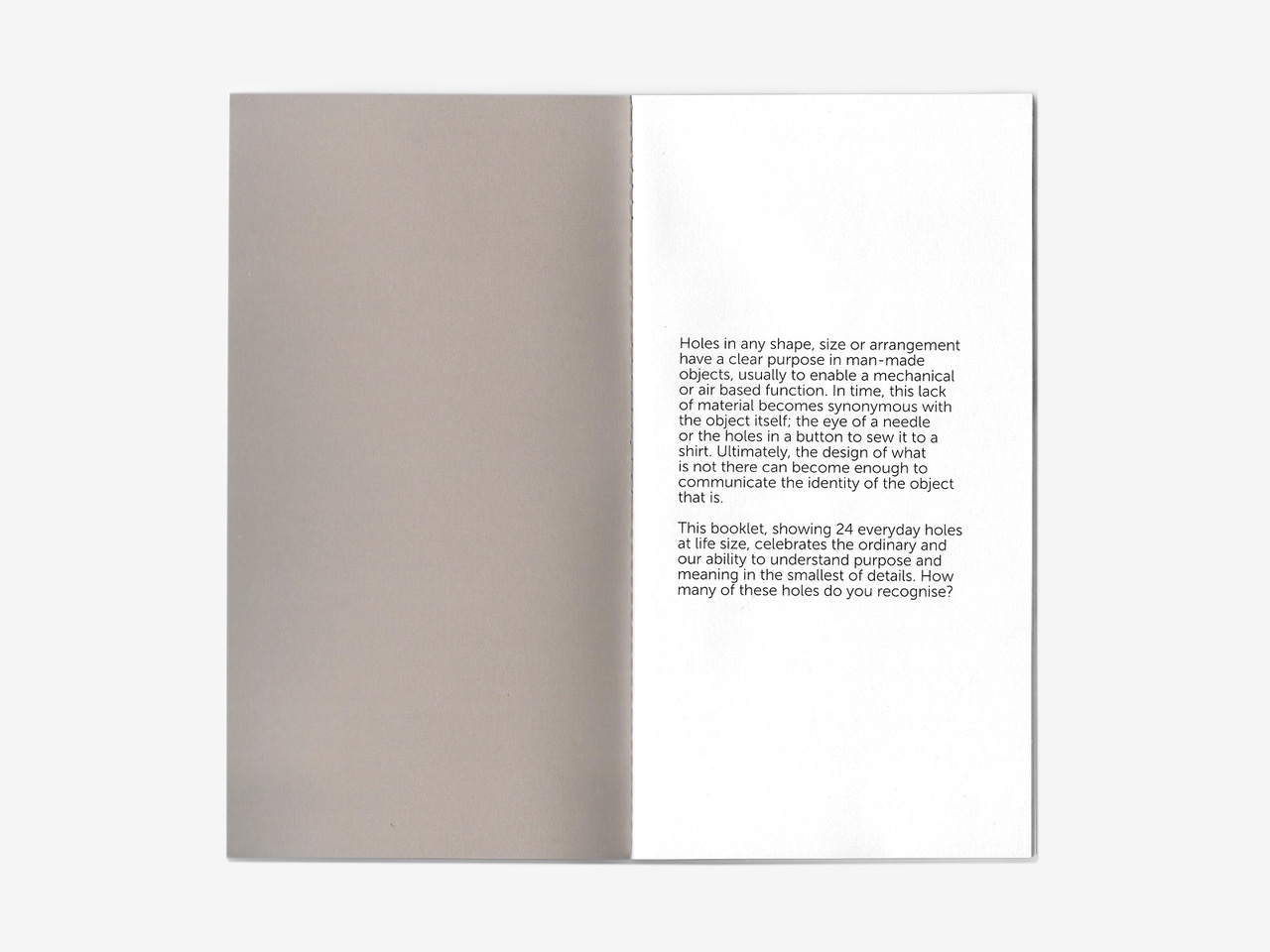
But underneath the playfulness, the book is making a serious point. Bergne’s introductory text argues that holes are not simply features cut into objects. Over time, they become the objects. The eye of a needle is not just a slot for thread. It is what a needle fundamentally is. The two holes in a button are what make it a button at all. Remove the surrounding material and keep only the void, and recognition still holds. That is a remarkable observation, and it quietly reframes the way you look at almost everything once it lands.
It also opens up a more provocative idea: if the absence of material carries as much meaning as the material itself, then perhaps good design is as much about what you leave out as what you put in. For a field that often equates quality with more, this feels like a genuinely welcome counterpoint. It’s a subtle argument for doing less, tucked inside what looks like a charming little quiz book.
As a physical object, Everyday Holes is exactly what it should be. Honest production, restrained design, no excess. It works as a gift for anyone who thinks seriously about how things are made. It works as a coffee table piece that actually starts conversations rather than just sitting there looking expensive. And it works as a solo read, the kind you finish in minutes but find yourself turning over in your head for days afterward.
The best design books don’t just document good design. They change how you see the world outside their pages. Everyday Holes manages that in under 24 pages and almost no words at all. Once you start noticing holes, really noticing them, the grid of a colander, the spacing of a grille, the deliberate placement of a buttonhole, you can’t quite stop. A small book about nothing that somehow changes how you see everything.