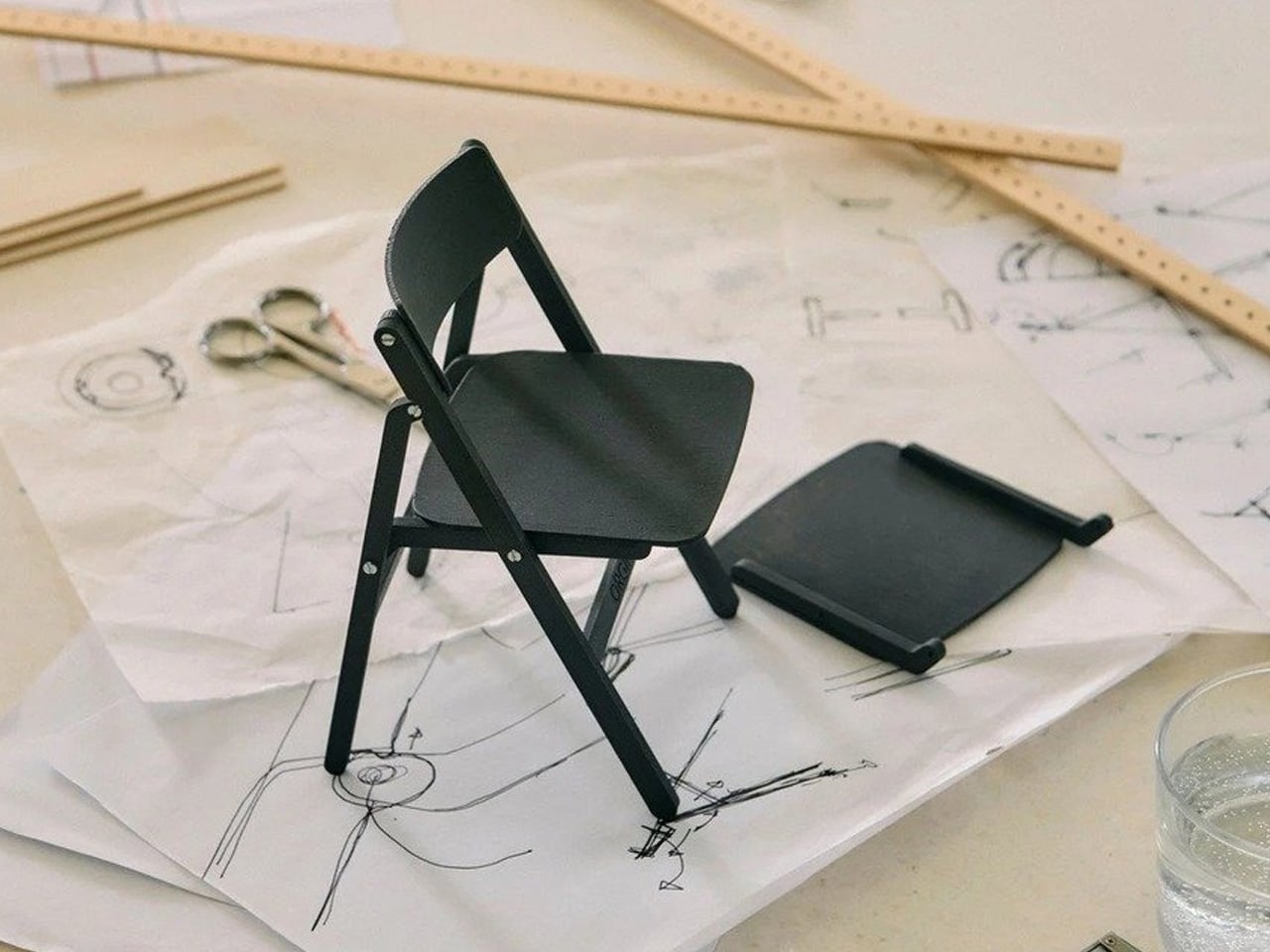

Gudmundur Ludvik had a question he couldn’t let go of. Why should a folding chair be a compromise? The answer, for decades, had been accepted without much pushback: folding chairs sacrifice comfort for storage, aesthetics for portability. The category had been quietly settled. Ludvik disagreed.
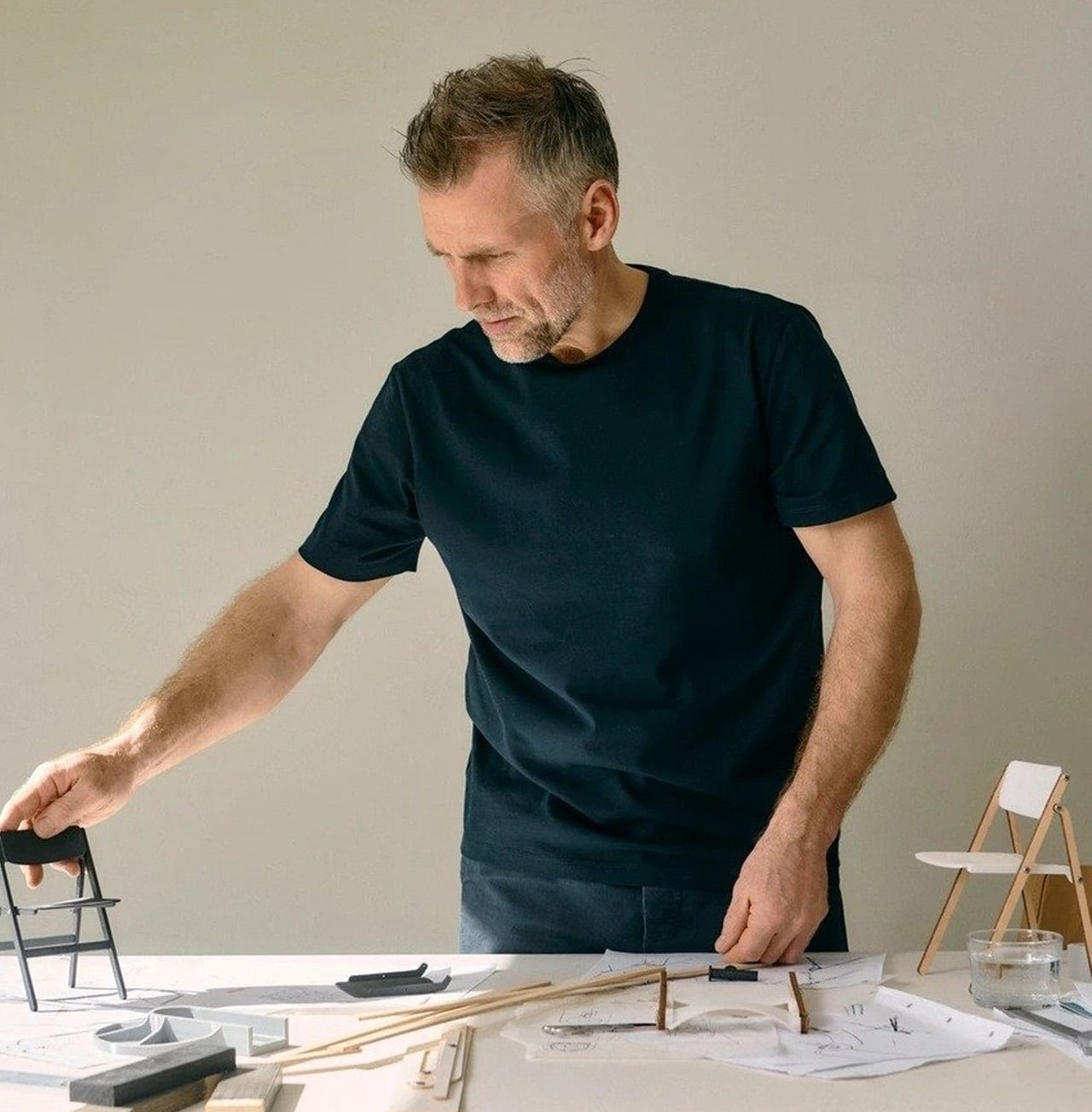
The Backflip, produced by HAY, is his rebuttal. An Icelandic designer based in Vejle, Denmark, Ludvik trained first as a carpenter and cabinetmaker before studying sculpture at the Icelandic Academy of Arts and furniture design at the Danish Design School, graduating in 2002. That layered background — craft, art, design — shows in the Backflip. The chair doesn’t announce its ingenuity. It keeps it entirely to itself.
Designer: Gudmundur Ludvik

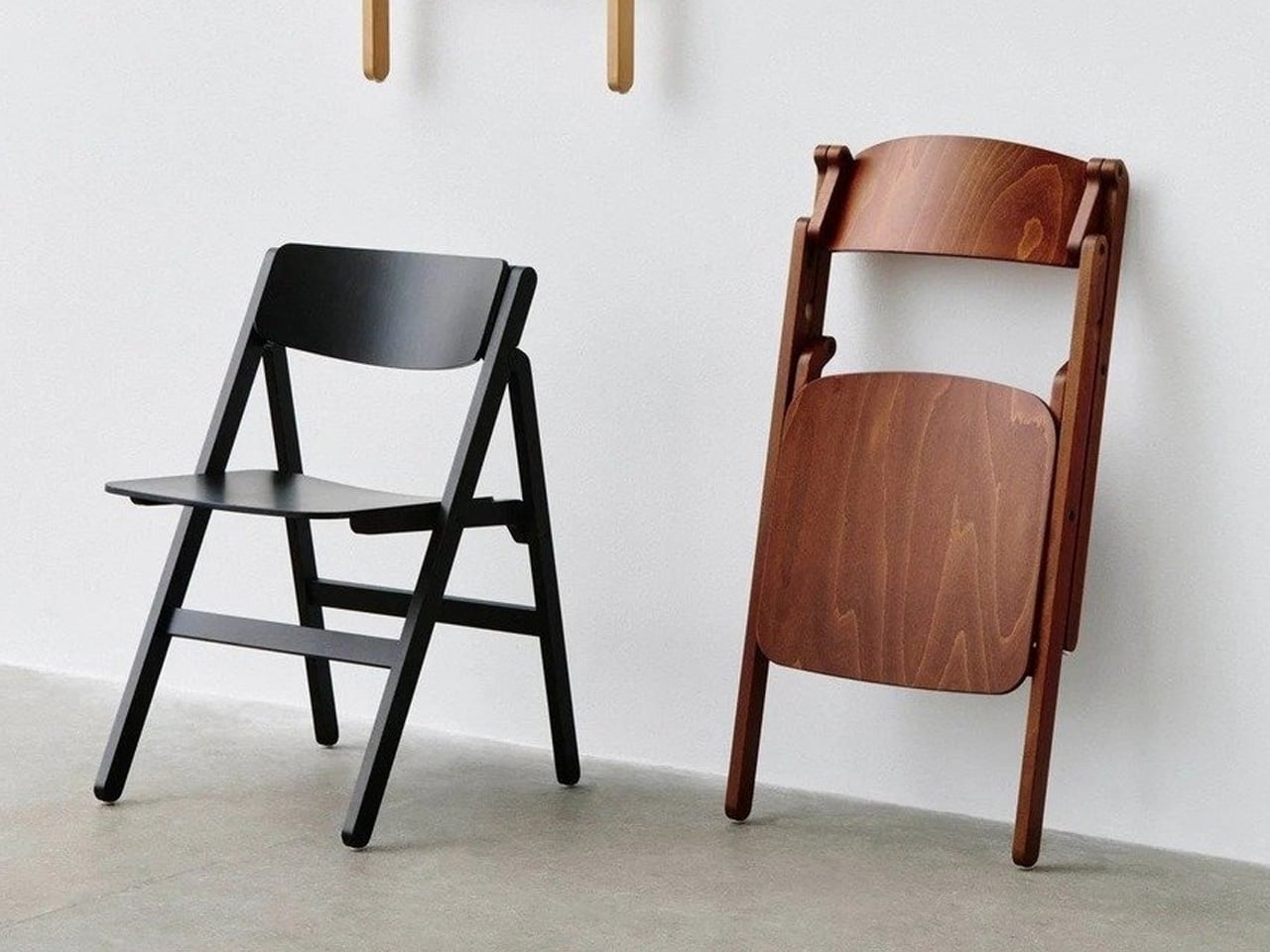
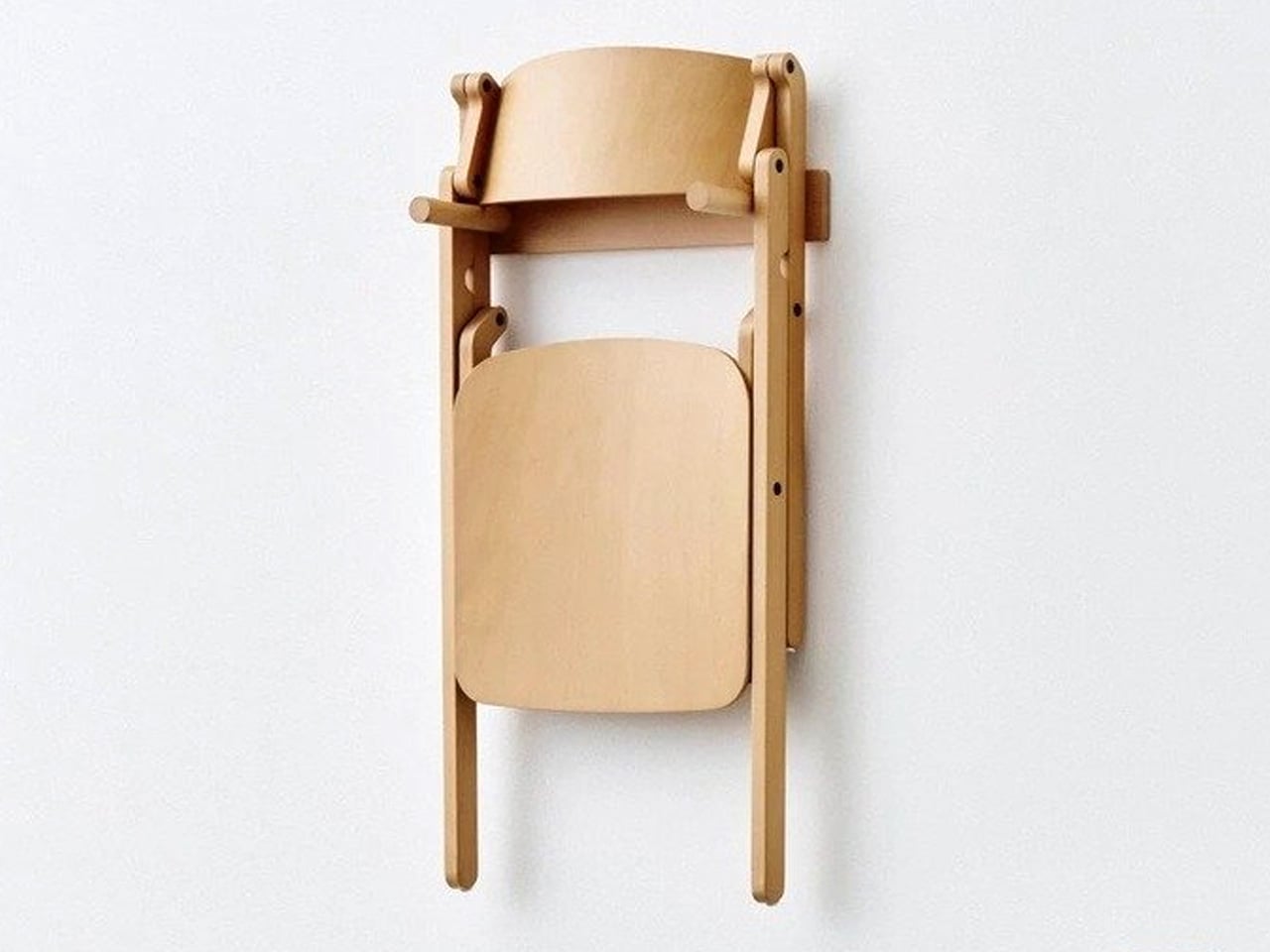
The defining feature is a folding mechanism concealed within the backrest. A single rotation collapses the chair in one continuous motion; one hand is all it takes. There are no exposed hinges, no visible hardware, no visual record of the engineering beneath. The mechanism is part of the structure rather than an addition to it, and that distinction is everything. From the front, the Backflip looks like a chair that simply sits well. Which is the point.
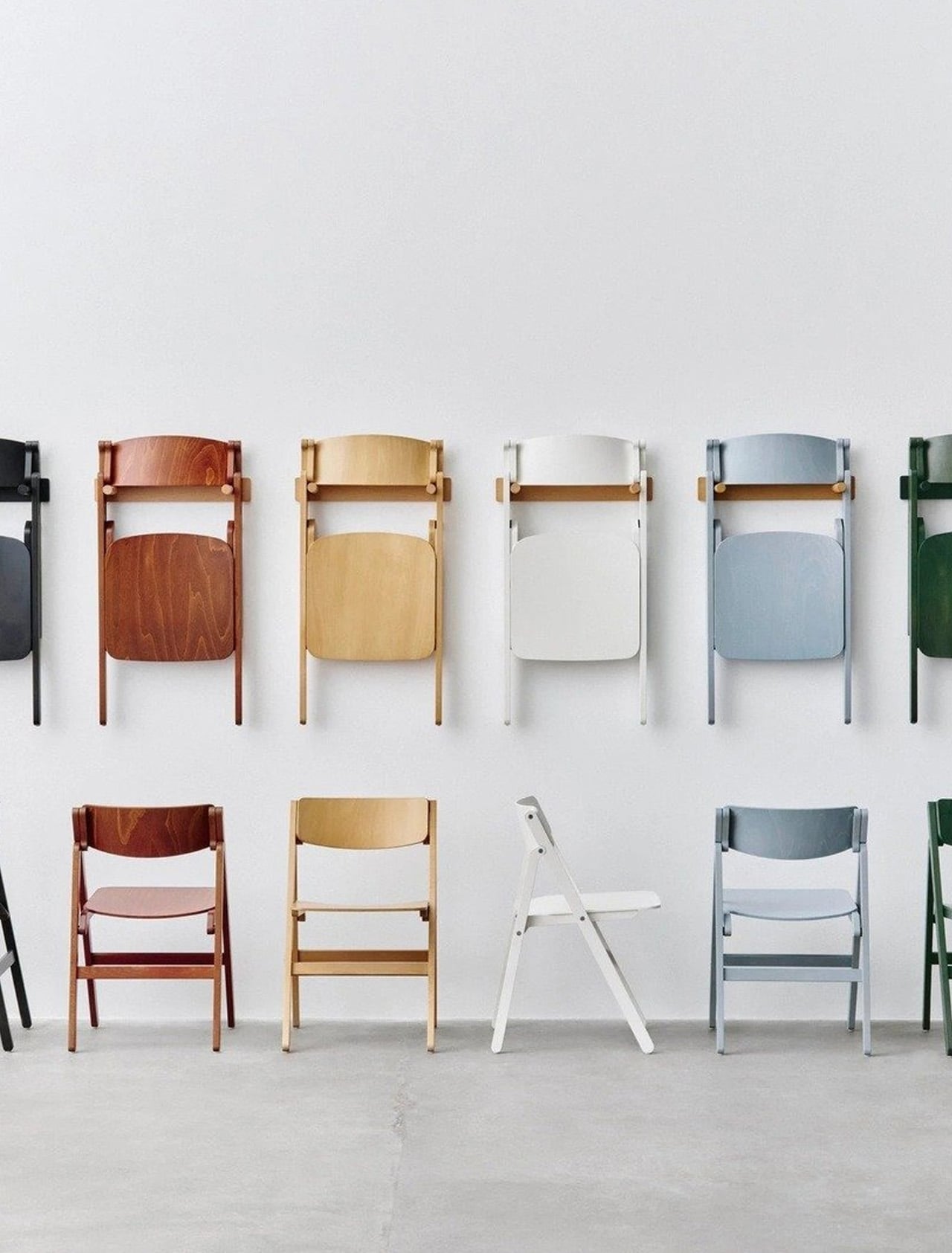
Ludvik’s stated ambition was to approach the folding chair typology from the opposite direction: create a good chair first, and a folding chair second. The frame is solid beech wood, lacquered, with a moulded plywood backrest. The profile is clean and unhurried, shaped by the logic of material and construction rather than any impulse toward decoration. Available in natural beech across a range of coloured finishes, it translates across private dining rooms and public hospitality interiors without trying too hard in either direction.
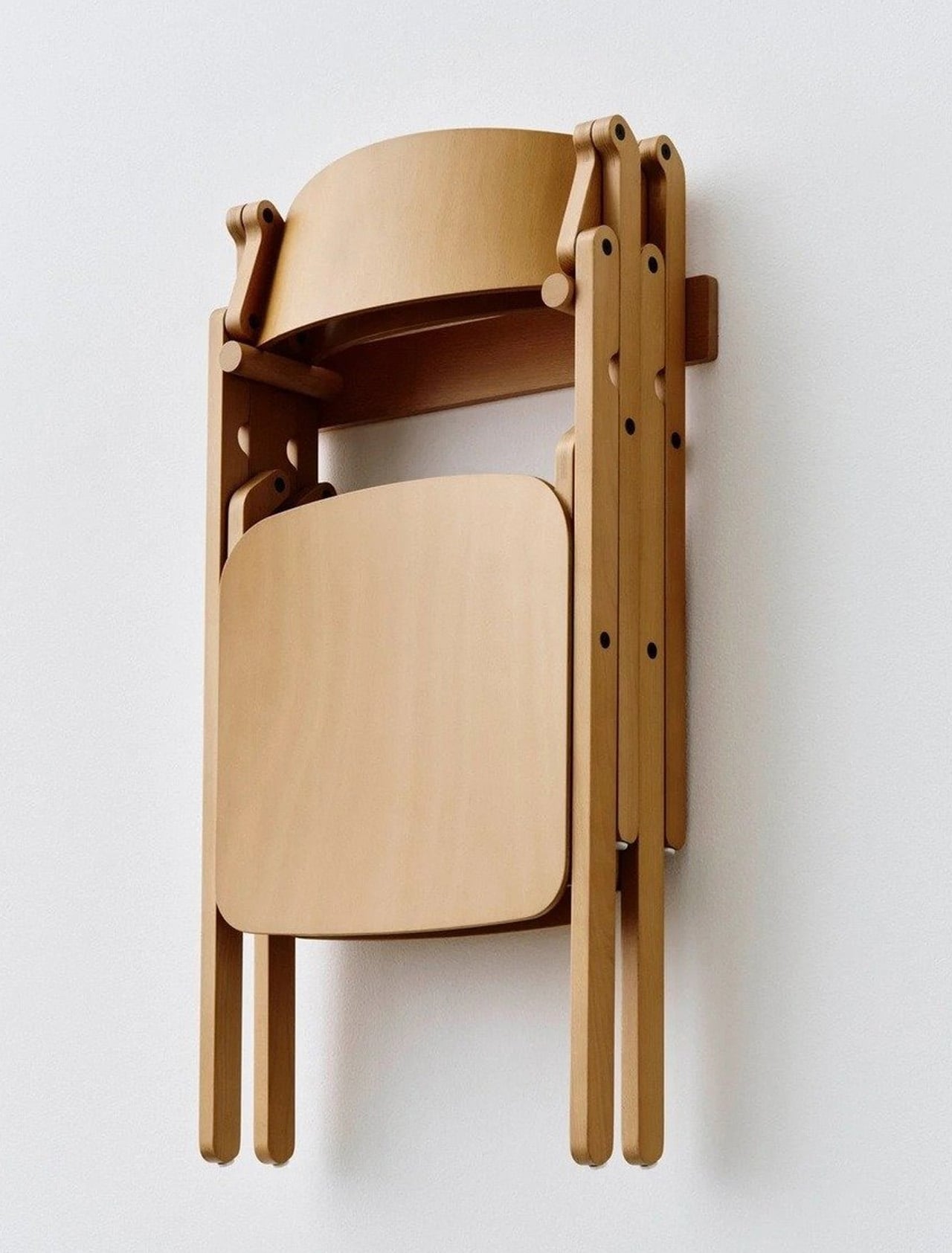

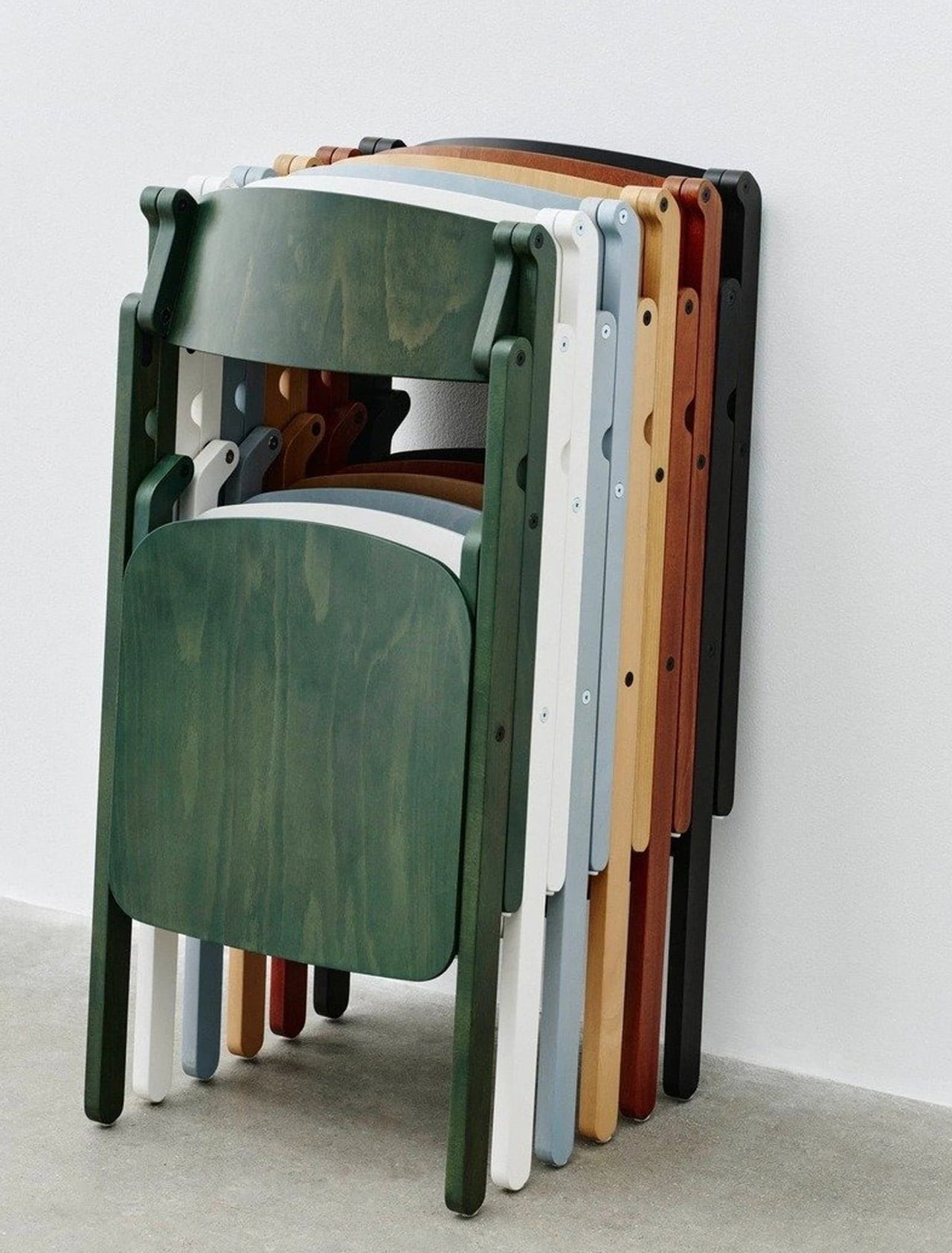
HAY also offers a matching wall bracket, designed to hold one or two folded Backflip chairs flush against any wall. It’s a satisfying extension of the concept: a chair that folds becomes genuinely space-saving only when storage itself is resolved. The bracket completes that thought without making a fuss about it.
The Backflip was previewed at 3 Days of Design in Copenhagen in 2026, where it sat alongside work from Jasper Morrison and Philippe Malouin in HAY’s exhibition at O-Overgaden, a contemporary art institution in Christianshavn. In that company, it held its own, which is a fair measure of how resolved the design feels.
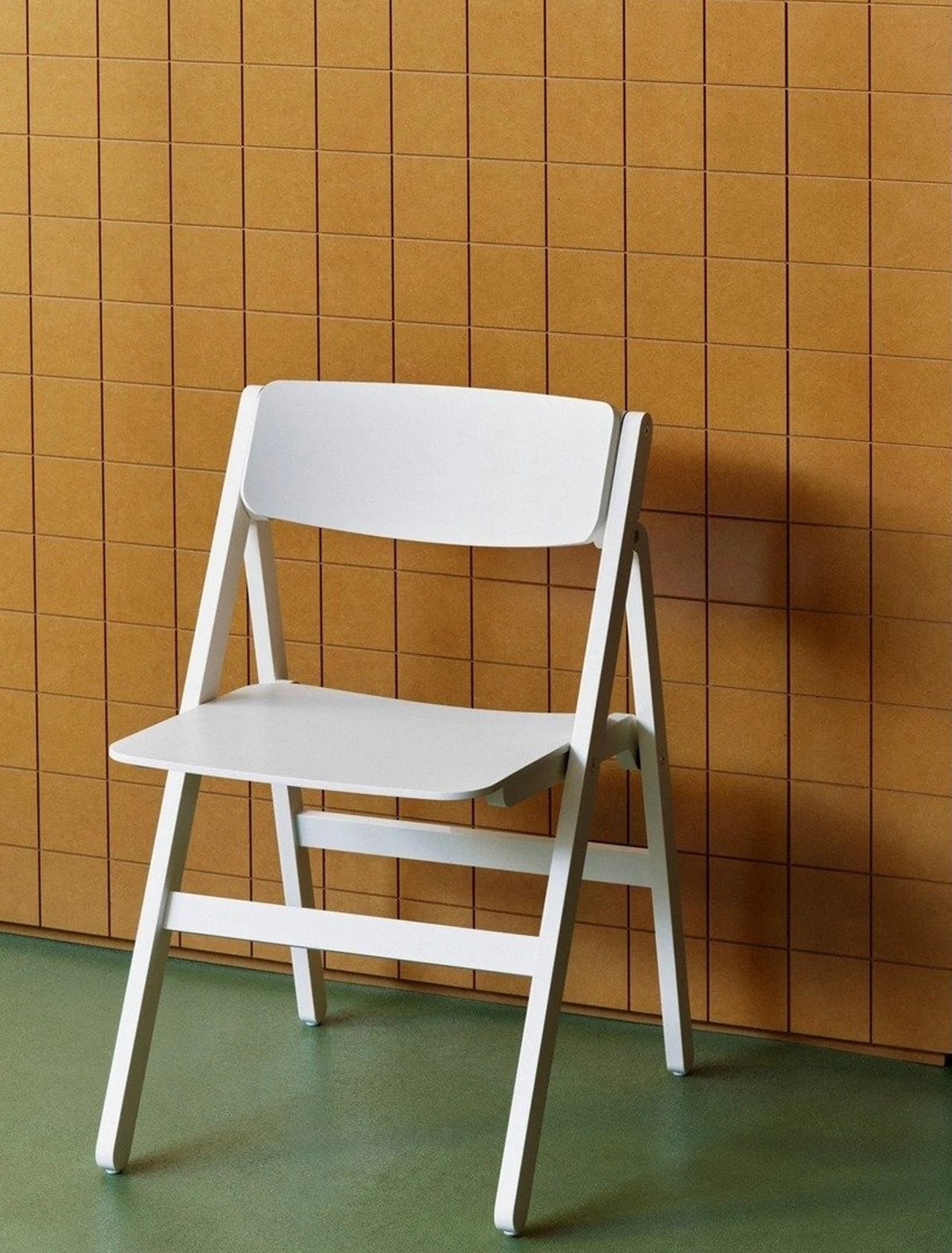
What Ludvik has made is not a clever folding chair. It’s a chair that happens to fold, and the difference is considerable. That the mechanism disappears entirely into the backrest is less a magic trick than a design argument, made quietly, about where the priorities should lie.