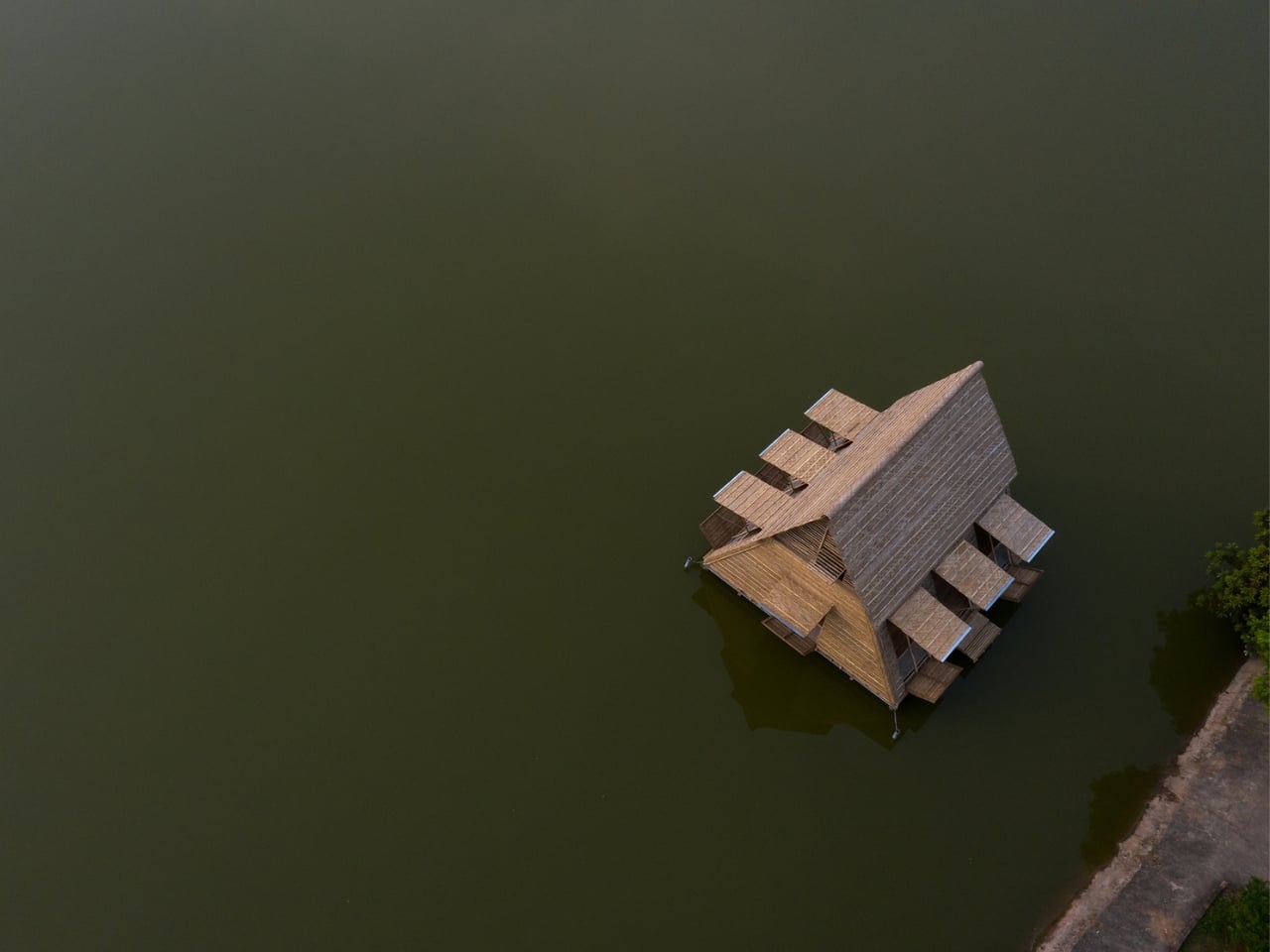
The Mekong Delta has always lived by the rhythms of water. Its rivers rise and fall with the seasons, and the people who call this region home have spent generations learning to move with it rather than against it. But what happens when the water stops being seasonal and starts being permanent? That question sits at the heart of one of the most quietly radical housing concepts to come out of Southeast Asia in recent years: the Floating Bamboo House by Hanoi-based H&P Architects.
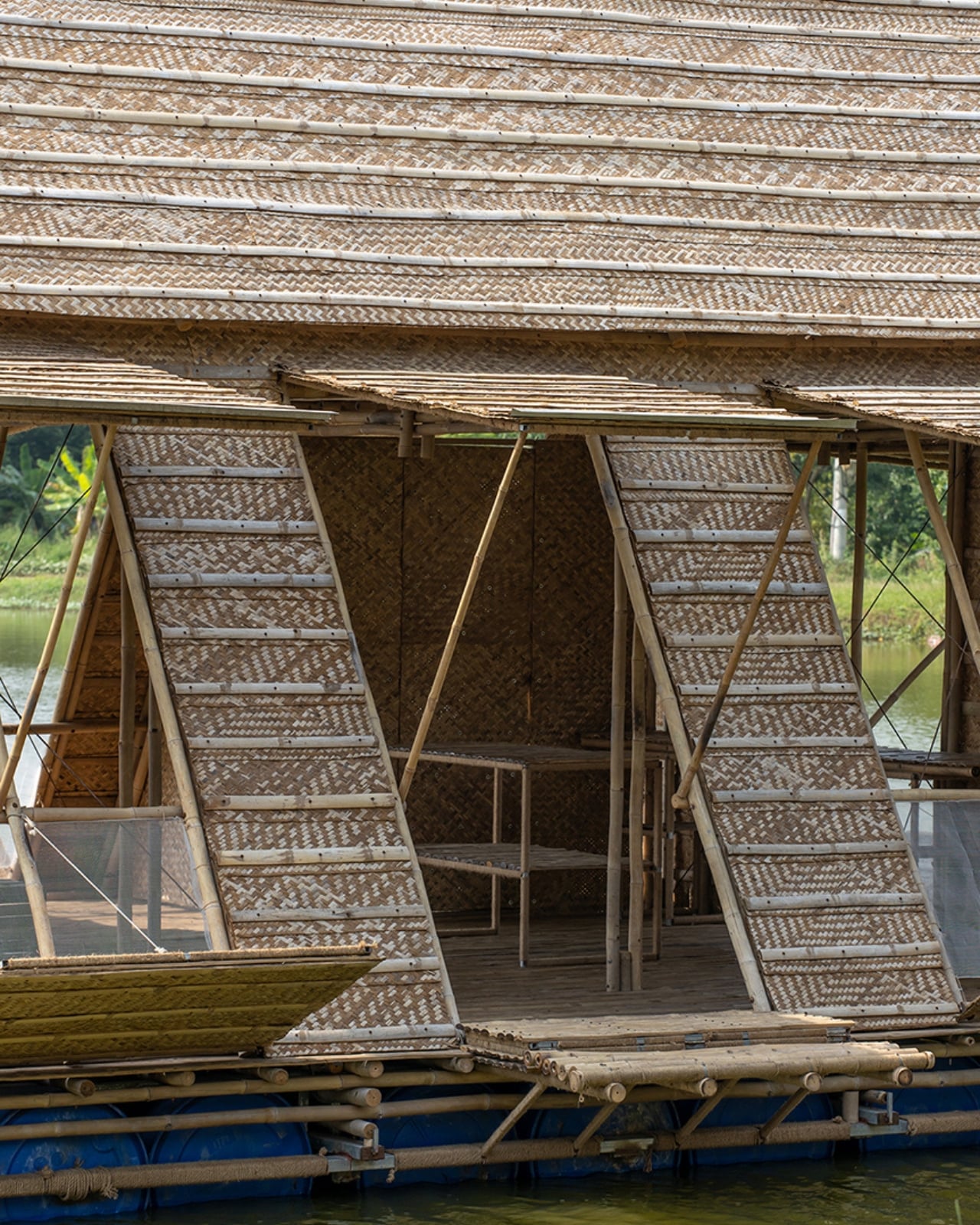
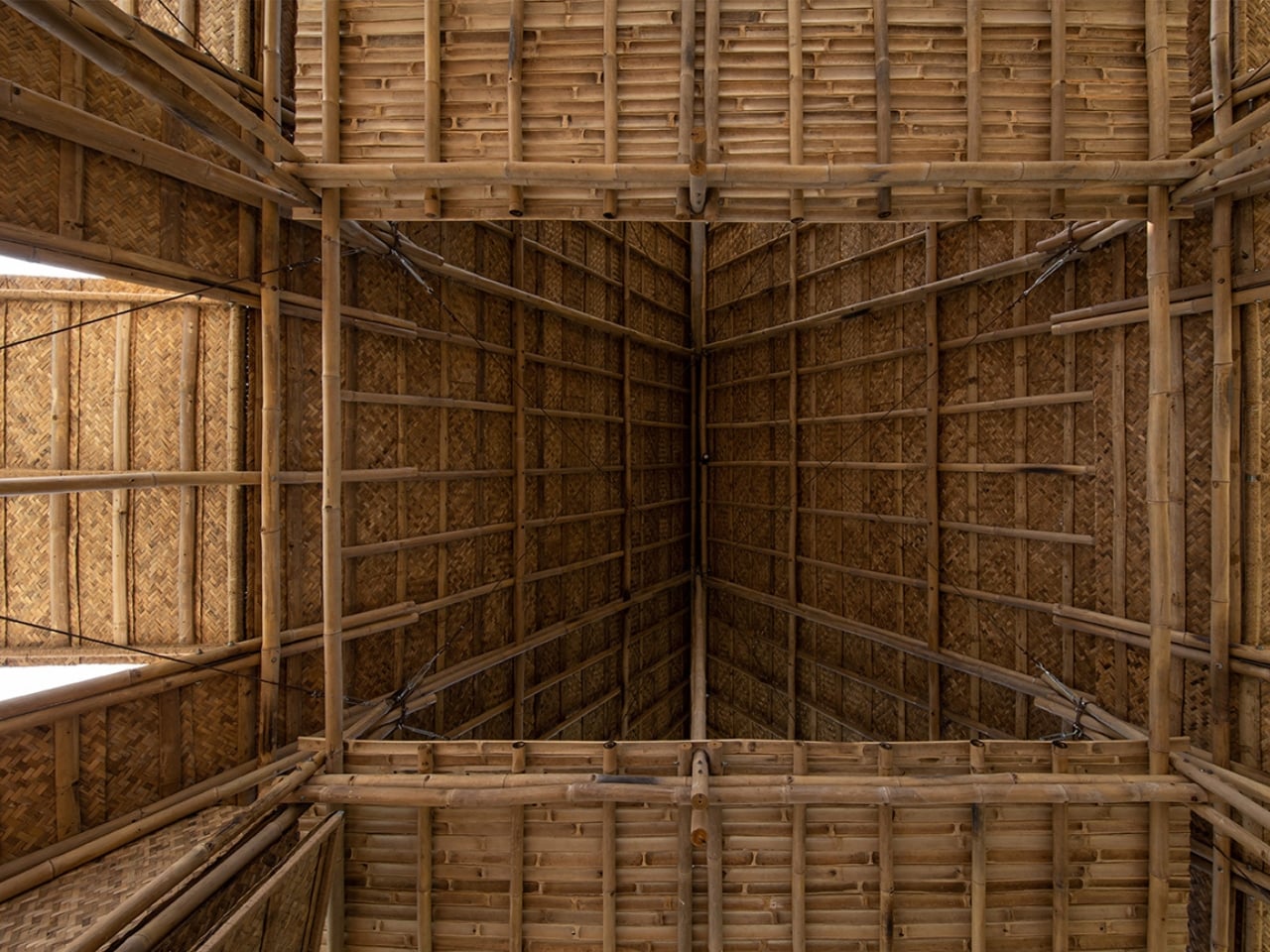
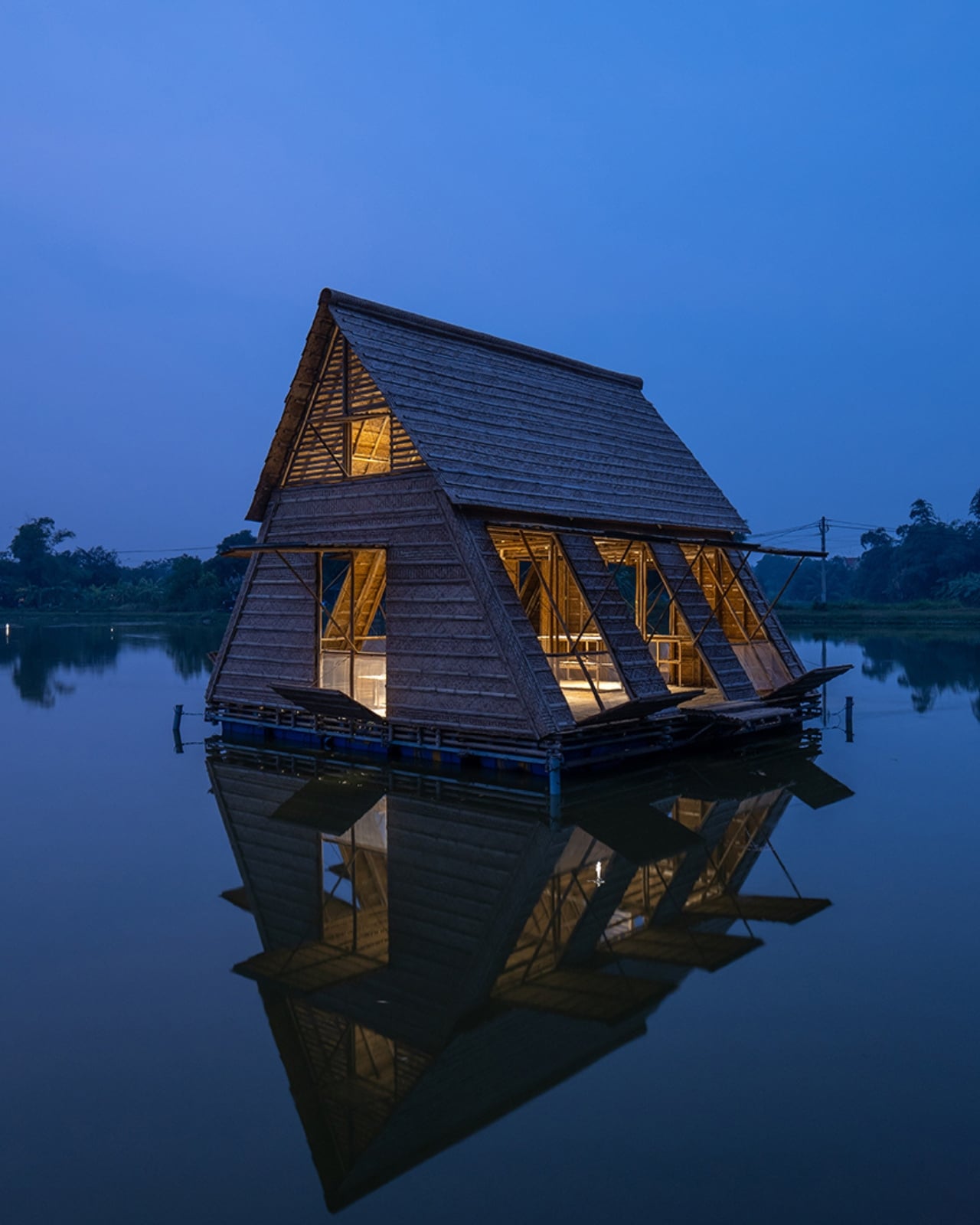
The project, also known as Nhà tre nổi, started as a prototype for Vietnamese communities whose lives and livelihoods are tied to the river. The structure is a three-compartment home built from solid-cored bamboo, with pieces ranging from three to six meters in length, joined with latches and ties rather than industrial fasteners. Beneath the floor, a system of plastic drums keeps the whole thing afloat. It sounds almost too simple, which is exactly why it works.
Designer: H&P Architects
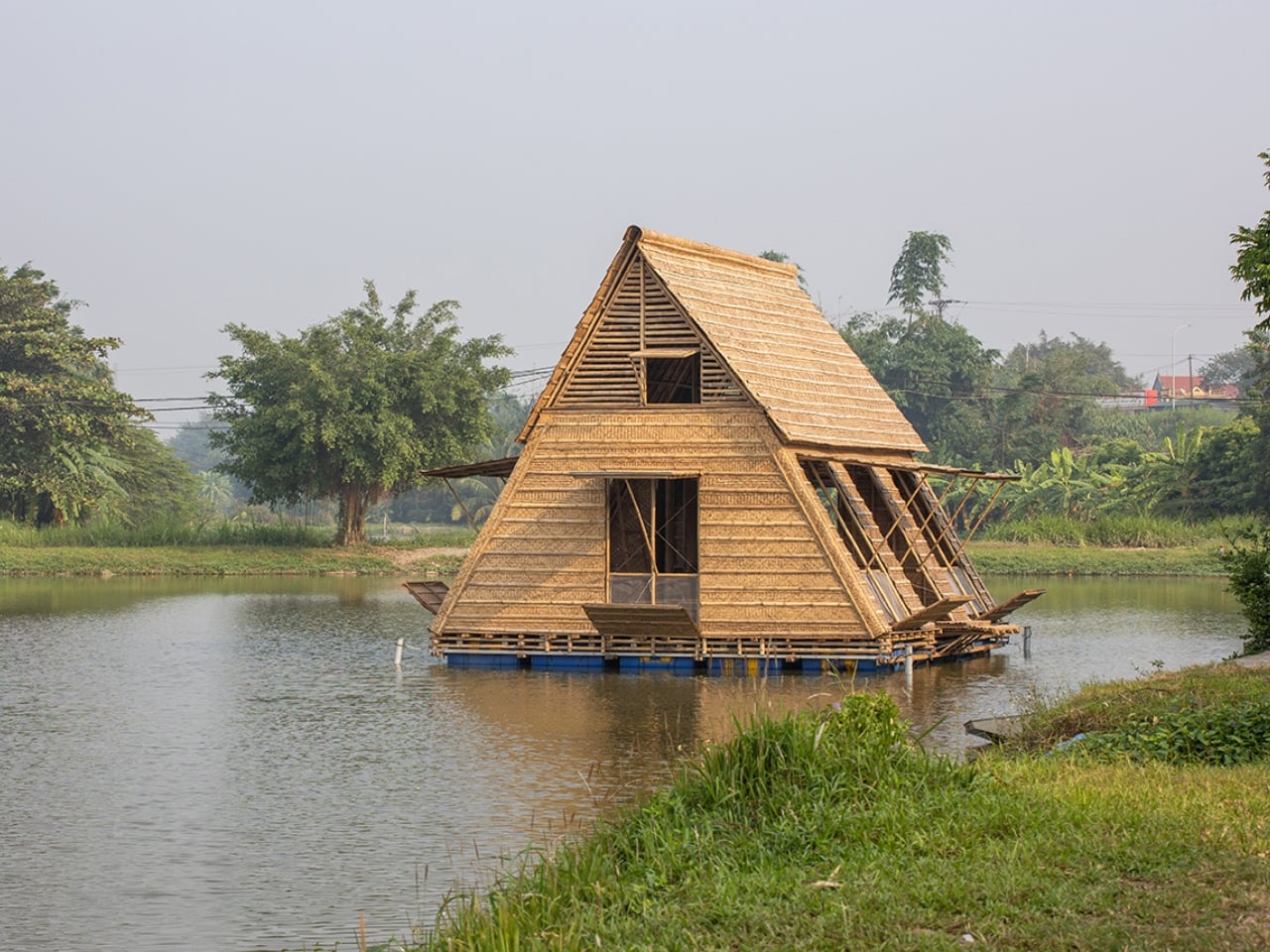

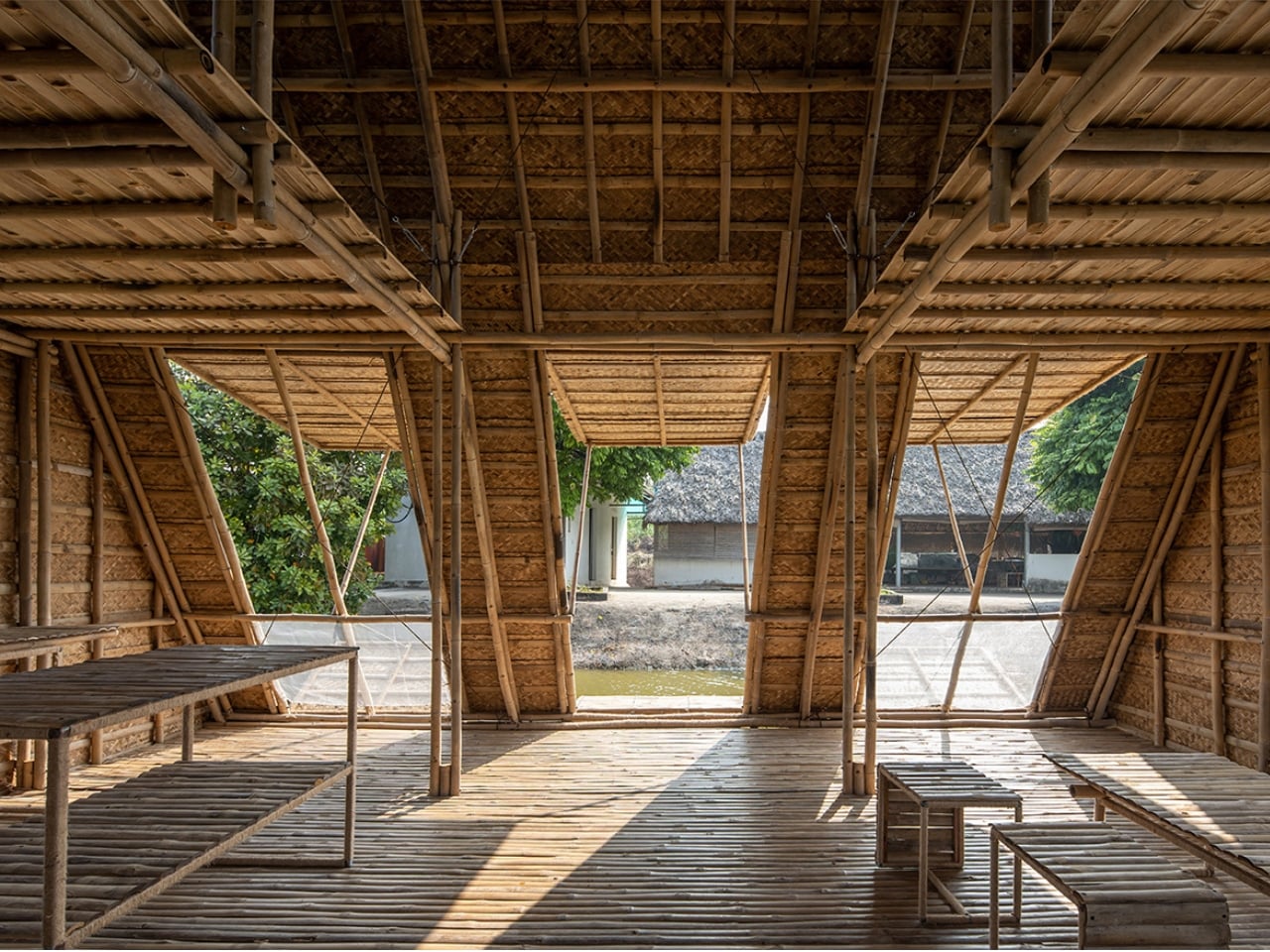
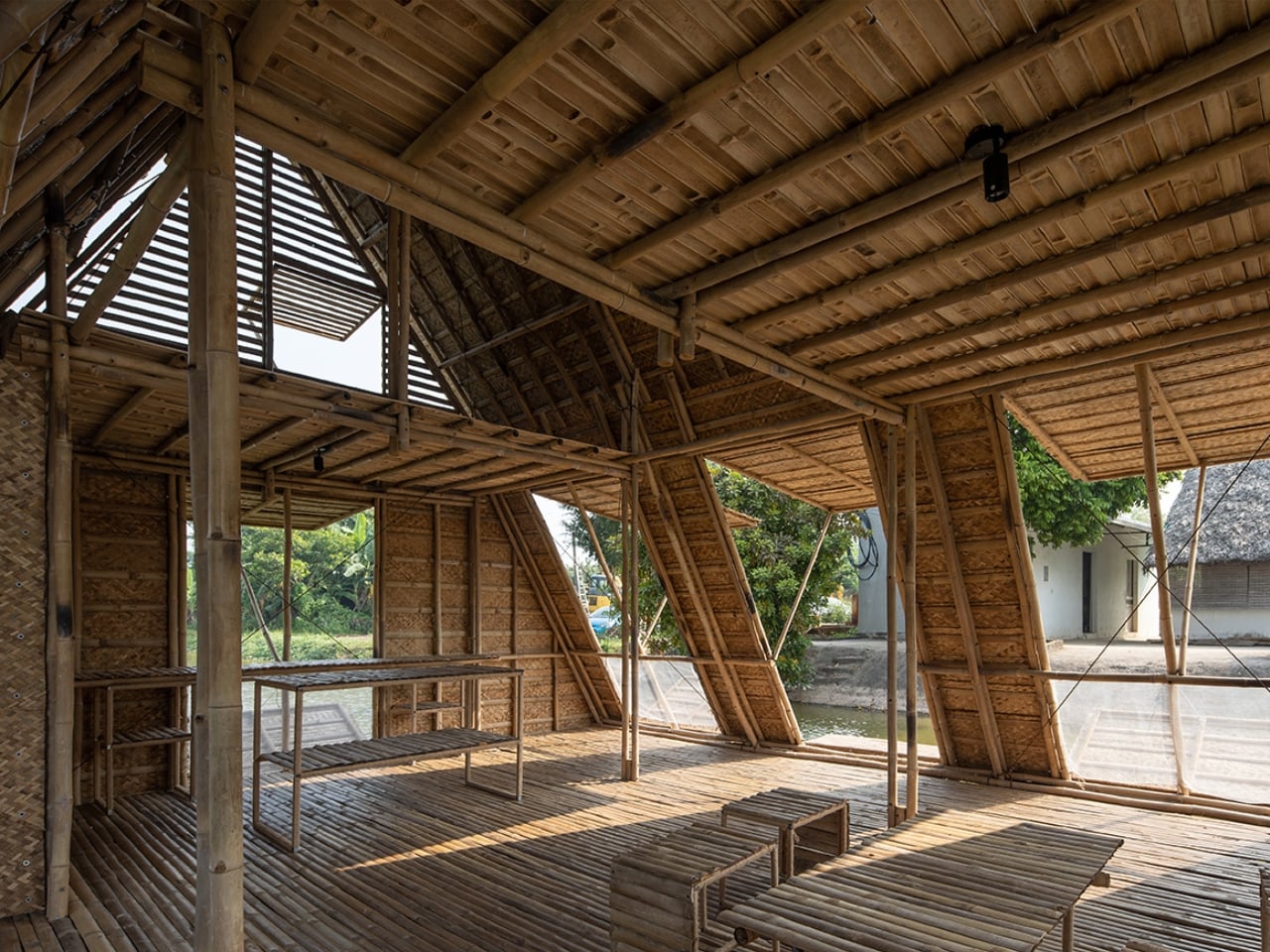
The exterior and interior are covered in lightweight materials: compacted bamboo sheets, leaves, perforated iron, and bamboo panels. Doors and panels open and close in ways that reinforce the structure during bad weather, and when skies are clear, the same openings let the house breathe. Two prototypes have been built so far, both in Hanoi province. Neither of them looks like a compromise.
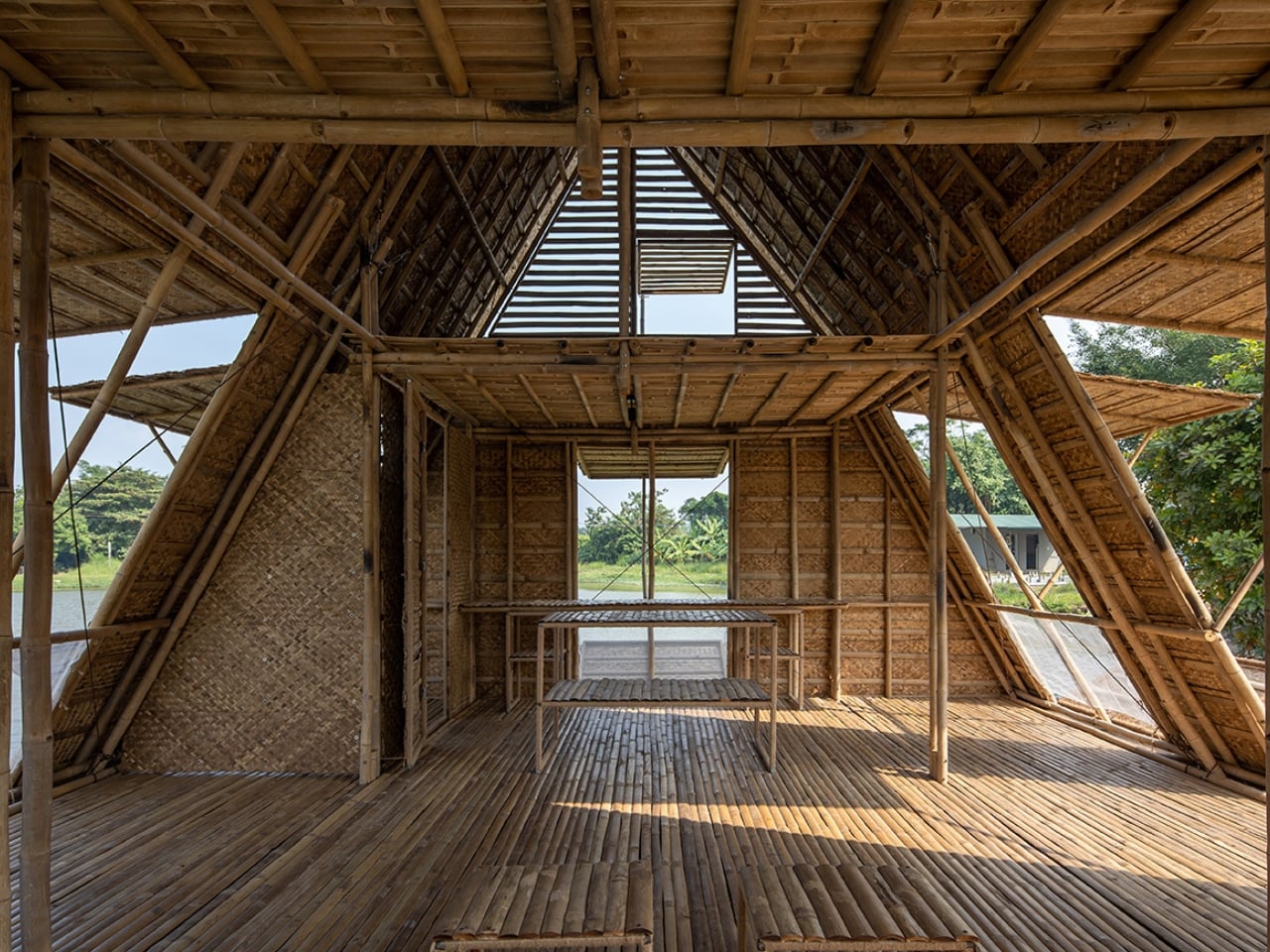
What makes this project feel culturally grounded rather than just architecturally clever is how it draws from Vietnam’s own building history. The open interior mirrors the Rông house, a communal structure used by ethnic minority groups in Vietnam’s Central Highlands, and the Đình pavilion, a longstanding civic gathering space. When the second-floor panels are removed, the home can transform into a classroom, a library, or a meeting hall. The house doesn’t just shelter people. It creates the possibility of community.
It also scales. H&P Architects envision multiple FB Houses eventually forming floating neighborhoods, connected by playing grounds, vegetable-growing rafts, and fish-raising areas. This is not a niche design experiment meant for a magazine spread. It is a serious proposal for how people can continue living with dignity in places the climate is actively reshaping.

Vietnam is one of the countries most exposed to sea-level rise. A predicted one-meter increase would flood nearly half of the Mekong Delta and affect somewhere between 20 and 30 million people. That context reframes everything about this project. Bamboo becomes not just a material choice but a statement about what resilience actually looks like at the scale of everyday life.
I keep coming back to the fact that the most compelling design work right now isn’t coming from luxury firms building dramatic icons for wealthy cities. It’s coming from architects willing to work with local knowledge, accessible materials, and real constraints. H&P Architects didn’t design a vacation house that happens to float. They designed a home that a low-income family can build and maintain, that connects to the land it came from, and that has enough cultural intelligence to feel like it belongs there.
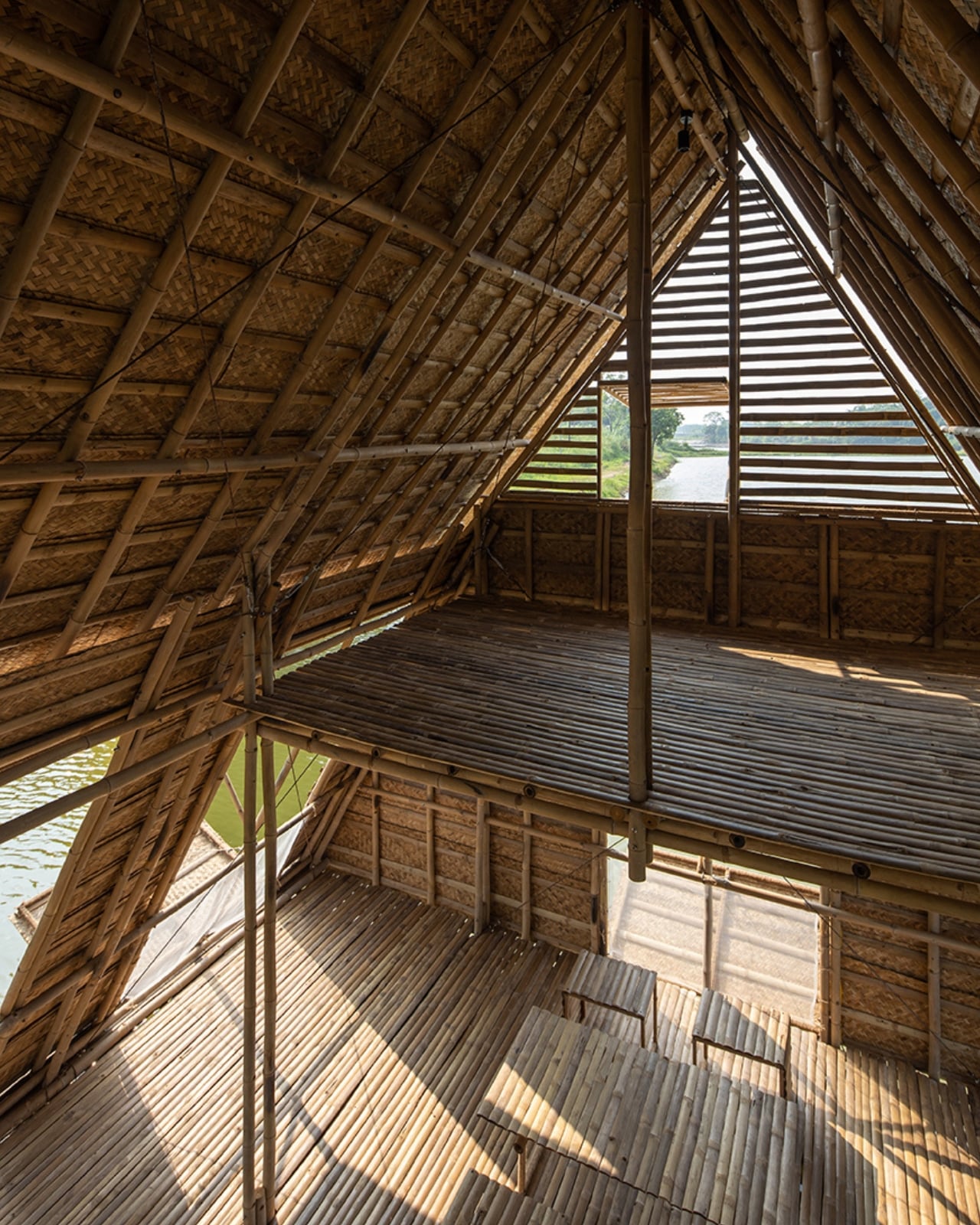
The Floating Bamboo House isn’t trying to be photogenic. But it is. The studio’s own description of the finished structures as “like flowers amidst floating waters” is one of those rare phrases that makes you pause because it actually earns its poetry.
If the broader design world is paying attention, and I think it should be, projects like this are worth more than admiration. They are worth studying, funding, and scaling. The climate conversation in design tends to get stuck on materials certifications and carbon metrics. What H&P Architects is offering is something harder to quantify: a model of living that bends rather than breaks, that takes its cues from the place and the people it was made for, and that treats resilience not as an aesthetic but as a form of care.