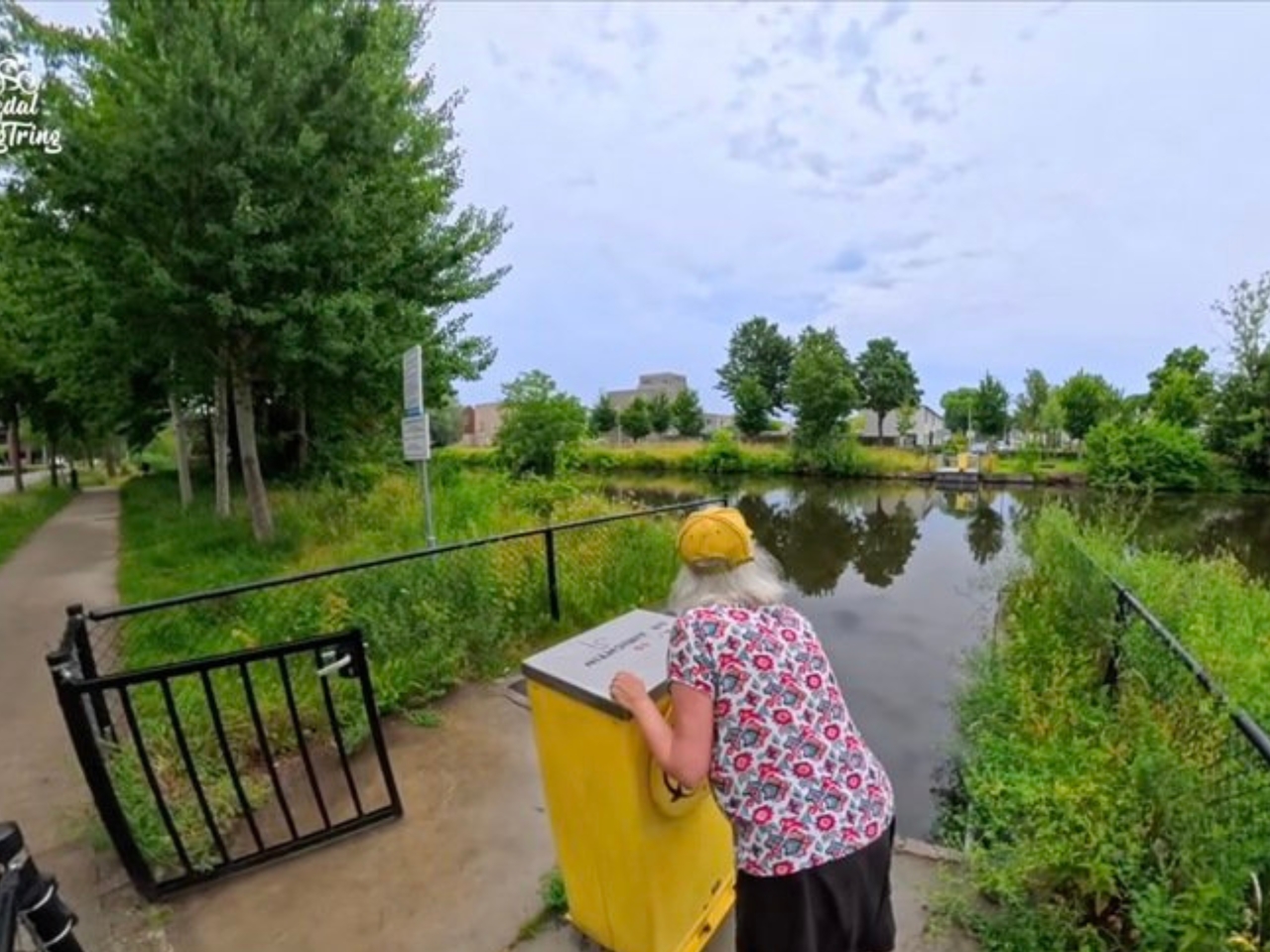
The Netherlands has long held the reputation for being the gold standard of cycling culture, and yet somehow, they keep finding new ways to surprise you. The latest? A self-powered, chain-driven floating platform that lets cyclists cross the Piushaven river in Tilburg without a bridge, without a motor, and without waiting for anyone else to make it happen. It’s exactly the kind of design that should make the rest of us feel both inspired and slightly embarrassed that we hadn’t thought of it sooner.
The setup is deceptively simple. A flat floating platform sits on the water, connected to a submerged chain that stretches from one bank to the other. When you arrive at the edge of the Piushaven, you roll your bike onto the platform and turn a crank. That’s it. The crank mechanism pulls the platform along the chain, and you slowly drift to the other side. No waiting for a scheduled ferry. No detour to the nearest bridge. No fuel, no emissions, no infrastructure beyond what’s already in the water. Cranks are installed on both sides of the canal, so if the platform is docked on the opposite bank, you simply crank it over to your side first.
Designer: Tilburg City
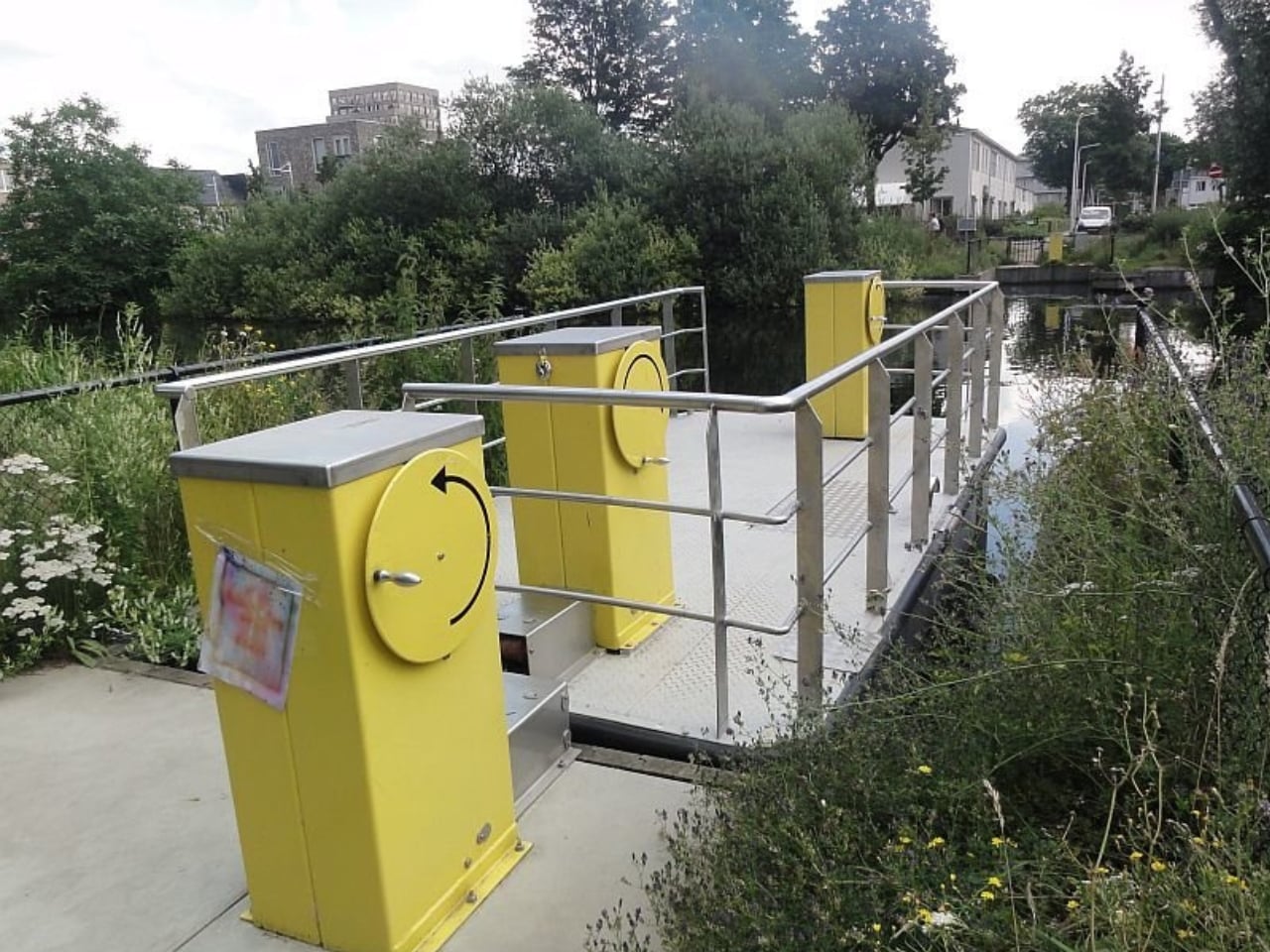

The Dutch have been managing waterways for centuries, which is probably why they’ve refined the logic of crossing them down to something this clean. The Netherlands is famously threaded with canals, many of which predate modern transit planning by hundreds of years. The challenge has never been the water itself but the question of how you move people across it without making the whole thing a logistical nightmare. A massive bridge requires significant investment. A permanent ferry service requires staff, a schedule, operating costs, and inevitably, maintenance headaches. What Tilburg built is neither. It’s closer to a tool than a transit system, a piece of infrastructure that behaves more like a piece of outdoor furniture than a public works project.
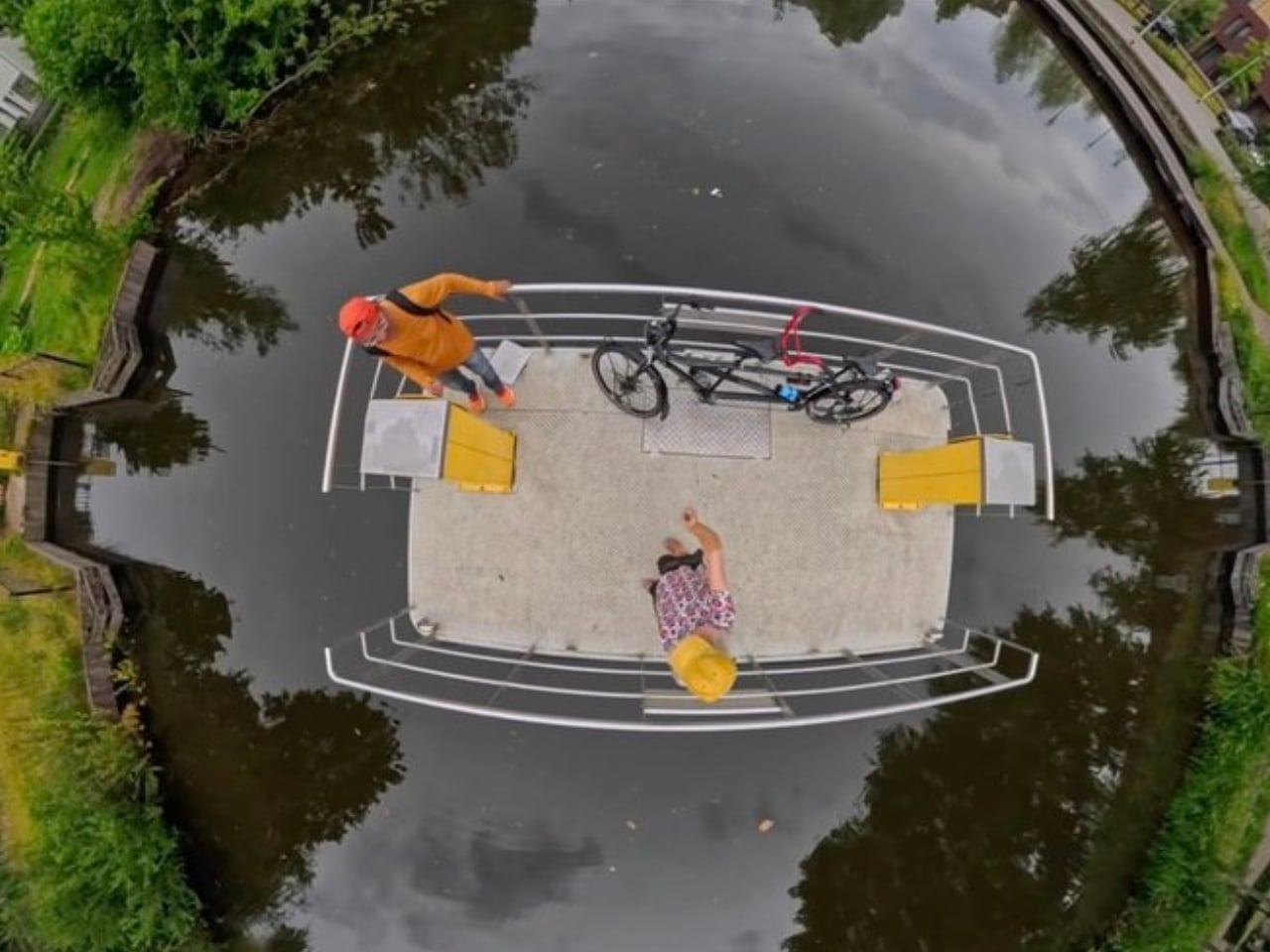
The restraint in that decision is the most clever part of the whole thing. The municipality didn’t try to solve the problem with more technology. They solved it with less. And the result is a crossing that works around the clock, requires minimal upkeep, and asks the user to contribute exactly as much energy as the task needs, no more. That runs counter to almost everything we tend to celebrate in modern design, where the default move is to add features, add connectivity, add intelligence. We rarely stop to ask whether less would simply work better.
Vijay Malhotra, an Indian bicycle vlogger who travels the world on two wheels, documented his encounter with the Tilburg ferry and the video has been making the rounds online. Watching it, you understand almost immediately why people are sharing it. Malhotra stumbles upon the crossing while following a bike route, and the whole encounter has this wonderfully mundane quality, like discovering a secret that the locals have simply accepted as ordinary life. That gap between “this is remarkable” and “this is just how we do things here” is where the best design tends to live.
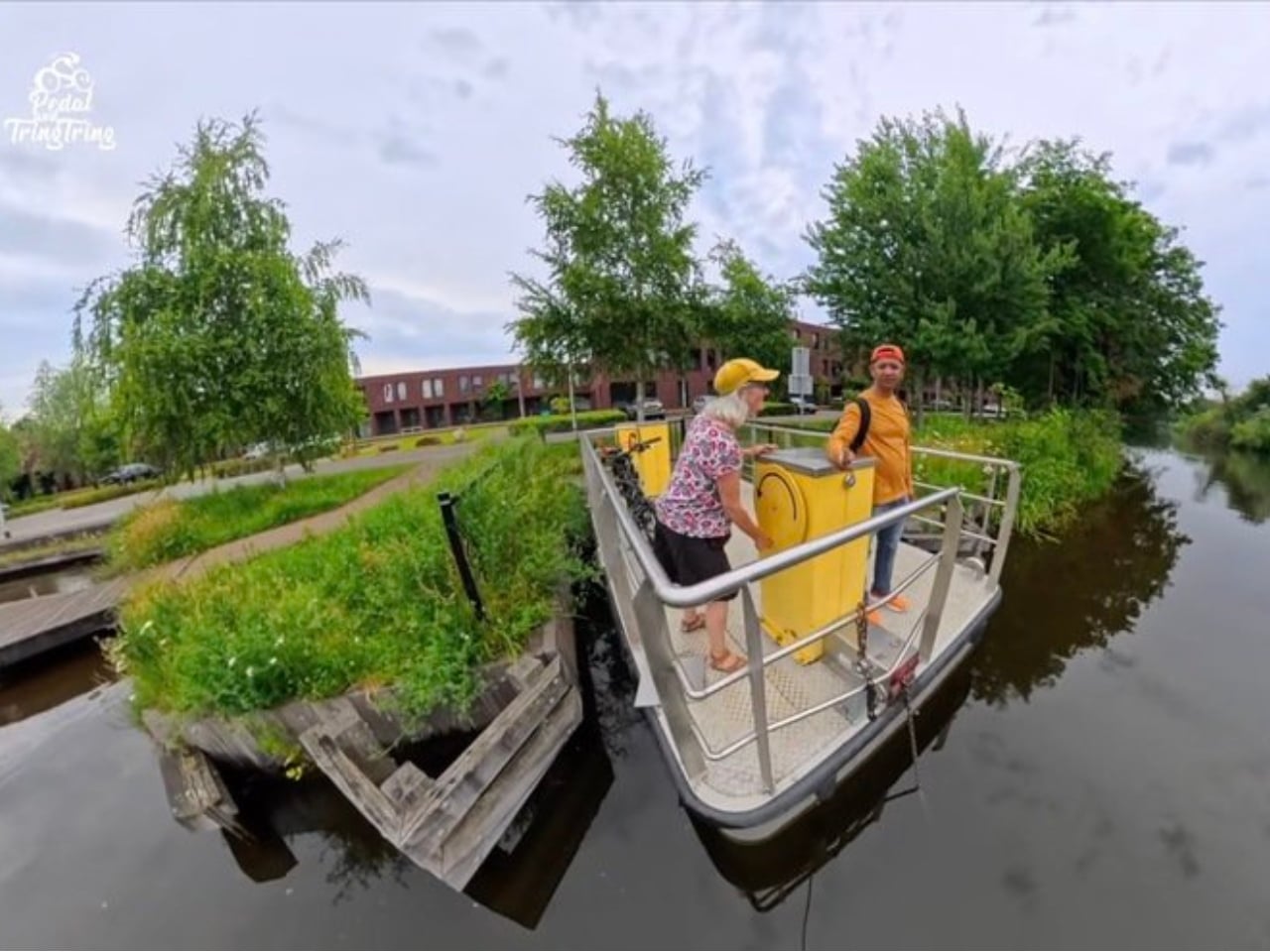
It also puts a useful frame around what cycling infrastructure can actually look like when a city commits to it seriously. We talk a lot about bike lanes and protected paths, and those conversations matter enormously. But the Tilburg river crossing is a reminder that cycling infrastructure isn’t just about the roads. It’s about removing every friction point between a person and where they’re trying to go, whether that’s a missing sidewalk, a poorly timed signal, or a river with no crossing in sight. A hand-cranked floating platform is a solution that costs far less than a bridge and works far better than nothing.
The design won’t go viral the way a sleek concept car or a flashy product launch does, and that seems perfectly fine. The things that actually improve daily life rarely make headlines. They just show up quietly, sit on the water, and wait for someone to turn the crank.