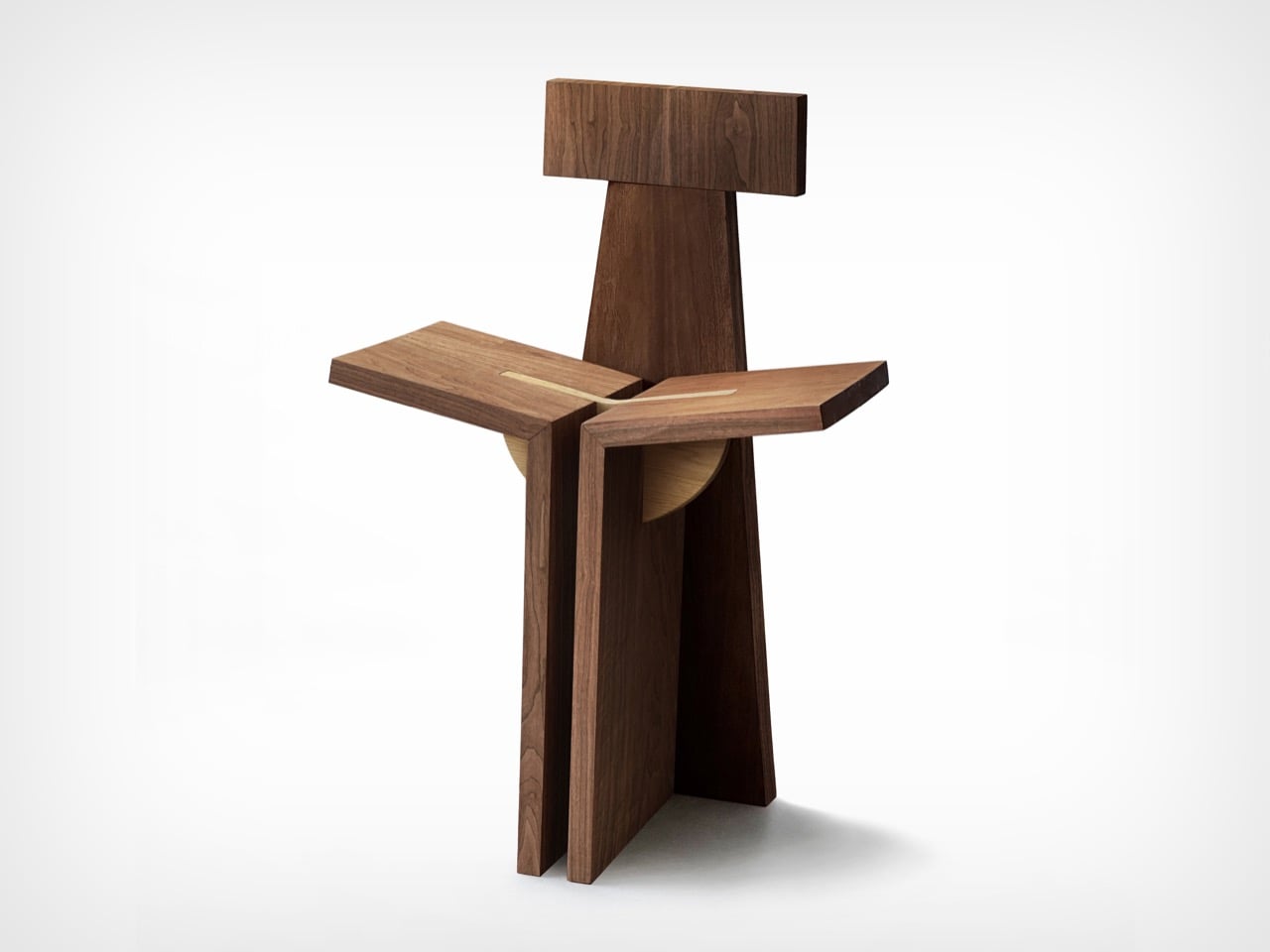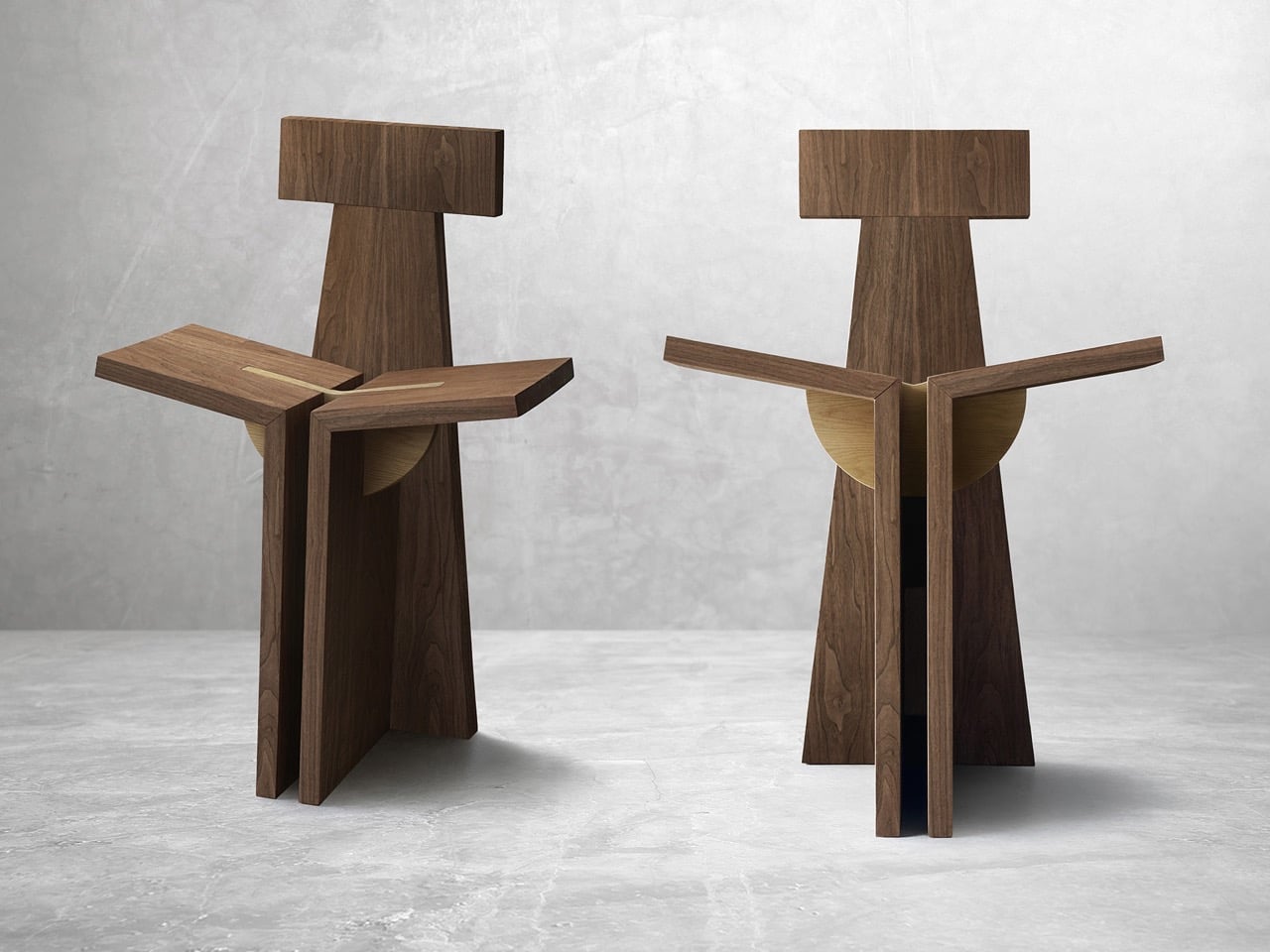
Guided by geometry, symmetry, and a quiet reverence for material, the Bookchair by Cass Saldanha sits somewhere between furniture, object, and architectural study. At first glance, it appears to be a stool. Look again, and it becomes something more deliberate: a sculptural support for an open book, a small monument to stillness, and an invitation to slow down in a world that rarely does.
The form is immediately striking. The Bookchair is not designed around softness or visual excess. Instead, it relies on precision. Every angle feels measured, every junction intentional, every line part of a larger geometric rhythm. Its silhouette carries the clarity of modernist thinking, but without feeling cold or overly industrial. There is warmth in the way the structure opens itself up, almost like a small piece of architecture scaled down to the size of a domestic object.
Designer: Cass Saldanha
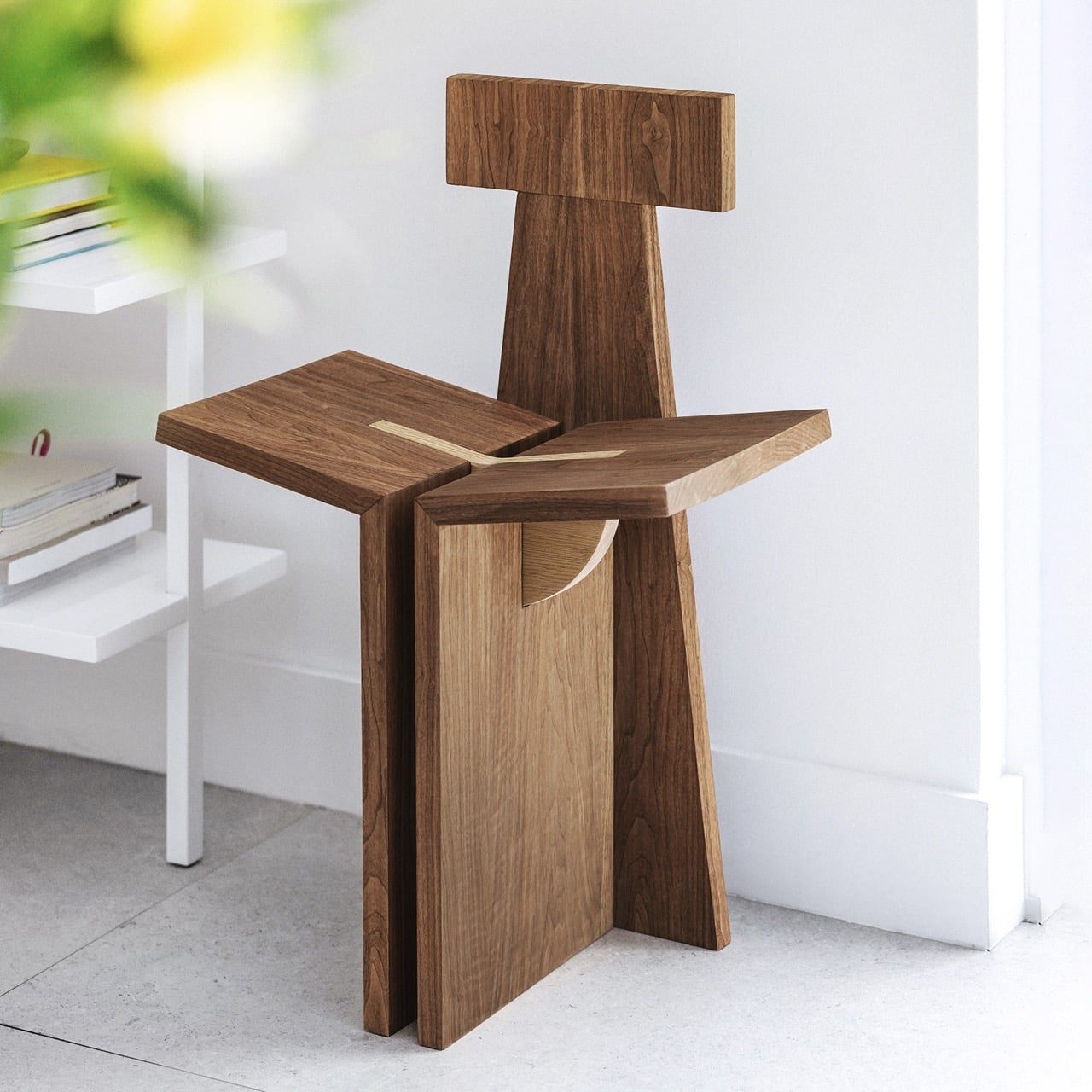
The design takes inspiration from Lina Bo Bardi, the Italian-Brazilian architect and designer whose work often balanced modernist rigor with Brazilian vernacular traditions, craft, and cultural honesty. That influence can be felt in the Bookchair’s refusal to separate structure from expression. Like Bo Bardi’s furniture, it does not treat utility and beauty as opposing forces. Instead, it allows function to become the source of sculptural character.
The Bookchair can be used as a normal stool, with its 18-inch height giving it a clear seating function. But its more poetic role is as a book display. Designed to cradle an open book, it transforms reading into a visual and spatial experience. A book placed on it does not simply rest there; it becomes part of the composition. The chair almost frames the written word, turning a casual object into a moment of attention. In this sense, the Bookchair is less about storage and more about pause. It asks the user to notice the book, the object, and the act of reading itself.
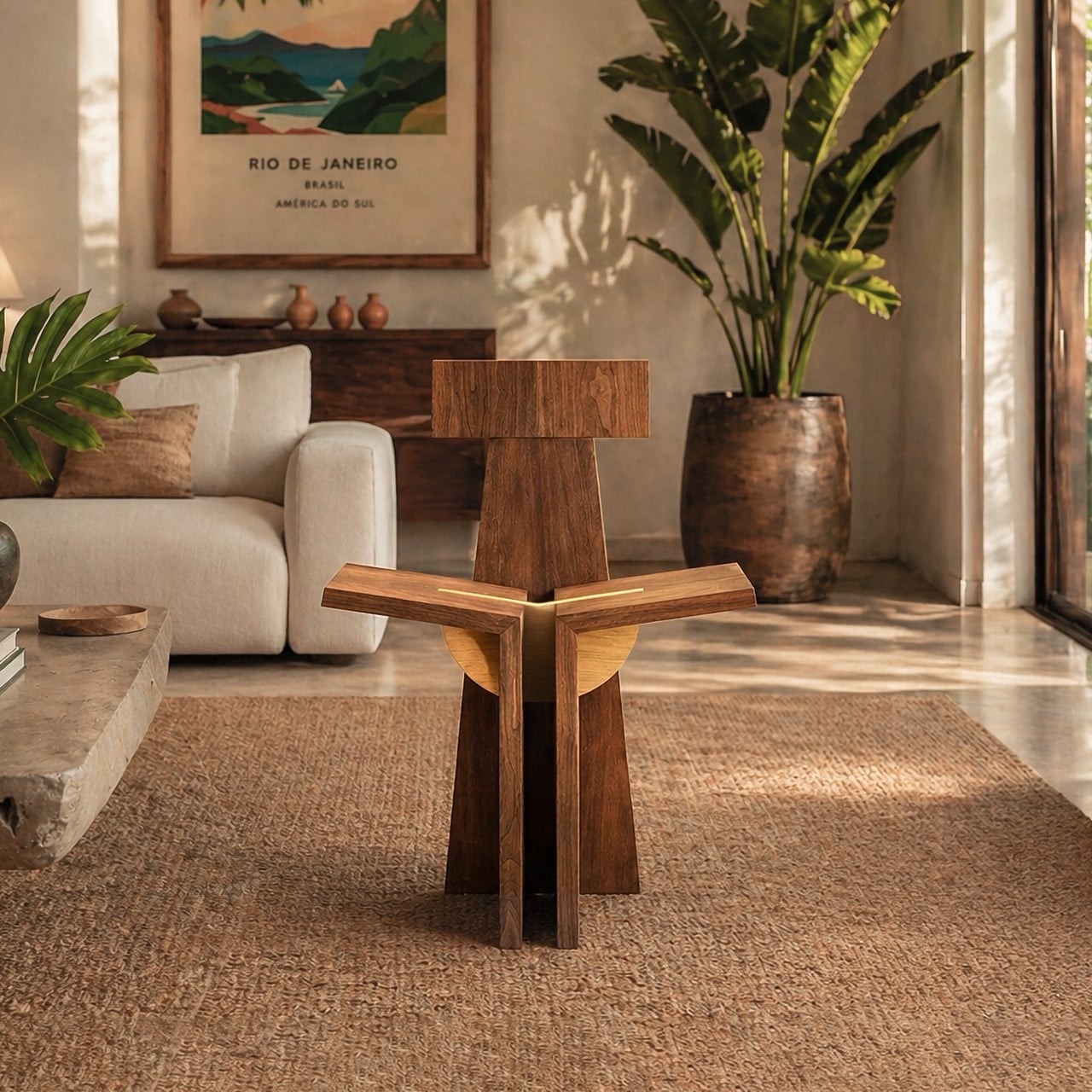
Materiality plays a major role in grounding the design. Crafted from solid white oak and European walnut, the piece balances tonal warmth with structural depth. The contrast between the woods gives the form a quiet richness without distracting from its geometry. At the center, an oak disc anchors the design, distributing force at the point where the three angled legs converge. This detail is both functional and visual, acting almost like a joint in a building or the keystone of a miniature structure.
The engineering is equally thoughtful. Four 1/3-inch brass rods are used as discreet tension relievers at key junctions, adding stability without interrupting the purity of the form. They are not decorative in the obvious sense, yet their presence adds another layer of refinement. The brass subtly acknowledges the forces moving through the object, making the structure feel honest rather than hidden.
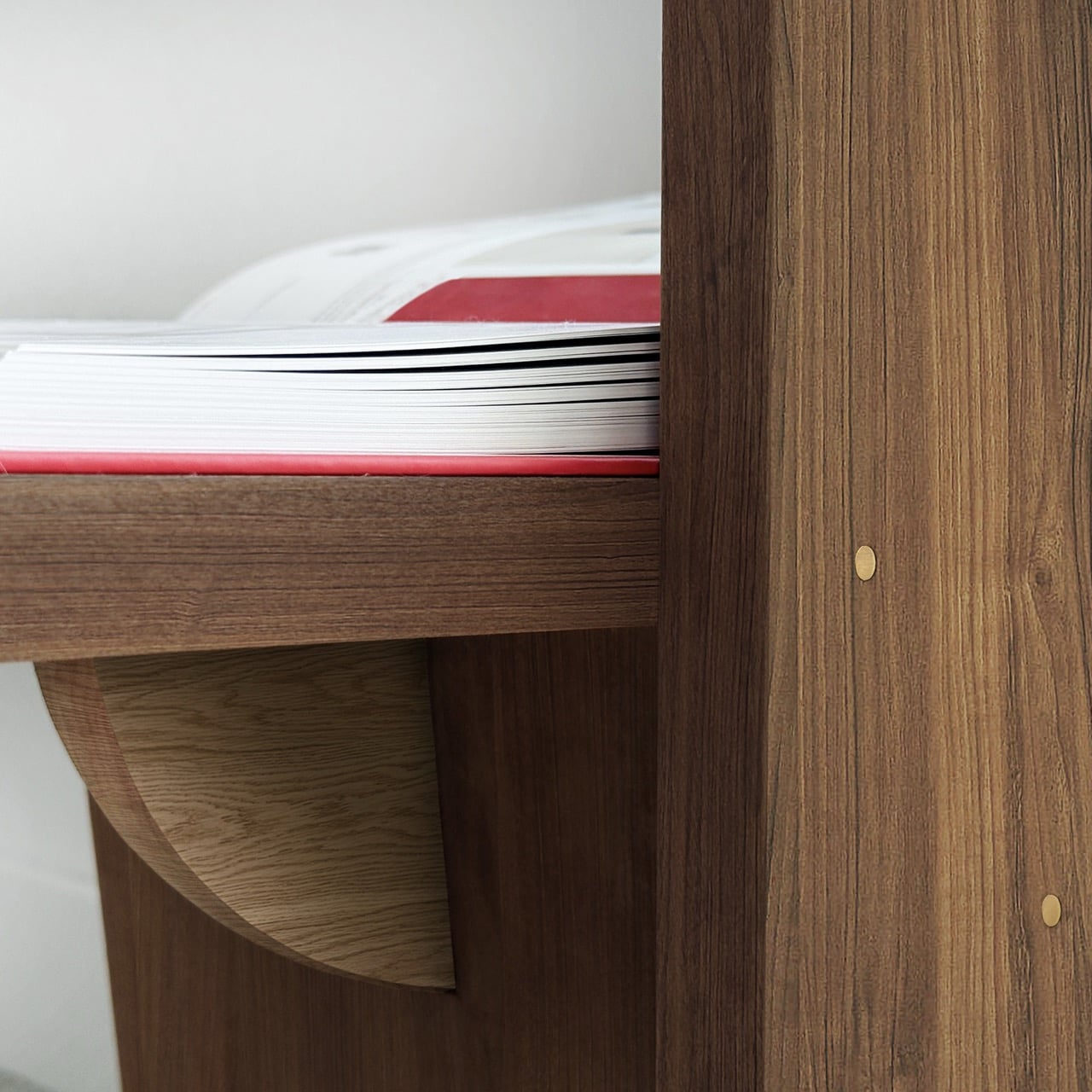
Each surface is hand-finished with natural oils, giving the wood a matte, luminous quality. This finish preserves the tactile essence of the material, allowing the grain, tone, and texture to remain central to the experience. It is a piece that seems meant to be touched as much as seen.
What makes the Bookchair compelling is its ability to hold multiple identities at once. It is a stool, but not just a stool. It is a bookstand, but not merely a display piece. It is functional, but its function feels almost ceremonial. By combining modernist clarity, Brazilian design sensibility, careful joinery, and sculptural restraint, the Bookchair becomes an object to use and contemplate. The Bookchair offers something quieter and more enduring, demonstrating how design can create rituals through even the smallest gestures. A place to sit. A place to rest a book. A place to pause.