Most clocks want to be noticed. They arrive with Roman numerals, exposed gears, or oversized frames, working hard to earn their place on the wall. The NMK by Seoul-based studio JAYUJAJE takes the opposite position entirely. It barely announces itself. And yet it is, without question, one of the most visually arresting objects I have seen recently.
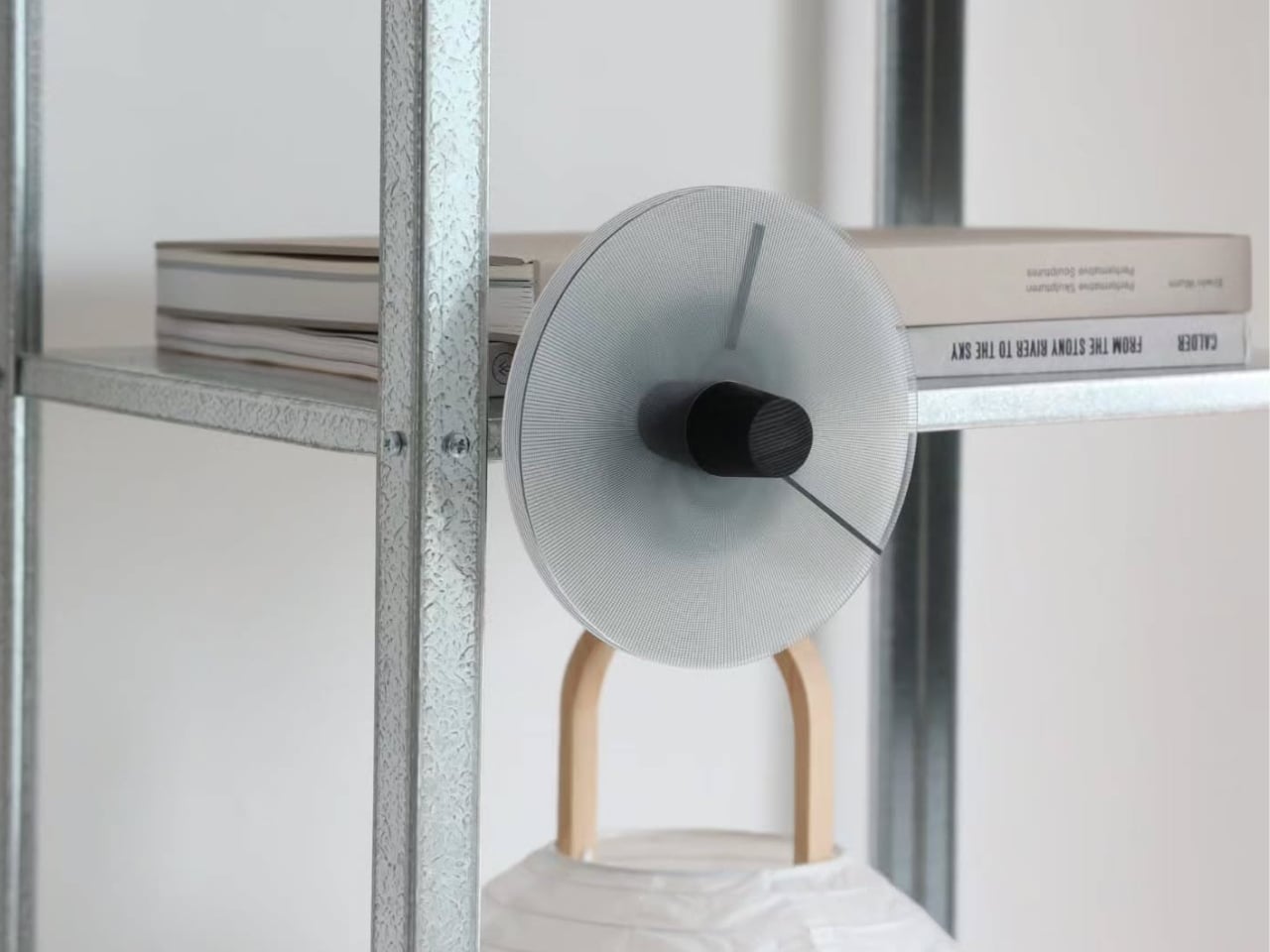
The NMK is a concept. It does not exist in a store. You cannot buy it. And yet designer Jin Kim of Seoul-based studio JAYUJAJE has photographed it with such care, placed it with such intention against galvanized steel shelving and paper lanterns and stacked design books, that it already feels like a fixture of a room you very much want to live in.
Designer: JAYUJAJE
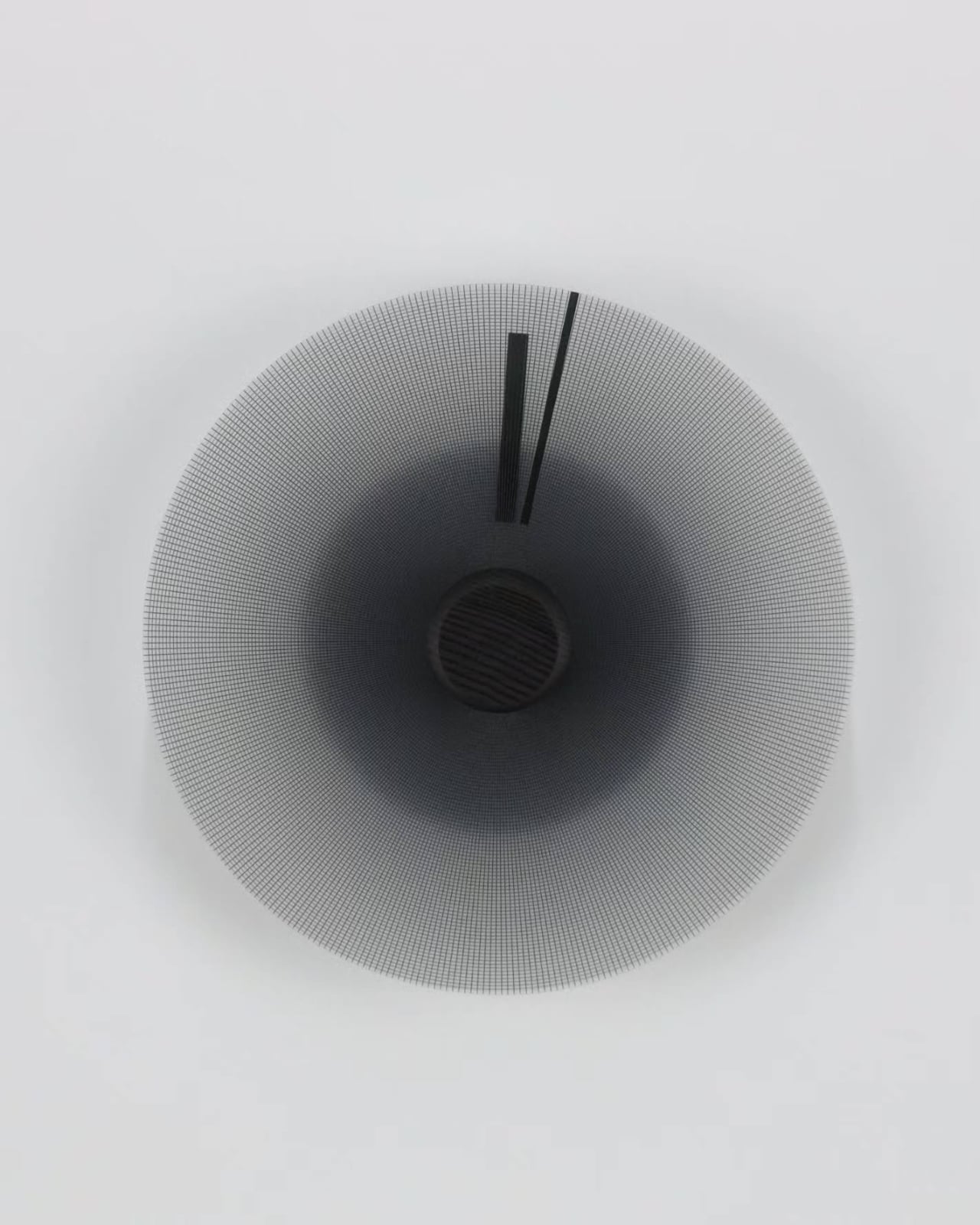
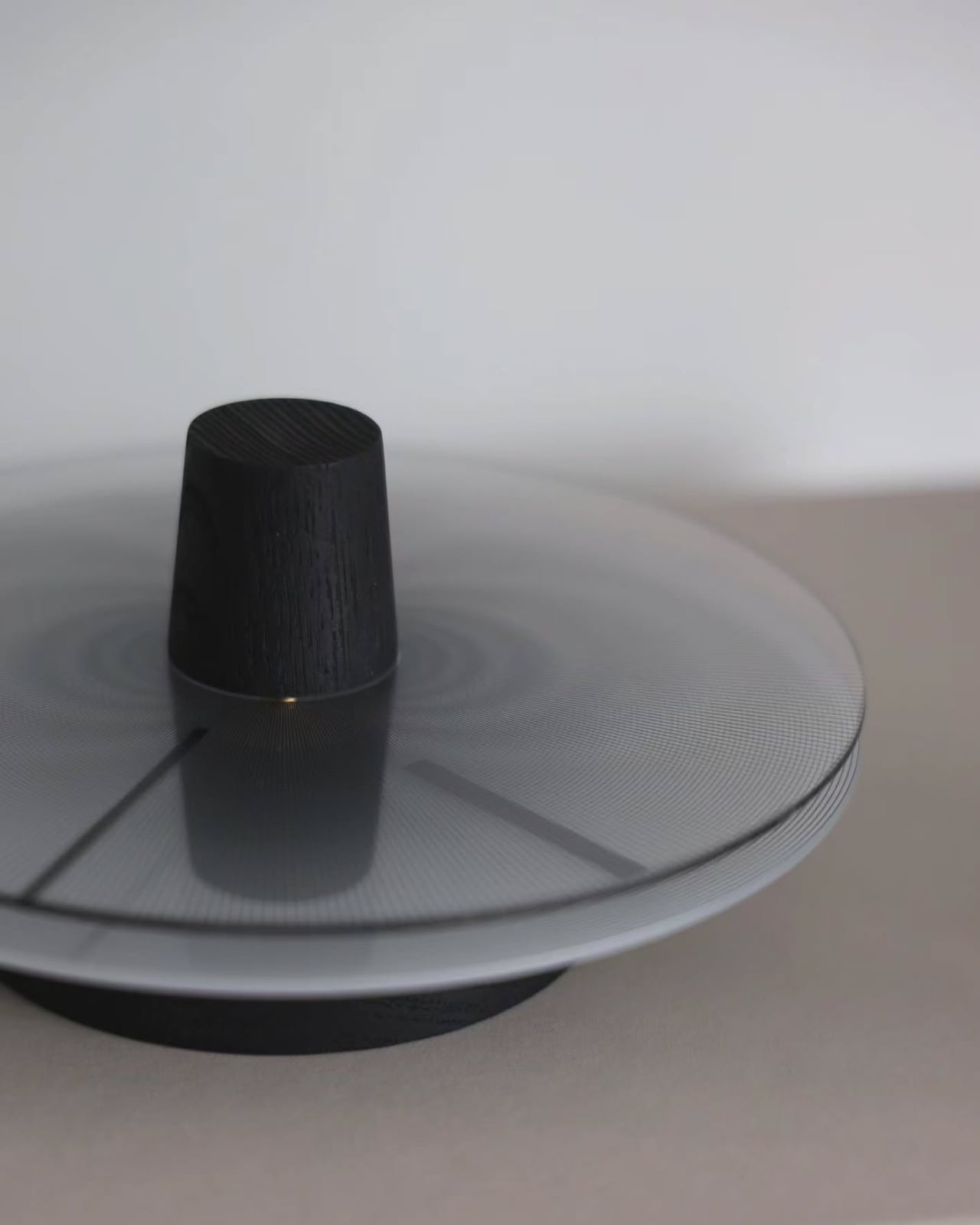
Start with the face, because that is where everything happens. It is a disc of tightly woven wire mesh, slightly concave, pulled into a shallow cone that draws the eye directly toward its center. The mesh is extraordinarily fine, the kind of density that creates its own optical behavior. At the outer rim it reads as pale silver, nearly transparent. Moving inward, the tone deepens gradually and consistently until the core becomes a near-black that feels less like a color and more like depth. The gradient is not printed or painted. It is a natural consequence of the curvature and mesh density interacting with light. The hands are two flat matte black bars, thin and unadorned, sitting flush against the face. No numbers. No markers. No hour dots. Just the slow movement of two lines across a surface that looks different depending on the angle you are standing at.
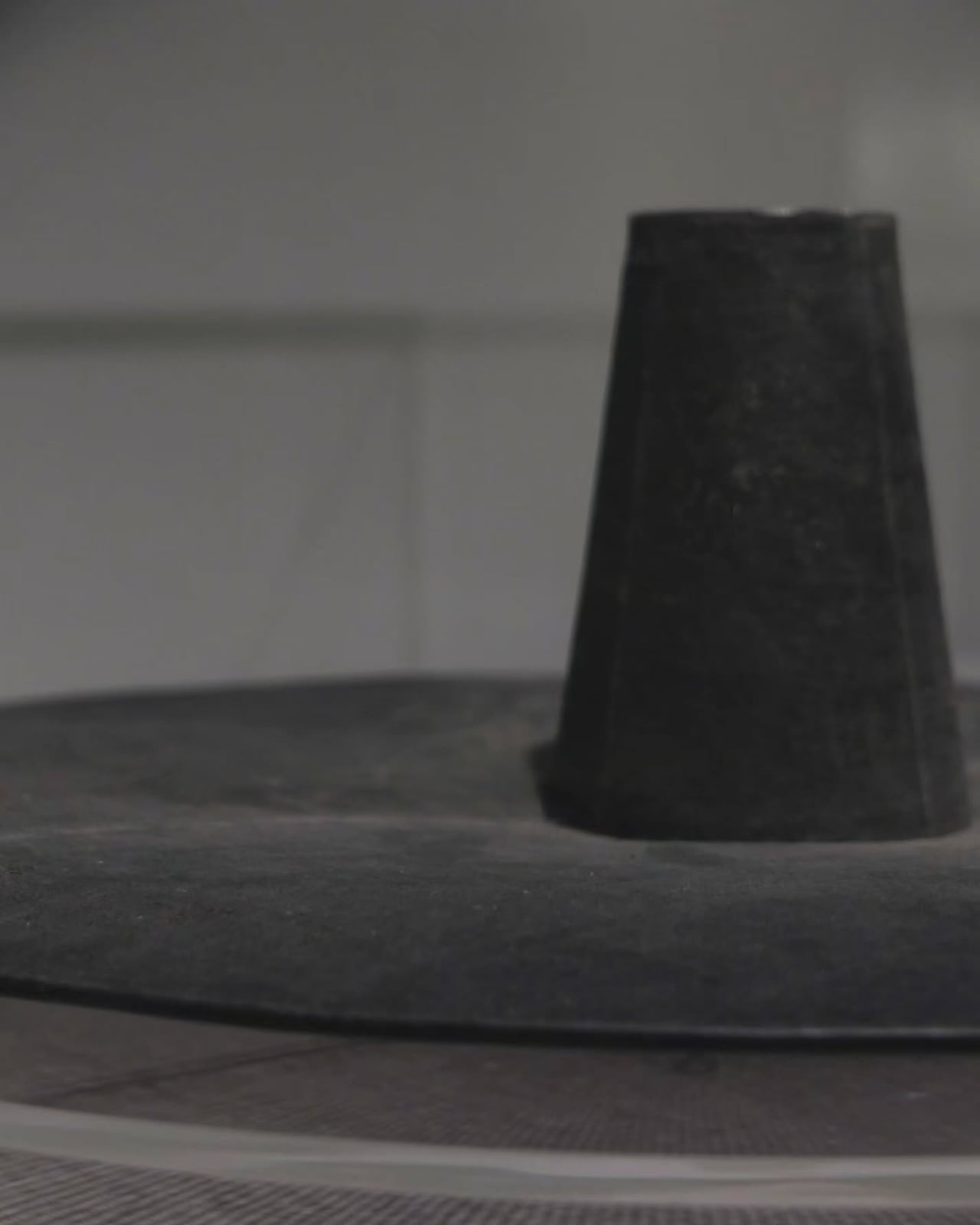
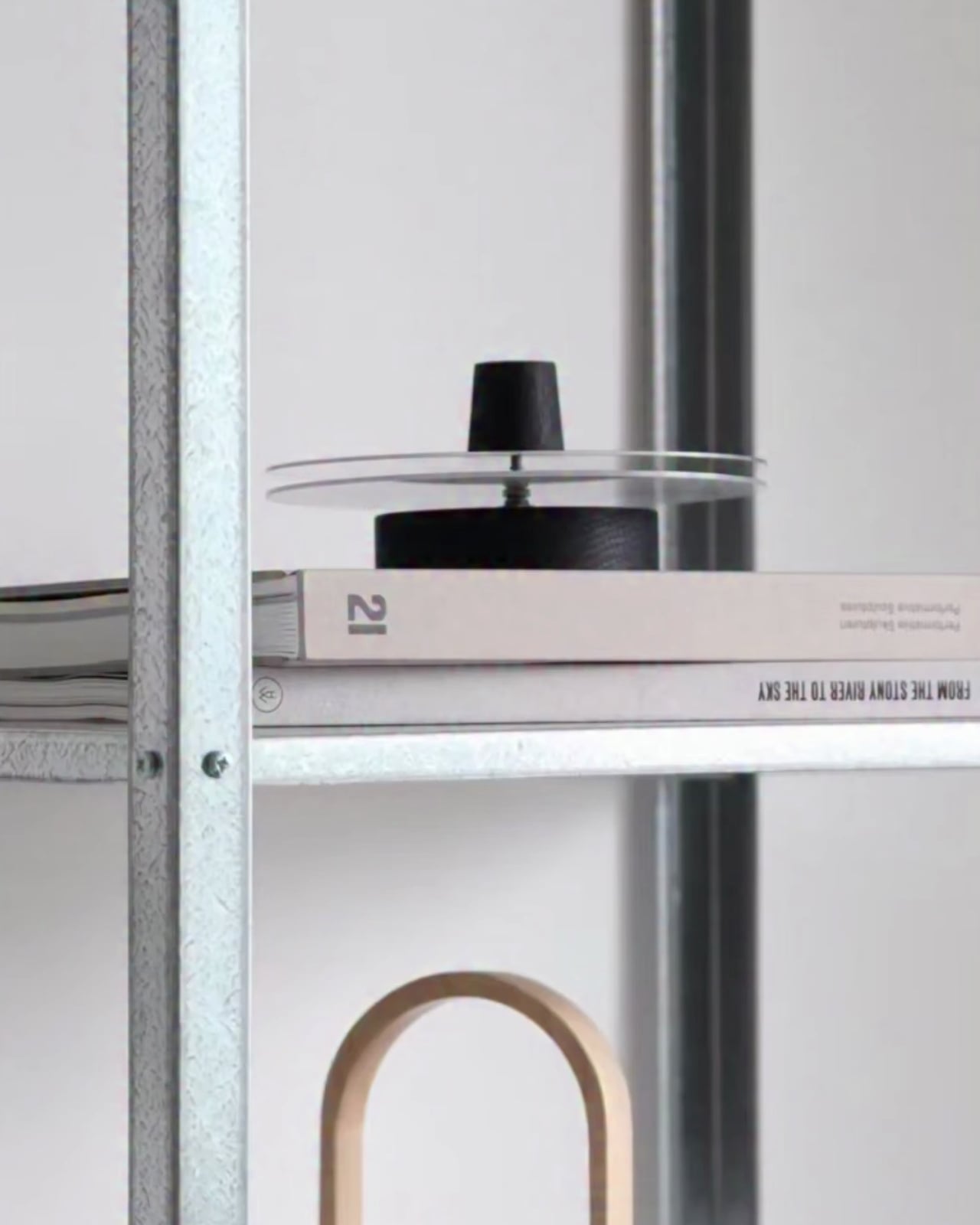
The center hub anchors everything. In the lighter version of the clock, it is a solid cylinder of blackened wood, its grain still faintly visible, sitting proud of the mesh face. In what appears to be a material study, the hub takes the form of a rougher, heavier truncated cone in dark stone or dense concrete, resting on a flat wooden disc that acts as a base. Both versions communicate the same thing: weight, presence, and a deliberate contrast between the industrial precision of the mesh and the warmth of a natural material at its core.
The concept draws from a specific philosophical tradition. Jin Kim has grounded the NMK in the worldview of Joseon-era scholars, who understood time not as a series of discrete and measurable units but as a continuous, gentle flow. That context changes how you look at the clock entirely. The absence of numbers is not minimalism for its own sake. It is a point of view. A clock face with nothing to count against refuses to let you fragment the day into anxious increments. The hands move, time passes, and the only reference point is the gradient itself, deepening toward the center like a slow exhale.
That philosophy is paired with a second intention: to record the structural aesthetics of Korean heritage within a contemporary interior. The wire mesh reads as industrial, but the concave disc form and the relationship between the circular face and the cylindrical hub echo the proportions and restraint of traditional Korean craft. The NMK does not announce its cultural references. It holds them quietly inside a form that looks, at first glance, like something from a design laboratory.
JAYUJAJE is the studio of Jin Kim, whose work consistently sits at the intersection of cultural memory and contemporary materiality. The Bugak stool, one of the studio’s earlier pieces, placed traditional Korean butterfly joinery at the structural center of an otherwise spare, modern object. The NMK continues that approach. The heritage is not decorative. It is load-bearing.
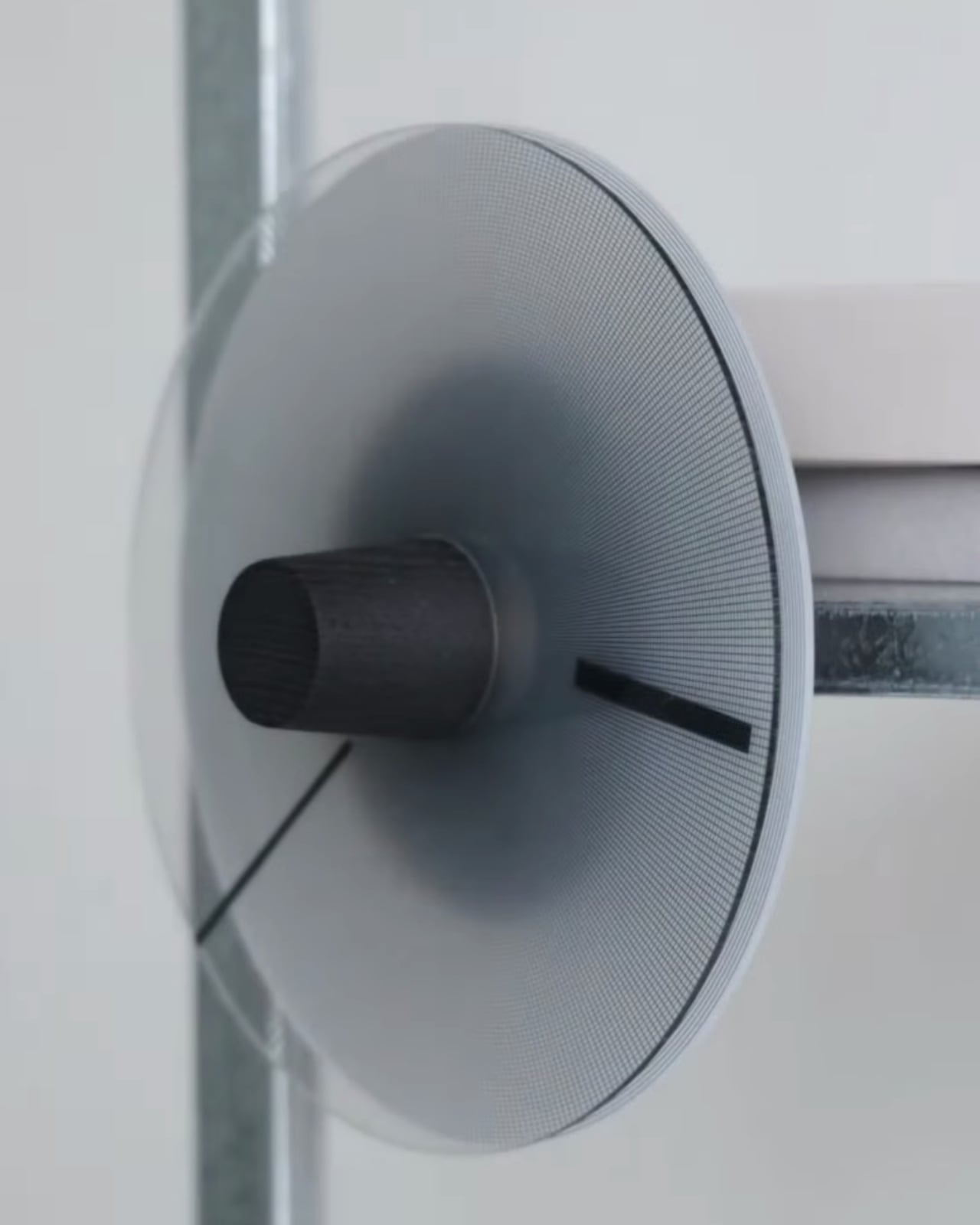
What makes a concept worth paying attention to is whether the idea is strong enough to survive the gap between intention and reality. The NMK clears that bar comfortably. The photographs show a physical object with real materials, real light behavior, and real presence in a room. The two-mode functionality, wall-hung or tabletop, works in both configurations without either feeling like a compromise.
Clocks are one of those design categories where the problem is already solved and everything else is a conversation. The NMK enters that conversation with something genuinely different to say: that time does not need to be counted, only felt. Whether it ever goes into production or remains a concept, it has already made its argument. Quietly, precisely, and without a single number on its face.