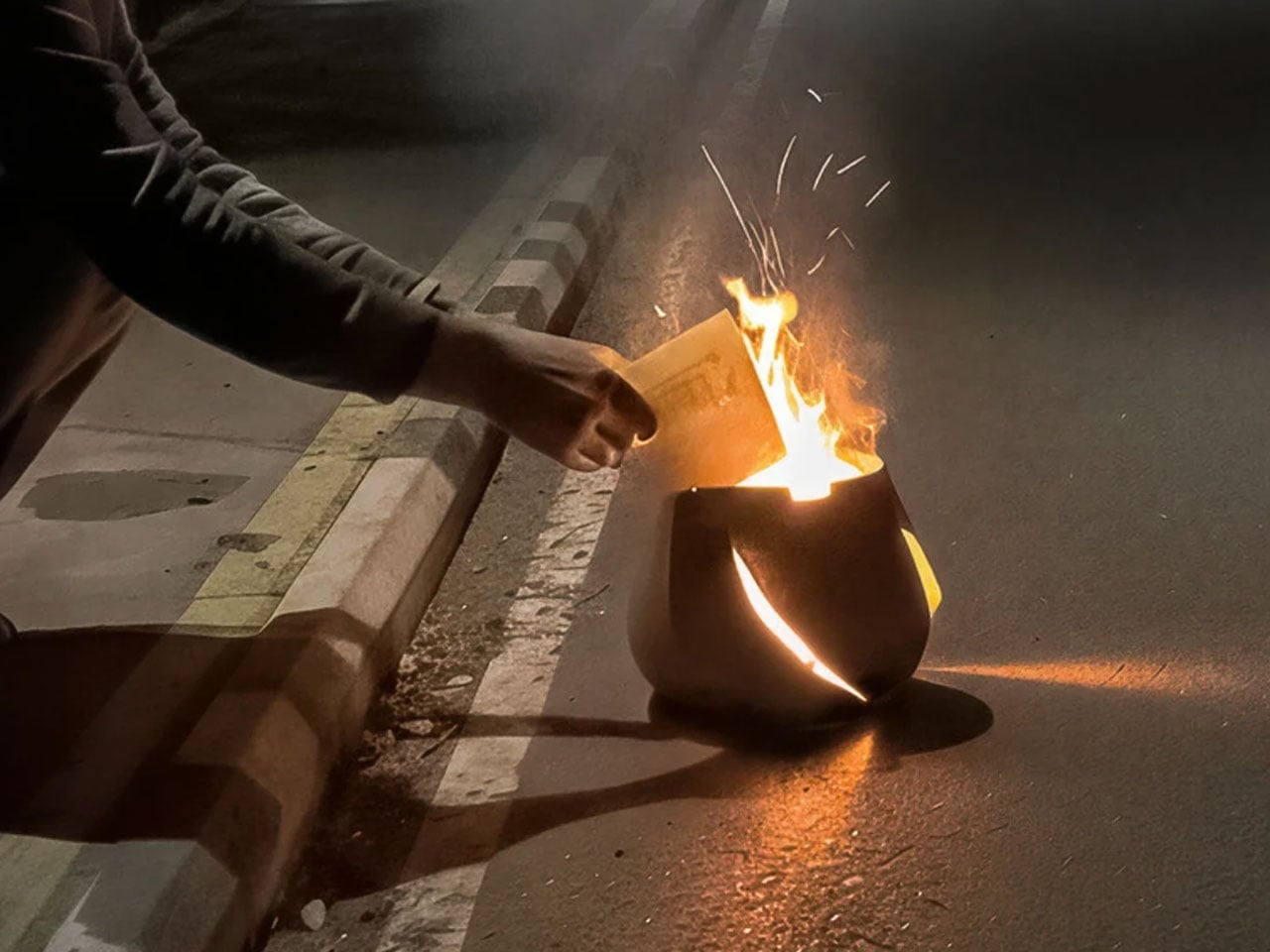
Every year during the Ghost Festival, millions of people across East Asia stand at street corners, in parking lots, or on sidewalks, setting fire to paper offerings for their ancestors. It is one of the most intimate acts a person can perform in public. It is also, increasingly, a problem for the cities around it. The smoke is real. The fire hazard is real. And the tension between a deeply rooted cultural practice and modern urban living is just as real. That is the space where the Peace Urn was born.
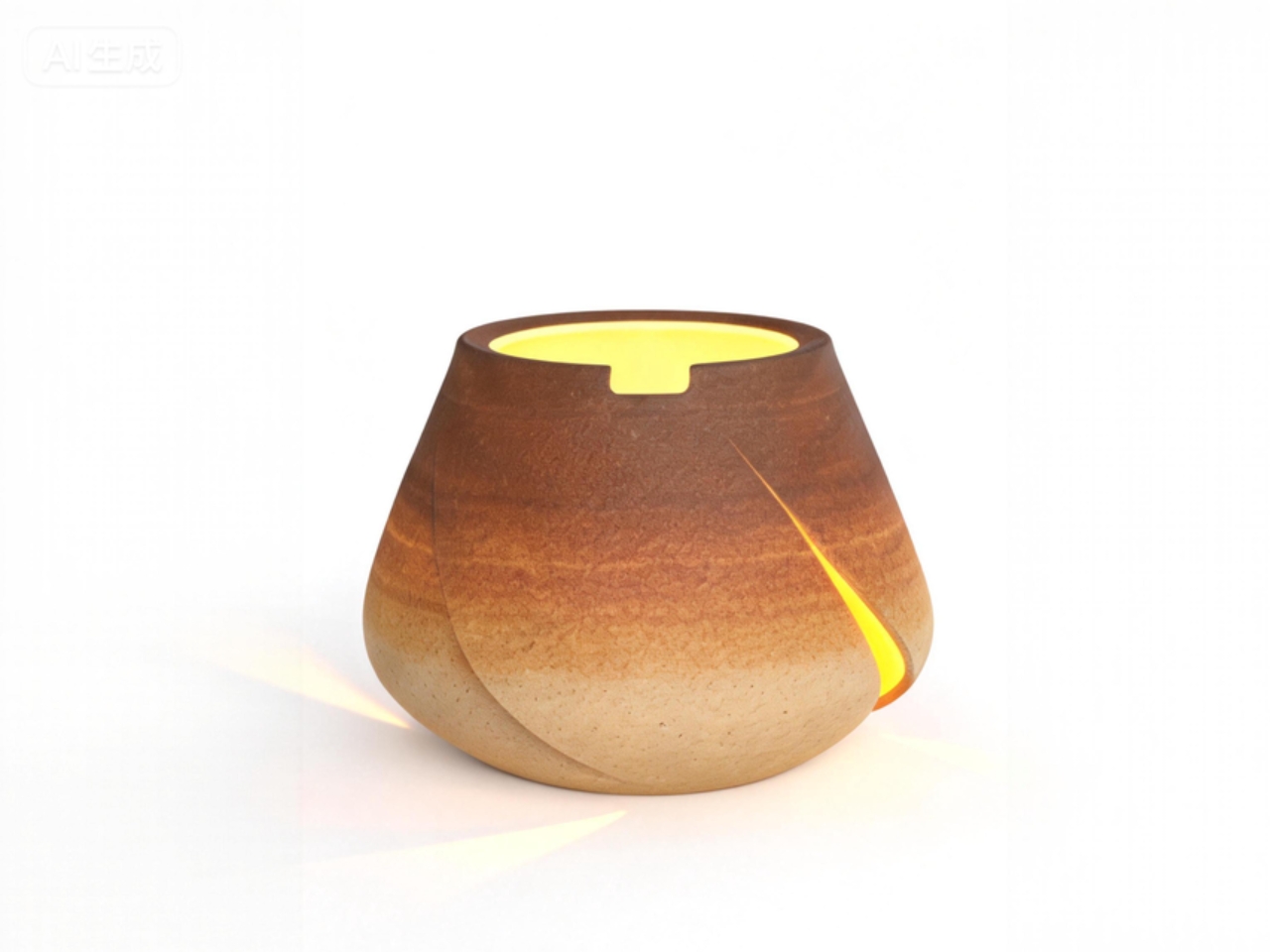
Designed by a team of five students, Hao Qian, Xiyue Yang, Zetong Song, Chenchen Du, and Yichen Fan, the Peace Urn is a clay vessel built specifically for burning joss paper in dense urban environments. It took home a Student Notable in the Lifestyle Accessories category at a 2026 design awards program, and while the recognition might sound understated, the thinking behind the project is anything but.
Designers: Hao Qian, Xiyue Yang, Zetong Song, Chenchen Du, Yichen Fan
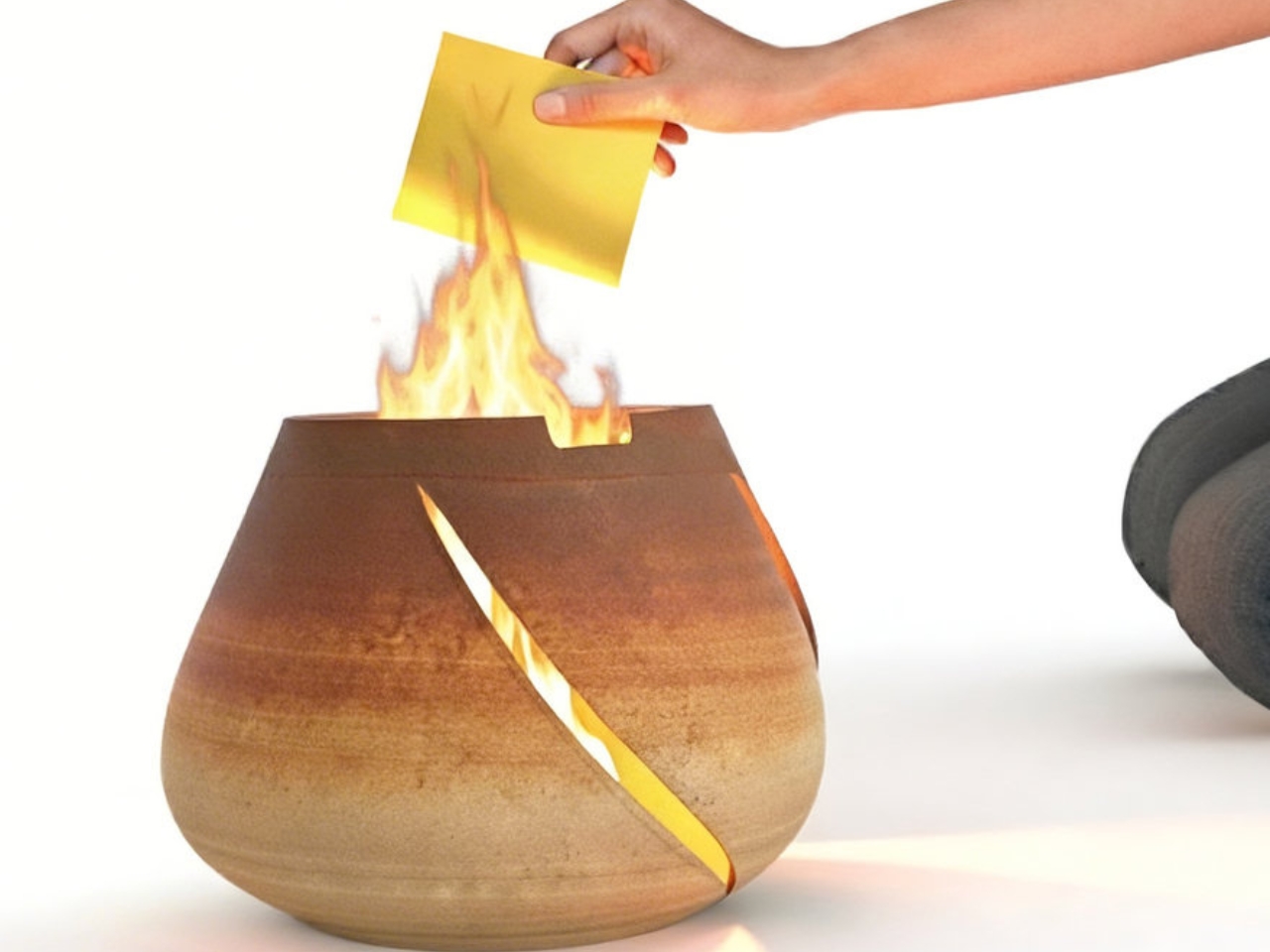
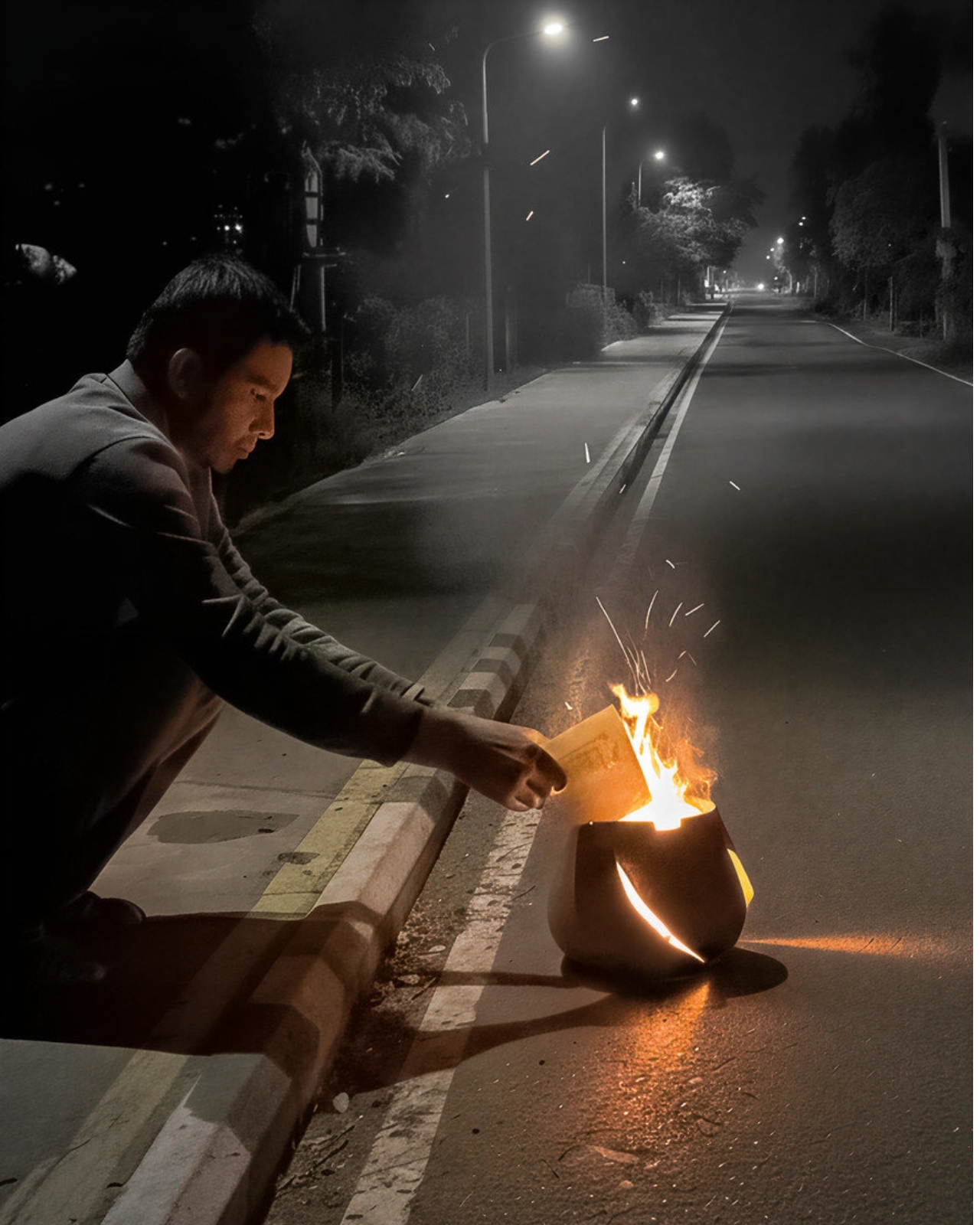
What the designers understood, and what I think gets missed in a lot of conversations about modernizing tradition, is that the goal was never to replace the ritual. It was to protect it. Burning joss paper is an act of grief and connection, a way of sending material offerings through fire to ancestors in the afterlife. You do not solve that by eliminating the fire. You solve it by giving the fire somewhere better to live.
The Peace Urn does exactly that through airflow. The geometry of the vessel is engineered so that air moves through it in a specific pattern, slowing ash as it rises and drawing it back down rather than letting it scatter across streets and neighbors’ windshields. Smoke is managed similarly. The result is a contained burn that still looks and feels like a burn, which matters more than it might seem.
The designers were deliberate about keeping the visual experience intact. Flames remain visible through openings in the vessel because that visibility is not decorative. It is the whole point. Watching the offerings transform is part of the ritual itself. A closed, purely functional container would have technically solved the problem while emotionally gutting it. The Peace Urn refuses to make that trade.

The material choice is worth noting too. The urn is made from unglazed heat-resistant clay, chosen for its thermal stability, affordability, and cultural familiarity. But the choice goes beyond practicality. As the urn ages and accumulates soot, heat marks, and residue from repeated use, it becomes a record of the rituals performed in it. The surface changes. It holds memory in a tangible way, which feels entirely fitting for an object designed to help people honor the dead.
There is also a structural proposal embedded in the design: moving the practice from informal street corners into designated public spaces. The urn is not just a personal object. It is part of a system, a piece of infrastructure that allows the practice to be relocated into designated spaces, improving safety and spatial order while maintaining the privacy and emotional intimacy of the ritual. That shift from “this is someone’s private act happening in public” to “this is a supported civic practice” is, I think, quietly significant. It is an argument that tradition deserves planning, not just tolerance.
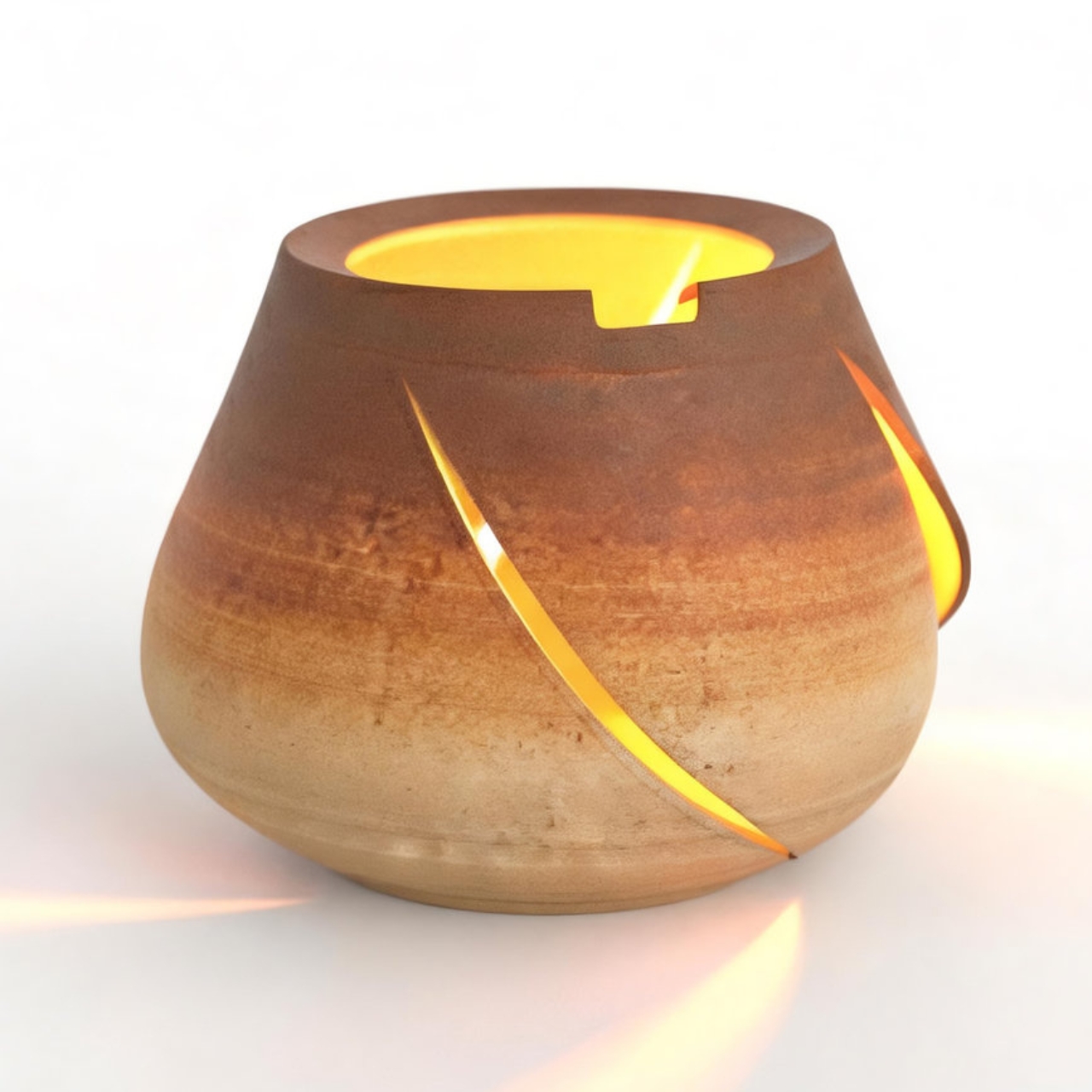
The geometry carries one more layer of meaning. The circular form of the urn references the traditional practice of drawing a circle on the ground when burning joss paper, where the boundary defines sacred space and the opening represents the direction of spiritual transmission. Translating that into the vessel’s shape is the kind of detail that separates thoughtful design from clever design. The circle does not just look good. It means something.
The Peace Urn will not end up in a museum as an object of aesthetic appreciation, and it is not trying to. It is trying to show up every Ghost Festival, on a designated corner somewhere, smelling like smoke and doing its job. That restraint is admirable. Not every design needs to be timeless. Some just need to be useful at the right moment, for the right people.