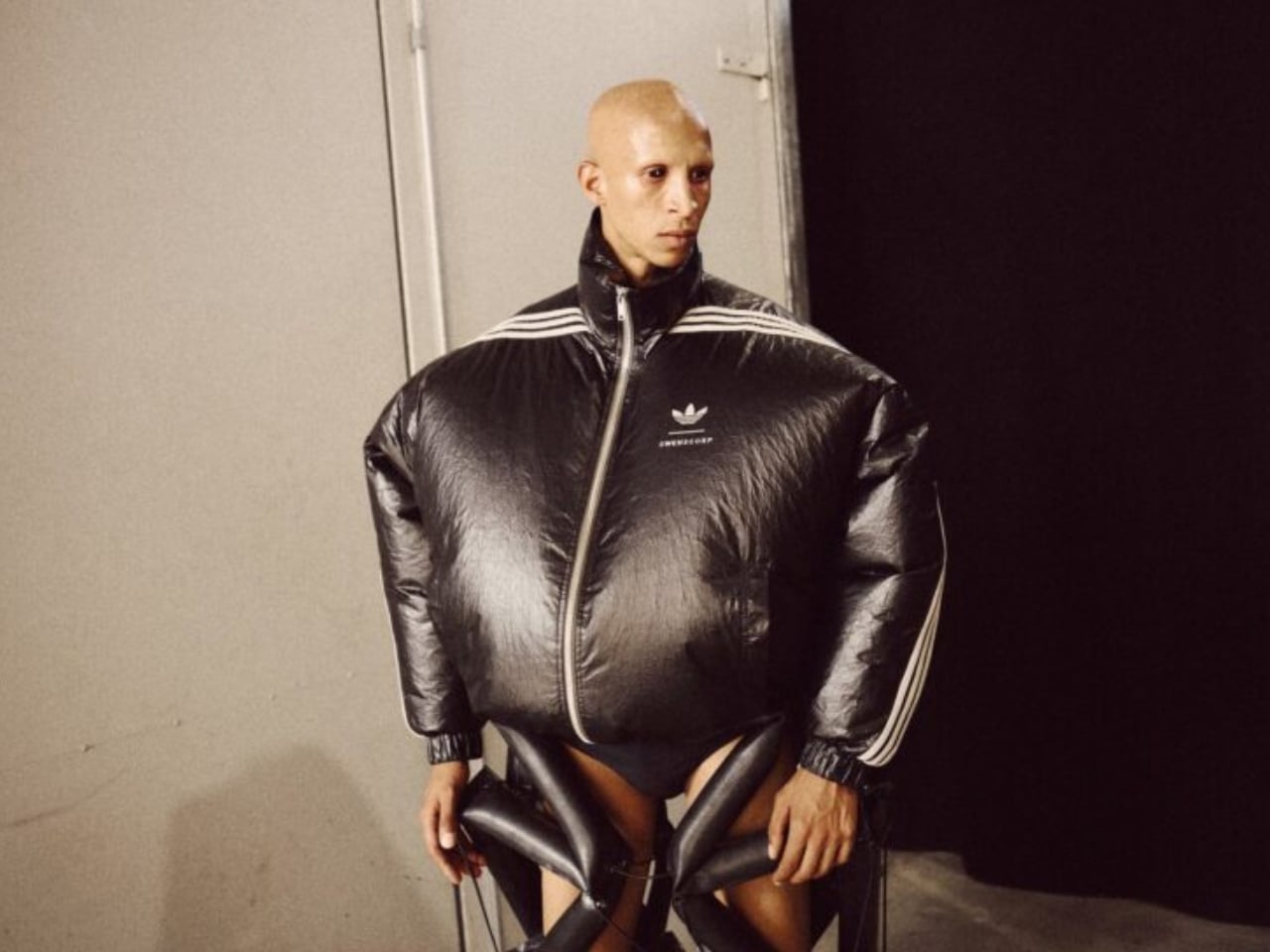
If you’ve ever stood outside in peak summer heat thinking, “someone really needs to fix this,” Rick Owens apparently heard you. At his Spring/Summer 2027 menswear show held at the Palais de Tokyo during Paris Men’s Fashion Week, the notoriously dark, architectural designer made a surprise announcement of sorts: he and adidas are back together, and this time, they came with cooling technology sewn right into the clothes.
The reunion itself is already big news. The original Rick Owens x adidas partnership ran from 2013 to 2017 and produced some of the most visually striking footwear of that era. Chunky, sculptural sneakers that looked like they belonged in a sci-fi film became collector staples. Nearly a decade later, the two are picking up right where they left off creatively, but the direction has shifted entirely. This is no longer about shoes. This is about what you put on your body when the planet refuses to cooperate.
Designers: Rick Owens x adidas
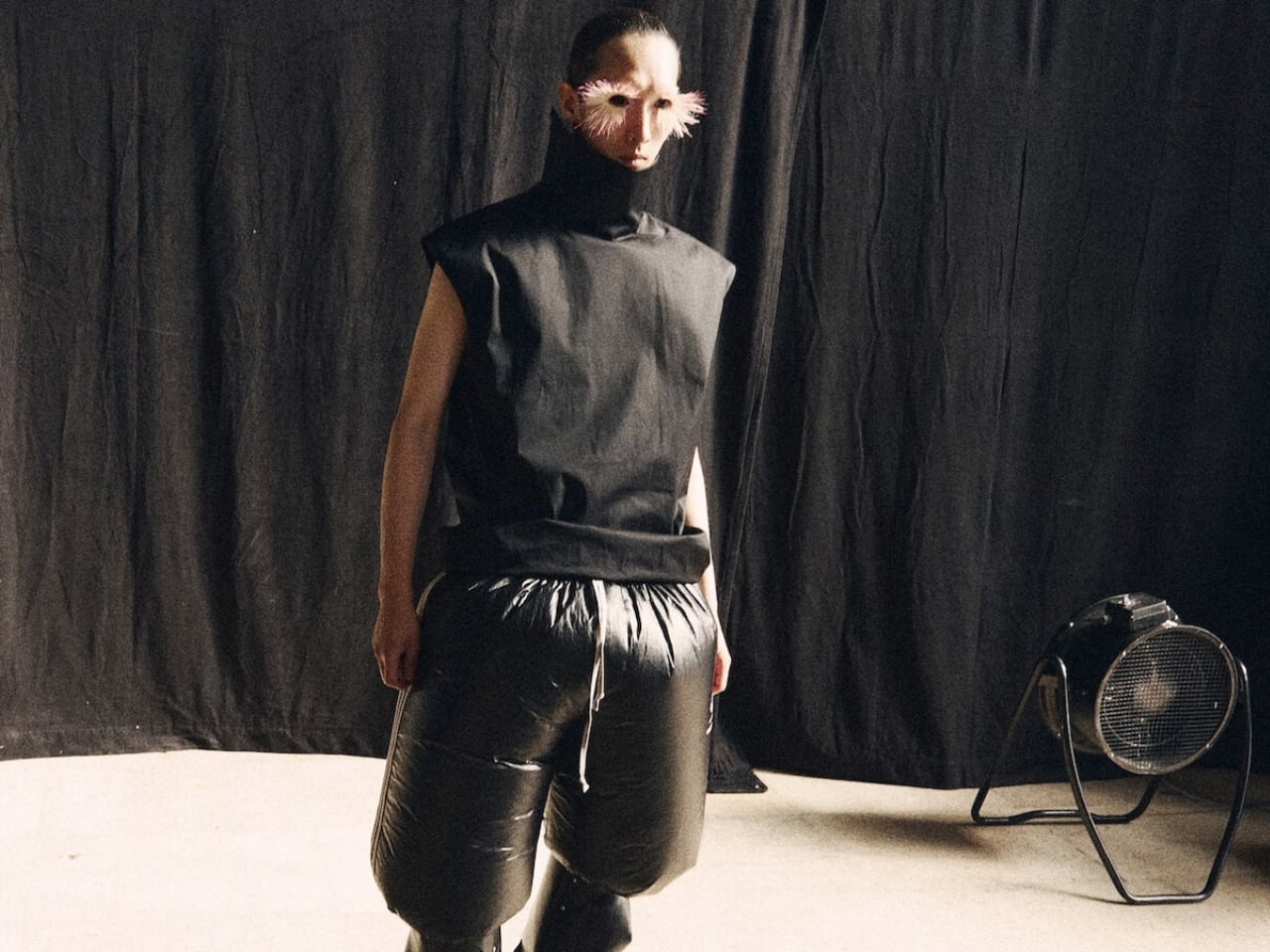
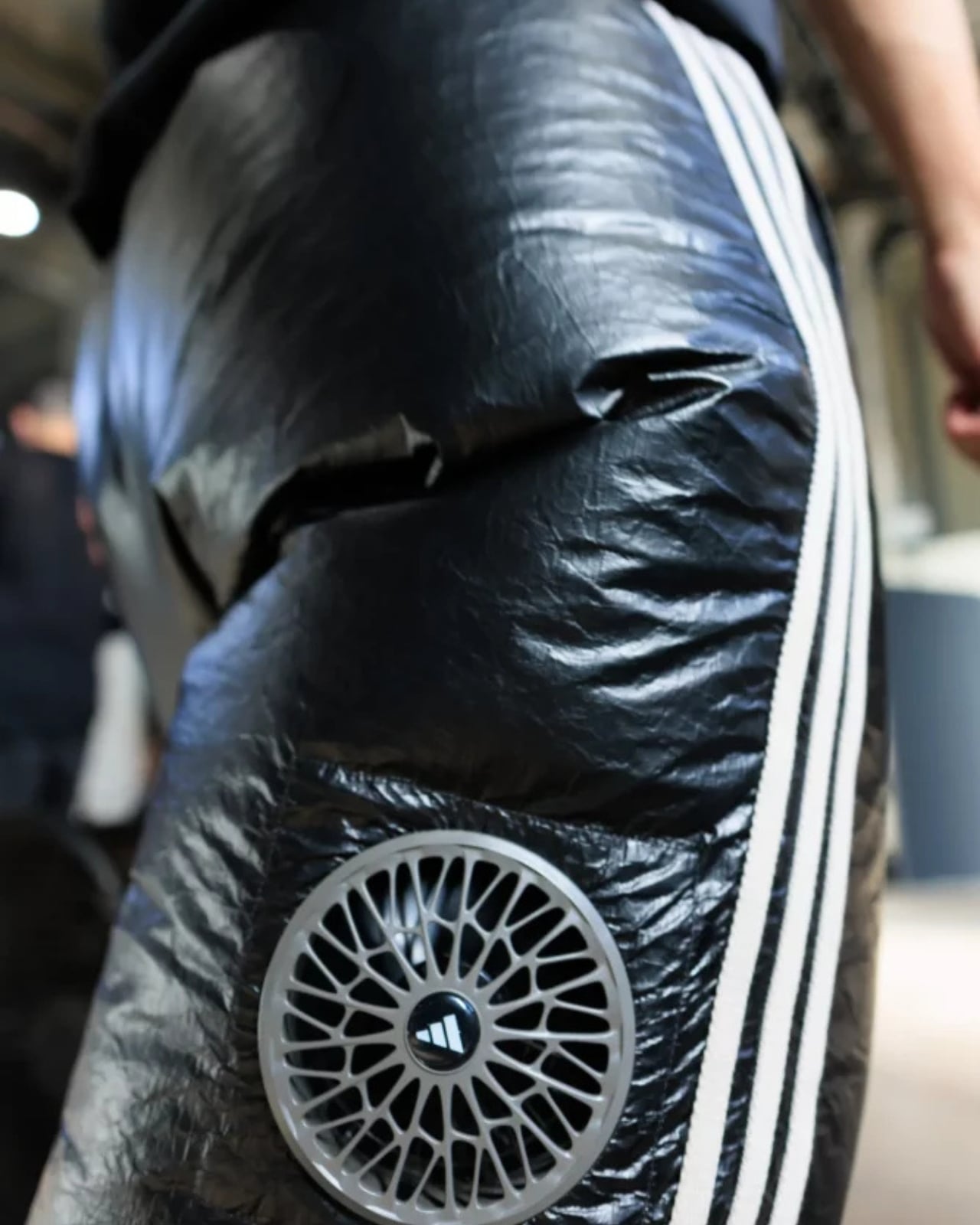
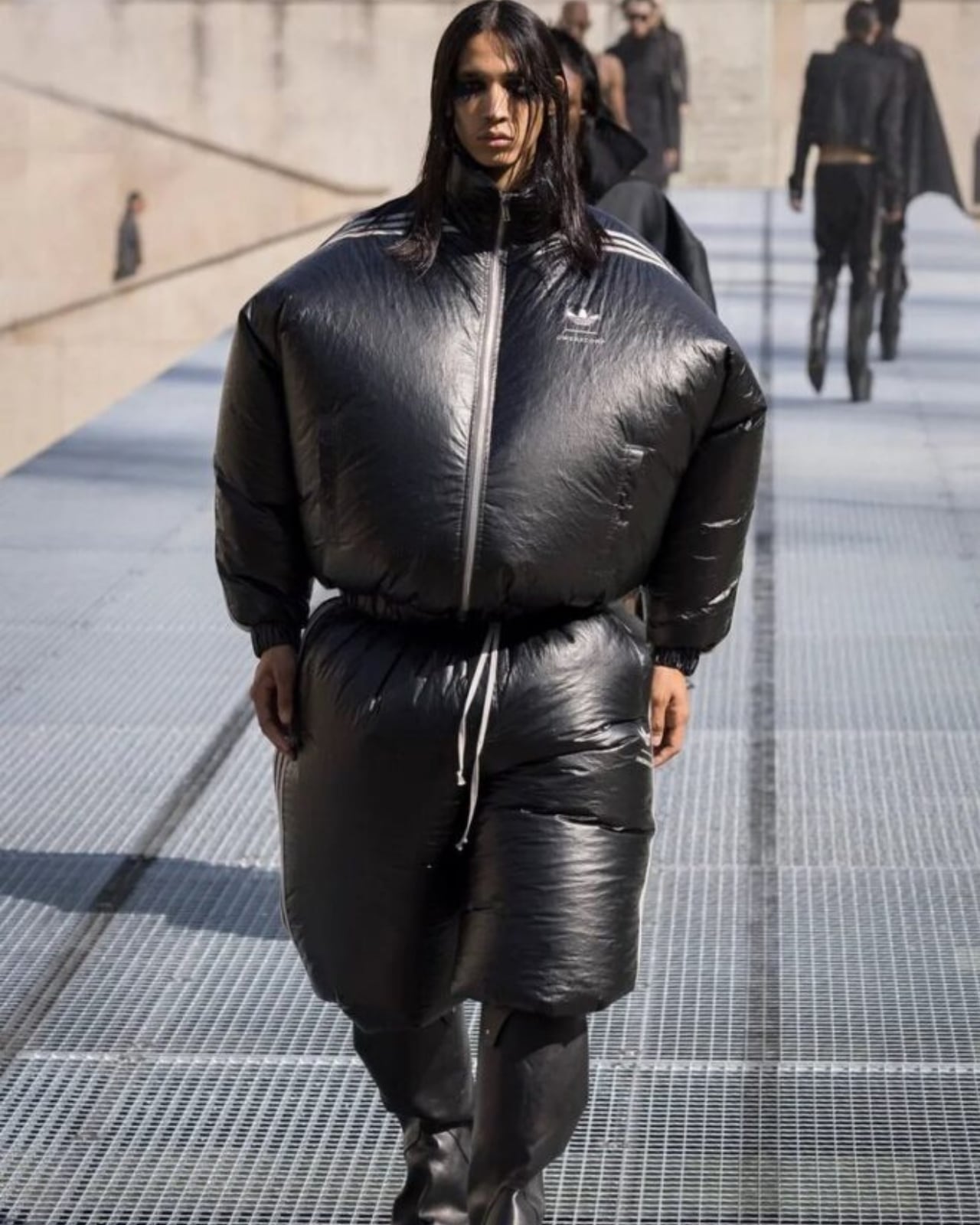
The collection features inflatable tracksuits fitted with adidas’ Climacool technology and integrated fans that circulate air directly around the wearer. Ballooning jackets and shorts expand dramatically around the body, creating silhouettes that look part sculptural art installation, part protective gear for some future we haven’t quite arrived at yet. The palette stays true to Owens’ signature obsessions: black, white, leather, latex, and technical fabrics that make everything feel simultaneously post-apocalyptic and razor-precise.
What makes this more than a clever gimmick is the context. Paris was reportedly sweltering during this particular fashion week, making the inflatable cooling garments less of a conceptual gesture and more of a direct, almost blunt response to conditions on the ground. Owens didn’t hide the technology. He put it front and center, letting the puffed forms become the silhouette rather than something tucked away beneath a lining. Wearable cooling as a visible design choice rather than a discreet utility is a genuinely interesting move, and it reframes what performance wear can mean in a luxury context.
The show itself was called “Stone.” It was moved from its usual afternoon time slot, which already tells you the team was thinking about heat logistics from the jump. Presented at the Palais de Tokyo, the setting felt apt for a collection that reads like a serious piece of speculative design. These are clothes asking a real question: as temperatures climb and climate disruption becomes a consistent backdrop to daily life, how does fashion respond beyond making linen shirts?
Rick Owens has always had this quality where the extreme nature of his vision somehow makes total sense the moment you see it in context. Inflatable suits with fans built in sounds absurd until you’re watching models move through them on a scorching Paris afternoon. Then it starts to feel less like provocation and more like logic. That balance between the theatrical and the genuinely functional is exactly what keeps this designer relevant across decades.
The adidas partnership adds a layer here that feels important. adidas brings serious technical credibility, including Climacool, which has roots in motorsport and was developed over years before making it to football. Pairing that depth of performance engineering with Owens’ architectural fashion language creates something that neither brand could pull off alone. It’s not a logo collaboration. It’s a genuine material conversation between two very different fluencies in how clothing can perform.
Whether these pieces ever reach everyday consumers in a wearable form, or whether they stay in the realm of editorial and collector culture, almost doesn’t matter for the conversation they’re opening. Climate-adaptive fashion has been floating around the design world for a few years now, usually in academic or experimental contexts. Seeing it hit a major runway like this, with actual technology and actual scale behind it, moves the needle. The Rick Owens x adidas SS27 collection isn’t just a reunion worth noting. It’s a reminder that the most interesting design often comes from taking an urgent problem and refusing to make it invisible.