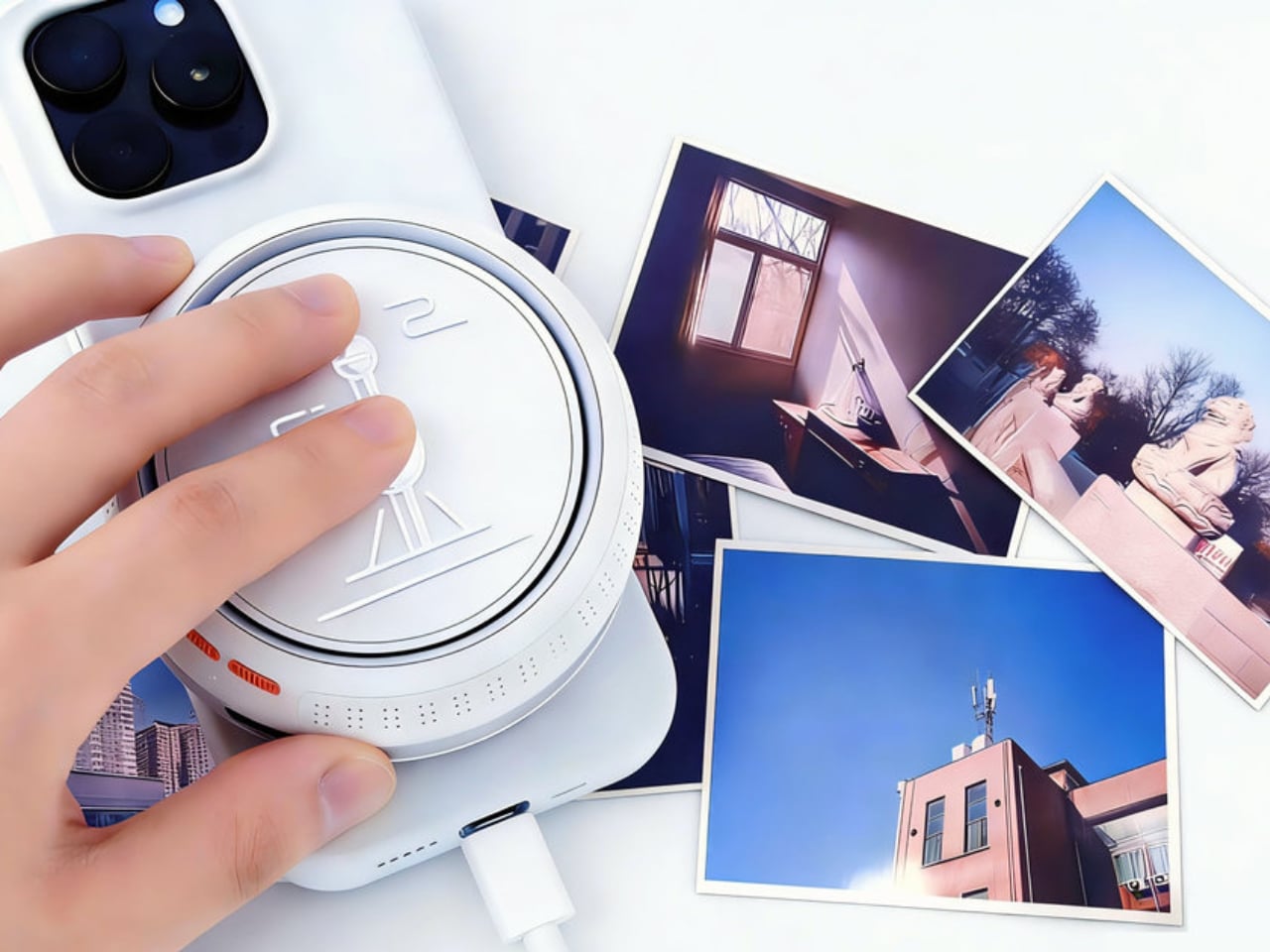
Every so often, a design concept stops you mid-scroll and makes you sit with an uncomfortable question. For me, Touch-frame by student designer Liang Han was exactly that kind of pause. It didn’t announce itself with a clever name or a slick render alone. It made me stop because of what it implied about how narrow our assumptions around photography really are.
The premise is deceptively simple: a smart photo frame designed for parents who have lost their sight. But the design challenge buried inside that premise is one most of us have never thought about. Photography, for all the innovation it has absorbed over the decades, remains a fundamentally visual medium. We build entire apps, devices, and rituals around looking at photographs. What happens when looking is no longer an option?
Designer: Liang Han
The most obvious answer to that question is AI narration, where a system describes what’s in an image and reads it aloud. It works. It’s useful. But Liang Han’s argument, embedded in the design itself, is that a verbal description of a photograph and the actual experience of a photograph are two very different things. When your child hands you a drawing they made at school, you don’t want a summary. You want to feel it.
Touch-frame addresses that gap with a dynamic tactile dot matrix embedded in the panel. Instead of translating a photo into words, the frame translates it into texture, allowing users to physically trace the contours of a face, a landscape, or a meal. The surface also adjusts its temperature in real time based on the color saturation of the image, a detail that sounds technical until you realize what it means: warm tones feel warm, cool tones feel cool. A sunset photograph doesn’t just get described as golden. You feel something close to gold.
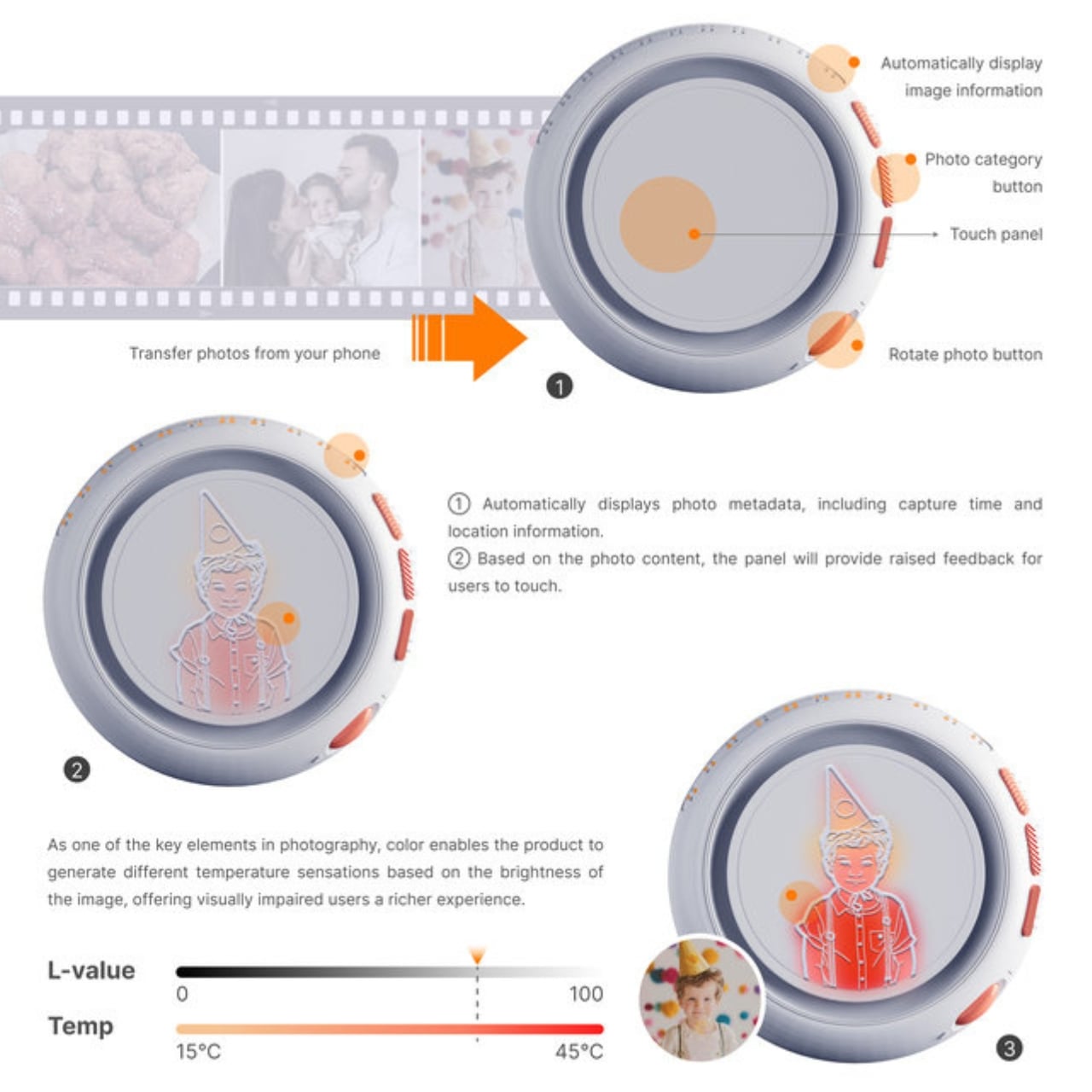
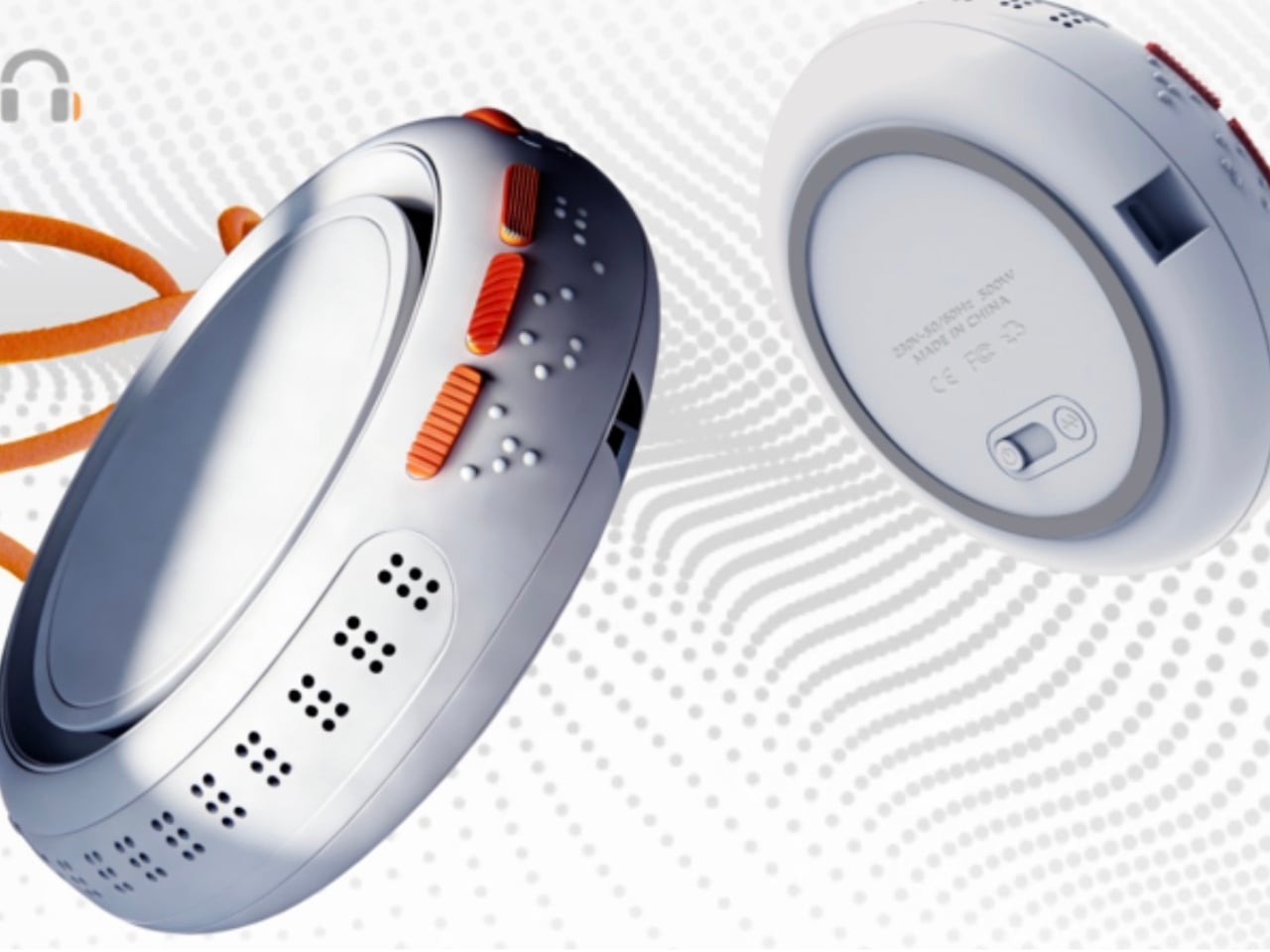
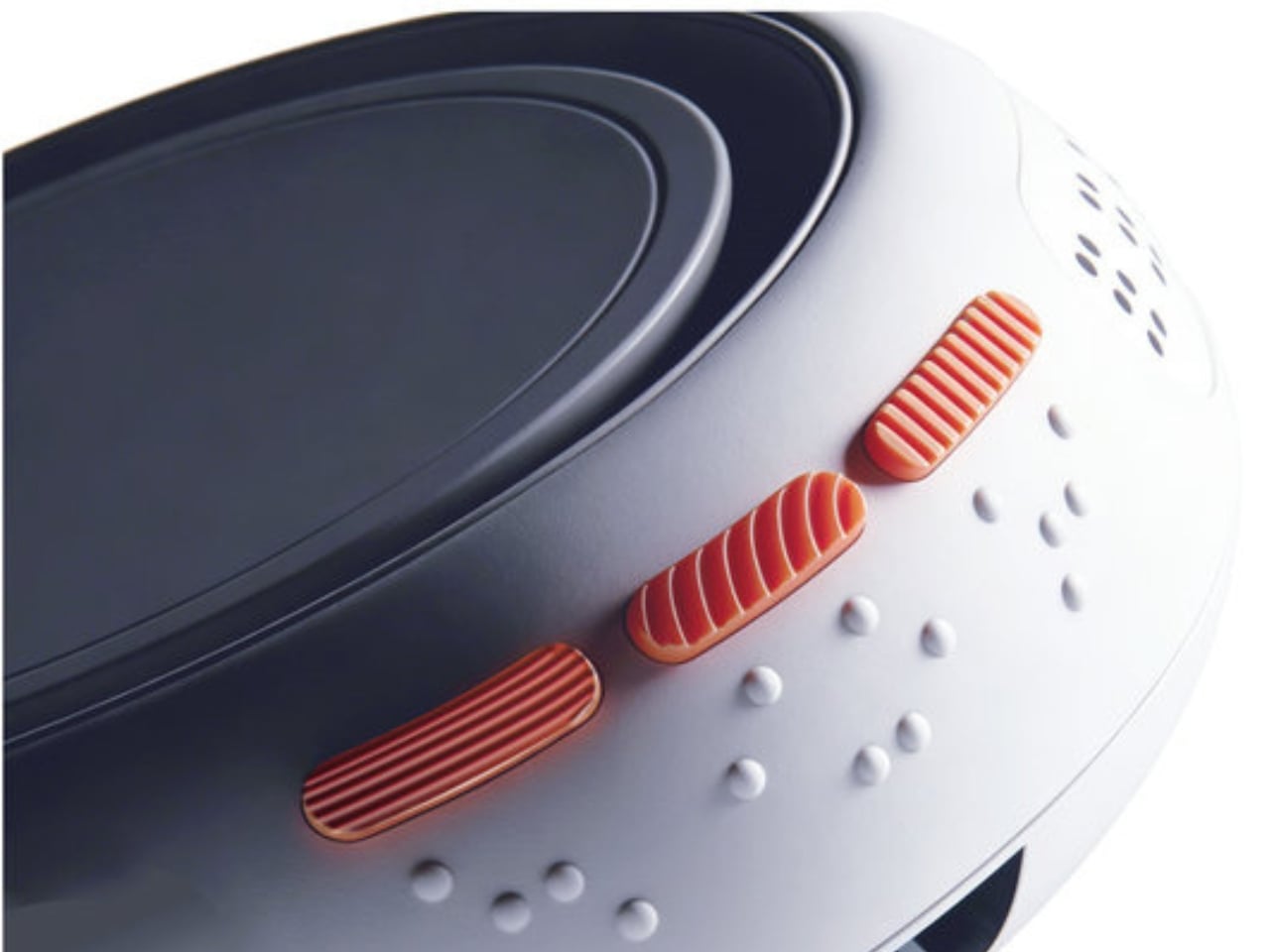
On top of the tactile experience, the device includes Braille annotations on the top surface, automatic photo categorization with textured tactile buttons (one for portraits, one for landscapes, one for food), voice metadata read-aloud with date and GPS location, and a recessed groove around the charging port so the entire device can be navigated independently without any sighted assistance. The fact that a student thought through all of these layers simultaneously, each reinforcing the others, says a great deal about where design education is headed.
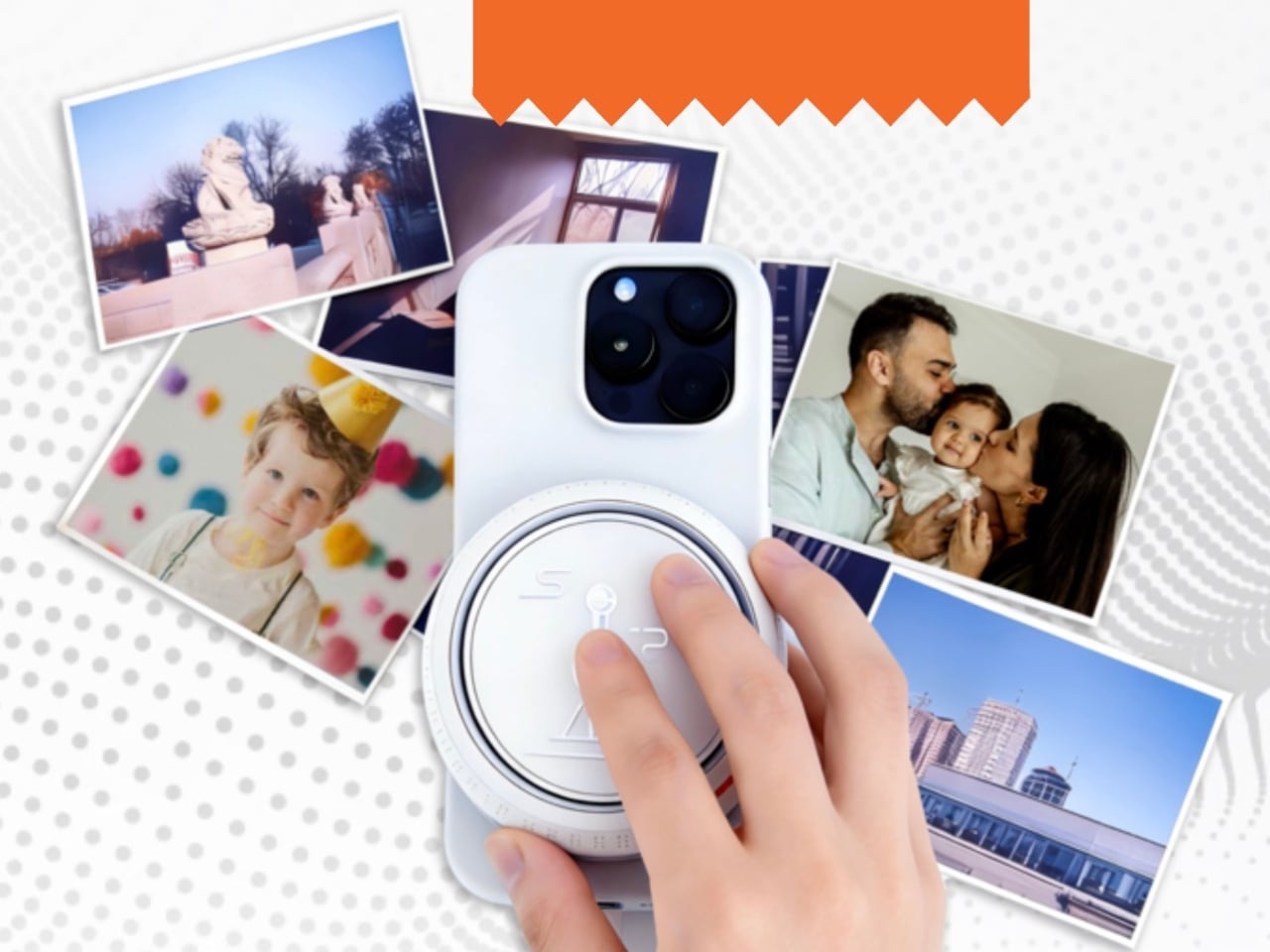
What strikes me about Touch-frame isn’t just the technology. It’s the philosophy underneath it. Most assistive technology is built around compensation, giving people a workaround to approximate what they’ve lost. This design reaches for something more ambitious. It tries to restore the emotional richness of the experience itself. When a child can place their school photo or a drawing directly on the device and share it with a visually impaired parent, that’s not compensation. That’s connection. And the distinction matters enormously.
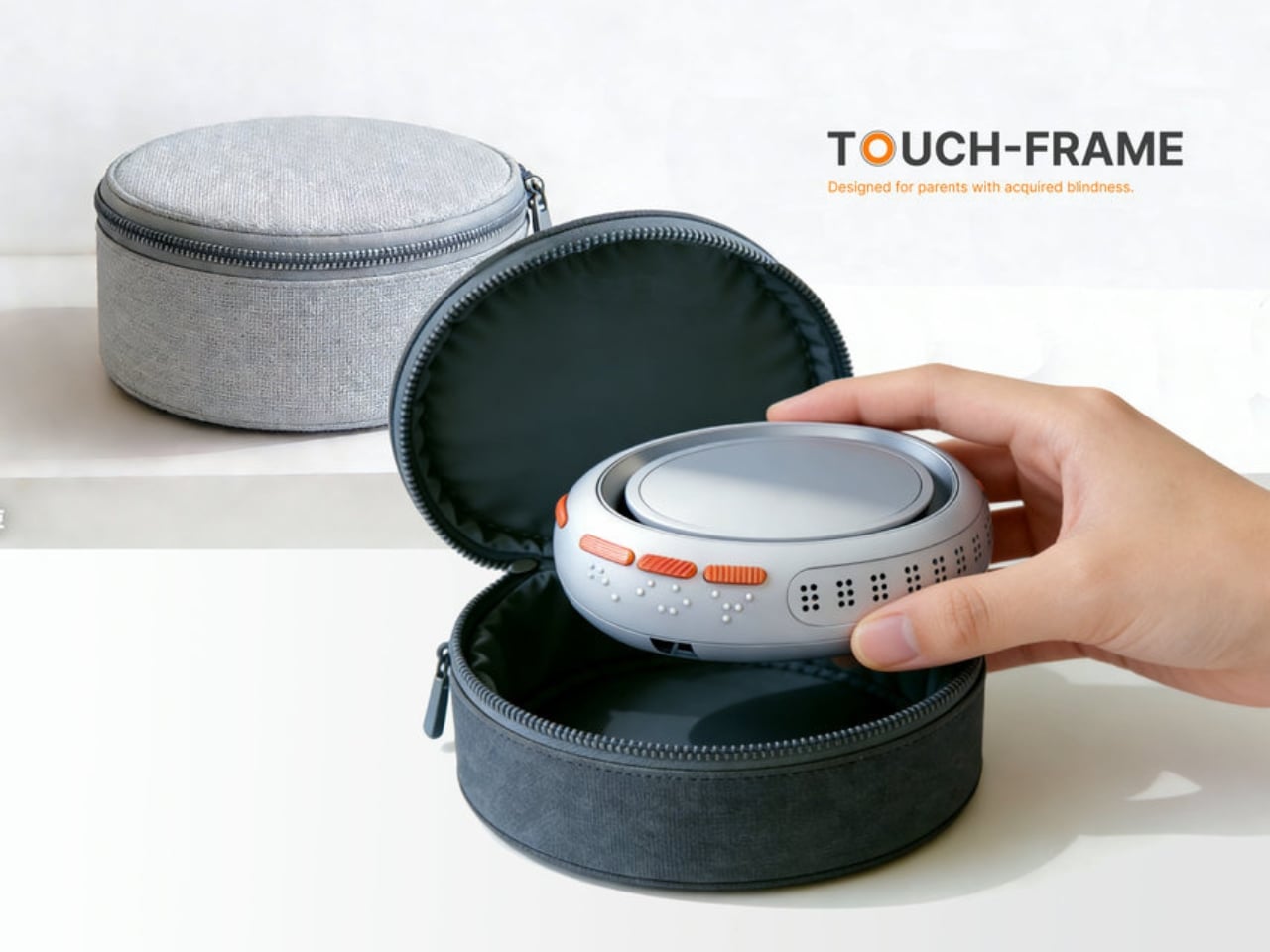
The design also consciously positions itself outside the clinical aesthetic that tends to dominate assistive products. Liang Han explicitly frames this as a shift from “medical equipment” to “personal electronics,” and the visual language of the renders backs that up. It looks like something you’d want on your shelf, not something that announces a medical condition the moment someone walks into the room. Dignity in design is still underrated, and it’s encouraging to see it treated as a deliberate intention rather than an afterthought.
You could argue that the concept still has gaps. A tactile dot matrix can only approximate so much, and thermal feedback as a color proxy has obvious limits. That’s fair. Concept designs exist in a space between aspiration and engineering reality, and not every detail survives contact with production. But the best concept designs do something valuable regardless: they reframe a problem in a way that makes you wonder why nobody thought to frame it that way before.
That, in the end, is what Liang Han has done. The photograph has been a sighted medium since its invention. Touch-frame quietly but firmly asks whether it has to be.
SHARE