There is something wonderfully unserious, and yet oddly elegant, about pasta-inspired decor. What began as an April Fools’ joke by luxury stone and tile company Artistic Tile has now become part of a broader design movement that treats pasta as form, memory, geometry, and material inspiration.
In April, Artistic Tile posted its newest “product line” on Instagram: mosaics featuring macaroni and farfalle shapes arranged like pasta in sauce. The collection, cheekily called Al Dente, immediately caught attention. Followers loved the concept, with many joking that Italian restaurants should take the idea seriously. The only problem? It was posted on April 1. The tiles were never originally meant to be real. But the joke had too much flavor to stay fictional.
Designer: Studio Yellowdot
The idea first emerged while Artistic Tile’s president and chief product officer, Zach Epstein, was reviewing another design with a boomerang-like shape. The curve suggested something more familiar and playful: macaroni. After the enthusiastic online response, Artistic Tile decided to bring the concept to life through its Tailored To program, which allows for custom designs. What started with macaroni and farfalle expanded into vodka rigatoni made from limestone and Rosa Perlino, and butter noodles made with Limone Marmi marble. Beneath the humor, the pattern works because it is recognizable, abstract, and decorative without feeling too literal.
That balance between wit and refinement is exactly why pasta has become such an appealing muse for designers. Pasta is familiar, playful, sculptural, and deeply emotional. It carries family memories, comfort, culture, and craft, while offering an endless library of shapes: ridges, curls, tubes, shells, folds, ribbons, and spirals.
Pasta-inspired design does not need to belong only in Italian restaurants or food-focused spaces. Its value lies in its ability to spark conversation anywhere. A pasta-shaped pull on a cabinet, a lasagna-inspired chair, or a macaroni mosaic creates a moment of recognition. People pause, smile, and look closer. That small moment of surprise adds emotional value to an interior. It makes a space feel more human, less predictable, and more open to storytelling.
In an age where many interiors can feel overly polished or algorithmically similar, pasta brings a charming disruption. It introduces humor without making the space feel childish. It creates nostalgia without becoming overly sentimental. Because nearly everyone has some relationship with pasta, through family dinners, grocery aisles, childhood meals, or comfort food memories, the motif carries an easy emotional resonance. It becomes a shared reference point, allowing design to feel more approachable and social.
Canadian Italian artist and industrial designer Chris Fusaro’s work shows how pasta can operate as a design language. His bronze objects appear to be built from hyperrealistic pasta pieces, transforming bowls, strainers, trivets, lamps, pendants, and chairs into playful studies of repetition and form. In this context, pasta becomes a modular system. Its many shapes allow the idea to expand across different scales and objects without feeling immediately exhausted.
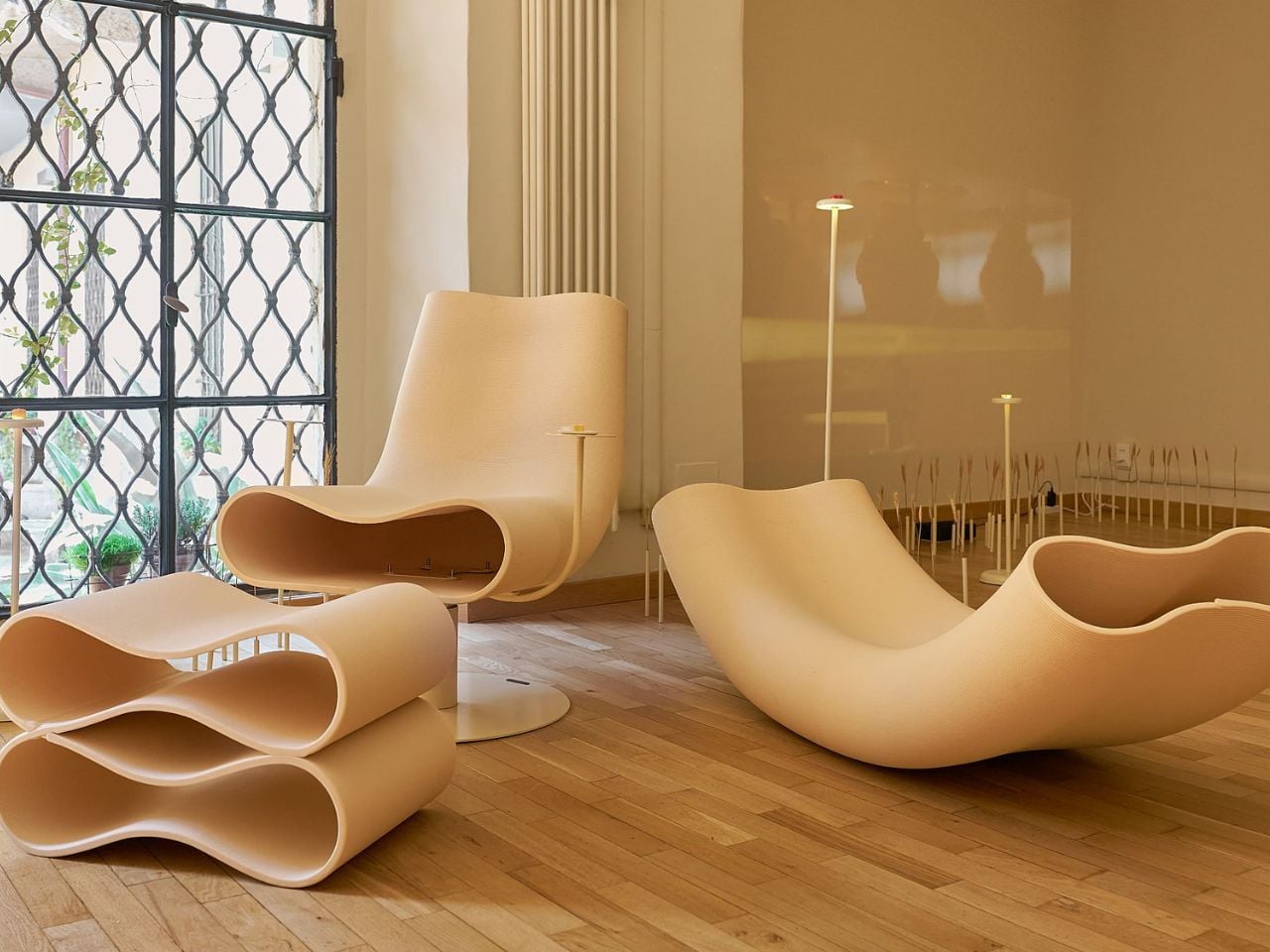
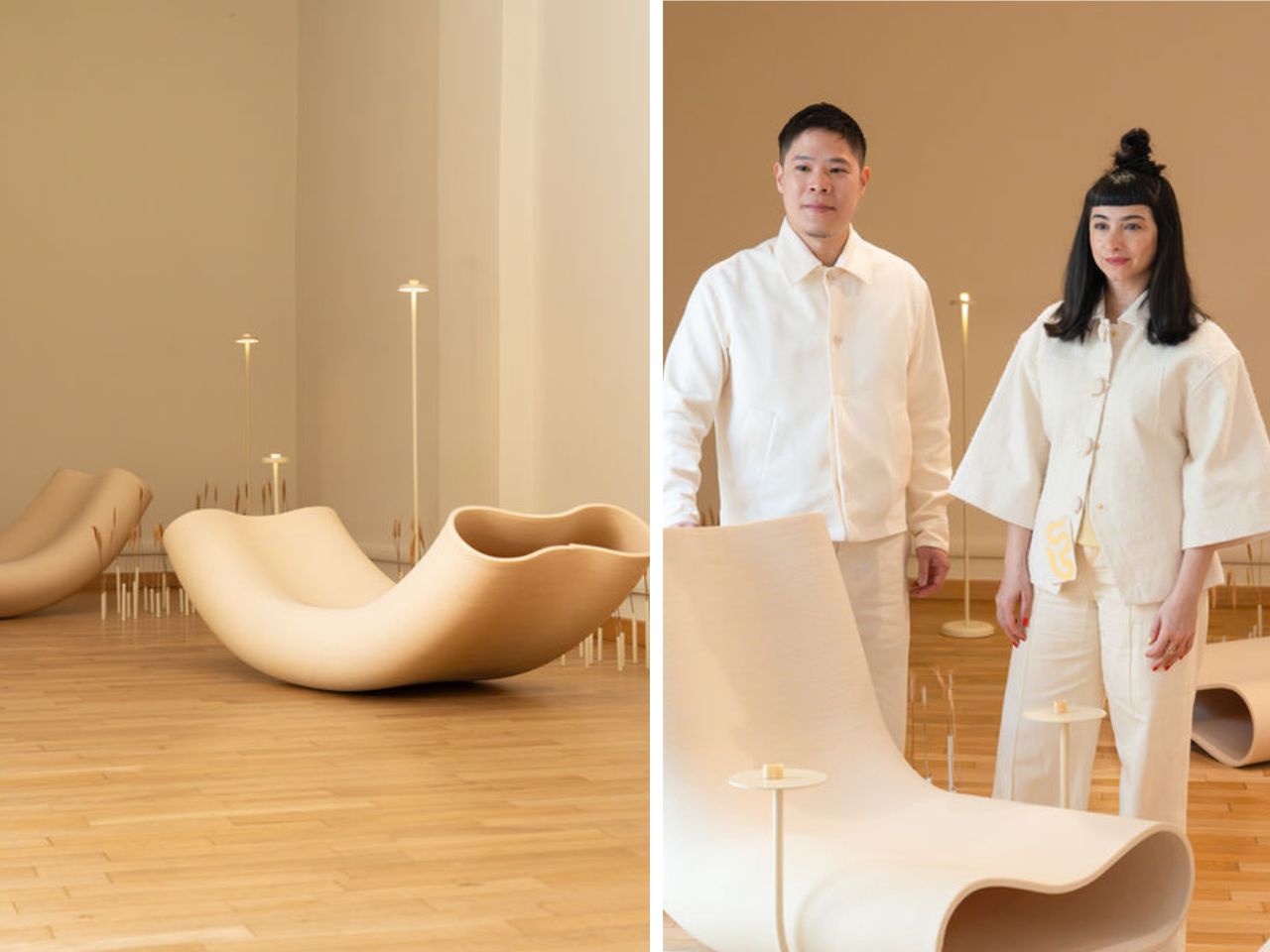
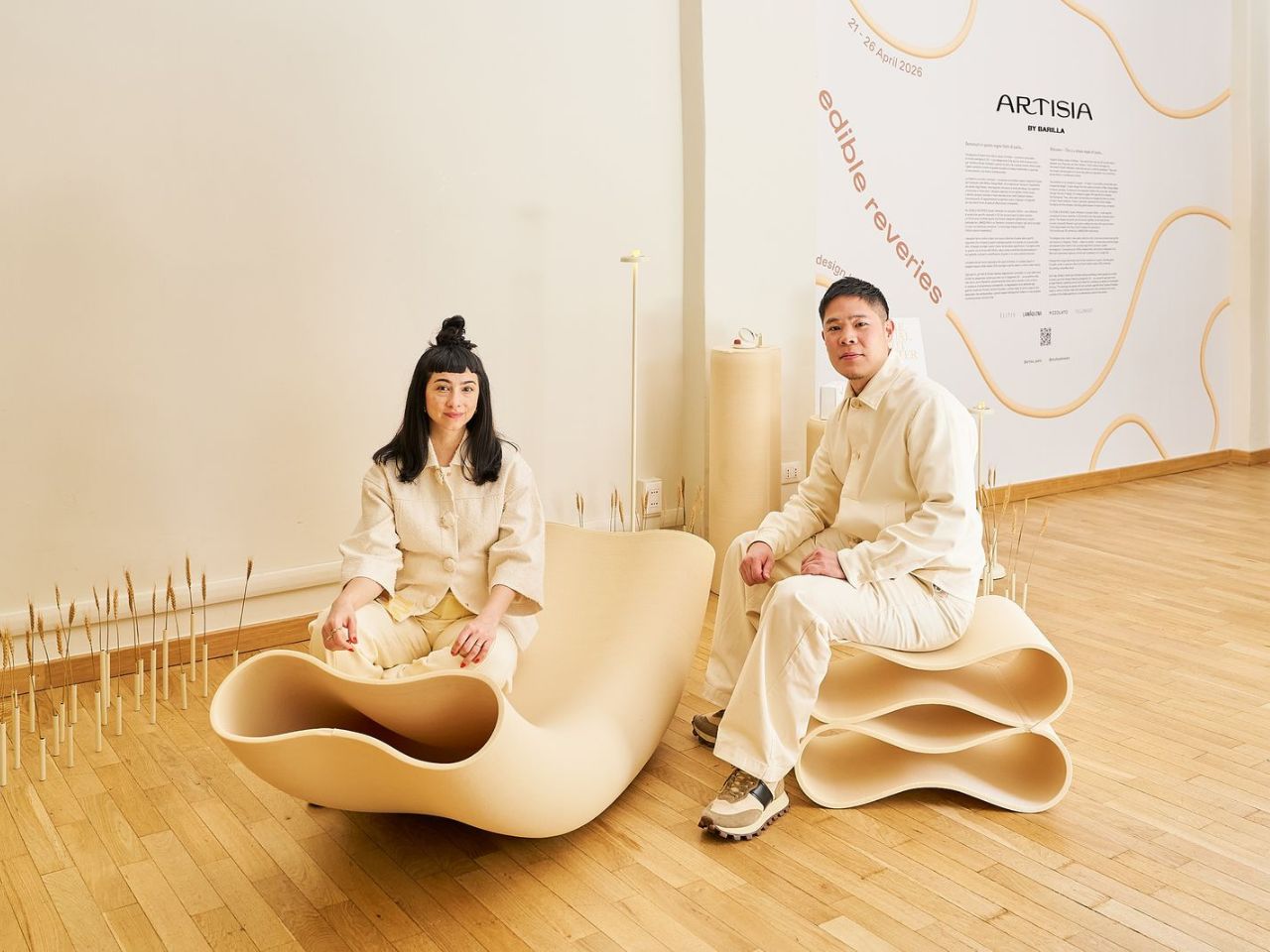
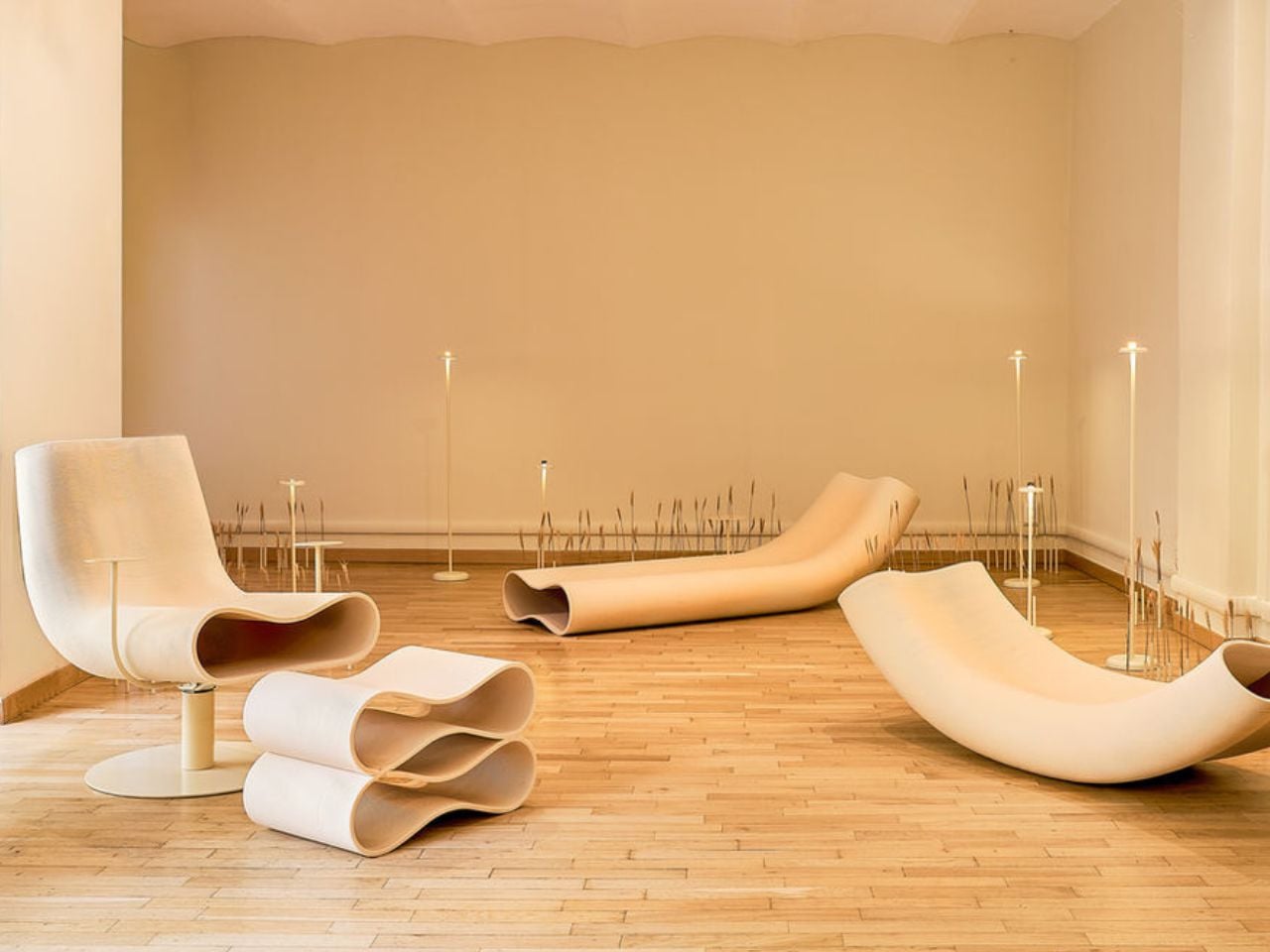
At Milan Design Week, pasta moved into an even larger spatial language through Edible Reveries, an exhibition by Artisia, a Barilla-owned company specializing in 3D-printed dry pasta, and Studio Yellowdot. Alongside tastings, visitors encountered pasta-inspired furniture, including a lounge seat, rocking chair, and ottoman shaped like enlarged dry noodles. The furniture was also 3D-printed, using a wood-composite material that echoed the process of shaping pasta dough. The result was surreal yet functional: soft and noodle-like in appearance, stable and architectural as furniture.
Other designers are exploring pasta at a more intimate scale. Australian hardware brand Lo & Co Interiors released its own Al Dente collection, featuring orecchiette-inspired knobs and lasagne-like pulls. These pieces bring a subtle wink to furniture and cabinetry. Their appeal lies in the way they feel familiar and sophisticated. A pasta-inspired drawer pull can be humorous, and when treated with the right material, finish, and proportion, it becomes unexpectedly elegant.
This trend feels timely because contemporary interiors are moving away from overly disciplined, sterile perfection and toward objects with personality, tactility, and a stronger sense of handcraft. Pasta forms naturally offer irregularity and charm. They feel shaped rather than engineered. They carry presence without becoming intimidating.
San Francisco designer Caleb Ferris found inspiration in pasta while observing the range of shapes found in grocery store aisles during the pandemic. The variety of pasta forms revealed itself as a kind of mass-produced design library. His lasagna chair, made in a ruffled black satin silhouette, brought tongue-in-cheek humor into furniture and went on to win the 2023 ICFF Editors Award for Seating. In a moment when people were craving lightness, pasta offered comedy, craft, and a break from overly serious design language.
New York interior designer Tara McCauley has leaned into the theatrical side of pasta. Her lamp, made with real linguine, faux parsley, and a clam shell base, plays with the line between decorative object and edible absurdity. The piece creates a moment of surprise: at first glance, it reads as a whimsical design object, but up close, the use of real pasta turns it into something stranger and more memorable.
Pasta-inspired design works because it is funny without feeling disposable. It adds value to interior spaces by being memorable. It gives people something to notice, talk about, and connect with. Whether placed in a home, boutique hotel, retail space, gallery, or restaurant, it can soften the atmosphere and make the environment feel more personal.
Pasta has always carried the logic of design. It is engineered to hold sauce, shaped for texture, scaled for the hand and mouth, and tied to ritual. Now, designers are moving it from the kitchen table into the wider world of interiors. The result is a little ridiculous, surprisingly refined, and very hard not to love.
SHARE