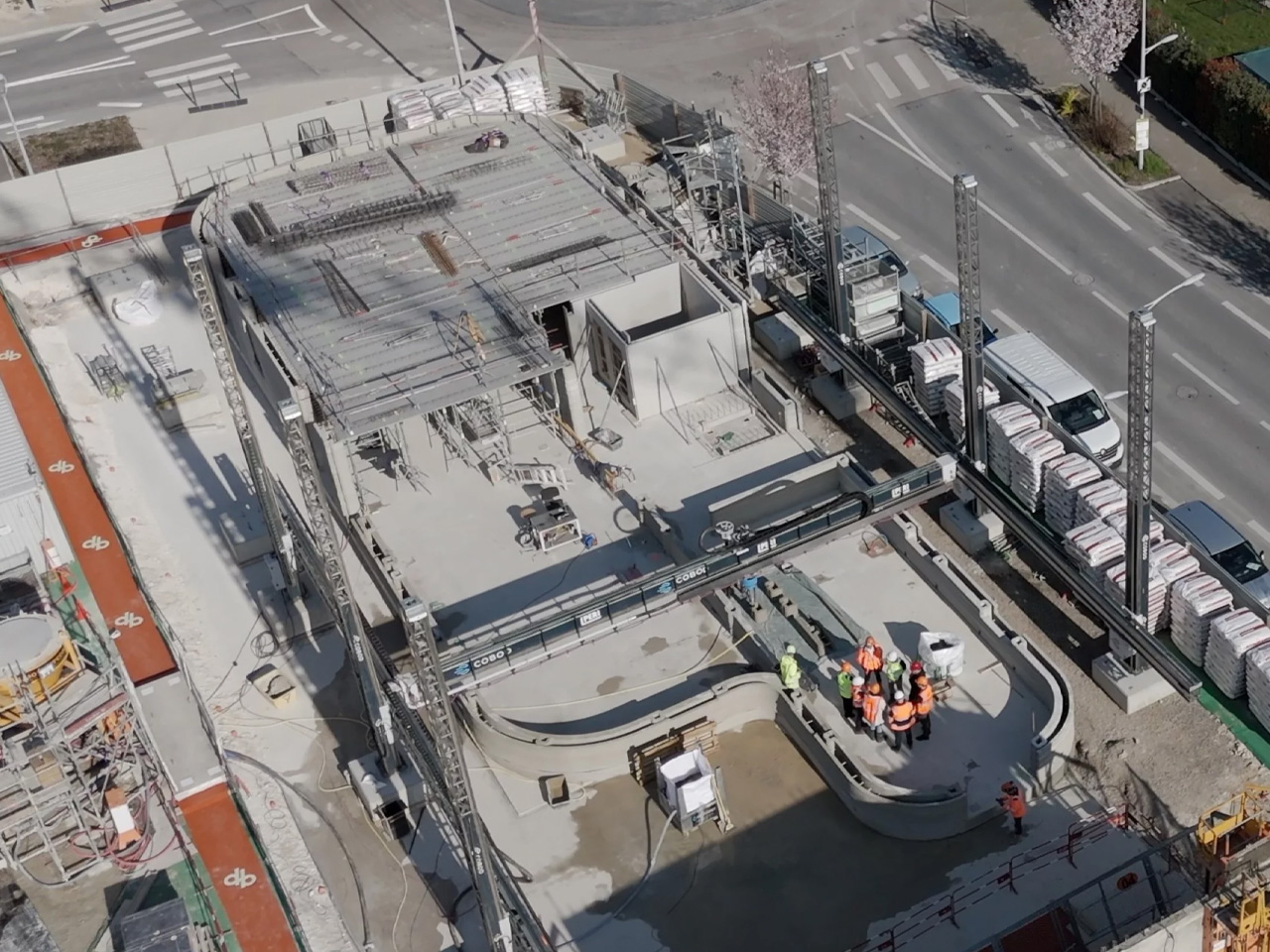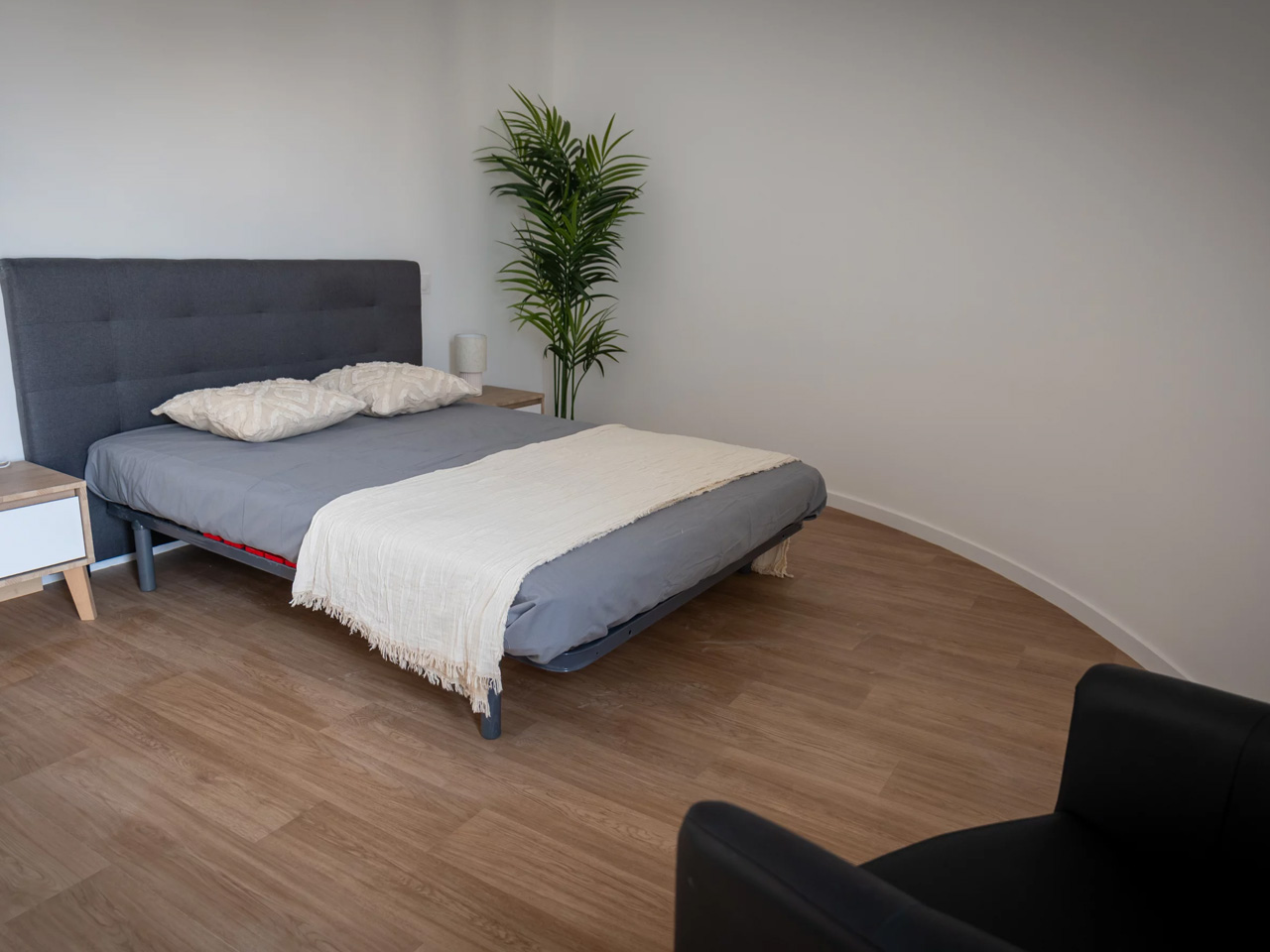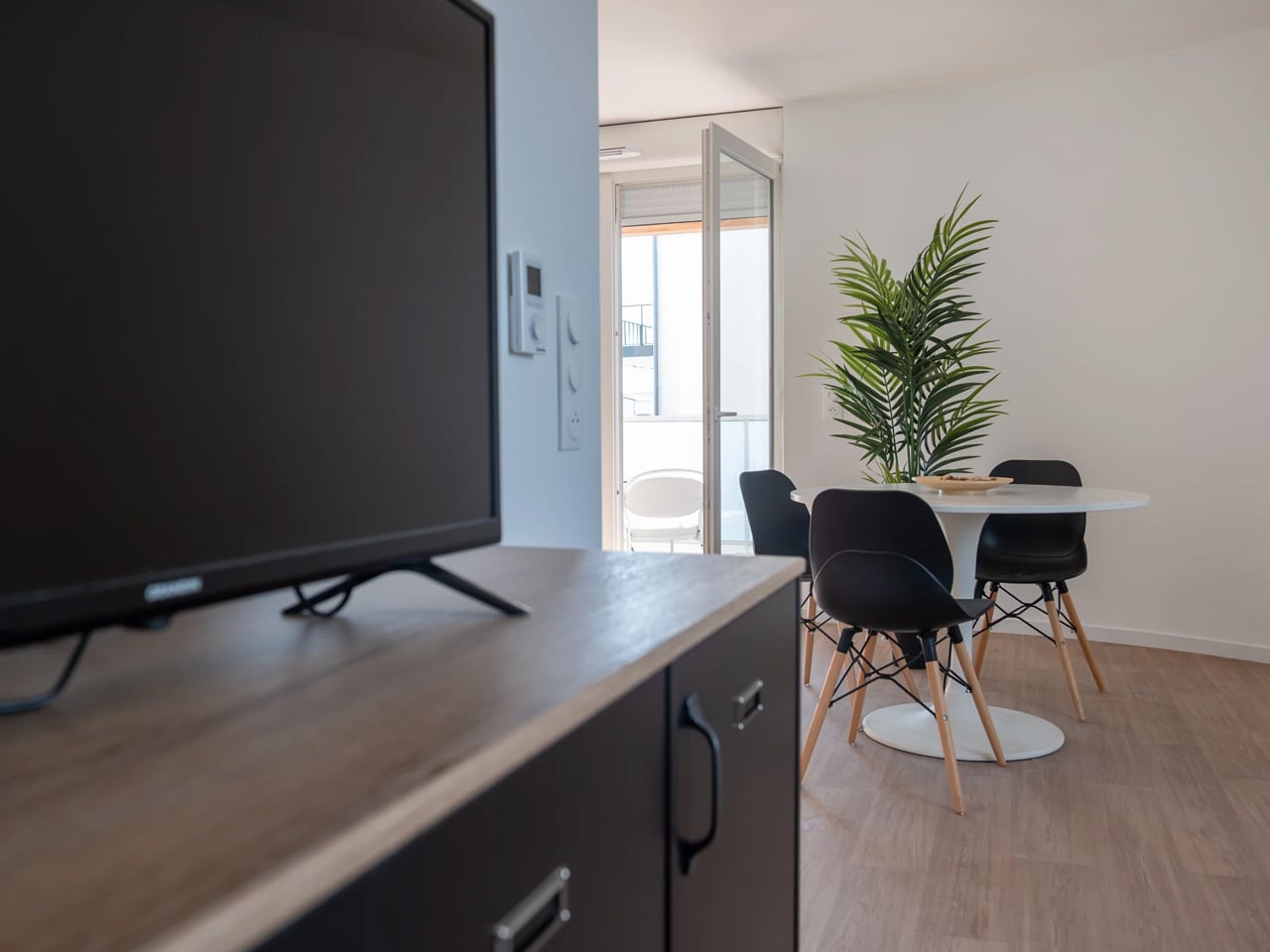

Something significant happened in Bezannes, France — and the construction industry should be paying close attention. ViliaSprint², Europe’s largest 3D-printed apartment building, has been completed, and it arrives less as a proof of concept and more as a genuine blueprint for what housing could look like moving forward. Developed by Plurial Novilia, designed by HOBO Architecture, and printed by PERI 3D Construction using a COBOD BOD2 printer, this is the kind of project that makes you reconsider what a building even is.
The numbers are striking. Twelve social housing apartments across three floors, 800 square meters of living space — all printed on-site in just 34 days, down from an originally planned 50. That alone would be a headline. But what makes ViliaSprint² genuinely remarkable is that it’s the first building in France where both the load-bearing structure and every wall were printed directly on-site, with 100% of all loads transferred through the 3D-printed walls. No hybrid workarounds. No conventional skeleton hiding beneath the surface. The printer did the heavy lifting, quite literally.
Designer: Plurial Novilia & HOBO Architecture
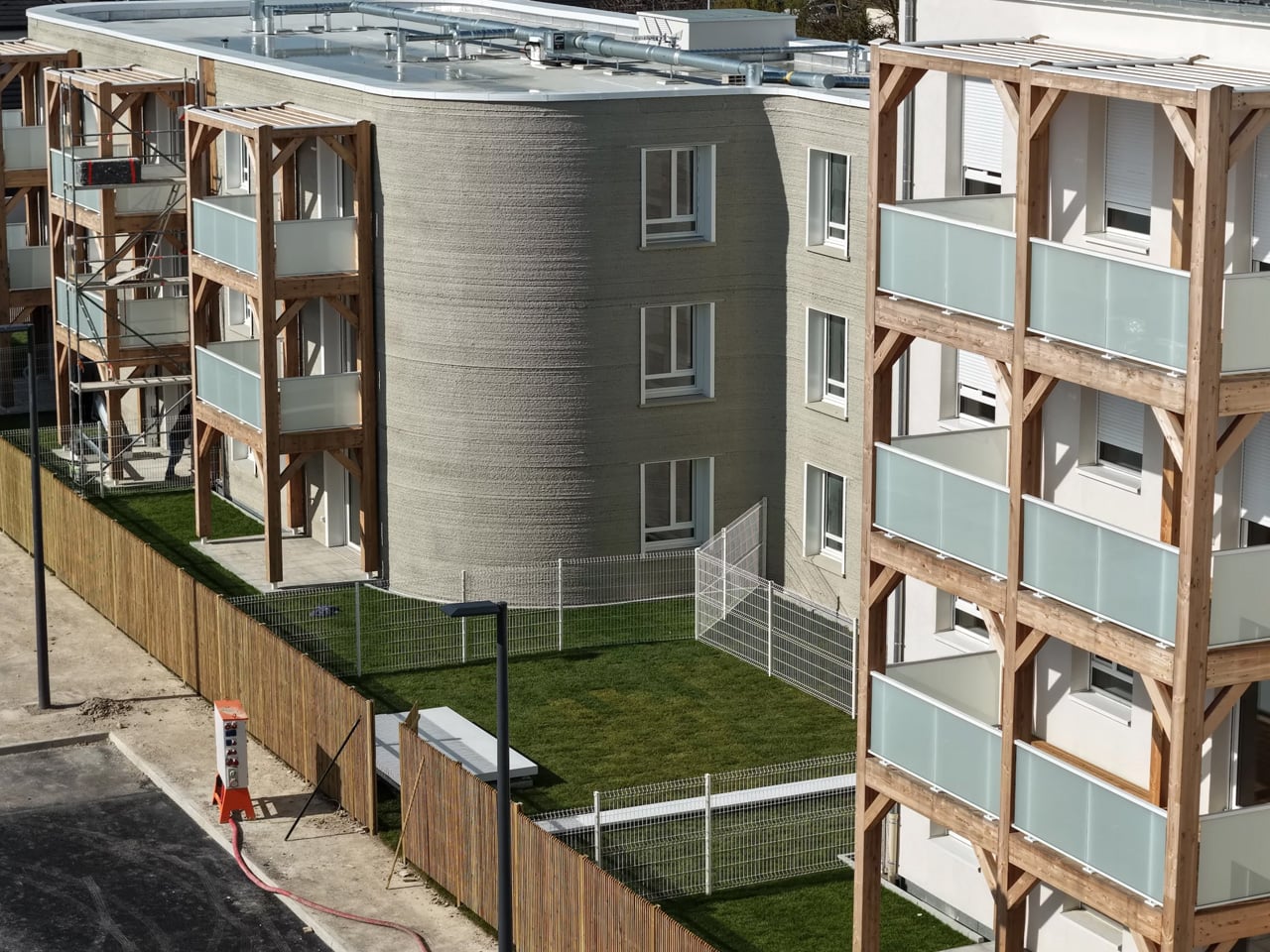
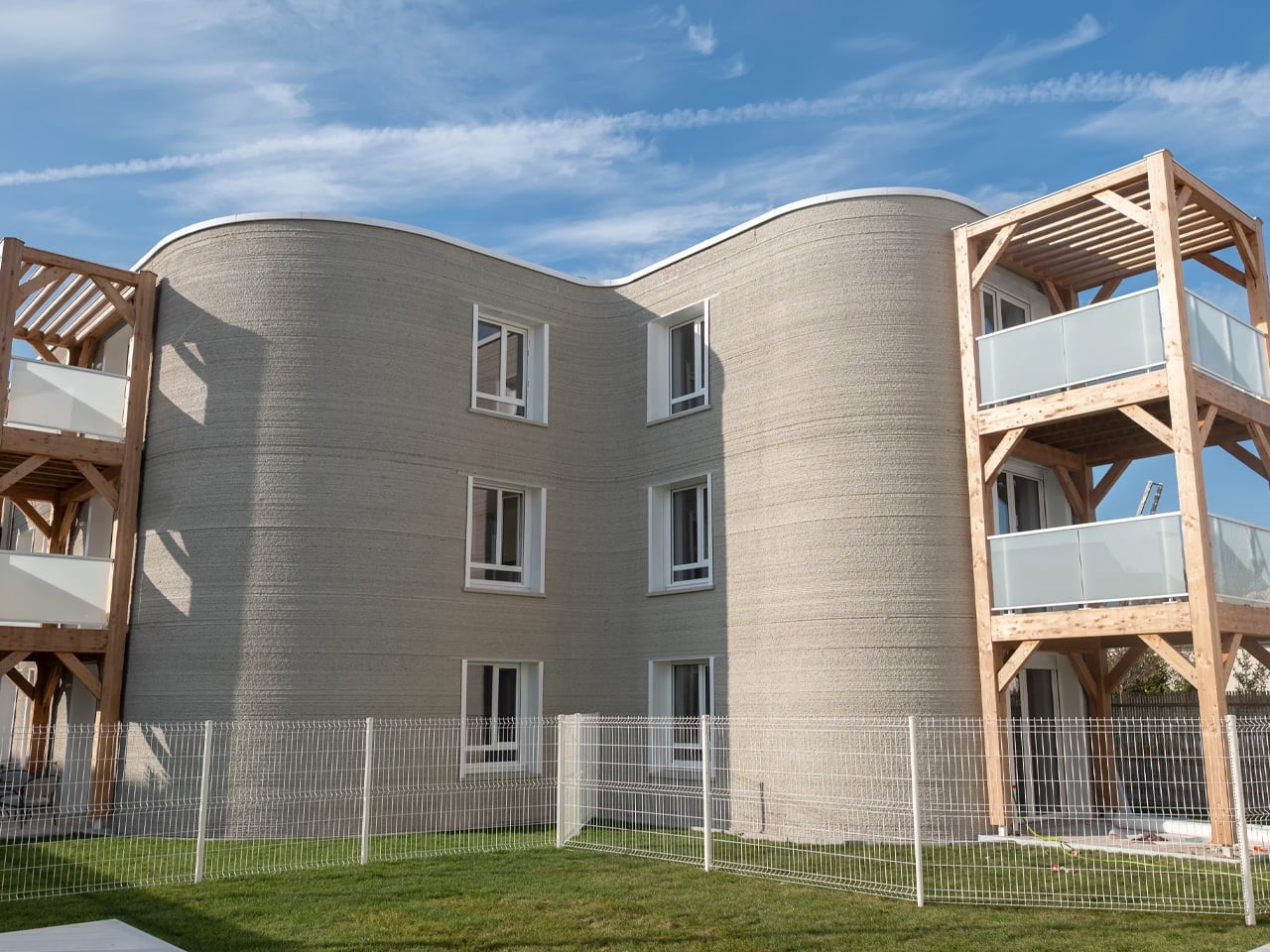
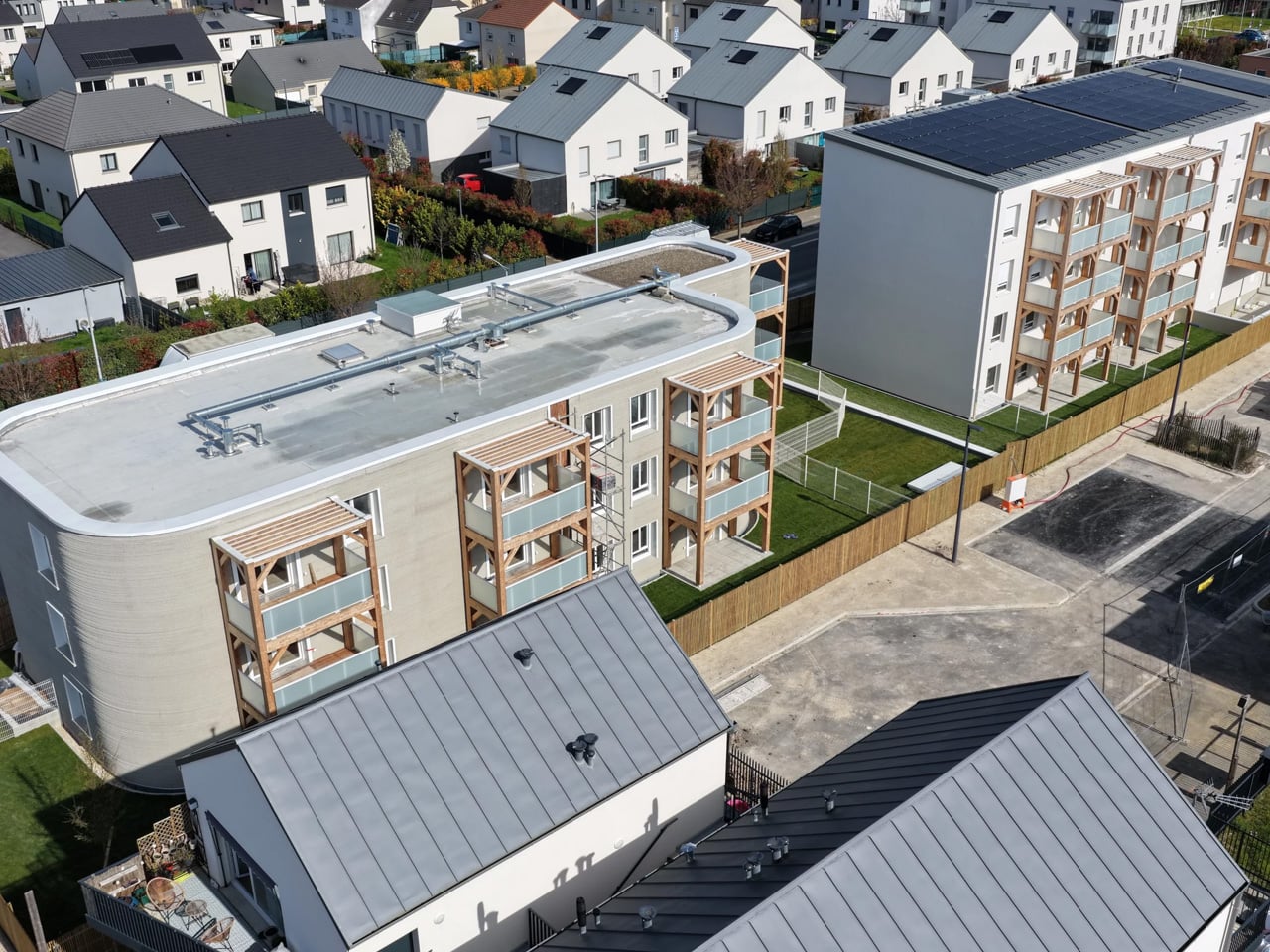
HOBO Architecture’s design leans into the honesty of the medium. The building’s rounded geometry — fluid curves that would cost a fortune to achieve through conventional formwork — is made possible precisely because a machine, not a tradesperson, is doing the forming. It’s design that could only exist with this technology, which is a rarer claim than it sounds. Timber balcony structures offset the weight of the concrete shell, adding warmth to a building that could otherwise read as cold and industrial.
Sustainability is baked into the structure rather than retrofitted onto it. The optimized curved form saved roughly 10% of concrete volume. Holcim supplied the printable concrete using its TectorPrint technology within the CO₂-reduced ECOPact range, reinforced with synthetic macro fibres. Perlite insulation, 500 square meters of photovoltaic panels, and a hybrid gas-heat pump system by Atlantic Systèmes push the building to around 60% energy self-sufficiency — fully compliant with France’s RE2020 2025 green building targets.
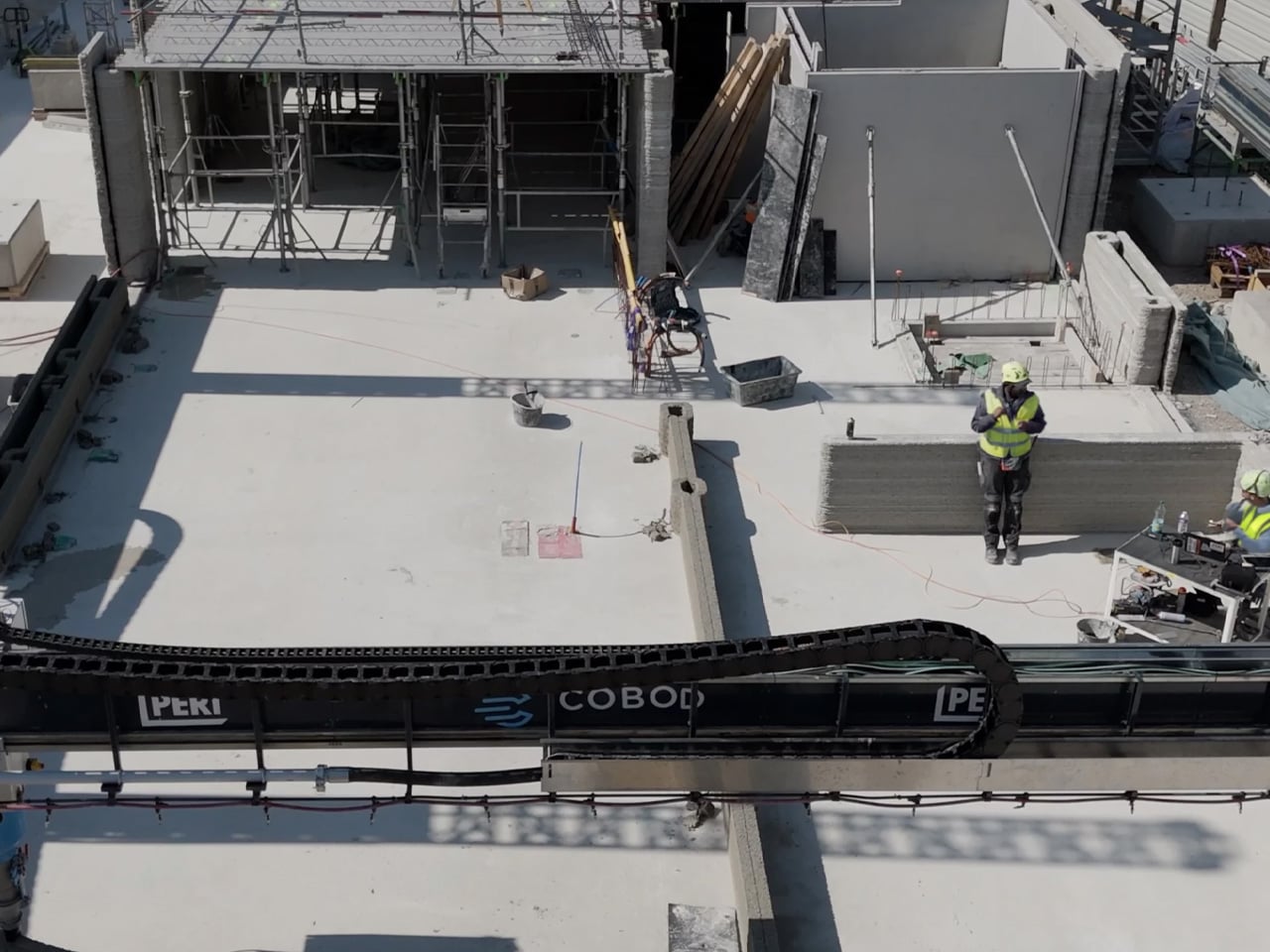
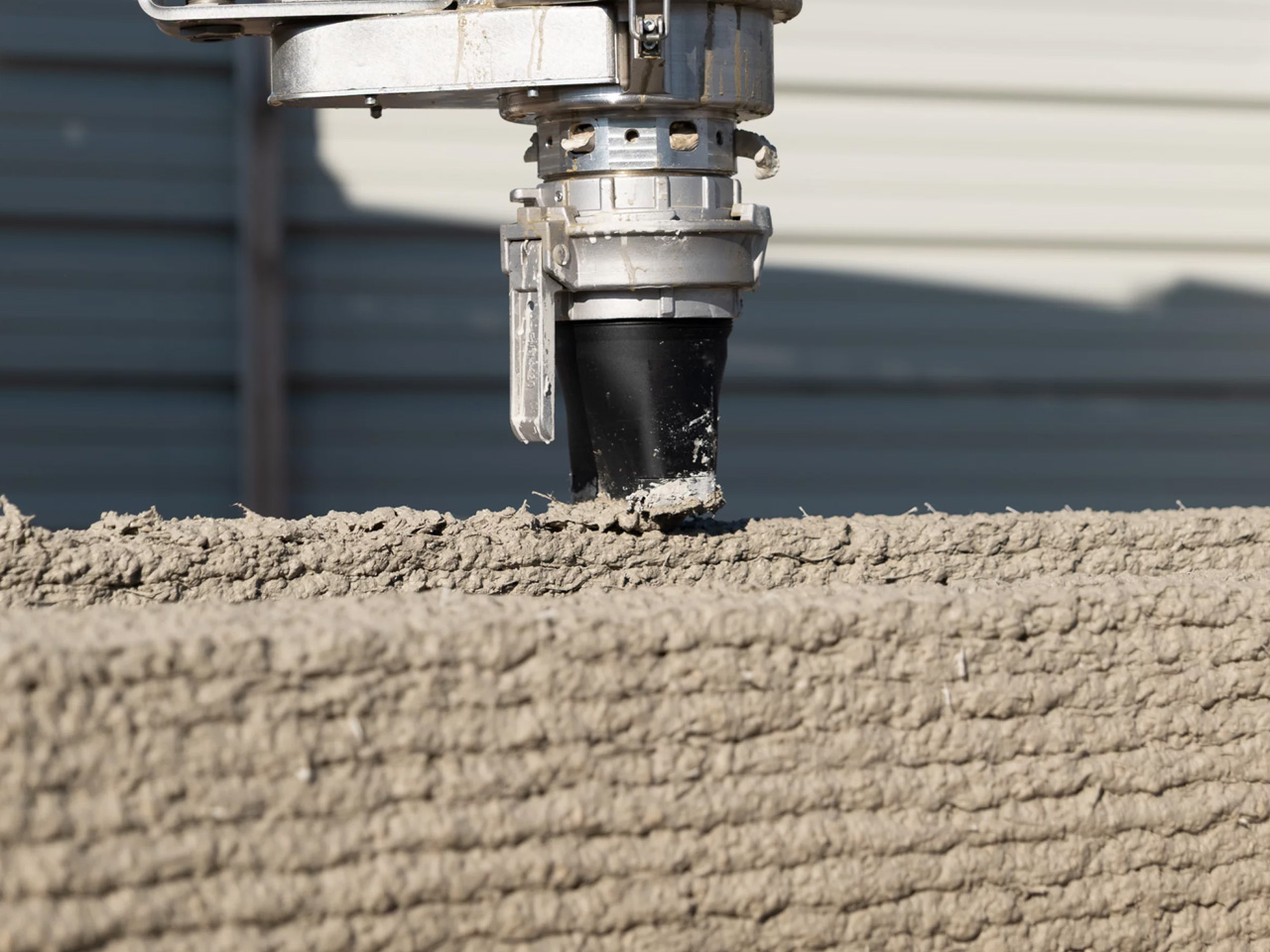
The building sits directly beside a conventionally constructed twin, built by the same developer simultaneously, as a live comparison. The 3D-printed version finished three months ahead. It also required only three workers to erect the walls, compared to six for the conventional build — a meaningful detail as the construction industry faces deepening skilled labor shortages.
Plurial Novilia is already planning the next move: roughly 40 apartments, two printers running simultaneously, with a target to cut print time by a factor of four. ViliaSprint² isn’t the destination. It’s the proof that the destination is real.