Side tables have always been one of the harder pieces of furniture to make genuinely interesting. They’re functional by nature, meant to hold a drink, a remote, or that ever-growing stack of books. Most designs take the easy route: a flat surface, four legs, and nothing more. A few try to add storage or visual flair, but the table and whatever sits on it rarely share anything deeper than proximity.
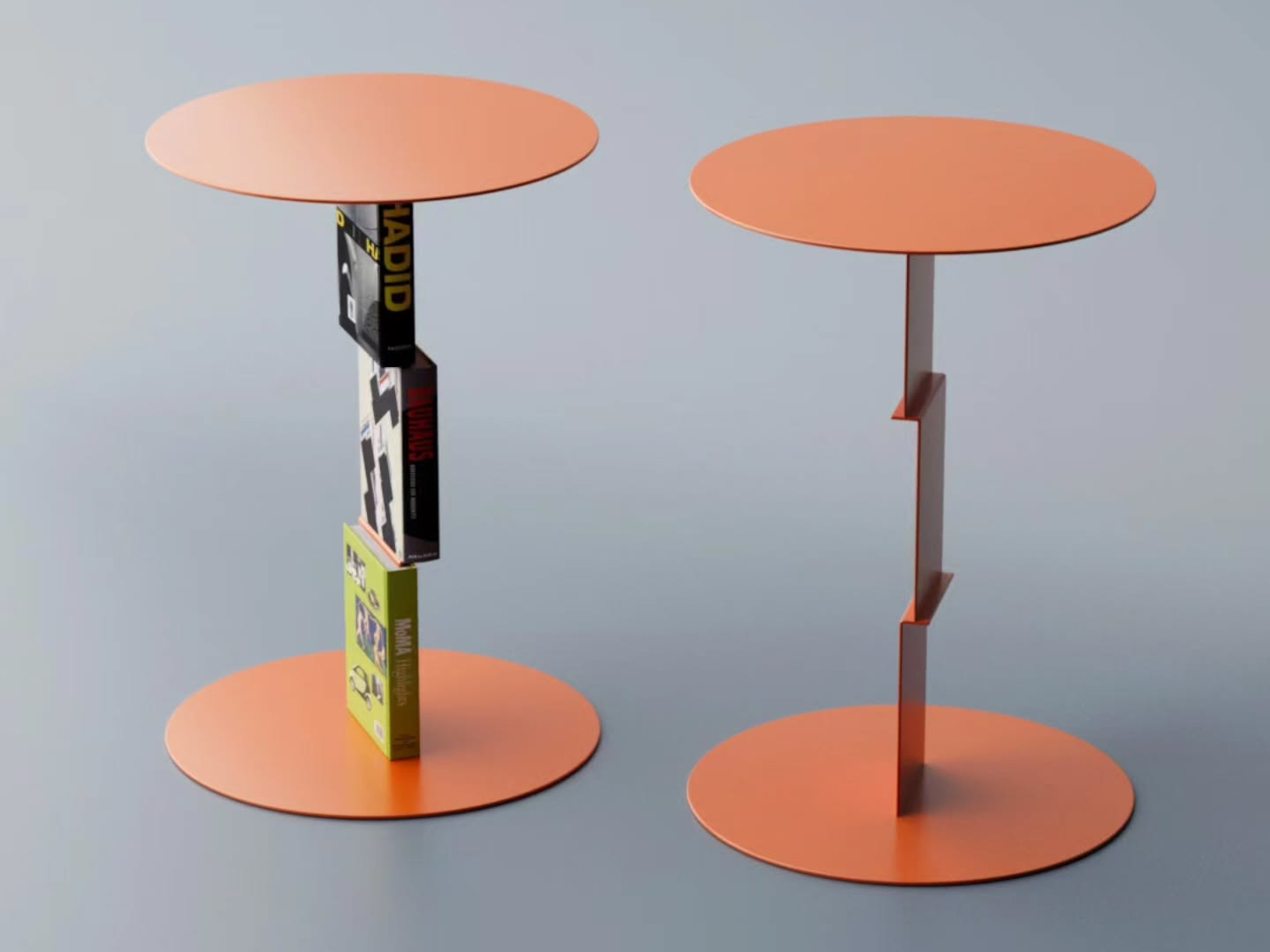
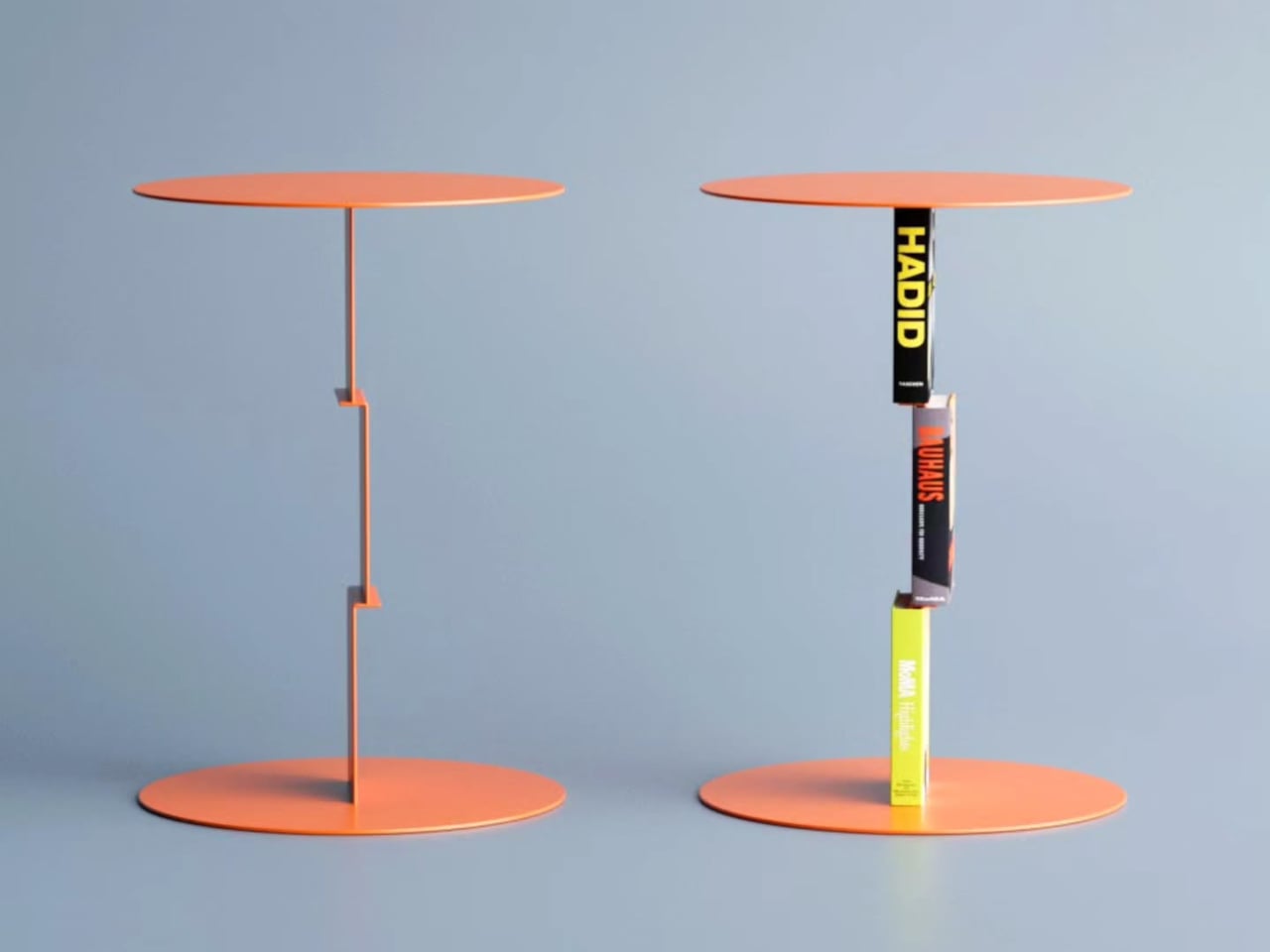
Deniz Aktay’s Delusion Table turns that relationship on its head. The Stuttgart-based designer has crafted a side table concept where books aren’t just accessories resting on the surface; they become part of the table itself, or at least appear to. The idea is simple but arresting: a purpose-built metal framework connects the tabletop to the base, and once books are loaded onto it, the metal structure all but disappears.
Designer: Deniz Aktay (dezinobjects)
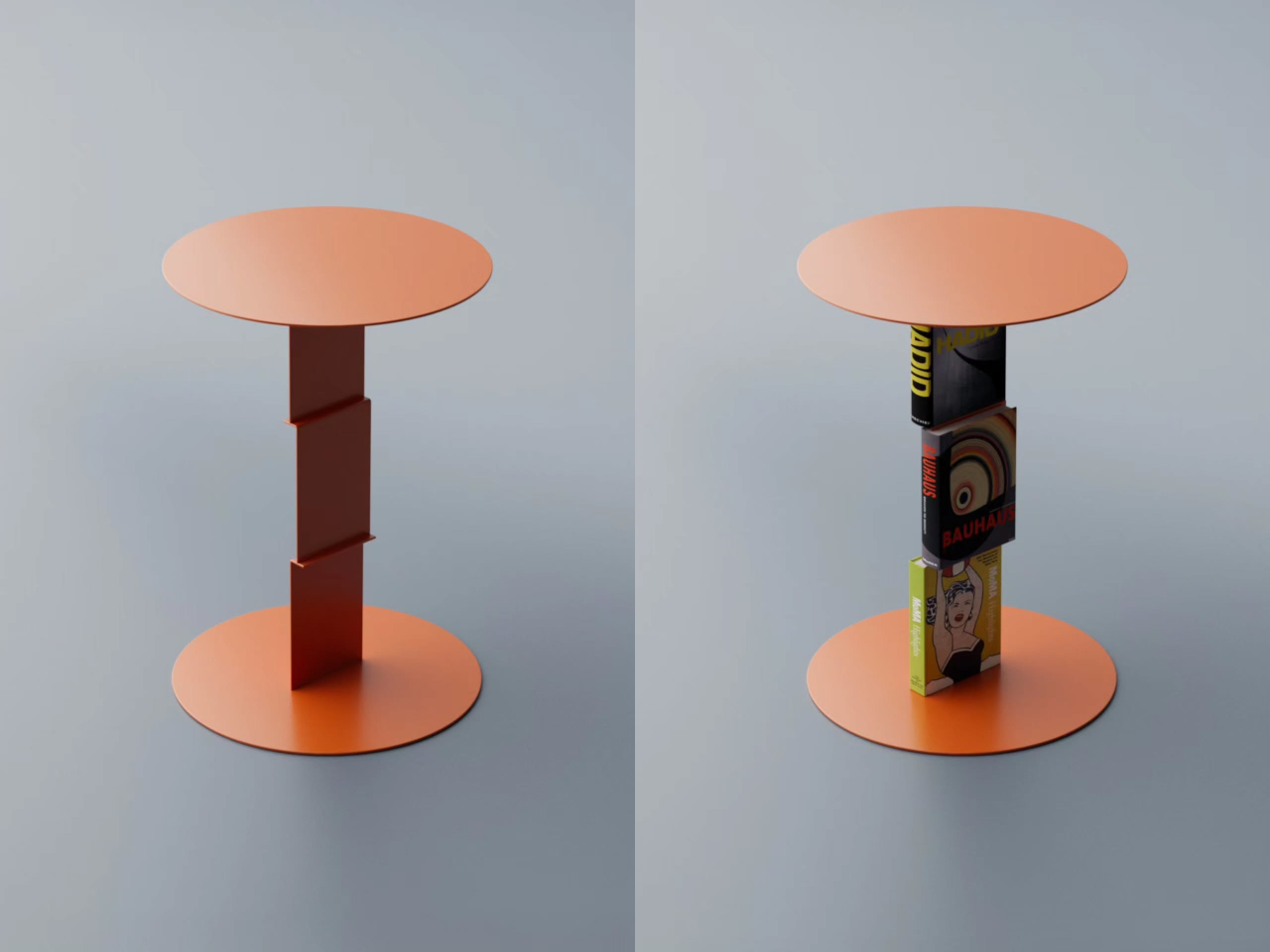
The trick borrows from a principle already used in certain bookmarks and floating wall shelves, where a thin metal channel slides between a book’s pages and disappears behind the covers. Aktay applies the same logic vertically: the table’s central stem has integrated clips that hold books upright against the structure. Slot a few thick art or design volumes in, and the metal seems to dissolve quietly into the spines.
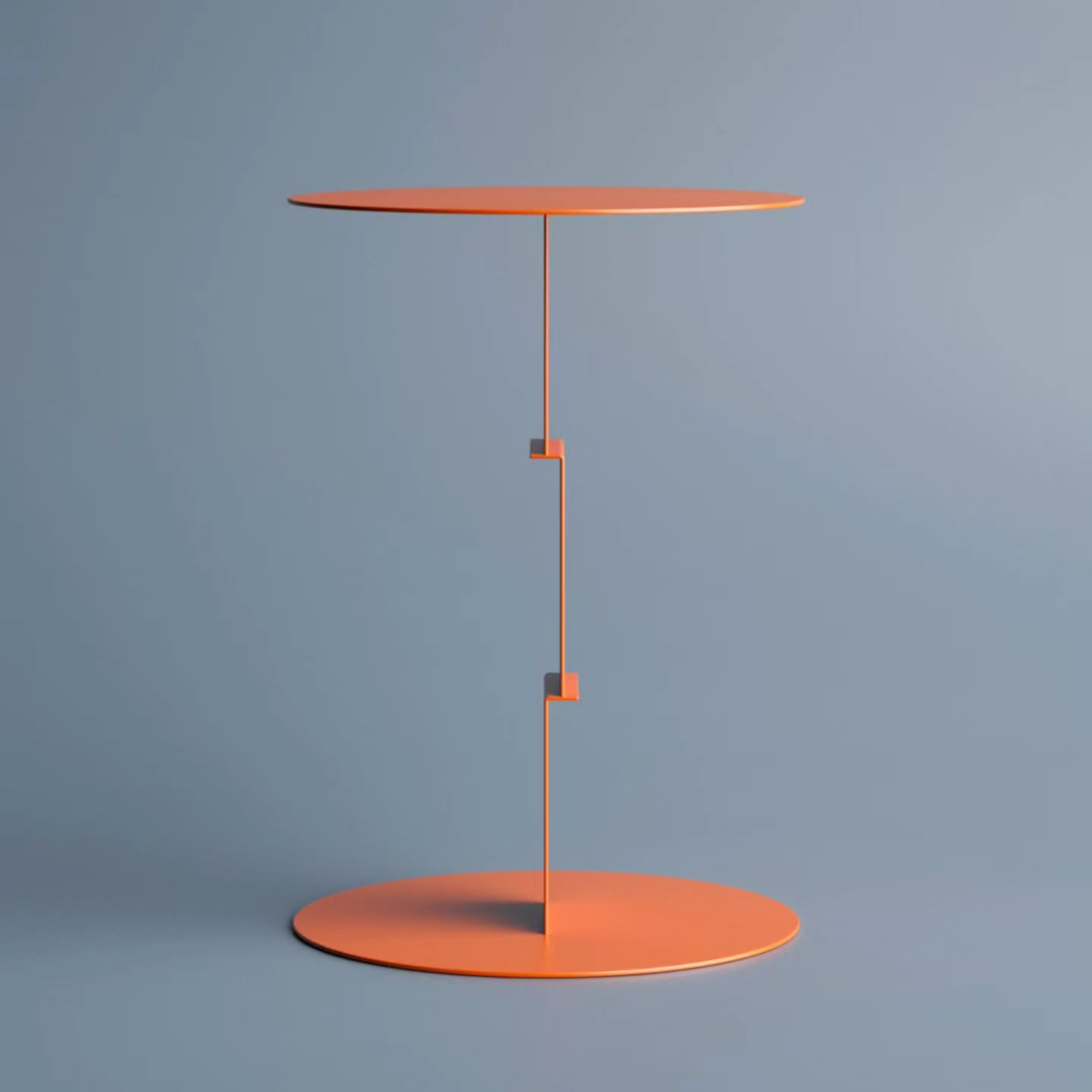
What results is a table that looks as if a small stack of books has somehow defied physics to hold an entire surface aloft. It’s a visual gag, but an elegant one. The books aren’t floating or leaning on something concealed behind them. They’re gripping the structure, pages pressed against the clips, covers facing outward, spines reading clearly, creating something that looks accidental but is actually very deliberate.
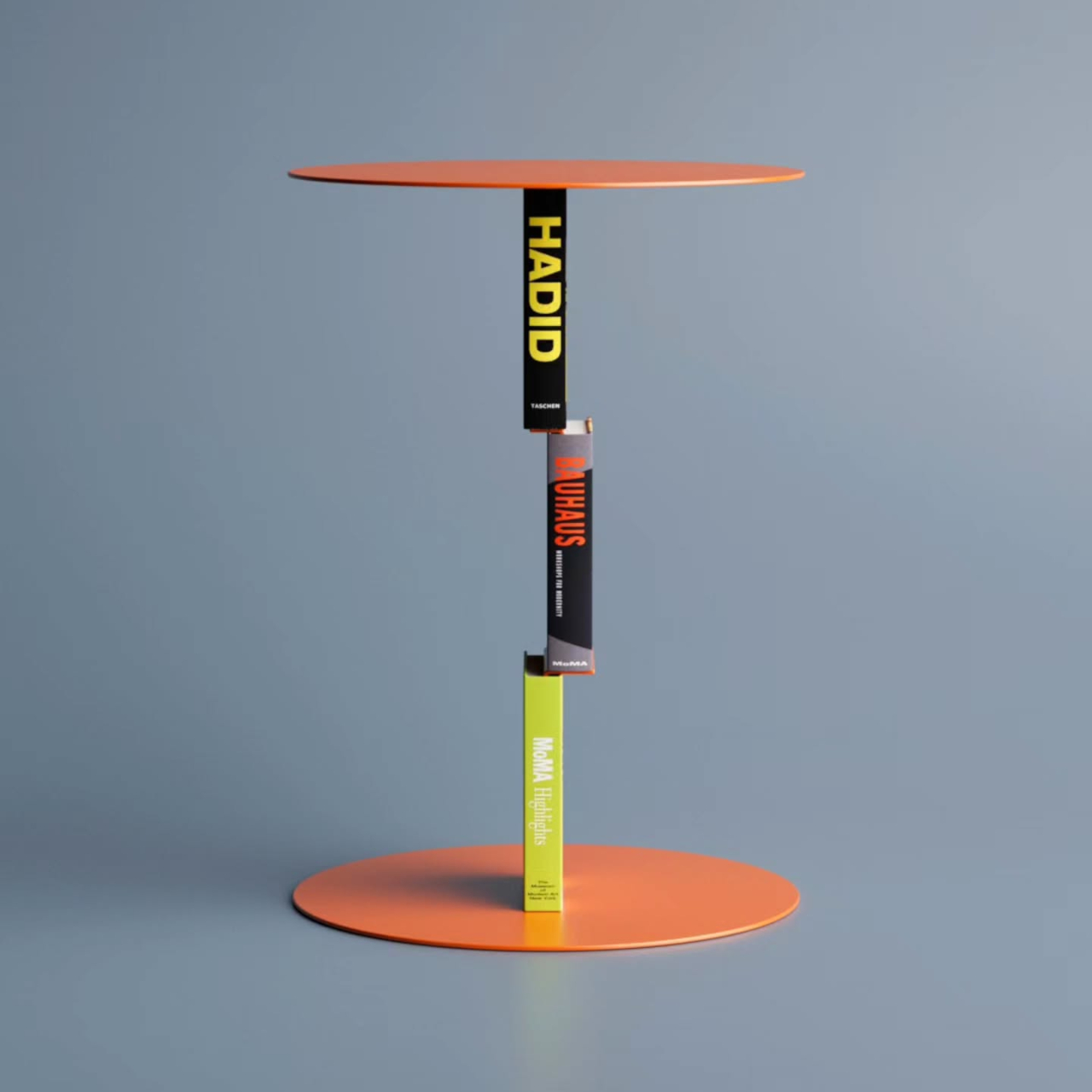
That deliberateness extends to the books themselves. The volumes you choose to insert don’t just support the illusion; they become part of the design statement. A stack of oversized architecture monographs communicates something entirely different from a row of photography books or a handful of paperbacks. The table changes with whoever assembles it, which is a quiet but genuinely meaningful layer of personalization built right into the concept.
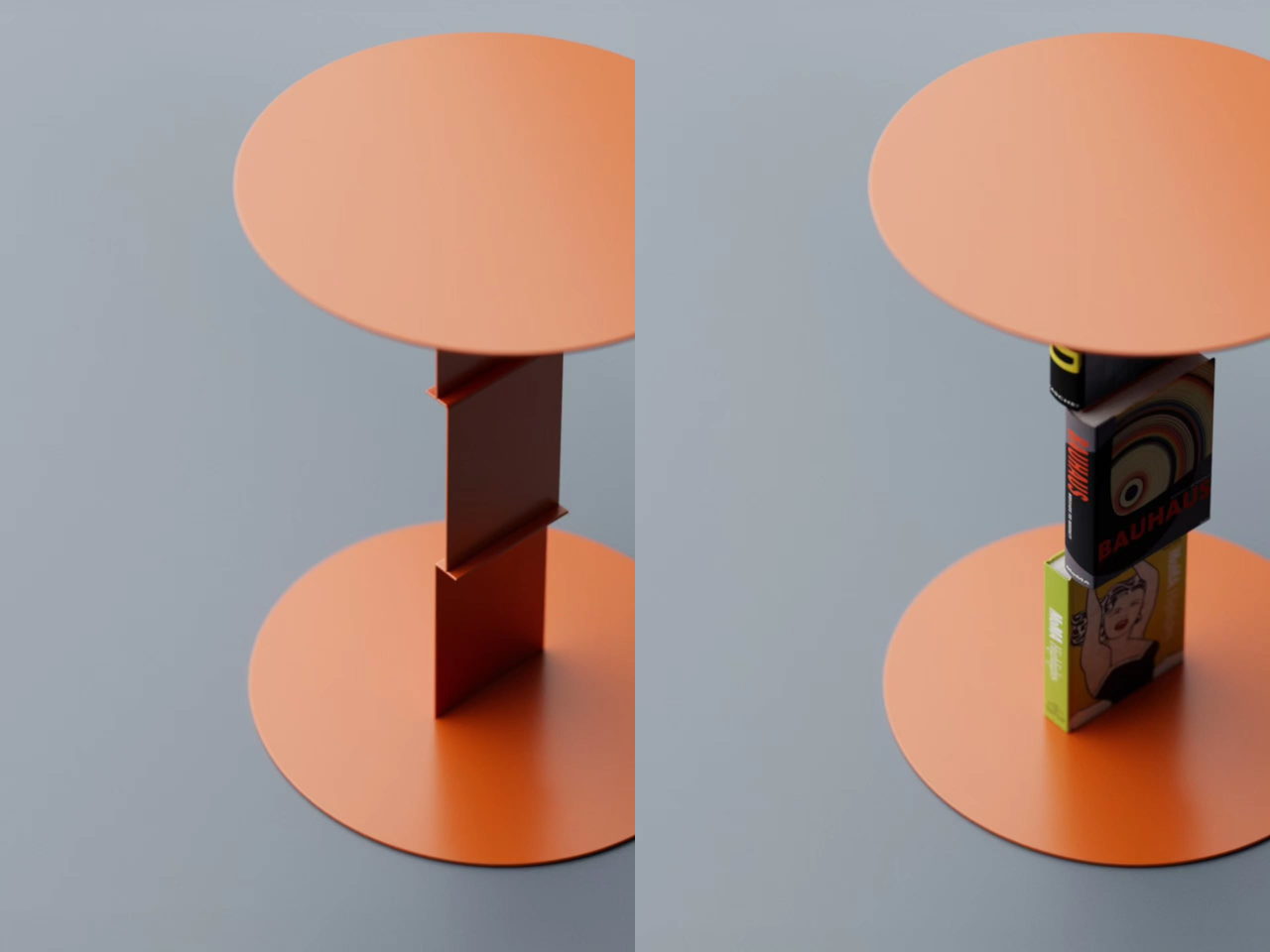
It’s also worth considering where a table like this fits most naturally. A reading nook, a home office corner, or a bedside setup for someone who always has a few books in rotation: in any of these settings, the Delusion Table doesn’t need anything extra to feel complete. The books it needs to function are probably already nearby, waiting to serve a purpose they weren’t originally designed for.
Aktay has made a habit of designing furniture that asks questions as much as it answers them, and the Delusion Table is no exception. It’s a concept that works on two levels: as a functional object that holds books and a tabletop, and as something that quietly unsettles your perception. You look at it, pause a moment, and find yourself genuinely unsure of what’s doing what. That’s exactly the point.