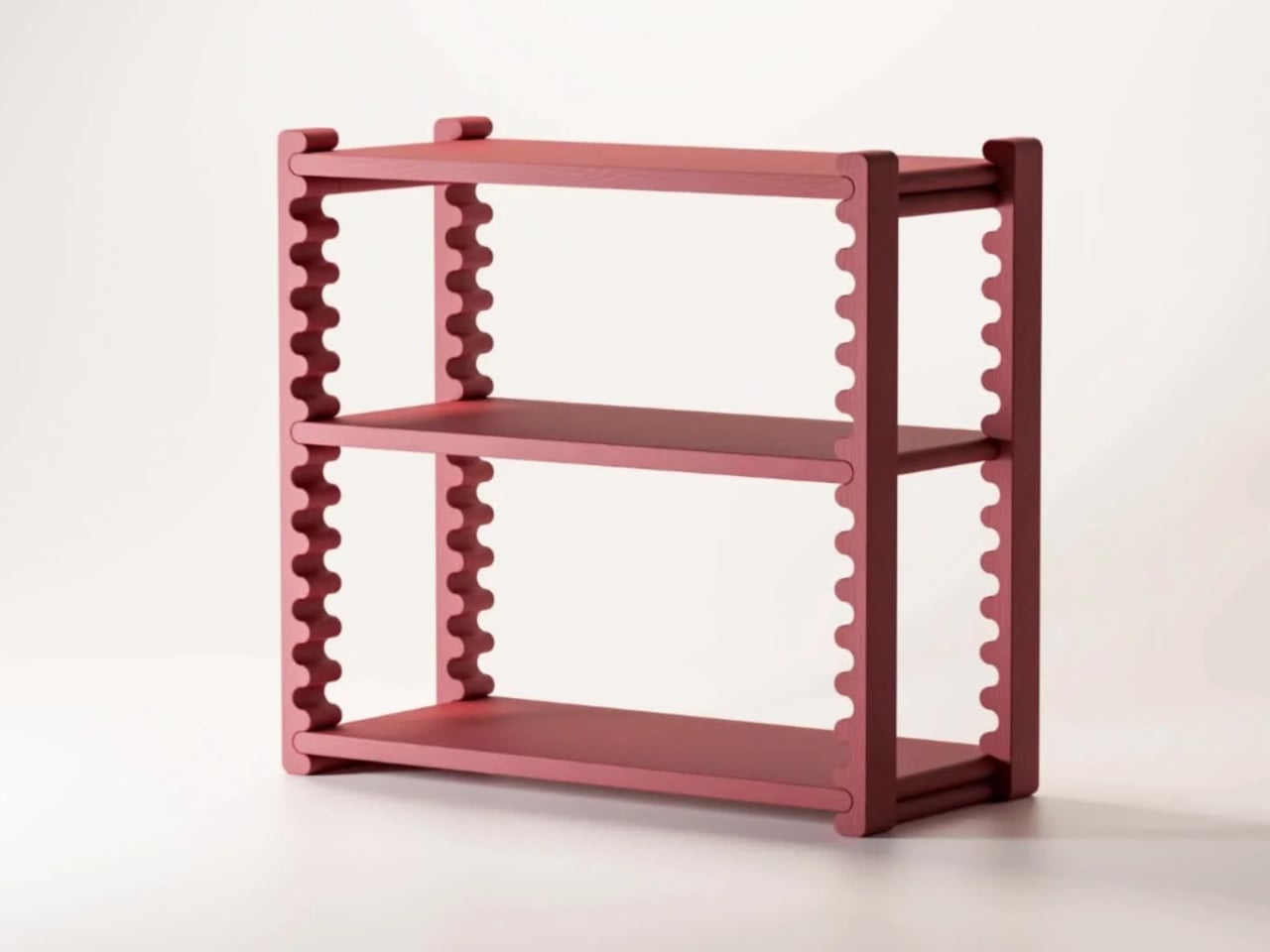
Most adjustable shelving systems make a quiet trade-off. To offer flexibility, they rely on rail channels, pin holes, or brackets that work well enough but bring a decidedly utilitarian look to any room. The result is a shelf that adapts to your needs but rarely looks like it was designed with much intention beyond storage. Hiding the hardware means losing flexibility; keeping it means living with it.
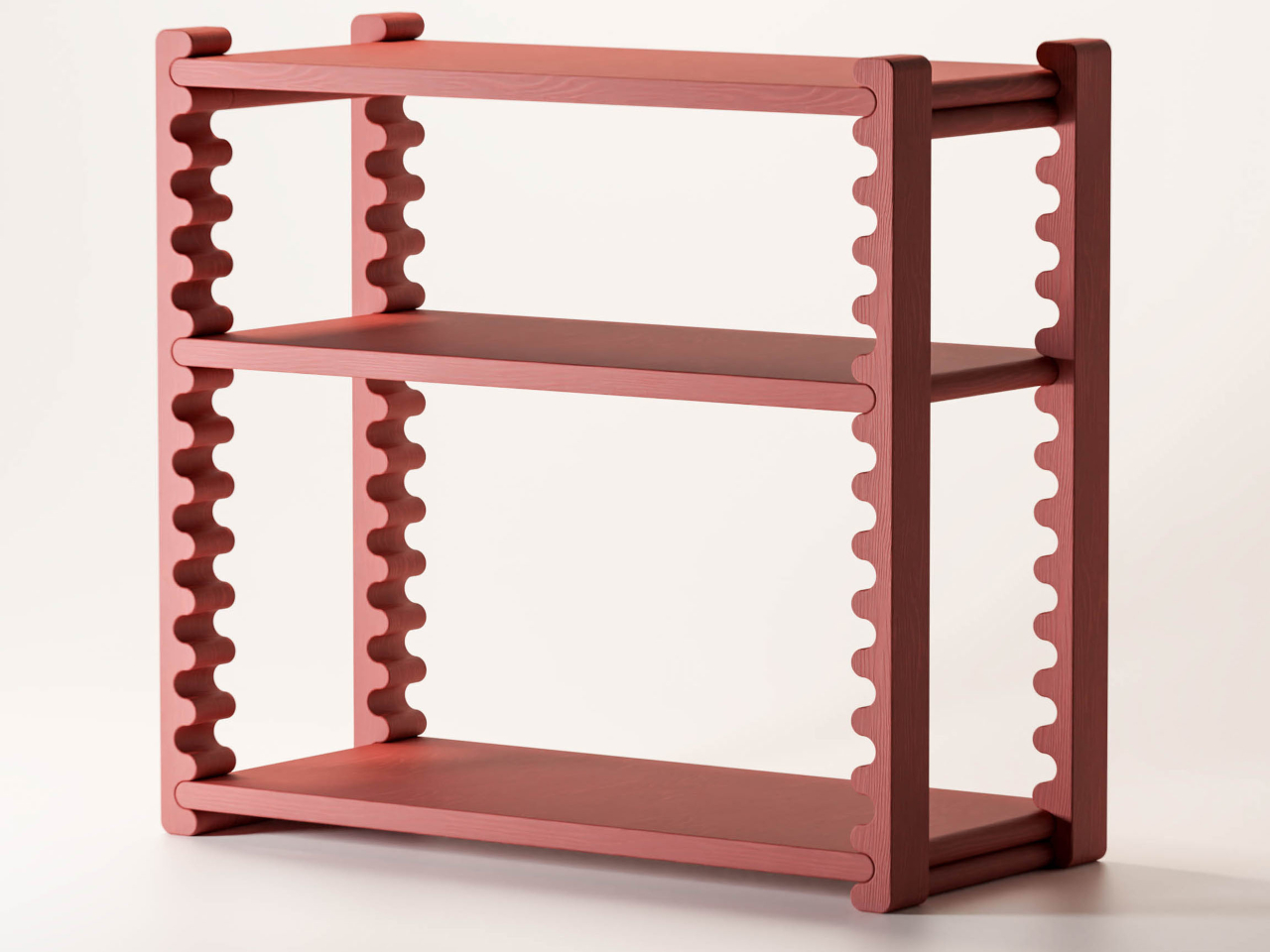
The Ripple Shelf from Sarajevo-based Dilema Studio takes a different approach, one where the shelf’s most visually distinctive element is also its adjustment mechanism. The vertical supports on each side run the full height of the frame in an undulating rippled profile. Those waves aren’t decorative flourishes; they’re guides. The middle shelves slot into them and can be repositioned to different heights without any tools or additional hardware.
Designer: Ermin Alić (Studio Dilema)
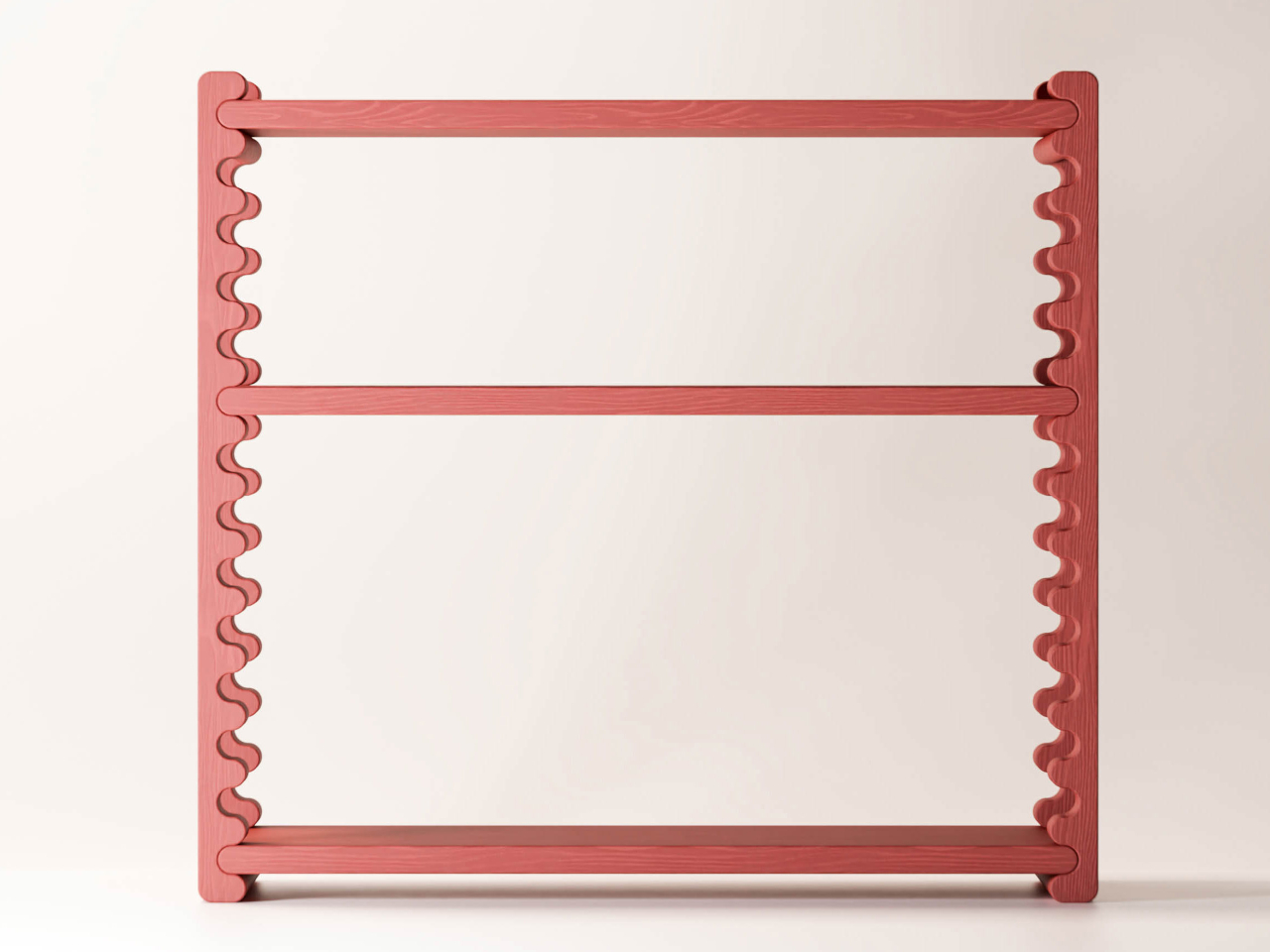
The logic here is pretty satisfying. Instead of adding a separate tracking or pinning system, Dilema embedded the mechanism directly into the form. The rippled surface of each support creates natural stopping points along the length of the frame, so positioning a shelf is as intuitive as sliding it into place. There’s nothing to install, nothing to adjust, and nothing to lose at the back of a drawer.
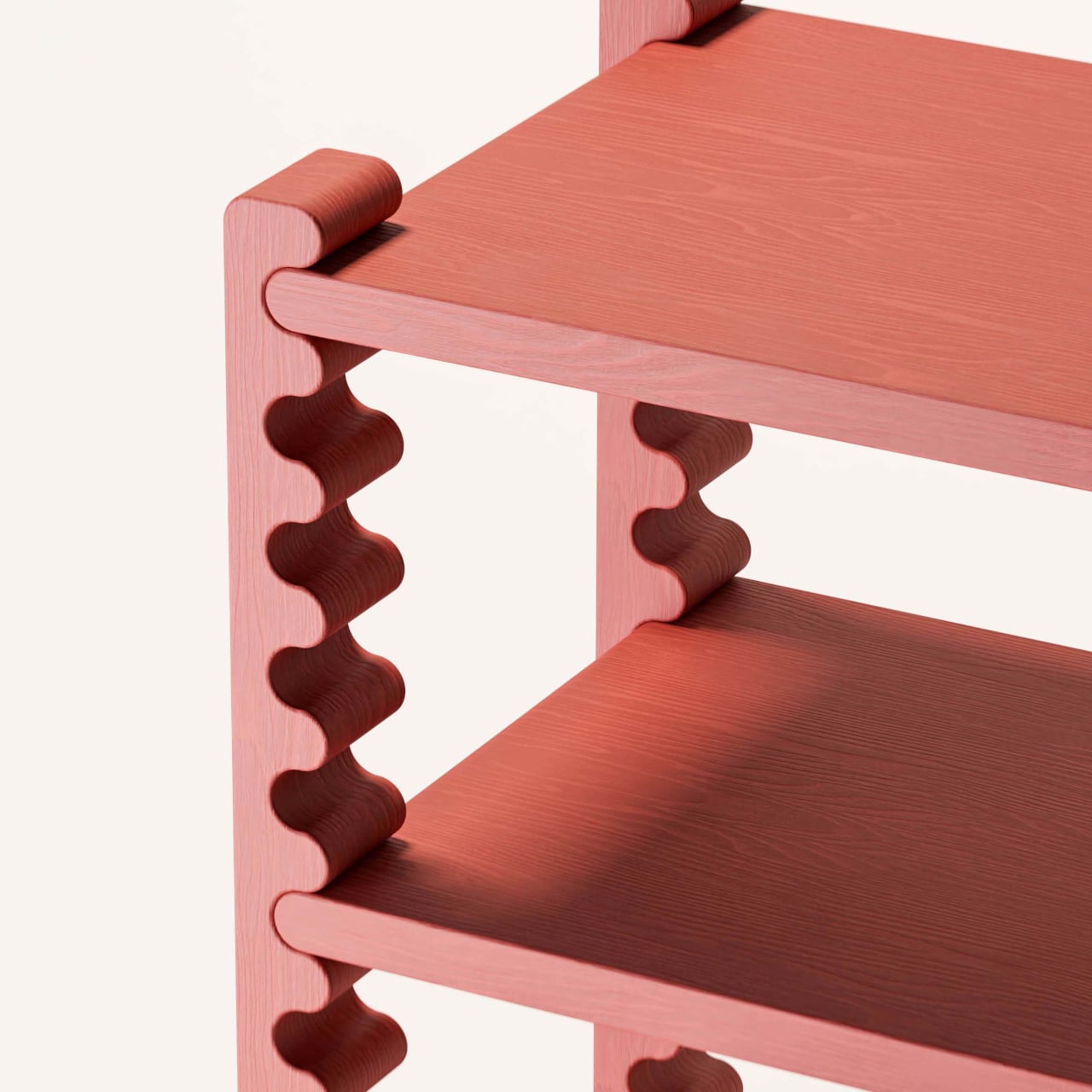
That practicality matters more than it might seem. Someone styling a home office one season and reorganizing it as their book collection doubles doesn’t need to buy a new shelf; they just move the existing ones. A family using the same unit to hold kids’ toys and, later, a collection of records and plants has one piece that grows with the space. The shelf changes; the shelf unit doesn’t.
The frame’s fixed top and bottom shelves keep everything stable while the interior remains open to change. Made from beech wood and measuring 750 × 350 × 800 mm, it comes in several color options, including terracotta, sage green, slate blue, and a natural off-white, each with a solid stain that lets the grain show through. The compact footprint makes it workable in tighter rooms without sacrificing capacity.
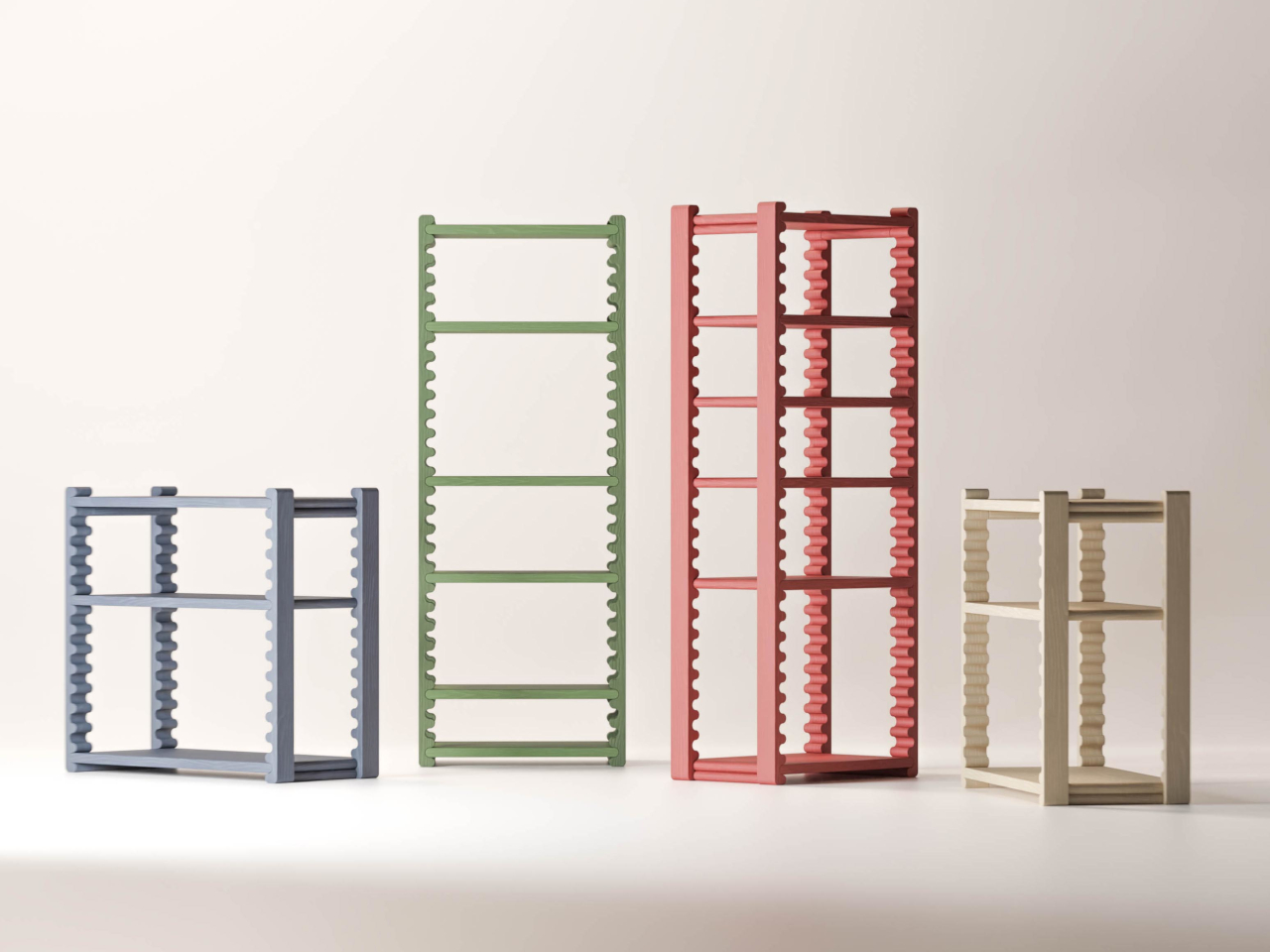
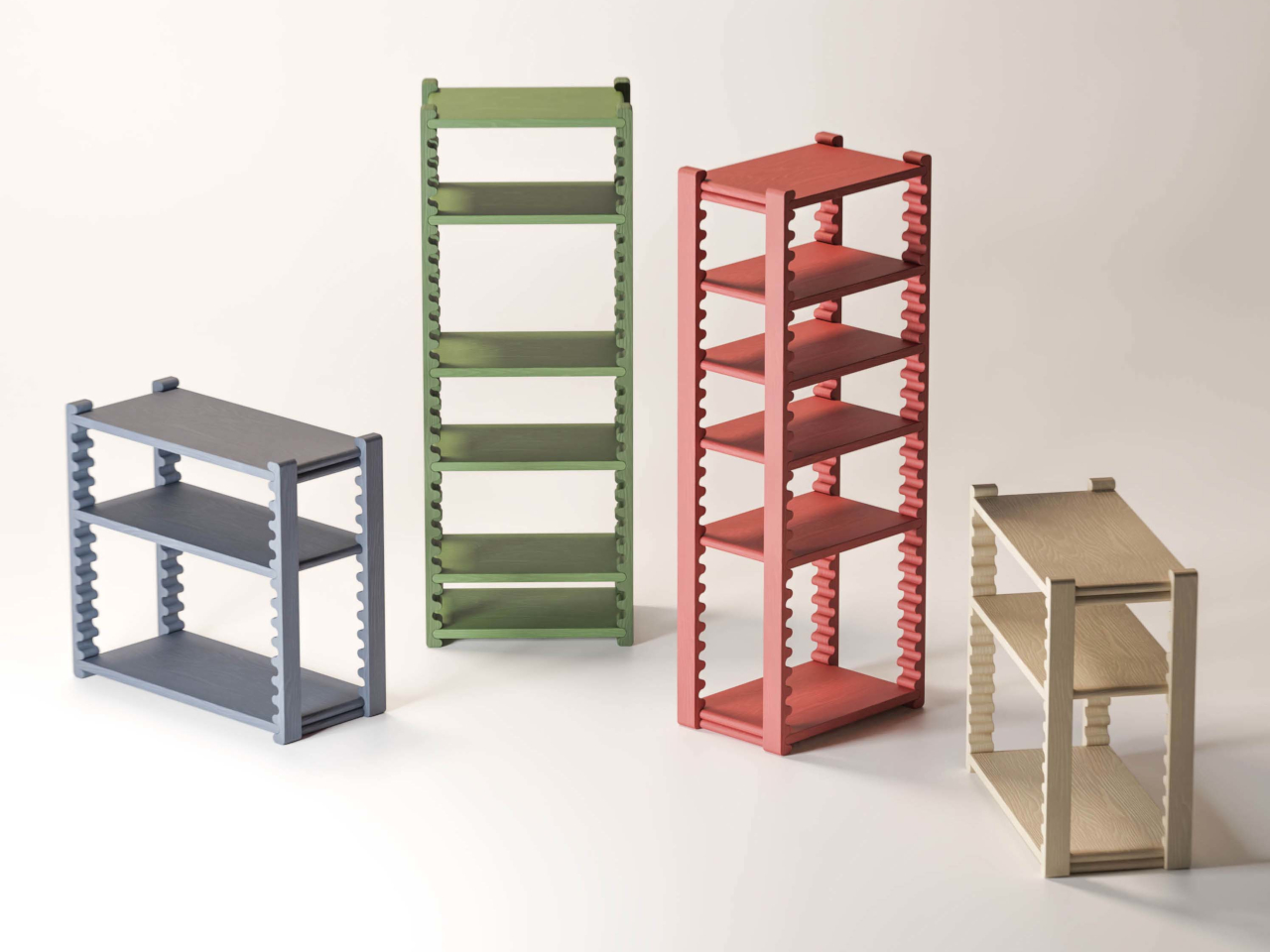
The system shows up in multiple size configurations, from compact low units to taller multi-shelf towers, giving it range across different rooms and storage needs. That versatility suits living rooms particularly well, where displaying and organizing things often need to share the same piece of furniture. A shelf for ceramics, a lower one for books, a bottom slot for a basket; the spacing adjusts to whatever the situation asks for.
What keeps the Ripple Shelf from being just another clever-but-impractical furniture concept is that it’s genuinely usable. The ripple mechanism doesn’t require any special technique or learning curve; you move a shelf, and it sits where you put it. It’s the kind of furniture that gets better over time, not because it wears in any particular way, but because it stays genuinely useful as what you put on it changes.