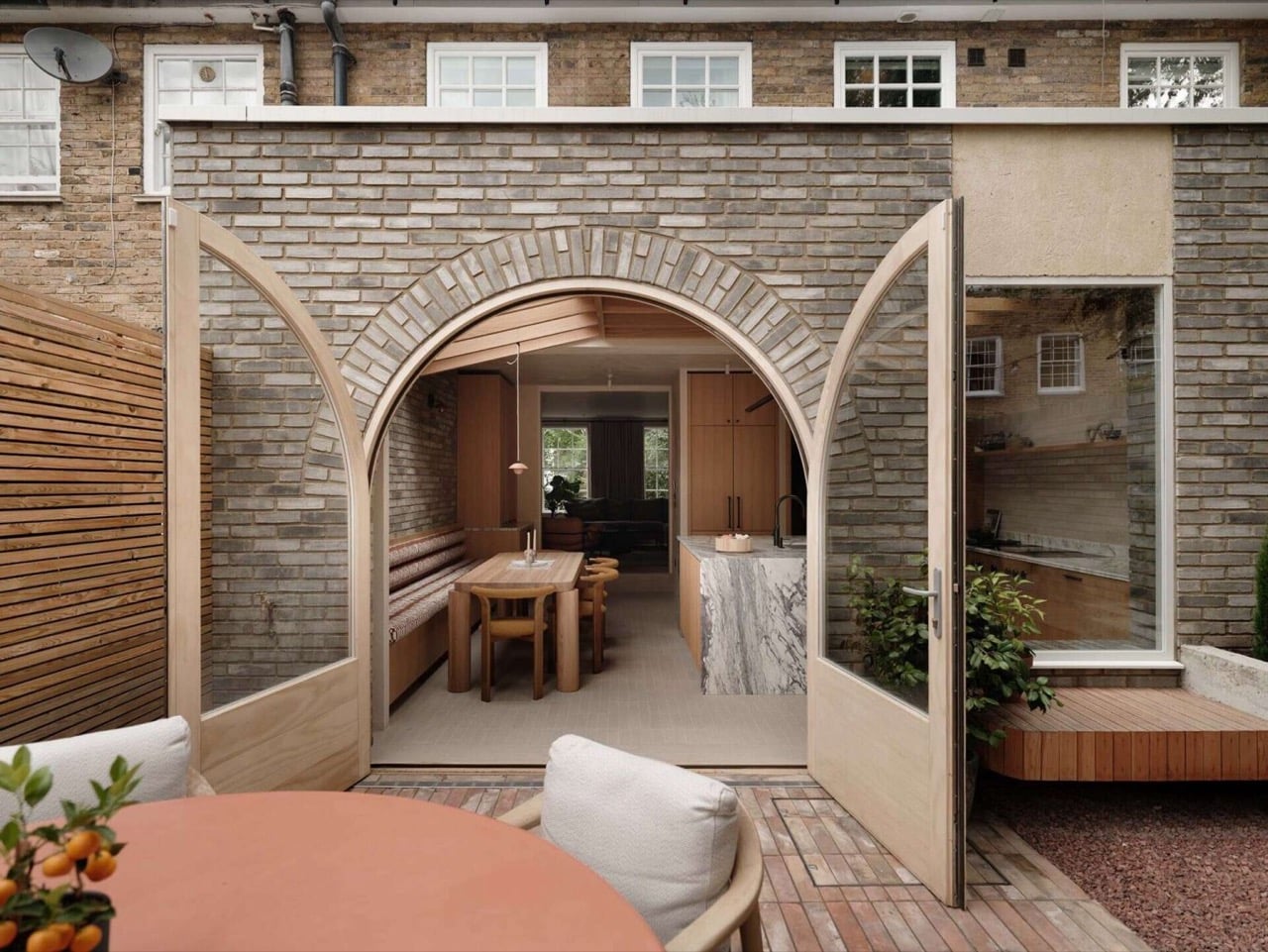
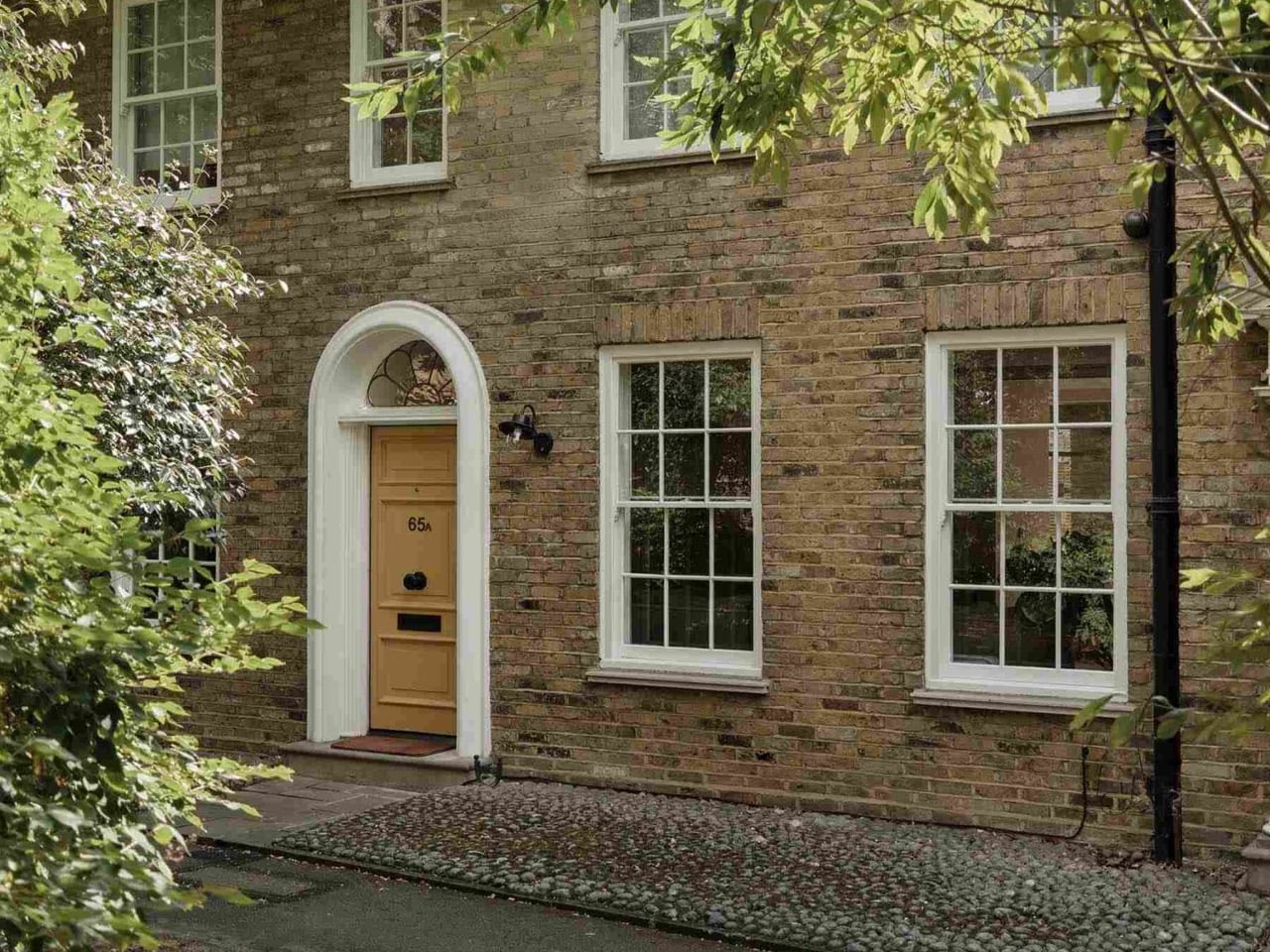
Islington houses tend to resist openness. The typical Victorian or Edwardian terrace was built for a world of separate rooms, each with its own function and its own door, and even postwar Neo Georgian rebuilds like this one on St Paul’s Road inherited that spatial logic. Hamish Vincent Design and Architecture for London treated that inheritance as a starting point rather than a constraint, keeping the facade exactly as it found it and reorganizing everything behind it around a different set of priorities.
The ground floor has been reworked into a single continuous environment where kitchen, dining, and living dissolve into each other with remarkable ease. A rear brick extension anchors the move, punched through with a full-height arched opening that frames the garden like a painting. Douglas fir beams overhead, a marble and fluted timber kitchen island, a bespoke helical staircase rising through three floors: every decision here is load-bearing, materially and spatially.
Designer: Hamish Vincent Design & Architecture for London
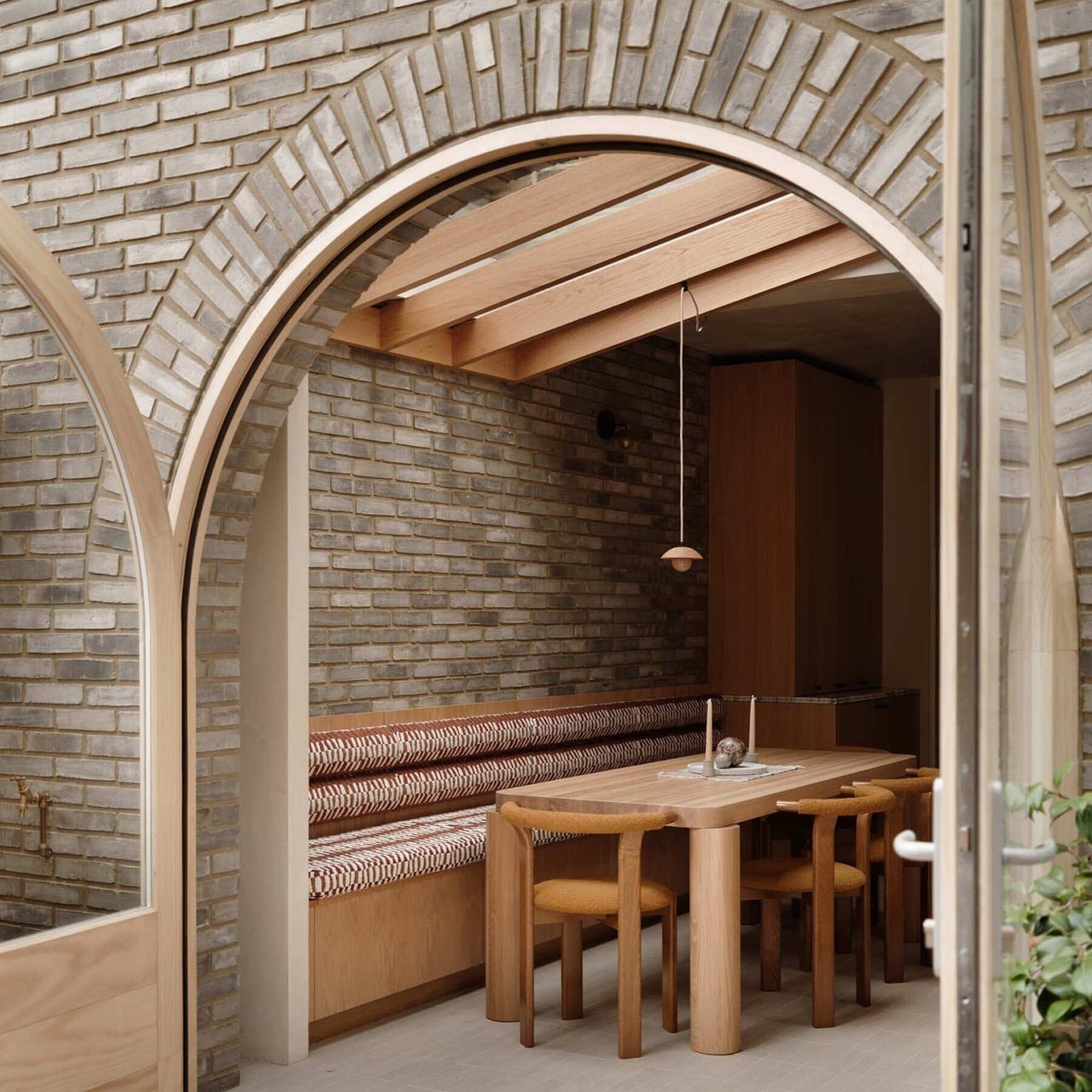
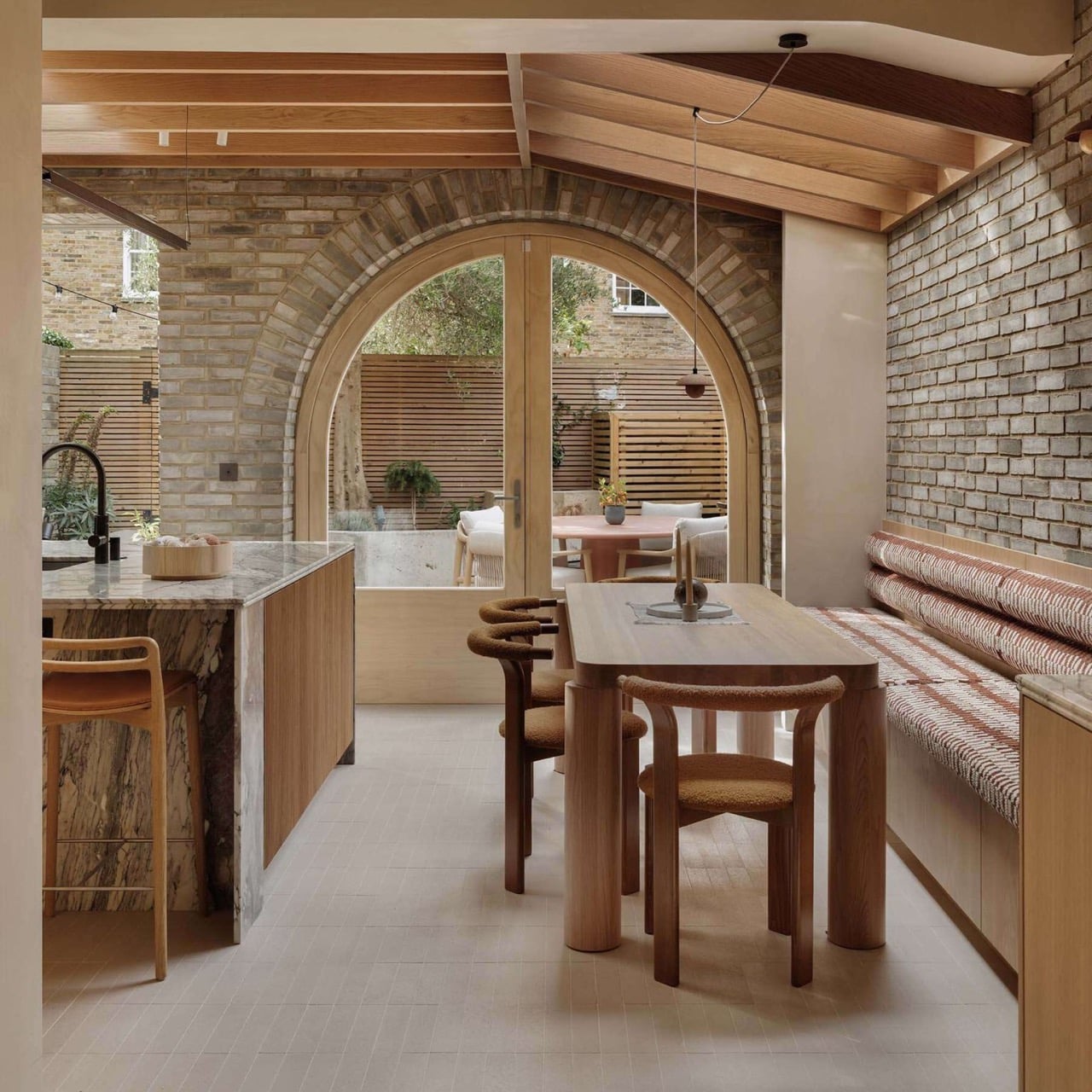
The extension is built in the same grey-green handmade brick as the original rear elevation, which is the kind of decision that sounds obvious but rarely gets made. Most rear extensions announce themselves, either in glass or in a conspicuously different material, as if embarrassed by the ambition. Here the new fabric reads as continuous with the old, and the arched opening cut through it does all the work of signaling that something has changed. That arch is timber-lined on the interior face, brick-voussoir on the exterior, and it frames the entire open-plan ground floor when viewed from the garden with the precision of a composed photograph.
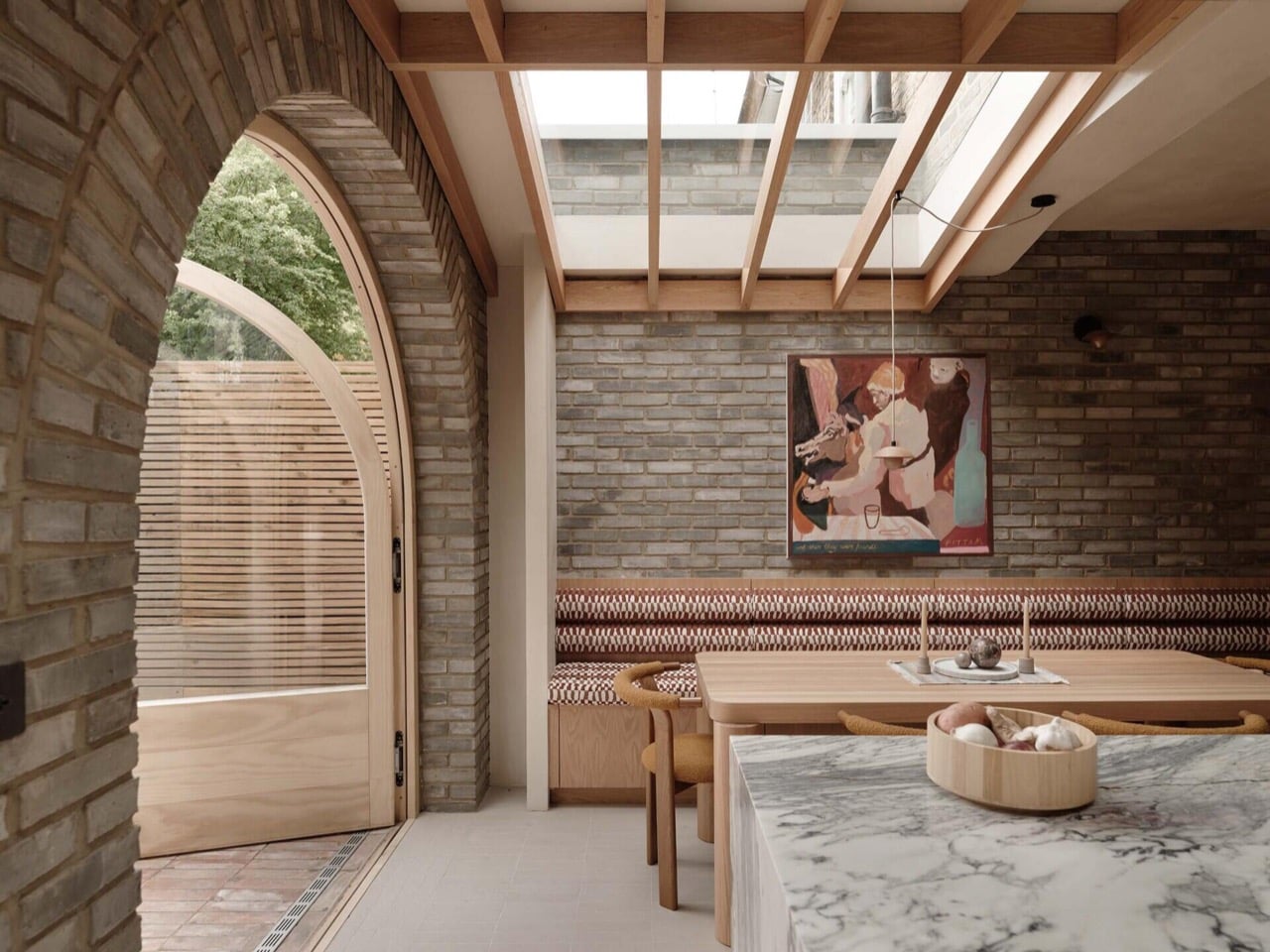
The kitchen island features a top with a heavily veined white marble slab. The body is clad in vertical fluted timber. The end panel, the short face you see from the dining side, is a column of deep purple-toned quartzite with the kind of geological color that reads almost violet in certain light. Three materials, one object, zero apology. The surrounding cabinetry is flat-fronted oak with black hardware, deliberately quiet so the island can operate at full volume without the room feeling overwhelmed.
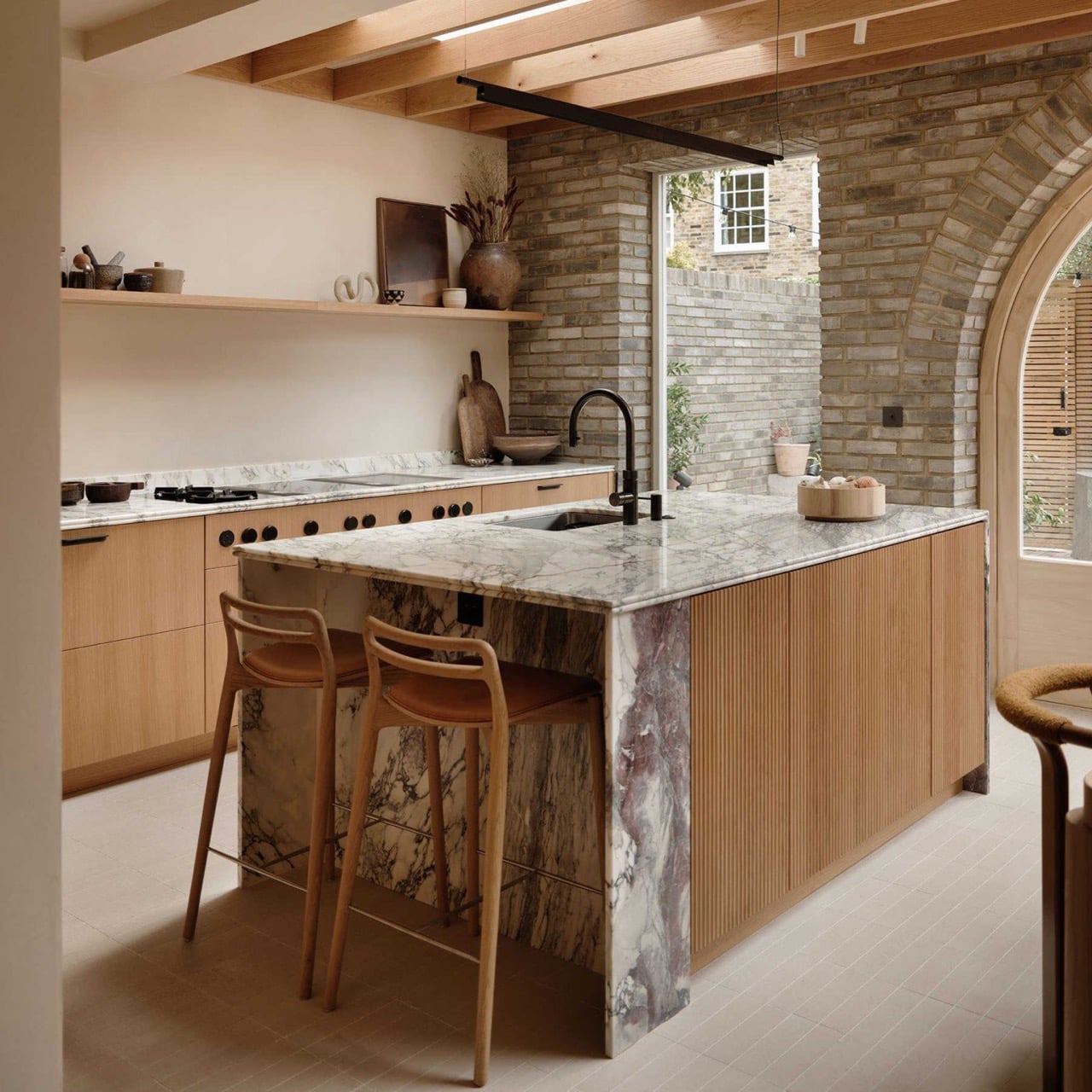
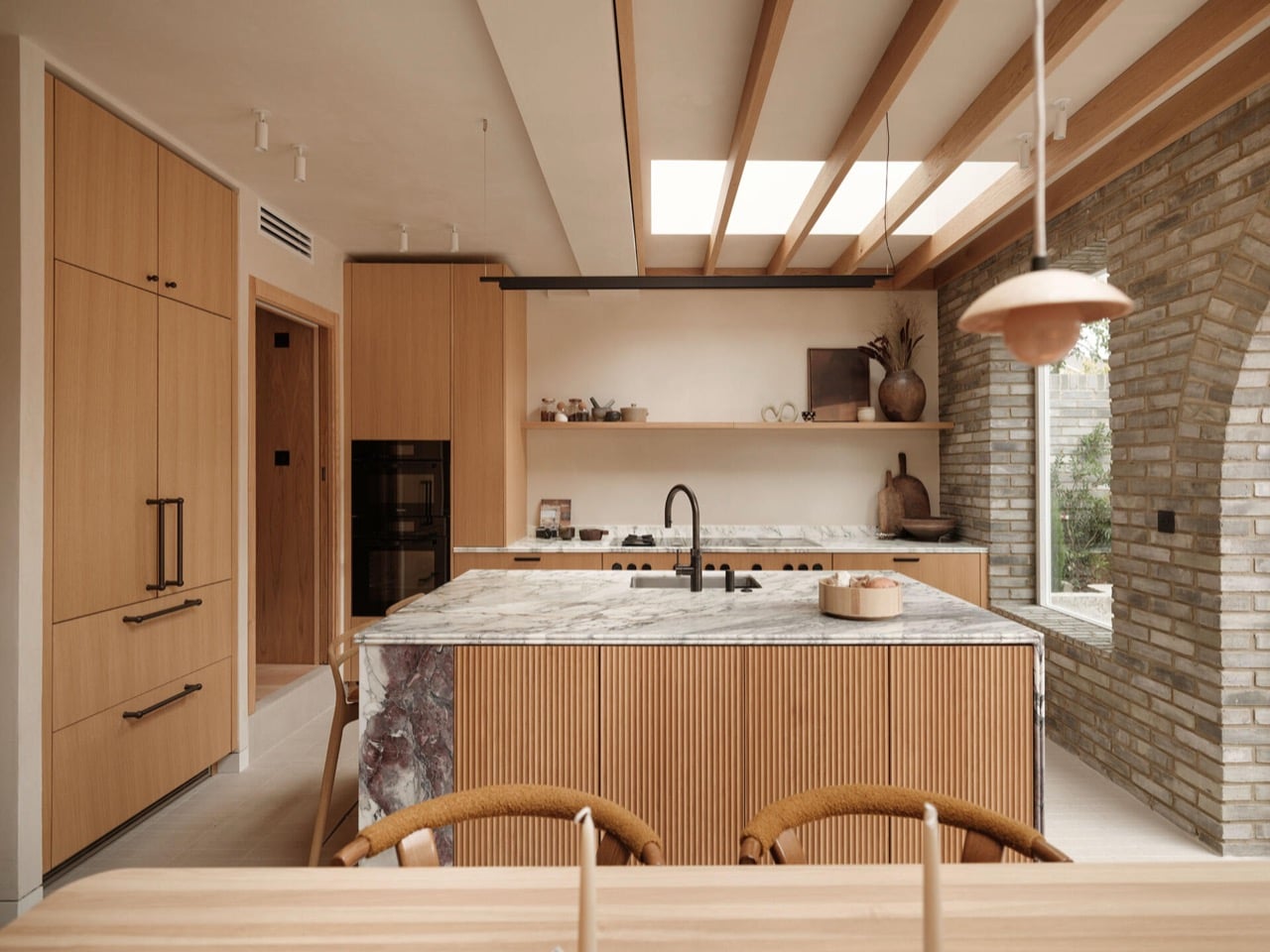
The dining zone sits between the island and the garden wall, anchored by a built-in banquette upholstered in a red and cream woven fabric against exposed brick. A timber dining table with rounded legs and a pendant light overhead completes the arrangement. Skylights cut into the roof above flood the entire zone with natural light, which matters because the extension sits behind the main house footprint and would otherwise feel basement-adjacent. The ceiling beams are exposed douglas fir, running parallel to the garden wall, and they give the space a warmth that keeps the brick from reading as cold or industrial.
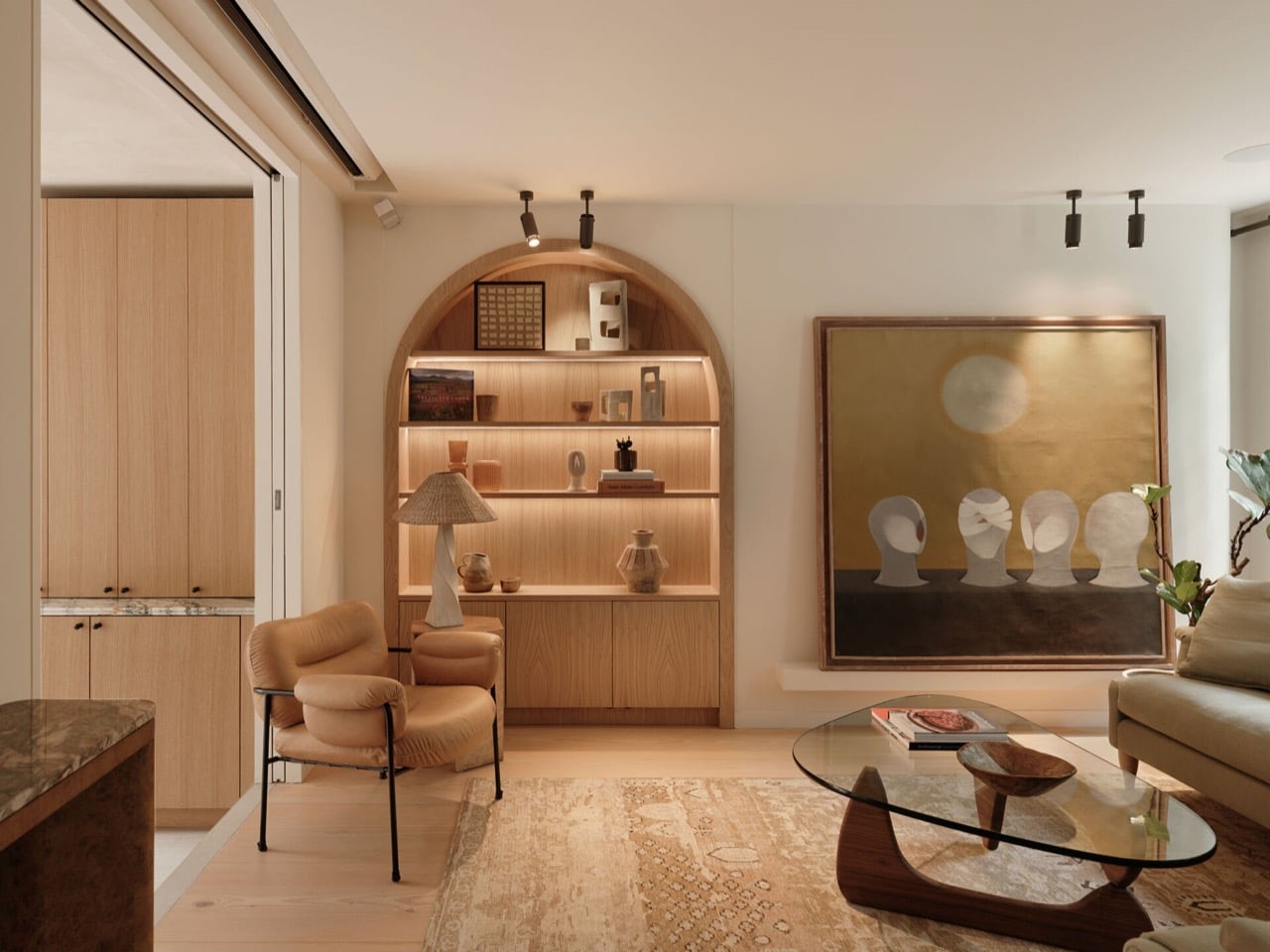
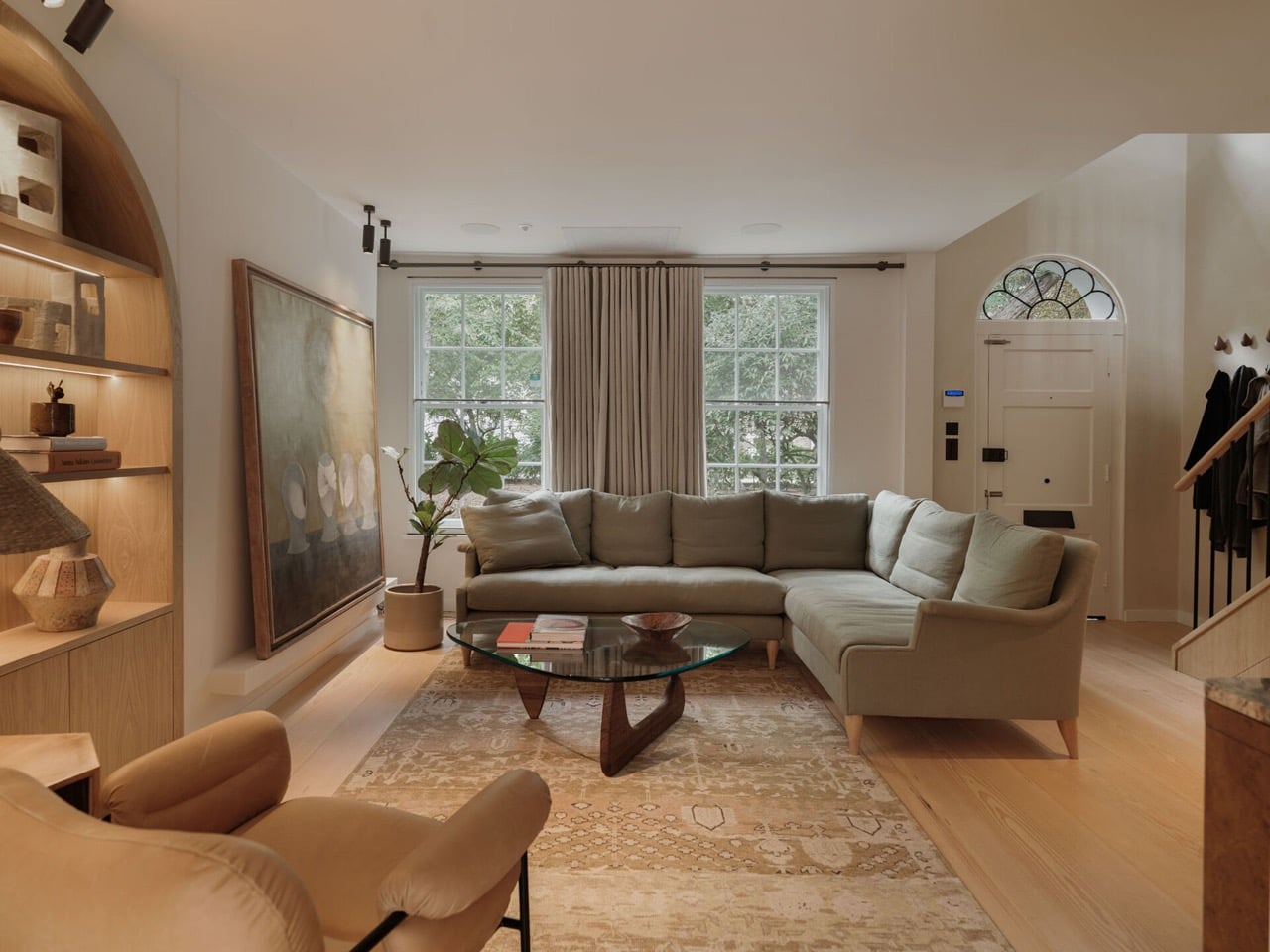
The living room pulls back from the material intensity of the extension. Lime-plastered walls, a Noguchi coffee table in walnut and glass, a vintage rug, and a built-in arched shelving unit with backlit display niches. The arch appears again here, and its recurrence across the garden threshold, the shelving, the staircase handrail, and the original front door fanlight is what gives the project its internal coherence. A single borrowed form, deployed with enough variation that it reads as a theme rather than a tic.
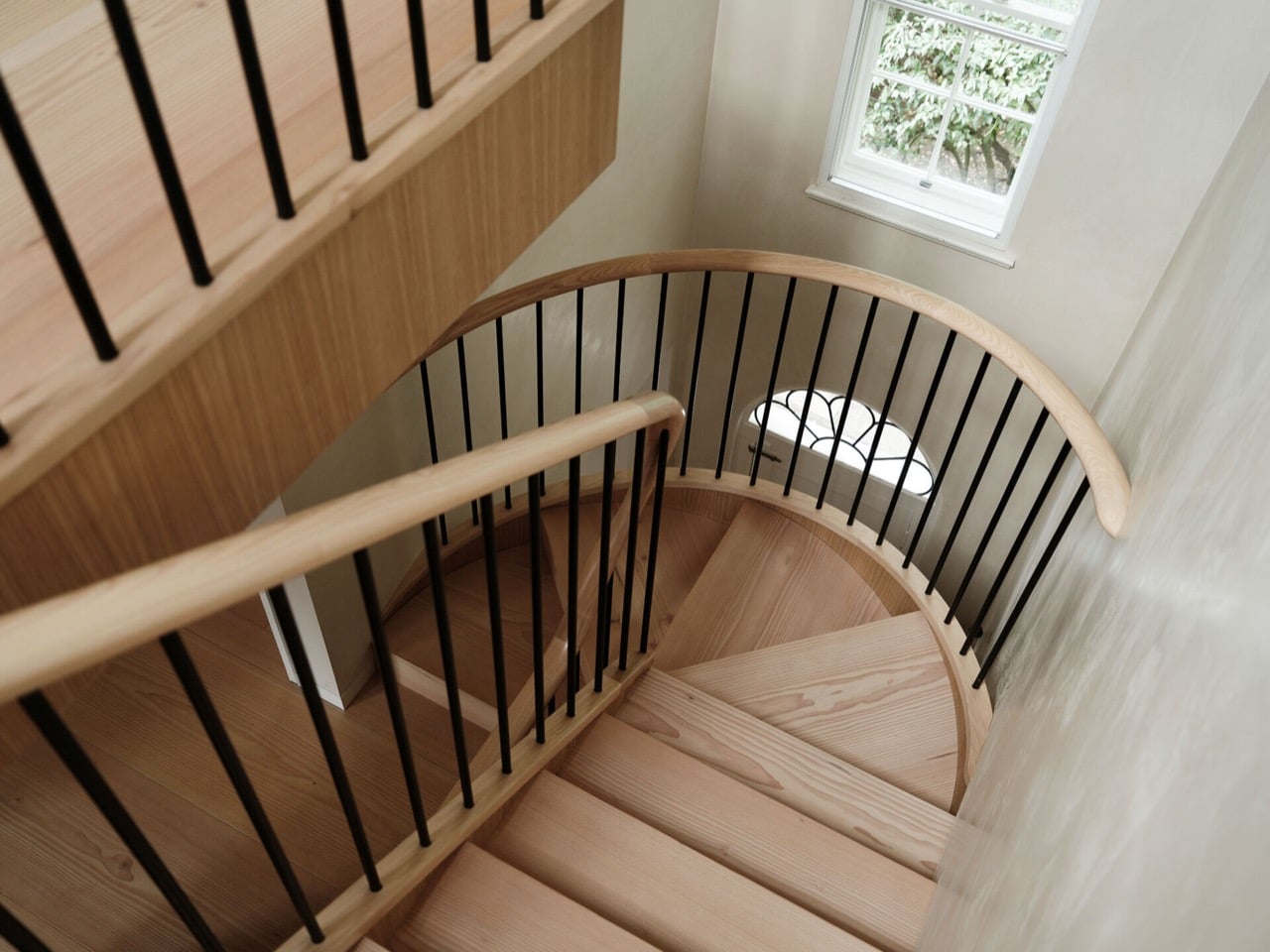
The staircase got repositioned as part of the redesign, which is a significant structural intervention often undersold in project descriptions. Moving a stair in a terraced house means rethinking the entire circulation logic, and the payoff here is a three-story helical structure with douglas fir treads, a curved timber handrail, and slim black metal balusters. Viewed from above, the stair winds down toward the original fanlight above the front door, a Georgian semicircular window that now sits framed at the base of the void like a deliberate full stop.
The Canonbury Conservation Area will never know what hit it. From the street, number 65A reads exactly as it always has: handsome, reticent, correctly proportioned. The ochre door gives nothing away. Behind it, Hamish Vincent Design and Architecture for London have built a ground floor that operates on an entirely different register, one organized around material conviction and a single recurring geometric idea rather than the room-by-room compartmentalization the building was born into. The arch did all the heavy lifting, and the house let it.