Speed settles a lot of arguments. Ask anyone who carries a knife daily and they’ll eventually get around to the deployment question: how fast can you get the blade out, how cleanly, and with how many fingers occupied. Folders demand a pivot, a swing, and depending on the locking mechanism, a deliberate wrist motion before the blade is truly ready. OTF knives skip all of that. One thumb movement sends the blade straight out the front in a single linear motion, and it locks automatically. There’s no arc, no fiddle factor, and no grip position the hand needs to be in before deployment works. That mechanical simplicity is a genuine advantage that compounds across every use case, whether it’s emergency cutting, utility tasks, or the kind of one-handed operation that makes a real difference when your other hand is occupied.
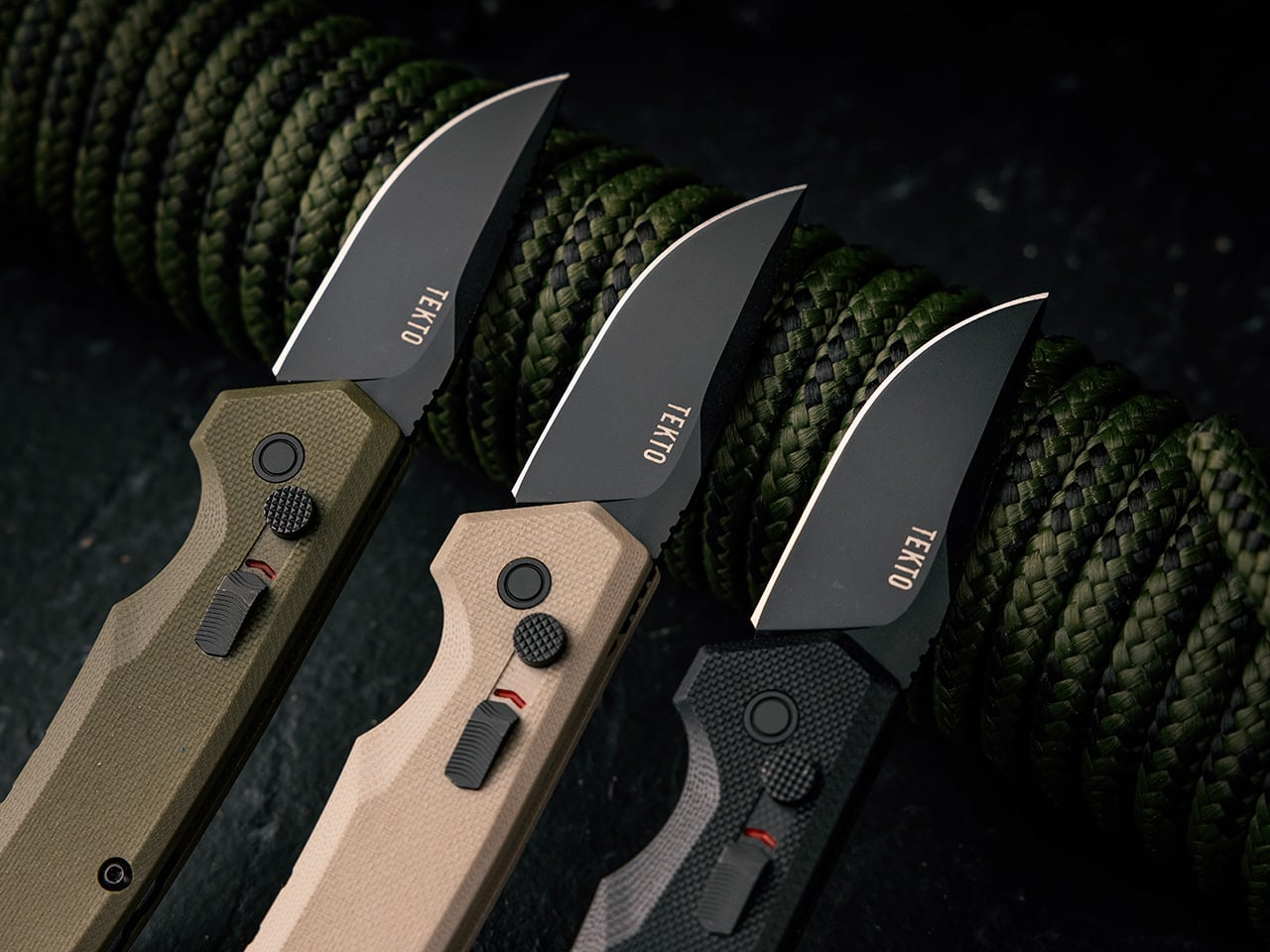
The A3 Delta, the A5 Spry, and the Spry Mini all operate on that same core principle: forward, fast, locked. Tekto’s folder range earns its place as refined everyday carry, but the OTF models are engineered around the reality that access speed and single-hand operation are non-negotiable for a tool you actually rely on. The A5 Spry, carrying an S35VN blade in a precision-contoured handle, represents the tactical end of that thinking. The A3 Delta Mini takes the same OTF discipline and packages it into a compact, California-legal form. The through-line across the range is a commitment to the mechanism itself, treating the out-the-front action as a feature worth designing around, a mechanical conviction rather than a marketing angle.
Click Here to Buy Now: 15% off, use coupon code “YANKO”. Hurry, deal ends in 48-hours!
Single-Motion Deployment Changes the Entire Calculation
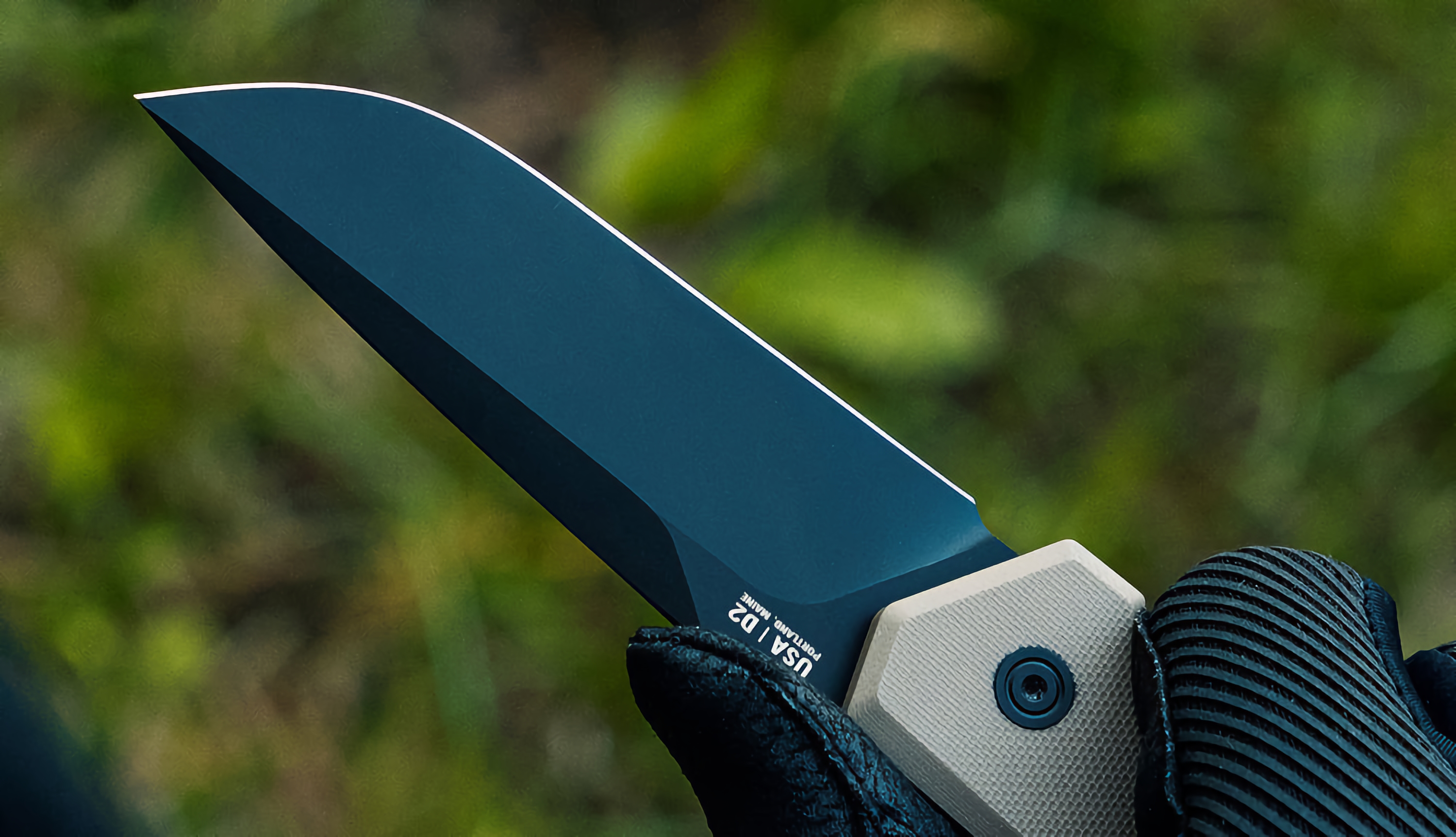
The A3 Delta
The core mechanical difference between a folder and an OTF comes down to the number of steps involved in getting the blade ready. A folder, even a fast one with ball bearings, requires the user to find a stud or flipper, apply pressure in a specific direction to initiate a pivot, and wait for the lock to engage. That sequence takes a fraction of a second for a practiced user, but it’s still a sequence. An OTF knife reduces that sequence to a single linear push. The thumb finds the switch and moves it forward; the knife does the rest. This removes the pivot, the swing, and the lock engagement from the user’s list of responsibilities.
This single-motion system translates to a higher degree of real-world reliability. When one hand is busy holding something in place, there’s no need to adjust your grip or use a second hand to get the blade out. The best OTF designs place the deployment switch exactly where the thumb naturally falls, making the act of gripping the knife and deploying it part of the same fluid motion. It’s a small ergonomic detail that makes a huge operational difference, turning the knife into an extension of the hand in a way a folder’s more complex mechanics can’t quite match.
Grip Position Has No Bearing on Whether the Knife Opens
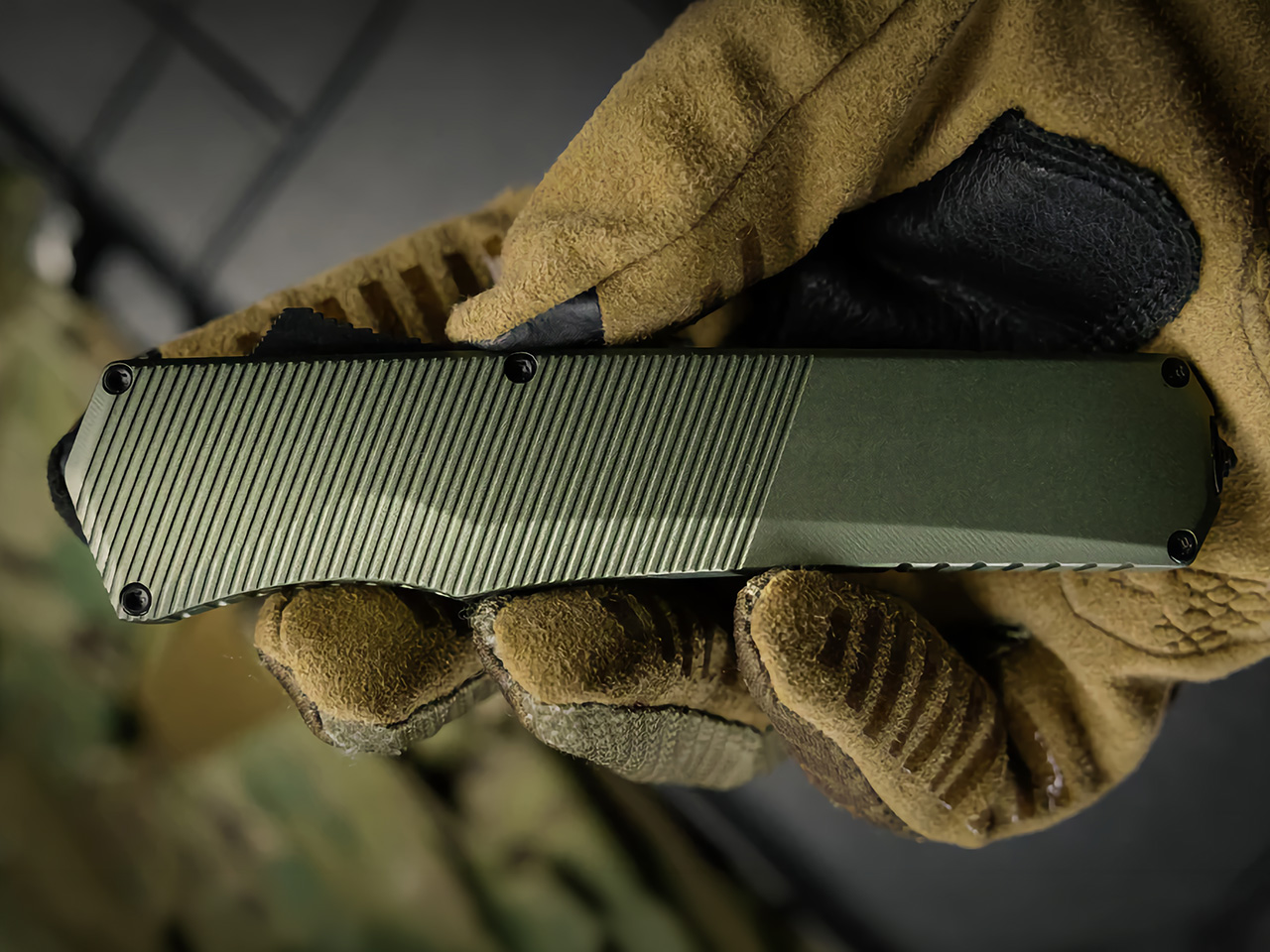
The A5 SPRY
Folders have a specific vulnerability that rarely gets acknowledged: they require a deliberate, practiced grip to open reliably. The thumb has to find its target, and the wrist needs to be oriented correctly for the blade to swing out without obstruction. In calm, controlled conditions, this is a minor point of practice. But in a hurry, or when wearing gloves, or when your hands are wet or cold, that small dependency becomes a legitimate failure point. OTF knives are functionally immune to this problem. Because the blade travels on an internal, linear track, the mechanism doesn’t care how the handle is being held.
This operational consistency is one of the strongest arguments for the OTF format, and it becomes even more apparent in smaller knives. Compact folders can be notoriously fiddly, with tiny thumb studs and short handles that are hard to manage. A compact OTF, however, deploys with the same authority as its full-sized counterpart. Models with blade lengths under two inches still offer an excellent blade-to-handle ratio and a full, confident grip, proving that the mechanism scales down without losing its inherent mechanical advantage.
Retraction Is as Fast as Deployment, and That Actually Matters
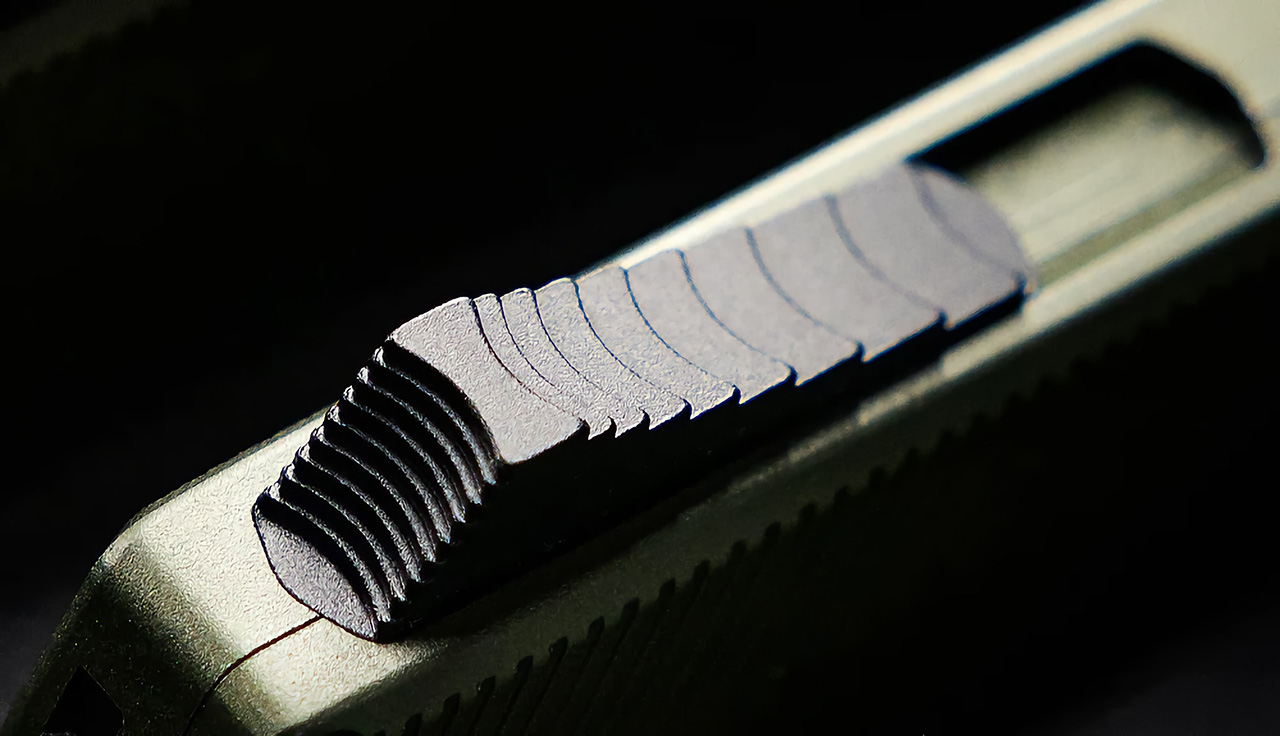
The A5 SPRY MINI
Closing a folding knife is a deliberate act. You have to consciously disengage the liner lock, frame lock, or button lock, then carefully fold the blade back into the handle, making sure your fingers are clear. On a well-made folder, it’s a secure process, but it requires your full attention. An OTF knife retracts with the same speed and simplicity as it deploys. A single pull on the switch sends the blade back into the handle, where it locks just as securely as it does when open. The knife is either fully engaged or fully stowed, with no hazardous in-between state.
This bidirectional action has practical value in any scenario where a tool needs to be put away quickly and safely. It also introduces a level of safety that folders can’t offer. A half-closed folder is a risk; a retracted OTF is a mechanically secured object. The confidence this provides is tangible for anyone who uses their knife frequently throughout the day. The crisp, reliable action of modern OTF mechanisms, both in and out, is a testament to how mature the engineering has become.
The Slim Profile Comes Without Mechanical Trade-offs
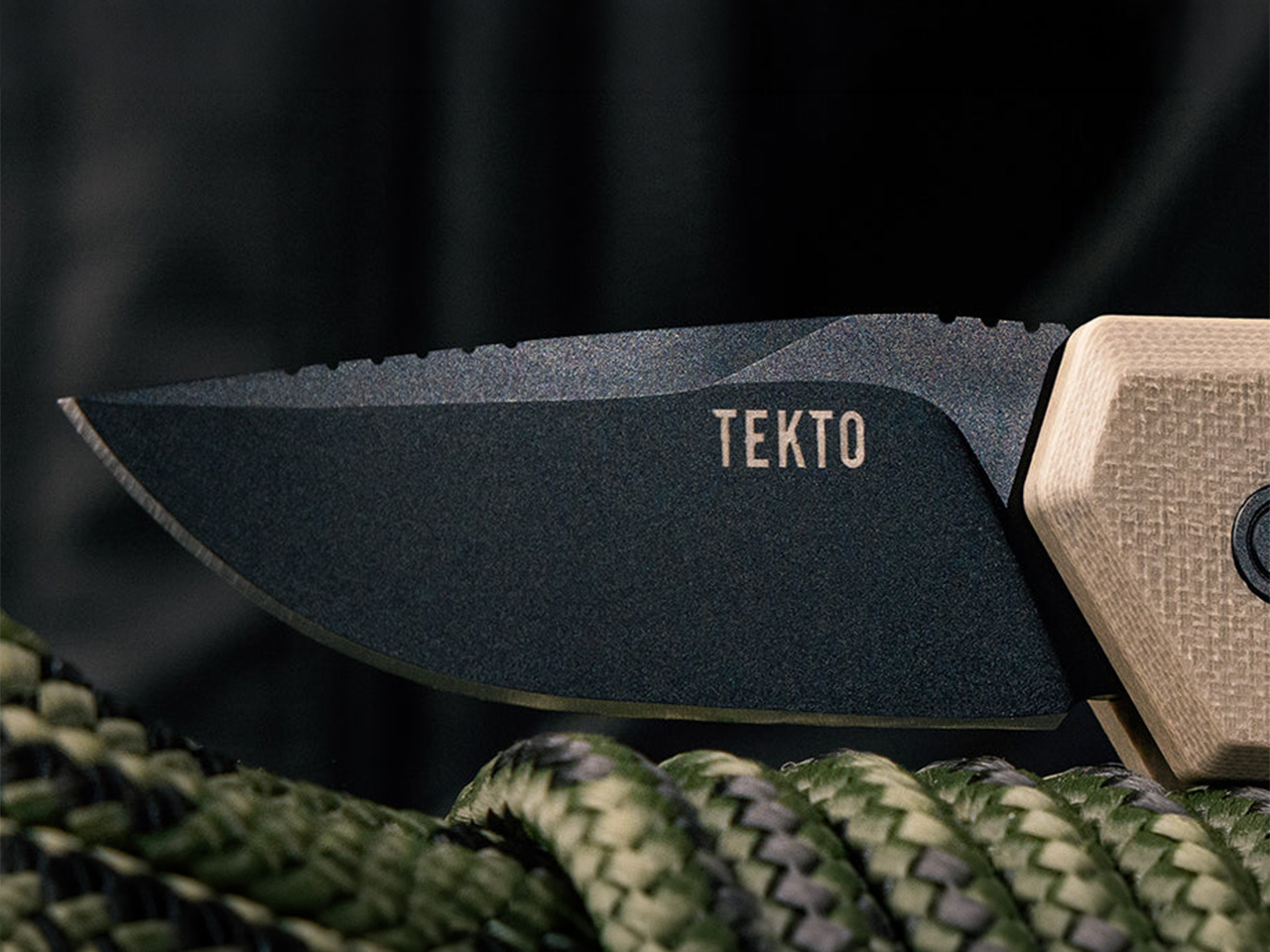
The A3 DELTA MINI
Many thin folding knives make compromises to achieve their slim profile. The pivot area is often a point of weakness, and a thin handle can make a strong locking mechanism difficult to integrate. OTF knives, by their very nature, are built on a linear chassis. The internal mechanism runs along the length of the handle, not across its width. This means the design can be inherently slim and narrow without sacrificing the strength of the lock or the reliability of the deployment. Thinness is a natural byproduct of the OTF’s structure, not an afterthought achieved by removing material.
This structural advantage allows for knives that are remarkably easy to carry while still being built from robust, high-performance materials. It’s common to see OTF models with a handle width of less than half an inch that are still equipped with premium steels like S35VN, rated for exceptional hardness and edge retention. These builds demonstrate that a slim, pocket-friendly profile and genuine, hard-use strength are not mutually exclusive concepts. The OTF format delivers both, proving you don’t have to choose between a comfortable carry and a capable tool.
The Blade Style Options Are No Longer an OTF Limitation
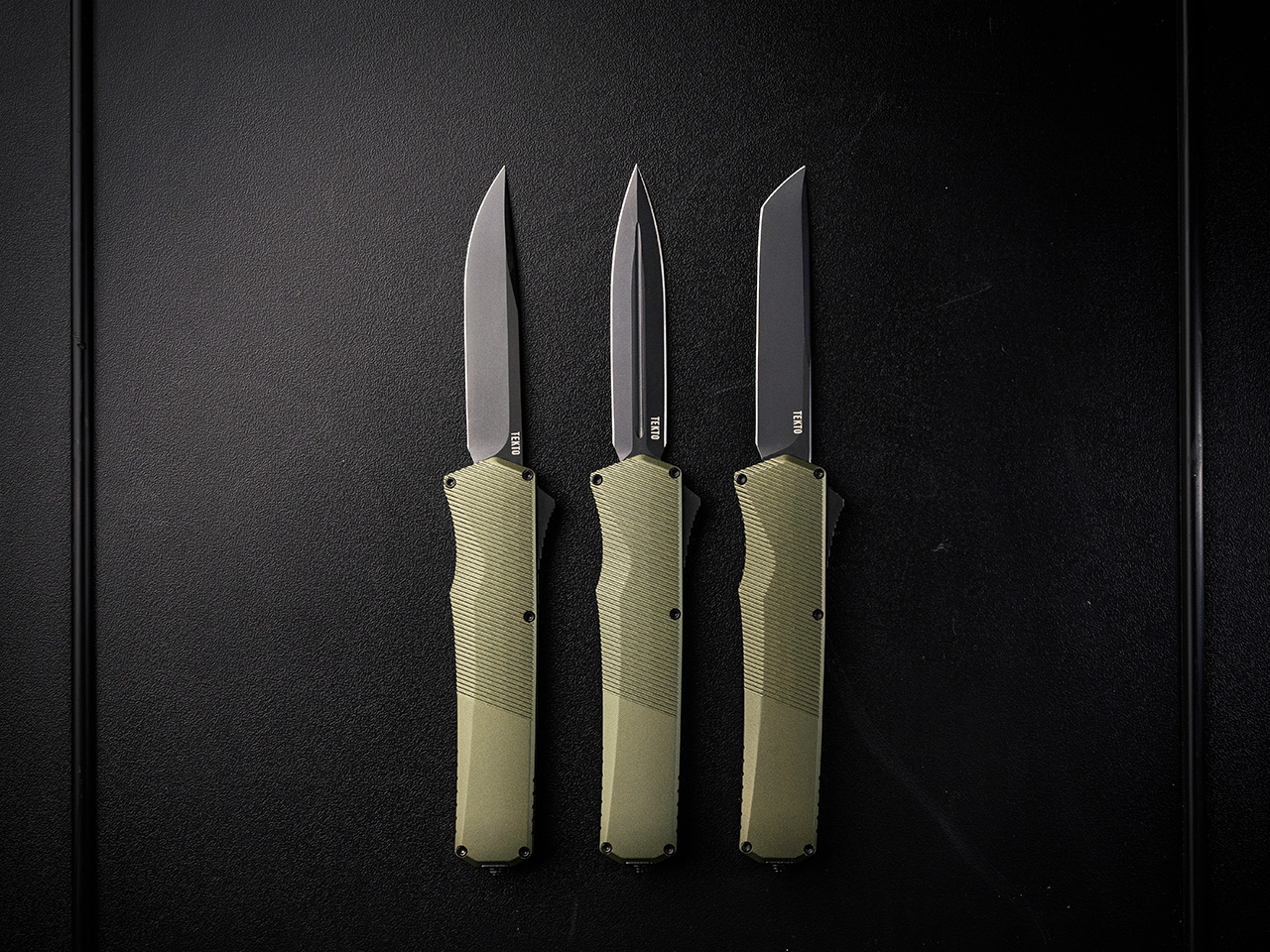
One of the oldest criticisms leveled against OTF knives was a perceived lack of versatility in blade shapes. For a long time, the market was dominated by a few basic drop point or dagger styles. That criticism is now completely outdated. The modern OTF category has evolved to a point where it offers the same full spectrum of blade geometries available in the high-end folder market. Whether you need the piercing capability of a tanto, the slicing efficiency of a drop point, or the specialized profile of a dagger, there is an OTF knife built for the task.
This expansion of options has effectively eliminated the last significant advantage that folders held. It is now common for a single, popular OTF model to be offered in multiple blade configurations, and even in both full-size and compact versions. This allows users to select the precise tool they need without having to abandon the superior mechanical advantages of the OTF platform. Blade selection used to be a compelling reason to stick with a folder; today, it’s just another area where OTF knives have achieved, and in some cases surpassed, parity.
Click Here to Buy Now: 15% off, use coupon code “YANKO”. Hurry, deal ends in 48-hours!
SHARE