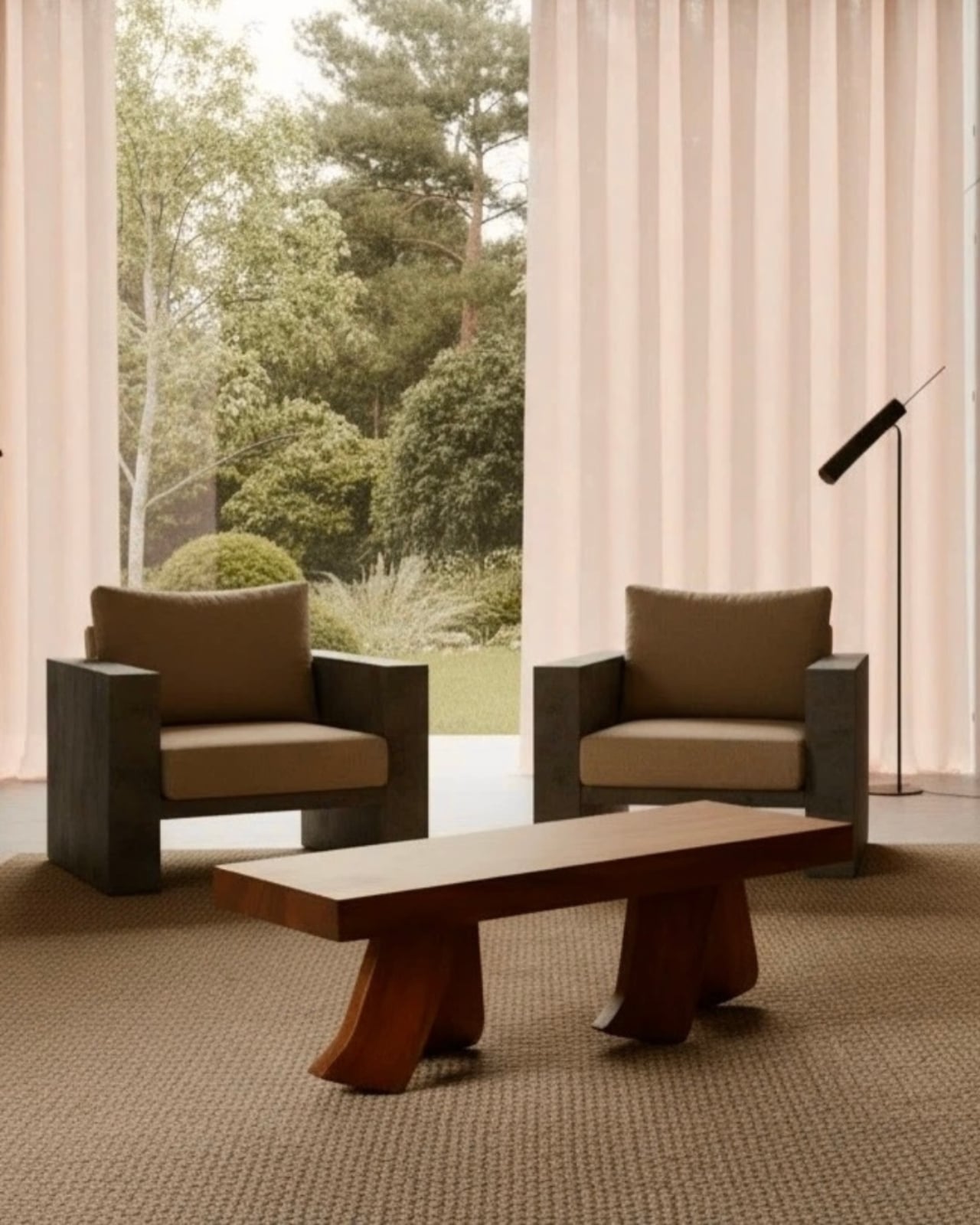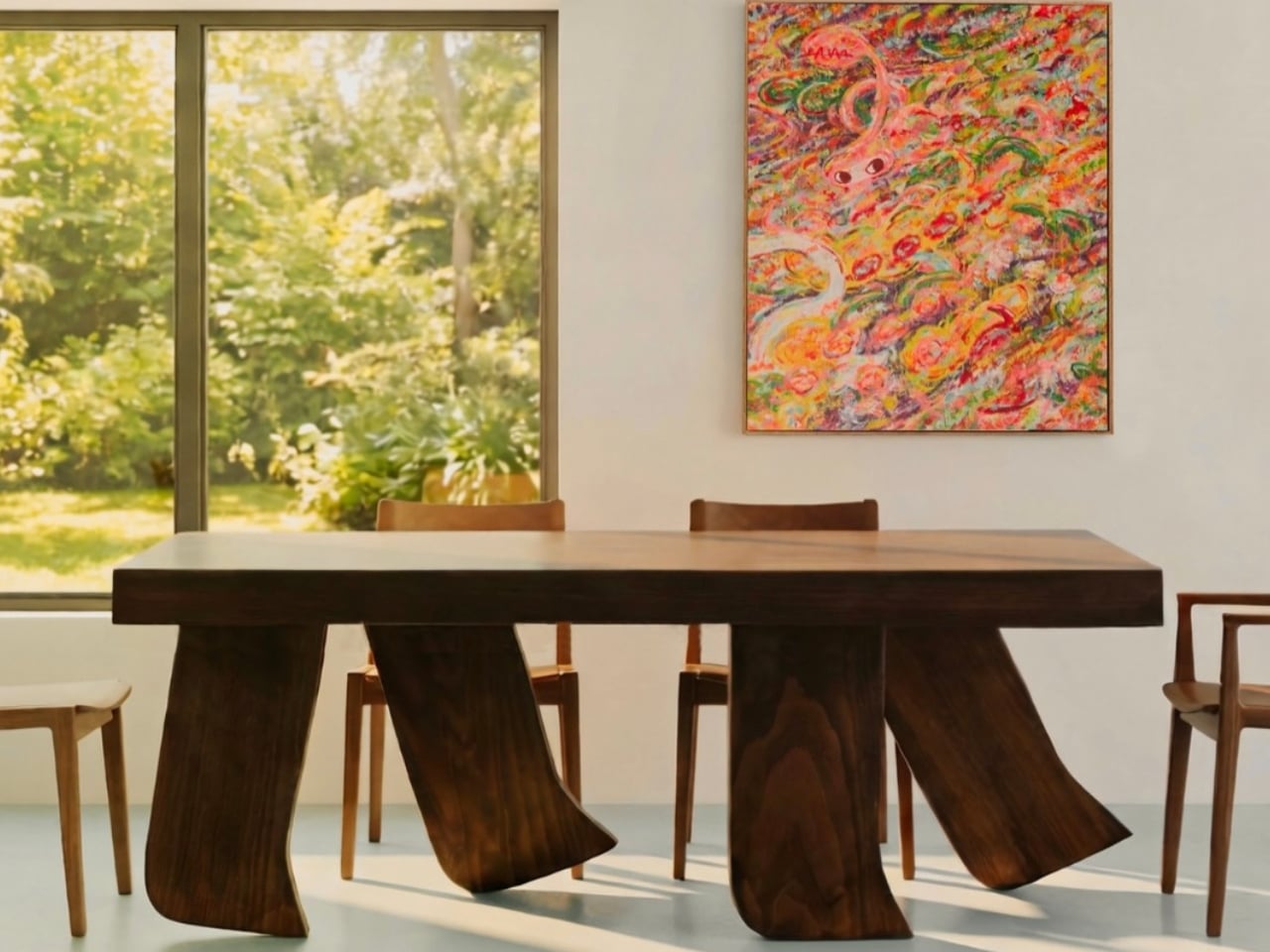
There’s a particular kind of design that stops you mid-scroll and makes you think: wait, what exactly am I looking at? That’s exactly what happened when I first came across the Barefoot Collection by Jorge Suárez Kilzi. At first, you register dark, richly grained wood. Beautiful, but expected. Then your eyes drift downward to the legs, and something shifts. They’re not straight. They’re not tapered. They’re curved, splayed, mid-stride, like a large foot caught in the quiet moment between lifting and landing. It’s subtle enough to feel elegant. It’s strange enough to feel unforgettable. That, to me, is the sweet spot.
Jorge Suárez Kilzi, who signs his work under his mother’s Syrian surname as a personal tribute, is a Barcelona-based architect and designer whose story is inseparable from what he makes. Born in Venezuela to a Spanish father and Syrian mother, he spent his childhood in constant movement, crossing cultures and countries, learning early on that the objects you carry with you carry meaning far beyond their function. That nomadic upbringing, he has said, taught him to see life from more than one angle, and that perspective filters directly into the furniture he creates. He also spent time in Japan working with SANAA and architect Junya Ishigami, and you can feel that influence in how restrained and quietly deliberate his work is.
Designer: Jorge Suárez Kilzi
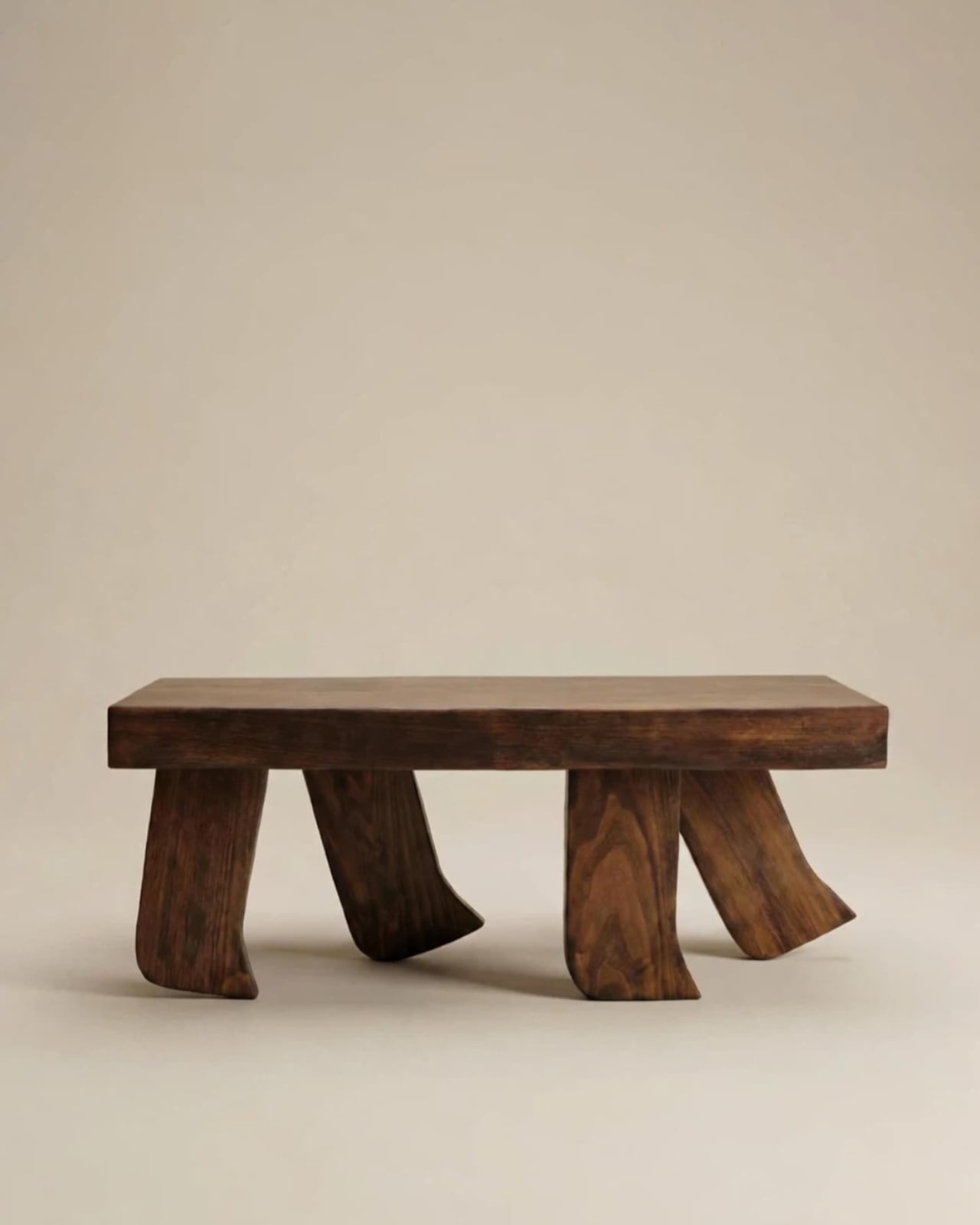
The Barefoot Collection grew out of a single idea: a coffee table designed to look like it was walking. The legs, built from solid wood and shaped to simulate the arc and flex of a bare foot mid-step, give the piece an uncanny sense of momentum. The top surface stays completely calm and rectilinear. That contrast is the whole point. Stillness above. Motion below. It’s a tension that shouldn’t work as well as it does, and yet here we are.
What I find genuinely compelling about this collection is that it resists the urge to explain itself too loudly. A lot of conceptual furniture falls into the trap of being more interesting to talk about than to actually live with. Barefoot doesn’t do that. You could sit a cup of coffee on it and forget it was ever supposed to mean something. Then a guest walks in, does a double-take, and suddenly you’re having a conversation about impermanence and what it means for a home to change over time. The piece earns that conversation by earning its place in the room first.
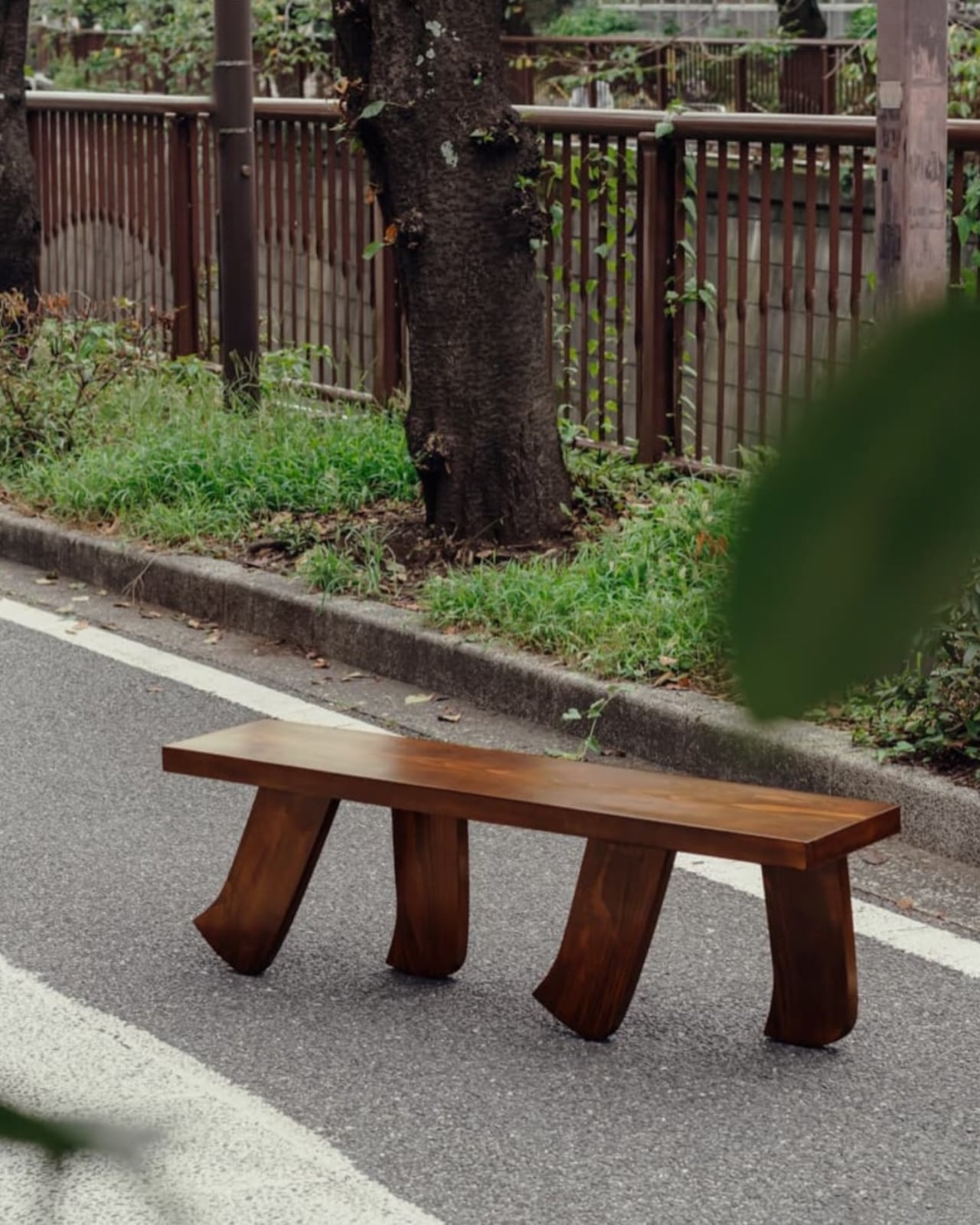
The collection has since expanded beyond the original coffee table to include a dining table and a bench, each carrying the same foot-like base into a different scale and context. The dining table version, in particular, has a presence that borders on sculptural. Placed beneath a colorful, painterly work, it holds its own without competing. The bench, spotted in one campaign image walking alongside a tree-lined street in what looks like Tokyo, has a lightness to it that almost reads as humor. Almost. The craft is too careful for it to be purely a joke, and Kilzi clearly intends both readings to coexist.
There’s also something worth noting about how the collection is built to adapt. The design can be reinterpreted across dimensions and formats to suit different interior projects, which is a practical flexibility that a lot of collectible furniture doesn’t bother offering. It acknowledges that real spaces have real constraints, and that a beautiful object with no room to negotiate isn’t as beautiful as it could be.
Kilzi has described his studio as one driven by the desire to create honest objects that coexist naturally with the body and space, not as decorative gestures but as presences that remain. The Barefoot Collection feels like the clearest expression of that to date. It doesn’t demand your attention. It just stays, quietly, on its four walking feet, reminding you that the room you’ve always lived in is still capable of surprising you. That’s a rare thing for a table to pull off.