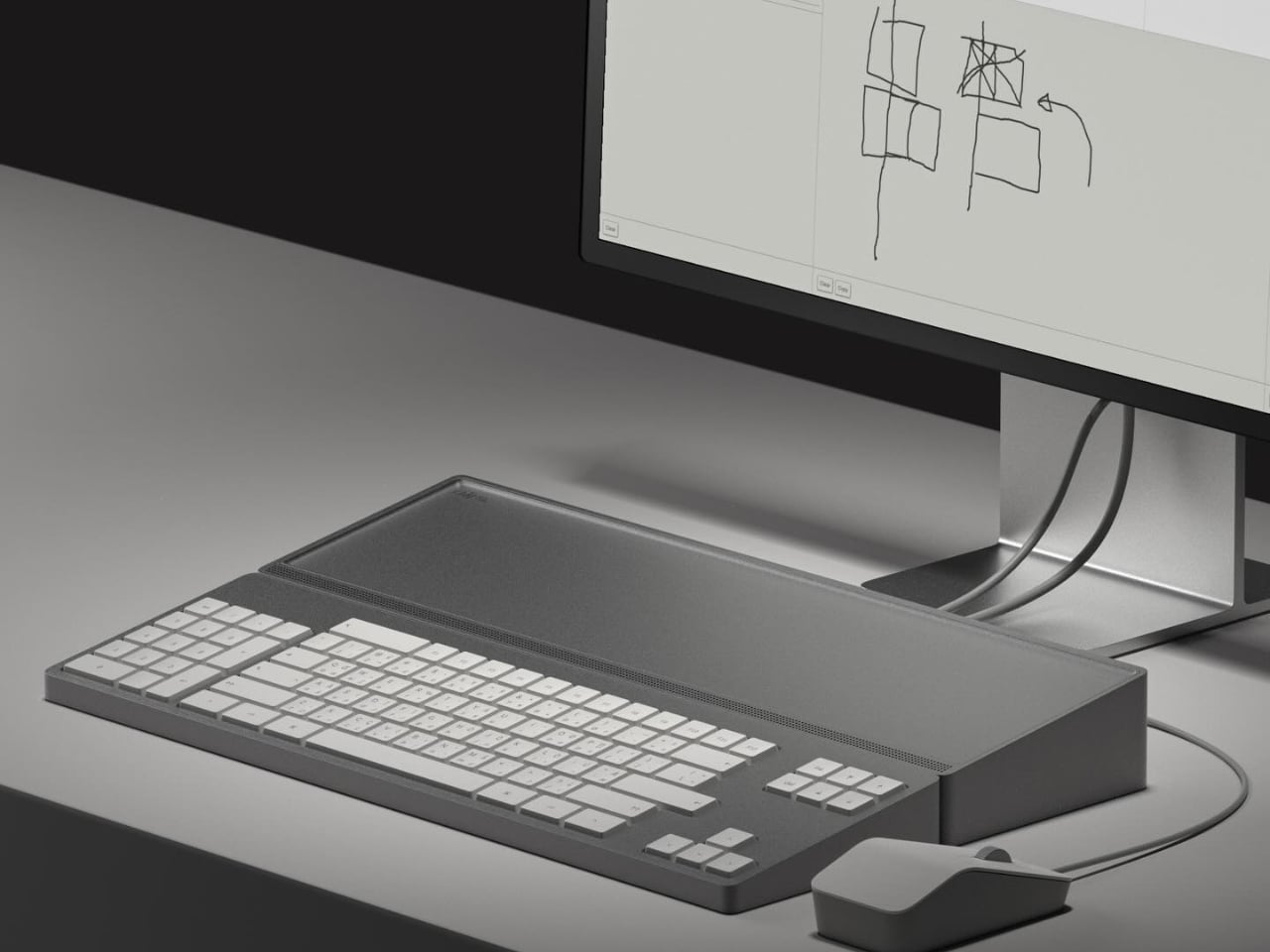
There’s something oddly nostalgic about Caligra’s c100 Developer Terminal, yet it feels completely modern at the same time. At first glance, it looks like someone took a pristine keyboard from the early computing era, polished it up, and reimagined it for 2026. But this isn’t just a keyboard. It’s an entire computer, cleverly disguised as the thing you type on.
Designed by Pentagram’s Jon Marshall in collaboration with London startup Caligra, the c100 is what happens when you strip away everything unnecessary and focus on what actually matters for people who build things. It’s described as a “computer for experts,” which is a refreshingly honest way of saying this isn’t meant for scrolling through social media or binge-watching Netflix. This machine is built for developers, designers, engineers, and anyone whose work involves deep focus and technical precision.
Designer: Jon Marshall for Pentagram
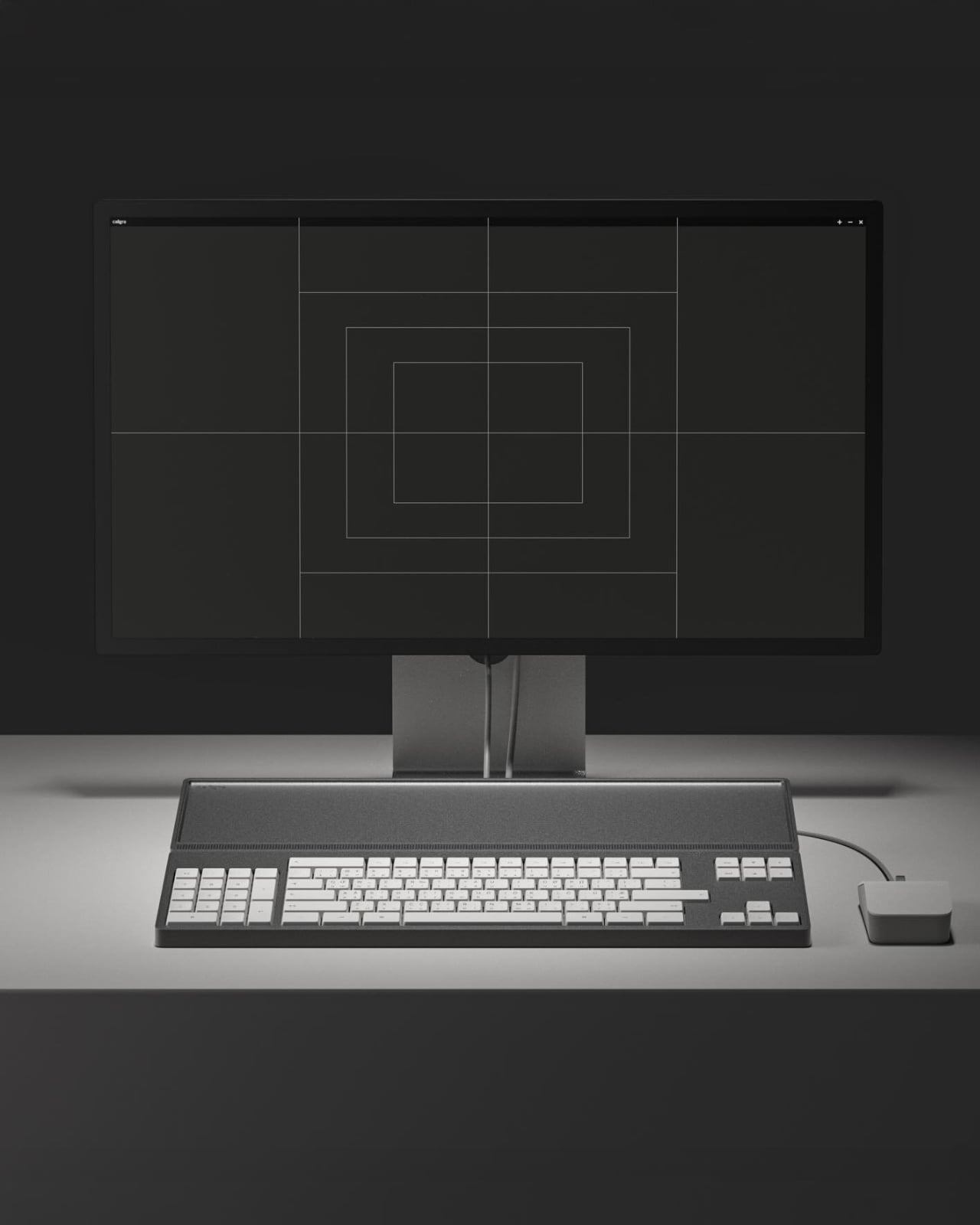
The design itself is absolutely gorgeous in its restraint. The entire body is CNC-milled from a solid block of aluminum, giving it a weight and solidity that modern tech rarely has anymore. That bead-blasted metal finish manages to evoke both sleek consumer electronics and industrial tools simultaneously, walking a line between approachable and professional. There’s something satisfying about a device that doesn’t try to hide what it is. No glossy plastics, no unnecessary curves. Just clean geometry and honest materials.
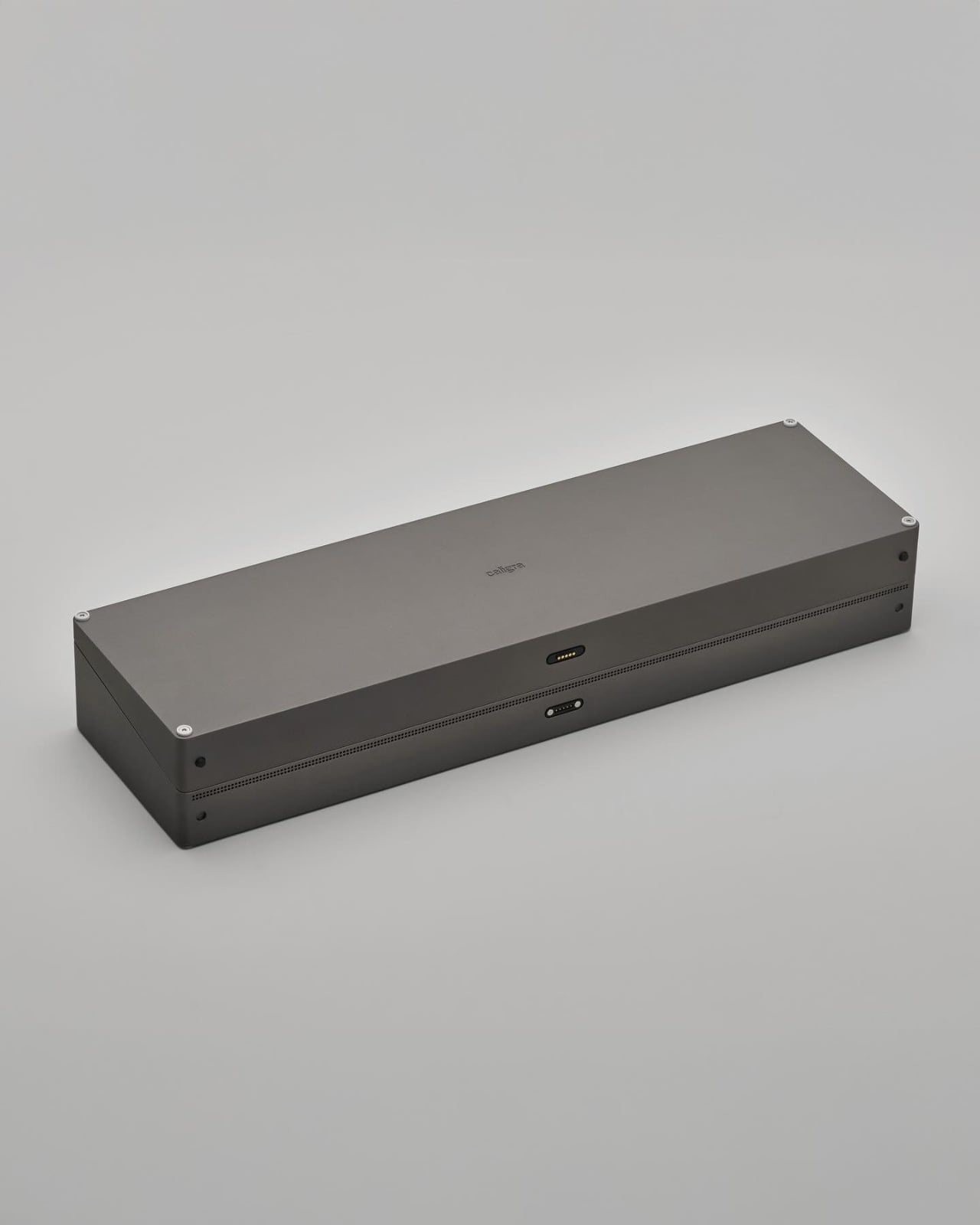
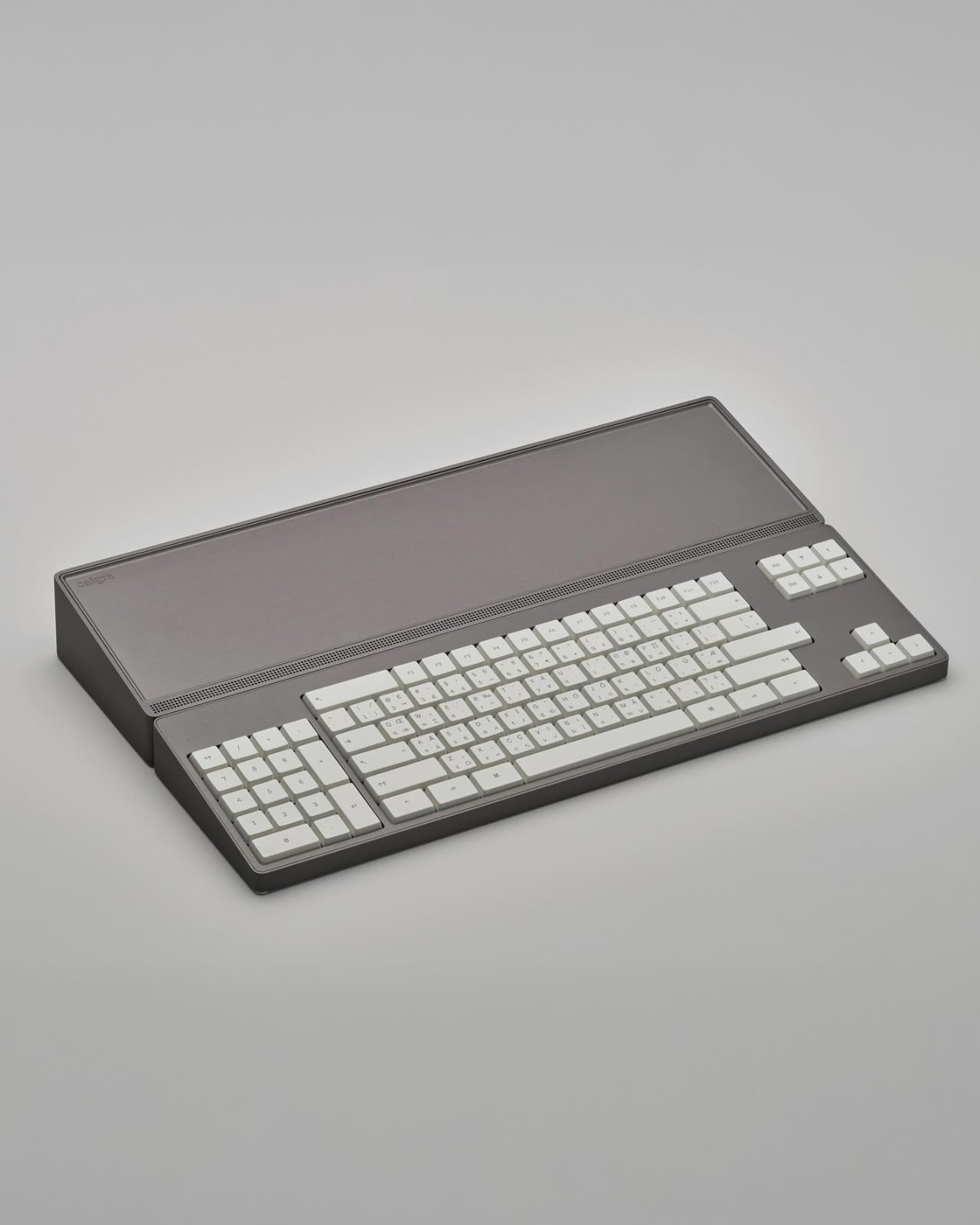
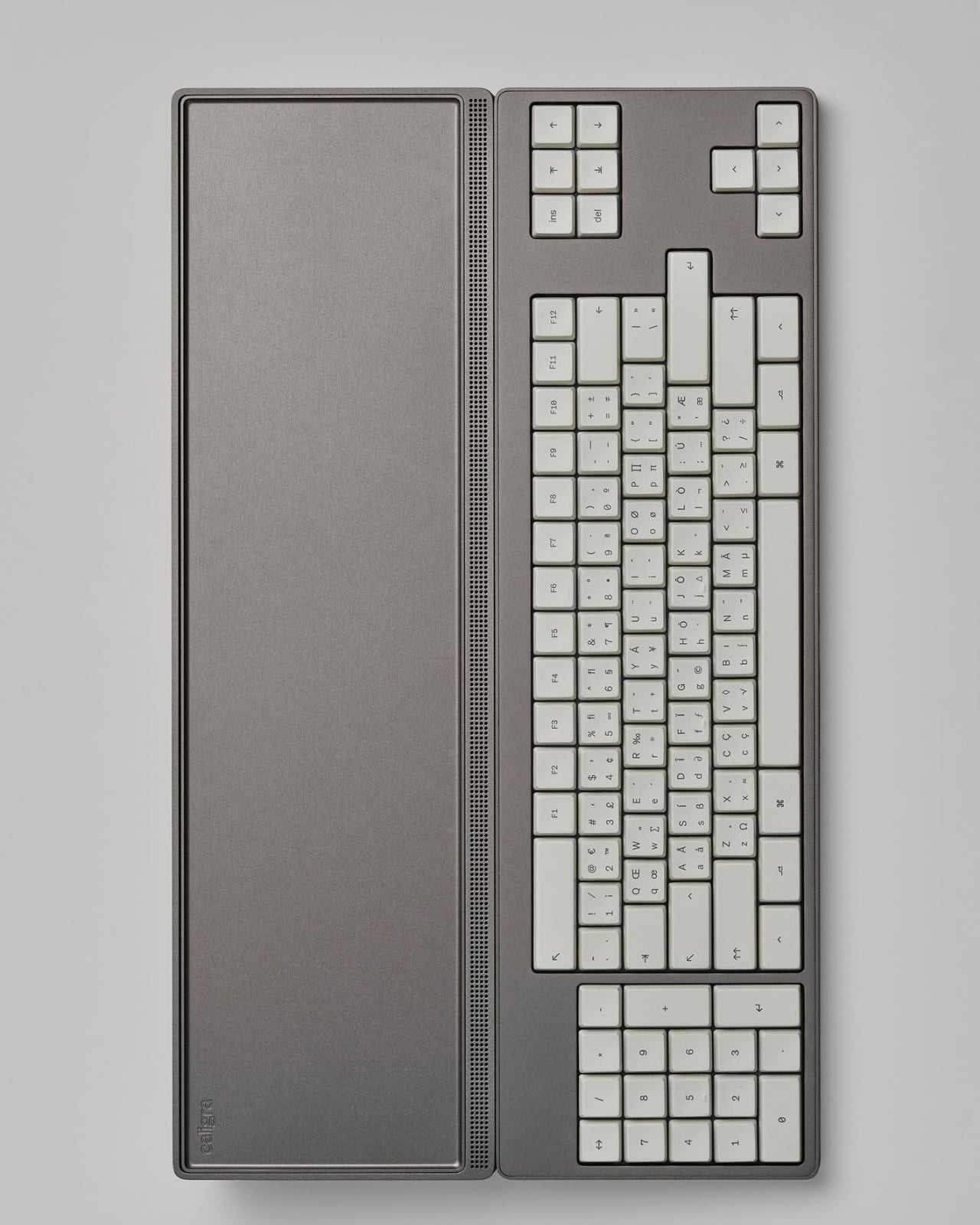
What makes the c100 truly clever is how it solves the problem of desk space. The keyboard sits at an angle, with the computing hardware tucked into the thicker rear section, creating a wedge shape that echoes those chunky terminals from the ’70s and ’80s. But here’s the genius part: there’s a central magnetic pivot structure that lets you detach and fold the keyboard without any visible external hinges. It’s the kind of detail that seems simple until you realize how much engineering went into making it look effortless.
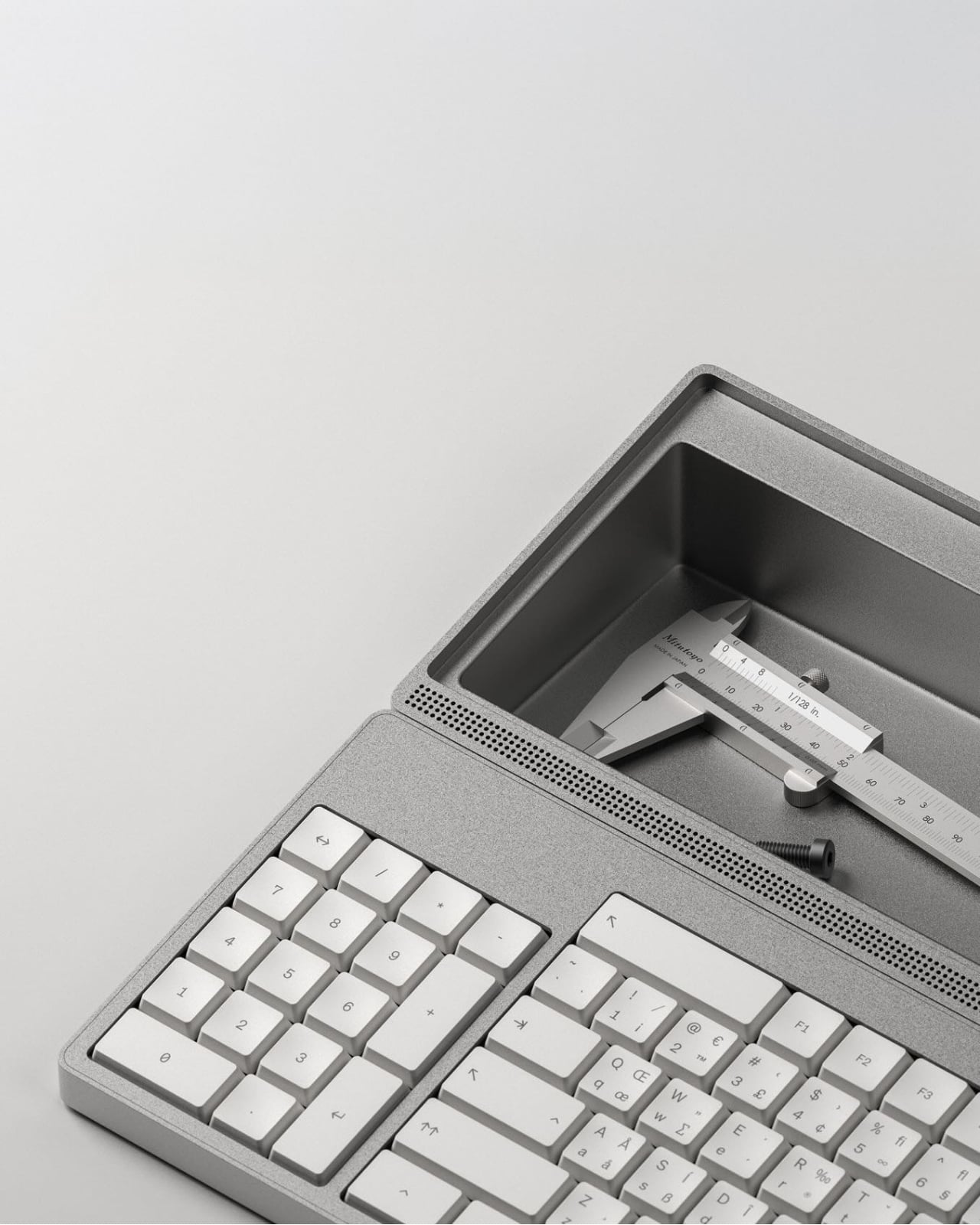
Open the removable lid and you’ll find tool storage built right in. It’s such a practical touch that it almost feels subversive in an era where most tech companies would rather you never open your device at all. The message is clear: this computer expects you to tinker, to maintain it, to actually use your tools. One photo even shows calipers and a pen tucked inside, the kinds of things you’d need if you’re working on something physical alongside your digital projects.
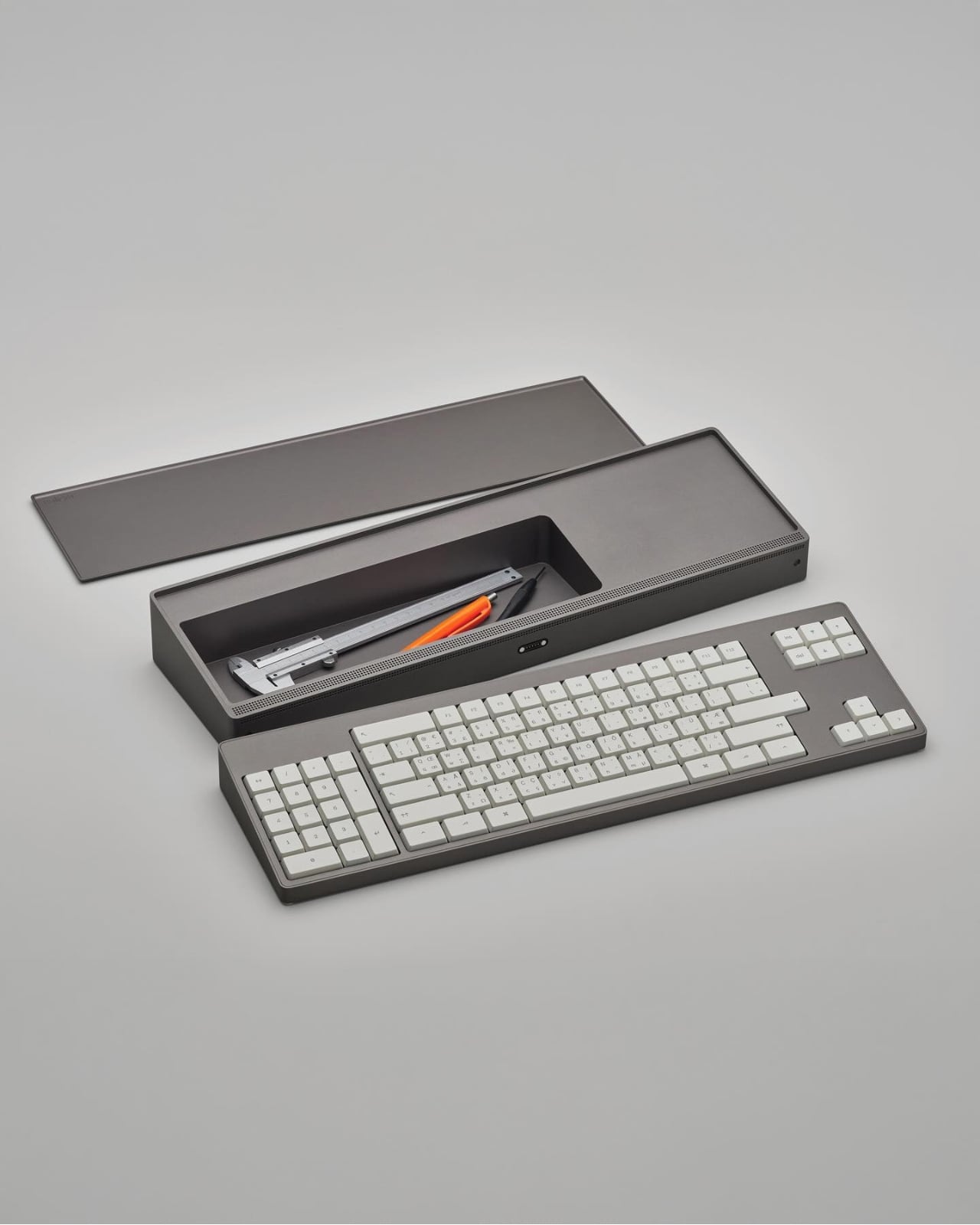
The keyboard layout itself is unusual and deliberate. Keys are grouped into separate clusters rather than the standard continuous layout most of us are used to. There’s a numeric pad on the left, arrow keys grouped together, function keys in their own section. It takes a moment to understand, but the logic becomes clear when you think about workflow efficiency. The design uses Fitts’ law to accelerate task management, meaning every key placement has been optimized for speed and minimal hand movement.
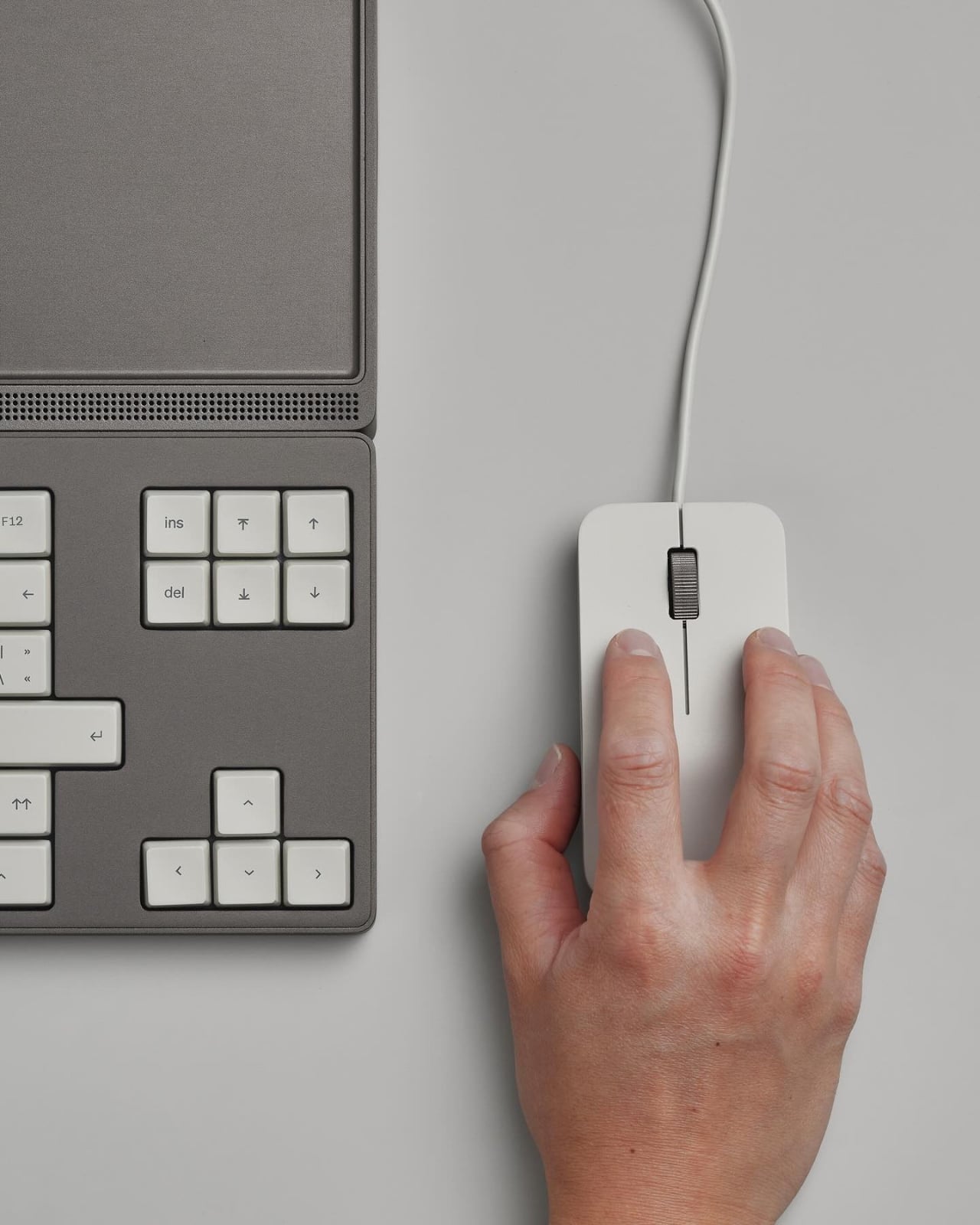
Even the mouse is thoughtfully designed, with that same geometric clarity as the rest of the system. And yes, it’s wired, which might seem retro until you consider that wireless connections mean batteries, charging, and occasional lag. For someone writing code or working on time-sensitive projects, that reliability matters more than the convenience of going wireless.
The c100 runs Workbench OS, a Linux-based operating system that Caligra built specifically for technical work. It has no decorative elements, no pop-ups, no need for “do not disturb,” which honestly sounds like a dream compared to the constant notifications and distractions modern operating systems throw at us. The whole philosophy behind Workbench is to create a clear space for deep thought, getting out of your way so you can actually focus on making things.
Under that elegant exterior, the specs are serious: an 8-core AMD Ryzen 9 processor, 96GB of DDR5 memory, and 1TB of storage. The terminal includes two USB4 ports, two HDMI outputs, ethernet, and all the connectivity a professional setup needs. The aluminum body isn’t just for looks either; it helps with thermal performance, keeping things cool without noisy fans disrupting your concentration.
At $1,999, the c100 isn’t cheap, but it’s also not trying to compete with mass-market laptops. This is a statement about what computing could be when it’s designed for creation rather than consumption. In a world where most tech products feel disposable and designed for obsolescence, there’s something genuinely refreshing about a computer that’s built like a tool, looks like an artifact, and functions like it’s been optimized for the way professionals actually work.