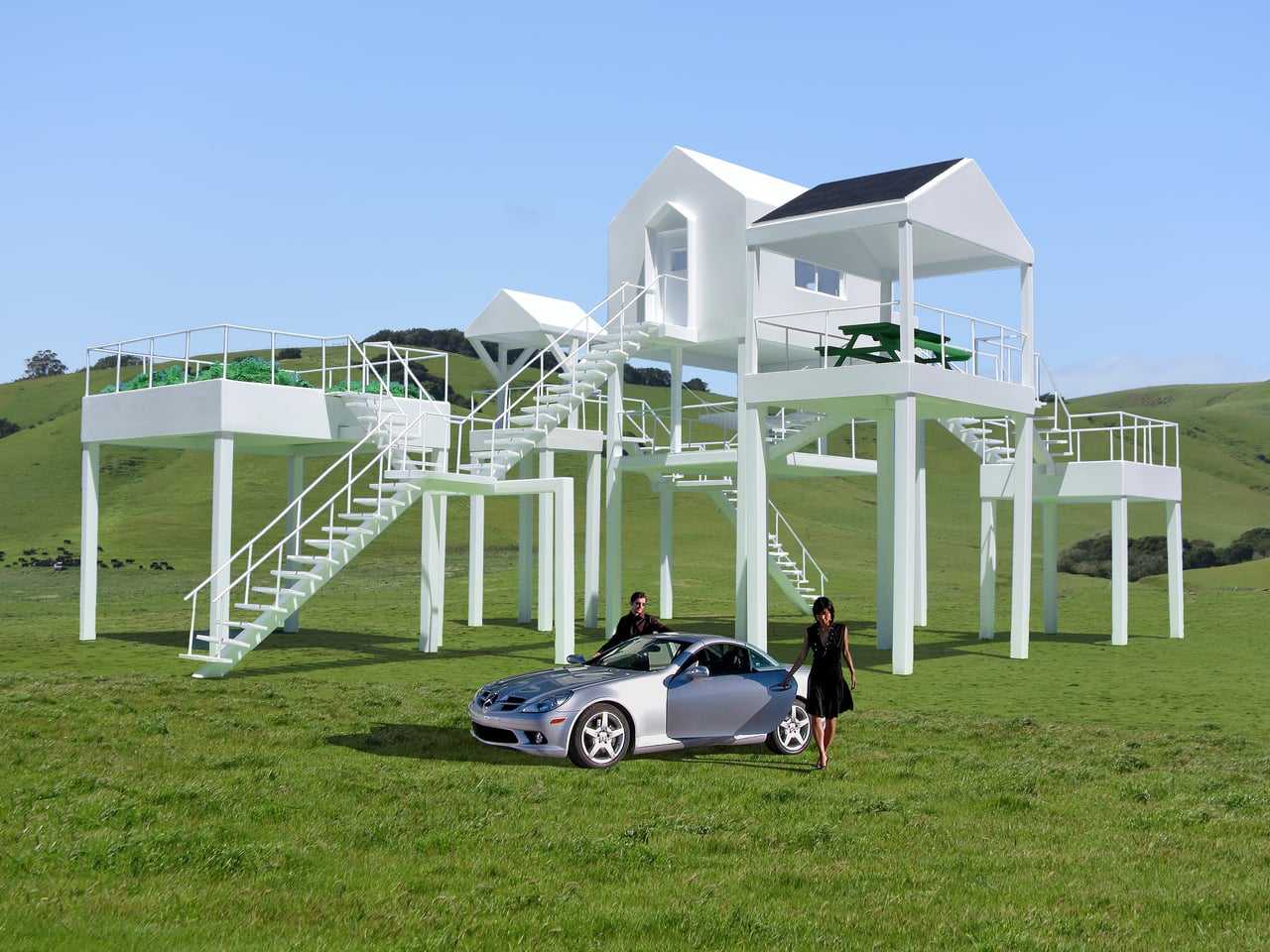
The typical vacation rental is a cabin or beach house sitting on the ground with a yard, a deck, maybe a hot tub, and a hammock scattered around it. Those amenities are usually background, things you walk past on the way to the main house or visit once during the stay. Michael Jantzen’s Elevated Leisure Habitat flips that logic by pulling everything off the ground and turning circulation into the main event, so moving through the complex becomes as much the attraction as the rooms themselves.
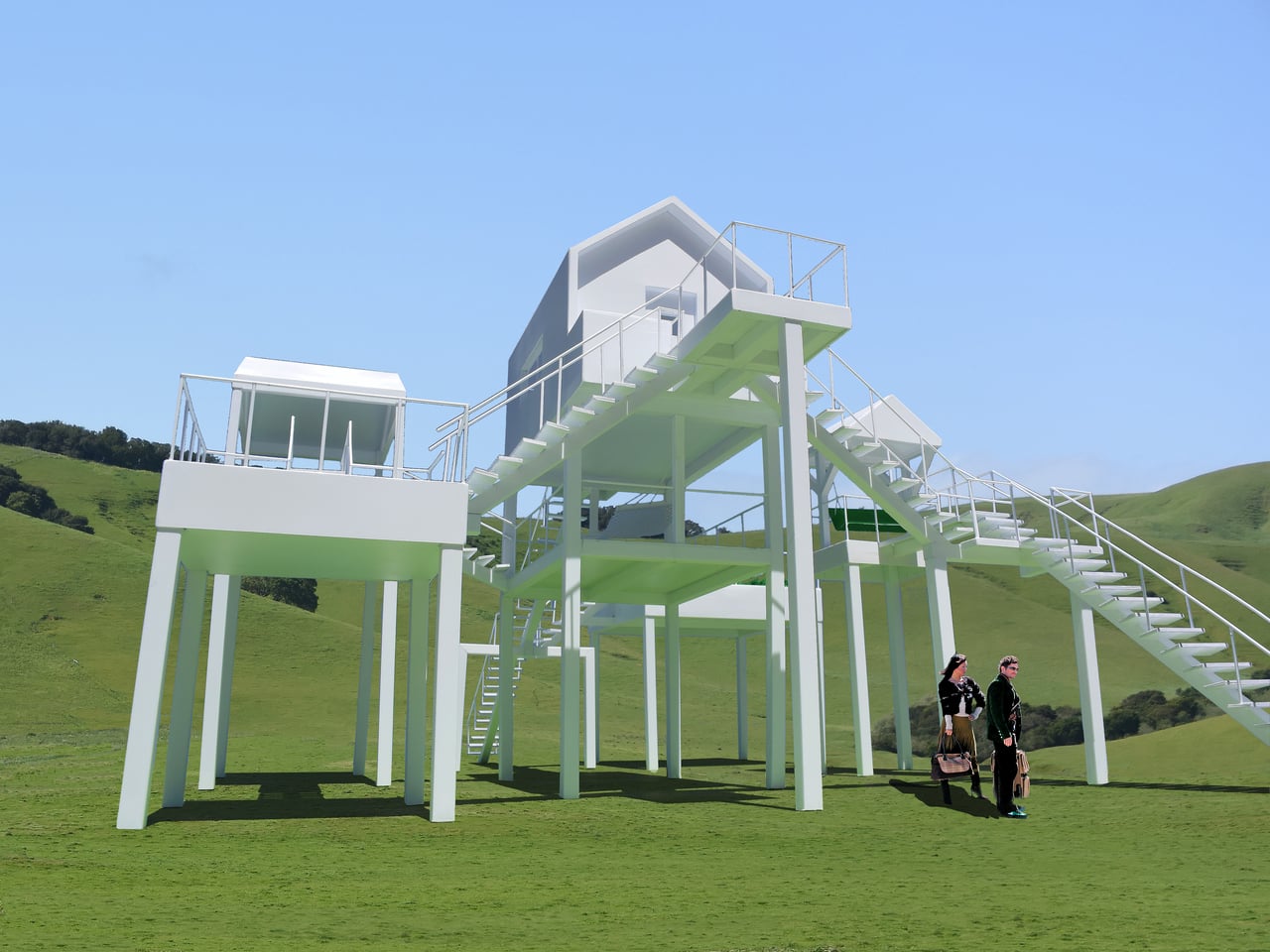
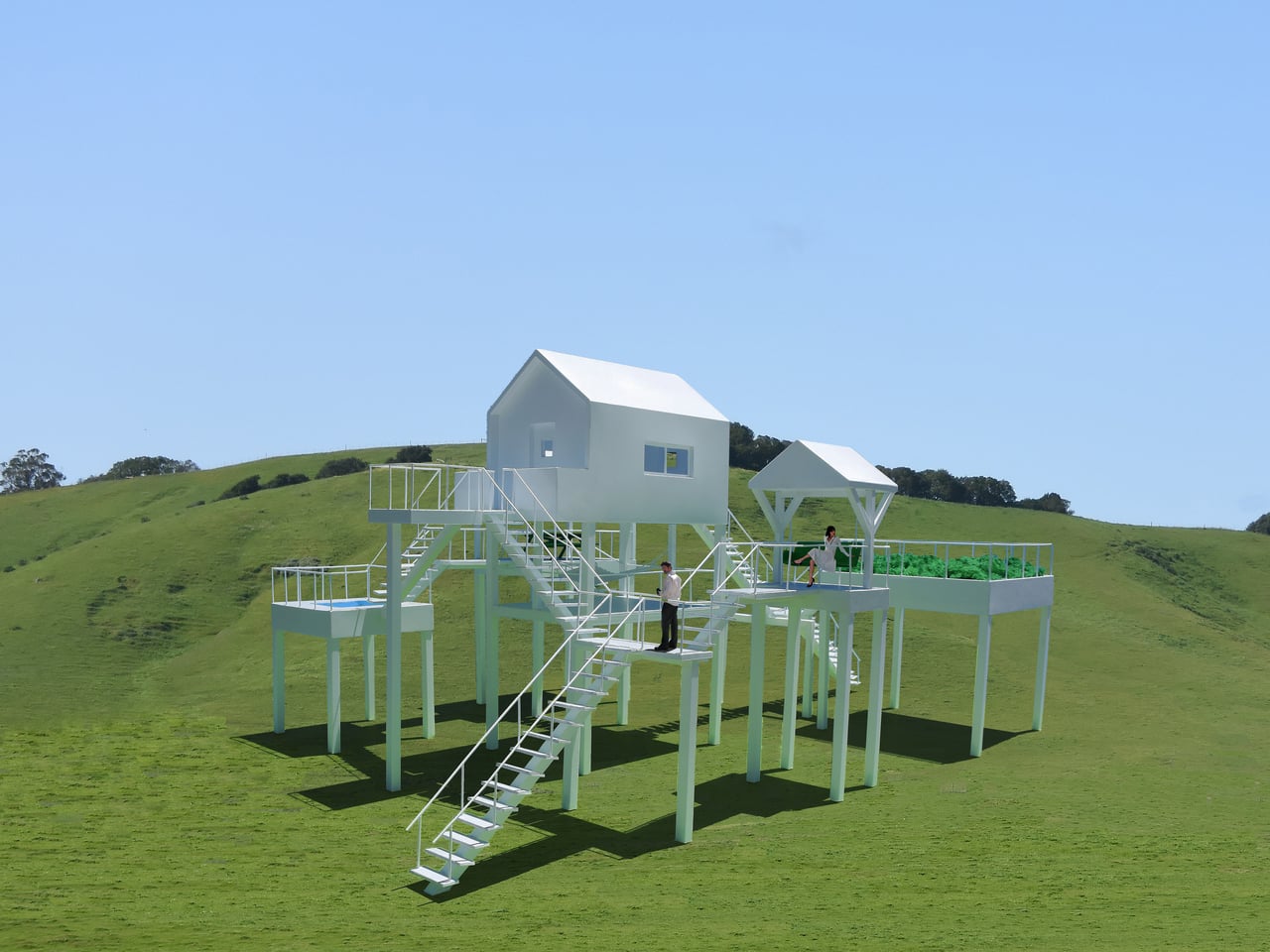
The Elevated Leisure Habitat is a functional art structure meant to be rented as a very special vacation place. This first version is designed for two people and consists of a small central house surrounded by a series of elevated platforms, each dedicated to a single leisure activity. Instead of one building with a yard, you get a loose constellation of outdoor rooms in the sky, linked by stairs and landings.
Designer: Michael Jantzen
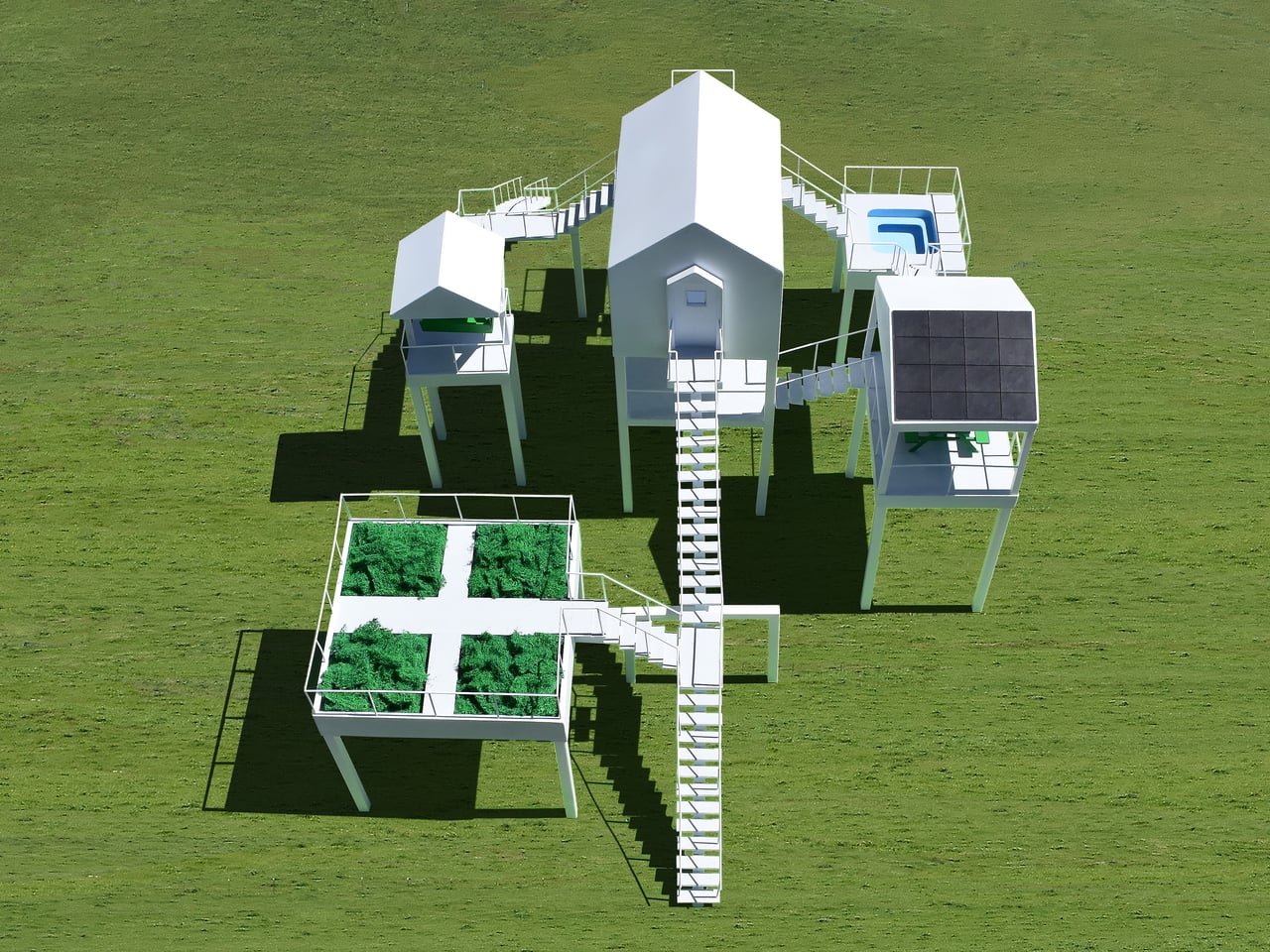
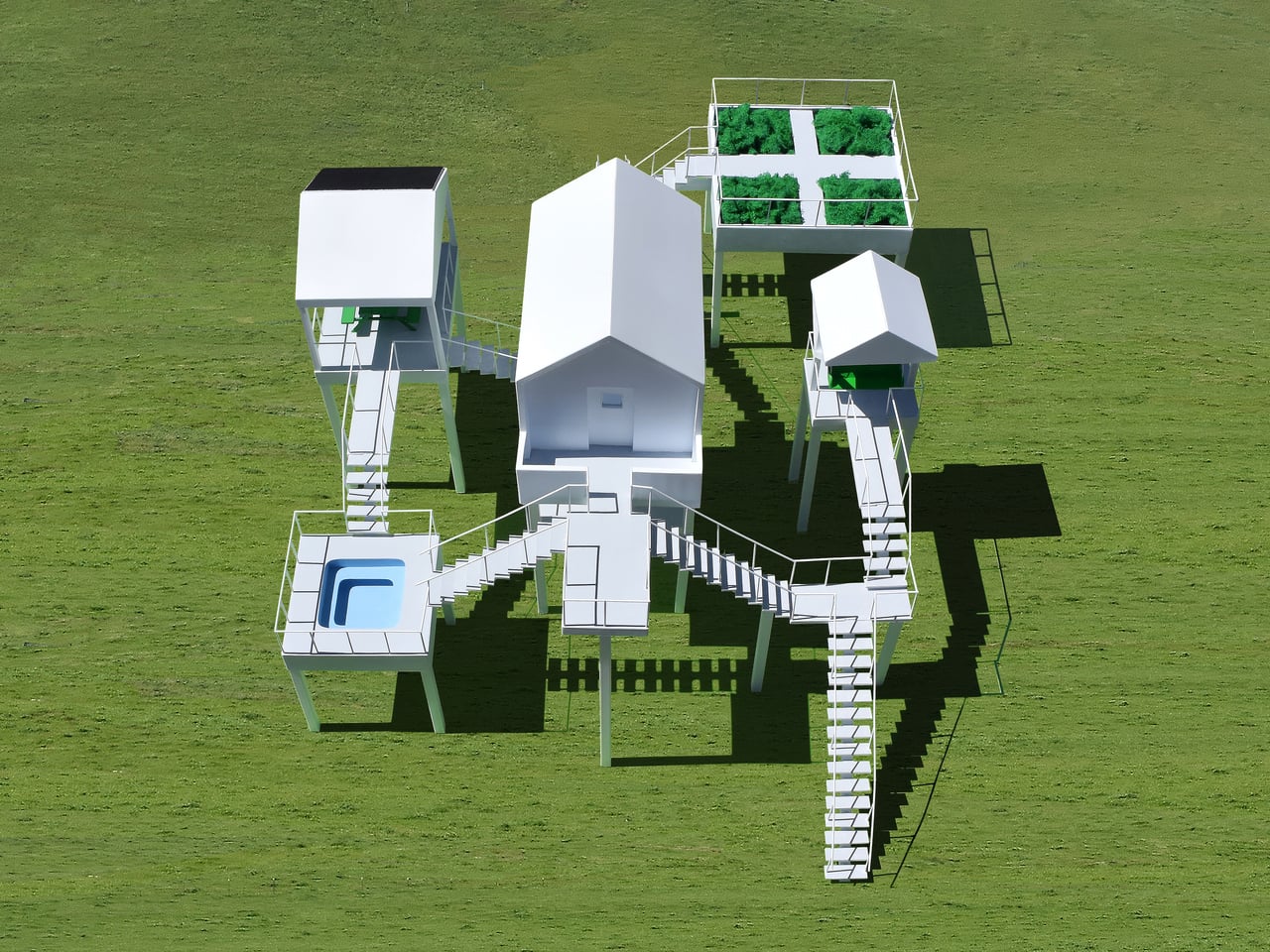
The central house is a compact volume with sleeping space, a desk, a toilet, a shower, and a small food-preparation area. Around it, the elevated amenities include a garden, a hot tub, a picnic pavilion, a porch-swing pavilion, a hammock platform, and a solar-cell array for electricity. All sit on their own stilts at different heights, connected to the house and to each other by a network of stairs, two of which descend to the ground.

Jantzen leans into archetypal forms. The house is a classic gable-roof silhouette, the pavilions echo that same pitched profile, the garden is a simple tray, and the solar array is a dark plane tilted like a roof. He writes that the aesthetics evolved from using a symbolically conventional, conventionally shaped house and amenities that symbolically refer to their conventional counterparts, turning the complex into a three-dimensional diagram of domestic life.
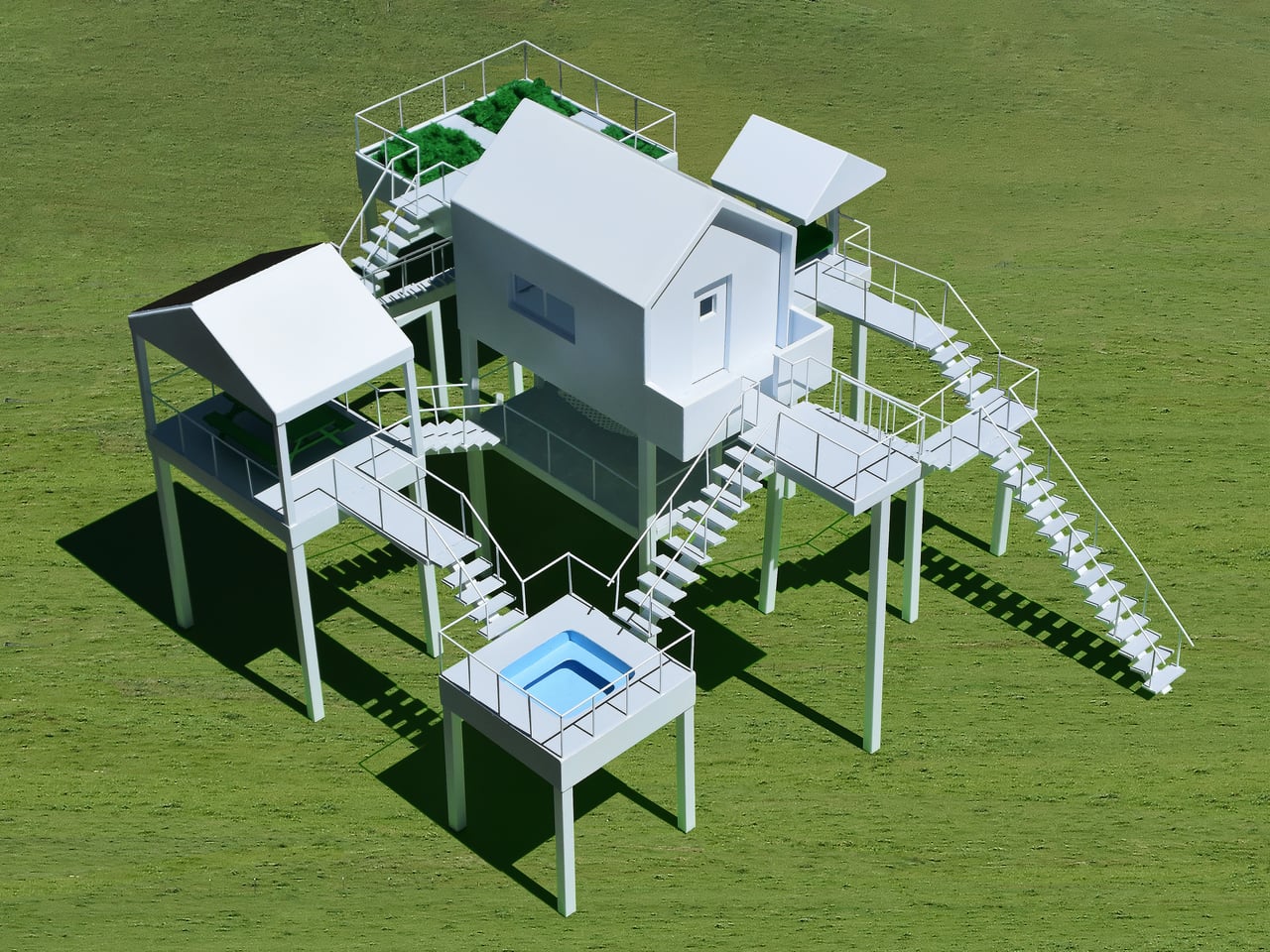
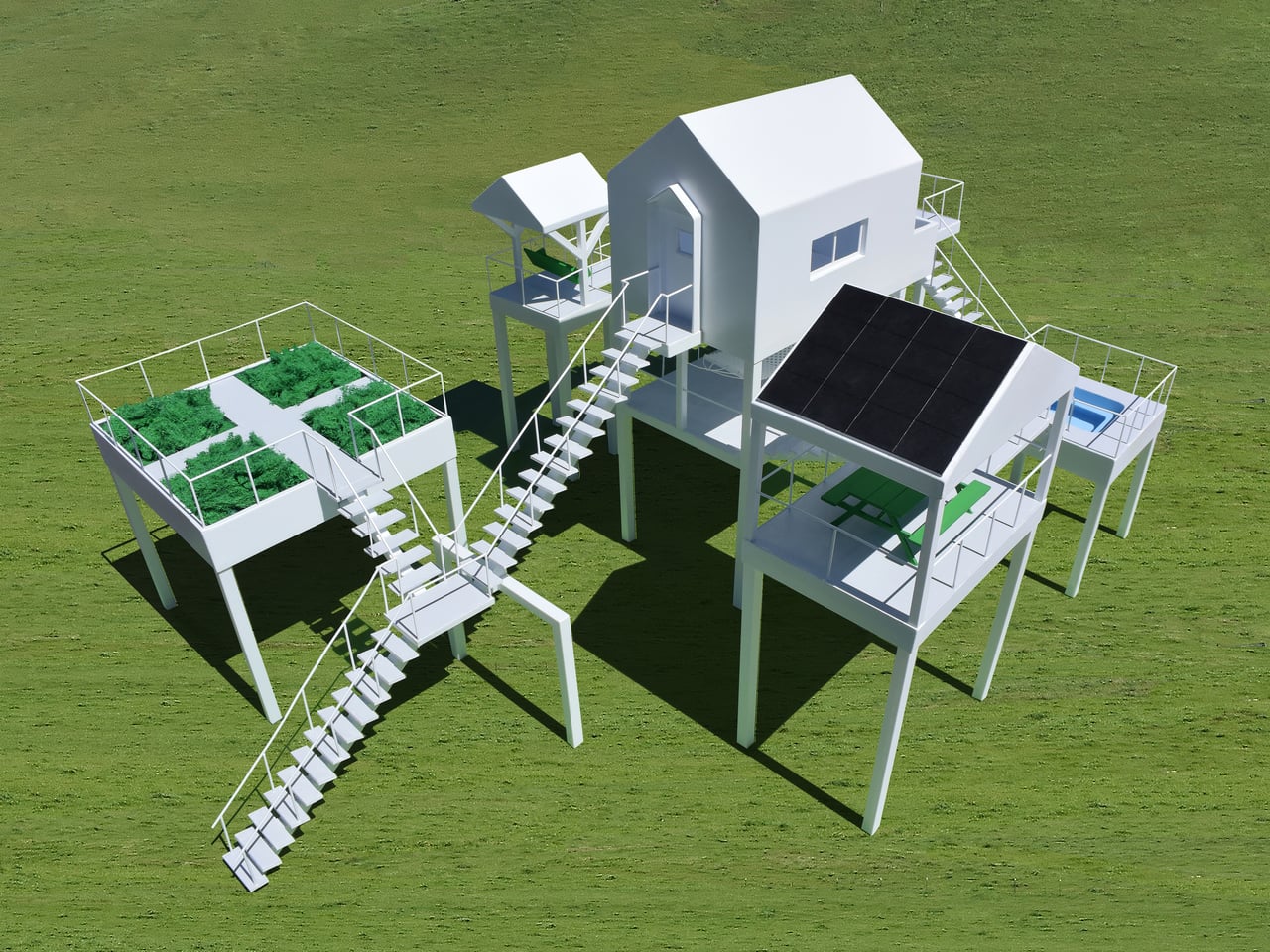
Simply elevating elements we are used to seeing on the ground and forcing us to climb from one to another creates an unexpected experience. Every trip to the garden, the hot tub, or the hammock becomes a small ascent and crossing. The stairs and platforms choreograph how you move, making the journey between activities as much a part of the stay as the activities themselves, which shifts the feel from a passive rental to an active exploration.
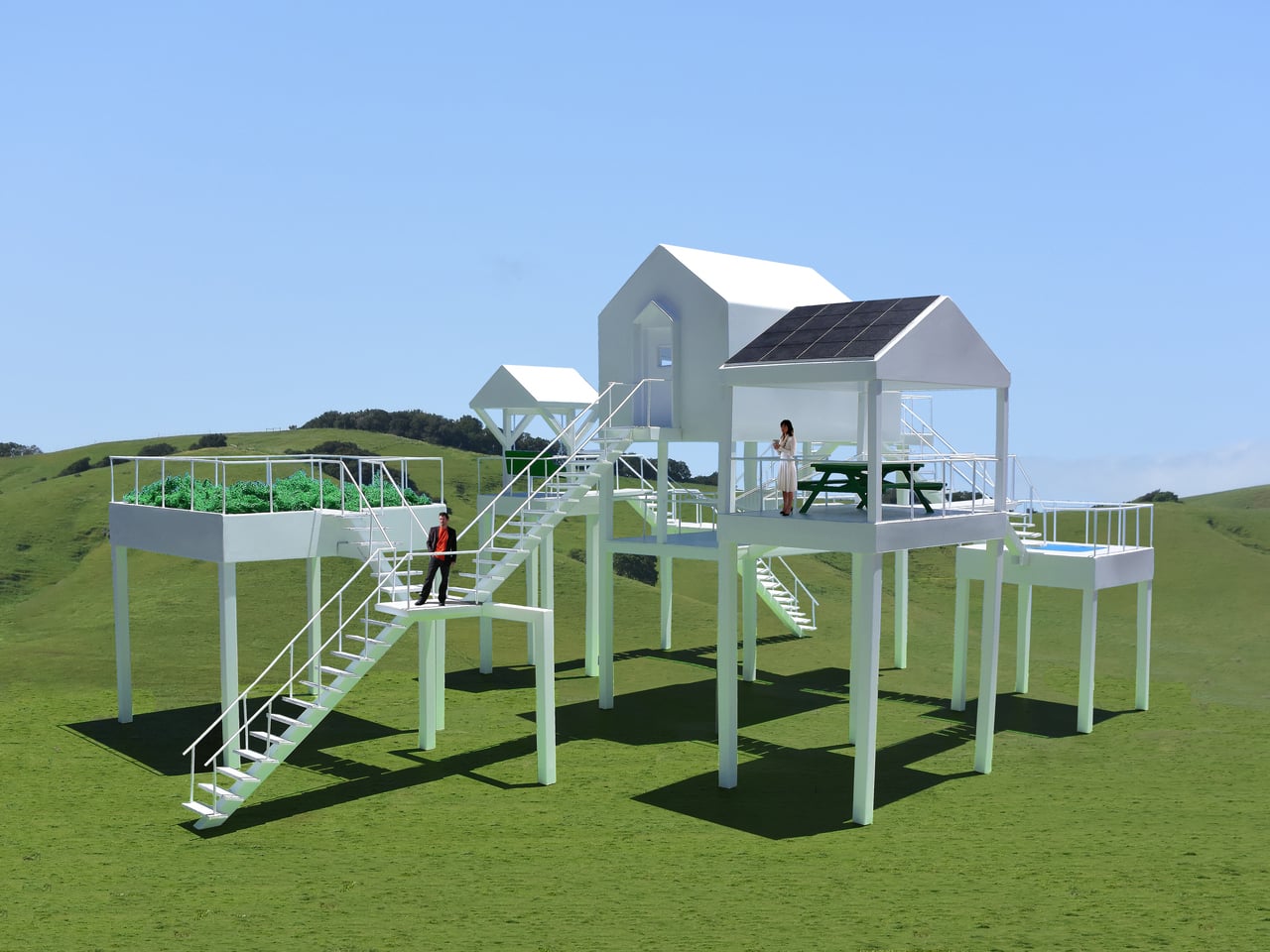
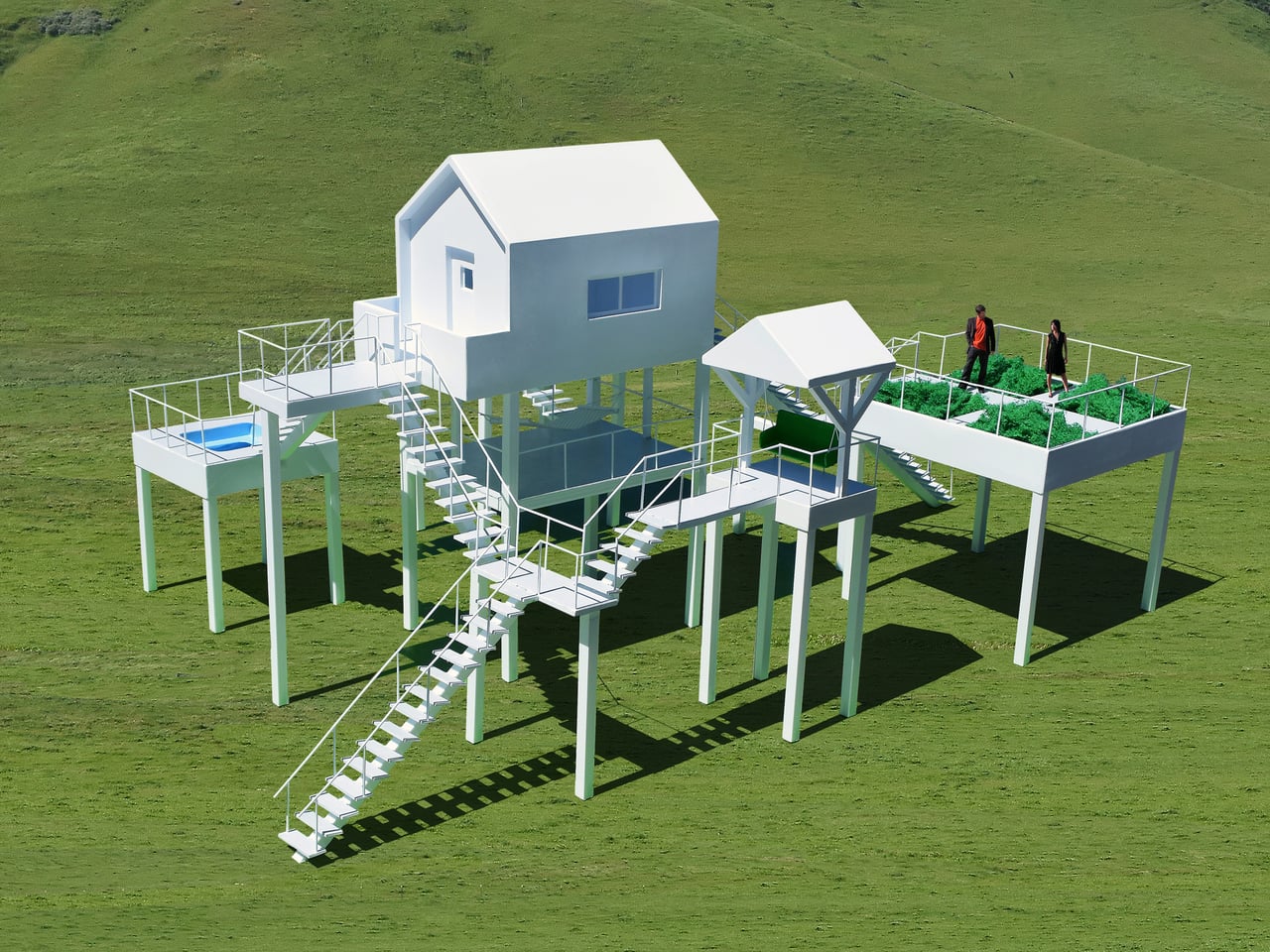
Lifting everything on slender white columns reduces the footprint on the landscape, leaving the ground largely untouched beneath the habitat. The dedicated solar-panel platform hints at off-grid potential, while the garden tray suggests controlled cultivation instead of sprawling lawns. The all-white structure against a green site reads like a deliberate insertion, a piece of land art that happens to contain a working vacation program with real utilities and shelter.
Jantzen describes the Elevated Leisure Habitat as basically a large interactive sculpture that explores new and exciting ways in which to have fun. It sits somewhere between house, artwork, and playground, using familiar icons and a simple structural language to reframe what a holiday stay could be. Instead of retreating into a single enclosed volume, guests would inhabit a small network of outdoor rooms in the sky, climbing and crossing between platforms as if moving through a three-dimensional diagram of leisure itself.