Cleaning Up The Wire Mess
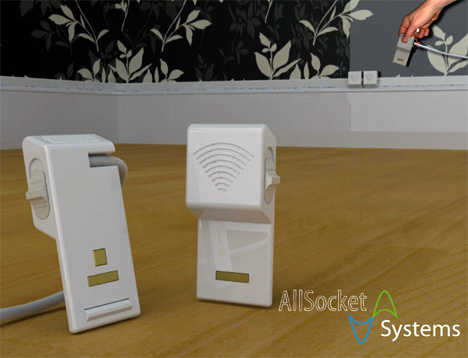
OMG, not another electrical gadget at home…where do I plug it…too many extension cords, wires, plugs, hassles! Does this thought often bog you down? It did bother designer Ashley too much, since she resides in a Victorian house where wiring and plugs haven’t been changed for more than 70 years! Instead of cribbing, she mulled and came up with the AllSocket Power Track and AllPlugs. Now she has the perfect solution for us…see her demo it for us after the break.
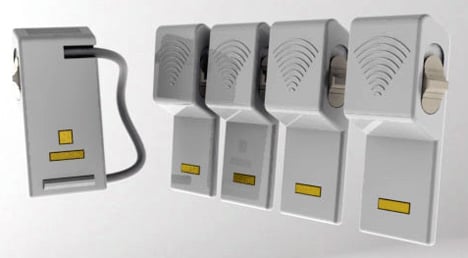
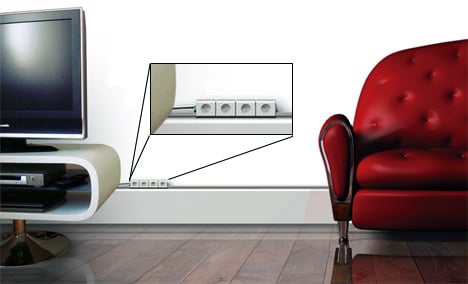
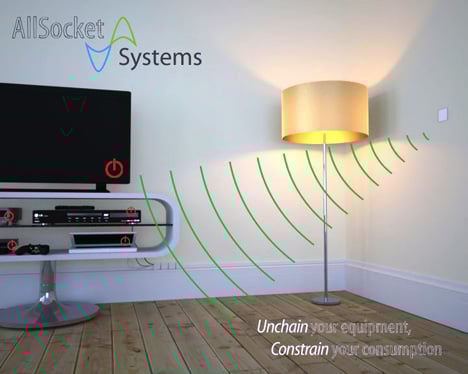
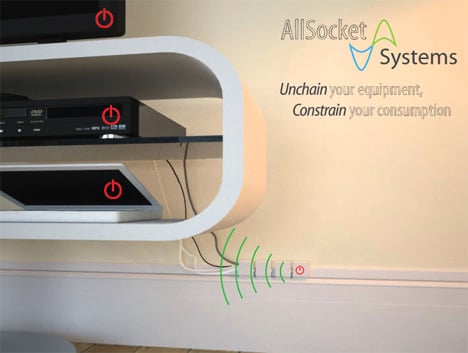
The Power Track integrates the electrical wiring into a skirting board or a similar wall panel. ‘AllPlugs’ replace conventional electrical plugs, then simply slot into the distribution system anywhere around the perimeter of the room, giving you access to power wherever it is required. AllPlugs are environmentally friendly, with options that allow users to turn the power off to one or several appliances at a time, by either a flick of one conveniently placed wireless wall switch, or automatically by smart plugs which detect standby states.
AllSocket Power Track System and AllPlugs is a James Dyson entry, you can vote for it here:
Designer: Ashley Kelly


18 Comments »
chris says
cool but what happens when you drop some change or screws or other metal objects into the “rails” that house the contacts, it would be like shorting out a battery except with AC current. i really like the design and idea, i have like 5 power strips just for my media center, however would need a better idea for contacts, it looks like she has some sort of cell phone battery type contacts where there wold be strips of negative and positive contacts along the wall.
MDuarte says
Aren’t old homes susceptible to leaky windows and whatnot? wouldn’t a live “rail” add to a dangerous situation?
Confucius says
Its on the right track, but yes, very dangerous. There are stringent international rules that dictate the design of power supply in homes, hense why the design hasn’t changed fro many years. One of these rules is the design must not have an aperture large enough to put fingers in, or metal objects etc. Also, as MDuarte mentioned the possibility of getting wet is a big issue.
Ashley says
Hi all,
It’s the designer here, and I want to thank you for your interest and your comments.
Indeed, Ingress Protection, ‘Standard Finger’ compliance, earthing, safety devices, etc are all part of the design challenge, and we are confident all can be overcome to comply with the most stringent regulations in the world here in the UK.
Think about why it would be any different for a 3-pin or 2-pin socket (and the plethora of extention devices) in terms of safety?
The design of chased-in cabling and fixed access points hasn’t changed in many years, but safety devices to protect from a fault state have, which can enable electrical distribution to be taken into the 21st century.
Warm regards,
Ashley
Ventego says
I added your blog to bookmarks. And i’ll read your articles more often!
Pax says
Well, I’m a bit late t the party, but first off I wanted to say to teh designer: BRILLIANT!
While there are clearly some concerns still to be addressed, the core concept is, in my opinion, a solid step forwrd for home (and office!) power distribution and management.
On the topic of object or fluid insertion, I should think it would not be impossible – nor excessively expensive – to include a ground fault interrupt into the circuit for each room, or even each wall.
And actually, you could not use a single RAIL within each baseboard. Instead, just put a side-by-side chain of “sockets” for those adapters to slide into … and design the socket so that current is only active when an adapter is inserted. The placement of each adapter would not have to significantly change – except perhaps losing a couple centimeters worth of flexibility – and the overall convenience and utility of the system would still be preserved.
A mild concern I do have, that has not been mentioned (but might already have been addressed) is total load capacity for each rail or room … and a means od determining how much of that capacity is in use or available at one time.
It occurs to me, by the by, that if such a system were adopted globally … the days of international travellers needing different adapters could become a thing of the past. Just have each of the modules able to determine available power, and step it up or down as required, based on the nation in which said adapter was purchased. That is to say, if an EU traveler buys some of these for their iron, laptop, hair-drier, and so on … when staying in a U.S. hotel with this rail system available … just drop their EU adapters into the US rail, and voila … self-adapting current.
Finally, a suggested additional feature: the ability to tie the system (via wireless master units, perhaps) into a home computer network, and a house-wide power management program running on a computer, would be IMO an excellent addition. For vacationers, you would also have the benefit of using that program to semi-randomly turn lights, television(s), and similar thins on and off, to enhance the appearance that the property is stil occupied.
Trackbacks