Public art installations in parks have a familiar relationship with the people passing through them. They hold a fixed position, a fixed meaning, and a fixed form. You walk around them, read a plaque if there is one, and that’s usually the end of the conversation. The ones designed to provoke a genuine reaction tend to depend on scale or spectacle rather than something the visitor can actually change.
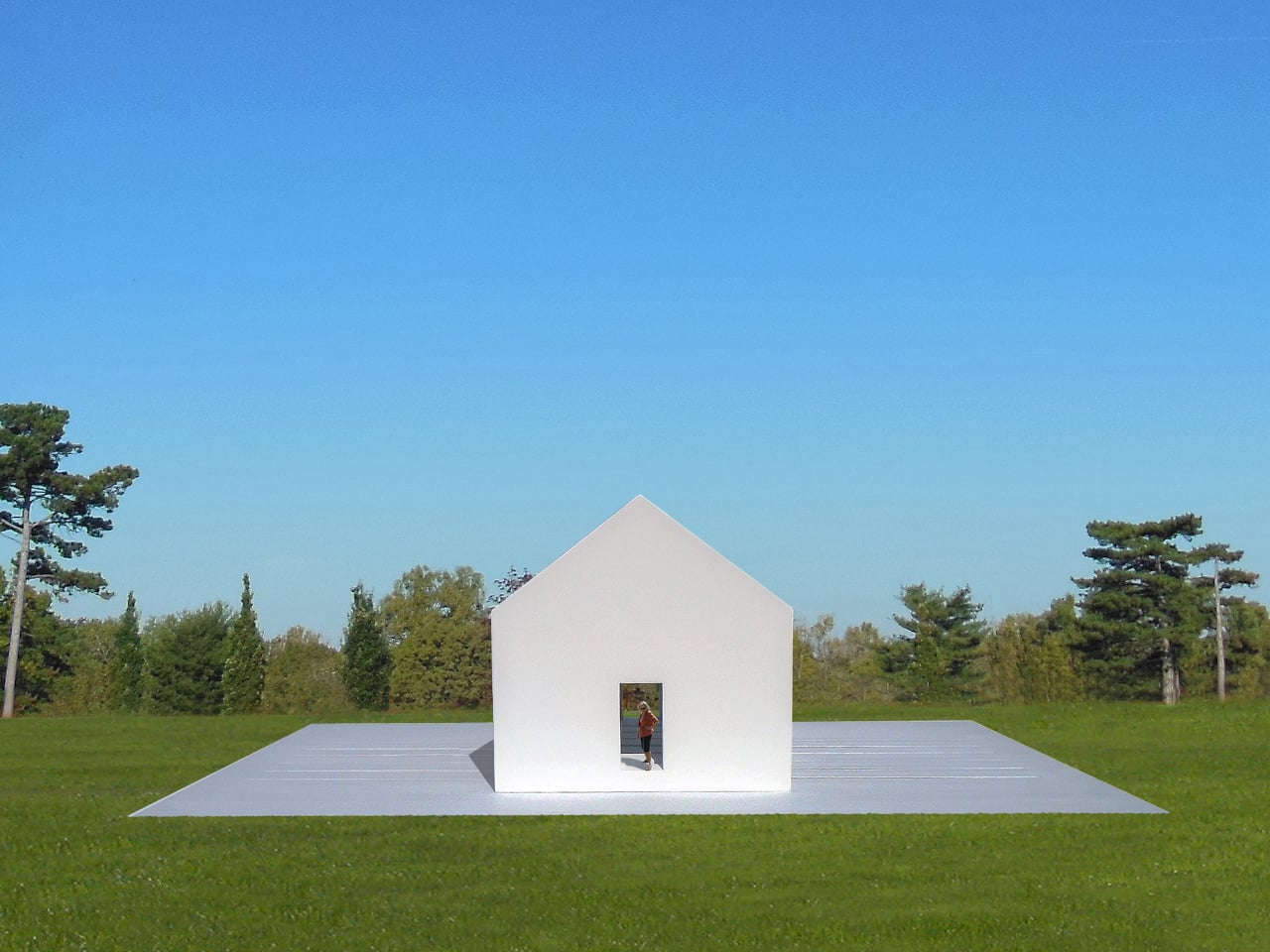
The Interactive Sliced House is part of a series that uses the most recognizable architectural shape there is as raw material. The house silhouette, walls, a pitched roof, and a doorway centered in front, is so deeply familiar that it functions almost like a word. This installation doesn’t just reference that shape. It cuts the whole thing into eight vertical slices and puts visitors in charge of what happens next.
Designer: Michael Jantzen
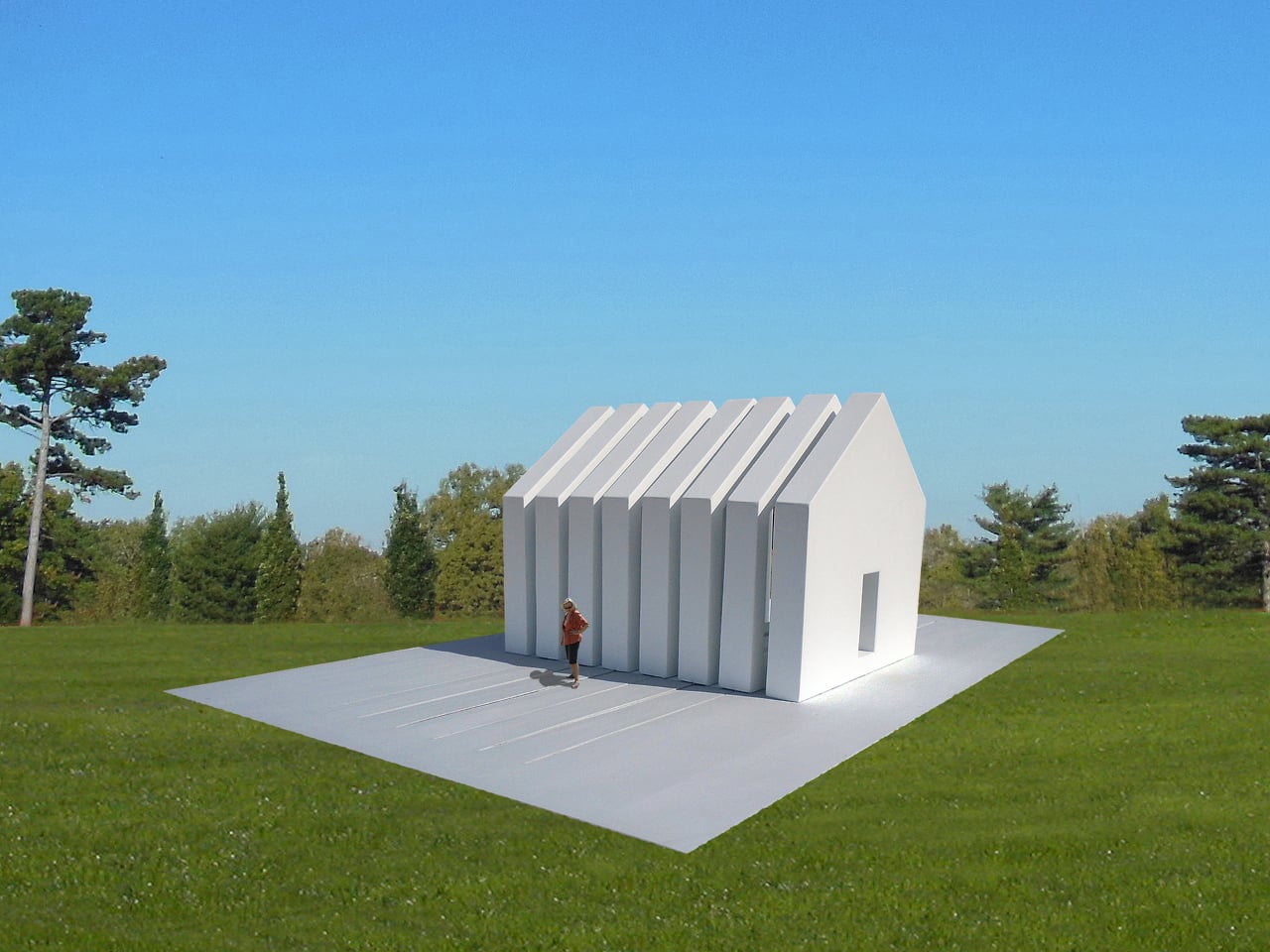
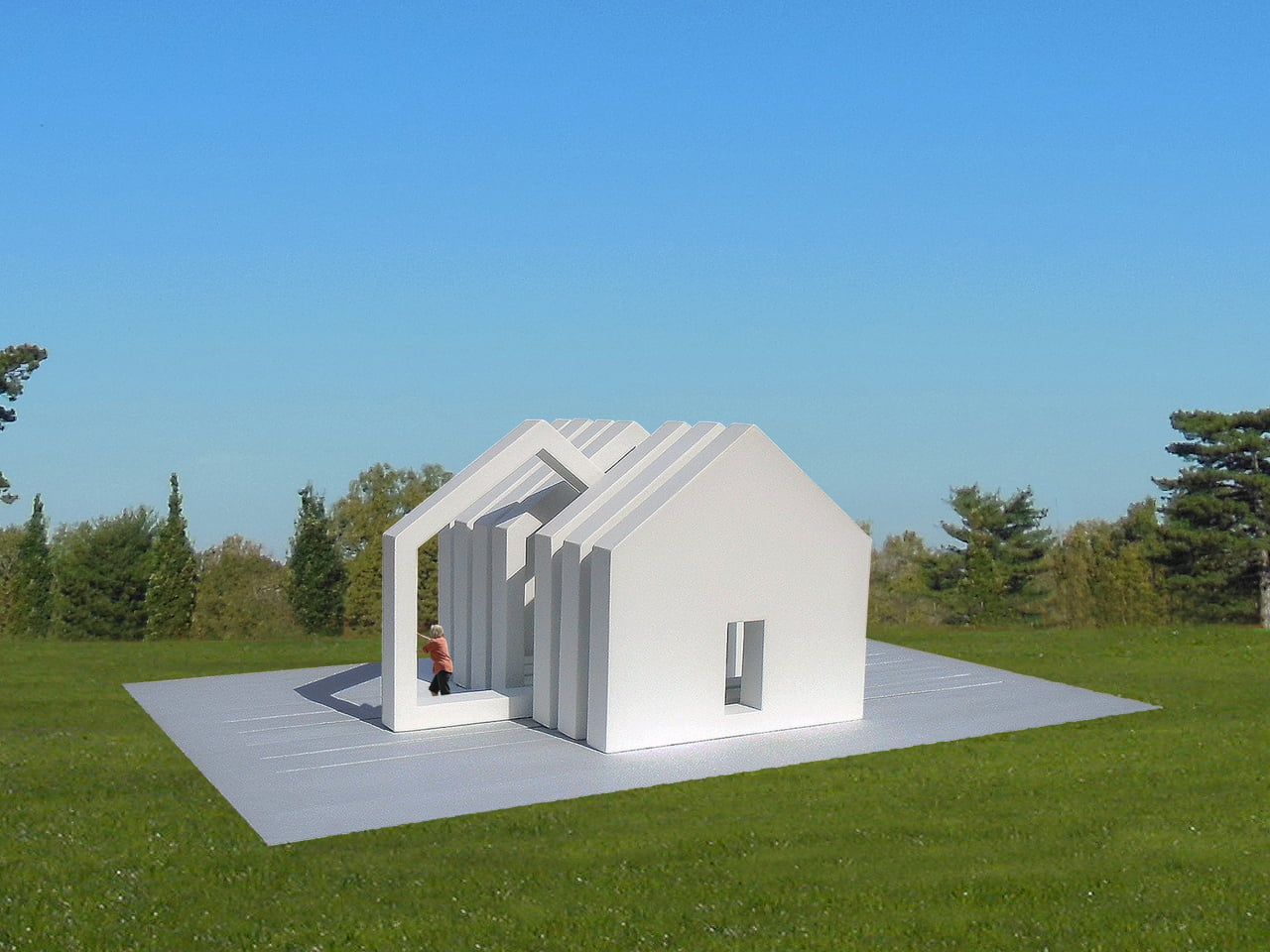
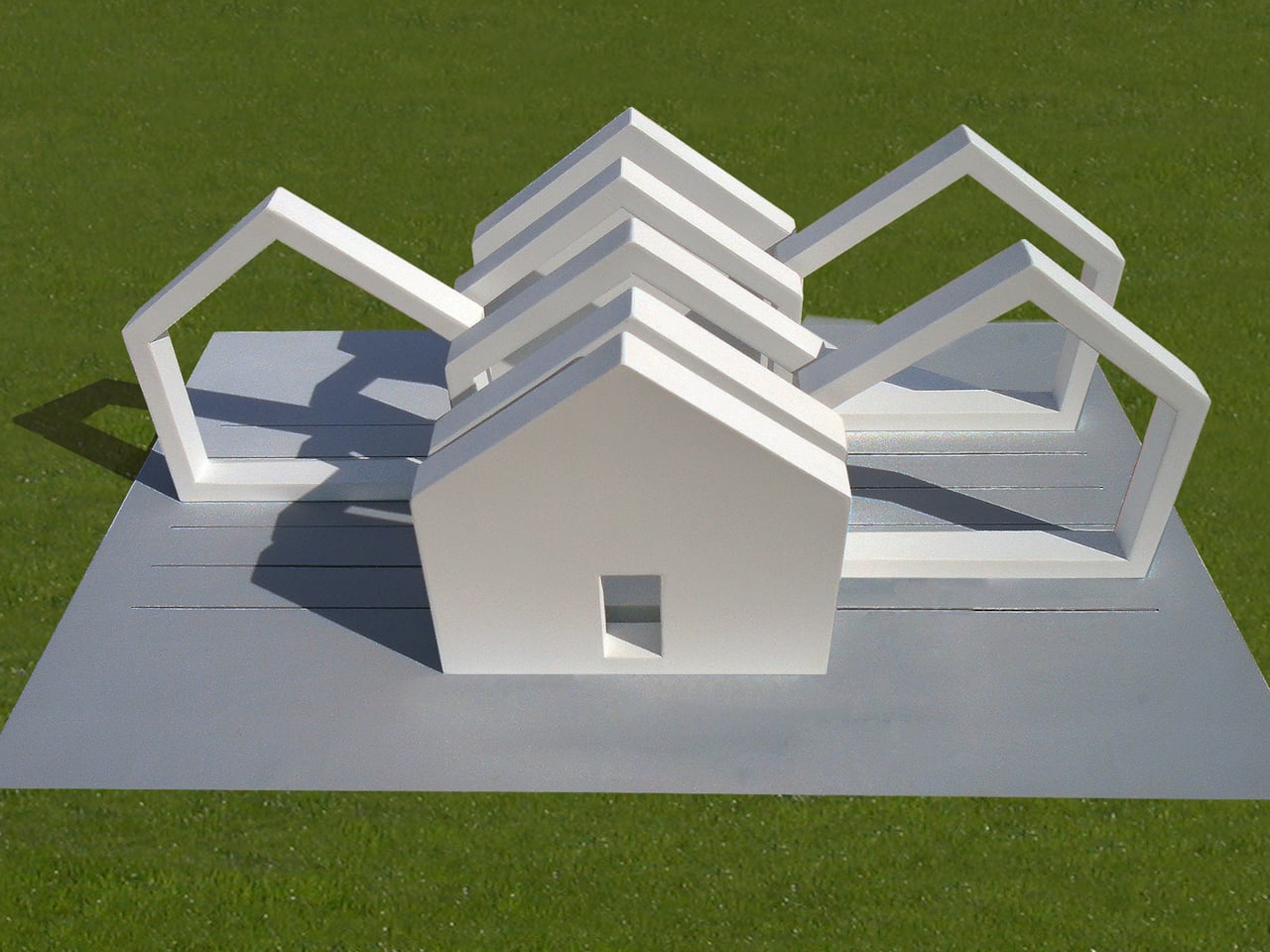
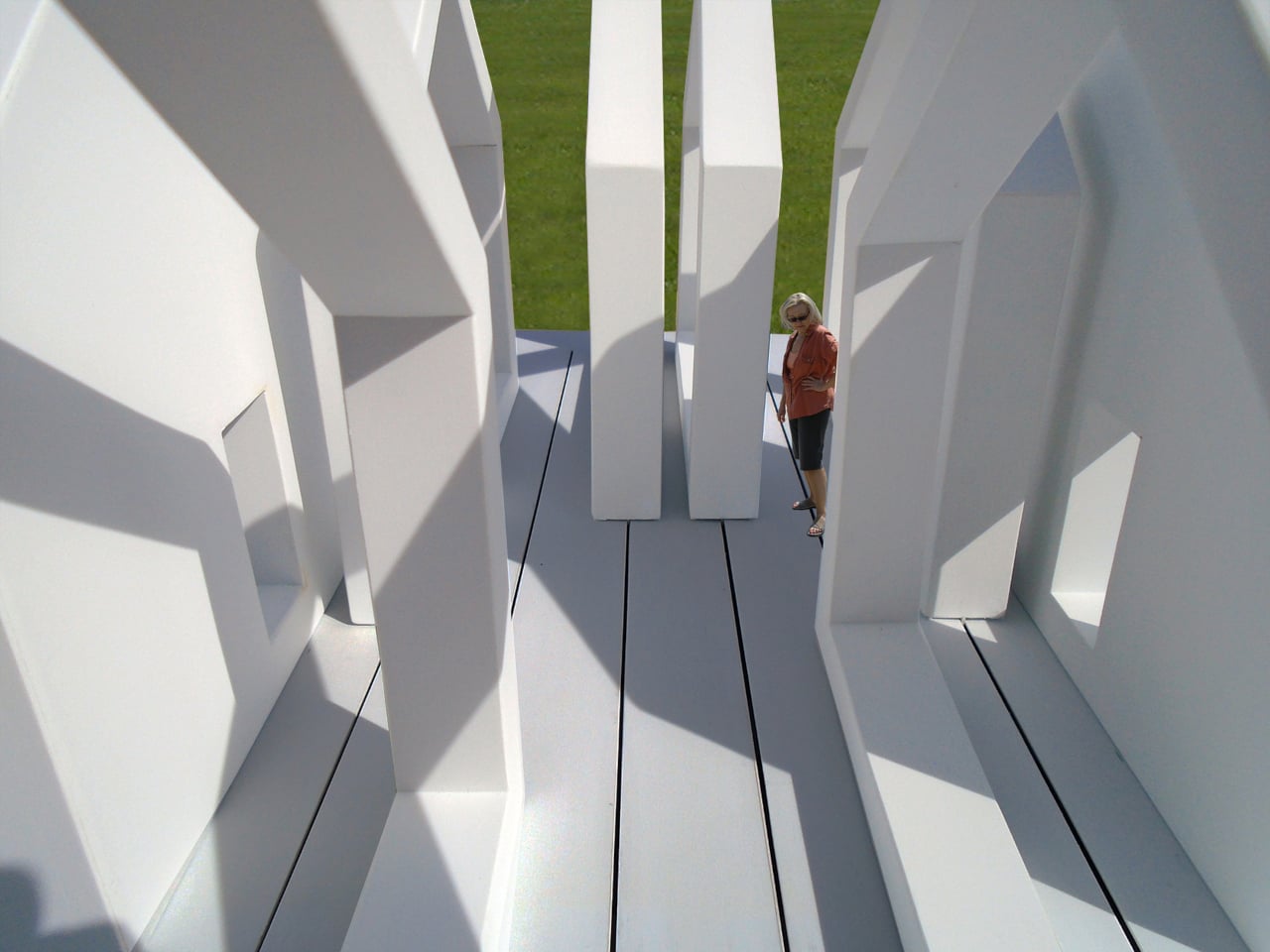
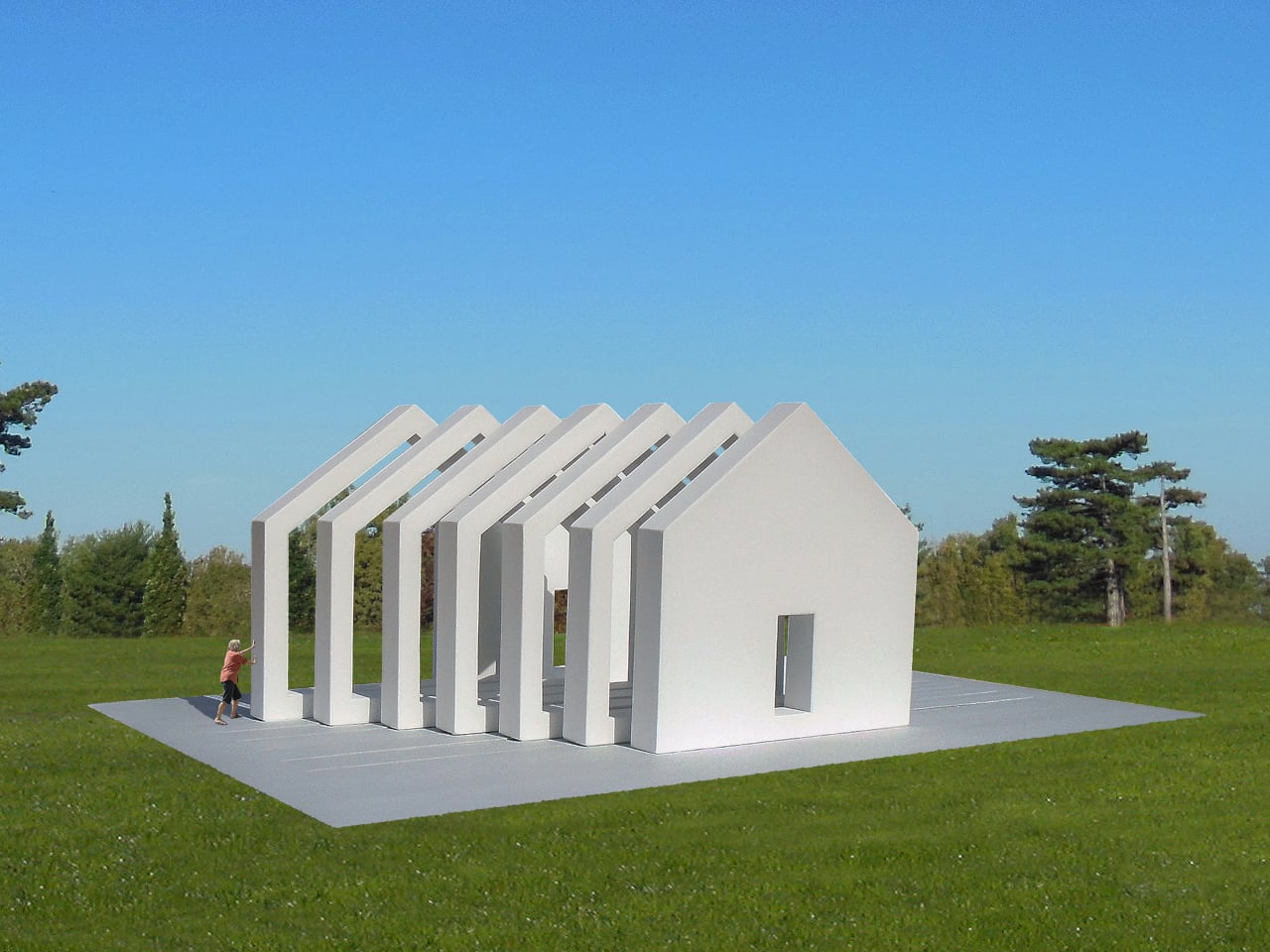
Two of the eight slices are solid white steel panels, one anchoring each end of the structure, both fixed permanently to a concrete pad on the ground. Each solid end has a doorway cut into its center. The six slices between them are open frames, the same house shape rendered as a hollow silhouette, and these slide freely along tracks set into the concrete beneath them.
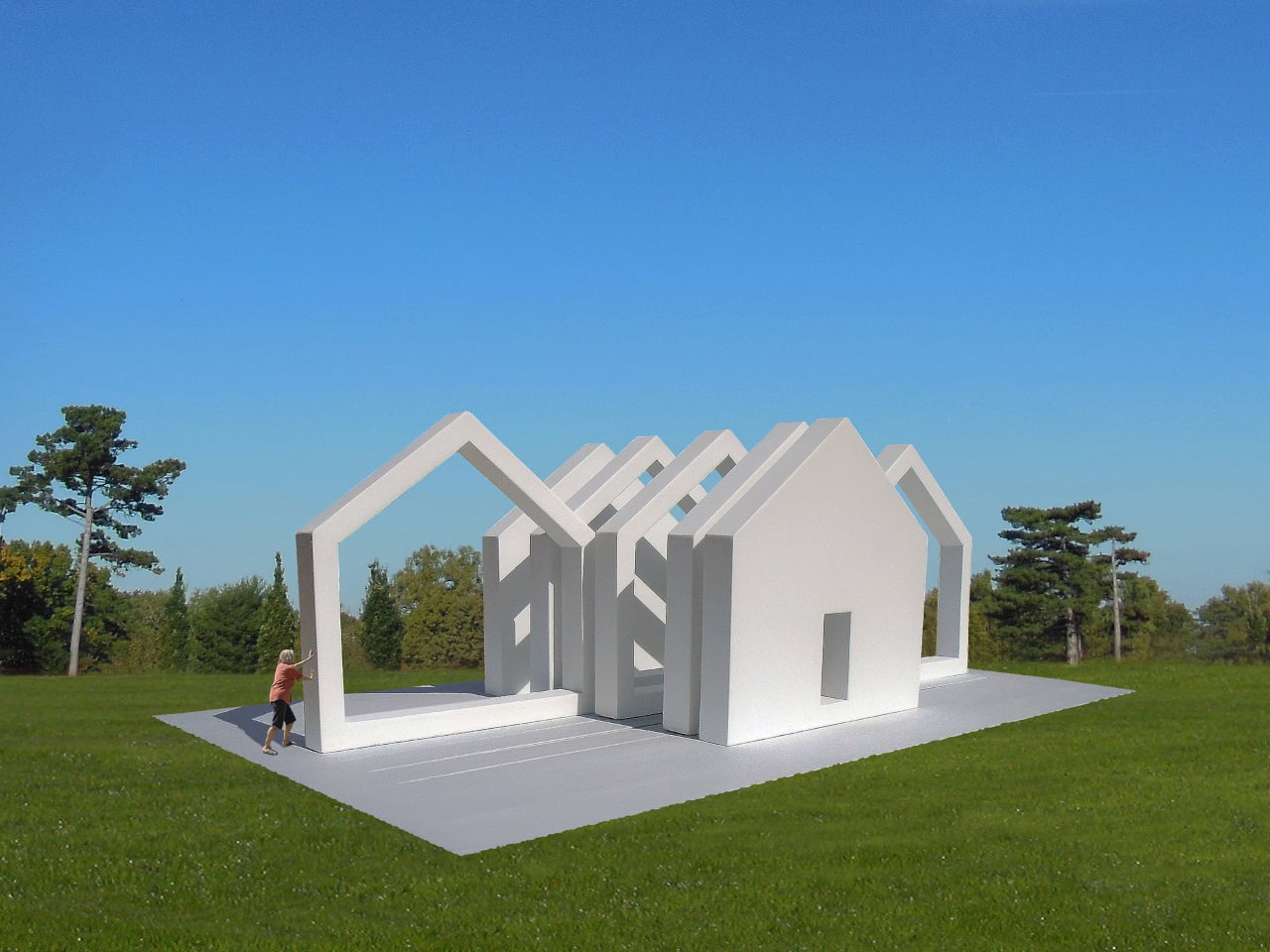
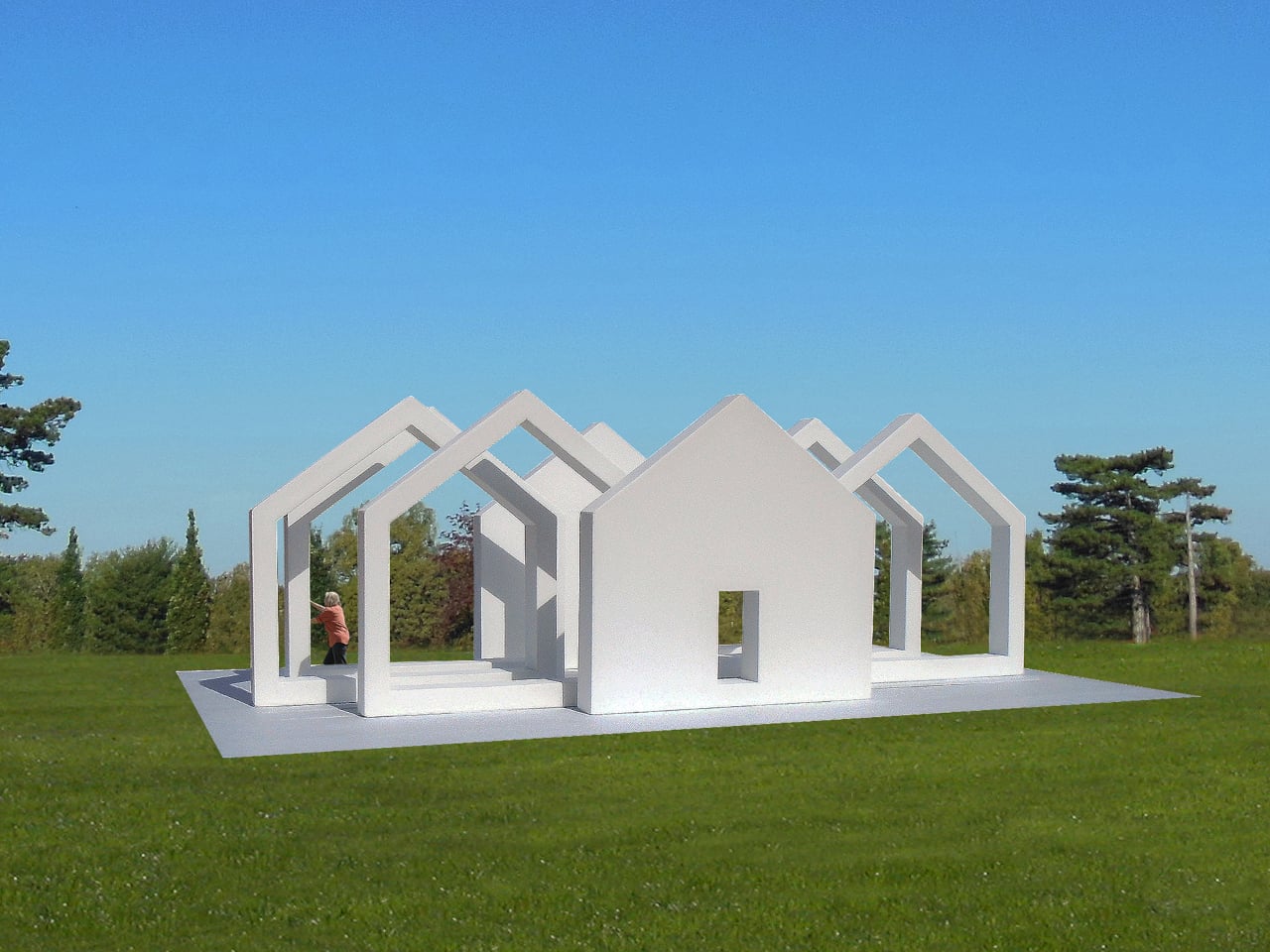
Slide those six frames to one end, and the house snaps back into something close to its recognizable form, dense and legible from a distance. Pull them apart, and they scatter across the pad, creating a sequence of house-shaped thresholds that repeat across the concrete like the same word written over and over with increasing space between each letter. The structure stays the same; the space it makes changes completely.
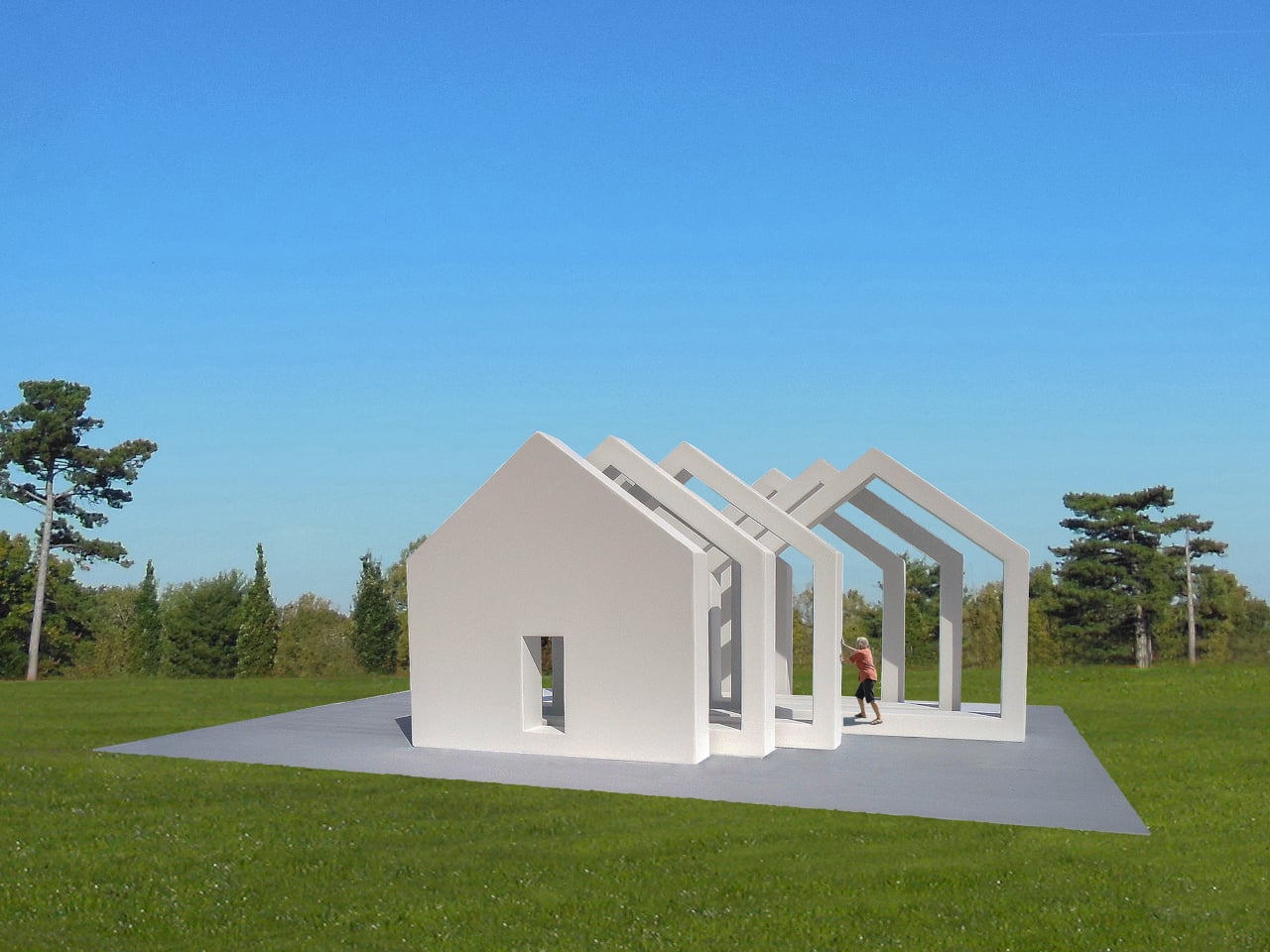
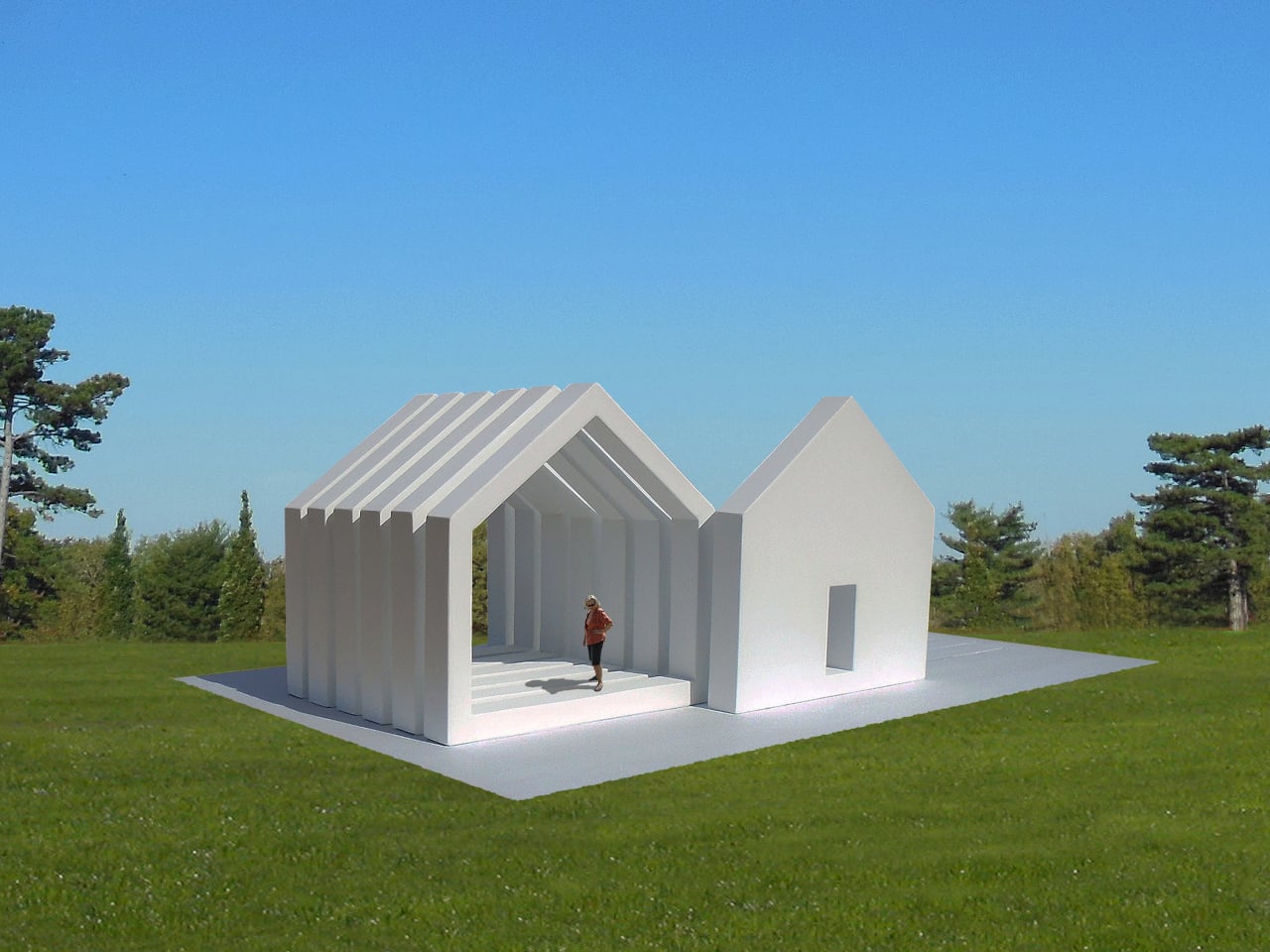
Someone walking through the installation when the frames are spread out passes through threshold after threshold, each one framing a slightly different view of the park, the sky, and anyone else nearby. The frames create enclosed corridors between them when pushed together, and open, almost ceremonial passageways when pulled apart. Moving through the structure is different every visit, depending on how previous visitors left it.
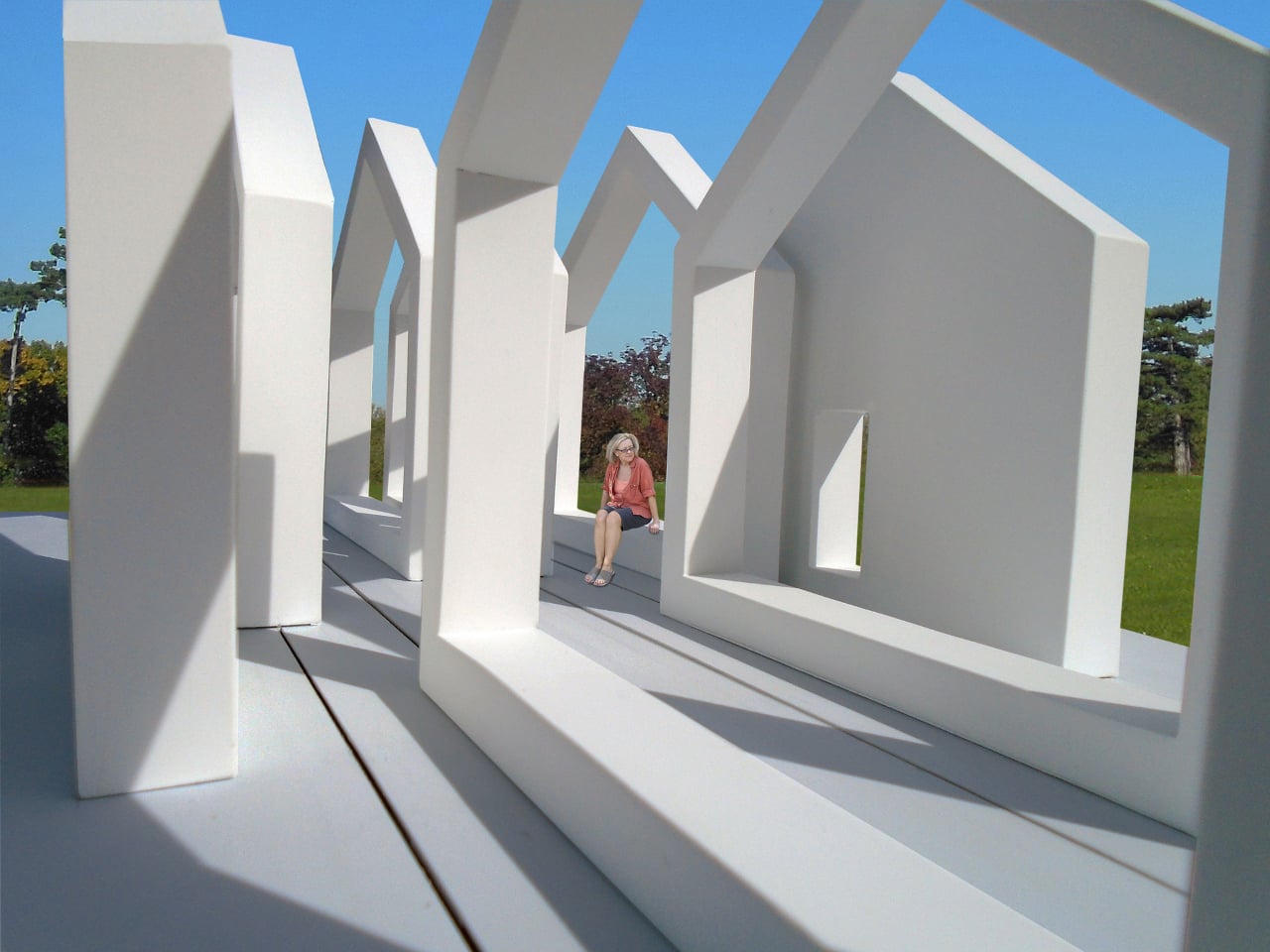
The house shape is the installation’s real subject. It’s one of the first symbols children learn to draw, and one of the most loaded in the human symbolic vocabulary: shelter, family, belonging, property. Breaking it apart and handing the fragments to strangers in a public park is a way of asking what it means without having to say the question out loud, and without prescribing the answer.
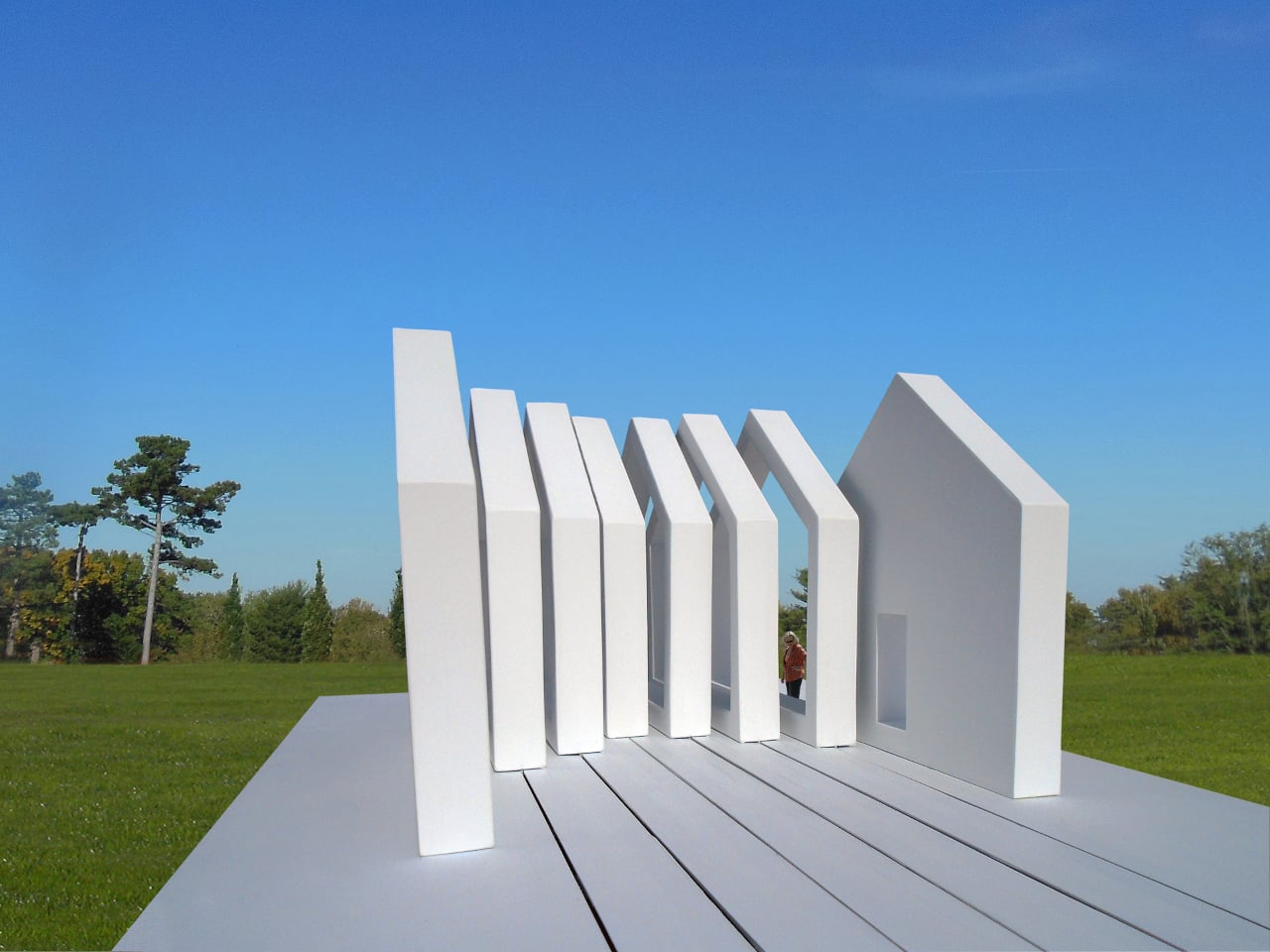
The white painted steel keeps everything visually consistent regardless of how the slices are arranged, meaning no single configuration reads as more “correct” than another. There isn’t a right answer built into the materials. The installation can also be deployed as multiples, several units placed across a park at once, which would multiply its questions the same way the frames multiply the house shape when pulled apart.