Look up at any tram line in the world and you will see the same thing, a cobweb of overhead catenary wires strung between poles, humming with 750 volts and cluttering the sky above every historic square and modern plaza the tram passes through. Bordeaux famously buried its wires underground in 2003 with Alstom’s APS ground-level power system, and cities like Nice, Dubai, Doha, and a handful of Chinese ART deployments have followed with their own variations. Seoul has stayed conspicuously absent from that list, and so has Busan, until now. Citrus Design’s Busan Oryukdo Tram concept is the visible face of Korea’s first commercial catenary-free system, a piece of urban infrastructure that gets to be seen as a sculptural object because nothing is tethering it to the sky. The engineering decision came first, and the design language followed.
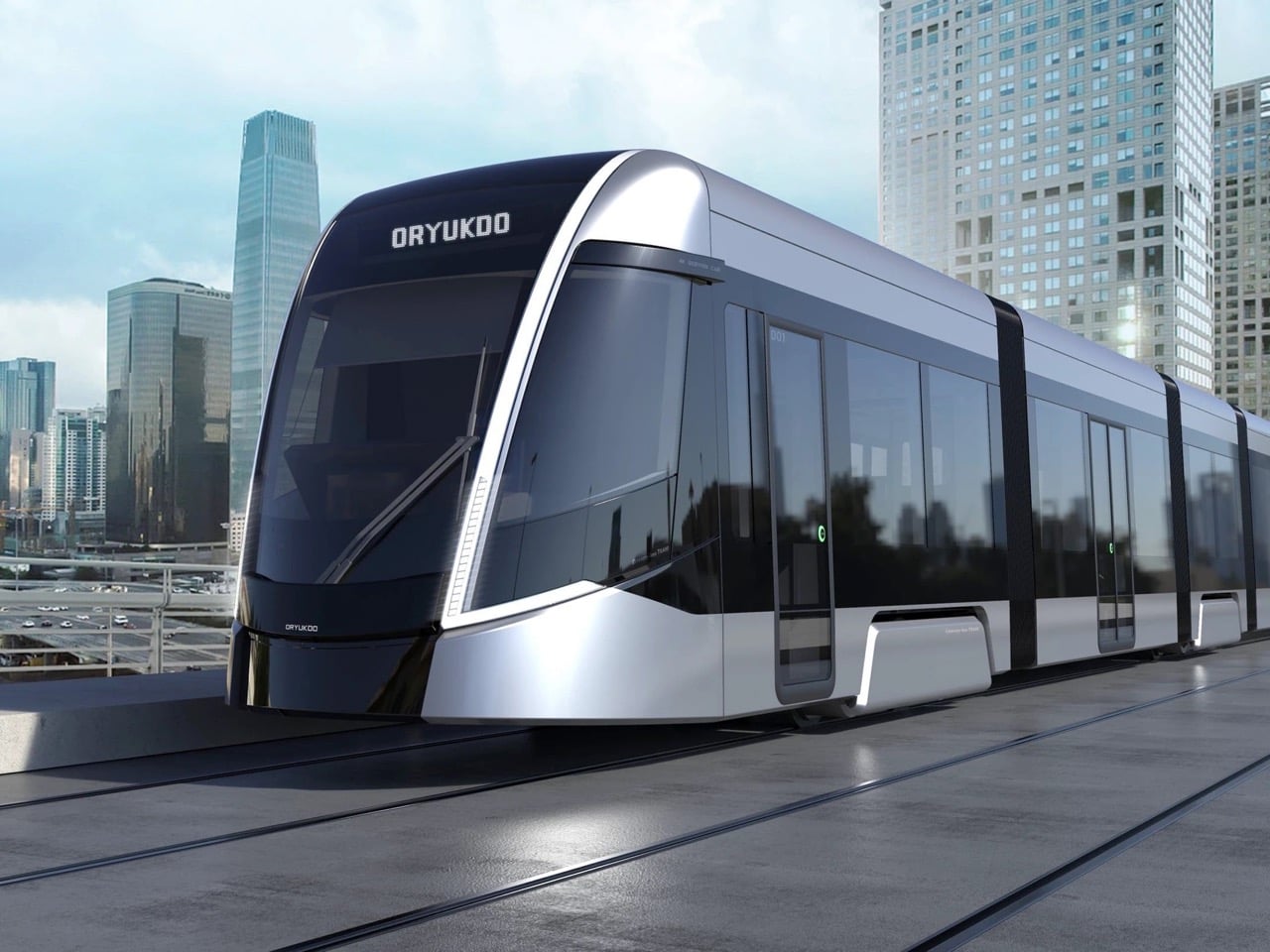
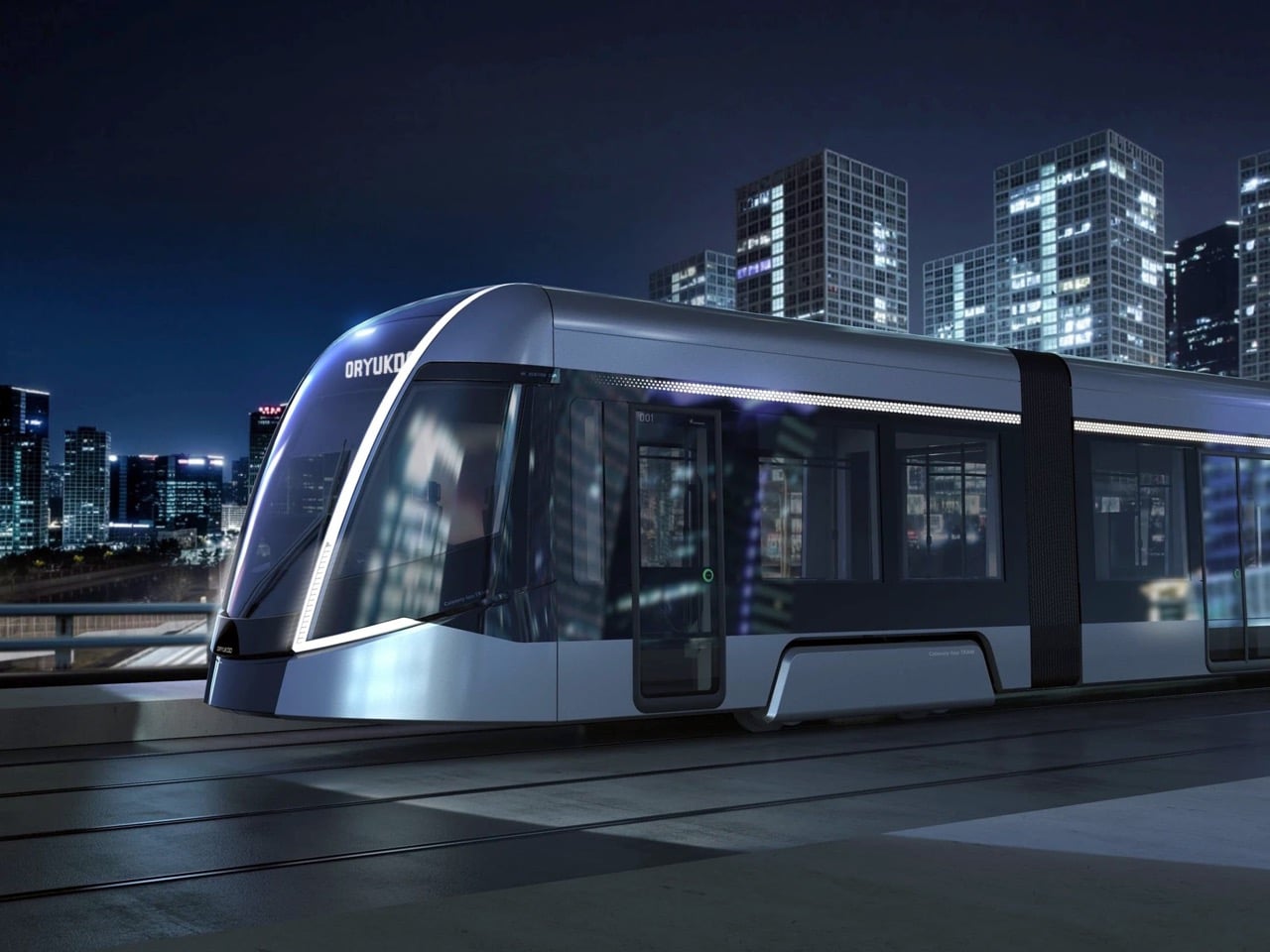
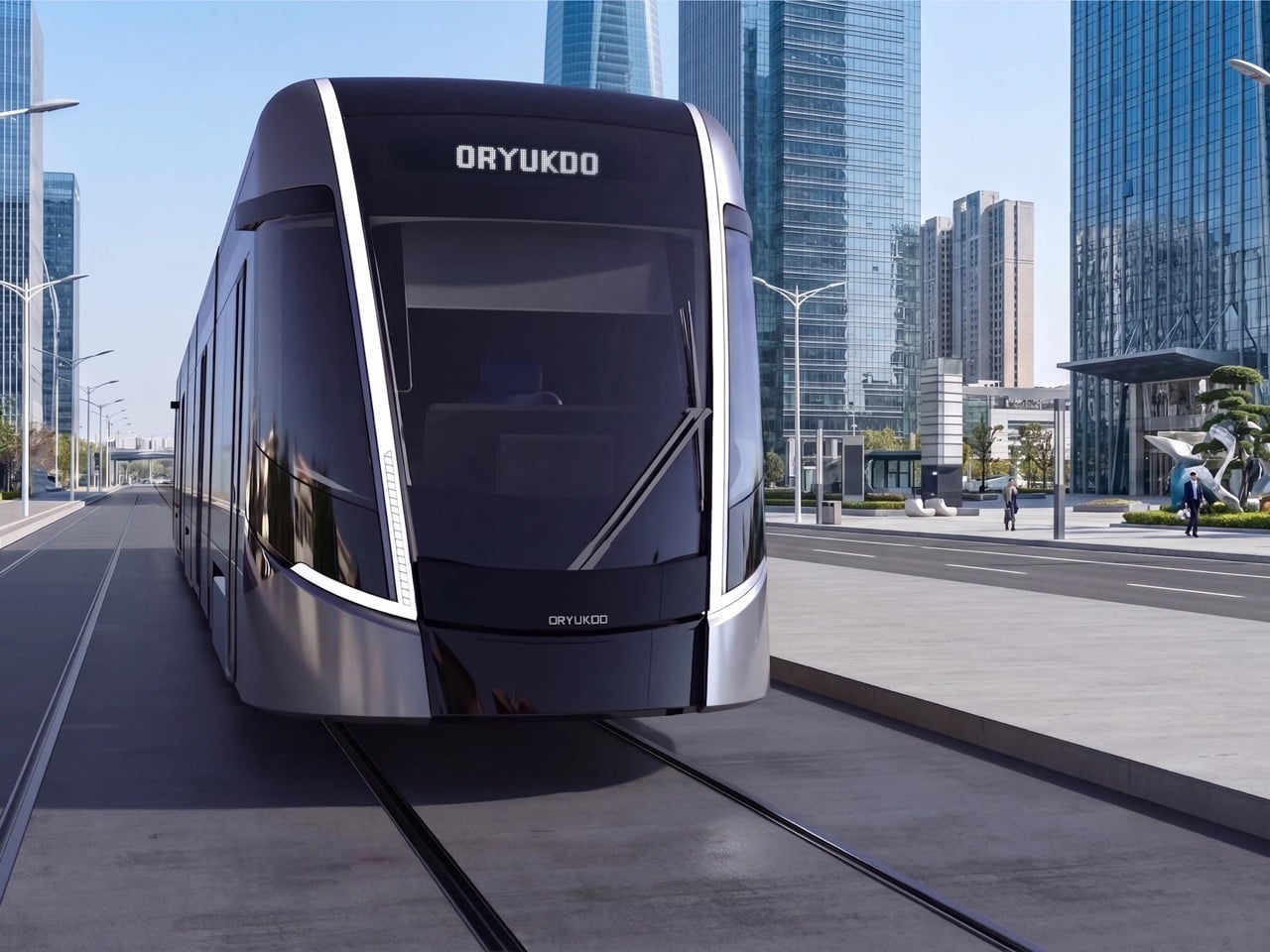
The tram wears a jet-canopy front end, with wraparound black panoramic glass sunk into a silvered metallic body and the ORYUKDO wordmark sitting centered on the nose. The body is fully low-floor, multi-articulated across three sections joined by bellows, and finished in a mirror silver meant to catch and throw back the Busan skyline as it moves. Citrus Design has clearly spent multiple design cycles on the surfacing, because the resolution is at a level trams almost never receive in commercial deployment. The whole package is framed under a city-branding brief titled “Eco-Friendly Future City Busan,” which sounds like typical municipal boilerplate until you realize Busan is actively positioning itself as a design-forward global city in Seoul’s shadow. The Oryukdo becomes rolling infrastructure that carries that argument.
Designer: Citrus Design
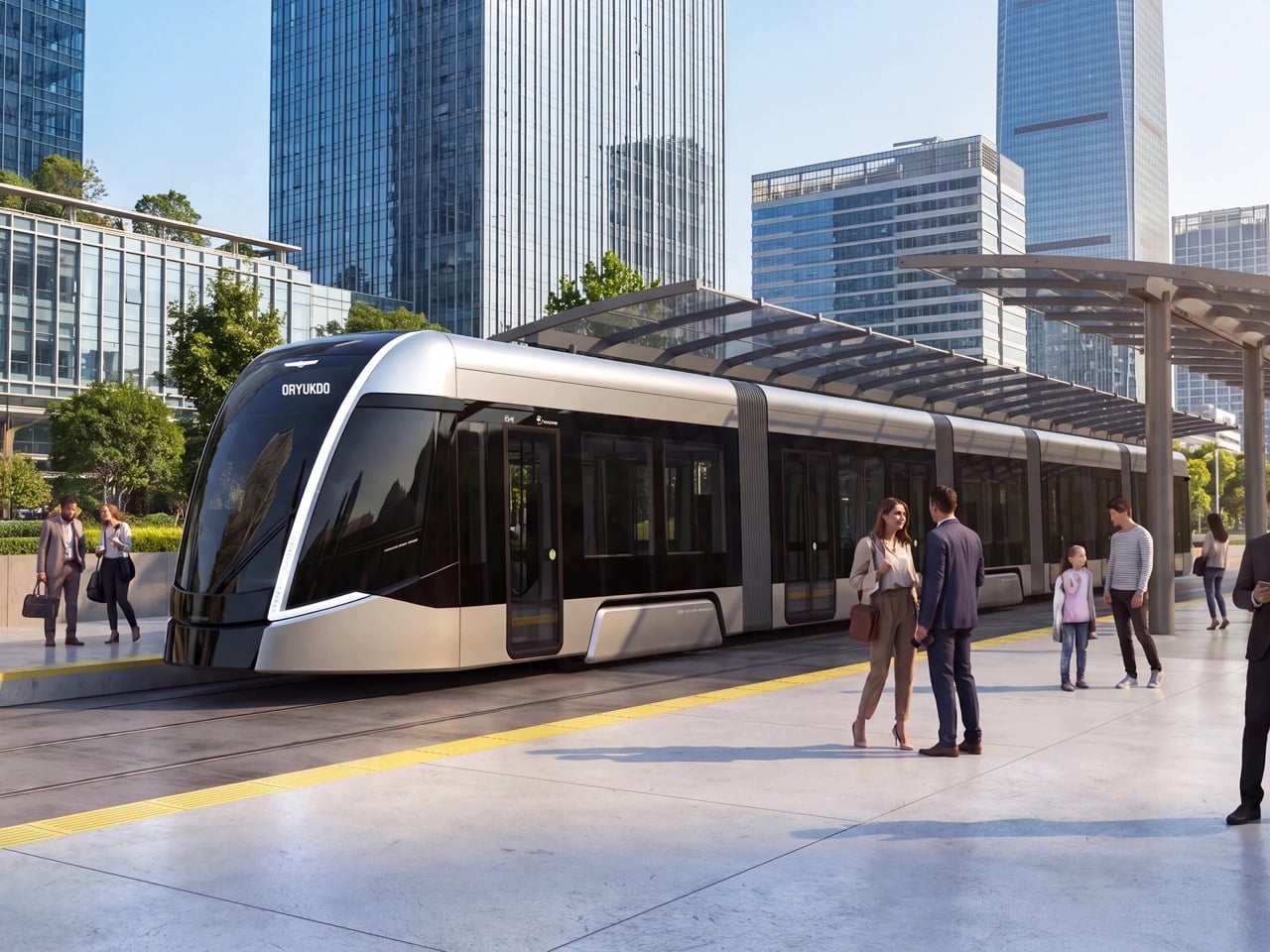
The canopy rakes back at an angle that has zero aerodynamic justification for a vehicle that peaks around 70 km/h, borrowing its geometry directly from fighter aircraft that need to punch through supersonic air. It looks incredible anyway, because the black-glass-in-silver-body graphic reads at pedestrian scale in a way most trams cannot manage. Citrus Design has treated the exterior surfacing as a continuous flow between sections, with the bellows connections deliberately quiet so the tram reads as one long articulated silver form rather than three carriages stuck together. Thin LED headlight strips flank the canopy in uninterrupted lines that echo the ORYUKDO wordmark centered above them. The mirror finish itself becomes a design element, turning every glass tower Busan puts on its skyline into part of the vehicle’s graphic identity.
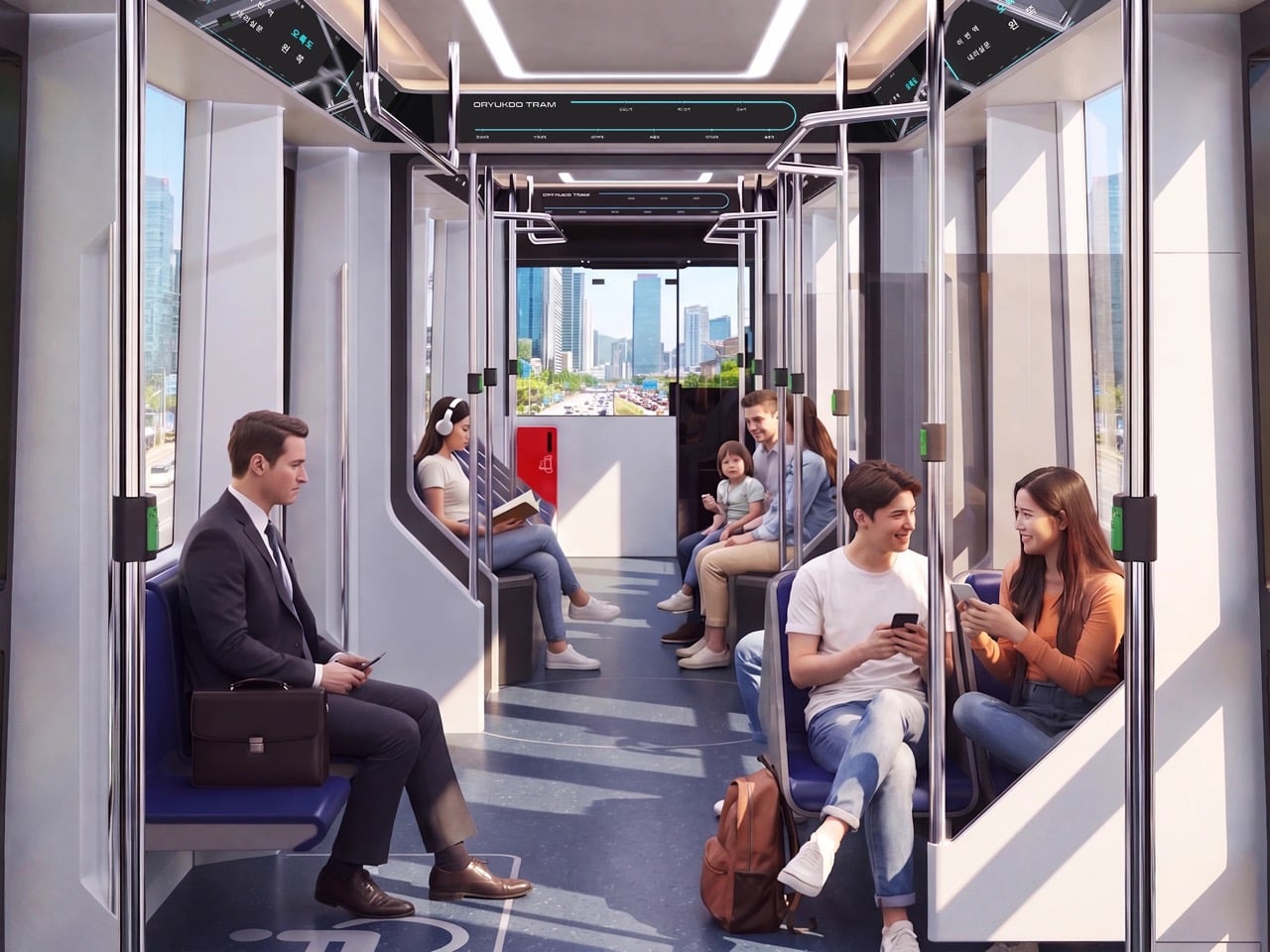
Inside, the cabin drops the industrial-transit atmosphere most trams carry by default and swaps in something closer to a modern airport lounge. A white and light-neutral base color, red graphic accents on grab points and wayfinding, and blue seat surfaces make the interior read as intentionally styled rather than functionally endured. Floor-to-ceiling glazing runs the full length of the body, giving passengers the same panoramic character the driver gets from the canopy up front. Overhead digital displays handle wayfinding and journey information, and the low-floor layout accommodates wheelchair users and strollers without the awkward step-up ramps that plague older tram systems. The three articulated sections are joined by wide bellows connections that passengers can walk through mid-journey, turning the interior into one continuous space rather than compartmentalized carriages.
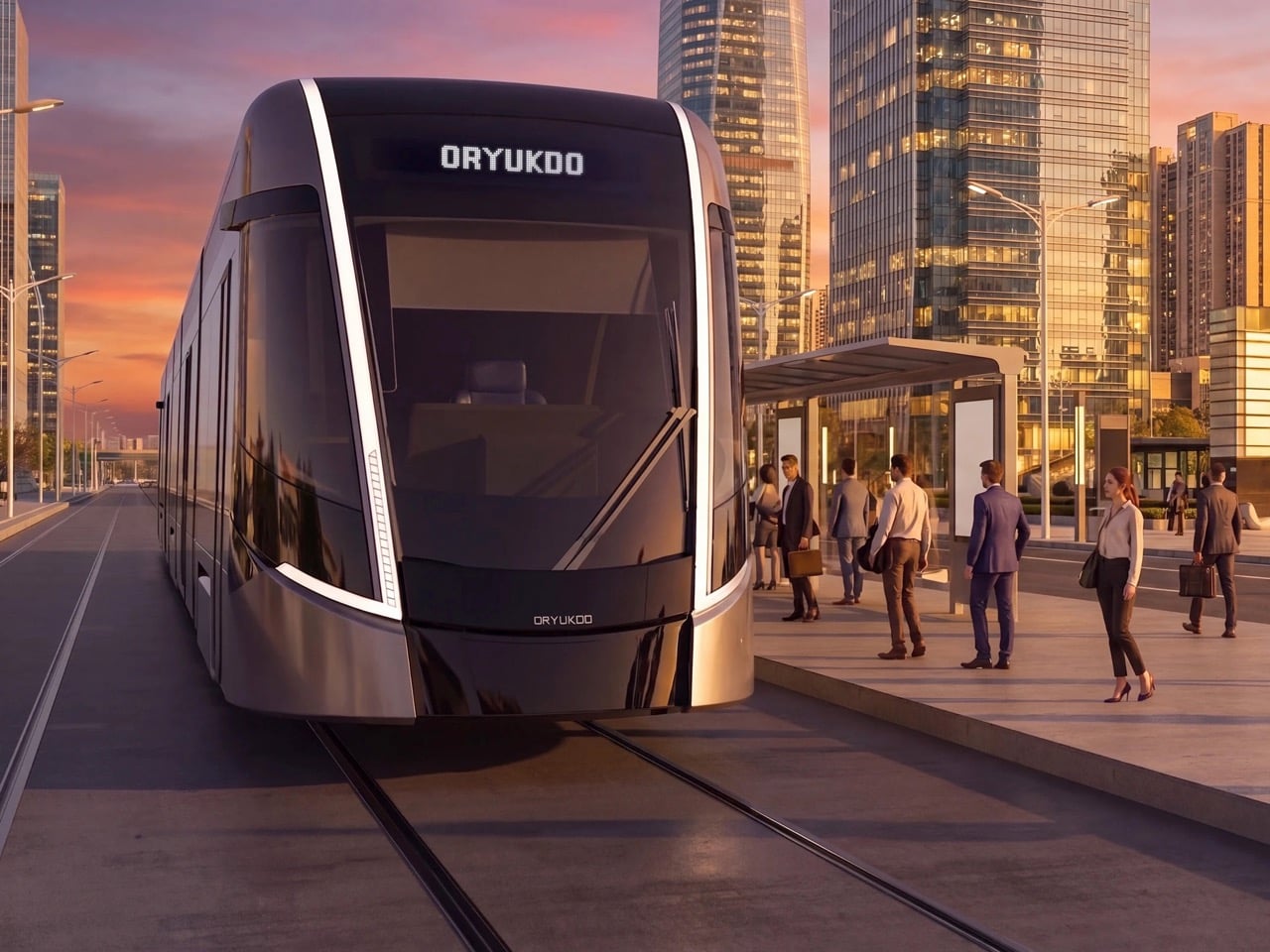
Catenary-free tram systems remain rare enough that Korea joining the club is a genuine transit-infrastructure story, and Busan doing it before Seoul is a subtle but pointed piece of civic one-upmanship. The city has spent years positioning itself as a global player, from its hard-fought and painful 2030 Expo bid to its film festival and port investments, and rolling infrastructure that looks this considered fits that campaign well. Trams almost never receive this level of design attention in the international press, which is strange considering they are among the most visible vehicles in any city that operates them. Citrus Design has treated the Busan Oryukdo Tram as a proper industrial-design commission with a clear brief, a considered CMF strategy, and a design language that will age gracefully. Busan gets a rolling ambassador, and everyone else gets a template for what a modern city tram should actually look like.