Most apartment buildings do their best work from the outside. A striking facade, a bold roofline, some smart use of glass and steel, and the job is considered done. La Vallée Verte, MVRDV’s recently completed residential project in Bordeaux, operates on a completely different logic. From the street, it is almost deliberately restrained. The real show is what you find when you step inside.
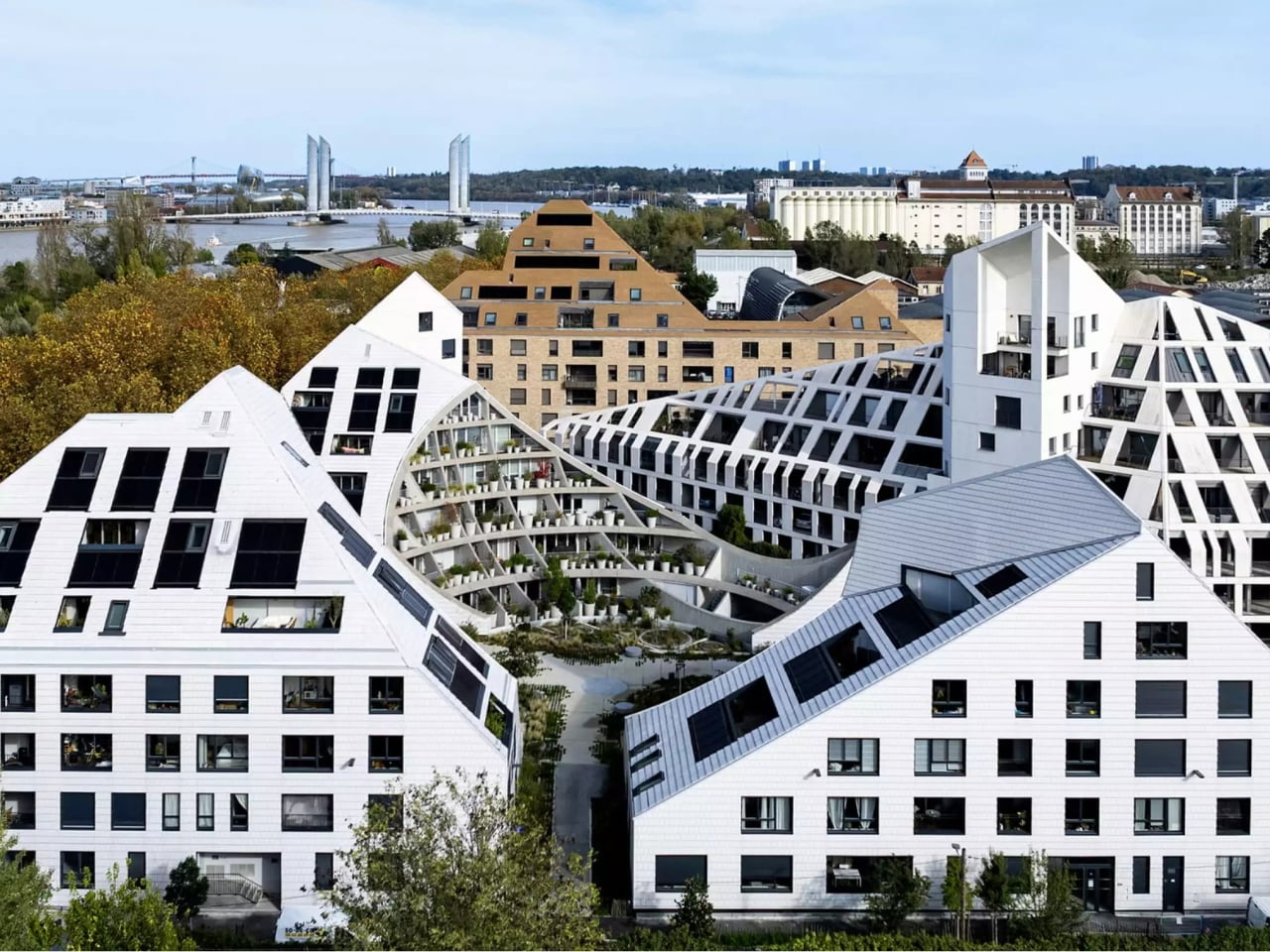
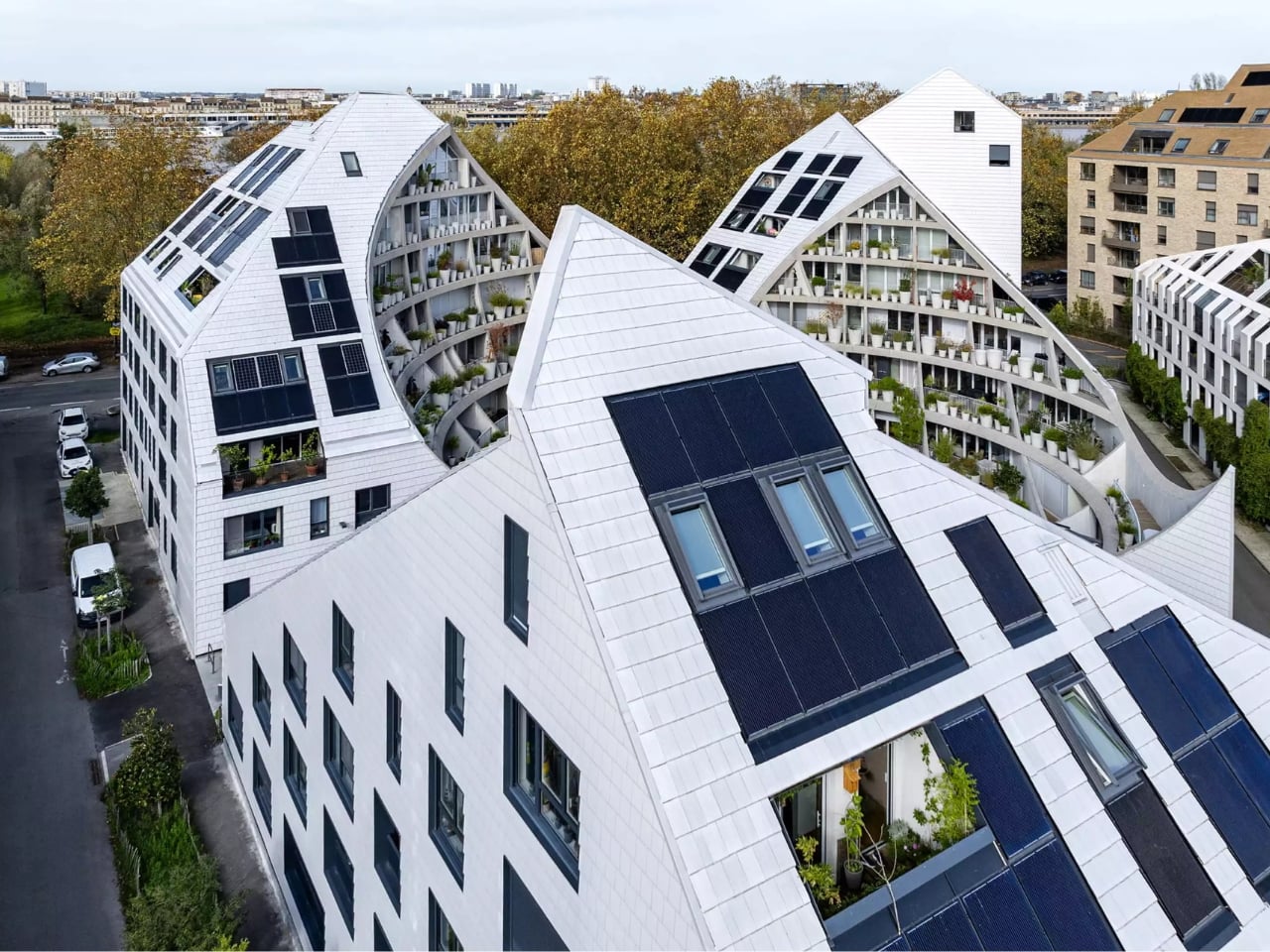
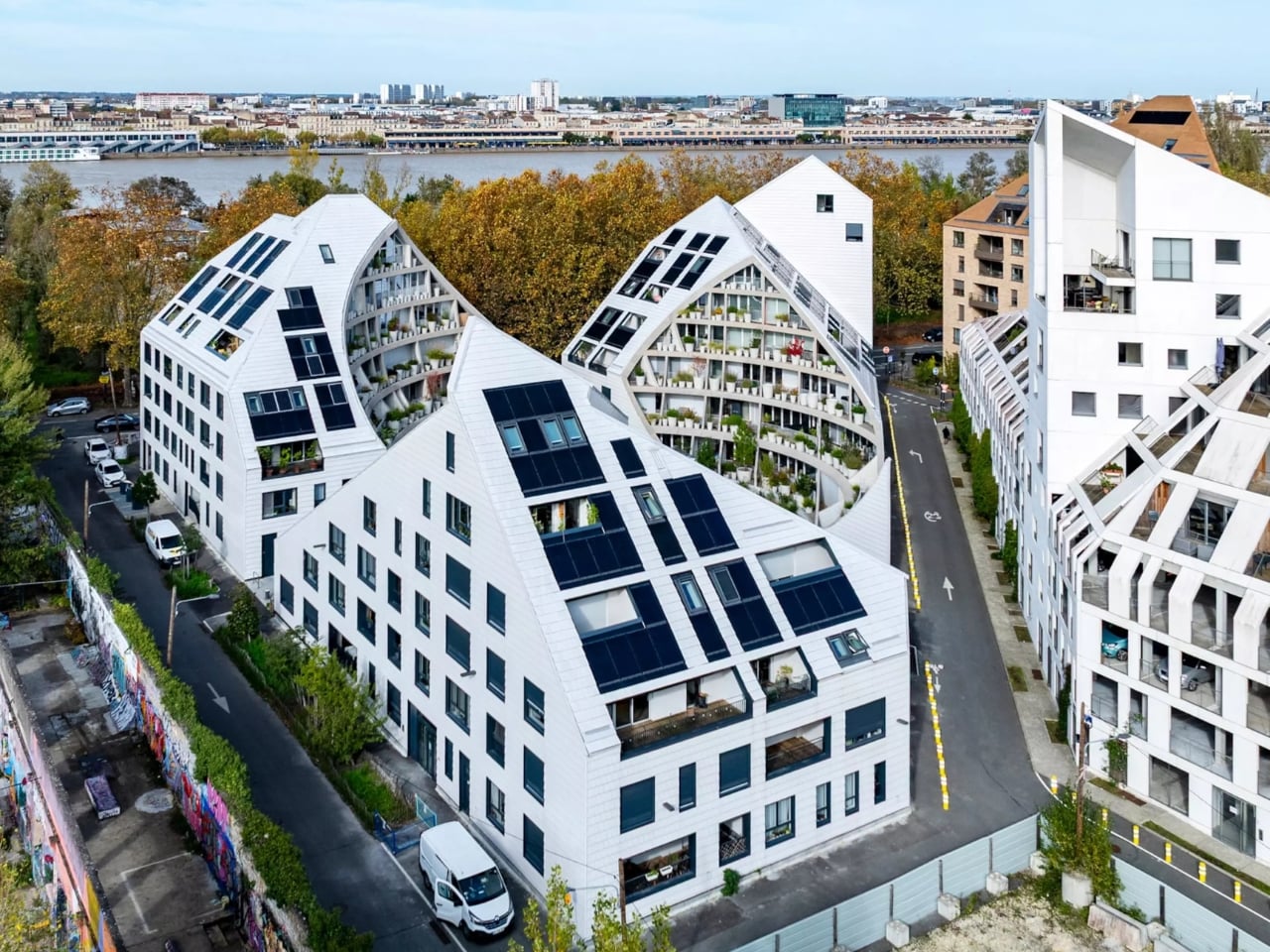
Tucked into the Bastide-Niel district on the right bank of the Garonne River, La Vallée Verte is three angled white buildings arranged on a triangular plot. It sits at the district’s north-western edge, along the Quai des Queyries. MVRDV authored the entire Bastide-Niel masterplan, coordinating 144 different architecture offices to transform a former industrial and military area into a dense, liveable urban district. La Vallée Verte is their own interpretation of the rules they set, which makes it both a residential building and a demonstration project in one.
Designer: MVRDV
The masterplan’s key principle is “suncuts,” a parametric design method where each building’s massing is carved and angled to maximise sunlight access and prevent neighbouring structures from being overshadowed. MVRDV founding partner Winy Maas describes the resulting roofscape as “like icebergs” echoing the geometry of the old city. It’s a compelling visual concept and a genuinely useful one, a combination that doesn’t come around as often as it should.
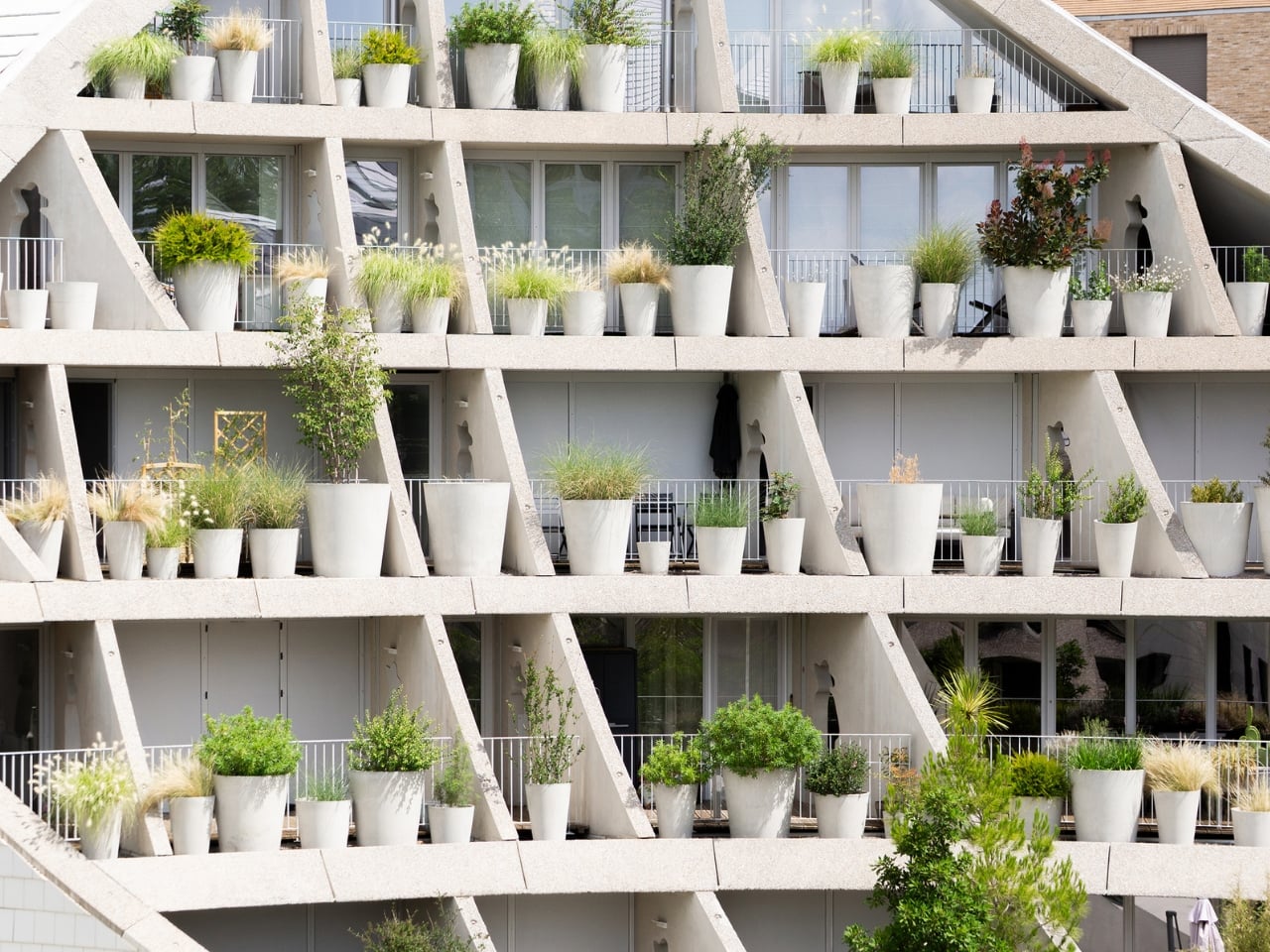
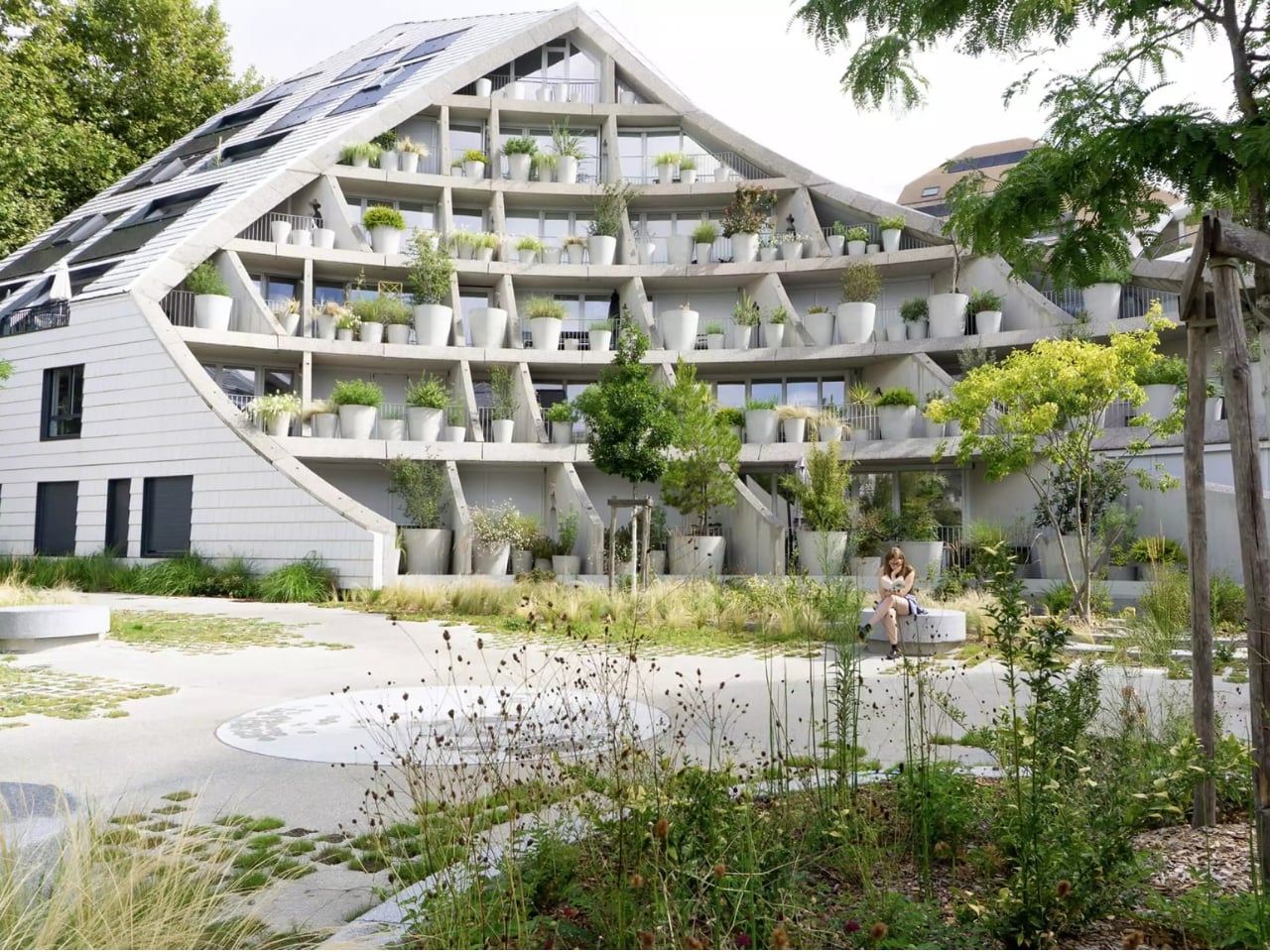
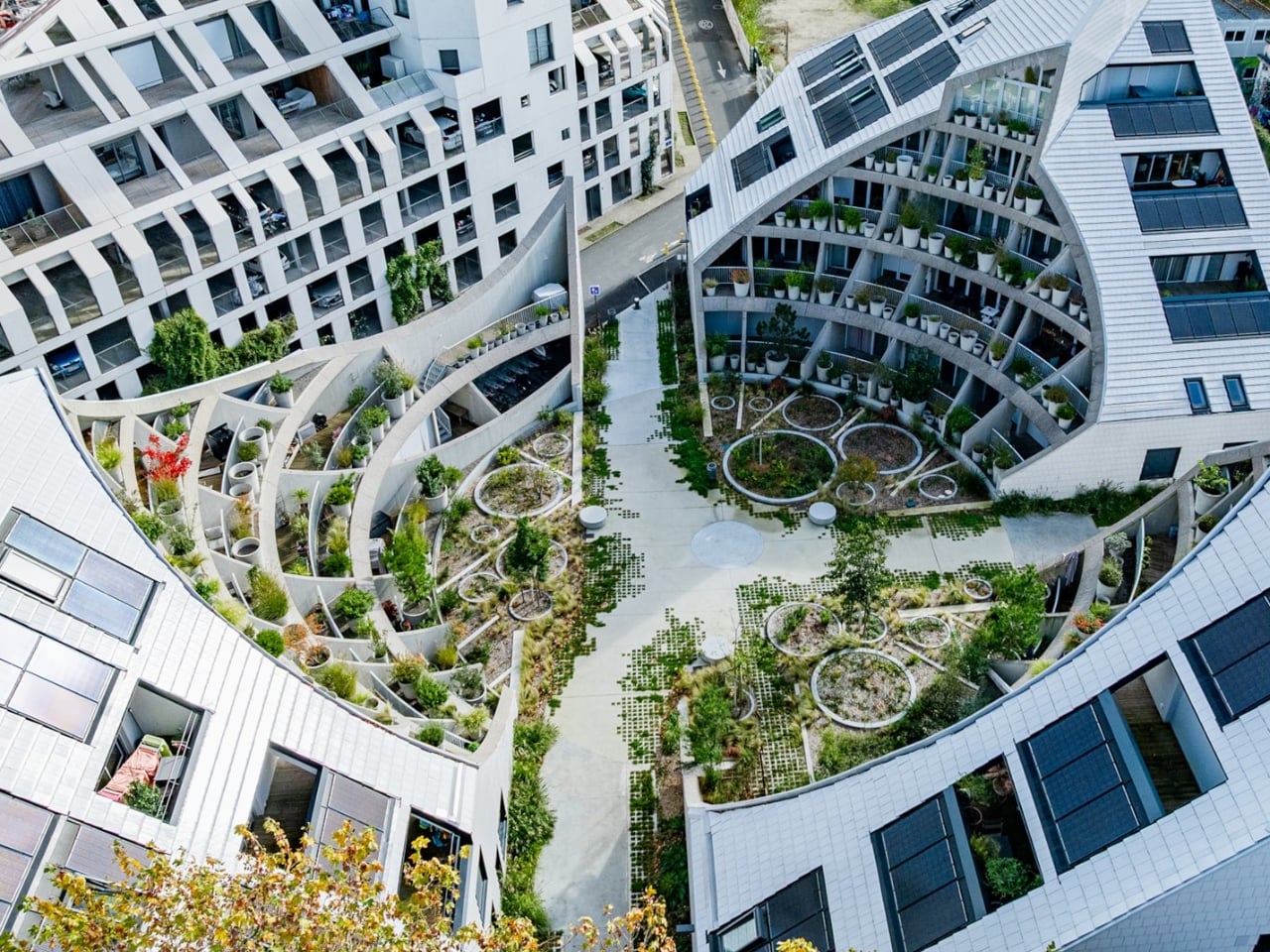
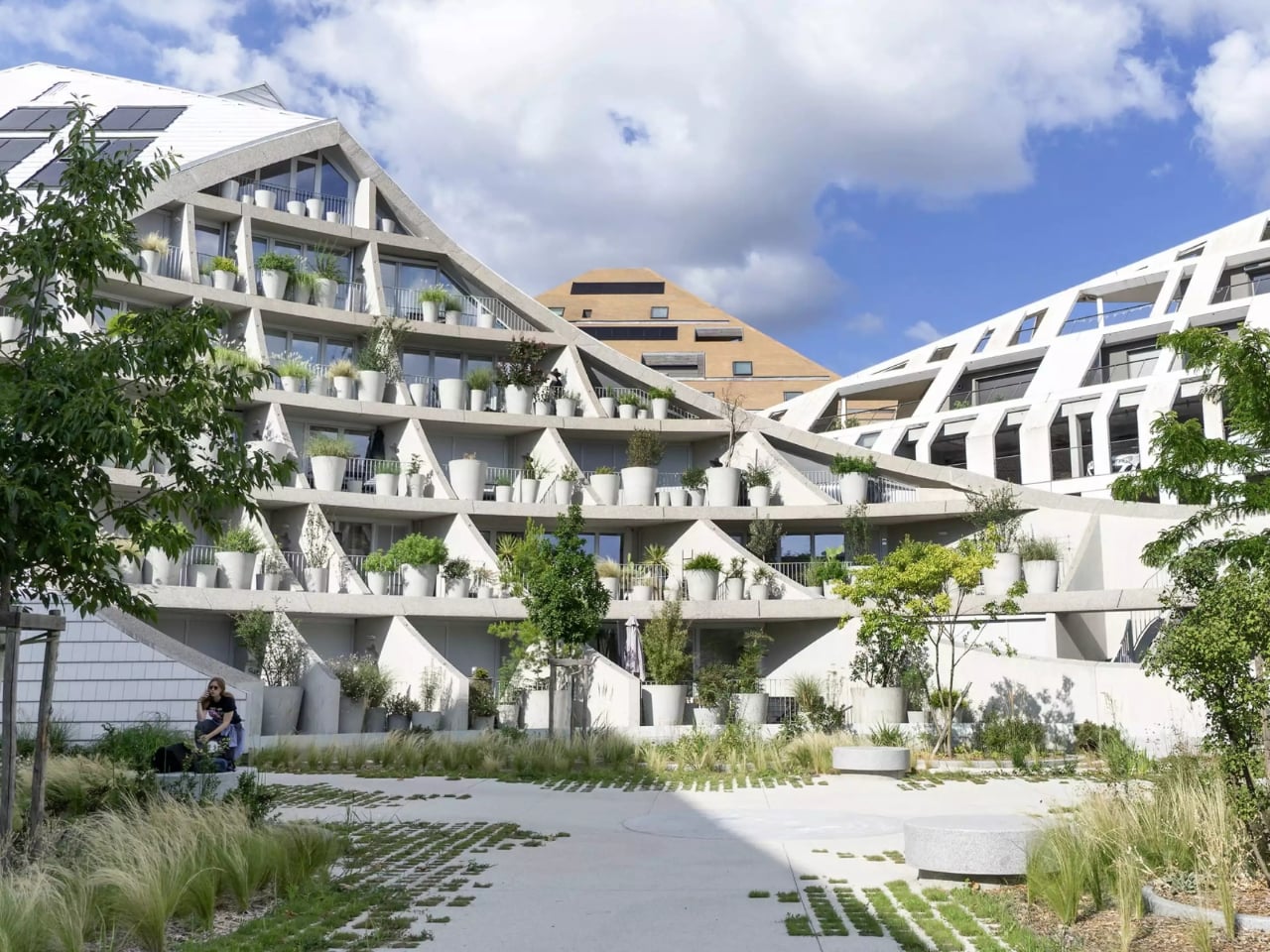
The suncuts define the exterior. But the interior is the actual idea. The three buildings encircle a circular courtyard that MVRDV calls a “crater,” a lush park-like space with plants covering every level of the inward-facing facades. Terraces cascade downward, each loaded with pots ranging from flowering shrubs to small trees, with evergreen and deciduous species mixed together to replicate a natural valley landscape at a building scale. The varying plant types at different heights support biodiversity, which at this point feels less like a bonus feature and more like a baseline expectation we should be holding all new housing to.
Seventy apartments of varying sizes are spread across the three buildings, intended to attract a genuine mix of residents: single first-time buyers, families, and older people. The idea is a building that ages well with the people inside it. A day-care centre occupies the ground floor of one block, opening directly onto the courtyard. That programming decision alone says something. Shared green space tends to feel incidental in most housing developments, an amenity tacked on after the real decisions are made. Here, it’s genuinely central to how the building functions.
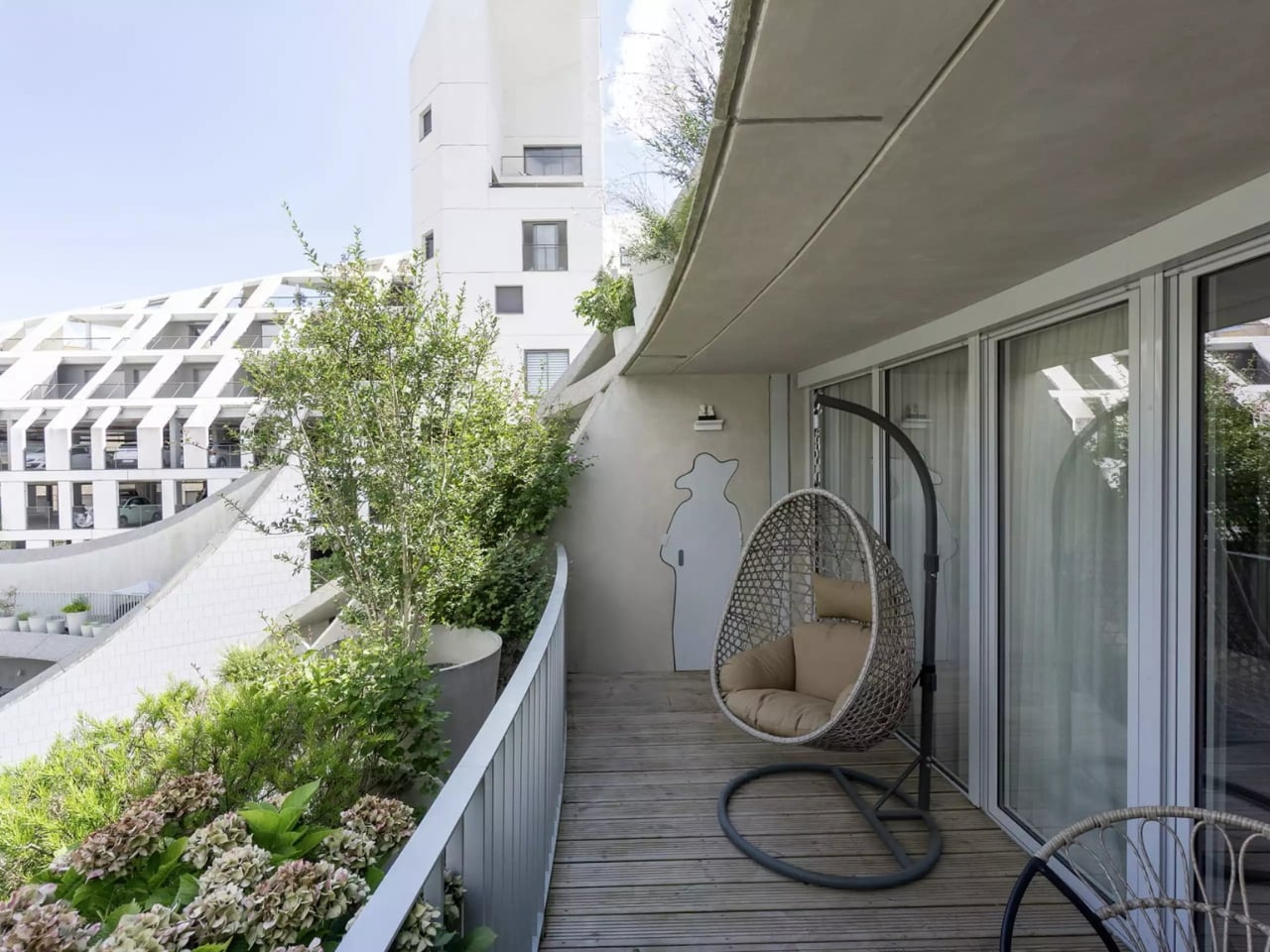
One detail stands out above everything else. Professional gardeners need access to those tiered terraces, so MVRDV cut openings through the structural walls and added steel doors between neighbouring balconies to create a maintenance route. Practical, necessary. What makes it quietly wonderful is that those doorways are shaped like the silhouette of a person wearing a wide-brimmed hat. It’s a small gesture, but it tells you something: the architects were thinking about the gardeners too, not just the residents. The people who will keep that valley alive are written into the architecture itself.
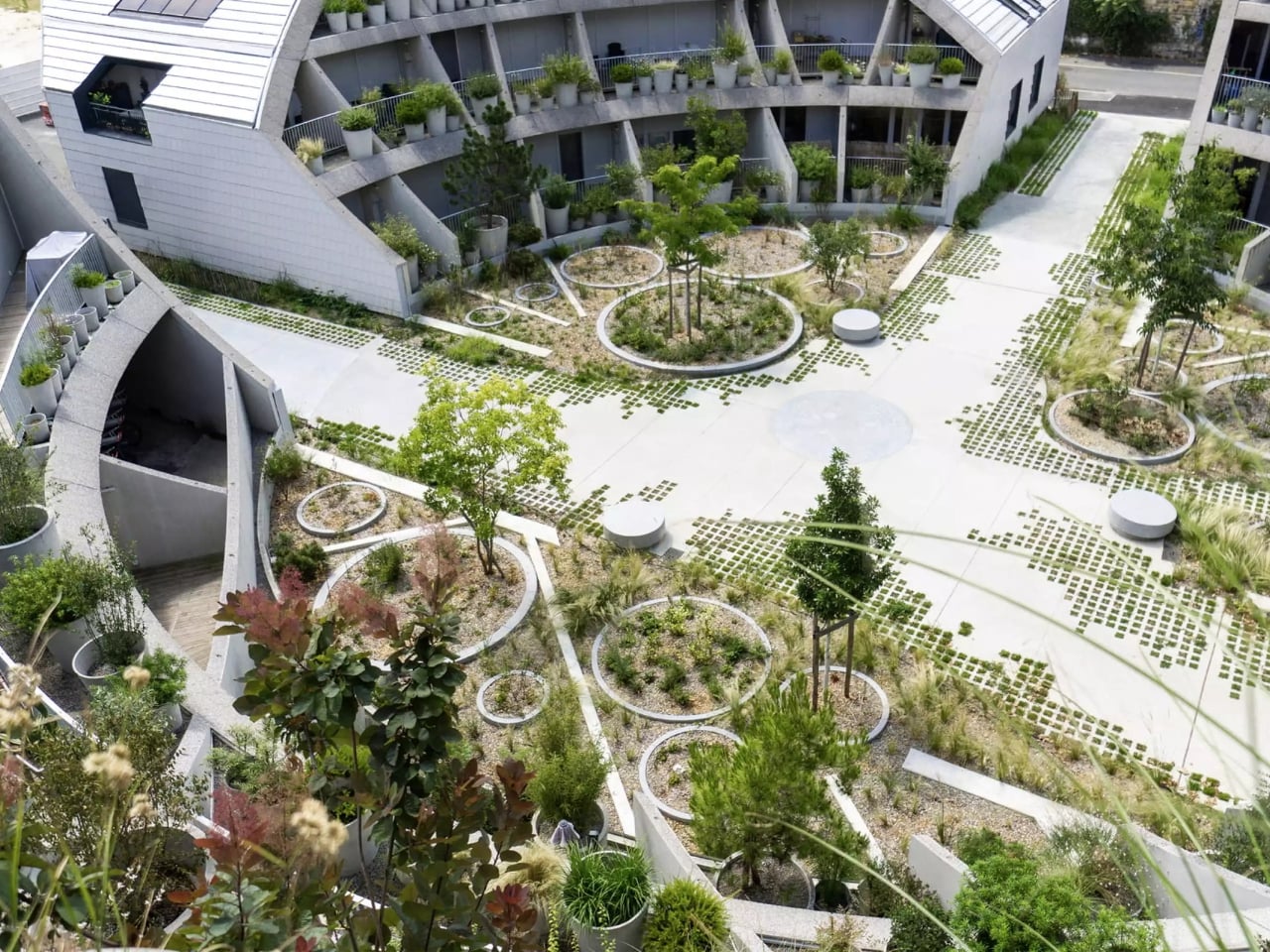
The environmental considerations are thorough throughout. La Vallée Verte sits in the Garonne River floodplain, so ground-floor apartments are raised to allow water to move through the site during flood events. The streetscape is porous to absorb rainwater. Parking is placed in an above-ground structure rather than underground, reducing both flood exposure and embodied carbon. District heating and photovoltaic panels round out the energy strategy. The broader Bastide-Niel district holds France’s EcoQuartier certification, and La Vallée Verte earns its place within it.
The courtyard is the image that will travel, the shot that gets shared, the thing people point to as the concept. But what makes La Vallée Verte worth paying attention to is how methodically everything else was thought through to support it. The suncut geometry, the flood adaptations, the gardener’s route, the mix of apartment sizes. Good design usually has one clear idea at its centre. Great design makes sure everything around that idea is working just as hard.