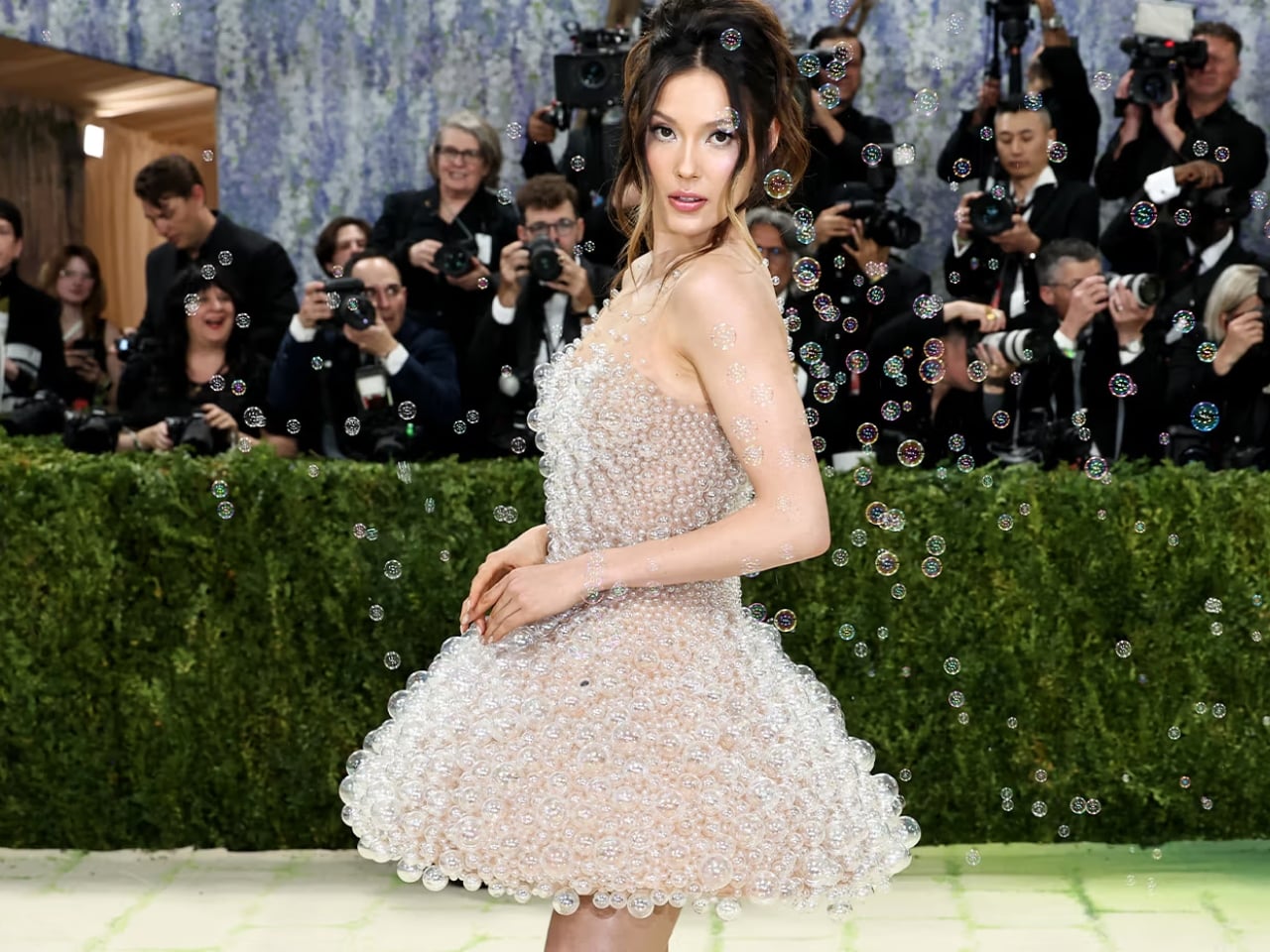
The Met Gala is probably the most popular and glamorous fashion event in the Western world. Whichever way you feel about the organizers and having such a lavish event in these times, you can’t deny that it is very much talked about, especially on social media, due to the personalities who attend and, of course, what they’re wearing.
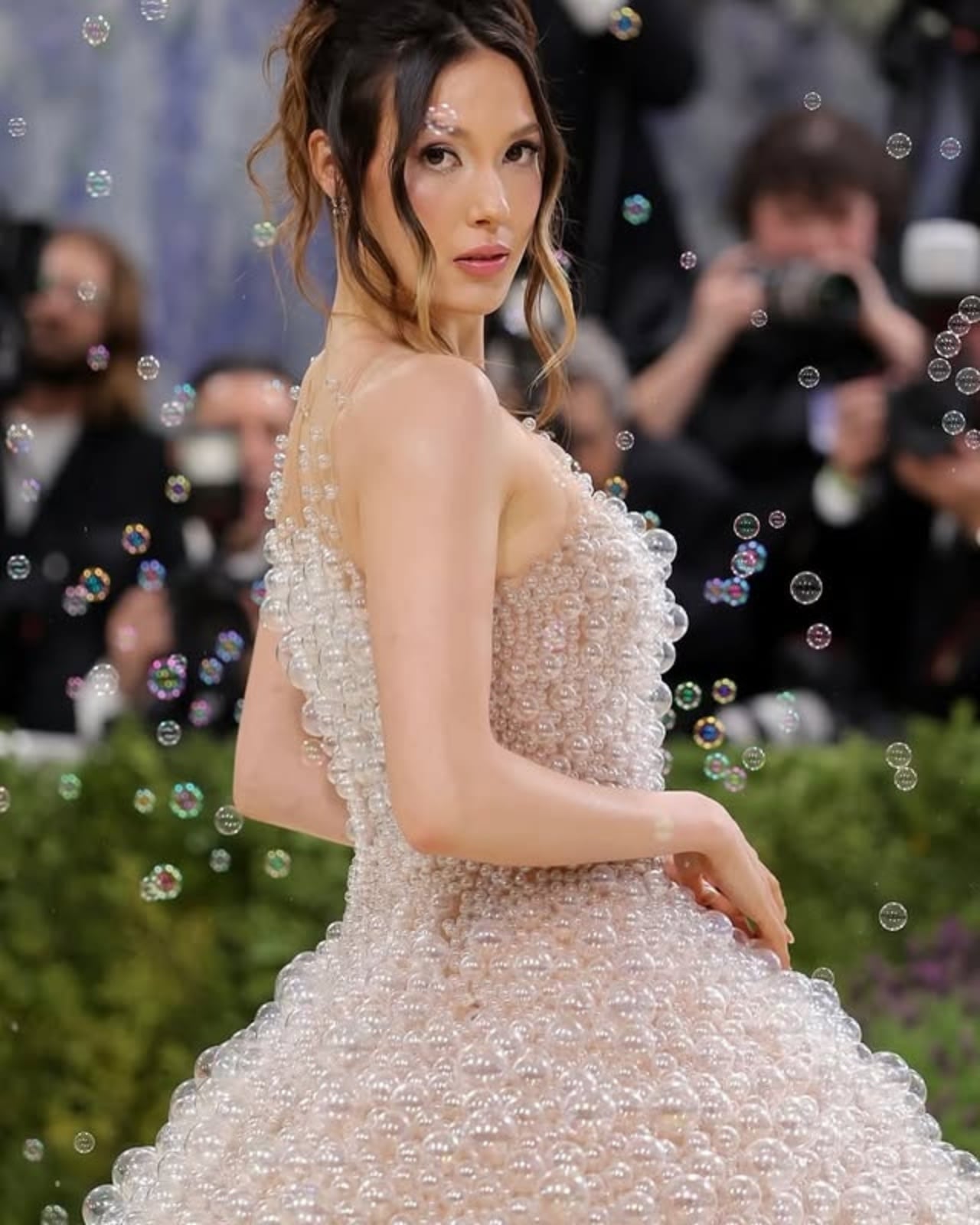
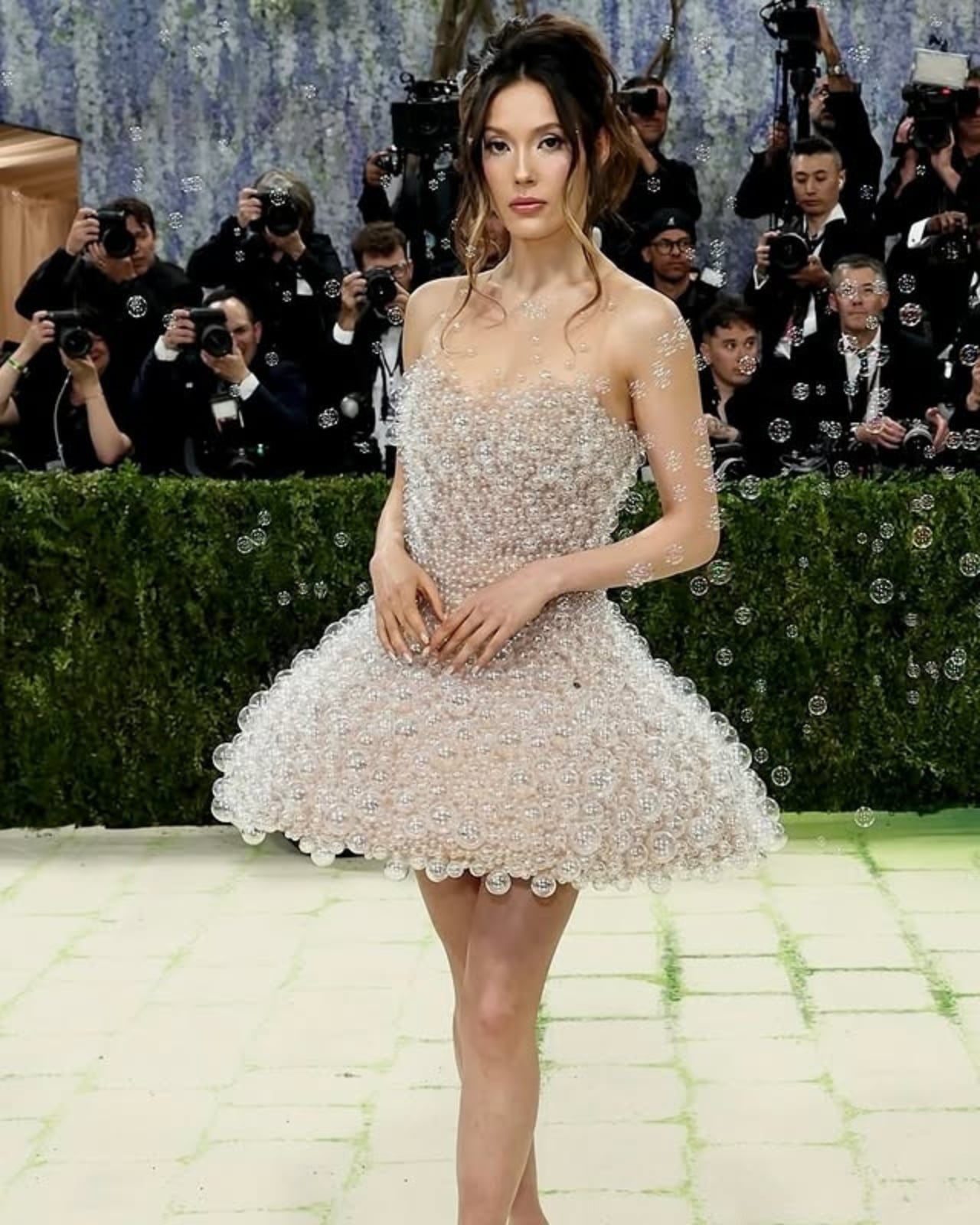
This event is also a chance for designers to showcase their more experimental works. One of the most eye-catching and interesting dresses we saw this year is the Airo dress, worn by Olympic freestyle skier and model Eileen Gu and designed by Iris van Herpen in collaboration with artist duo A.A. Murakami. The dress features 15,000 iridescent glass bubbles and, believe it or not, it actually released real floating bubbles live on the red carpet.
Designer: Iris van Herpen
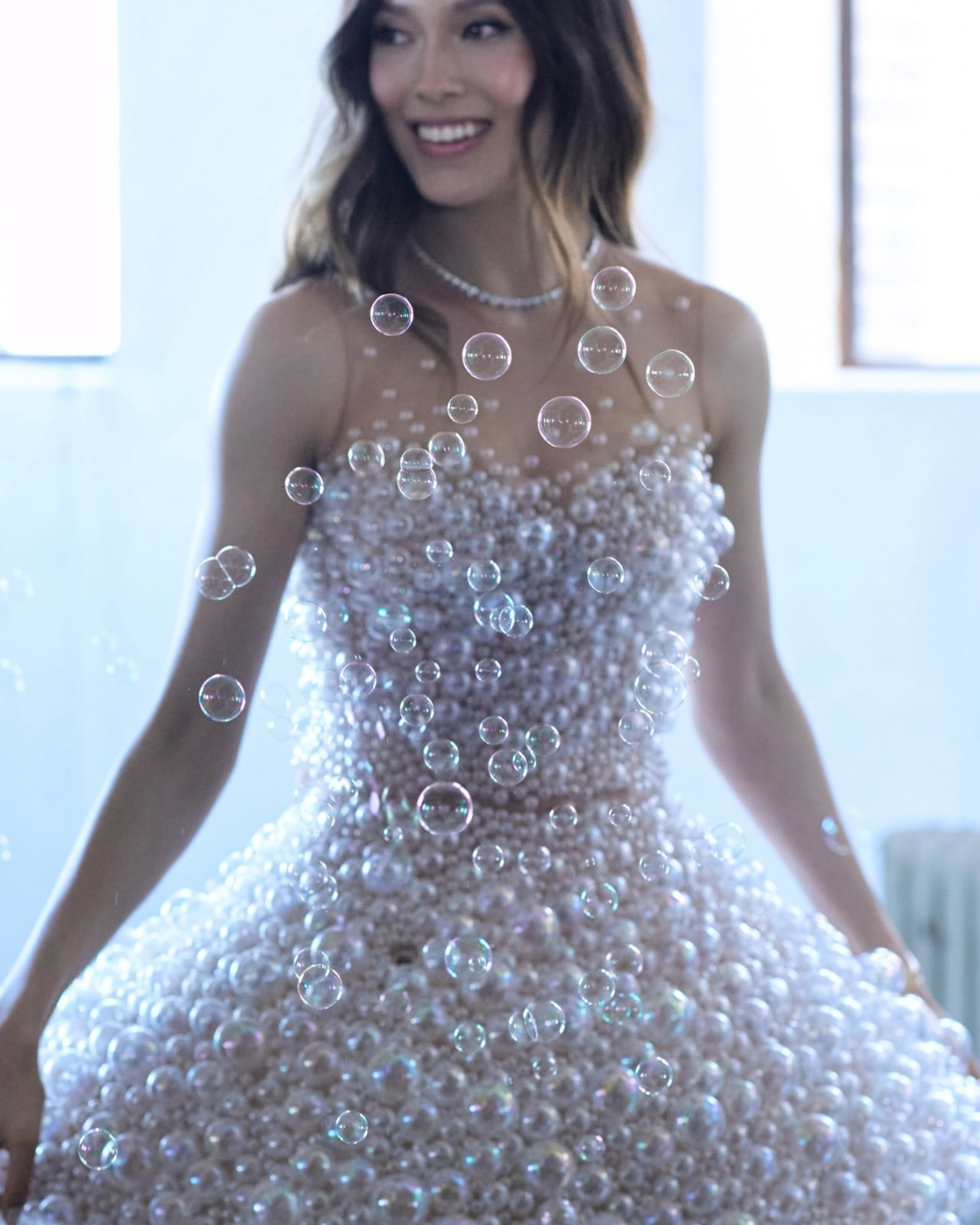
The dress’s silhouette is sculptural and mini in length, giving off a cloud-like, ethereal effect that instantly captured eyes on the red carpet. Van Herpen described the bubbles as a reflection of human anatomy, “which is composed of 99.9% empty space,” and the piece is also a nod to her ongoing fascination with biotech couture. Olympic triple medalist Eileen Gu is a wonderfully fitting muse, as the concept philosophically mirrors the kind of weightless, almost gravity-defying precision her sport demands on the snow slopes.
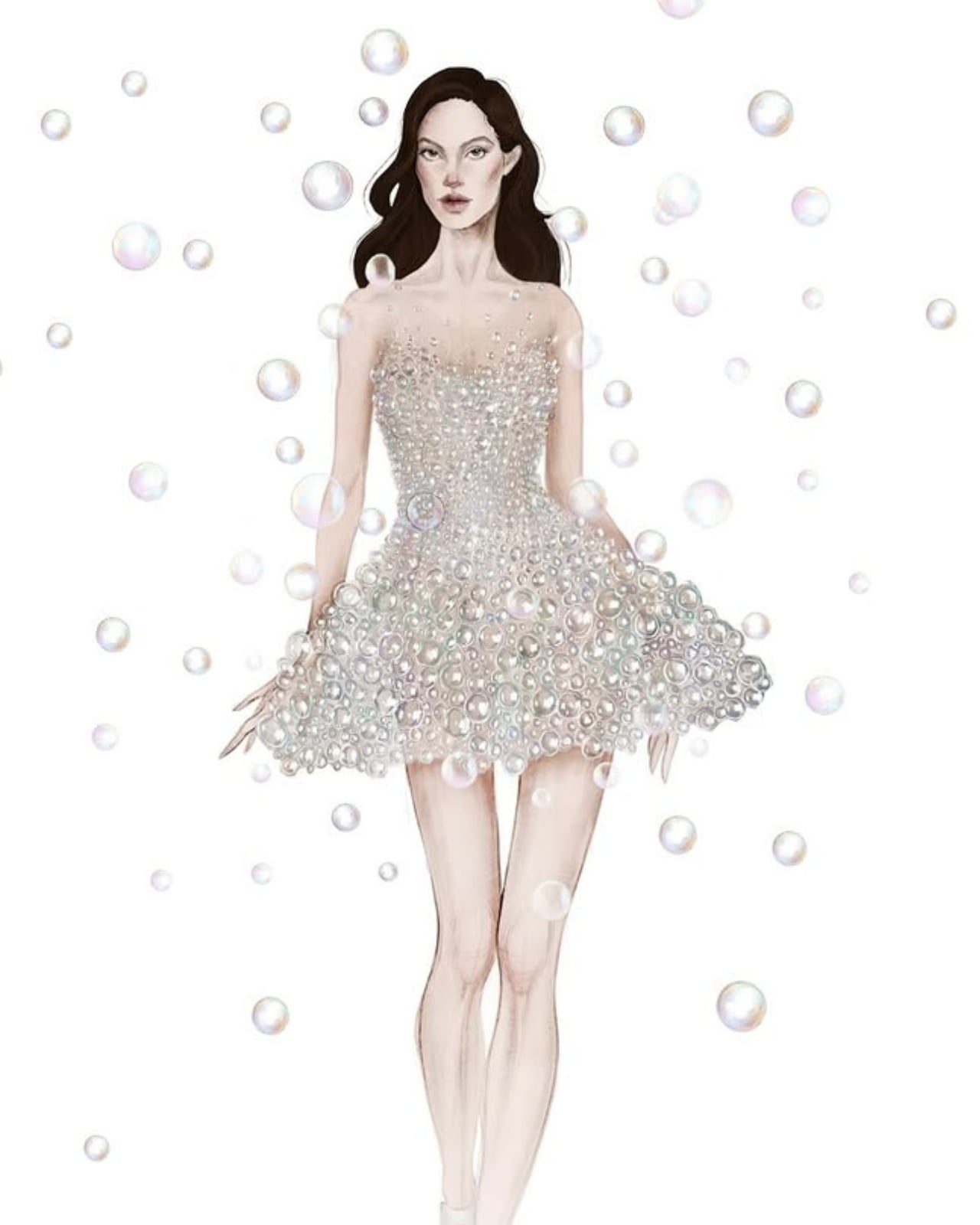
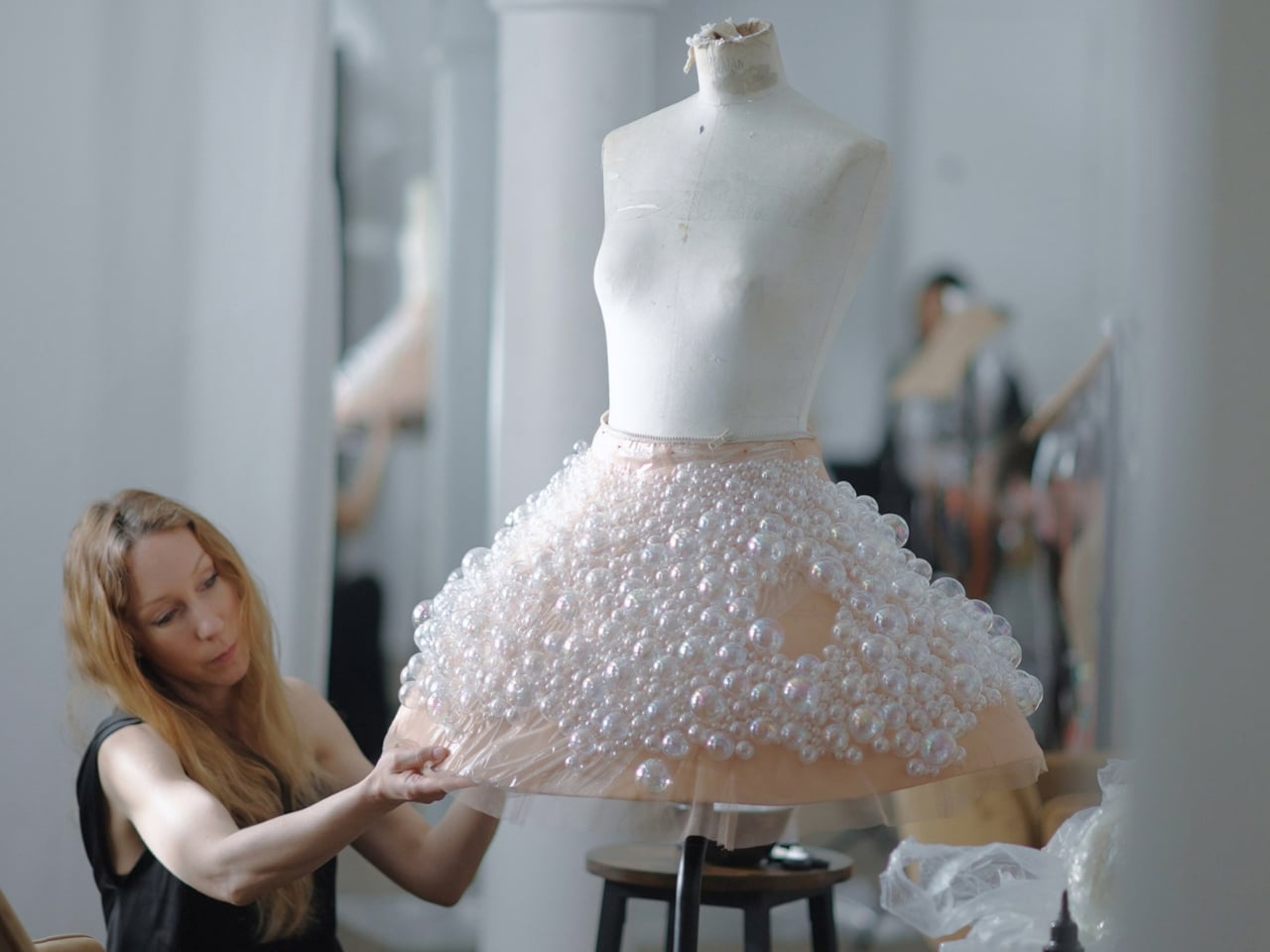
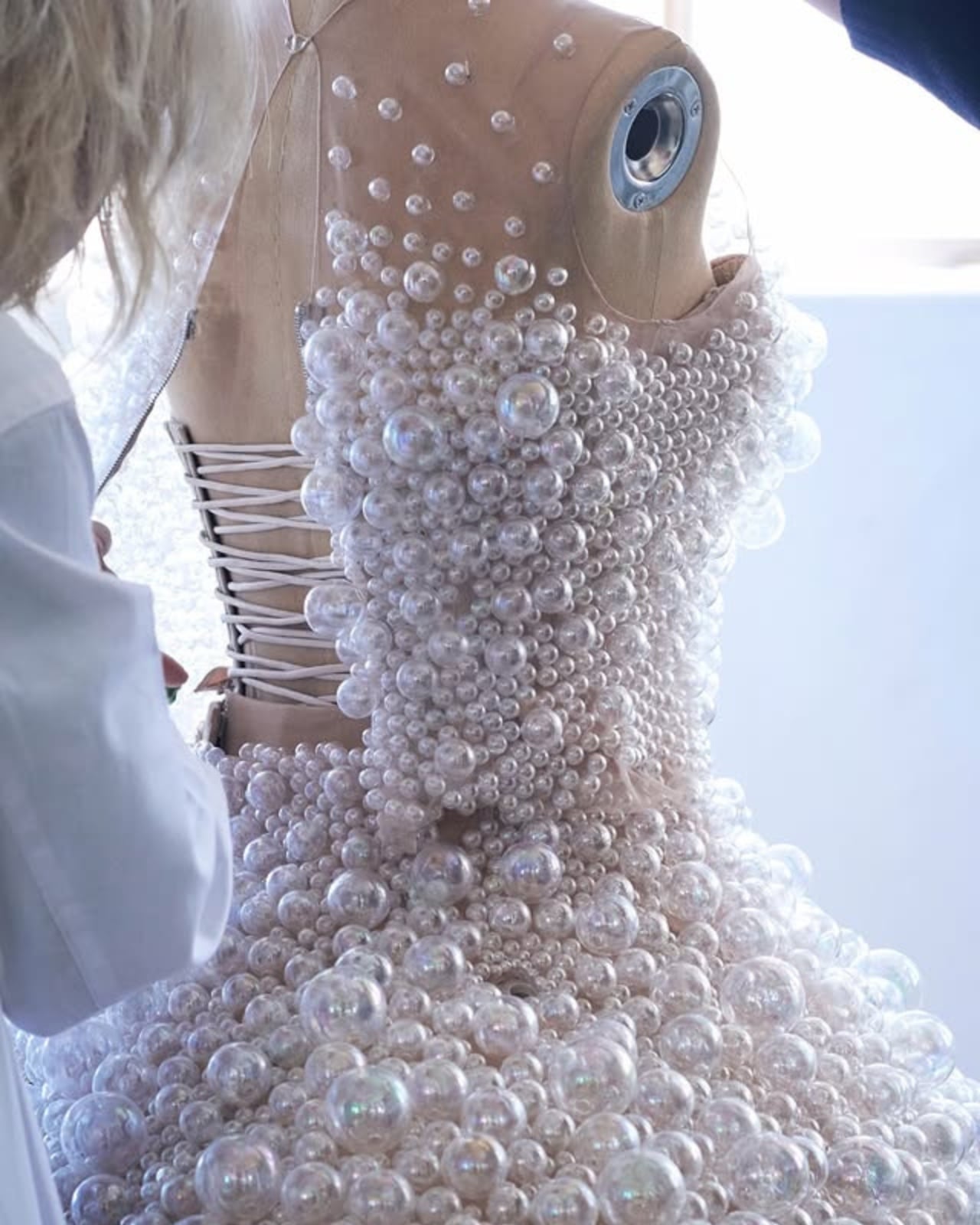
This is not just a simple dress adorned with bubbles. Each of the 15,000 iridescent glass bubbles was hand-moulded and then attached to the bodice using UV light, a meticulous process that required 2,550 hours of work across 15 weeks, carried out by a dedicated team of specialists in couture, science, and computational design. Underneath the skirt, hidden microprocessors pressurized gas and released real, floating bubbles in timed sequences. Everything you saw on that red carpet was completely real, with no filters and no CGI. It was a pure, breathtaking collaboration between fashion, art, and science.
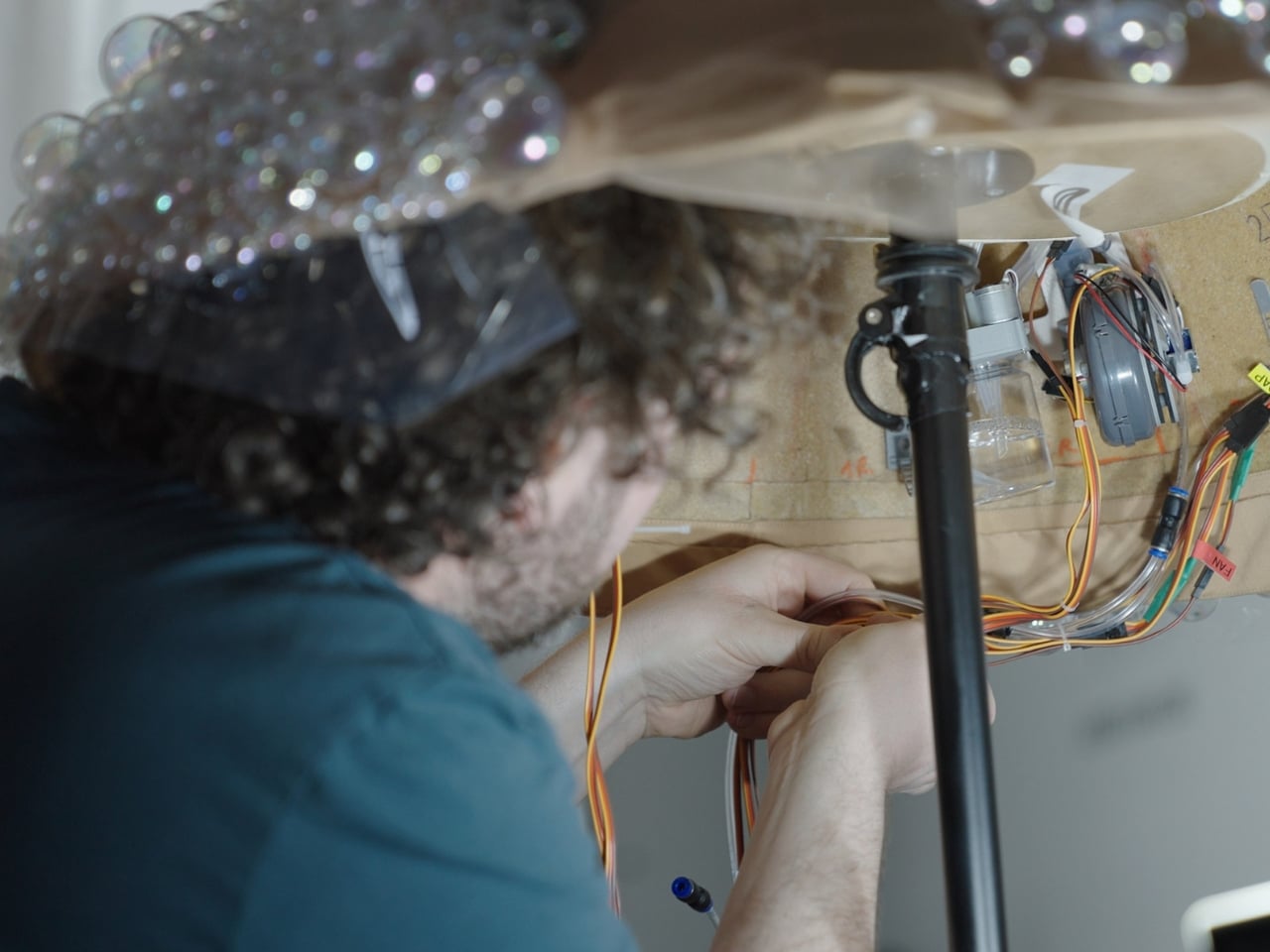
What truly elevates the Airo dress from couture to living art is the partnership with A.A. Murakami. Alexander Groves and Azusa Murakami, who work between London and Japan, are celebrated for transforming ephemeral materials like steam, light, and air into immersive living installations. Their renowned “Floating World” exhibition is a perfect example of how they blur the line between the tangible and the invisible. Remarkably, the Airo dress marks the very first time they have applied their artistic philosophy to a wearable garment, and the result is nothing short of extraordinary.
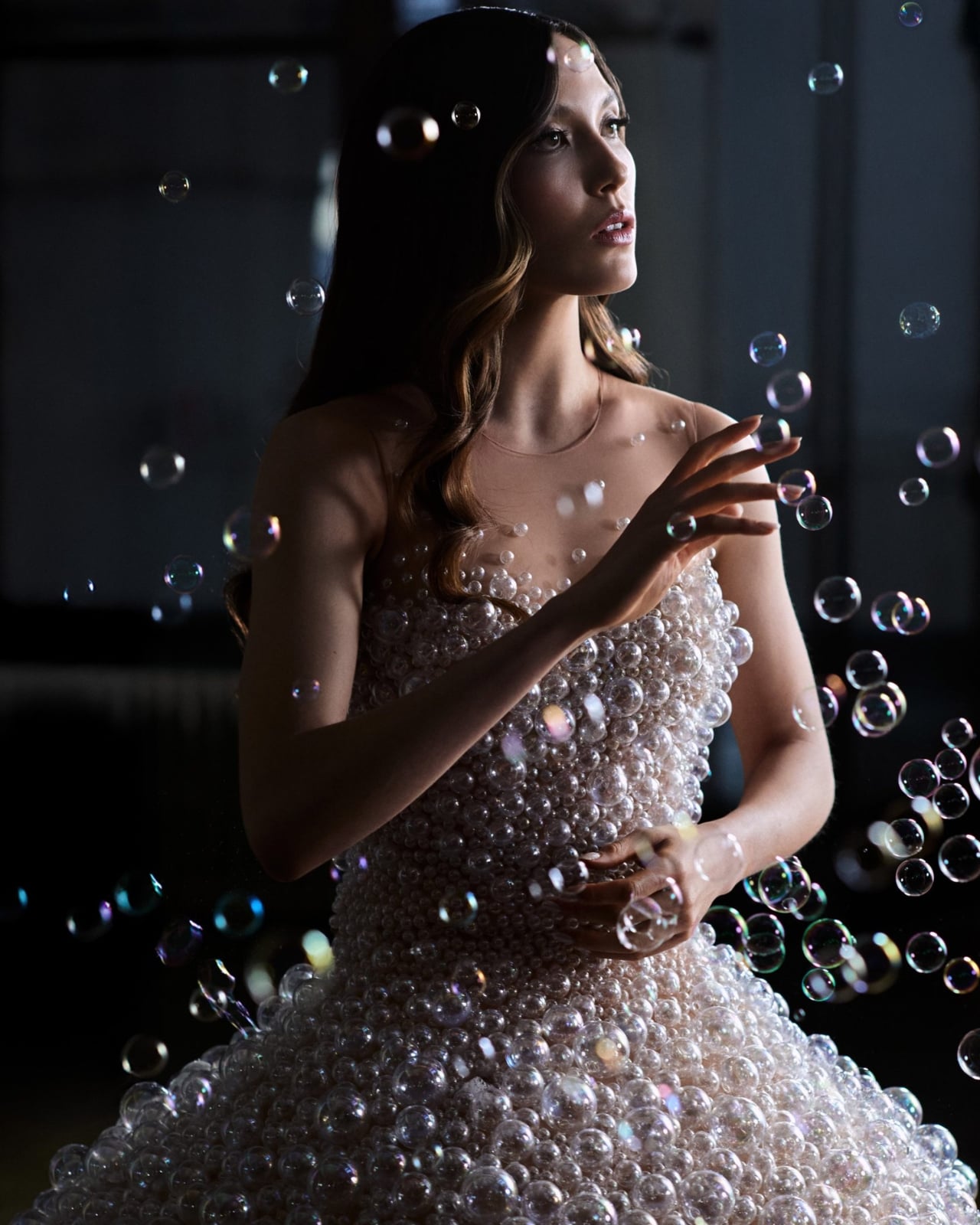
What makes this piece particularly compelling is the question it poses while you’re simply looking at it: where does the body end and the space around it begin? The cloud of iridescent glass and the soft stream of real bubbles dissolving into the air around Eileen Gu created something genuinely hypnotic. It wasn’t just a dress being worn; it was a statement unfolding in real time. The silhouette seemed to blur the lines of her athletic frame, giving her an almost otherworldly quality that no CGI could ever replicate.
Van Herpen is no stranger to this kind of boundary-pushing. Her previous viral creation was a luminous dress made of living algae, crafted in collaboration with a bio-engineer and biophysicists from the University of Amsterdam. With every headline-making piece, she continues to challenge what fashion can be, not just as clothing, but as a vehicle for scientific exploration, philosophy, and wonder.
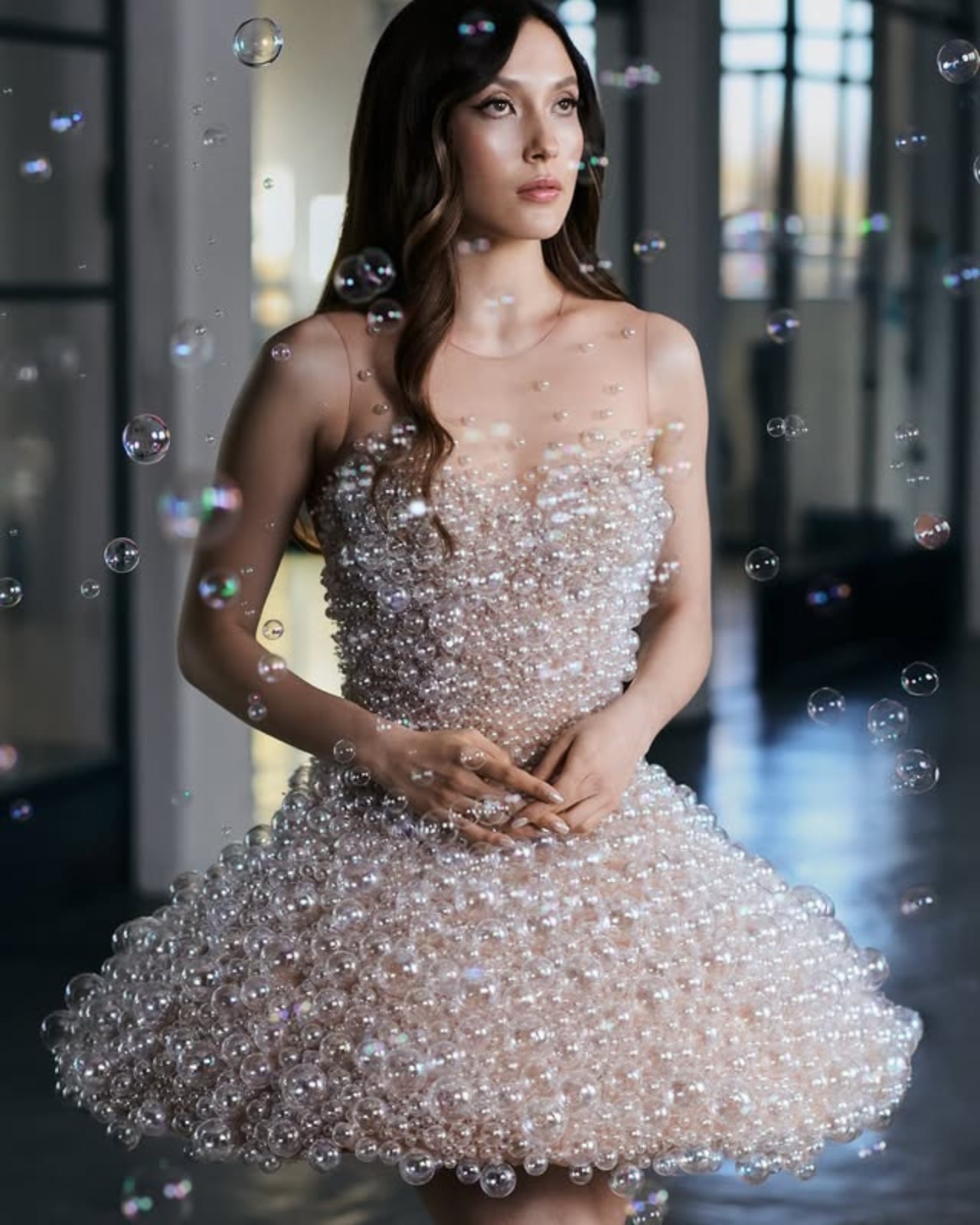
And perhaps that’s the most exciting thing about the Airo dress. In a sea of beautiful gowns at the Met Gala, this one made people stop and ask questions about science, about art, about the human body, and about what fashion is even for. At a time when so much of what we see has been filtered, edited, or AI-generated, there’s something incredibly refreshing about a dress that creates its own quiet spectacle from the inside out. Real bubbles. Real craft. Real wonder. That’s the kind of fashion that stays with you long after the cameras have gone.
SHARE