Aston Martin’s design language has evolved remarkably little over the past two decades when you strip away the marketing talk and focus on the actual forms. The grille is always a wide, low trapezoid. The side strakes always bisect the doors. The DRLs always sit in the outer corners of the headlight clusters. The roofline always describes a fastback arc that terminates in a ducktail or integrated spoiler. These aren’t criticisms, they’re observations about a brand that has figured out a formula that works and seen no compelling reason to abandon it. The DB9 introduced this vocabulary in 2004, and every subsequent model (DB11, Vantage, DBS, DBX) has been a variation on that same grammatical structure. It’s a conservative approach that has kept Aston Martin visually coherent across multiple model cycles, but it also means the brand’s design evolution tends to happen in increments rather than leaps.
Naoto Kabayashi’s Vanagandr concept asks what happens when you take that established vocabulary and dial the intensity up by about thirty percent. The grille is still recognizably an Aston Martin grille, but it’s more sculptural, more three-dimensional, integrated into the front fascia in a way that makes it feel like part of the car’s structure rather than an applique. The side strakes are still there, but they’ve dissolved into body surfacing that creates similar visual breaks without relying on traditional panel separators. The headlights are still outer-mounted, but they’ve become slim horizontal blades with an internal graphic that references current Aston Martin DRL signatures while pushing the execution further. Every signature element has been reinterpreted through a lens that prioritizes monolithic surfacing and aerodynamic integration over heritage preservation. Whether Aston Martin’s own design team will ever feel bold enough to make these kinds of moves in production is an open question, but Kabayashi’s renders make a compelling case for why they should at least consider it.
Designer: Naoto Kobayashi
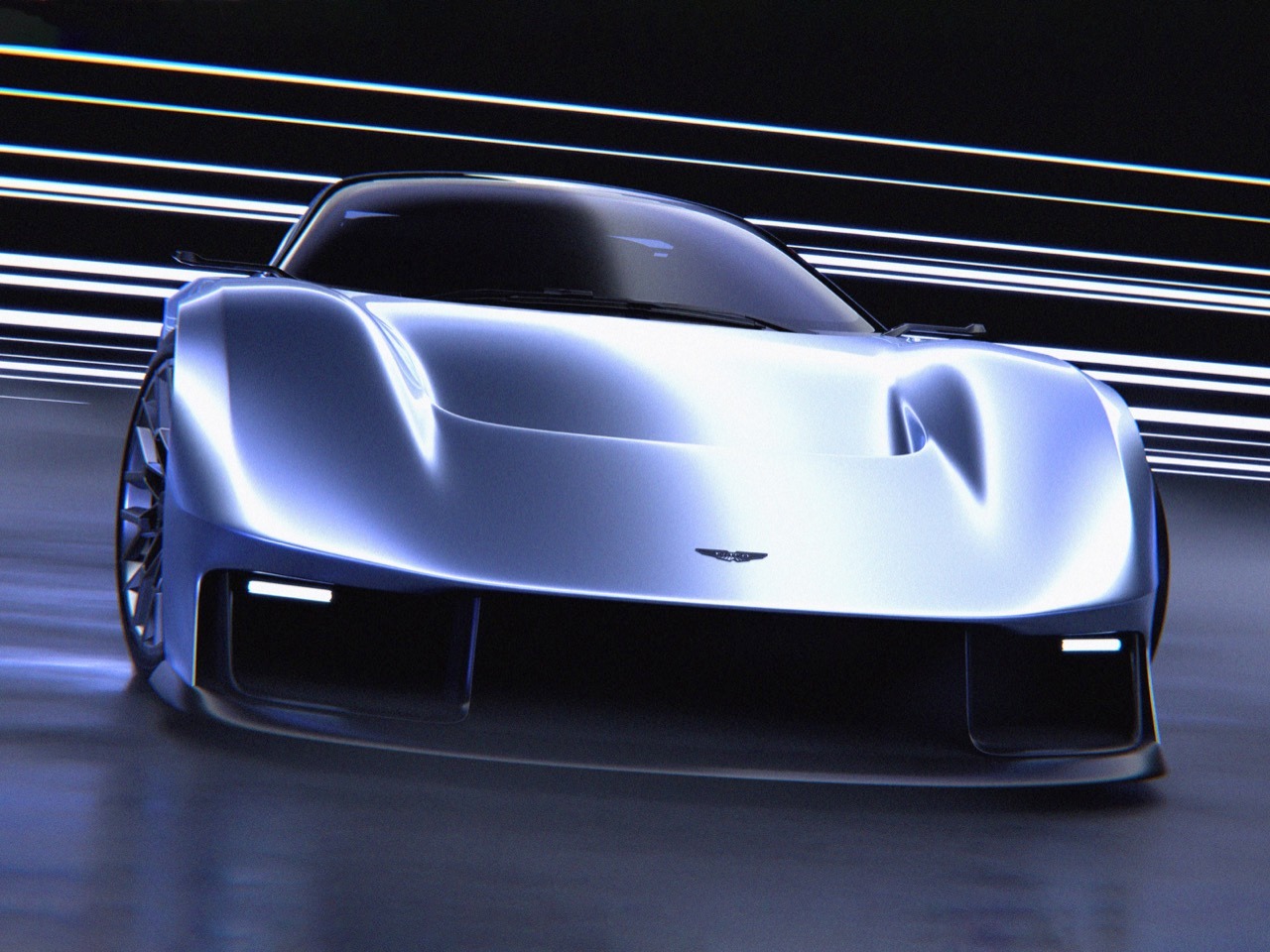
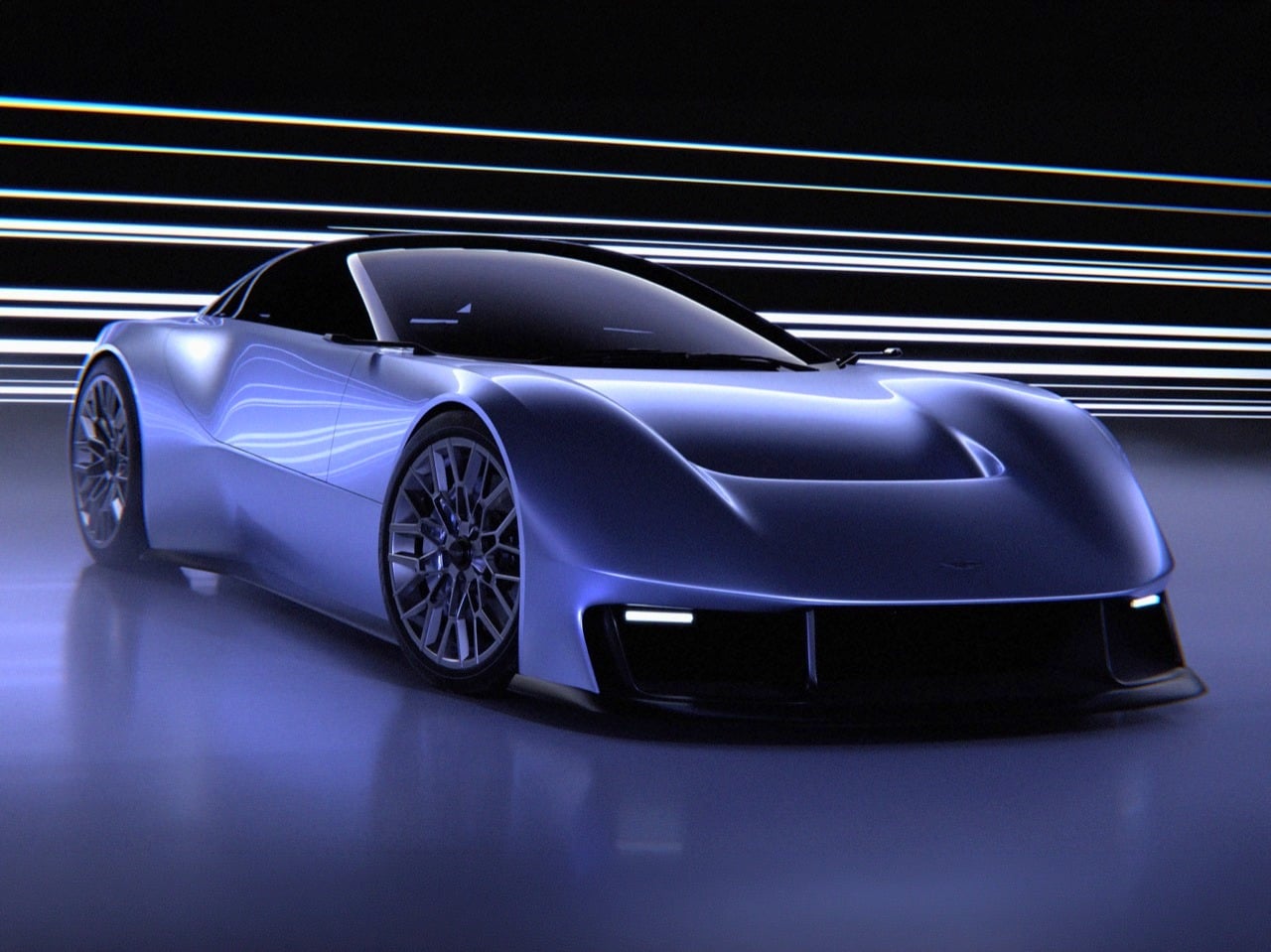
The front fascia is where Kabayashi’s reinterpretation feels most radical. That signature Aston Martin grille, typically a relatively flat panel with a mesh insert, has been transformed into a deeply recessed cavity flanked by aggressive sculpted surfaces that channel air around the nose. The grille opening itself splits into two distinct sections, a lower primary intake and an upper secondary element that sits just below the leading edge of the hood, creating a layered depth that production Aston Martins rarely attempt. Flanking this central structure are vertical air curtain intakes that look like they were carved out of the bodywork with surgical precision, their sharp-edged openings creating visual tension against the organic curves surrounding them. The headlights are razor-thin horizontal elements that extend almost to the wheel arches, with a DRL graphic inside that consists of stacked horizontal bars, a contemporary interpretation of the current Vantage’s lighting signature. It’s aggressive without being cartoonish, purposeful without sacrificing the elegance that defines the brand.
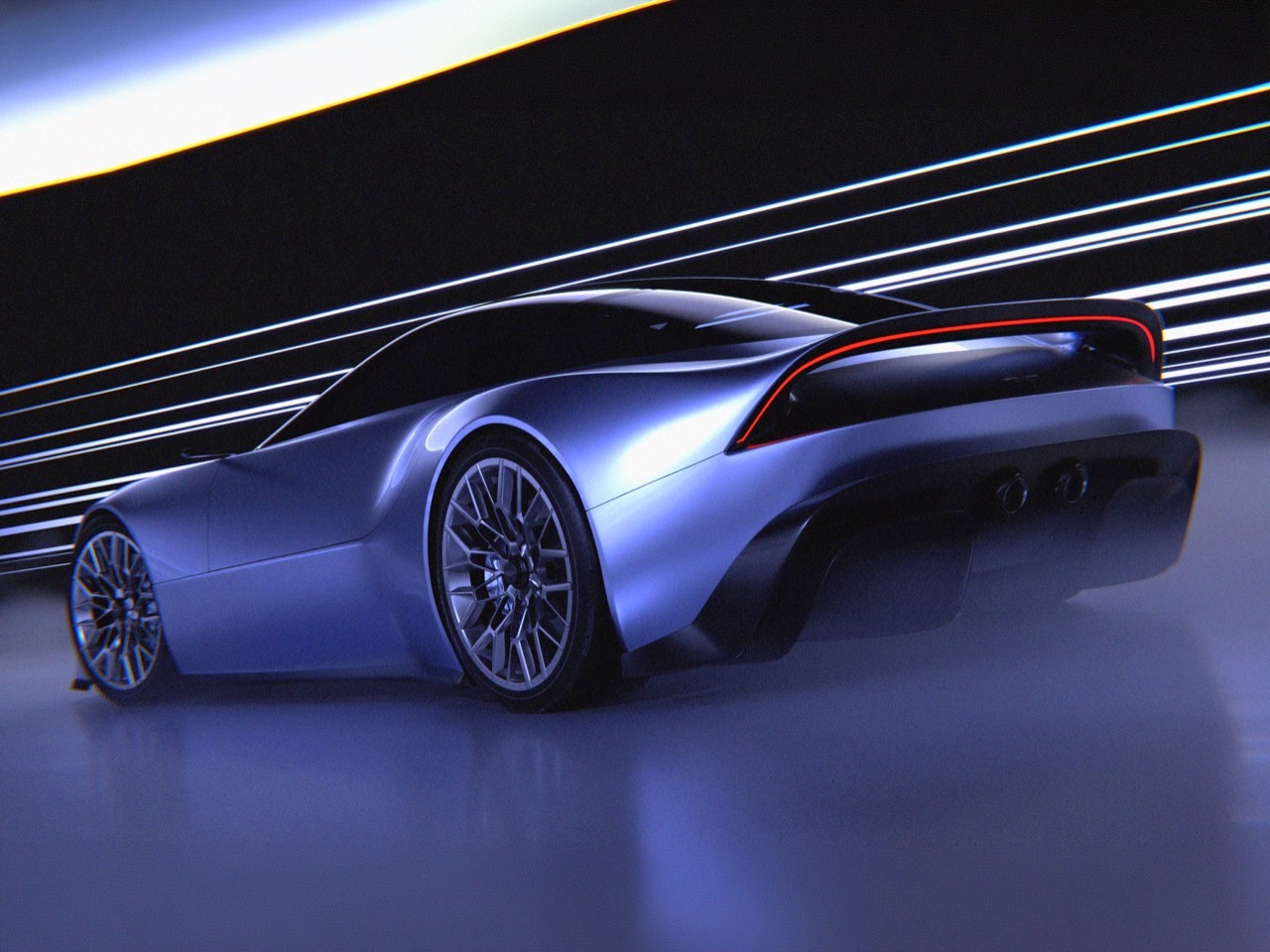
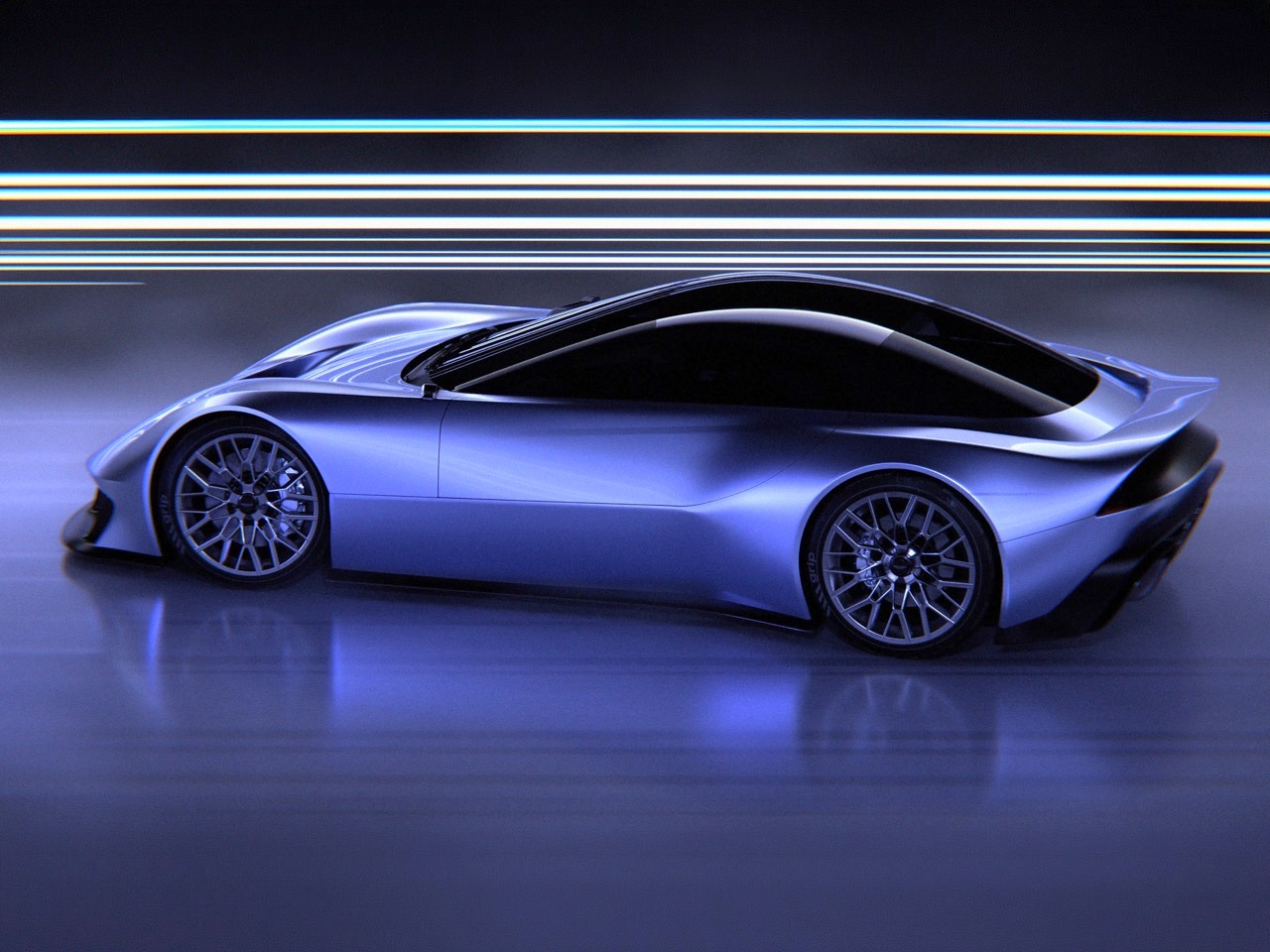
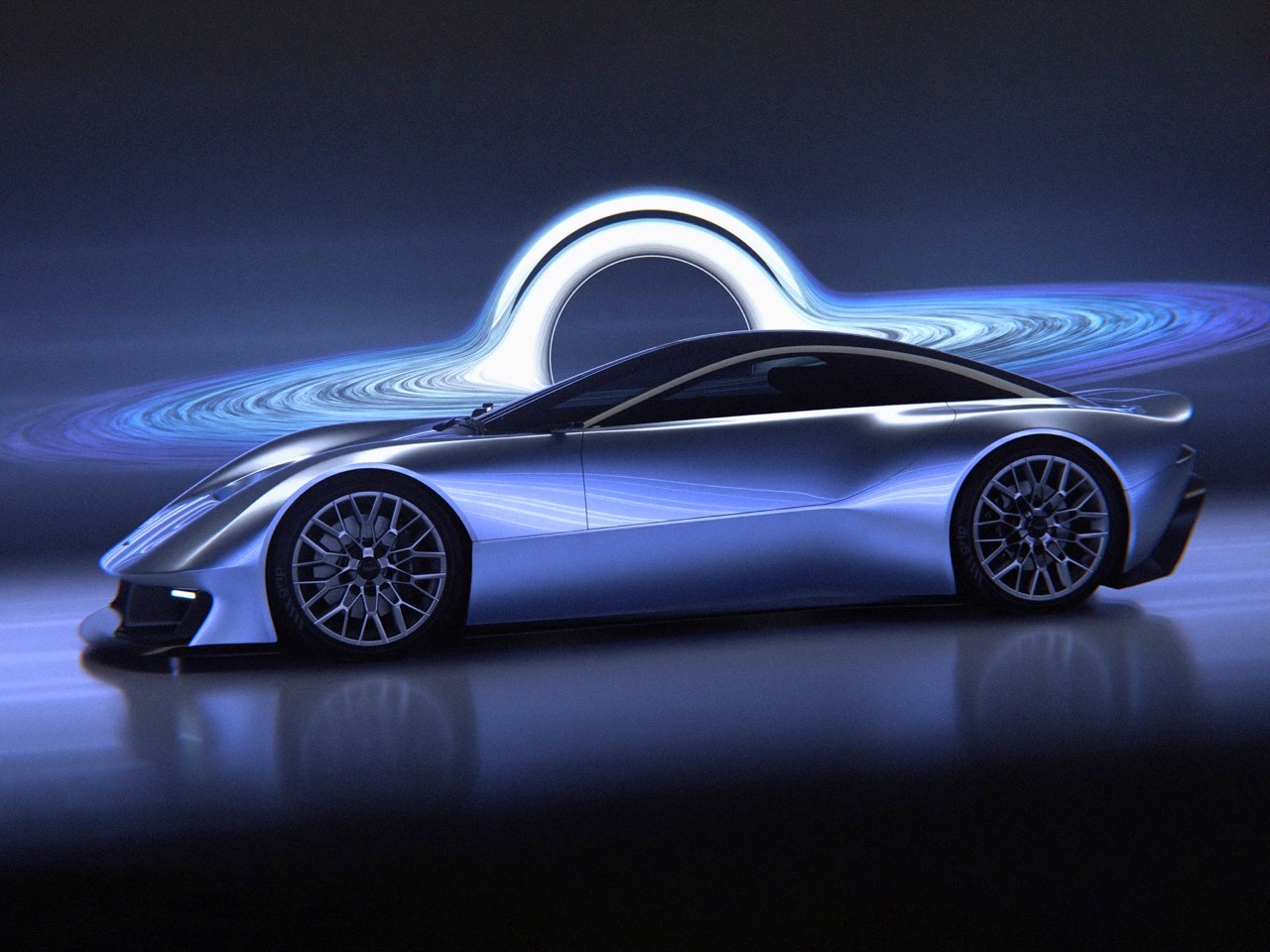
The wheelbase looks stretched, the front wheels pushed far forward to create that classic long-hood silhouette that telegraphs front-engine GT performance from a quarter mile away. The greenhouse is compact and sits low on the body, with a roofline that arcs rearward in a smooth fastback curve before terminating in what appears to be an integrated ducktail spoiler. The side strakes, a design element Aston Martin has carried forward from the DB9 through every subsequent model, have been reimagined as flowing body creases that start just behind the front wheel arch and sweep rearward along the door, creating visual length while also suggesting functional aerodynamic channeling. The rear haunches swell outward dramatically, emphasizing the rear-wheel-drive layout and creating muscular surfaces that catch light in ways that flat panels never could. Multi-spoke wheels in what appears to be gloss black fill the arches completely, and the absence of visible door handles suggests either pop-out units or touch-sensitive entry, both of which have become increasingly common in contemporary supercar design.

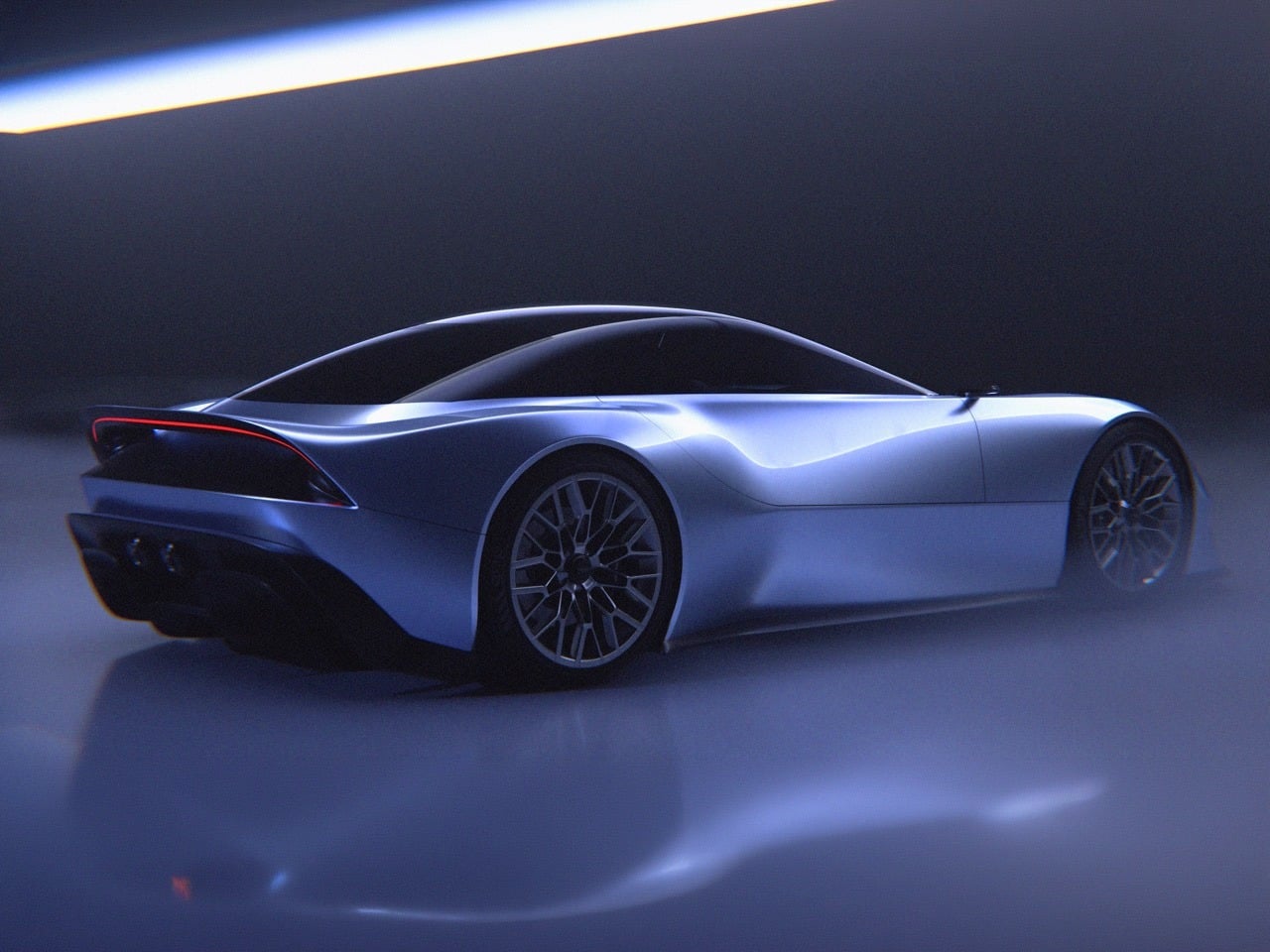
The rear three-quarter view reveals how Kabayashi has handled the challenge of creating a visually interesting tail without resorting to the aggressive aero addenda that defines modern track-focused supercars. The fastback roofline flows into a gently integrated spoiler that rises organically from the rear deck, avoiding the bolt-on appearance of aftermarket wings while still suggesting functional downforce generation. The taillights are slim horizontal elements that wrap slightly around the rear haunches, their internal graphics invisible in these renders but likely consisting of the kind of intricate LED arrays that have become table stakes in the luxury performance segment. Below the taillights sits a rear diffuser treatment that’s more aggressive than anything currently in Aston Martin’s production lineup, with multiple channels and what appear to be dual exhaust outlets integrated into the lower fascia. The overall effect is of a car that’s been shaped by aerodynamics without being dominated by them, maintaining visual elegance while acknowledging the reality of high-speed stability requirements.
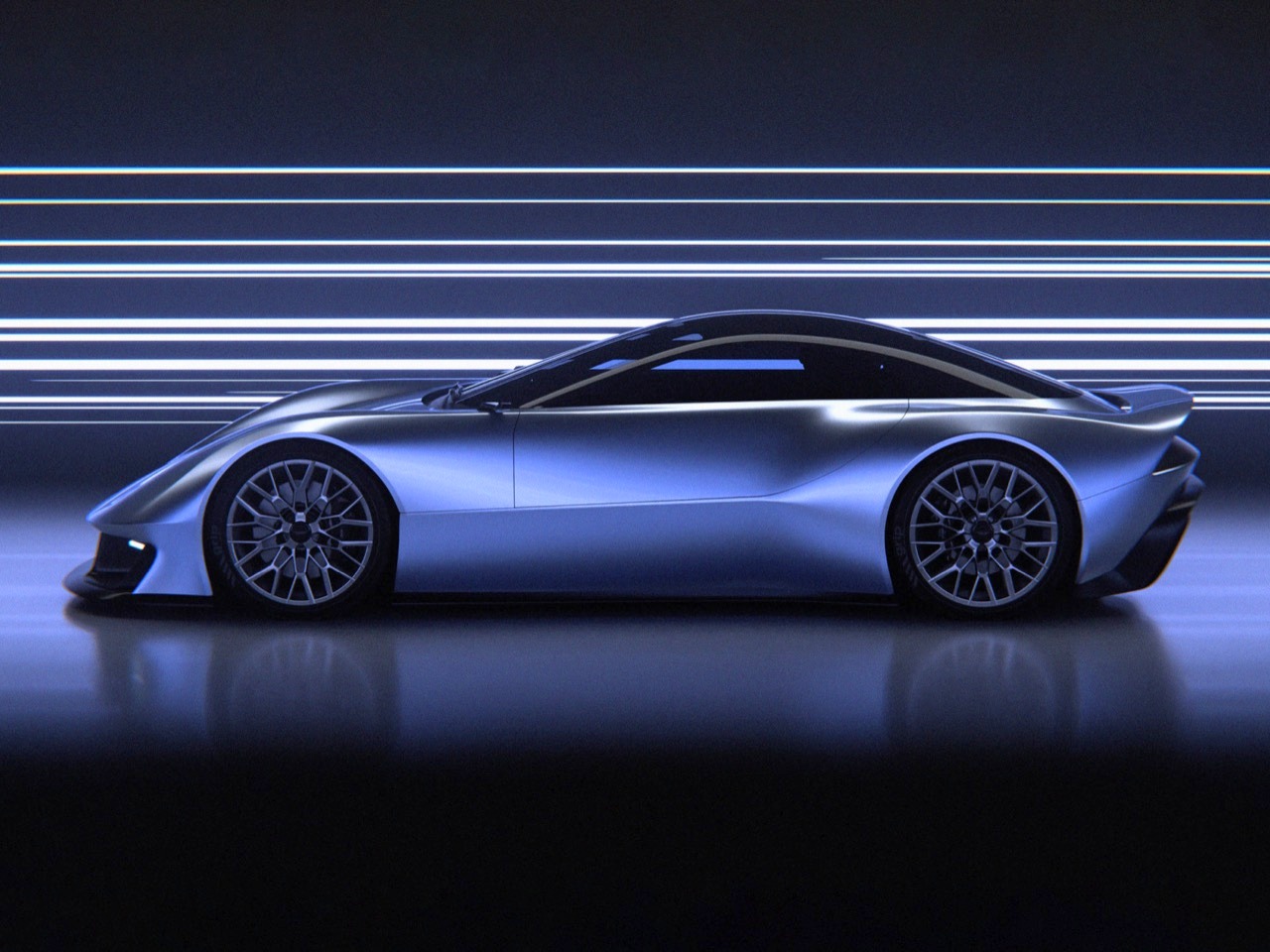
The surfacing across the entire body deserves its own discussion because it represents a significant departure from Aston Martin’s current approach. Production Aston Martins tend to use relatively simple, flowing surfaces with minimal interruption, relying on curvature and proportion rather than complex character lines to create visual interest. The Vanagandr maintains that philosophical approach but executes it with far more tension and drama. The hood appears to be a single uninterrupted surface that flows from the grille all the way to the windscreen, but it’s subtly crowned in the center with gentle concave sections flanking the raised spine, creating shadow play that makes the surface read as far more complex than it actually is. The doors similarly avoid hard character lines, instead using compound curves that transition smoothly from the wheel arches to the greenhouse, creating surfaces that look like they’ve been formed by airflow rather than stamped in a press. It’s the kind of surfacing that’s extraordinarily difficult to execute in production because it reveals every imperfection in panel gaps and alignment, which is probably why Aston Martin has historically been more conservative in this area.
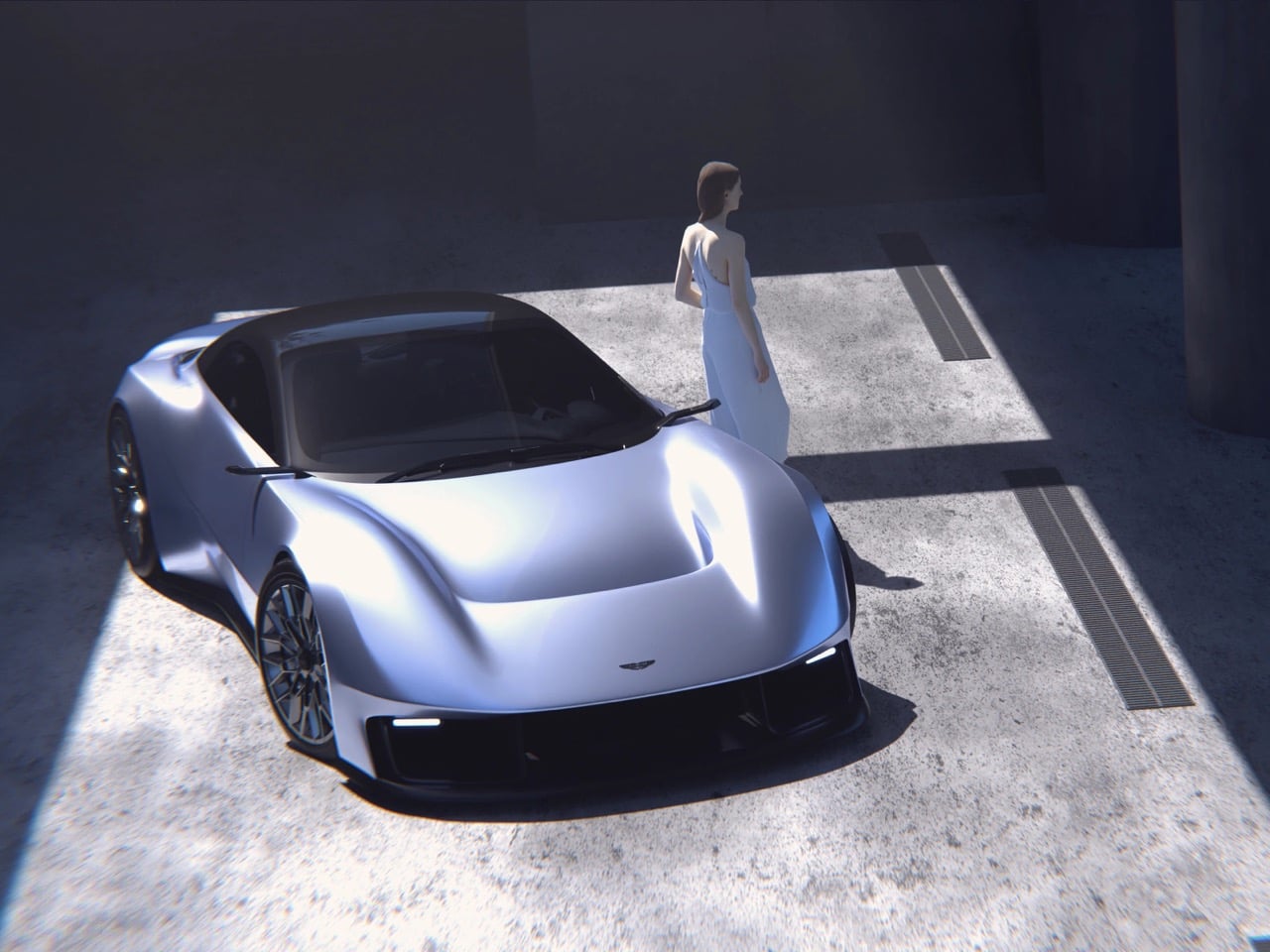

The color chosen for these renders, a metallic violet that shifts between silver and blue depending on the lighting, does significant work in revealing the complexity of those surfaces. It’s close to Aston Martin’s Lunar White or Skyfall Silver, colors that prioritize surface revelation over visual pop, allowing the forms themselves to generate interest rather than relying on bold hues. In bright light the car reads as almost pure silver, emphasizing the sculptural quality of the bodywork. In shadow it takes on deeper blue and purple tones that add mystery and visual weight. The name Vanagandr, borrowed from Norse mythology where it refers to a wolf destined to break free during Ragnarok and devour the sun, feels appropriate for a design that seems bound by Aston Martin’s heritage while simultaneously straining against those constraints. Kabayashi has created something that respects the brand’s visual legacy while pushing aggressively toward a future that Gaydon’s own designers may or may not have the courage to pursue.
SHARE