Streaming hasn’t killed physical media. It’s made us crave it more. CDs are back in rotation, showing up in record stores, apartments, and design studios with a renewed sense of purpose. Some of it comes down to sound: a format that doesn’t compress or buffer. A lot of it is about the object itself. A disc, a sleeve, a machine worth looking at. Things that feel considered in a world that mostly isn’t.
The players featured here range from transparent sculptures to boombox revivals, from minimalist concept blocks to award-winning portables with genuine design credentials. Each one has a clear point of view. Whether you’re rebuilding a hi-fi setup or just want something to put a CD in that doesn’t feel like a relic, this list proves that the format and the hardware around it can be genuinely beautiful. Seven players. Seven reasons to press play.
1. ClearFrame CD Player
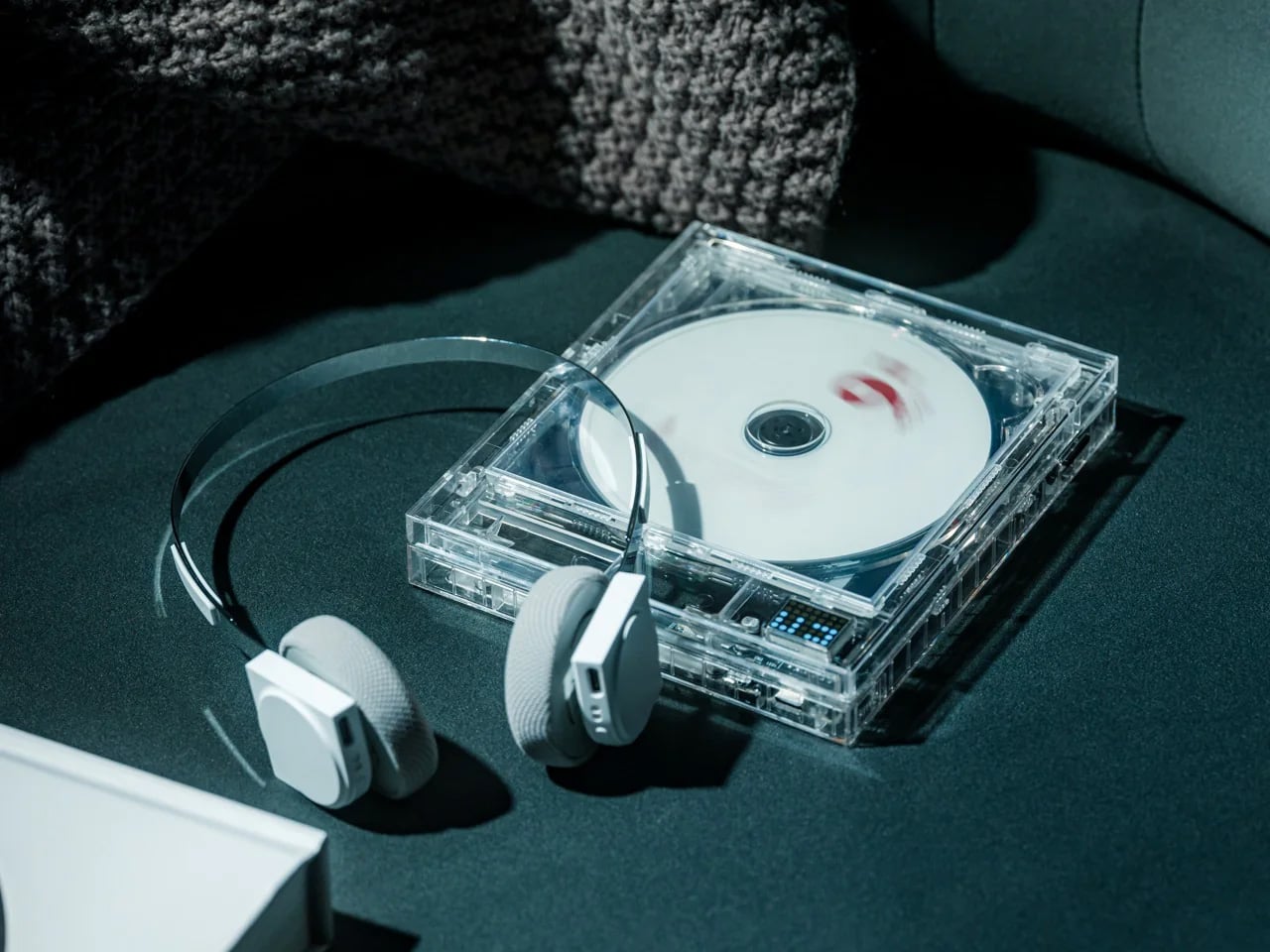
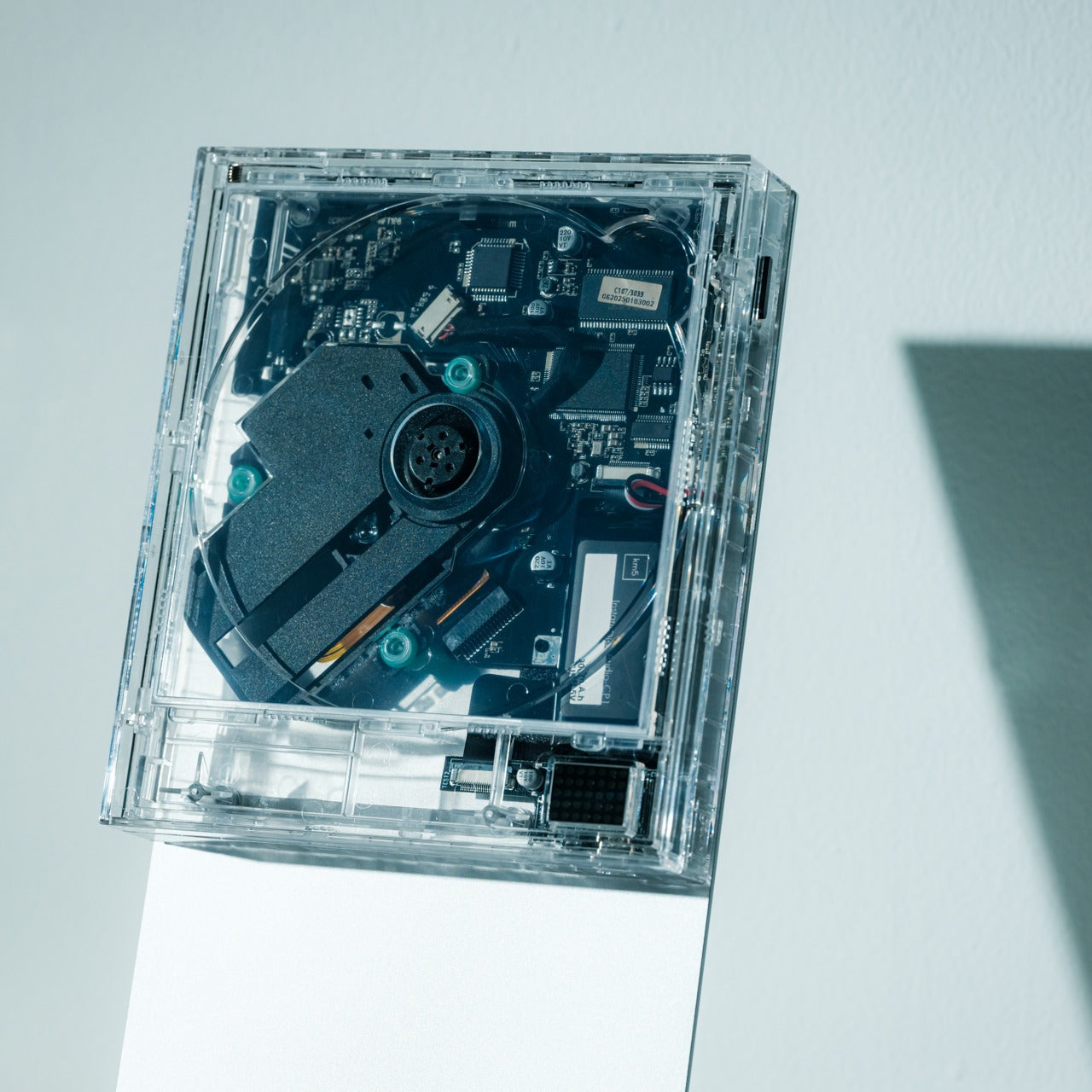
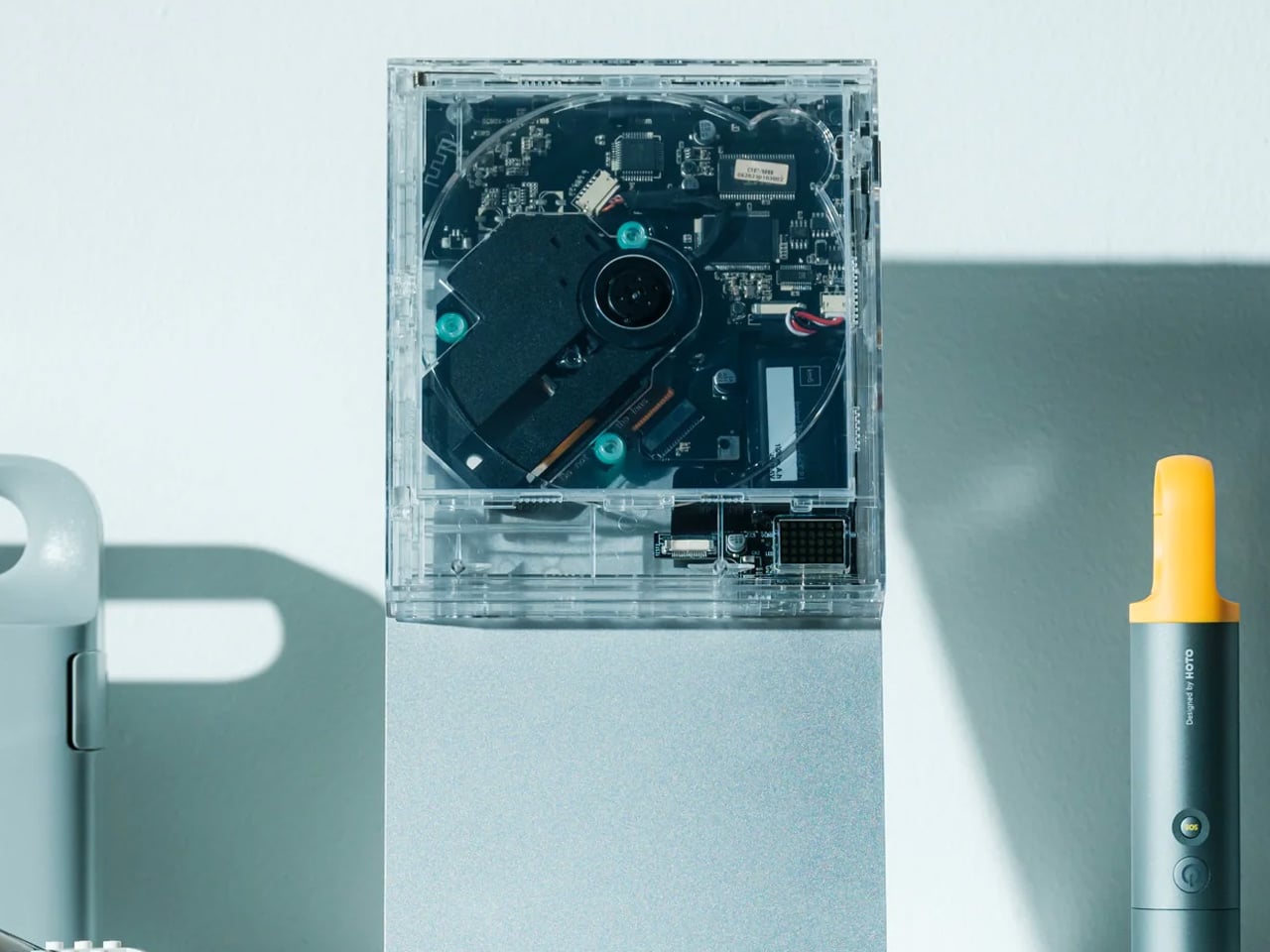
Most CD players hide their engineering. The ClearFrame does the opposite, wrapping everything in crystal-clear polycarbonate so the circuit board becomes part of the experience. The result sits somewhere between gadget and display piece: you see the disc spin, the components work, the music moves through the machine. It’s built for people who love the ritual of physical media and want that ritual to look good doing it, on a shelf, a desk, or mounted on a wall.
Slide in the disc and prop the album sleeve in the front window. The ClearFrame turns your favorite record into a framed display. With Bluetooth 5.1, a seven-hour rechargeable battery, and multiple playback modes, it’s practical enough to go wherever you do. The square silhouette keeps things gallery-clean while the exposed circuitry underneath adds texture and personality. It’s the kind of object that makes you want to rebuild a CD collection just to have something worth putting on display.
Click Here to Buy Now: $200.00
What We Like
- The transparent body doubles as an album frame, making the sleeve a visible part of the experience
- Bluetooth 5.1 and a seven-hour battery make it genuinely portable without sacrificing the display concept
What We Dislike
- The clear polycarbonate housing will show fingerprints and dust more readily than any solid casing
- Wall mounting requires a separately purchased bracket, which adds to the overall cost
2. Bumpboxx BB-777

The BB-777 doesn’t whisper. It makes a statement. Bumpboxx pulled directly from the GF-777, one of the most iconic boomboxes of the 1980s, and rebuilt it for the present day. Stretching 29.6 inches across with dual cassette bays, four large front-facing drivers, a long analog tuner strip, and two telescoping antennas, it reads instantly as the kind of machine that belongs center stage. CD, cassette, radio, Bluetooth: a format-agnostic system that refuses to stay in the background.
At 270W, it fills a room without asking permission. The wide horizontal body, the carry handle, the spacing of the controls — every detail is faithful to the original without veering into nostalgia-trap territory. The BB-777 plays CDs, cassettes, and the radio while connecting wirelessly via Bluetooth. It’s designed to be heard and seen in equal measure, the kind of system that changes the energy of whatever space it lands in. Not a background device. A destination.
Click Here to But Now: $649 $1049 ($400 off). Hurry, only 262/1400 left! Raised over $4.3 million.
What We Like
- The faithful ’80s aesthetic is executed with full commitment, not as a gimmick or a costume
- 270W output paired with multi-format playback makes it a genuine room-filling entertainment system
What We Dislike
- At 29.6 inches wide, it demands a significant and very specific amount of physical space
- The maximalist retro aesthetic won’t suit every interior or every taste
3. CD-P1
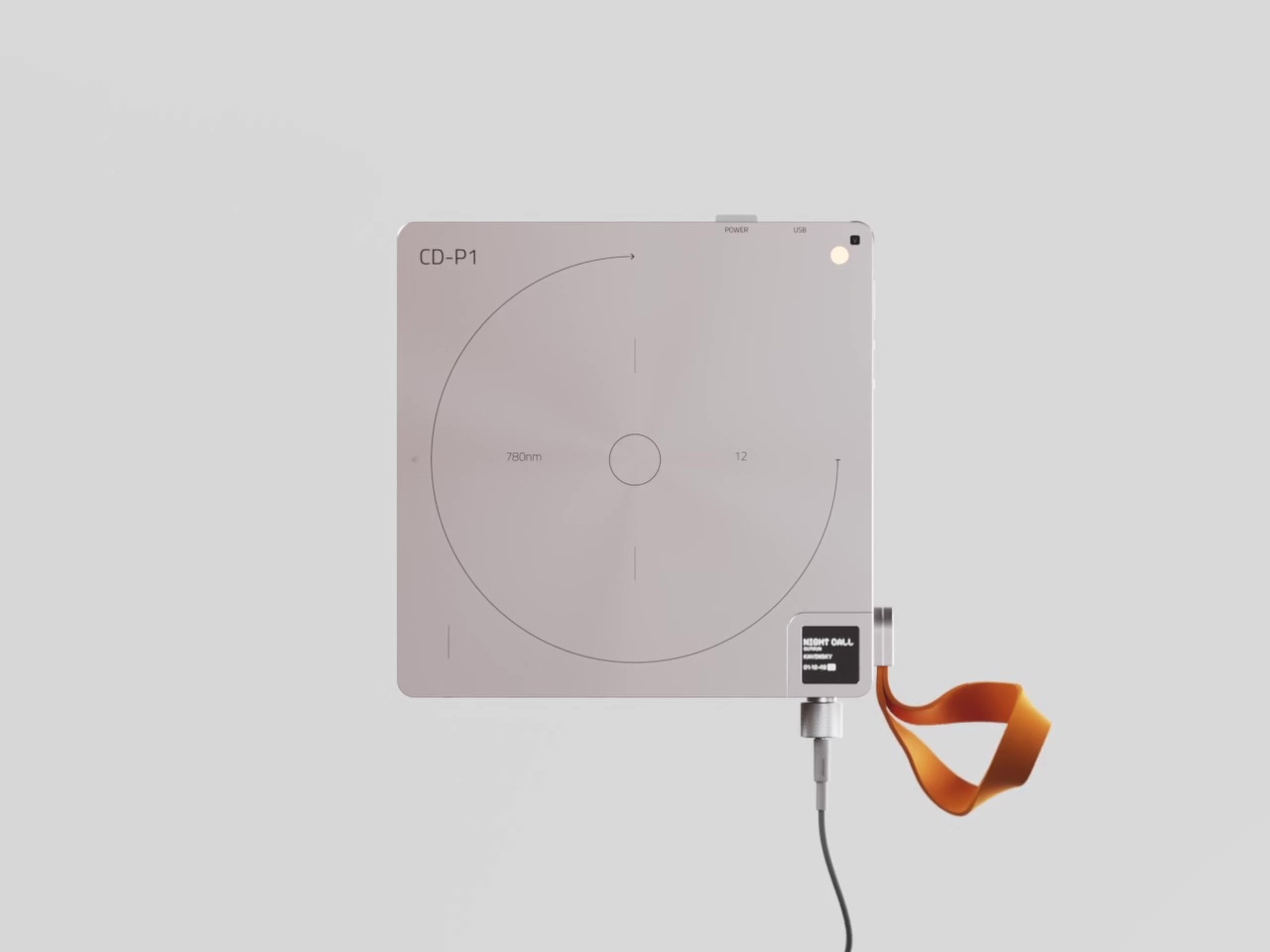
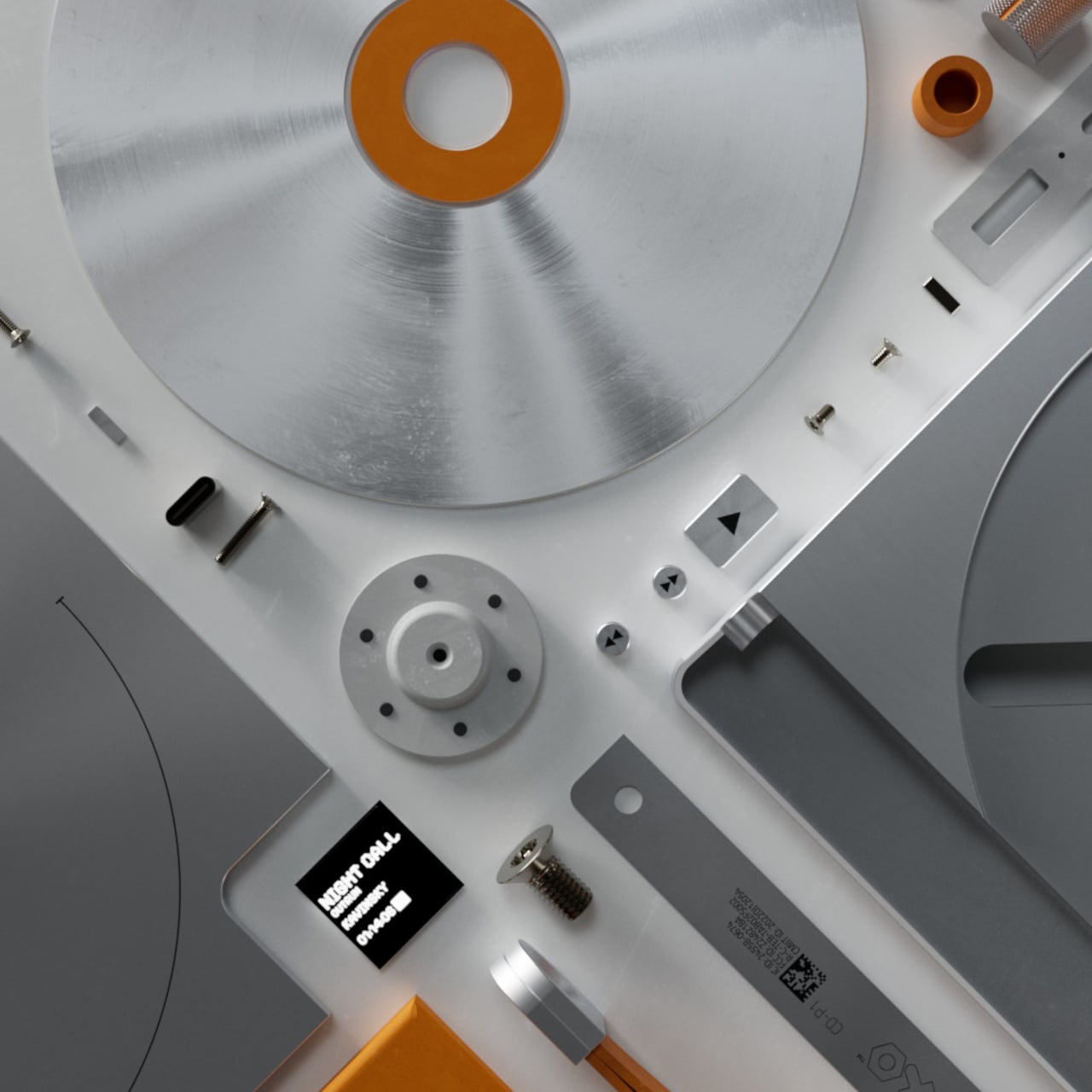
This concept takes Teenage Engineering’s most recognizable quality, restraint, and applies it to a format that usually gets treated as background technology. The result is a metallic square block with almost nothing readable on its surface. The CD bay barely announces itself, just a thin circle scored into the top face, until you realize the entire top surface lifts as one. For a machine built around spinning discs, the absence of visual noise is startling and exactly right.
Every control element earns its place. A volume knob disappears into one of the rounded corners, flush with the body until your fingers find it. The headphone jack breaks from the minimalist logic: a small knurled cylinder jutting from the bottom edge, textured and tactile, almost inviting you to pull or twist it. The concept leaves some functional details open, but the design language is unambiguous. This is what a CD player looks like when you refuse to make compromises anywhere.
What We Like
- The volume knob hidden inside a rounded corner is a quietly brilliant piece of design thinking
- The metallic square format sits in any space without drawing unnecessary attention to itself
What We Dislike
- As a concept, key functionality and production specifications remain unconfirmed
- The extreme minimalism may make basic operations less intuitive in everyday use
4. SYITREN R300
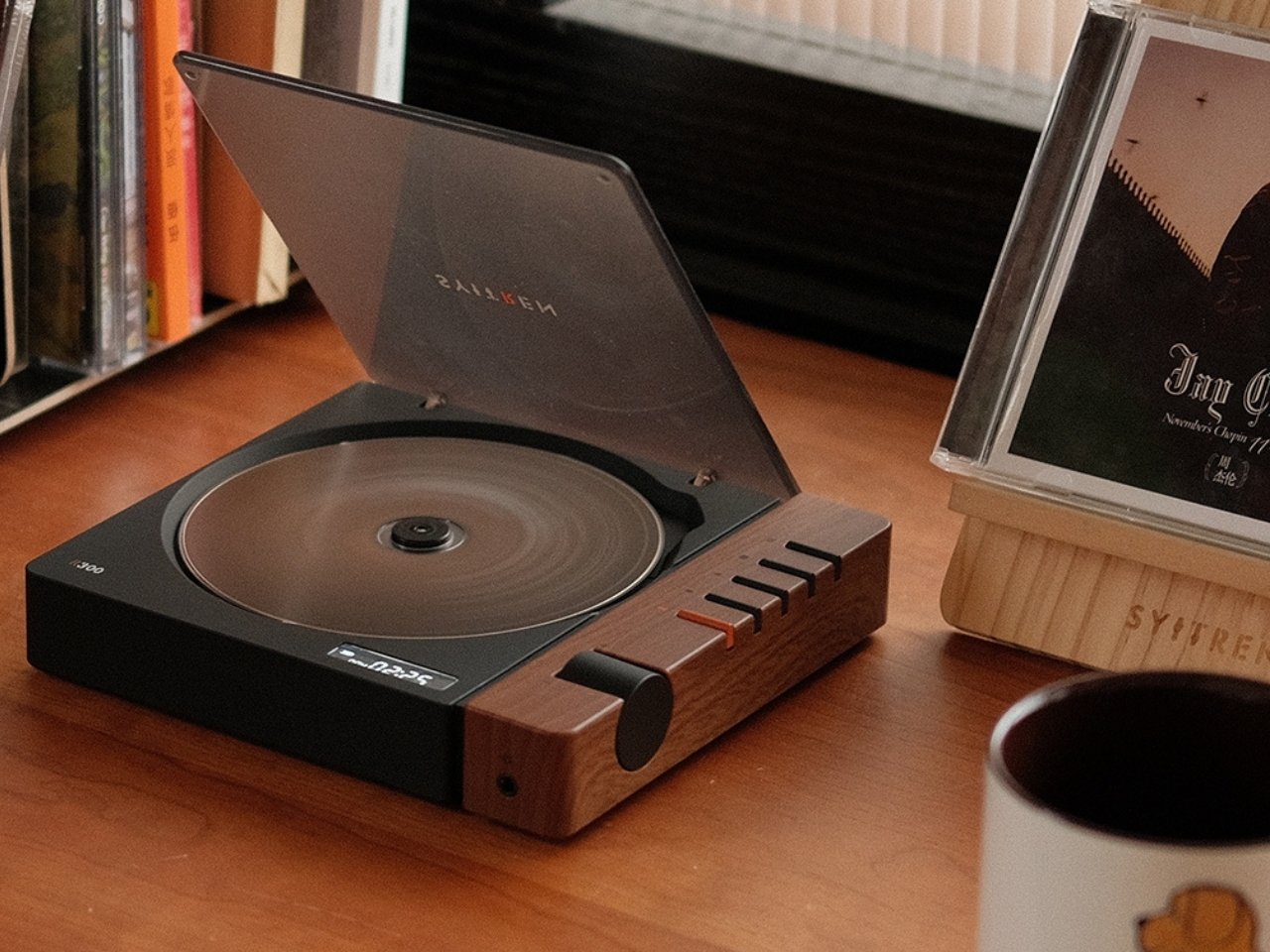
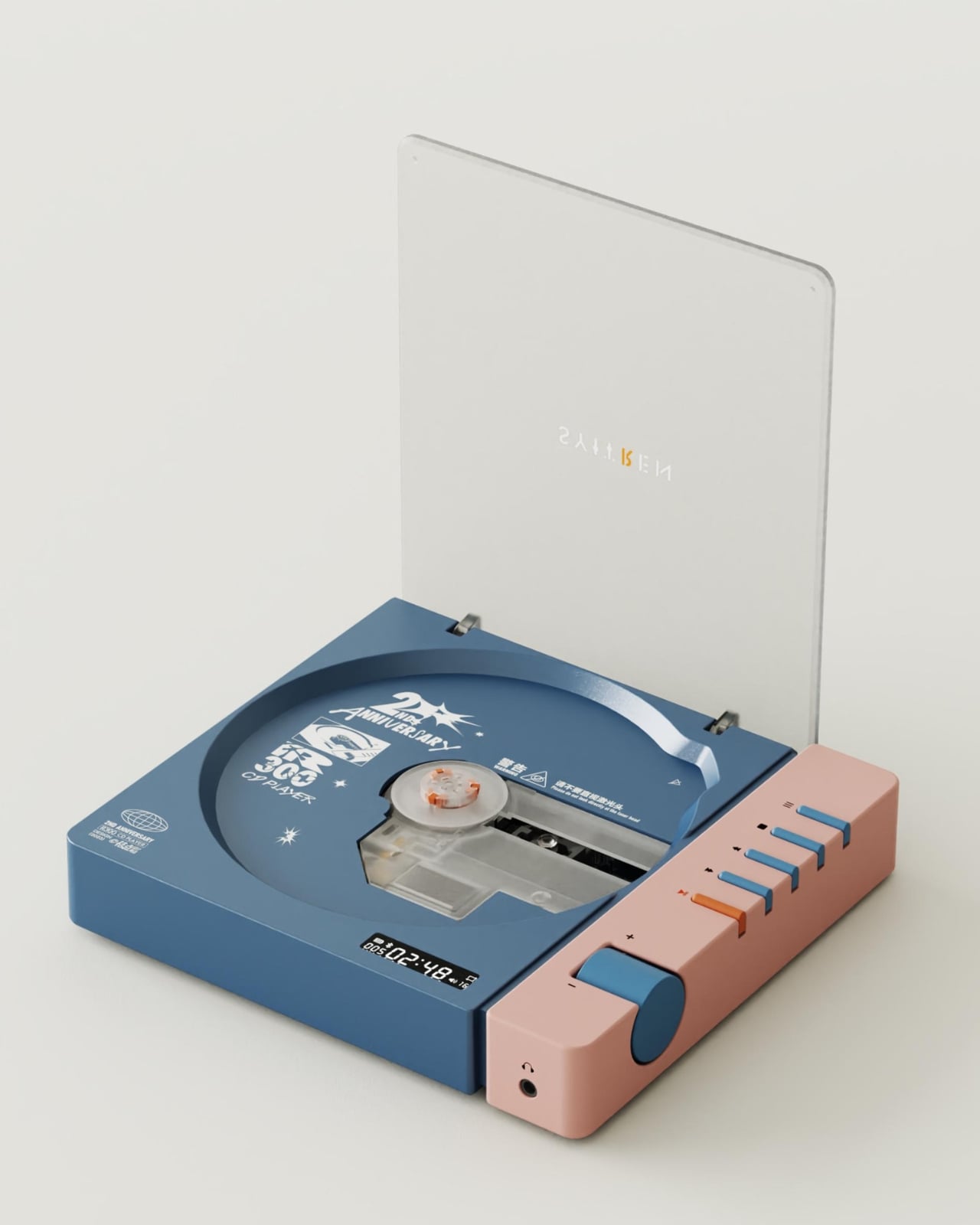
The R300 arrived wearing its intentions clearly. Those finish options, wood grain, clean white, and a fruit green that has no business looking as good as it does, signal that audio equipment doesn’t need to default to satin black to be taken seriously. A MUSE Design Gold Award in the Audio and Video Devices category validated what you can already see: this is a player that understood the brief and executed it with genuine care for the object.
The dynamic area button on the right side is designed for intuitive, tactile control, the kind of physical interaction you want from a portable you pick up and put down regularly. It supports CD, CD-R, and CD-RW formats, covering virtually every disc in most collections. Whether it sits on a kitchen shelf or a coffee table, the R300 settles into a space without looking like an afterthought. It carries the quiet confidence of a product that knows exactly what it is.
What We Like
- The fruit green finish is a bold, deliberate choice that actually earns its place in any room
- The MUSE Design Gold Award reflects a product that delivers well beyond the surface of its aesthetics
What We Dislike
- Three colorway options may still feel limiting for those wanting something more singular or custom
- The retro-leaning design language will resonate more naturally with some aesthetics than others
5. Portable CD Cover Player
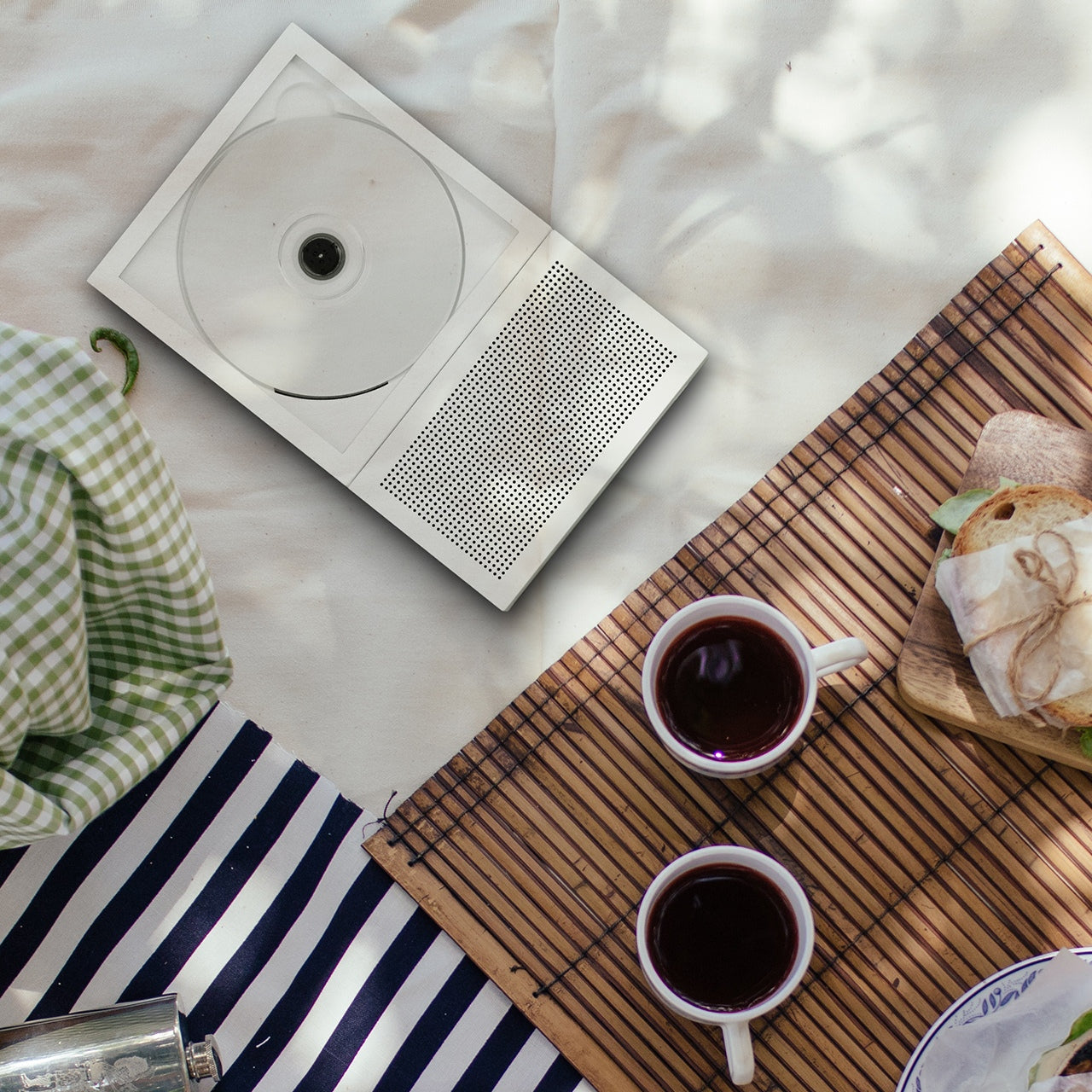
This one solves a problem most people didn’t know they had: what to do with the album art while the music plays. The CD Cover Player keeps the sleeve front-facing while the disc spins, turning a listening session into something closer to a gallery moment. A built-in speaker and rechargeable battery mean you can carry it from room to room or hang it on a wall. It shifts how you relate to your collection by making the visual half of it fully visible.
The minimalist form keeps everything balanced. Nothing competes with the artwork’s framing. Music becomes visual here, and that’s deliberate. There’s real value in slowing down enough to look at what you’re listening to, and the Cover Player builds that pause into its design. Whether it sits on a desk or mounts like a picture frame, it handles both functions without compromise, suiting anyone who thinks of their CD collection the same way they think about the art on their walls.
Click Here to Buy Now: $199.00
What We Like
- Displaying the album cover while music plays adds a genuinely new dimension to the listening ritual
- The wall-mountable design functions as striking home decor even when music isn’t playing
What We Dislike
- The wall mount bracket is sold separately, which adds to the overall cost of the experience
- The built-in speaker, while practical, may not satisfy more critical or discerning listeners
6. FiiO DM15 R2R
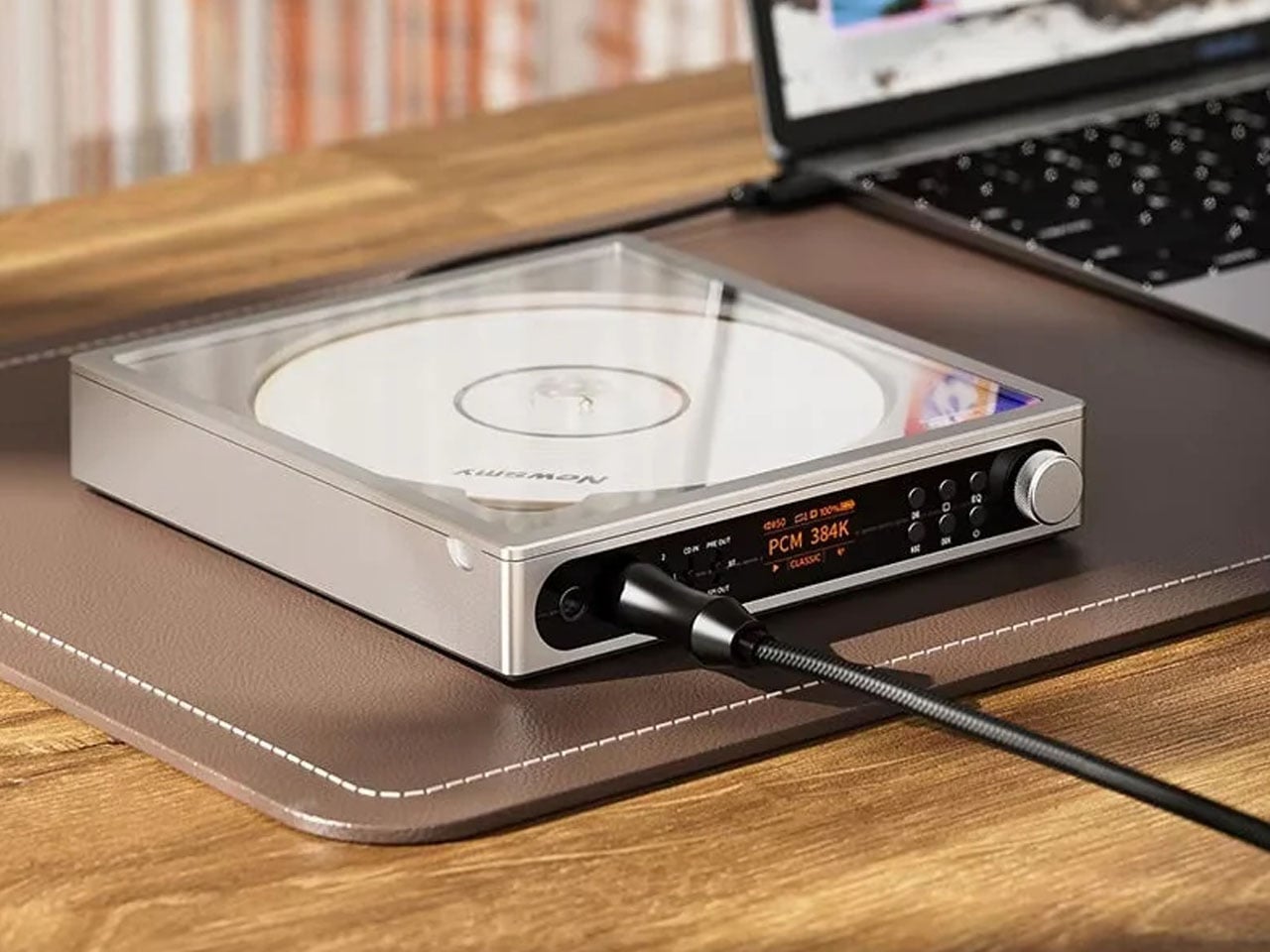
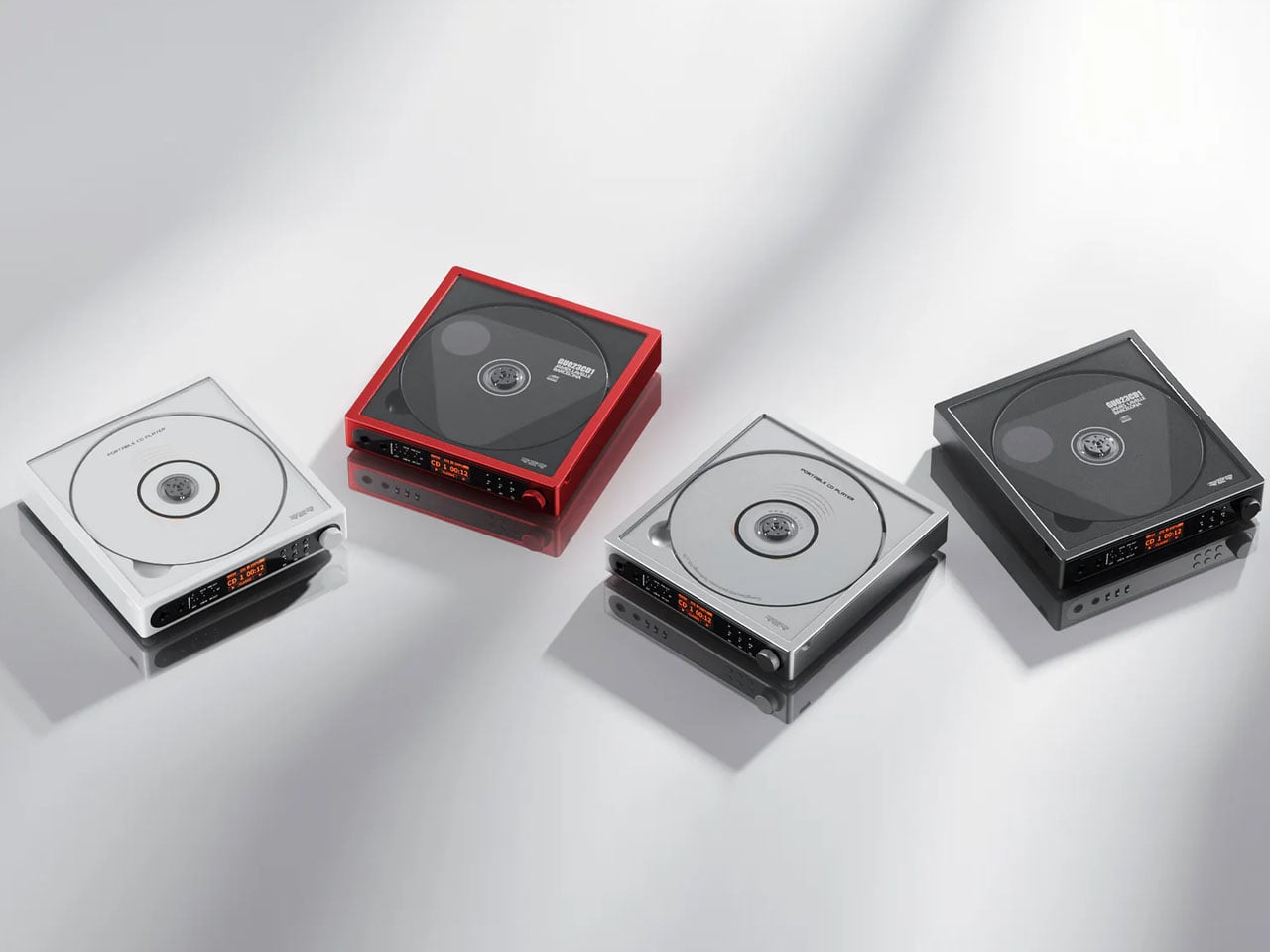
The DM15 R2R is where the CD revival gets serious. FiiO built this successor to the DM13 around a compact aluminum chassis with a transparent top panel that lets you watch the disc spin, a small but satisfying detail for anyone drawn to the physicality of the format. The R2R discrete ladder DAC architecture underneath is the real draw, bringing a level of engineering to a portable form that most standalone players at this size simply don’t attempt.
Beyond disc playback, the DM15 R2R works as a full USB DAC outputting up to 32-bit/384kHz PCM and native DSD256, figures that put it well above what its compact size suggests. A seven-hour rechargeable battery handles long sessions wire-free, while optical, coaxial, 3.5mm, and balanced 4.4mm outputs cover every system you’re likely to connect it to. For anyone building a physical media setup around sound quality, this is the component that makes everything around it perform better.
What We Like
- R2R discrete ladder DAC architecture is genuinely rare to find in a portable CD player at any price
- USB DAC mode at 32-bit/384kHz PCM and native DSD256 extends its usefulness well beyond CDs
What We Dislike
- The depth of technical specification may exceed what casual listeners need or want from a portable
- The understated aluminum chassis, while elegant, won’t appeal to those wanting a more expressive object
7. Orion
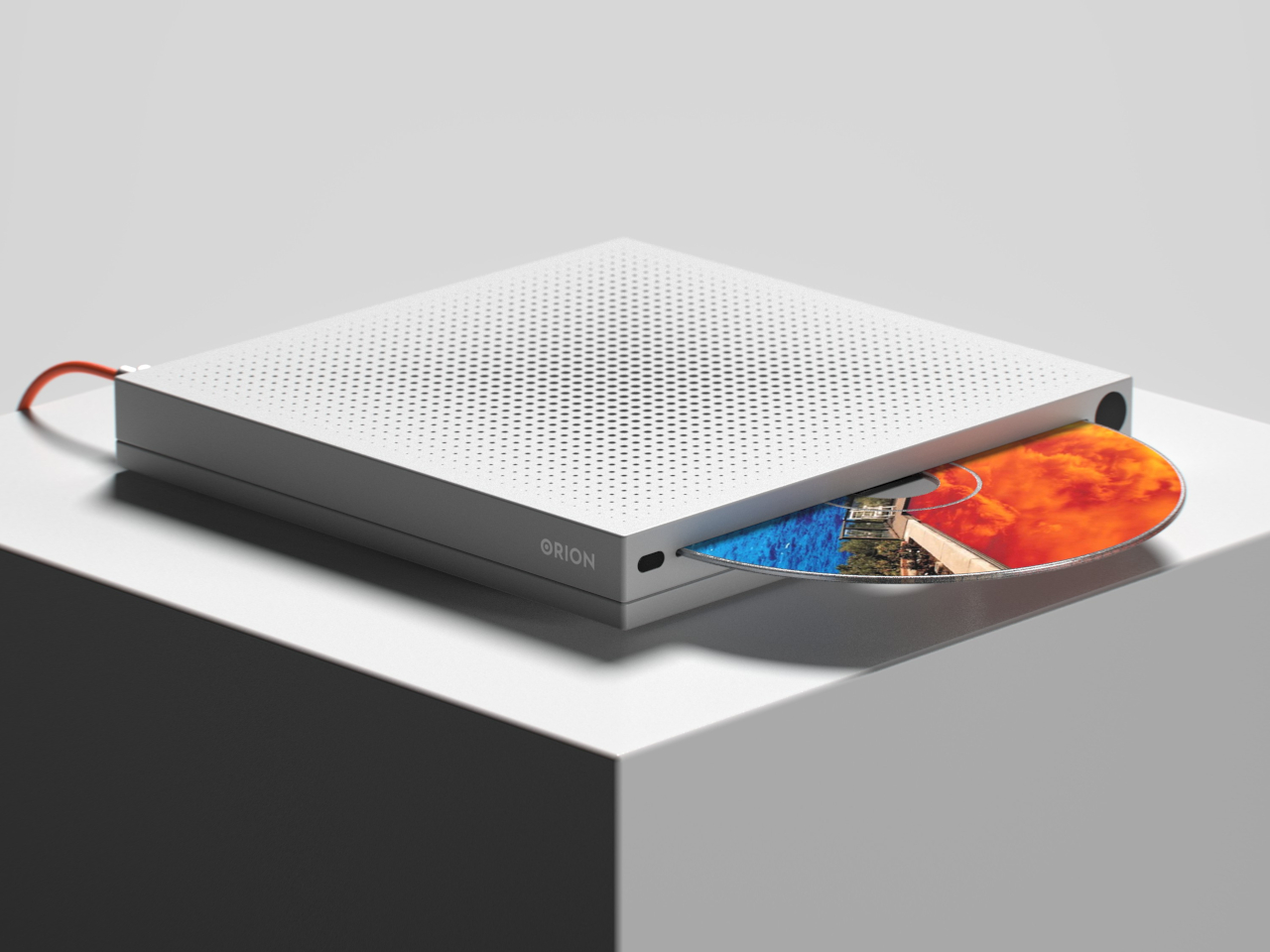
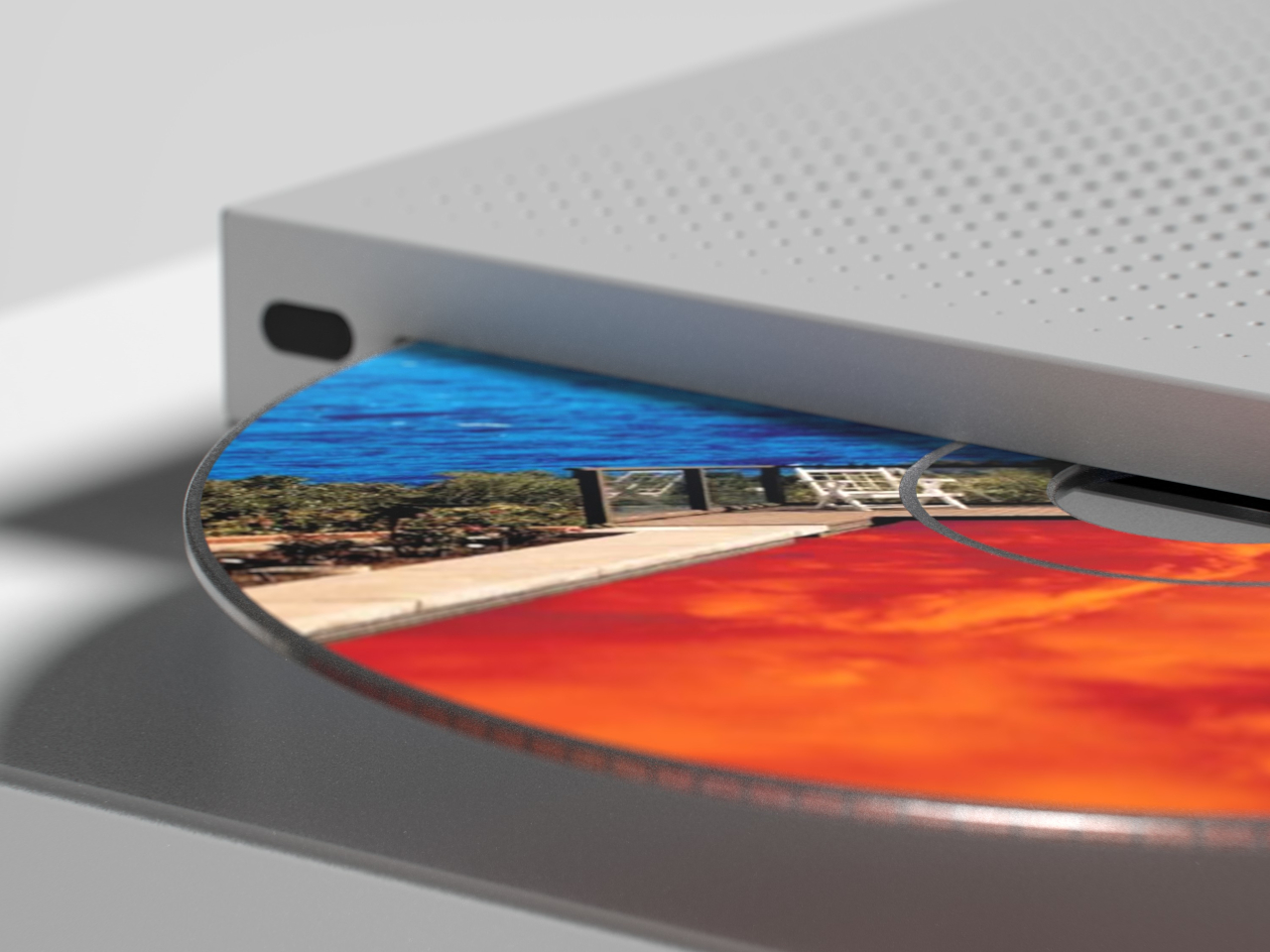
Designed by Vladimir Dubrovin, the Orion doesn’t bother with flaps or hinged lids. You slide the disc in through a thin front slot, and that’s it. A powder-coated metal body gives it an industrial calm, with almost nothing on the surface to distract from its form. An eject button, an IR receiver at the front, a power socket at the back — the controls are so reduced they barely register. It’s the kind of restraint that takes more confidence to execute than decoration ever would.
What keeps it from tipping into cold territory is the top surface. The perforations up there follow a parametric logic: holes grow larger toward the center, then taper back out toward the edges. The pattern was generated using Grasshopper 3D, a node-based parametric system that creates a logical relationship between each perforation and its proximity to the device’s outer contour. It’s a quiet flourish in an otherwise clinical design — the one place where the Orion lets geometry do the talking, and it’s enough.
What We Like
- The parametric perforation pattern is engineered with genuine logic, making it feel earned rather than decorative
- Front-loading slot design removes all mechanical clutter, keeping every surface clean and purposeful
What We Dislike
- As a concept, it remains unproduced with no confirmed specifications or release timeline
- The extreme restraint in controls may feel inaccessible to those who prefer tactile, readable interfaces
The Disc Is Back. And It Brought Better Hardware With It.
The CD player doesn’t need defending anymore. These seven designs make the case without argument: physical media is back, and it looks better than ever. Whether you want transparency, volume, minimalism, or award-winning color, there’s a player here that fits the shelf space and the listening habit. The format never lost its quality. It just needed the hardware to catch up with what the moment demands.
Put a disc in something beautiful and see what happens. The ritual is still there, the sleeve, the track listing, the deliberate act of choosing a record and committing to it. These players don’t compete with streaming. They offer something streaming can’t: a reason to sit still and listen. That’s the real comeback. Not nostalgia. A better way of paying attention to music you already love.