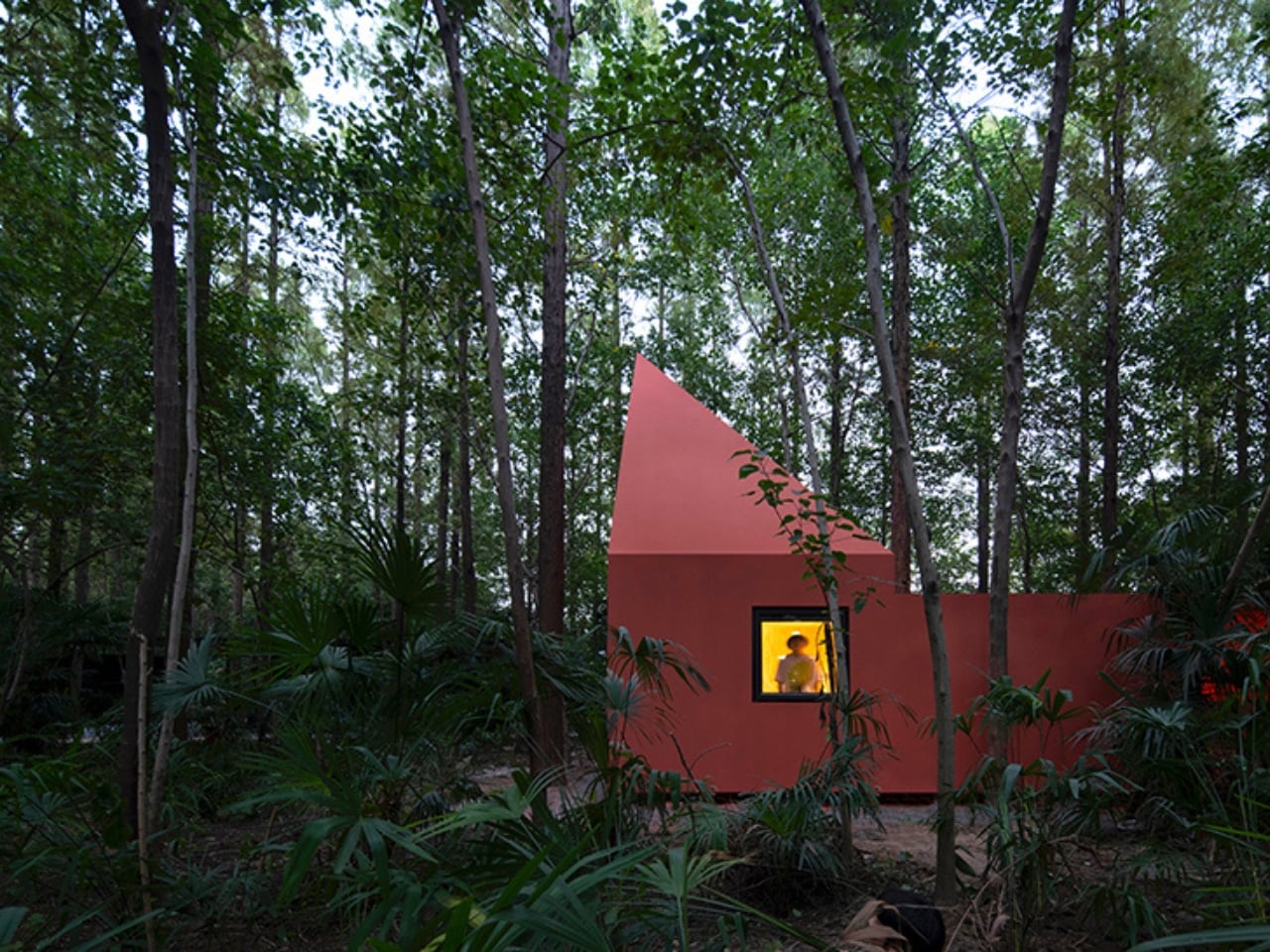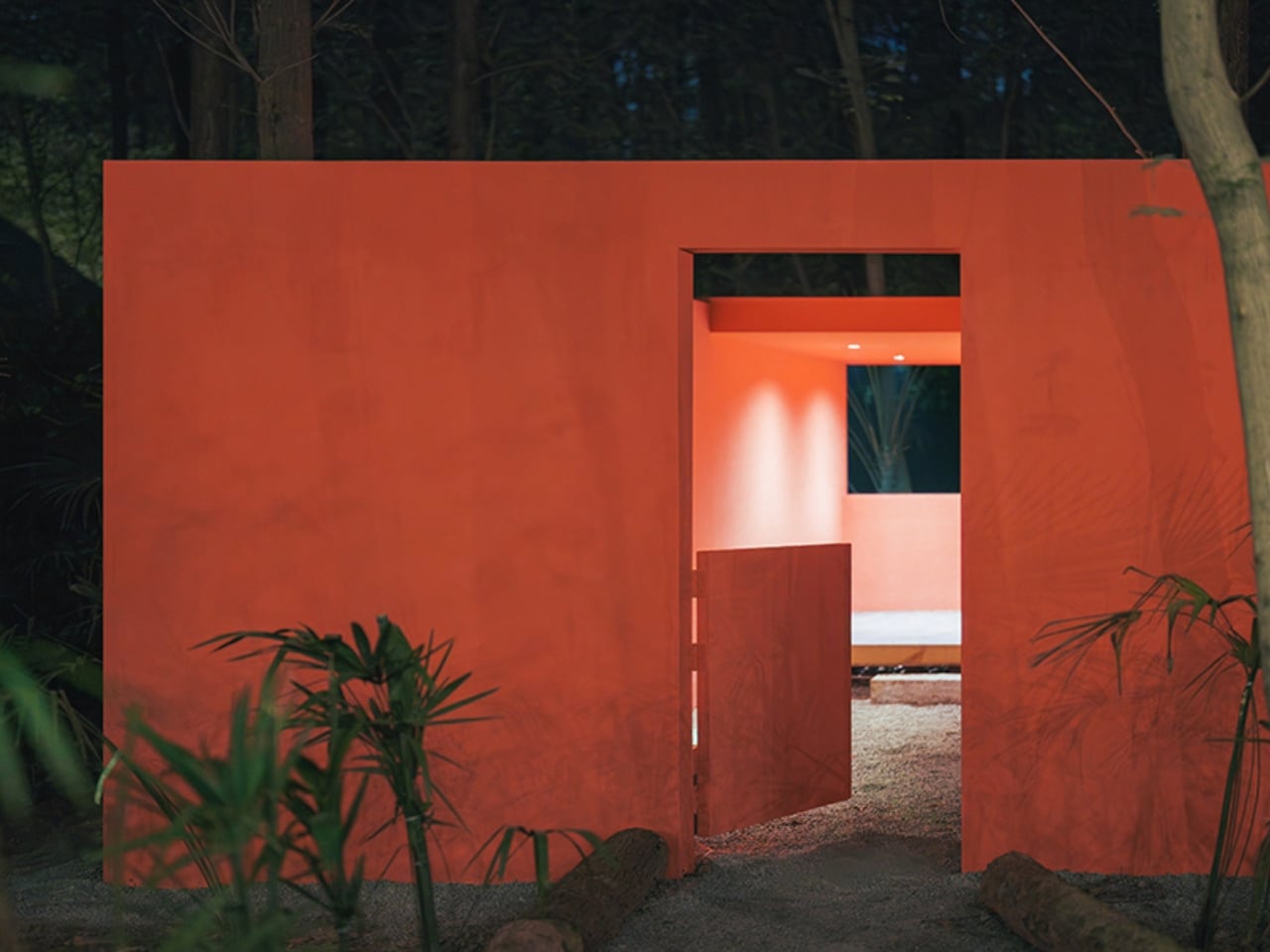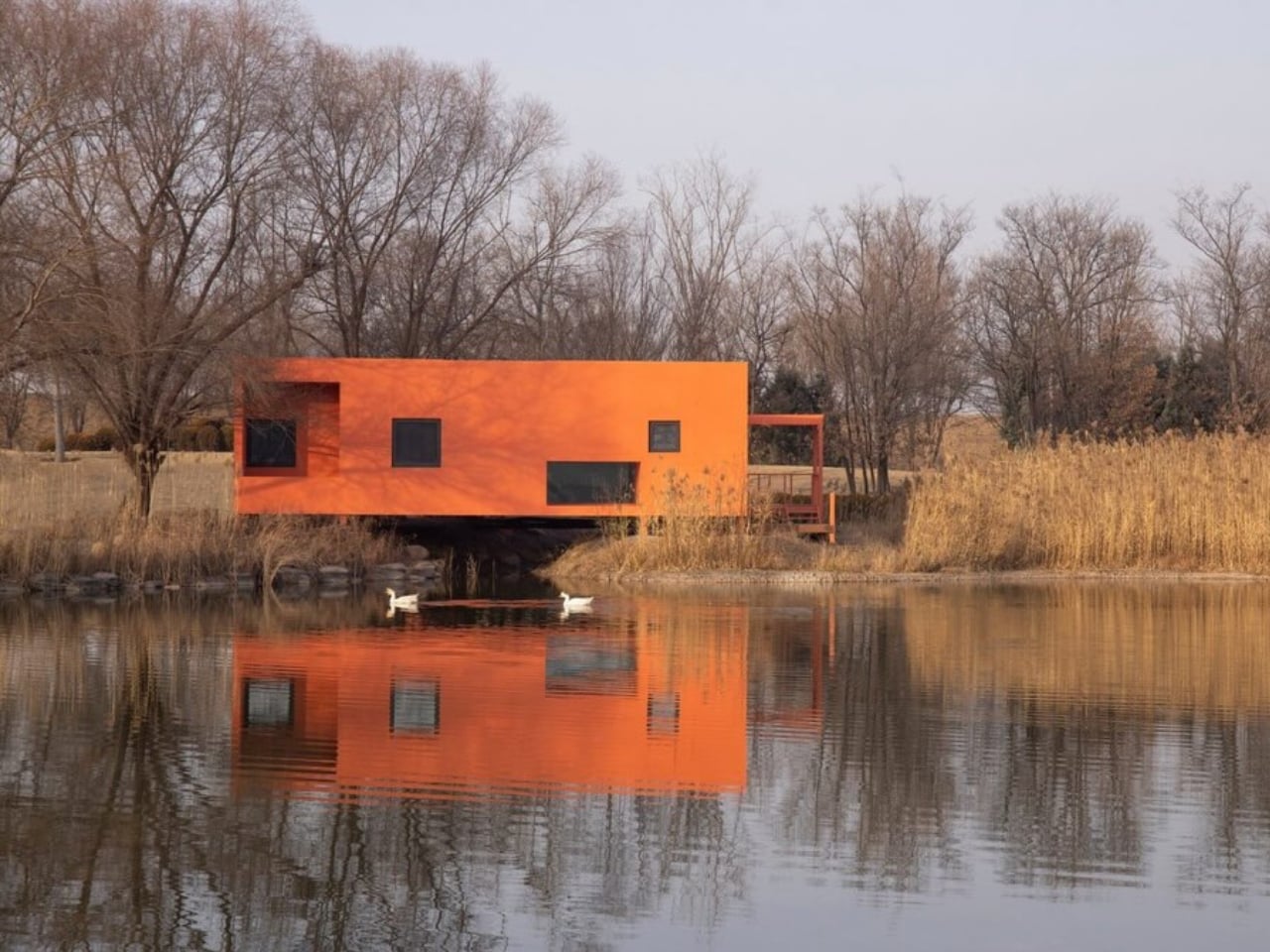
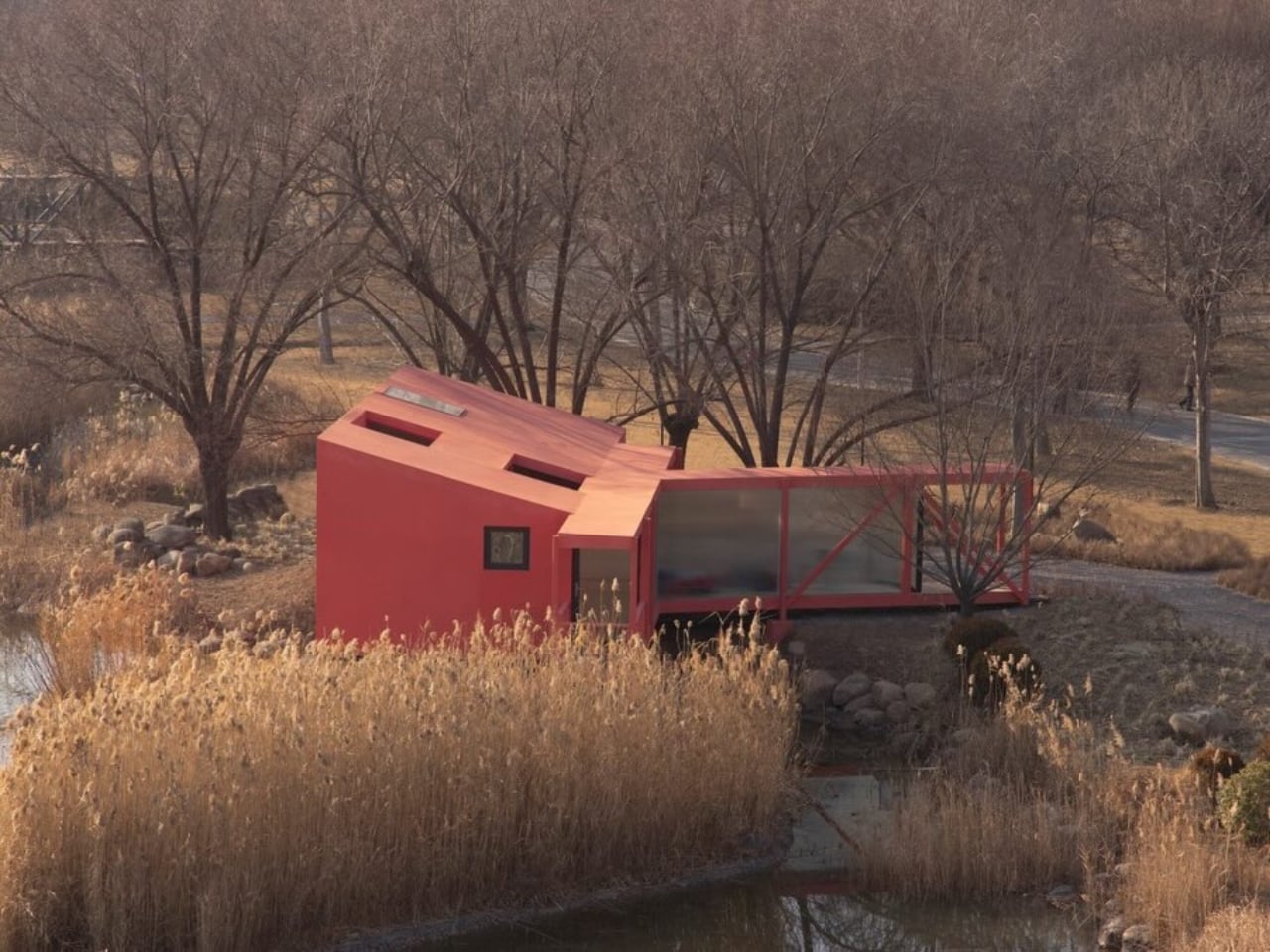
The first time I saw images of the Red Bridge Cabin, I spent a good five minutes just staring at them. Not scrolling. Not clicking through. Just staring. A small red structure sitting on a quiet island, reflected in the water around it, surrounded by the stillness of a thousand-year-old heritage park in Zhengzhou, China. It looked like something out of a dream someone had while reading ancient poetry. It makes me want to spend a few hours in it. That’s the kind of thing good architecture can do to you.
Designed by Wiki World and the Advanced Architecture Lab, the Red Bridge Cabin is the 138th entry in Wiki World’s ongoing “Wild Home” series, a collection of experimental small-scale dwellings that push back against conventional ideas about what a home needs to be. At just 79 square meters, the cabin sits within Yuancheng Cultural Park, a free-admission heritage park built around the Yuanling Ancient City Site in the Zhengzhou Airport Economy Zone. The site is a nationally protected cultural landmark that integrates historical preservation, ecological landscapes, and family-friendly leisure all in one place. Parking a bold red wooden cabin in the middle of that requires either tremendous confidence or a very specific kind of audacity. I’d argue it requires both.
Designers: Advanced Architecture Lab, Wiki World (photos by Arch Exist)
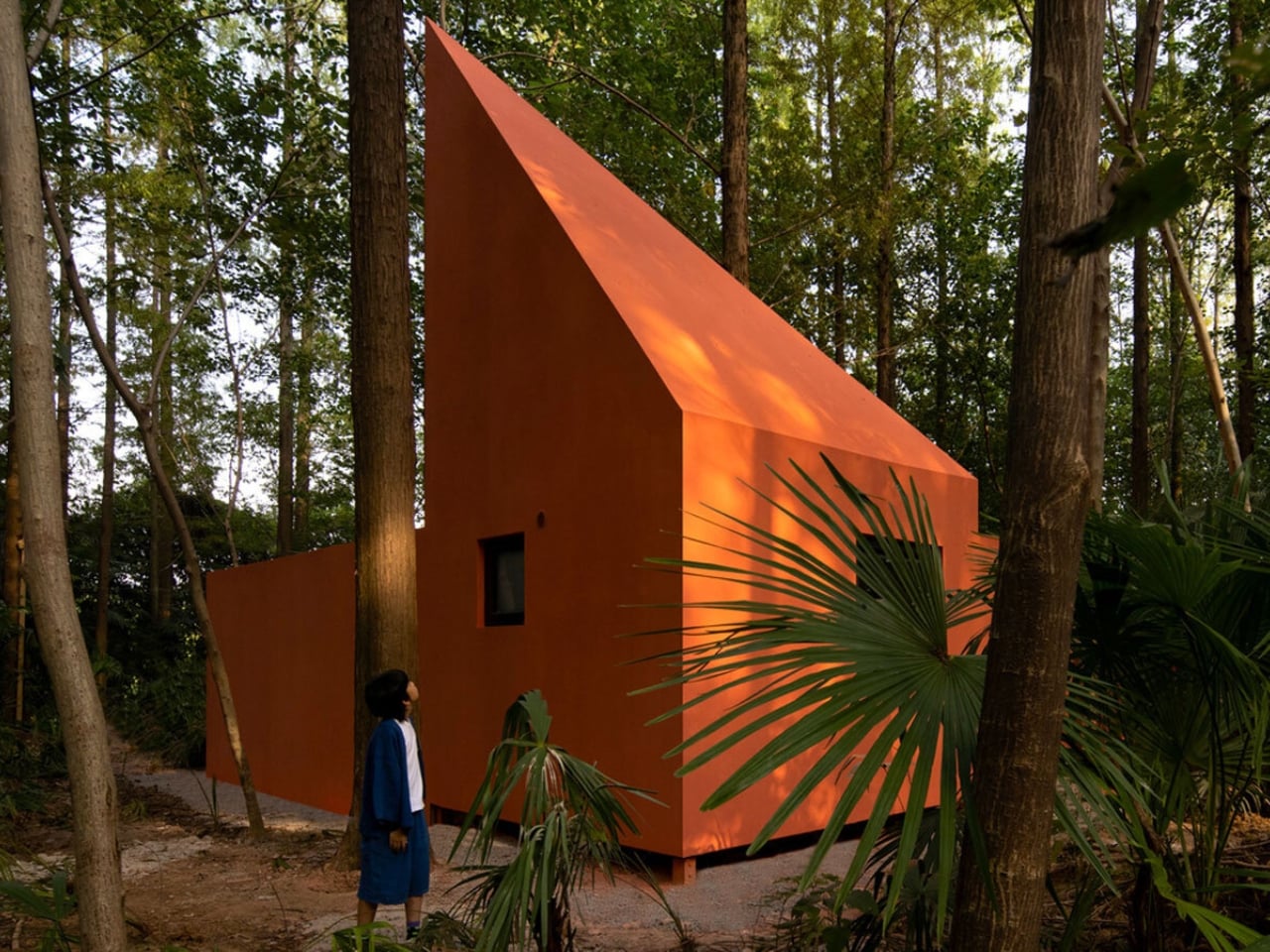
The name comes from the bridge. You reach the cabin by crossing a narrow, translucent bridge over the water, which immediately sets the tone. This isn’t a building you stumble into. You approach it, and that approach is already part of the experience. The designers describe it as a place where “comfort and wilderness, engagement and detachment, become indistinct, like longing itself, beautifully blurred.” I know that reads a little poetic for a press release, but I think they actually meant it, and looking at the photographs, it’s hard to argue against it.
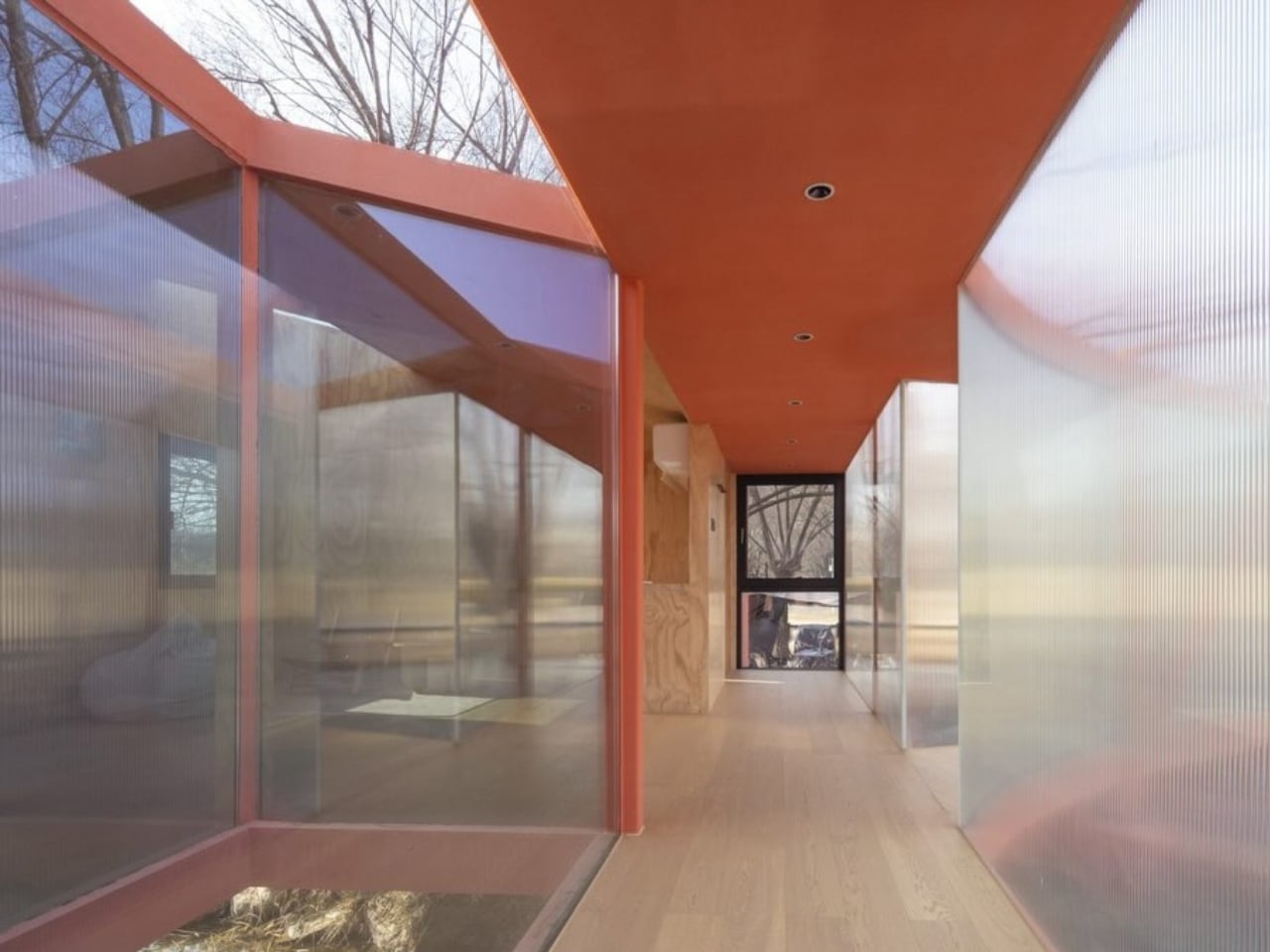
Inside, the cabin incorporates two courtyards and a large skylight, which together create what the designers call “a landscape within the living space itself.” That phrase sounds abstract until you see it in practice. Natural light moves through the interior differently at different times of day. Translucent screens blur the surrounding views into soft silhouettes while carefully placed windows frame specific sightlines outward. It’s a small space that feels intentionally porous, as if the boundary between inside and outside was always meant to be negotiable.
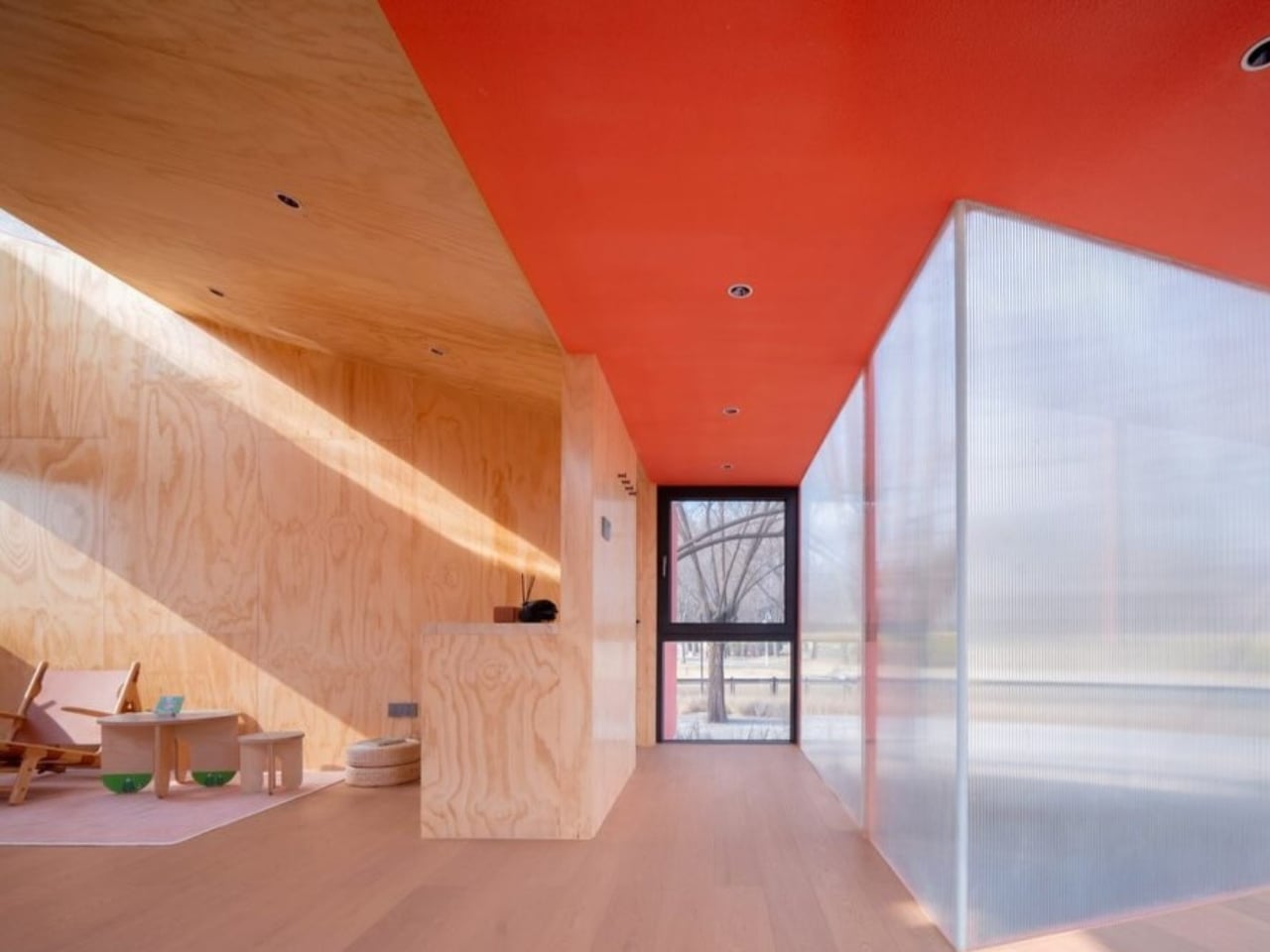
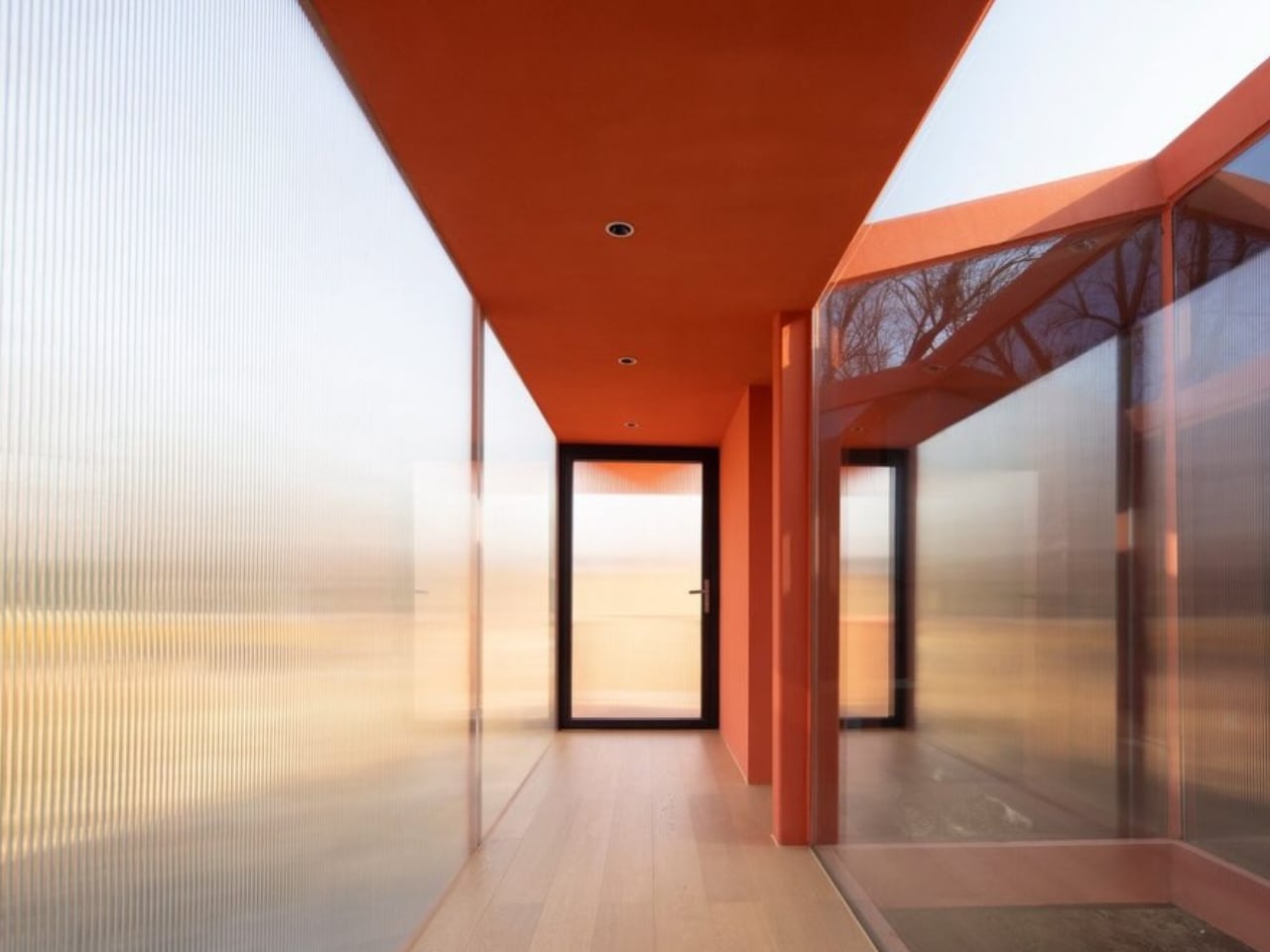
The construction method deserves its own moment. The entire structure is built from glued laminated timber, with every irregular component and joint digitally designed and custom-fabricated for full prefabricated assembly. Small metal connectors link the timber elements, and the whole thing can be disassembled and reassembled without permanently altering the site. The designers frame this as a feature, not a workaround, and for a cabin sitting on protected heritage ground, it’s the only approach that makes any sense. The cabin belongs to the landscape without claiming it.
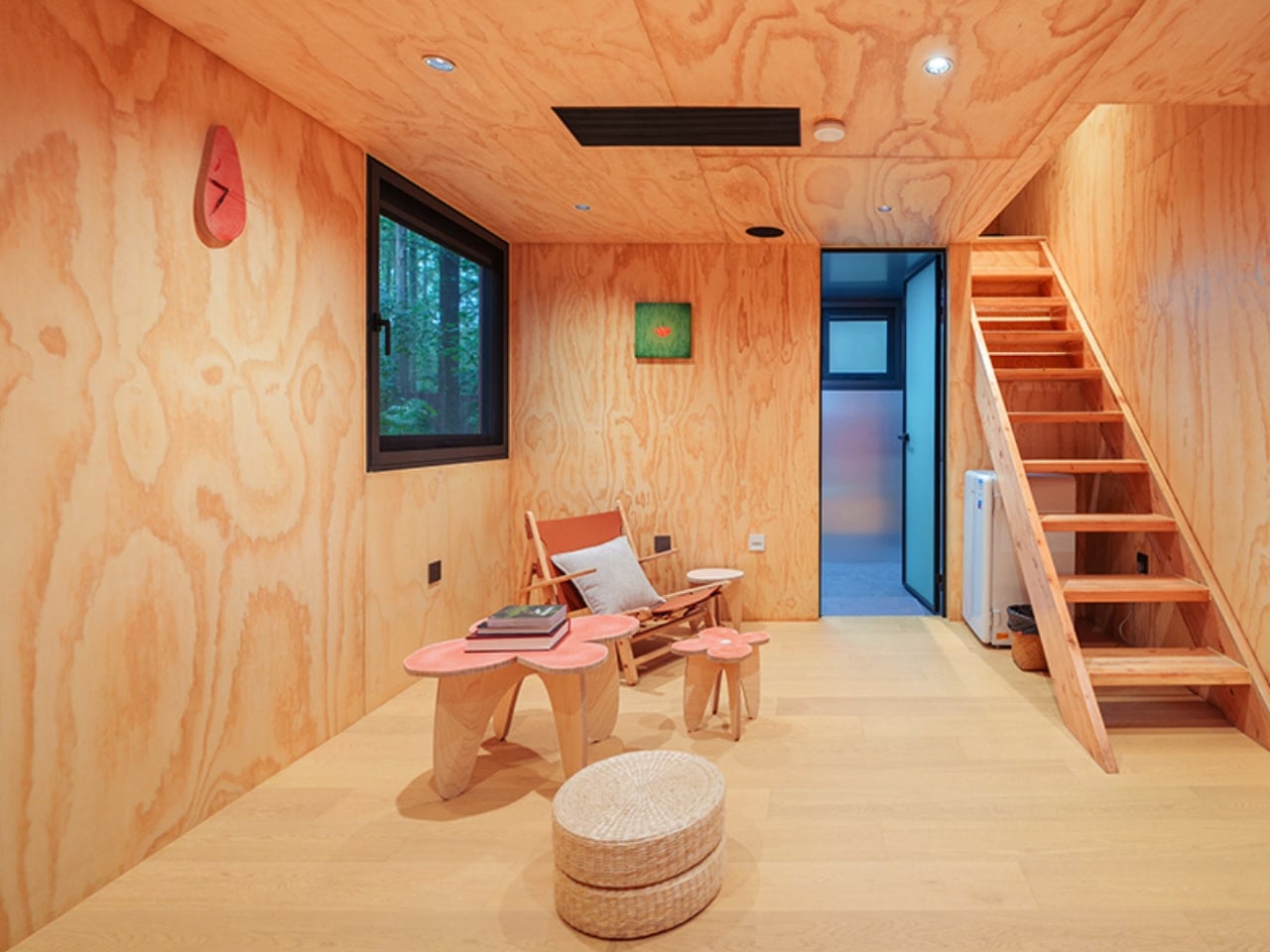
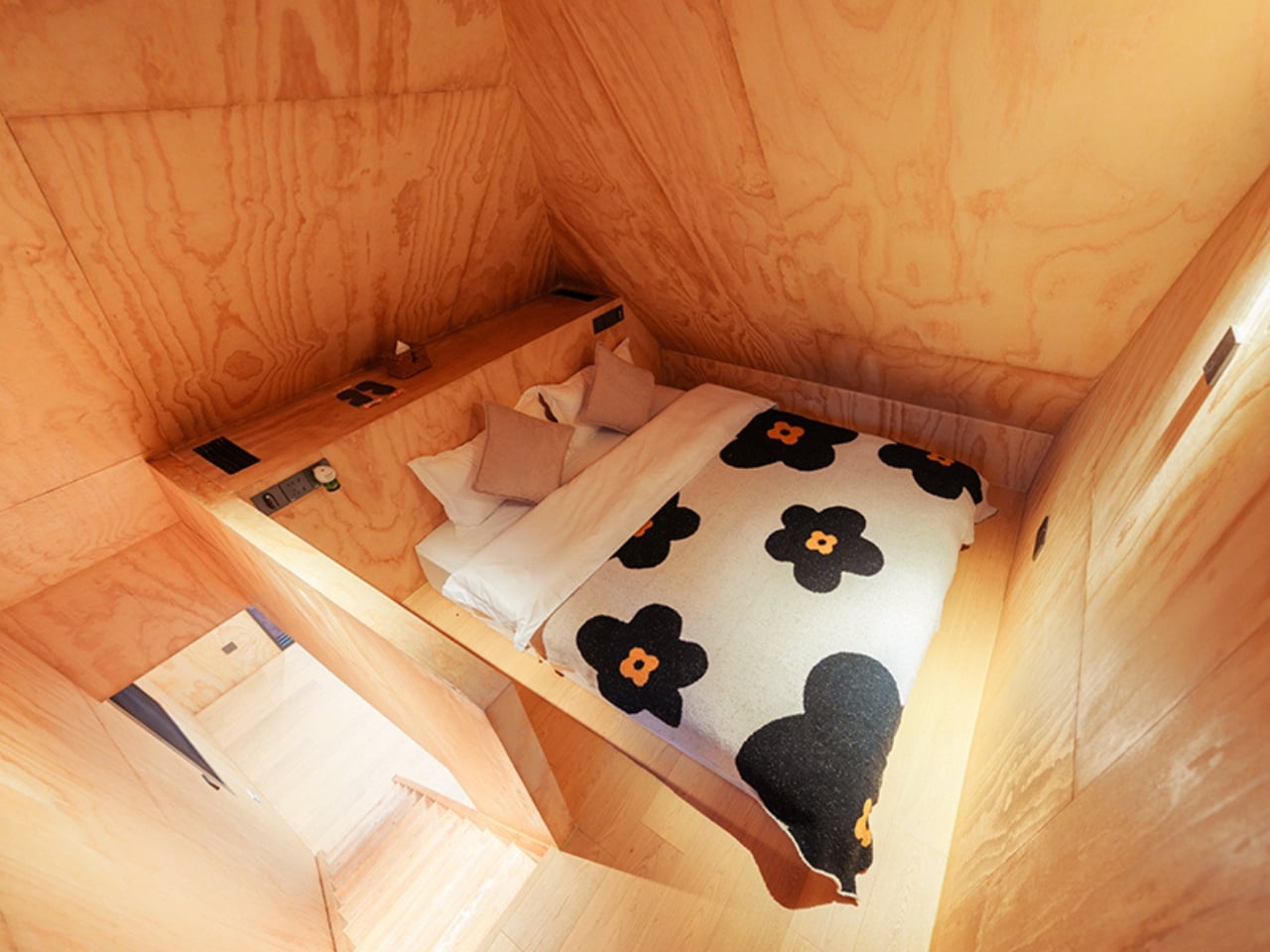
Wiki World has been building this kind of experimental wilderness dwelling for years, and their consistency is a big part of what makes the Red Bridge Cabin feel interesting rather than just pretty. They’re genuinely working through a set of ideas about small-scale living, about what it means to be physically close to materials, about how reducing space can make a person more sensitive to their surroundings. Their phrase, “small brings us closer to the material,” sounds like design philosophy, but it also sounds like something that could apply to how most of us live, if we let it.
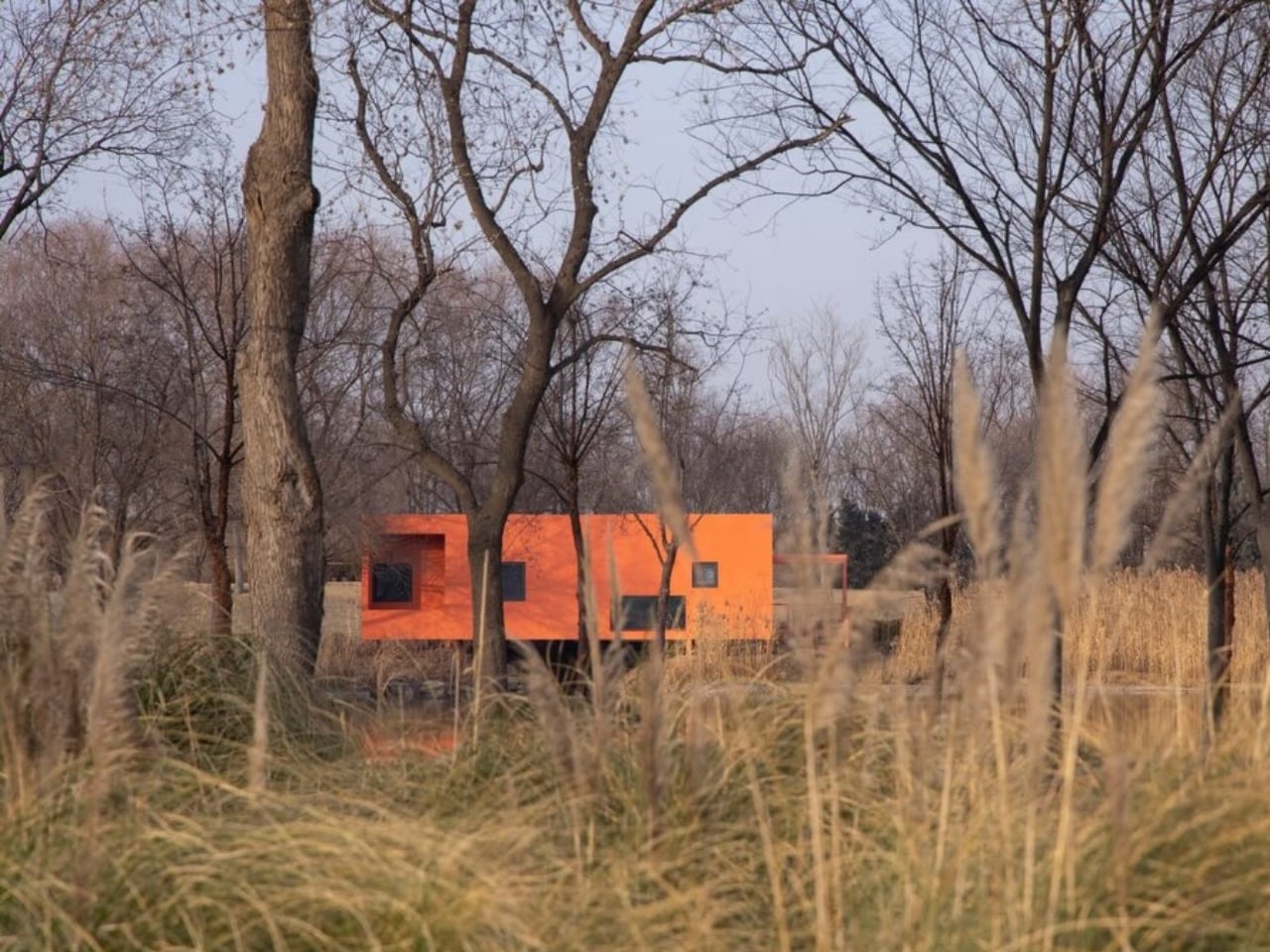
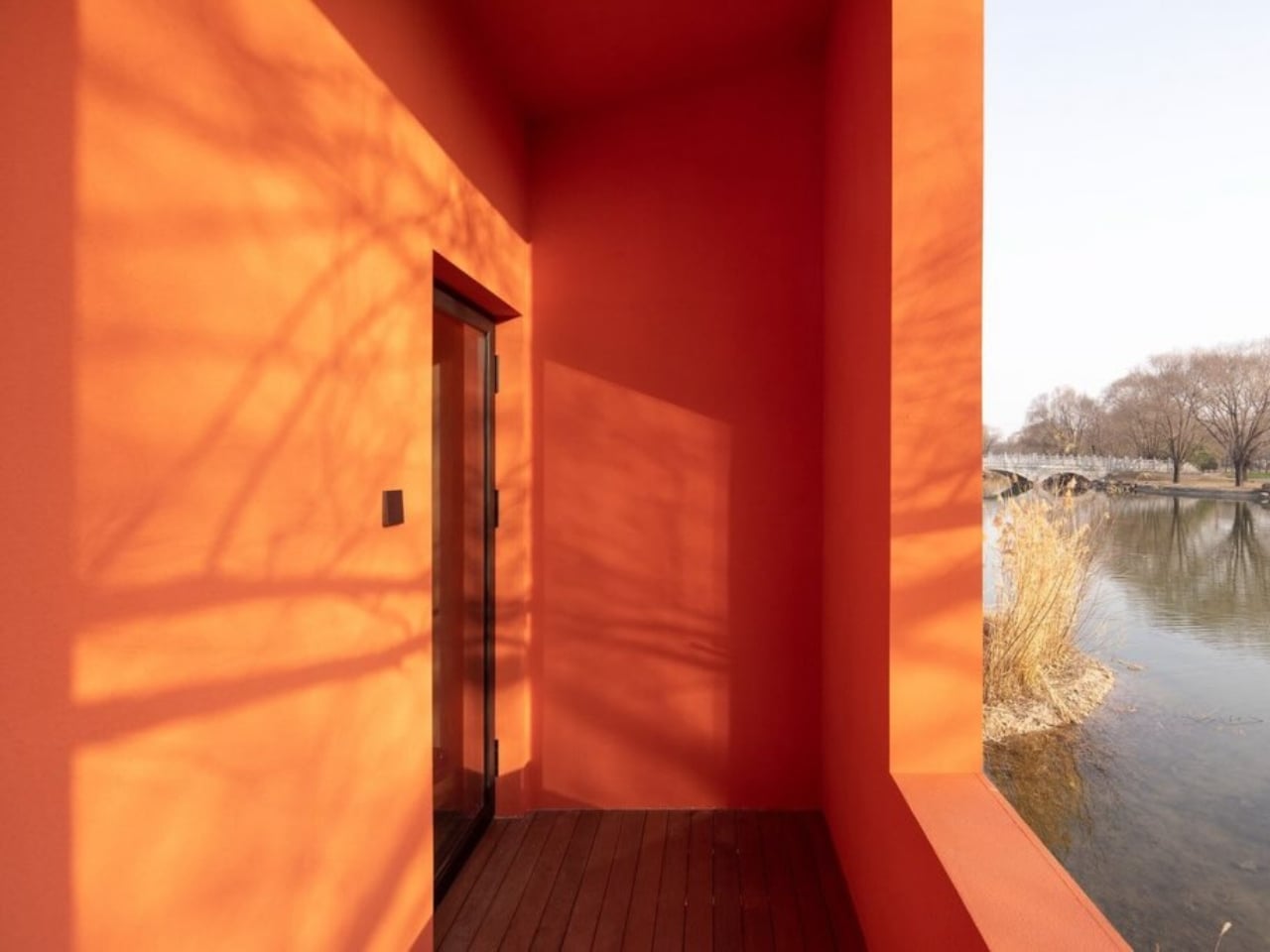
The cabin is painted a deep, saturated red, which at first feels like a deliberate provocation against its natural setting. But the more you look at it in those photographs, reflected in still water against muted greens and ancient earth, the more it starts to feel inevitable. Like it was always supposed to be there. Like the landscape had been waiting for something to mark it. I’m not entirely sure if that’s great design or great photography. Probably both. Either way, I keep returning to those images, and that feels like its own kind of answer.