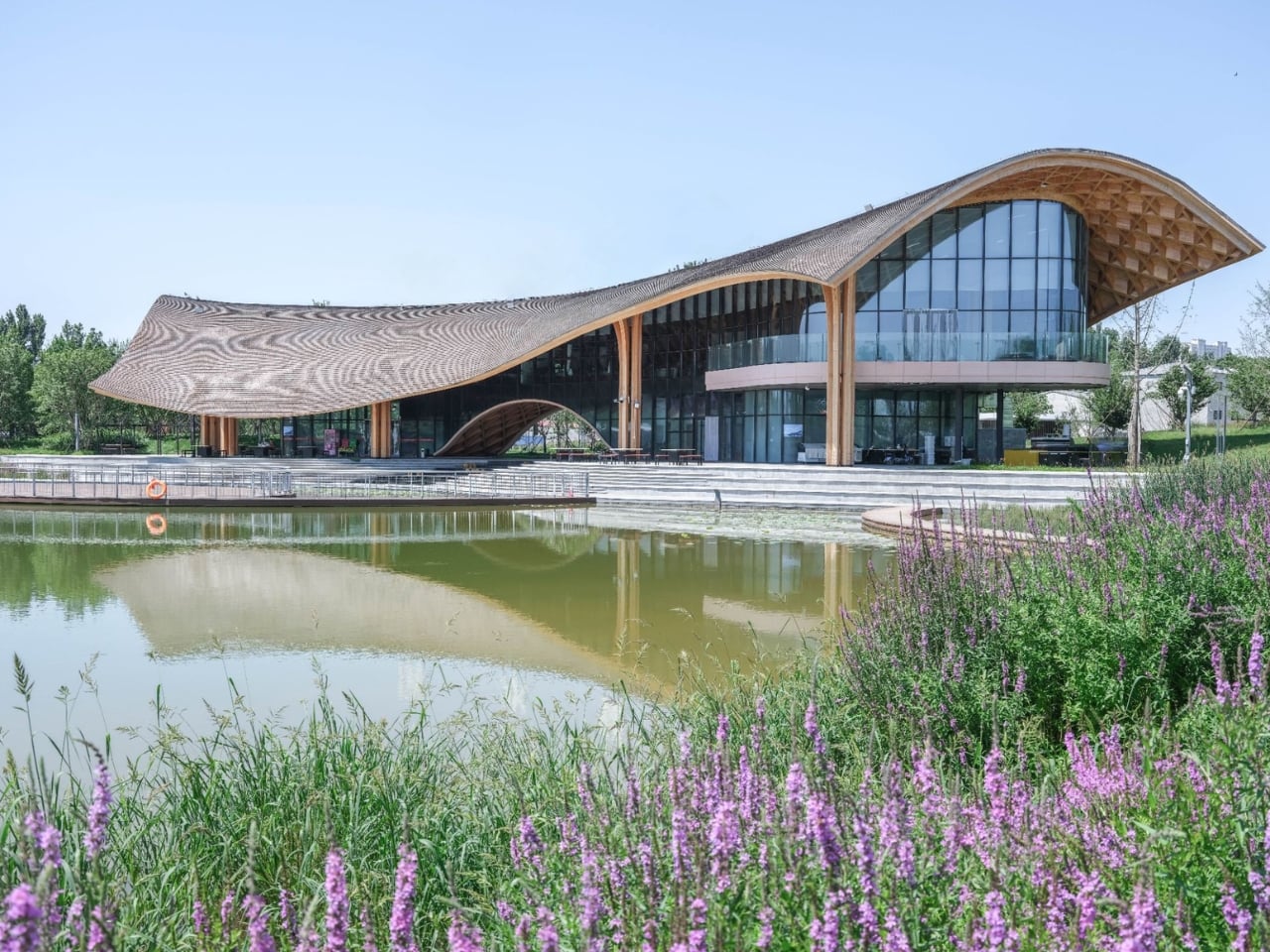
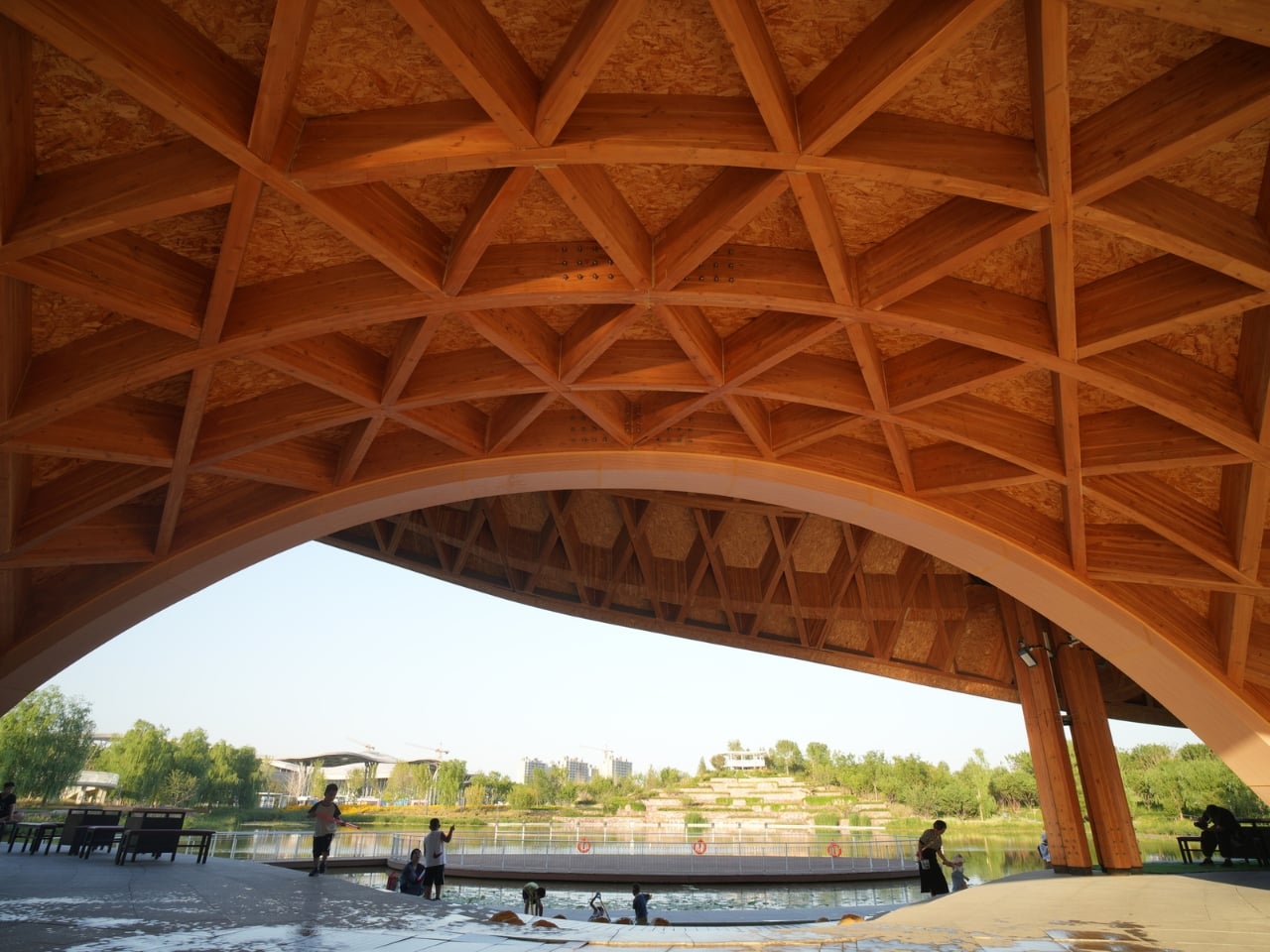
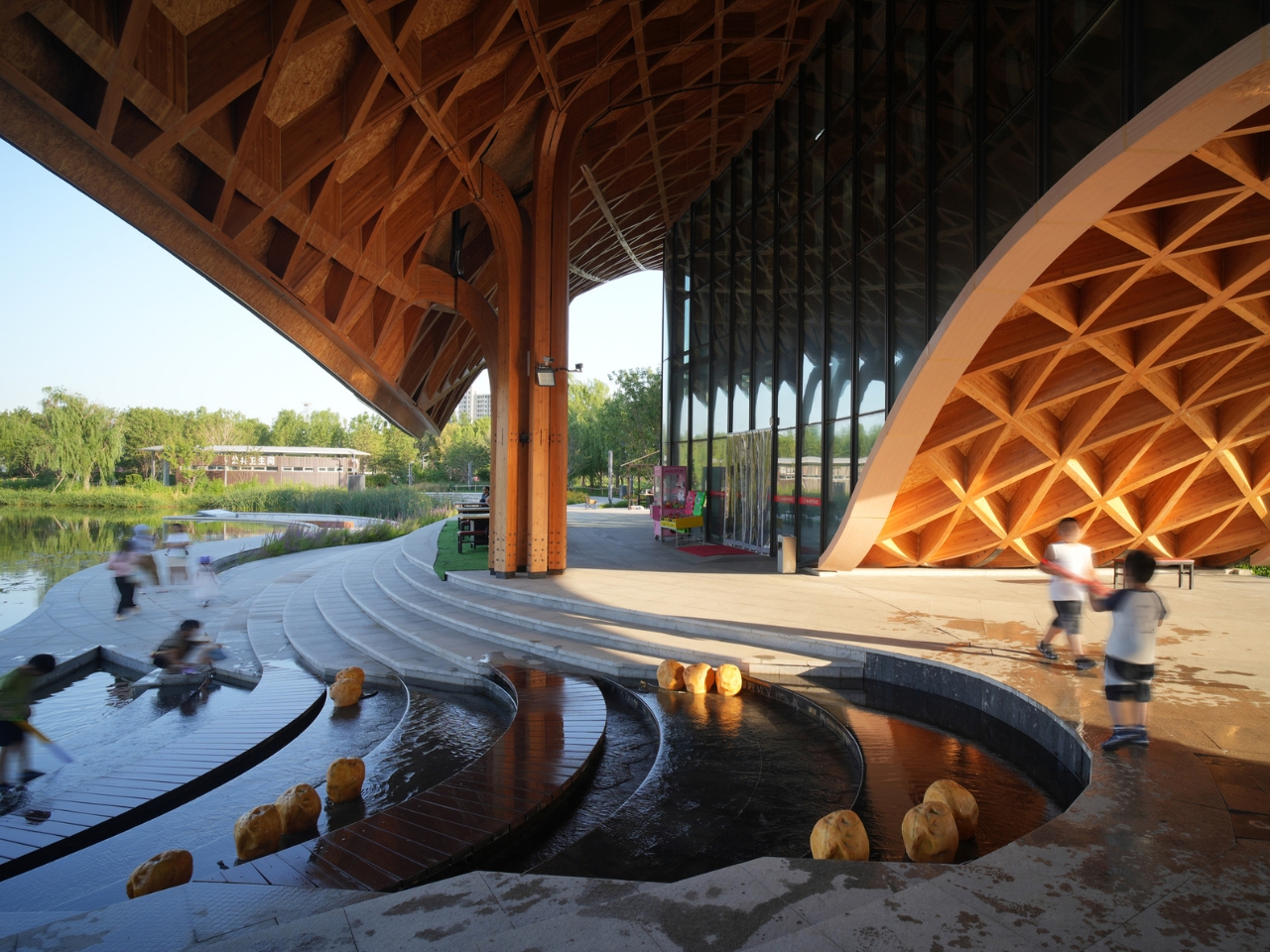
The first thing you notice about the Lakeside Restaurant at Silk Road Friendship Park in Dingzhou, China, is that the building doesn’t announce itself. It doesn’t shout or compete. It simply arrives at the water’s edge like it’s always been there, wooden columns branching upward like trees that never needed permission to grow.
Completed in 2025 by THAD SUP Atelier, the restaurant sits within a cultural park in Hebei Province, a place layered with historical significance tied to Silk Road trade routes. The building spans 2,400 square meters and was designed by principal architects Song Yehao and Chen Xiaojuan. But the numbers don’t explain why this project feels so quietly extraordinary. The design does.
Designer: THAD SUP Atelier (photos by Xiaoqing Guan, Xinxhing Chen)
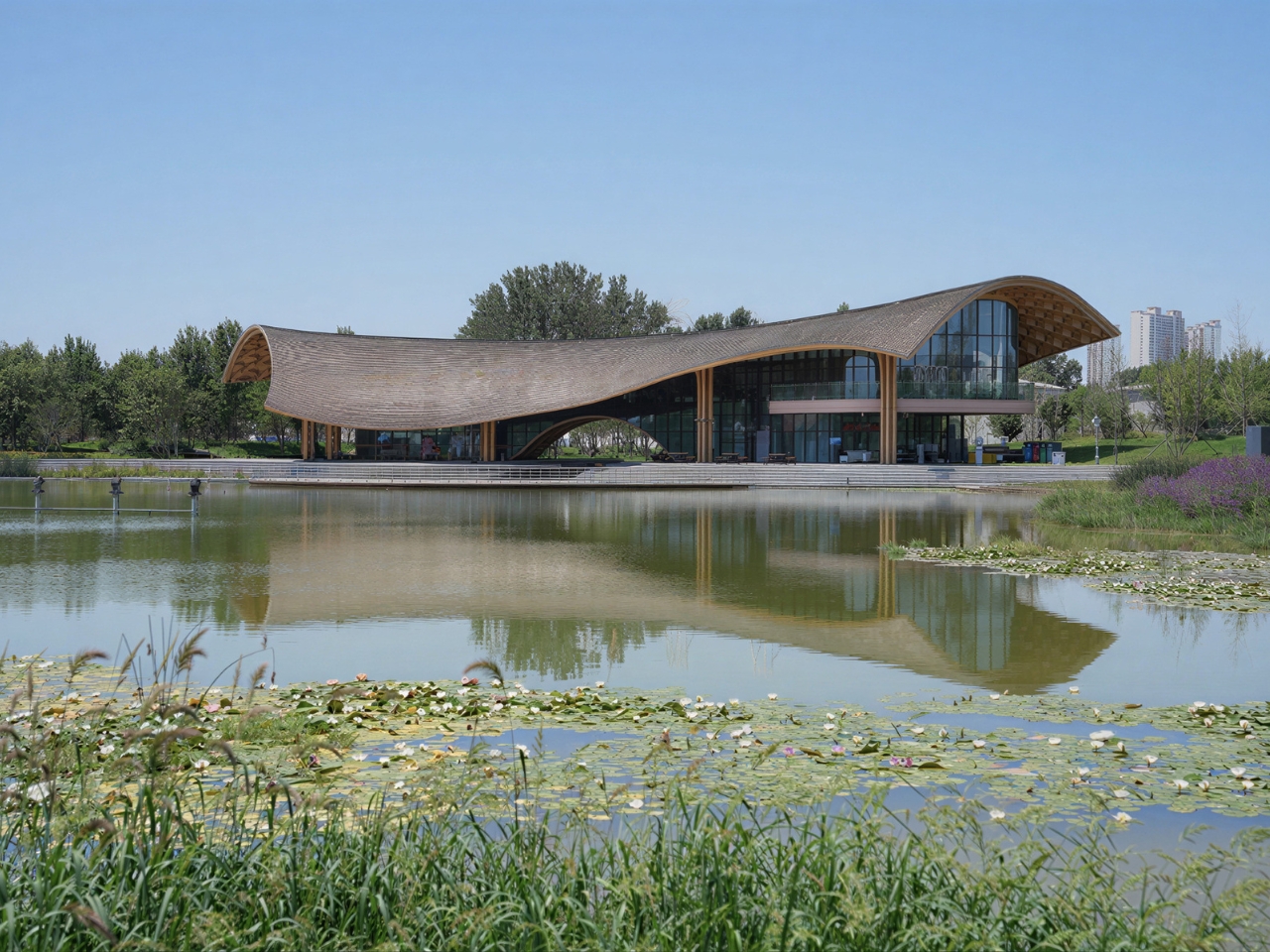
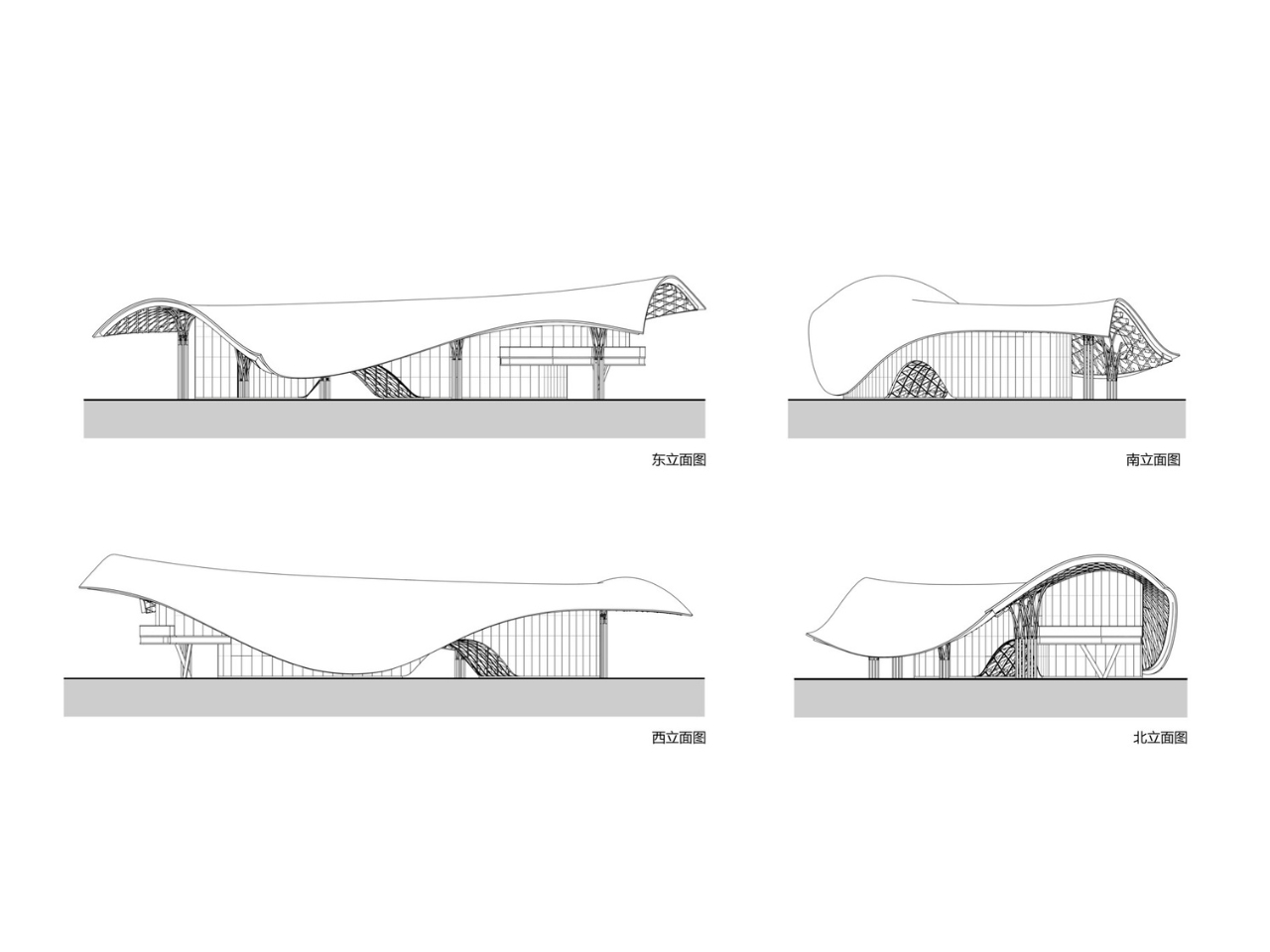
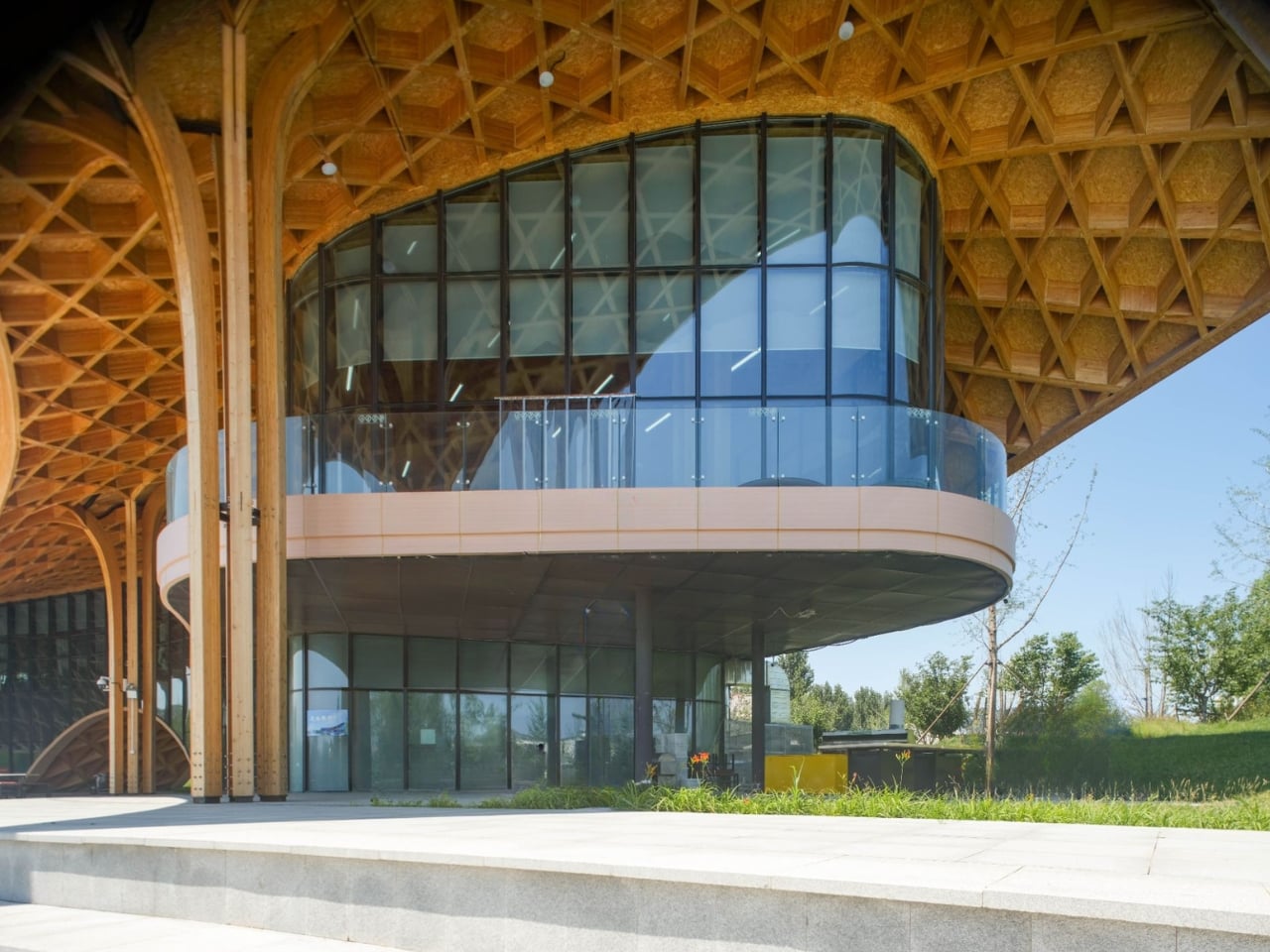
The central concept is deceptively simple: the building takes its visual language from the forest canopy above and the lake below. Blossoming wooden columns rise from the ground and fan out to meet a flowing roof structure, all designed as one integrated system. The result looks less like constructed architecture and more like something that grew out of the ground and arched over the water because it felt like the right thing to do.
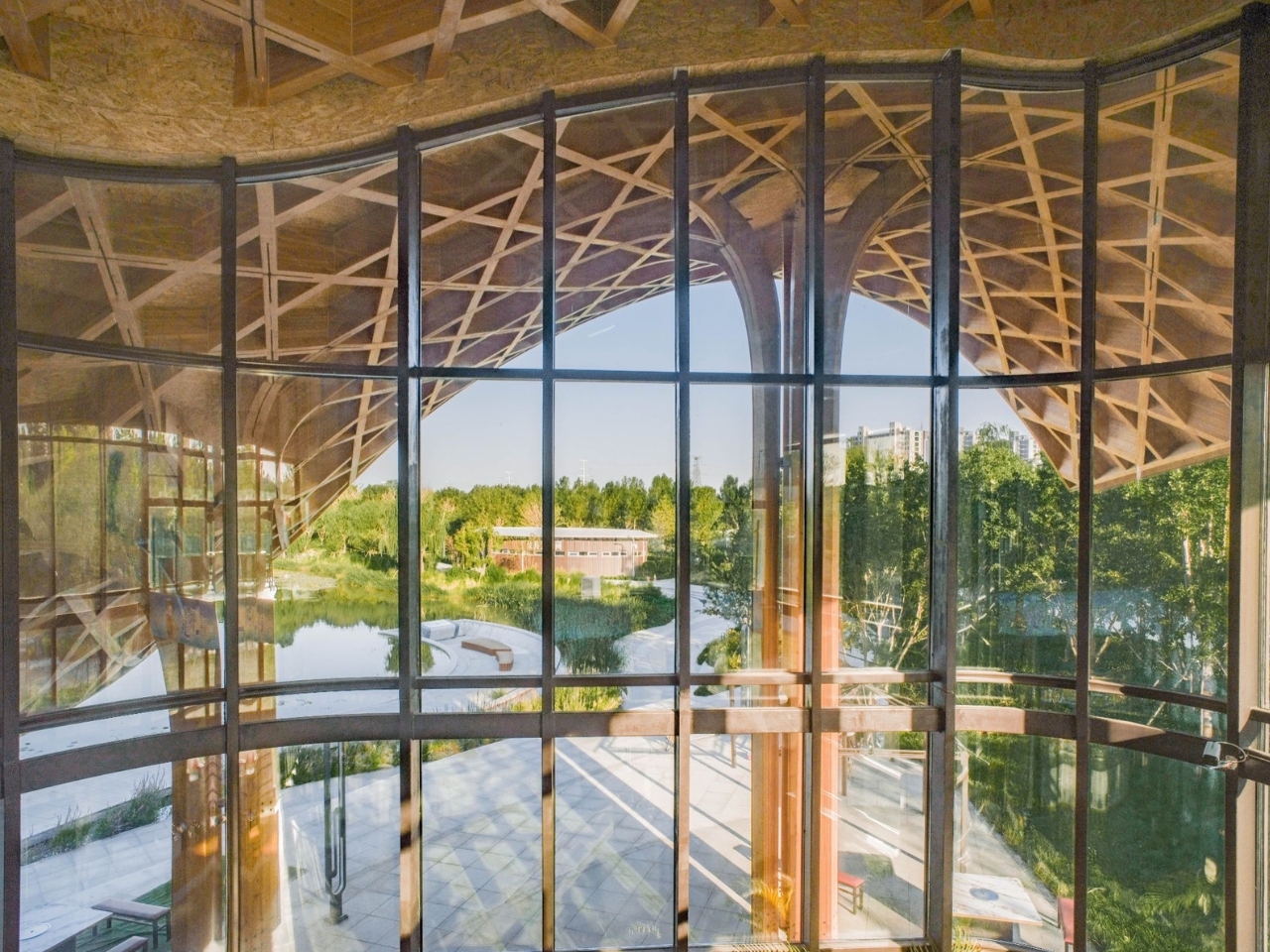
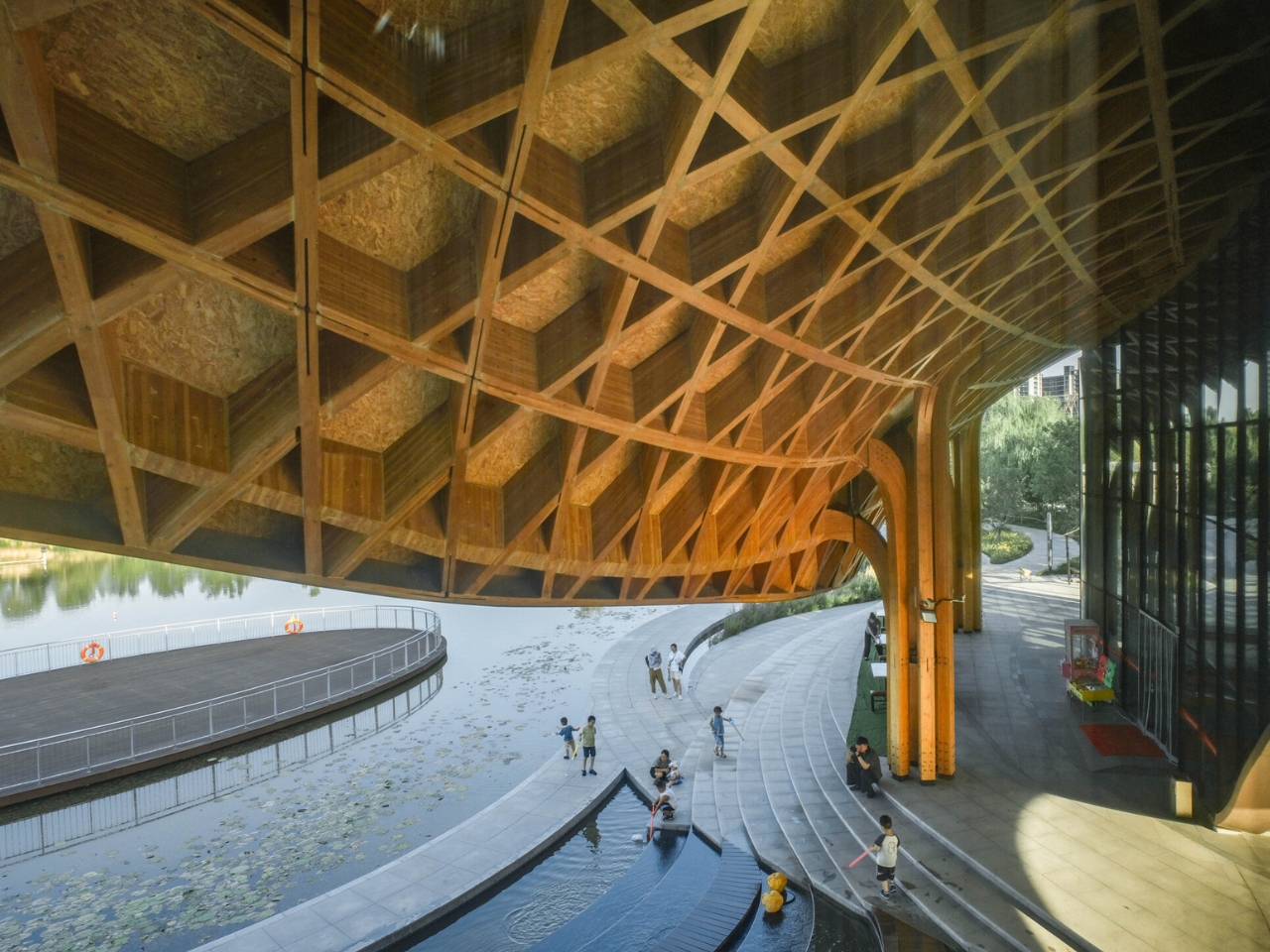
What makes this possible, practically speaking, is the fusion of digital fabrication and traditional woodworking. The team used modern glued laminated timber and relied on digital industrial prefabrication for precise form control, while simultaneously optimizing each wooden component’s dimensions through digital tools to preserve the handcrafted quality you can feel at eye level. The idea that a process this technically demanding could produce something this warm and tactile is one of the better arguments for what design technology can actually do when it’s used thoughtfully rather than just to show off.
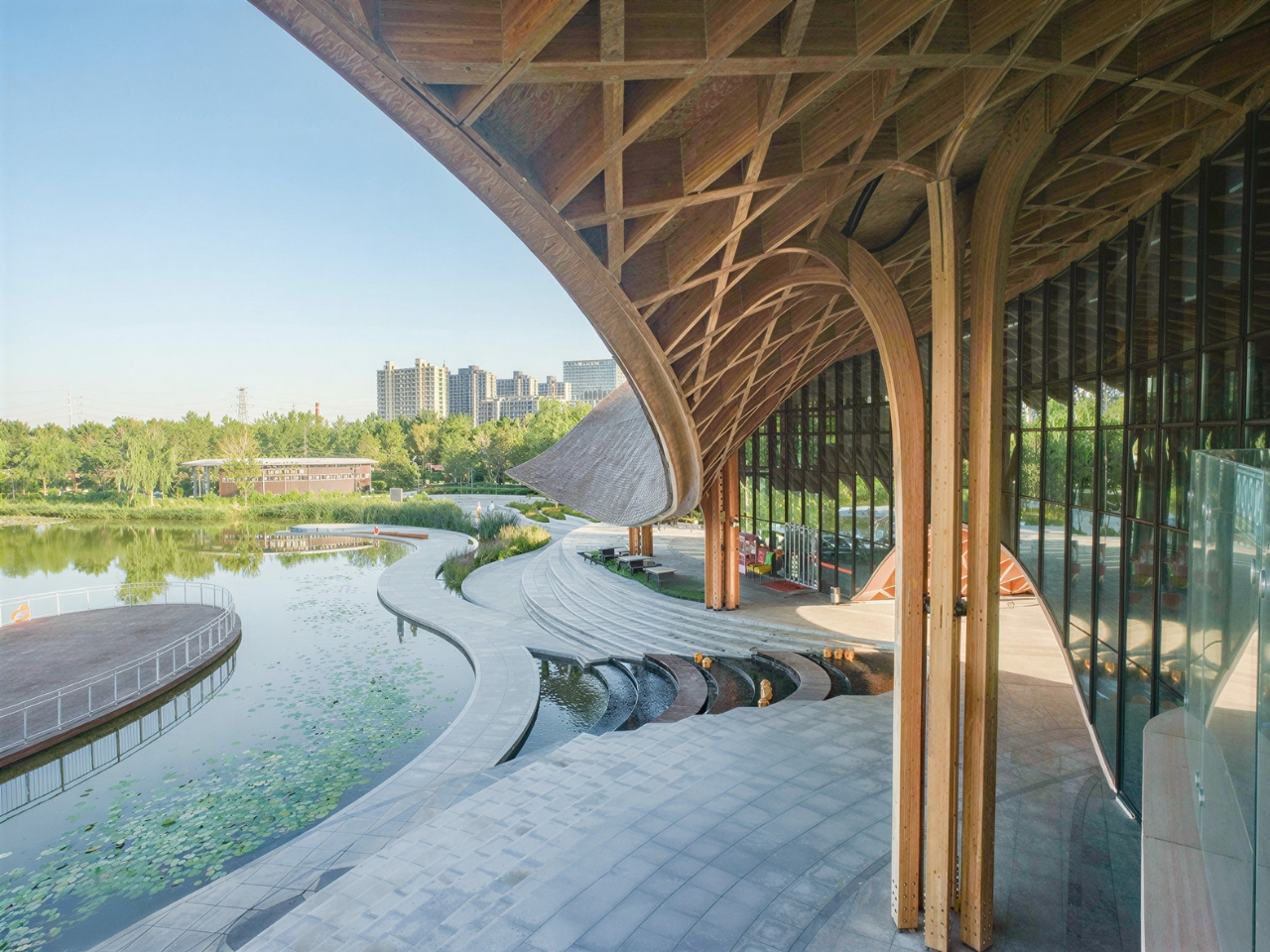
Functionally, the layout is equally deliberate. The building slopes gently from south to north along the shoreline. The west facade, facing the main park road, is relatively closed, concealing the kitchen and back-of-house areas from view. But that restraint on the west side is there for a reason: it channels visitors toward a central arch opening on the ground floor. You pass through it, and suddenly you’re standing at the water’s edge. The progression is intentional, moving from arrival to view to lingering, and it works the way good spatial storytelling always does.
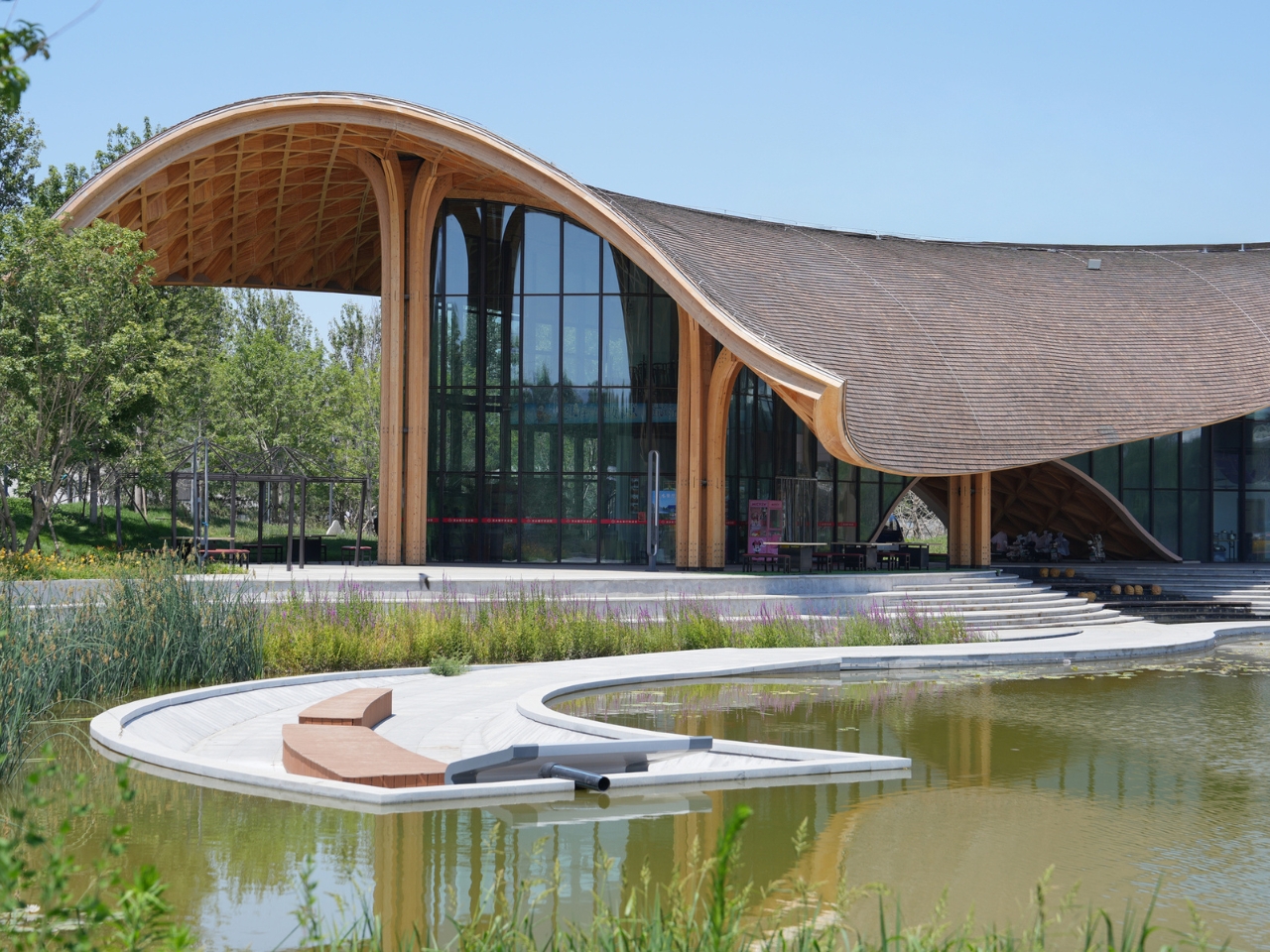
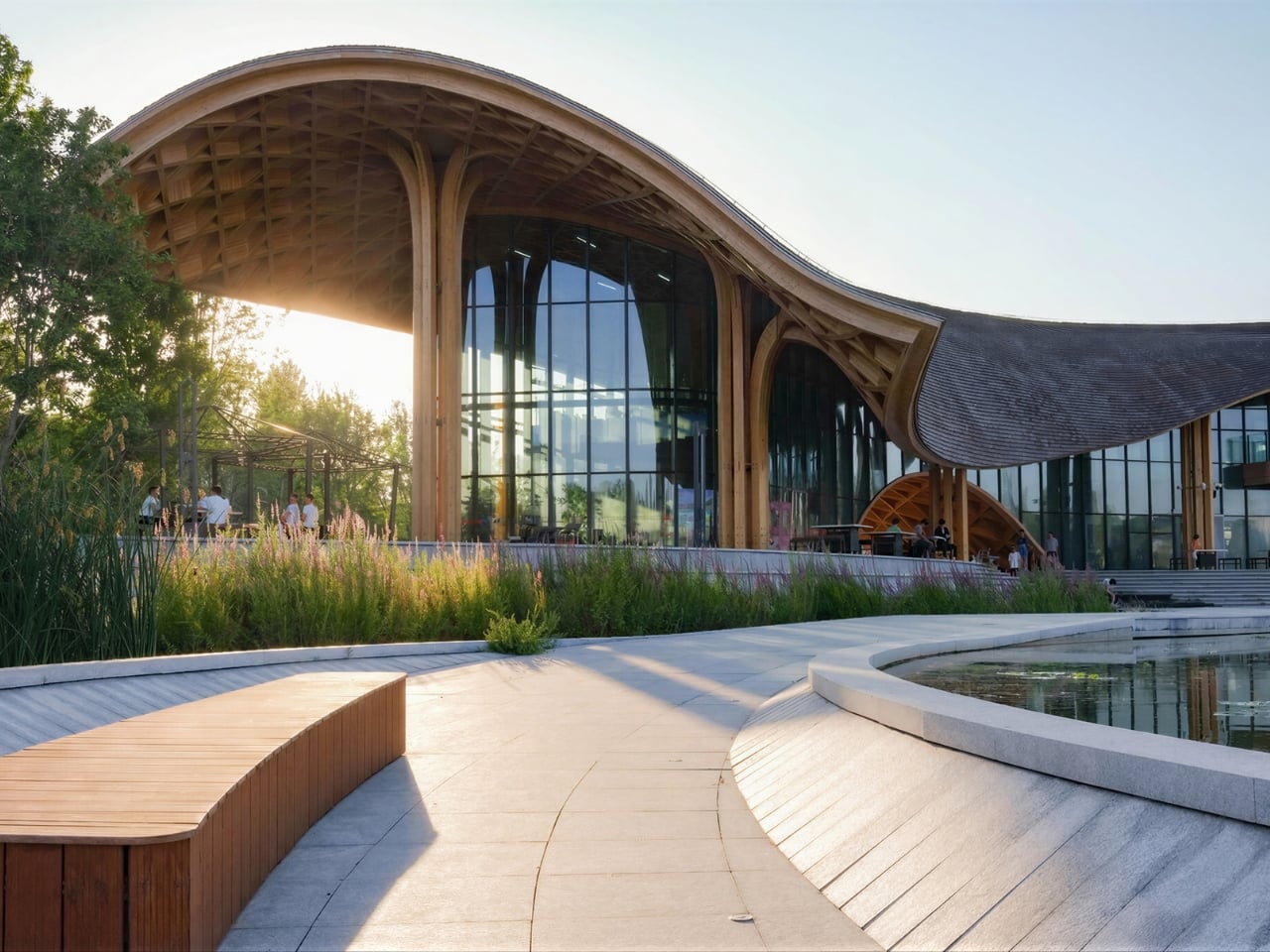
Three sides of the building open toward the lake, and the overhanging roof creates layered corridor spaces that shift and change as you move through them. During the day, the wooden structure casts shadows across the glass curtain wall, projecting a forest canopy effect that bleeds into the interior. At night, when the interior lights come on, the boundary between inside and outside softens, and the full curve of the wooden structure becomes luminous. It’s the kind of building that earns a second visit just to see it at different hours.
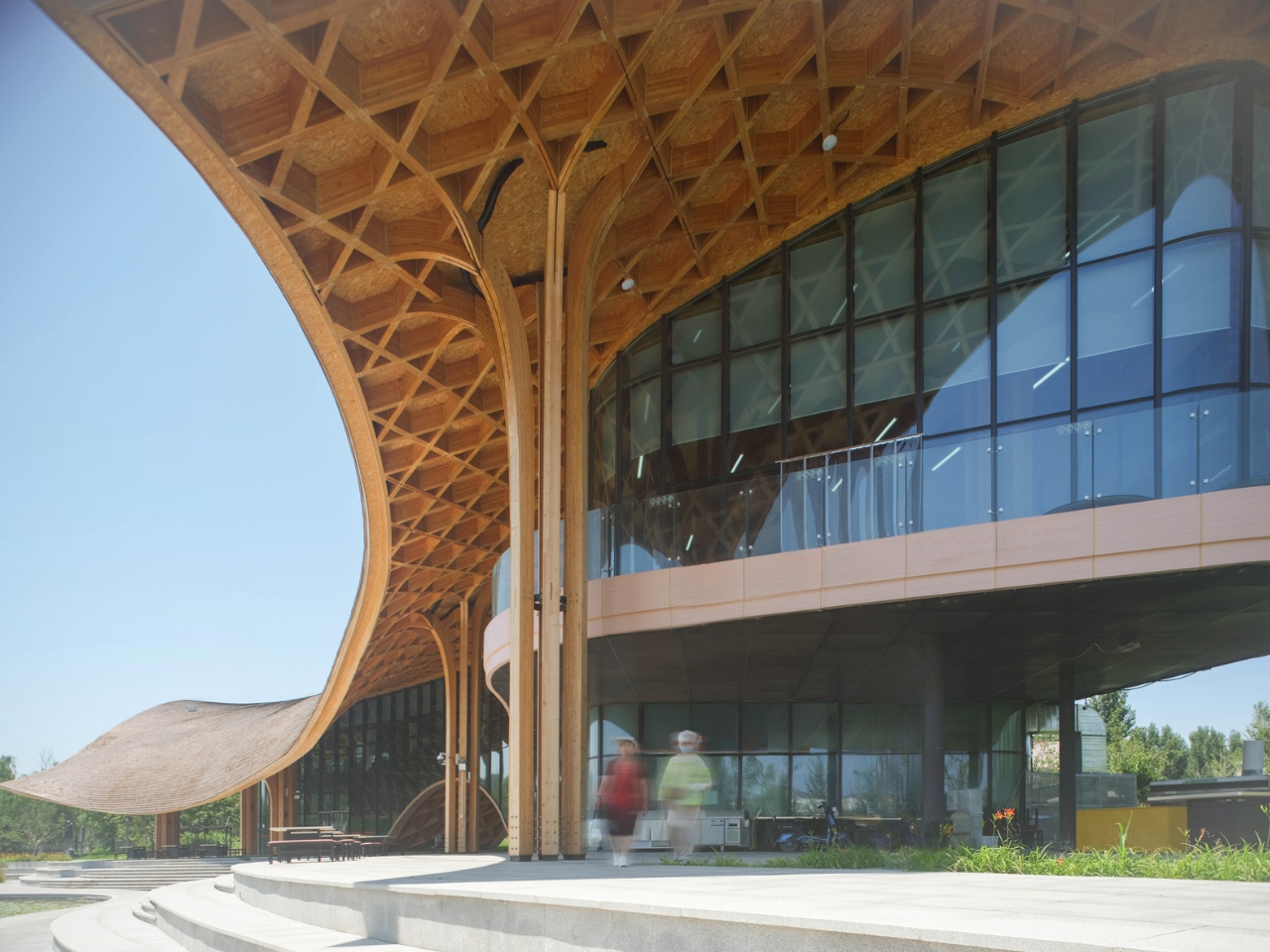
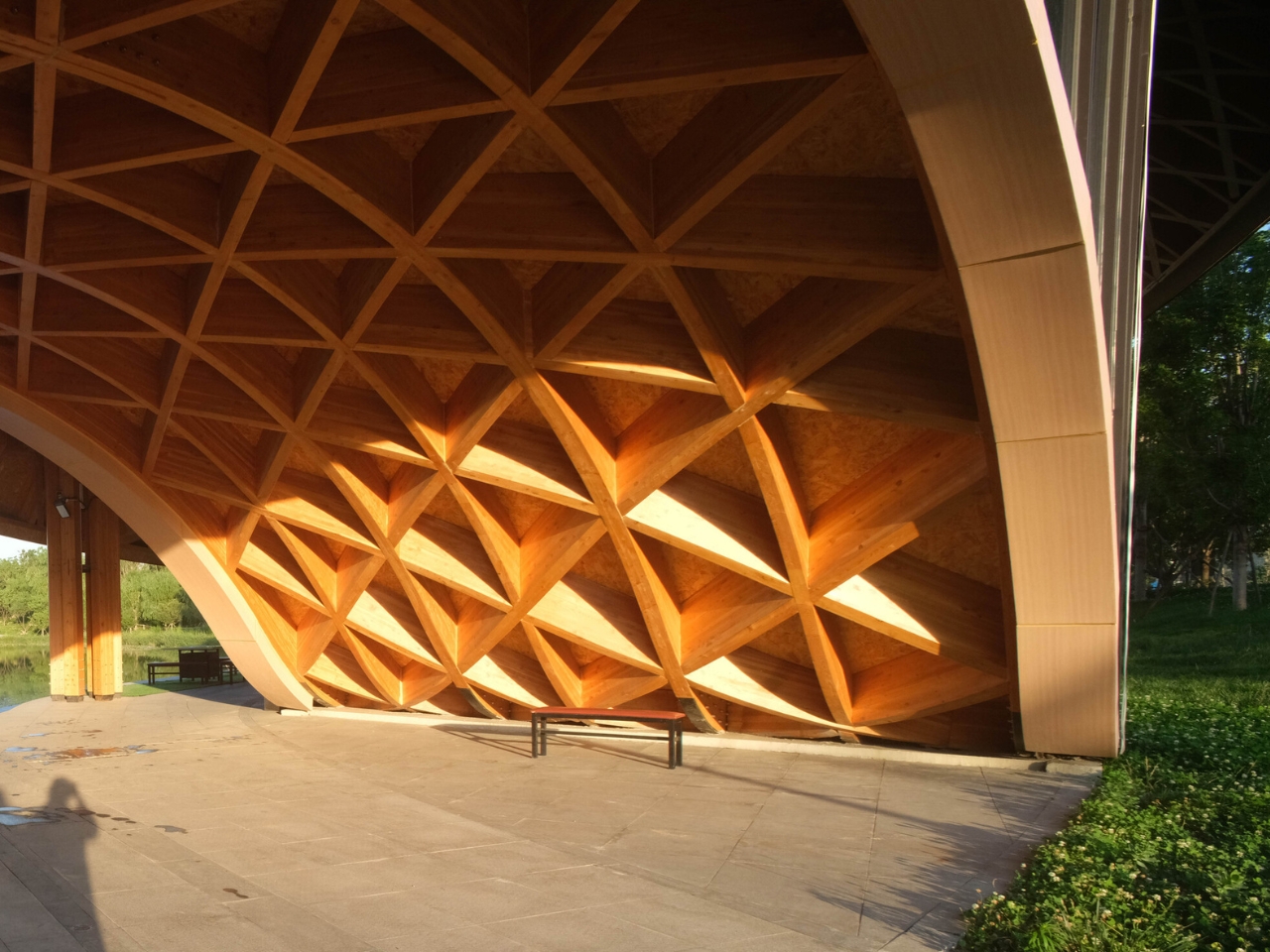
The choice of wood throughout isn’t arbitrary or just aesthetic. Wood is warm where glass is cold, organic where steel is industrial, and in a restaurant, those qualities matter in ways that aren’t always consciously named. Diners feel the difference even if they can’t articulate it. The building creates an environment that is simultaneously impressive and approachable, which is a difficult balance to strike and one that a lot of high-design spaces fail to achieve.
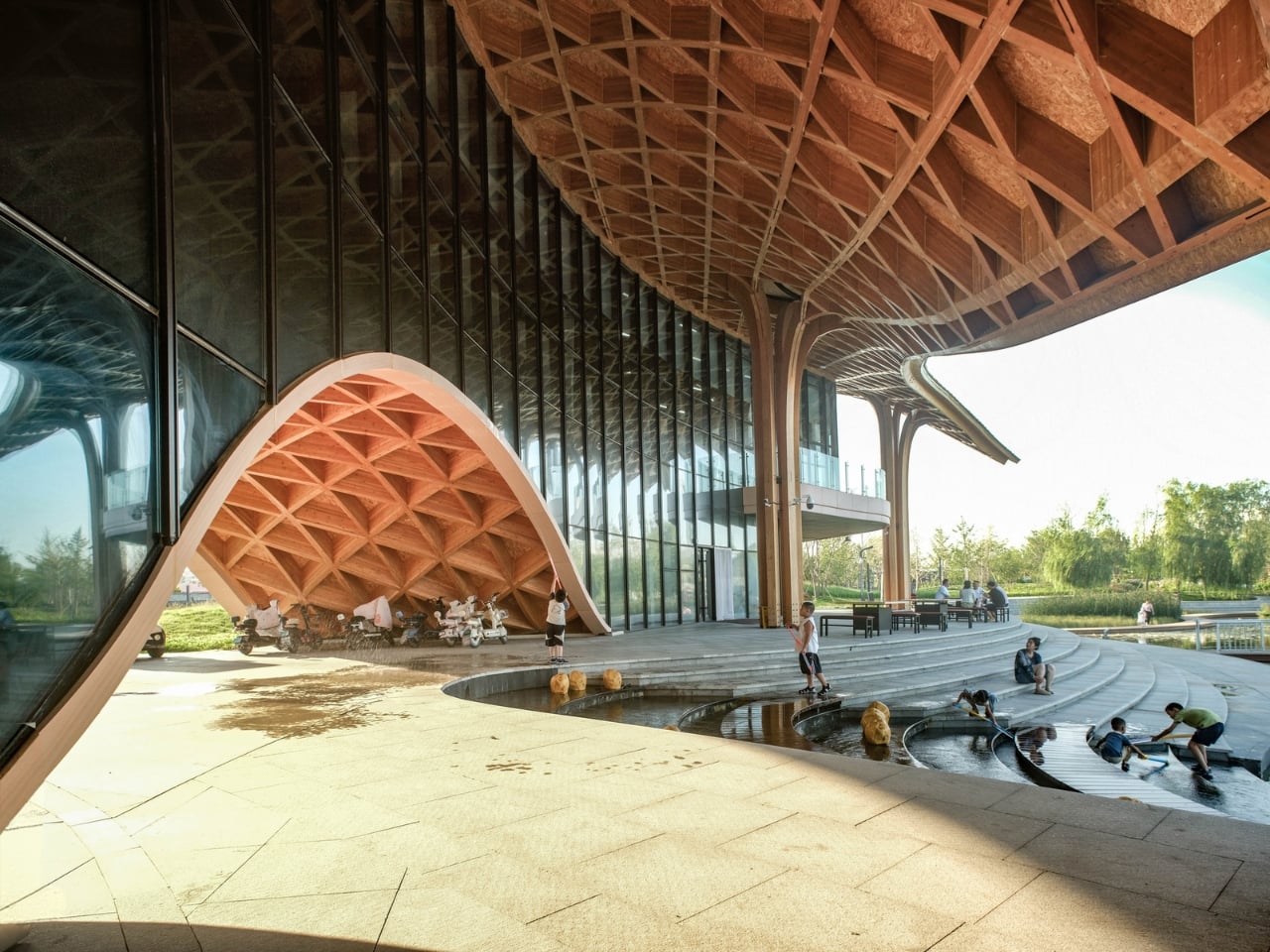
THAD SUP Atelier has built a reputation for projects that sit thoughtfully within their landscape, and this one continues that thread. The Silk Road Friendship Park is a place carrying weight and cultural meaning. Dropping a flashy, look-at-me building into that context would have been easy. Instead, the team chose restraint, materiality, and sequence. The restaurant doesn’t dominate the park. It listens to it.
Architecture that knows when to stay quiet tends to be the kind that stays with you. This is one of those buildings. Not because it announces itself, but because the moment you move through it toward the lake and look back at the way light plays through those wooden branches, you understand exactly what it was trying to say.
SHARE