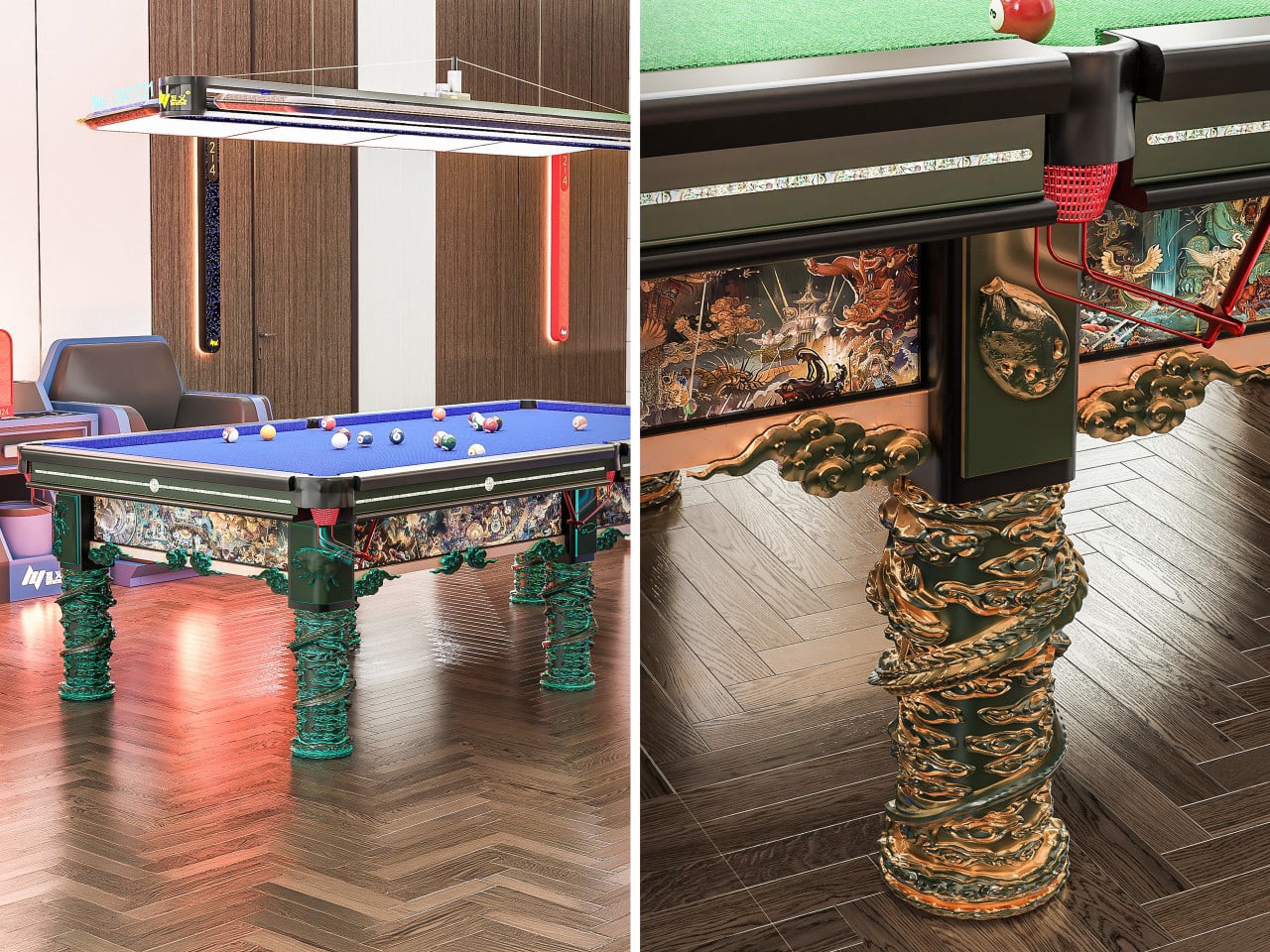
Most billiards tables do not ask much of you. You walk up, take your shot, and move on. They are designed to be neutral, quietly functional, almost invisible. This one is not interested in being invisible at all.
Designed in Shengfang, Hebei Province, and later exhibited in Beijing, this Chinese billiards table does something rare. It slows you down. It makes you look. And if you stay with it long enough, you begin to notice that the experience extends beyond the game itself.
Designer: Mingzhi Cai and Fengshi Li
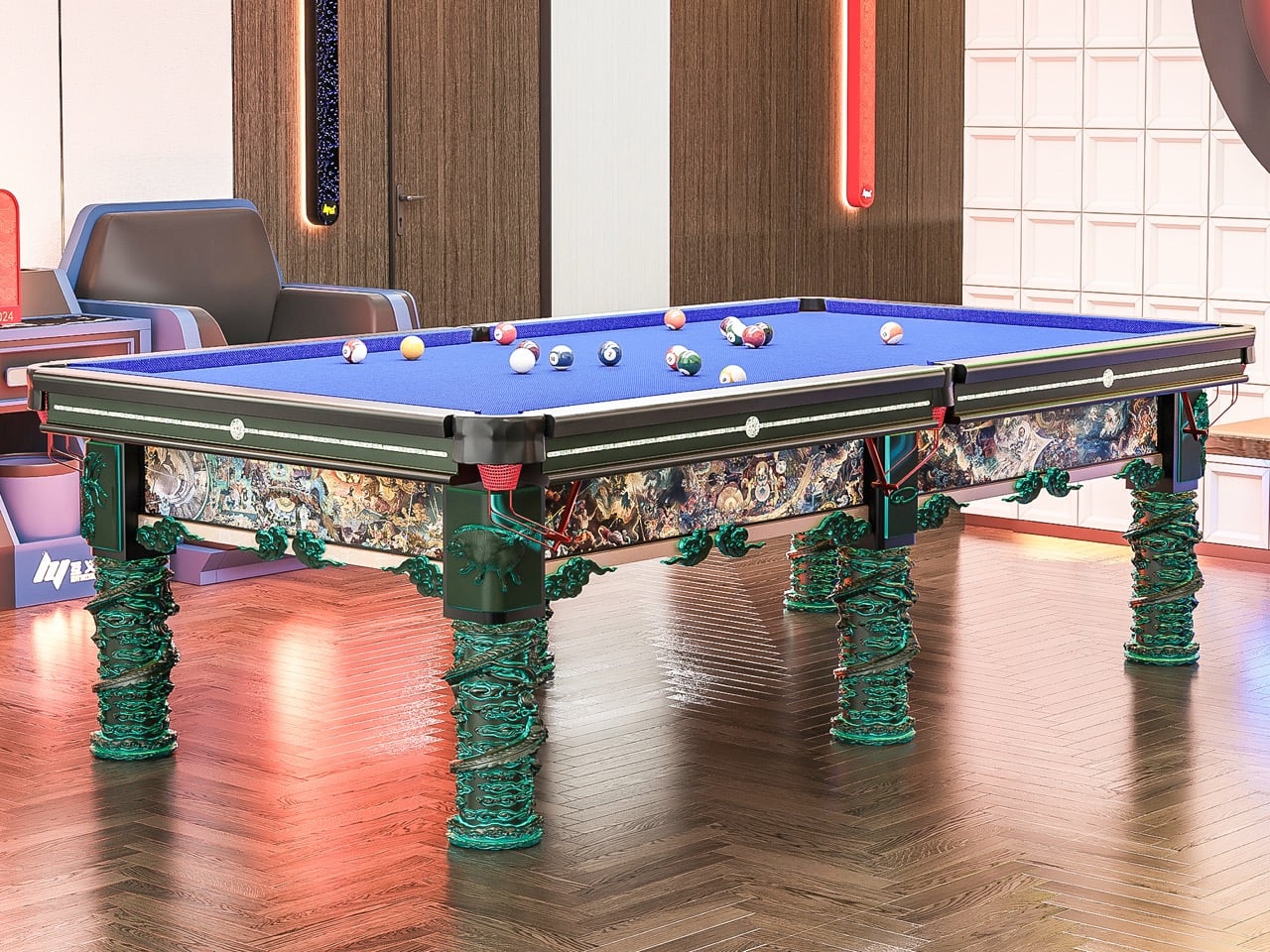
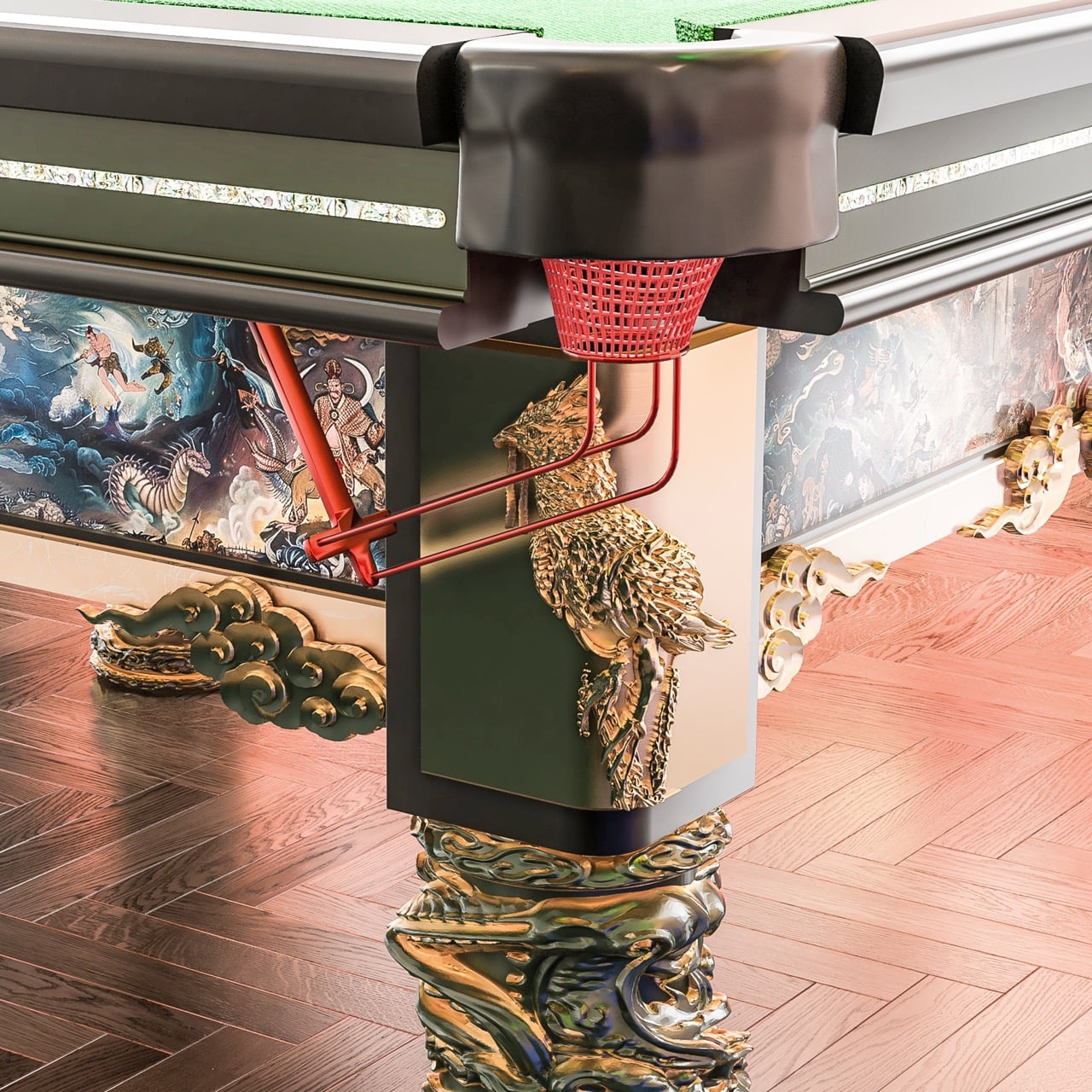
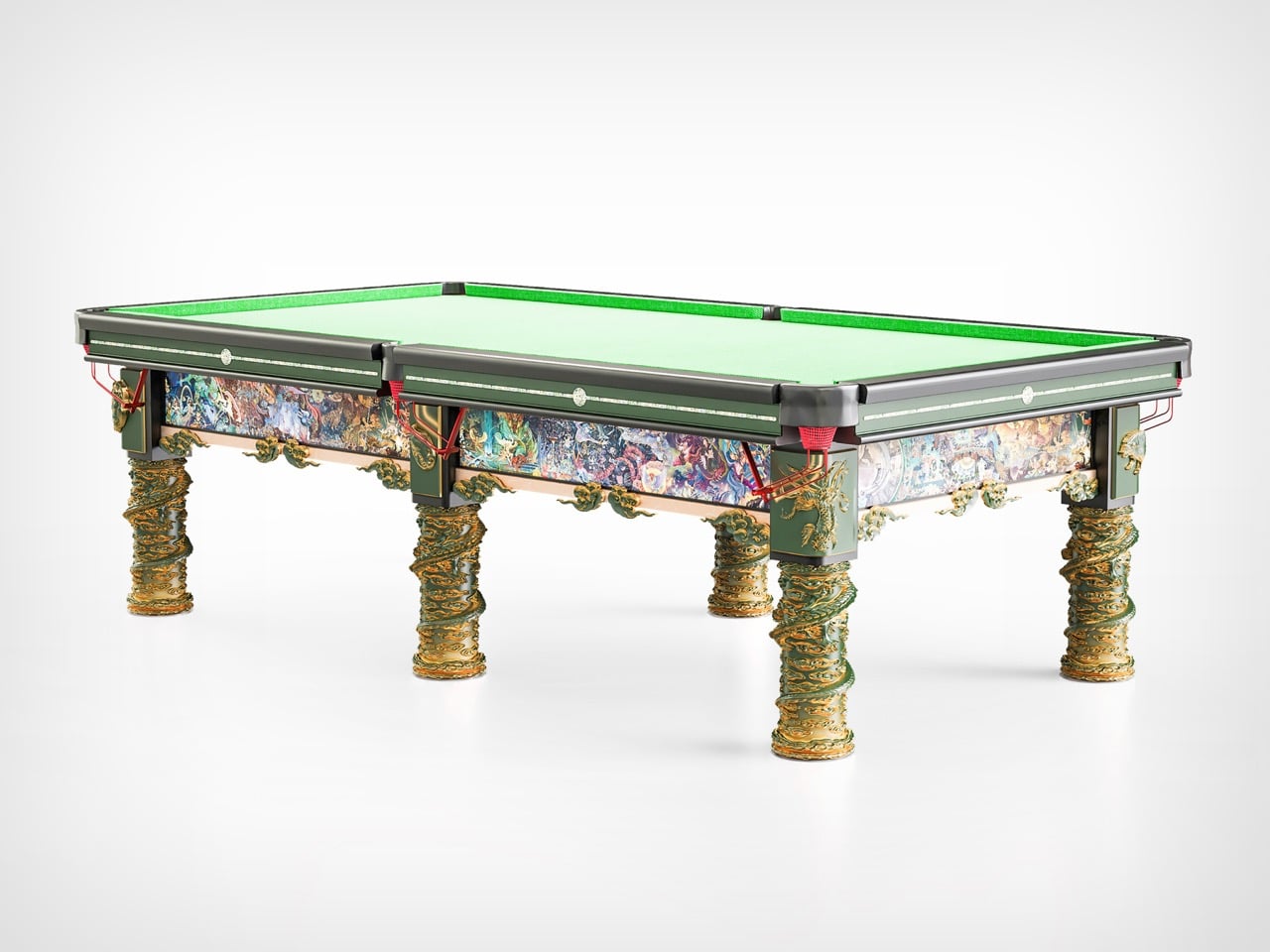
The inspiration comes from Journey to the West, a myth that sits deeply in Chinese cultural memory. Instead of simply referencing it, the designers have broken it apart and rebuilt it into the object. The table is wrapped in six narrative panels, each capturing a different moment, whether it is the intensity of the Bull Demon King, the burning of Guanyin Temple, or the surreal calm of Little Western Heaven. They do not read as surface decoration. They feel like scenes you move around, almost as if the table is holding fragments of a larger story.
This aligns naturally with how billiards is played. Every shot resets the situation. Every angle shifts your perspective. As you circle the table, the imagery changes with you, creating a rhythm between movement and narrative. The experience becomes less about a fixed viewpoint and more about continuous discovery.
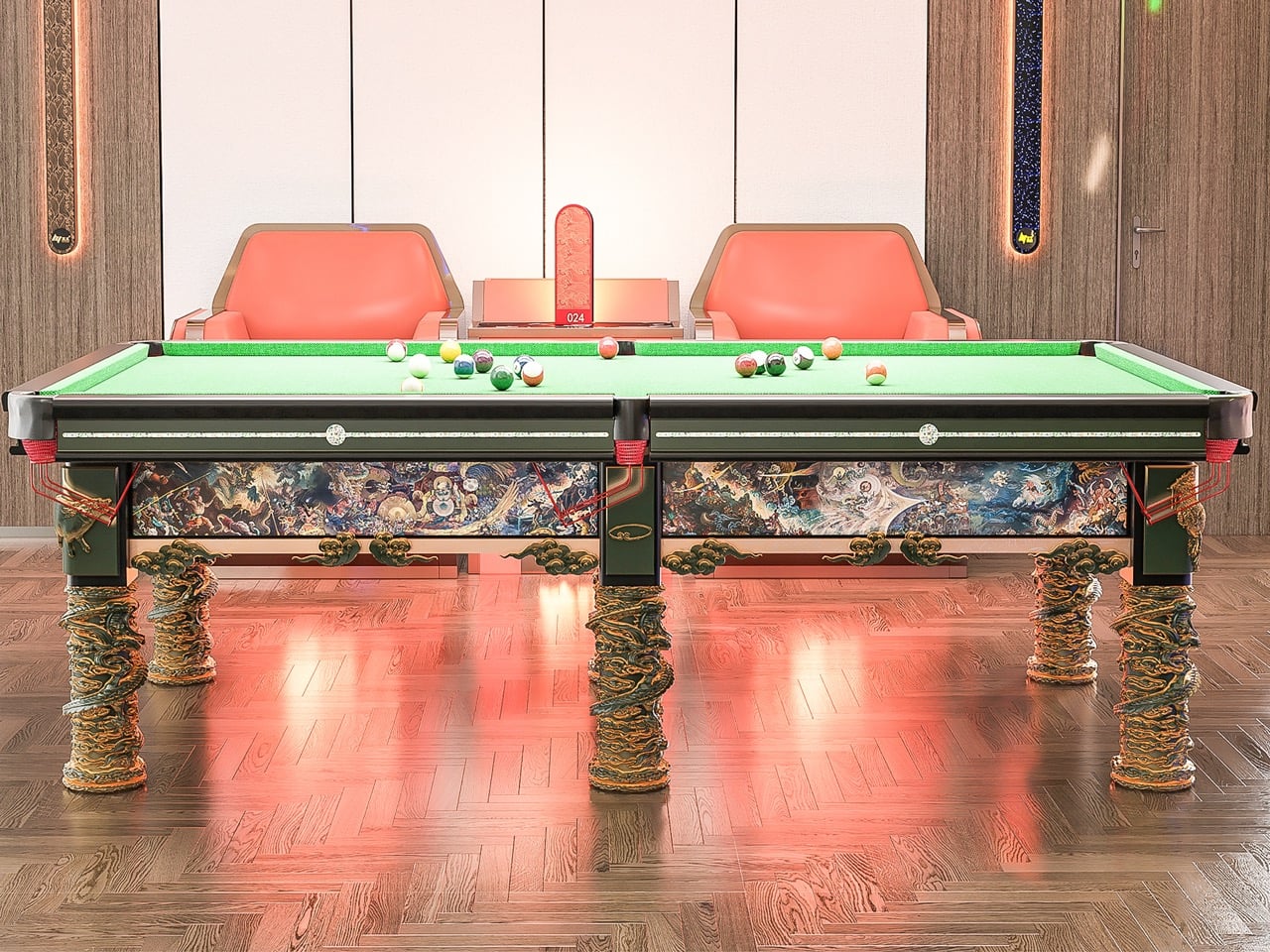
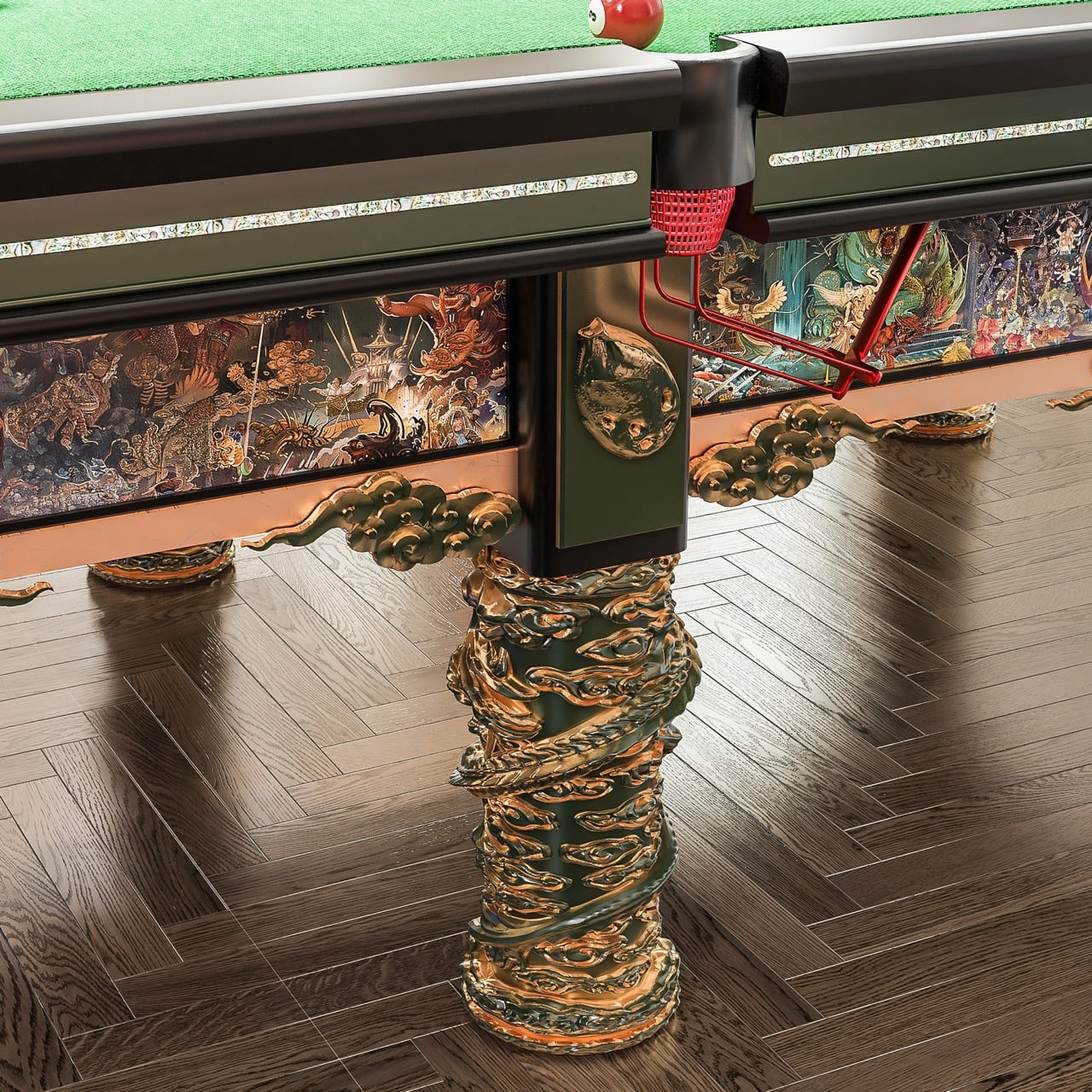
There is a quiet intelligence in how symbolism is built into the structure. The six legs are shaped after the Sea God Needle, a mythological object associated with strength and transformation. Above, the six column relief references the six senses in Buddhist philosophy. It is a subtle layer, but it reframes the object. What you see, how you move, and how you interpret begin to feel connected.
The level of craft holds everything together. The reliefs are hand carved before being translated into production. The tabletop uses walnut wood, bordered with mother of pearl abalone shell inlays, a detail often found in royal furniture traditions. The paintings themselves are selected from hundreds of artists, then carefully scanned and embedded into the surface. Even the stone slabs are polished repeatedly until they reach the right balance of smoothness and durability.
Despite this richness, the table remains highly functional. The sound of the ball striking is crisp, and the movement across the surface is smooth and controlled. The visual intensity does not interfere with the game. It sits alongside it.
Color plays a similar role. The deep green and gold palette feels grounded and weighty, while the blue antique bronze variation introduces a quieter, more atmospheric tone. As light shifts across the surface, the table reveals different depths, allowing the imagery to feel active rather than static.
What becomes noticeable over time is how deliberately the design moves away from contemporary minimalism. Instead of reducing the object to its essentials, it builds layers of meaning, craft, and narrative into every surface. The process itself reflects this approach, with over 700 days of research, hundreds of iterations in modeling, and continuous refinement through collaboration.
That sense of time and attention is present in how the table is experienced. It does not reveal itself all at once. It asks for movement, for observation, for a willingness to engage with it beyond its immediate function. The act of playing becomes intertwined with noticing, reading, and interpreting.
Somewhere between the first shot and the next, the table shifts from being a surface you play on to something you are moving through.
SHARE