Every year, Burning Man erects a temple on the playa, and every year, it burns. That ritual of building and releasing has been part of the festival’s identity for over two decades, and yet each new design still manages to find a fresh way to make the whole thing hit differently. The 2026 edition, called the Temple of the Moon, might be the most quietly devastating one yet.
Designed by artist James Gwertzman, the structure takes its inspiration from the epiphyllum oxypetalum, better known as the Queen of the Night, a cactus flower that blooms exactly once a year, only at night, releasing its fragrance before wilting by morning. It’s the kind of plant that demands you pay attention, because if you’re not watching, you’ll miss it entirely. As a metaphor for grief, for presence, for what it means to witness something you know won’t last, it’s almost uncomfortably perfect.
Designer: James Gwertzman
Gwertzman came to this design through a deeply personal place. He spent years walking alongside a friend as she lost her partner to pancreatic cancer, learning what it means to simply be present in someone else’s pain without trying to fix it. Before all of this, he was trained in theater as a set and lighting designer, then spent decades in the video game industry building interactive worlds. Now he’s building something you can actually stand inside, and then watch burn.
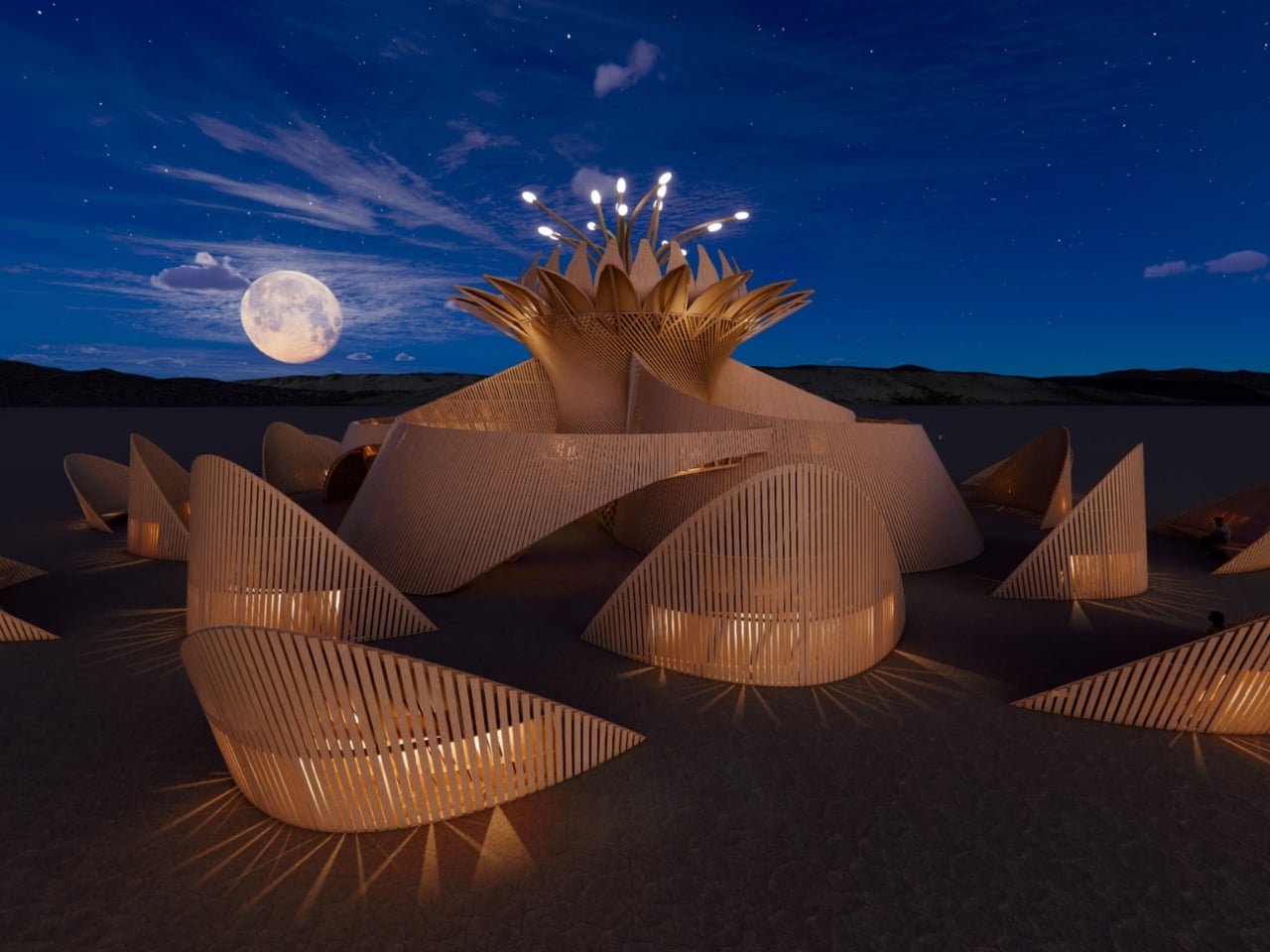
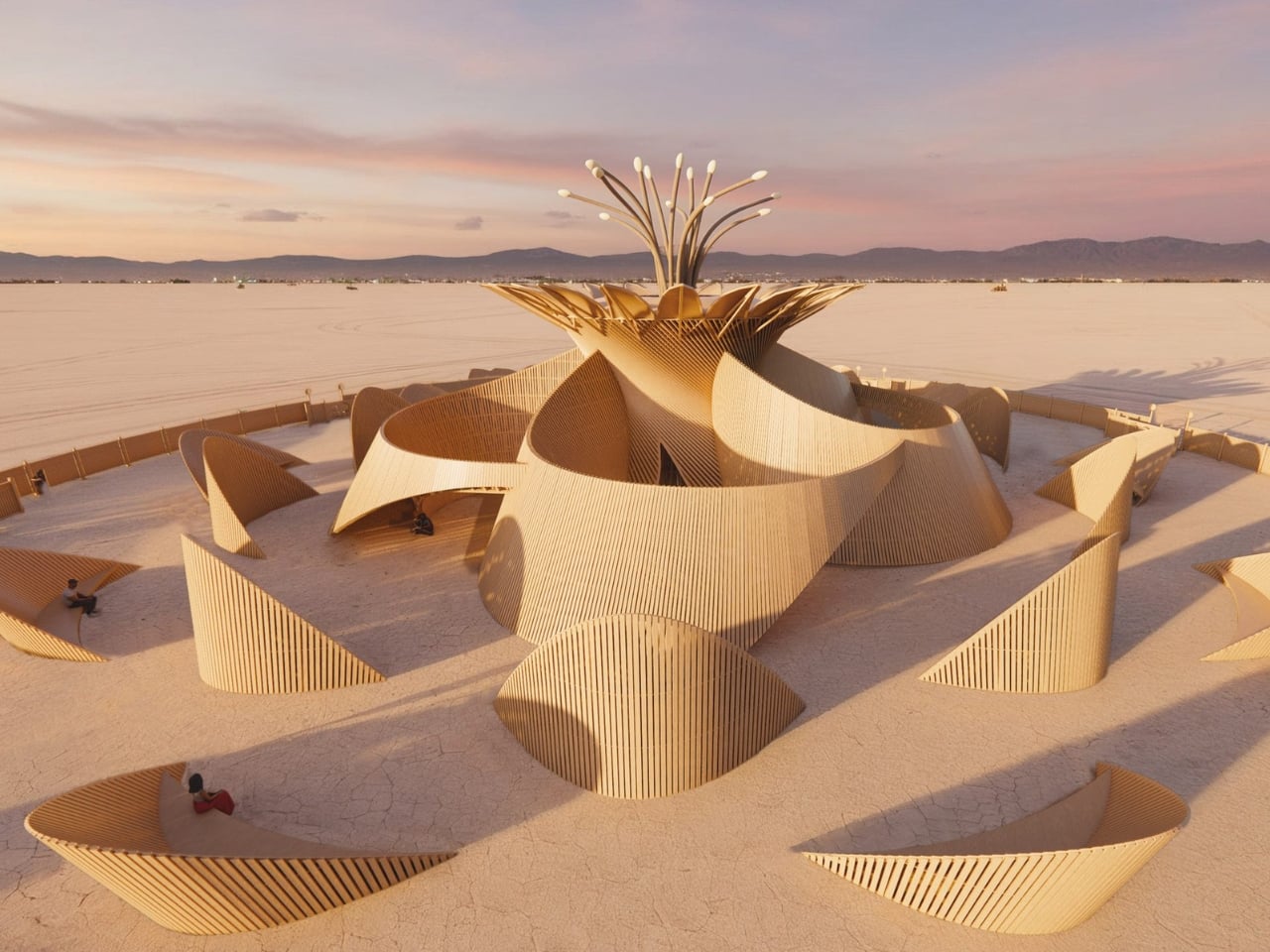
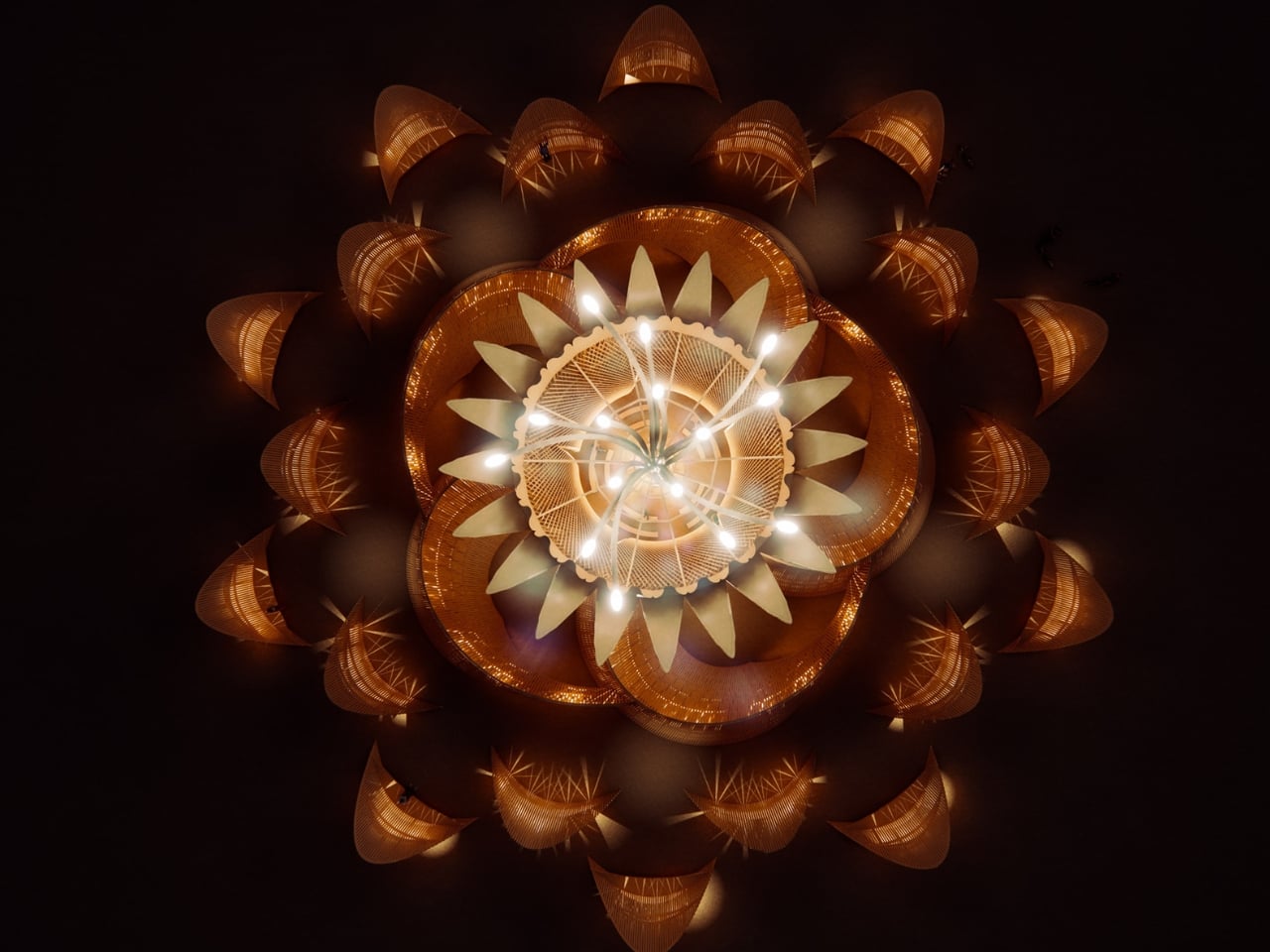
The architectural approach is where things get genuinely fascinating from a design perspective. Gwertzman and his team used a parametric design method, essentially algorithmic generation, to create complex organic curves out of straight pieces of timber. It’s the kind of technical problem-solving that sounds counterintuitive: using math to fake nature. But the result, at least from the renderings, is stunning. From above, the structure looks like a fully bloomed flower, with slatted wooden petals radiating outward from a central chamber.
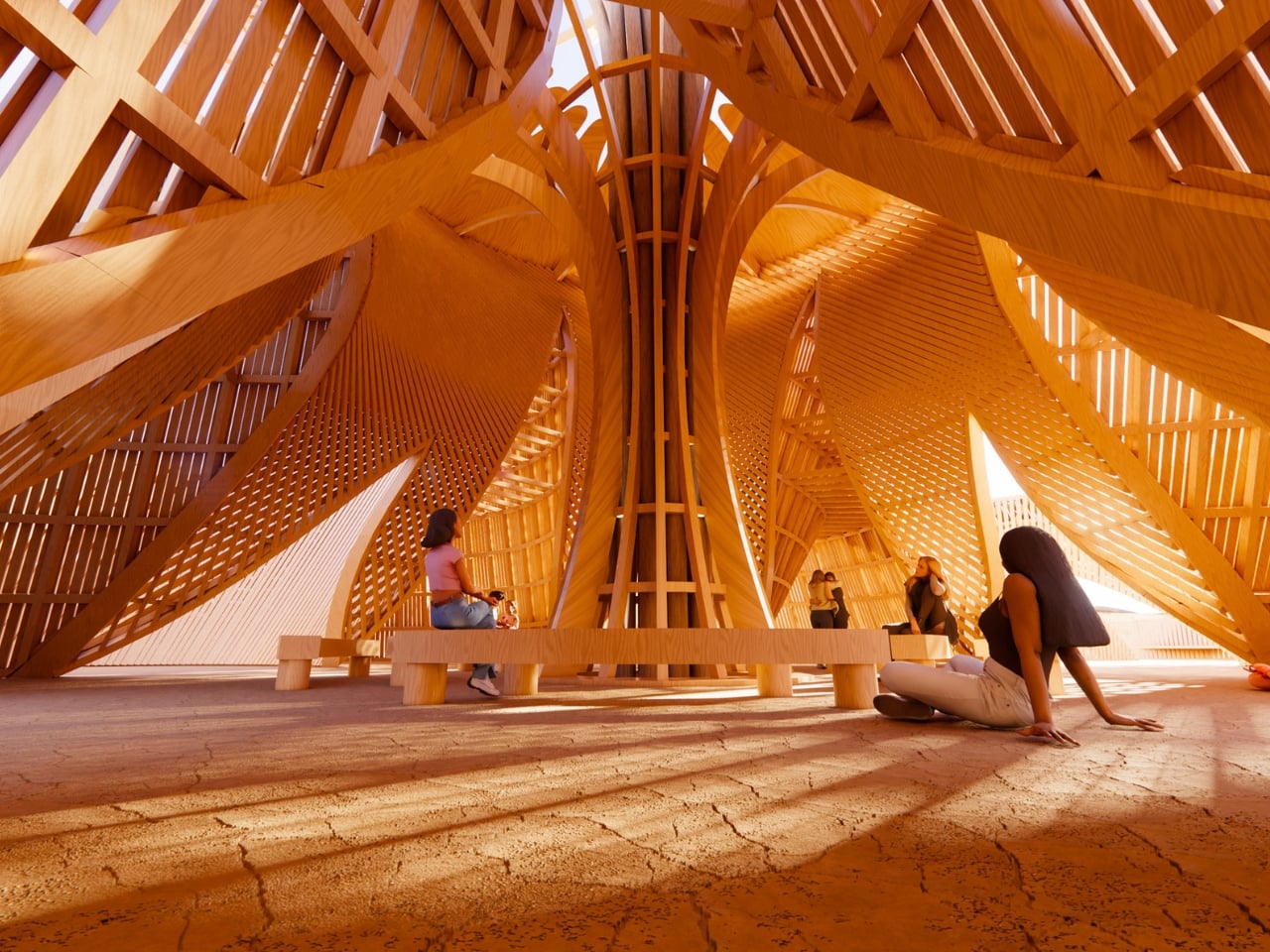
The center of the temple is built around a hyperboloid structure, a column that flares outward at the top, edged with sharp petals and light-topped wooden pieces that echo the look of a flower’s stamen. Fan-like wooden forms provide shelter and mark the entryways into the mostly enclosed inner space. The renderings feel alive in a way that strictly geometric architecture rarely does, and I think that has everything to do with the fact that the form was borrowed from something real.
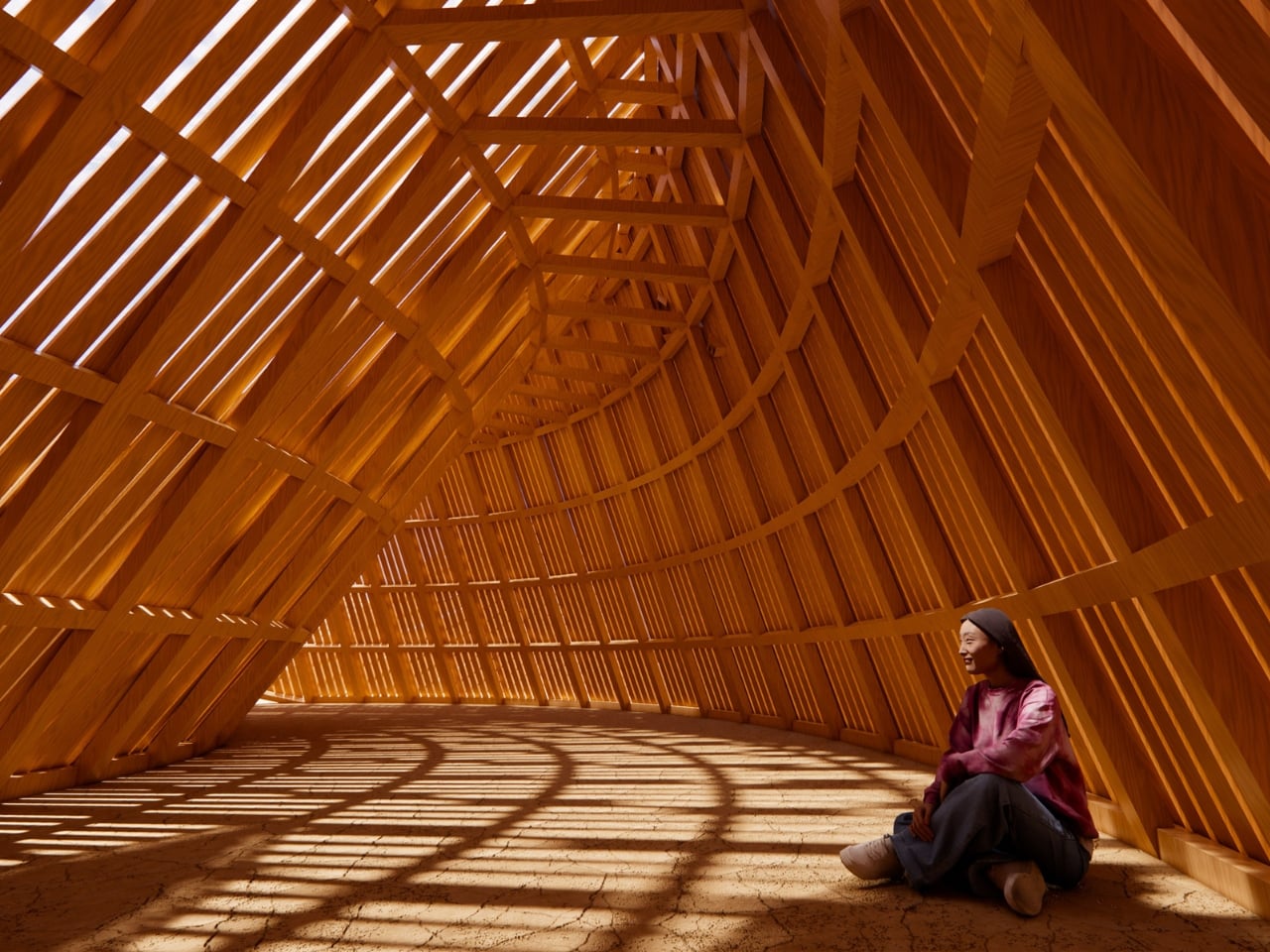
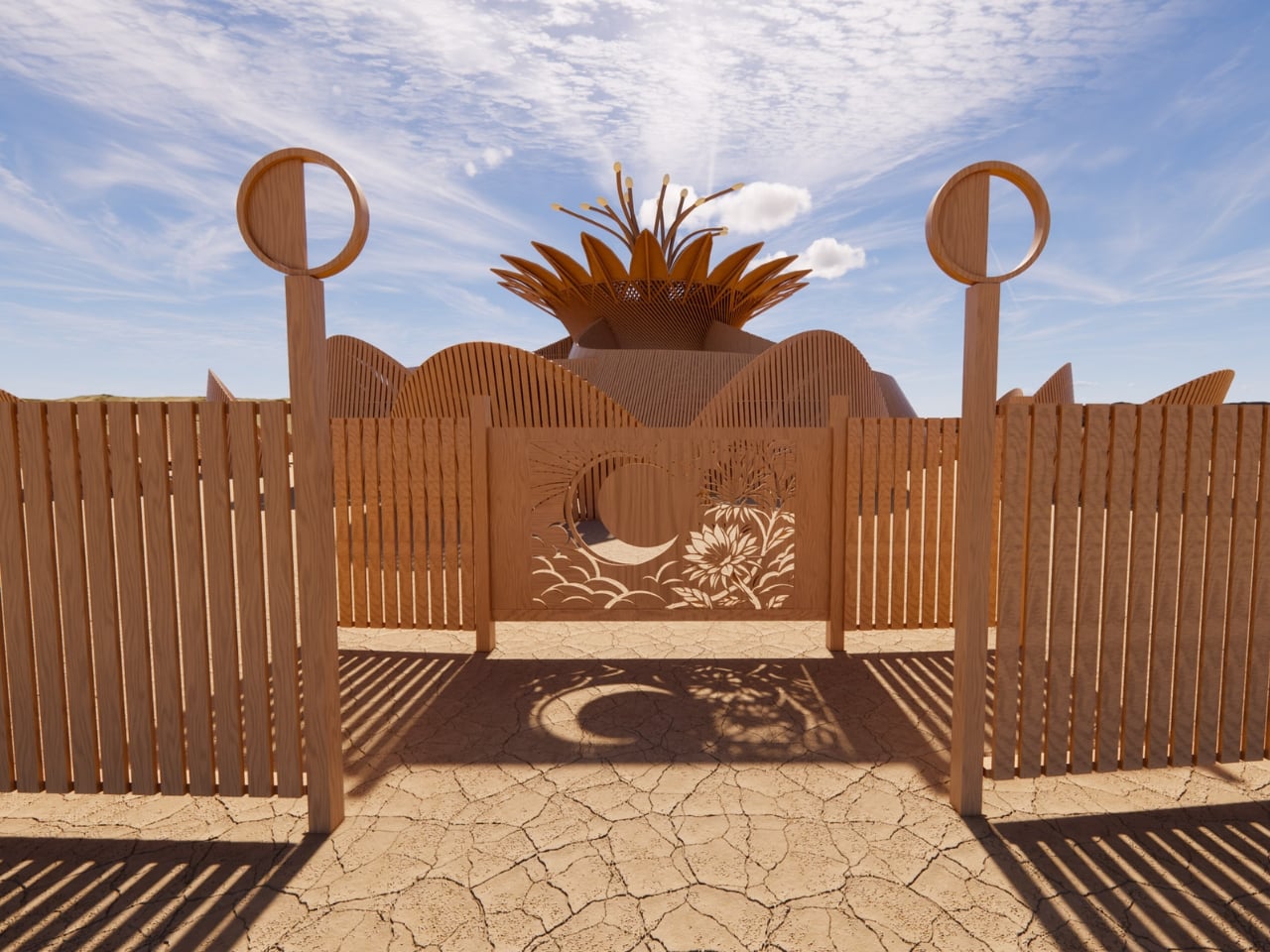
What I find most considered about this design is that it doesn’t try to be monumental in the traditional sense. Yes, it’s large, and yes, it will be visible from a distance across the Black Rock Desert. But the experience is designed to be intimate, with petal-like seating areas and an approach path built as a journey rather than a straight line toward the entrance. Eight gateways mark the perimeter fence, each one corresponding to a phase of the moon. The fence panels will feature CNC-cut designs submitted by the community around moon and flower motifs, making the very border of the temple a kind of collective artwork.
That detail matters more than it might seem. Burning Man’s Temple has always been a communal space, a place where people leave names, photos, and notes for loved ones who have died. But designing the threshold of that space to carry the marks of many hands is a meaningful gesture. It says the temple doesn’t belong only to the artist. It belongs to whoever needs it.
The whole structure is scheduled to burn on September 6th, 2026. Everything about it, from the flower that wilts at dawn to the lunar cycle that keeps starting over, points toward that moment. The 2026 Burning Man theme is “Axis Mundi,” meaning the center of the world. It’s a heavy framework to design inside of, but the Temple of the Moon seems to hold it without strain. It’s not trying to be the center of everything. It’s trying to be a place where you can stand still for a moment, feel the weight of what you’re carrying, and let it go.