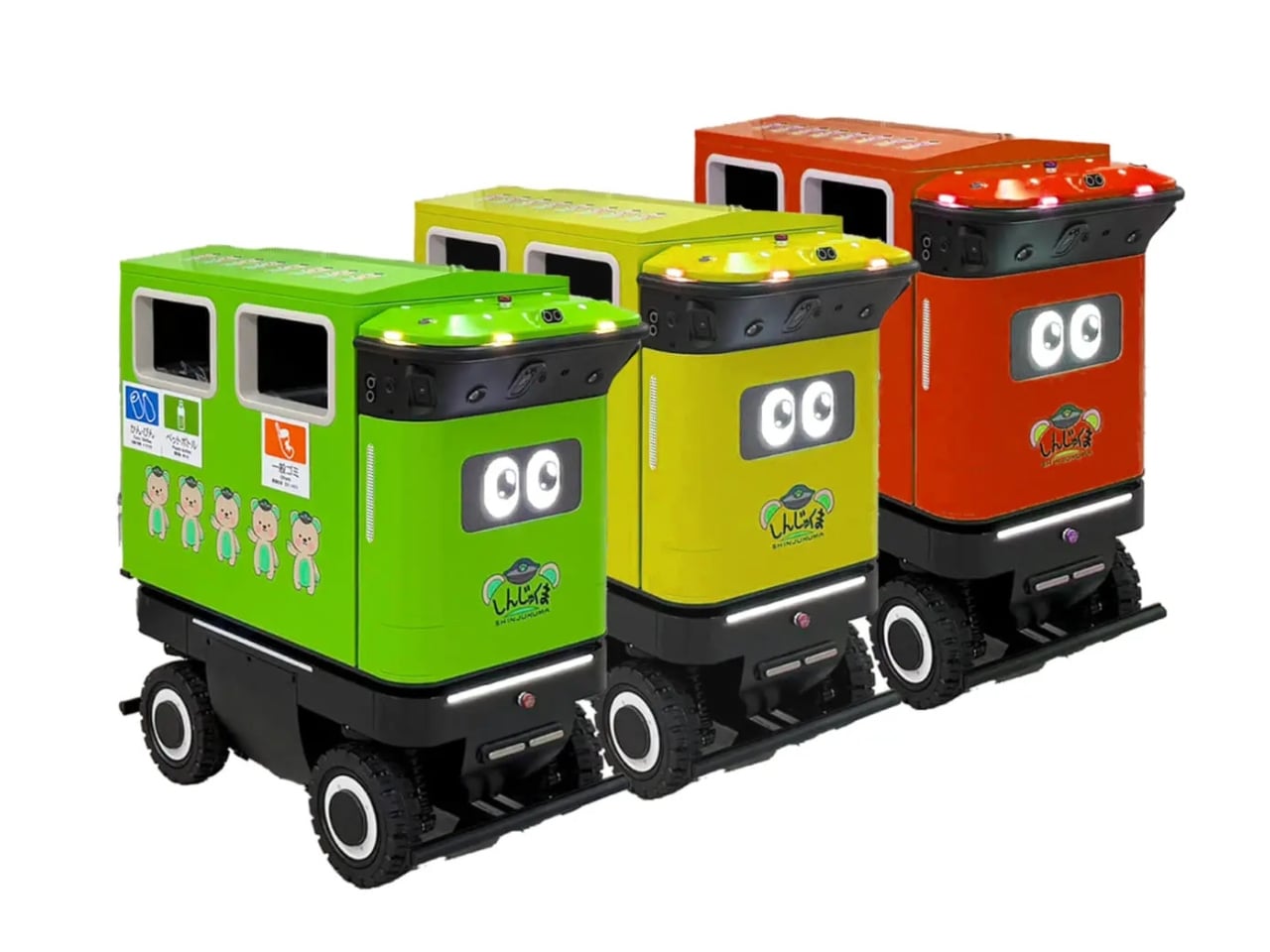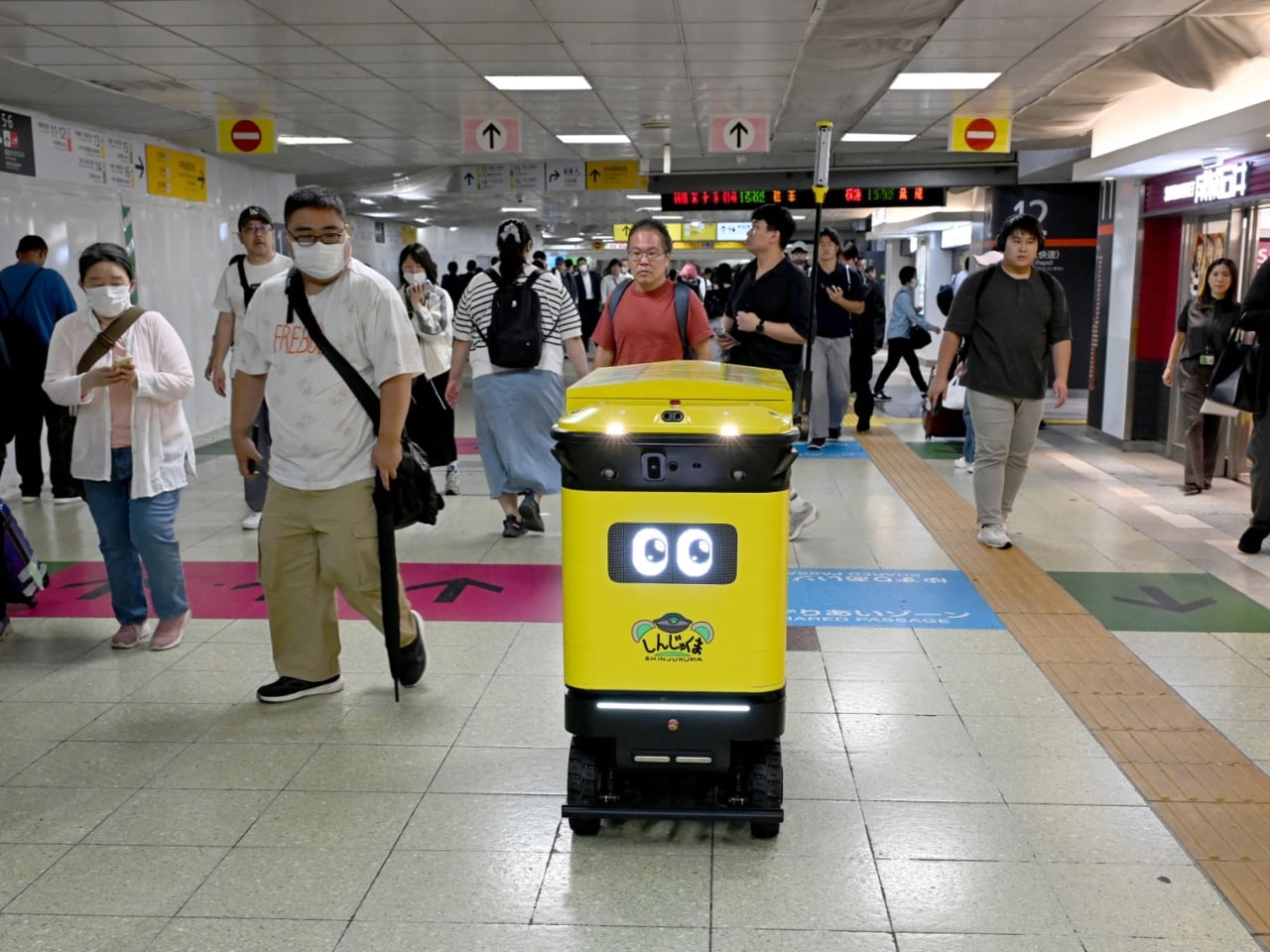

The trash cans at Tokyo’s Shinjuku Station had big cartoon eyes and the bright colors of the trains upstairs. They also had somewhere to be. During a fall trial, three robotic bins rolled through the underground concourse, giving passengers a chance to unload an empty bottle or a snack wrapper without hunting for a bin. I like the modesty of that idea. If you’re already looking for your platform, one less thing to look for sounds pretty good.
East Japan Railway Company, better known as JR East, ran the weekday trial from September 8 through November 20, 2026, inside the station’s ticket gates. The experiment addressed a second inconvenience most passengers never see: somebody has to carry all that garbage away. Shinjuku’s station manager told TBS that staff make more than ten collection trips a day because the fixed bins fill so quickly. Adding more stationary bins might make life easier for passengers, but it would still leave workers with bins to visit.
Designer: JR East
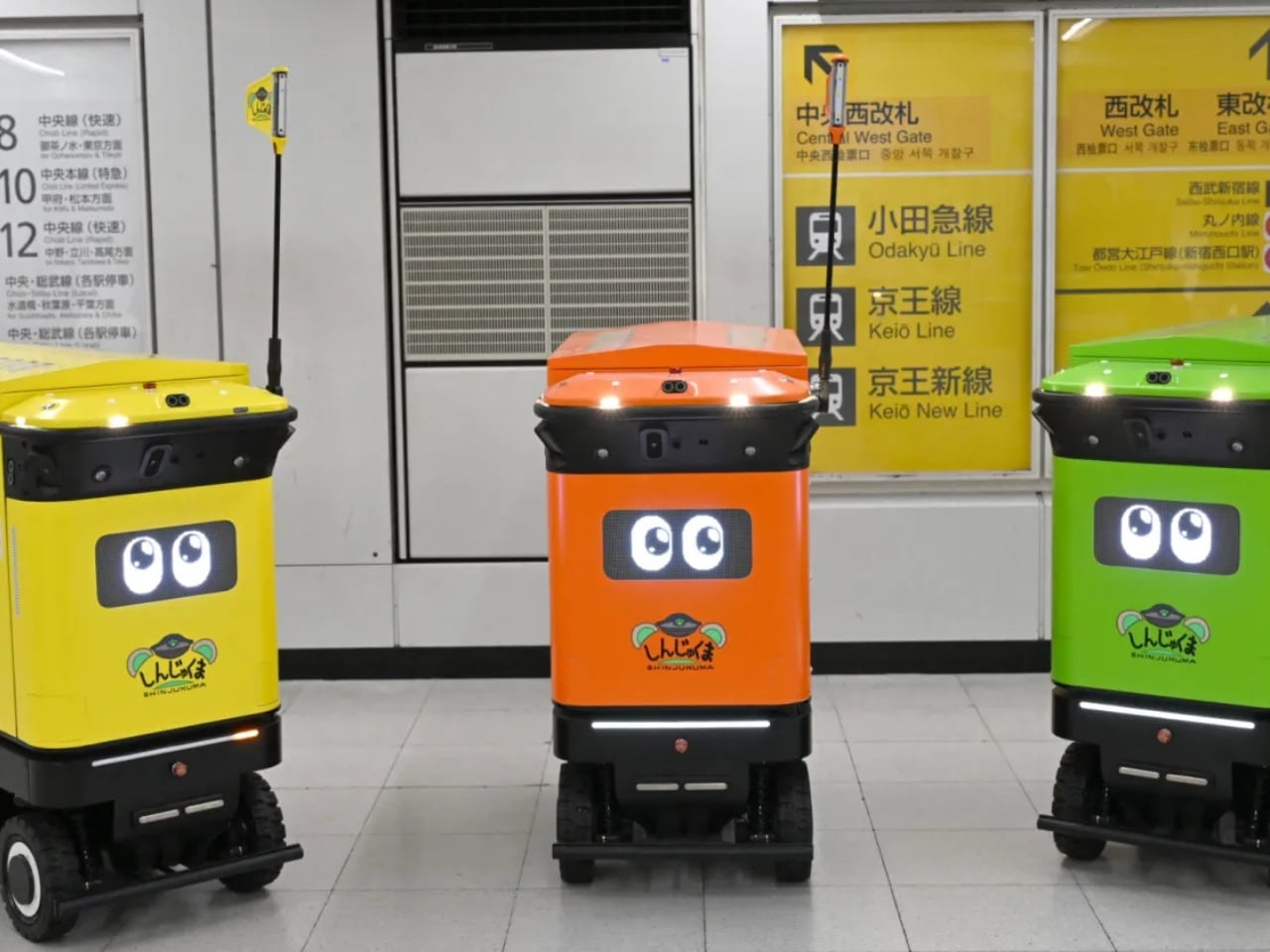
The machines started out as autonomous delivery robots developed by Cartken, with Mitsubishi Electric and Melco Mobility Solutions handling operations for the trial. Giving a delivery robot a trash can is a neat reversal of its usual job. Instead of setting off with a load and coming back empty, it picks up a little at a time along a programmed route and can return to the station’s waste collection area on its own. Staff still handle the garbage at the other end. The job the robot takes on is the walk.
The eyes make for a good photo, but the details I appreciate are on the sides. Separate, labeled openings give passengers somewhere to put ordinary trash and somewhere to put recyclables. Shinjukuma, the station’s bear mascot, appears beneath the labels. The bright green, yellow, and orange bodies might get you to look up from your phone; the openings still have to tell you what to do once the robot is beside you. A face can make a machine look approachable. It can’t tell you where your bottle goes.
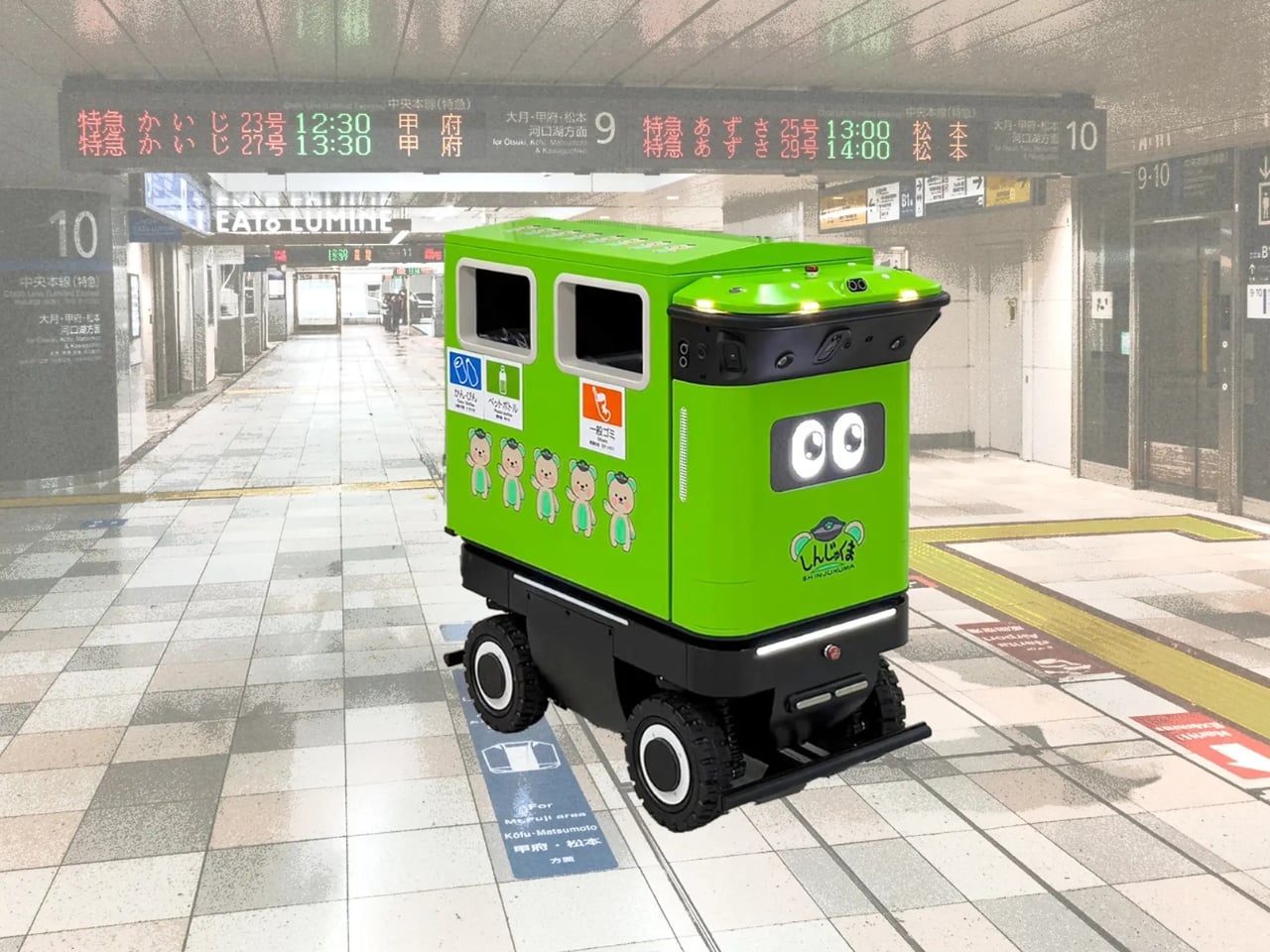
At about eight inches per second, the robots traveled at less than half a mile an hour. That sounds about right for a bin you’re supposed to be able to use as it passes. But a concourse is full of people doing things that don’t fit neatly into a programmed route. Someone spots the right platform sign and changes direction. Someone else stops to pull up a ticket, leaving a suitcase in the flow of traffic. JR East set out to see how the robots’ sensors handled crowds and whether the machines interfered with passengers getting where they needed to go.
I’m glad JR East left the regular trash cans in place. A fixed bin has one underrated feature: if you know where it is, you can go straight to it. A roaming bin is convenient when your paths happen to cross, but I wouldn’t want to wait for one to come around before catching a train. Keeping both during the trial gave the robots a more sensible job. They could offer another chance to get rid of that coffee cup without making anyone depend on a moving target.
The trial has wrapped, but there’s no public tally yet of how many trips the robots saved station workers. That’s the number I’d want to see before making room for more of them. A line of passengers stopping to photograph a googly-eyed trash can tells you it’s easy to notice. It doesn’t tell you how much work it saves on an ordinary Tuesday, after everyone has gotten used to seeing it. By then, the nicest thing about the robot might be how little attention it needs: you drop in a wrapper, keep walking, and the bin takes the longer trip.