
Jesper Kouthoofd said in a recent interview that Teenage Engineering is done making synths, which is a bit like Lay’s announcing it’s done with potatoes. Naturally, the internet started guessing what comes next. Designer Quentin Stamenov already has an answer, and it involves popcorn. His ACT-1 is a fan-made Teenage Engineering concept built for people who make sound for movies. The design puts controls for surround mixing, film editing, and environment design onto one slab that looks like it walked straight out of the Stockholm studio. Honestly, I’d buy a ticket just to watch someone use it.
What if a Dolby Atmos mixing stage fit in your backpack? ACT-1’s surround interface shows a tiny cinema, with a little pink dot representing a sound you could move around the room. An editing mode includes chapters, scenes, timecode, and two cartoon film reels for good measure. A third proposes an acoustic landscape, letting you pick a desert and crank the temperature to 42 degrees Celsius, which is roughly 108 degrees Fahrenheit and also my apartment in July. Wrapped around all that are white keys, an orange knob, and a jog wheel that looks borrowed from the TP-7.
Designer: Quentin Stamenov
Dolby Atmos, Shrunk Down to a Pink Dot
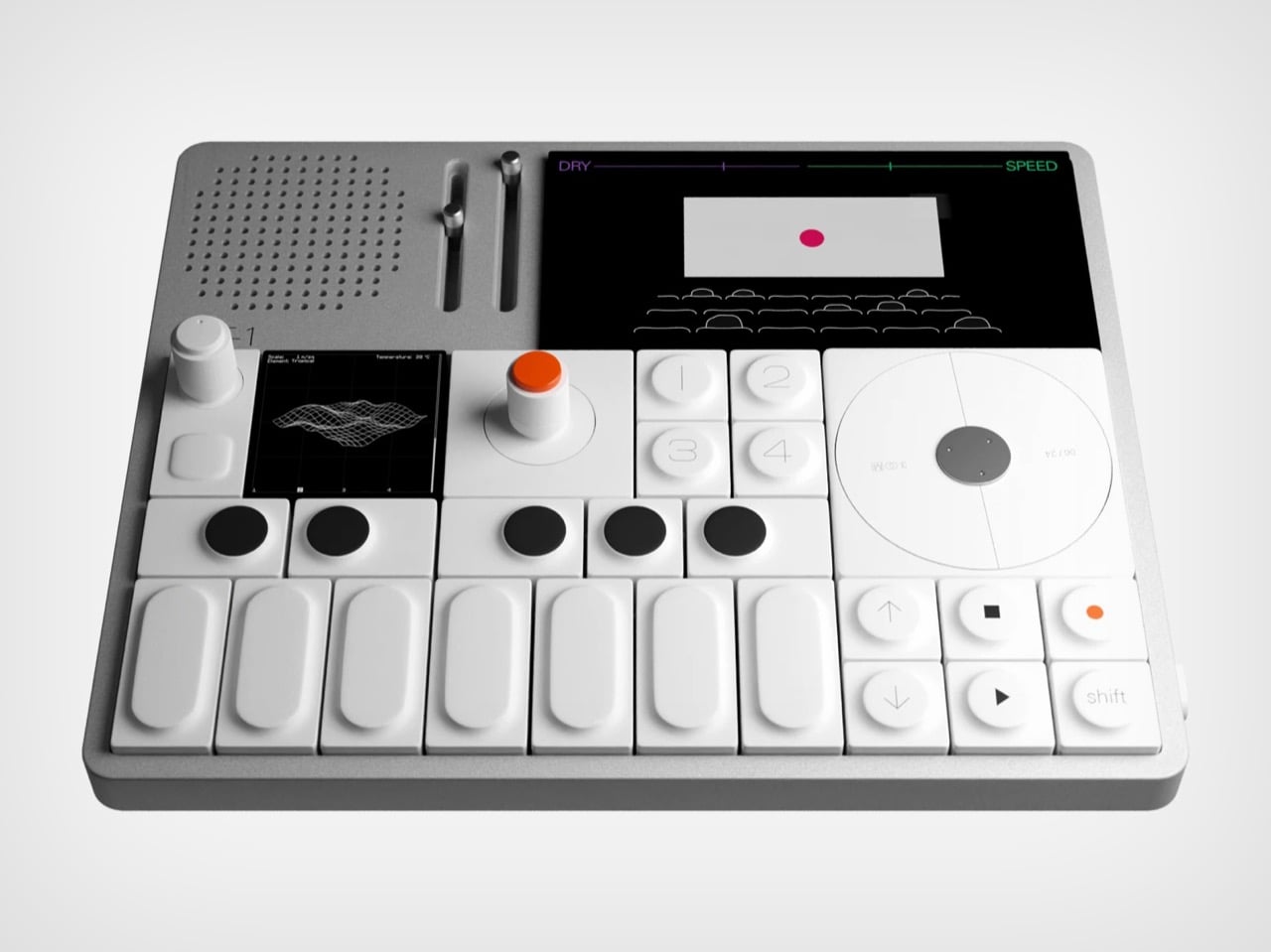


Big-budget movie sound runs on Dolby Atmos, which can treat sounds as objects with coordinates instead of feeds assigned to particular speakers. A cinema Atmos mix can carry up to 128 tracks, and each theater’s processor decides in real time which of its speakers plays what. Mixers usually steer all this through plugins in Pro Tools or a console that costs more than my car. ACT-1 boils the idea down to a top-down auditorium on its main screen and a single magenta dot for positioning sound between the rows. Two physical faders beside the speaker grille look tailor-made for the DRY and SPEED values running across the top of that screen.
Steenbeck flatbed tables, built in Hamburg since the 1950s, ran picture and sound across flat motorized plates and stayed the editing default until digital took over in the 1990s. ACT-1’s editing table mode borrows their name and nods to them with two reel icons, chapter and scene markers, a running timecode, and color-coded lanes for each audio layer. Topology is the nerdiest mode, showing a wireframe terrain at roughly 16 feet (5 meters) per grid square, with a desert setting and a temperature readout. There’s a physical basis for that last detail: sound travels faster through hot air, so temperature could matter in an acoustic simulation. Whether the concept would model that behavior is another question.
OP-1 Body, TP-7 Soul, and One Very Orange Knob
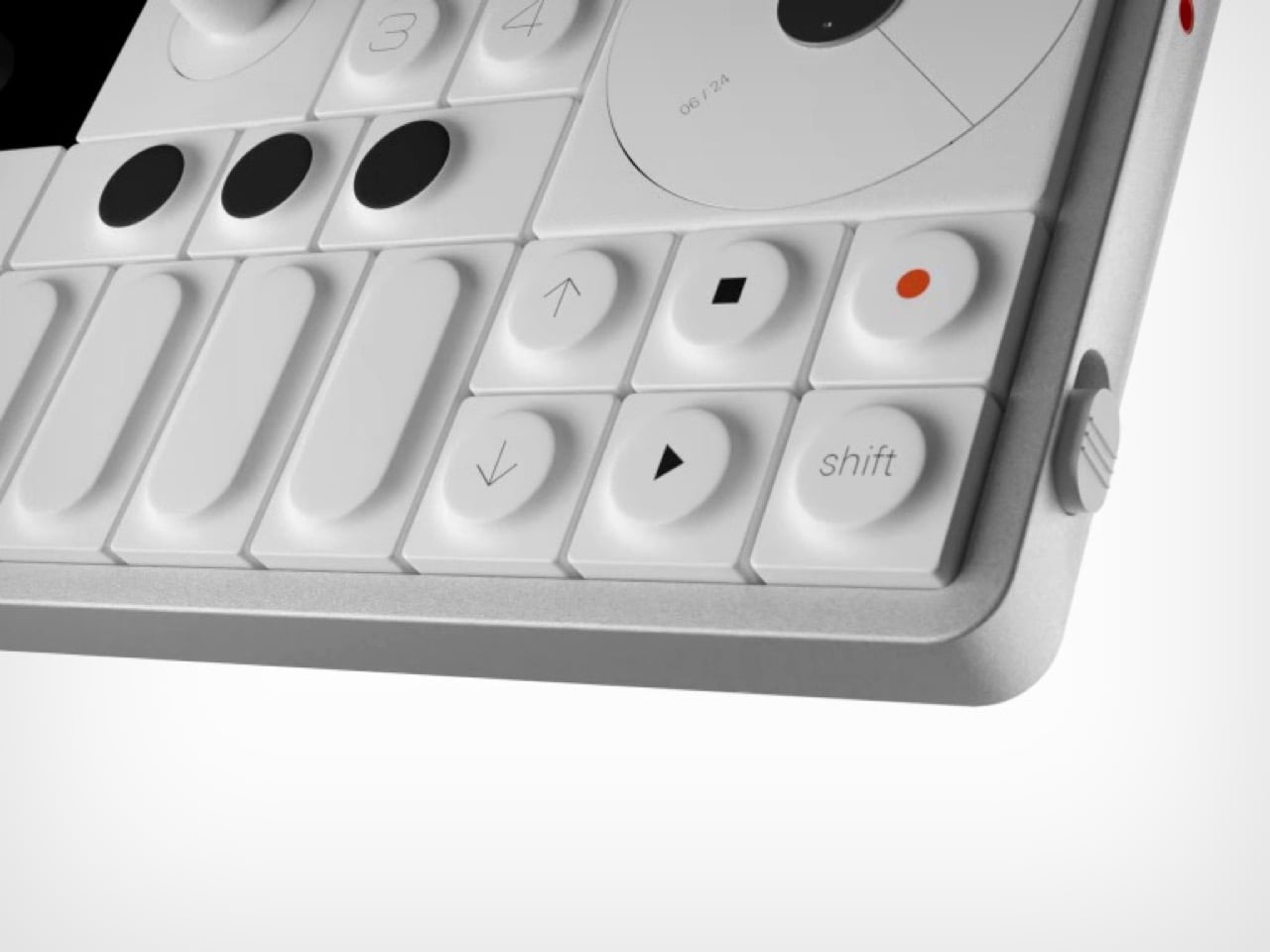
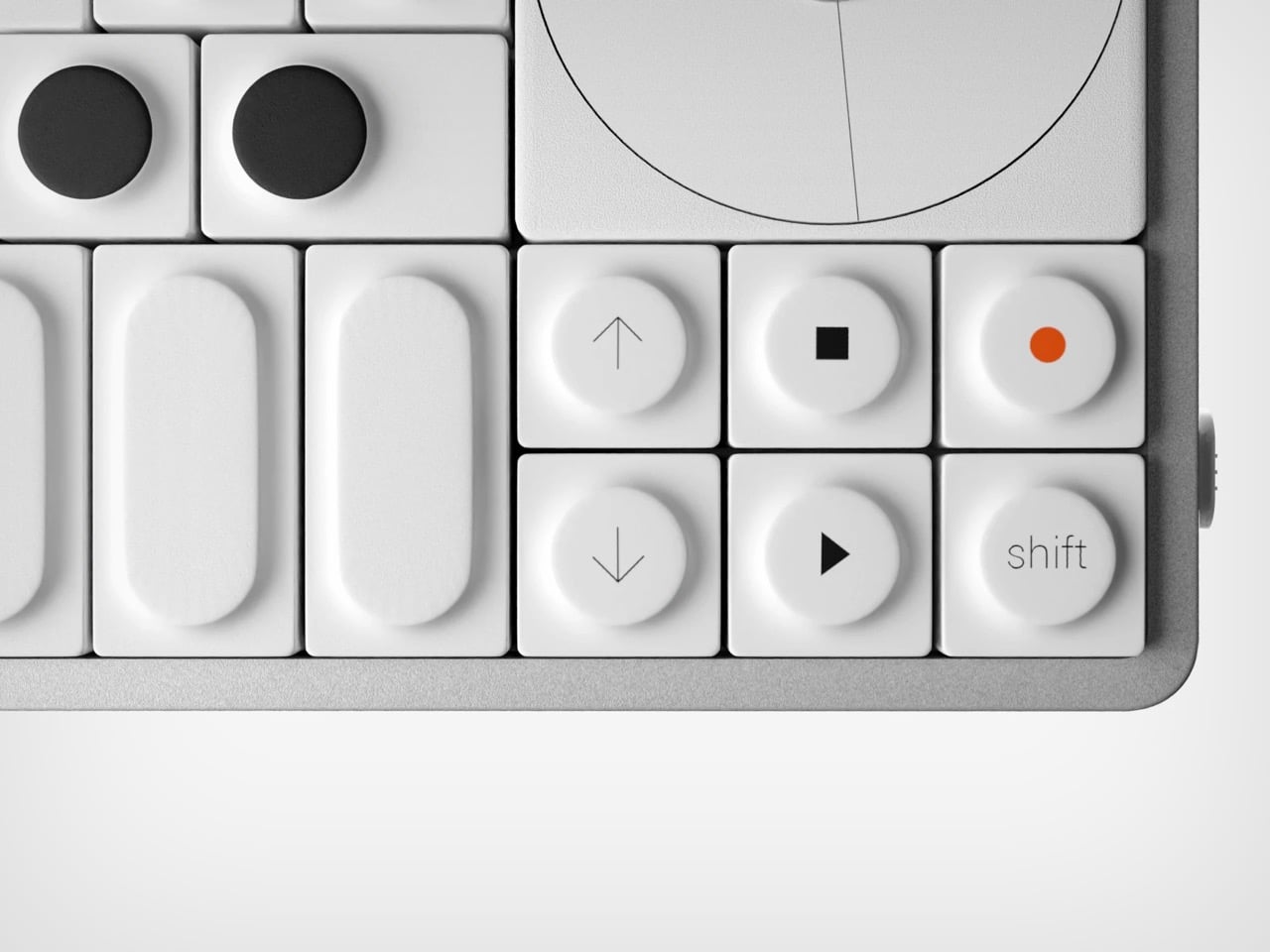
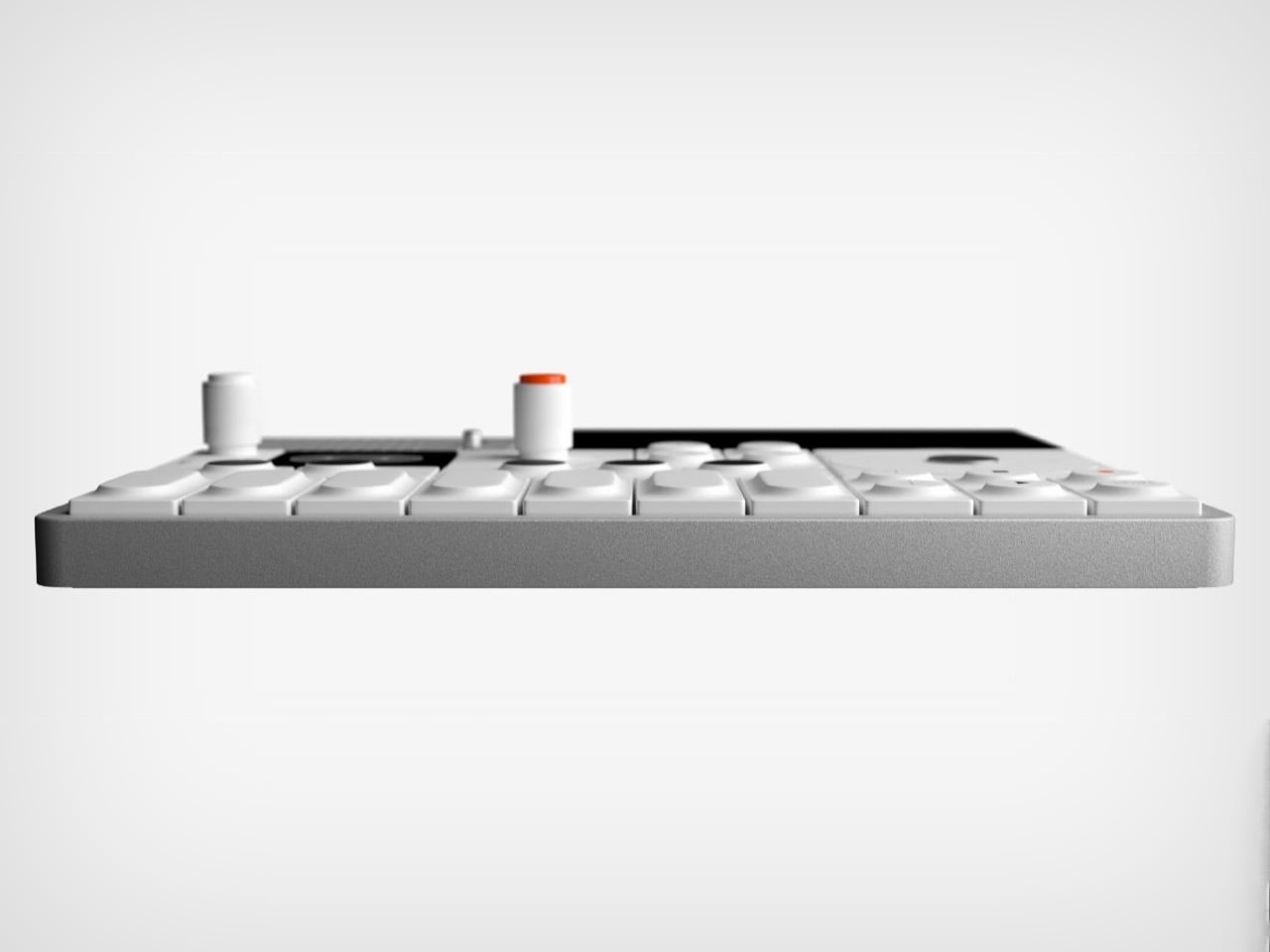
Physically, ACT-1 borrows the OP-1 field’s look, a light aluminum tray with white keys dropped into it. A perforated speaker grille owns the top left, surrounded by two faders and two knobs, and only one knob gets the orange cap, because TE always lets a single control hog the spotlight. Long pill-shaped keys run across the lower half, topped in places with black dome buttons. The star sits bottom right, a big circular platter that recalls the Steenbeck’s plates and the reel on TE’s $1,499 TP-7 recorder. Even the transport keys use TE’s lowercase “shift” label, and the full render looks like a leaked product page.
Teenage Engineering has built cinema hardware before. In 2024 it designed B-1, the console behind Gary Hustwit’s generative documentary Eno, which assembled a fresh cut at every live screening while its makers tweaked the audio for each theater. Stamenov staged ACT-1 in a launch studio straight out of that world, a white room lined with rounded acoustic panels, four speakers, and a big screen. A portable film-sound rig from TE’s real field system means a TP-7, a $1,999 OP-1 field, and a TX-6 mixer, and none of them speak Atmos. If Kouthoofd really is moving past synths, a tool for the people who make movies sound enormous seems like a pretty great next act.