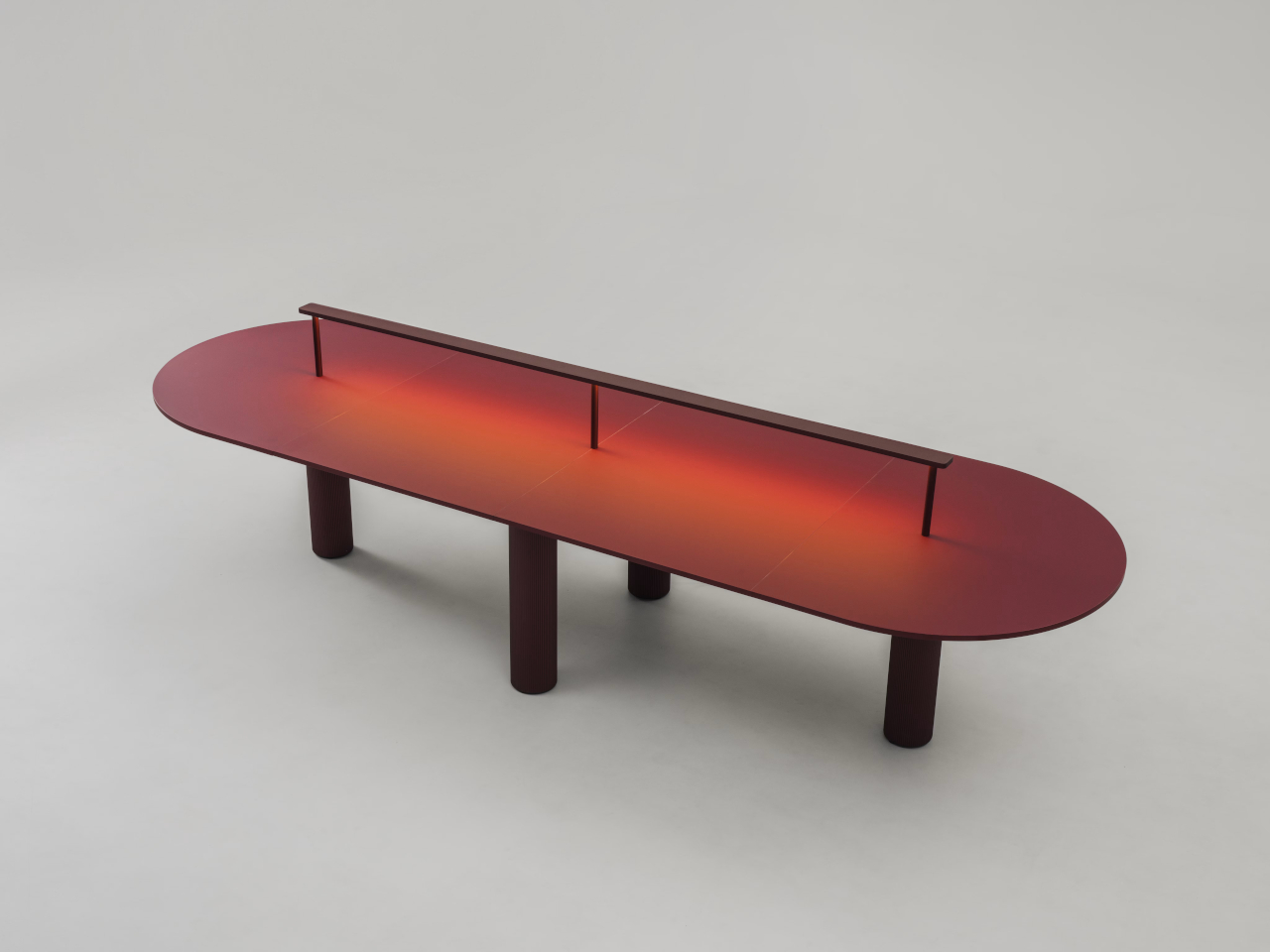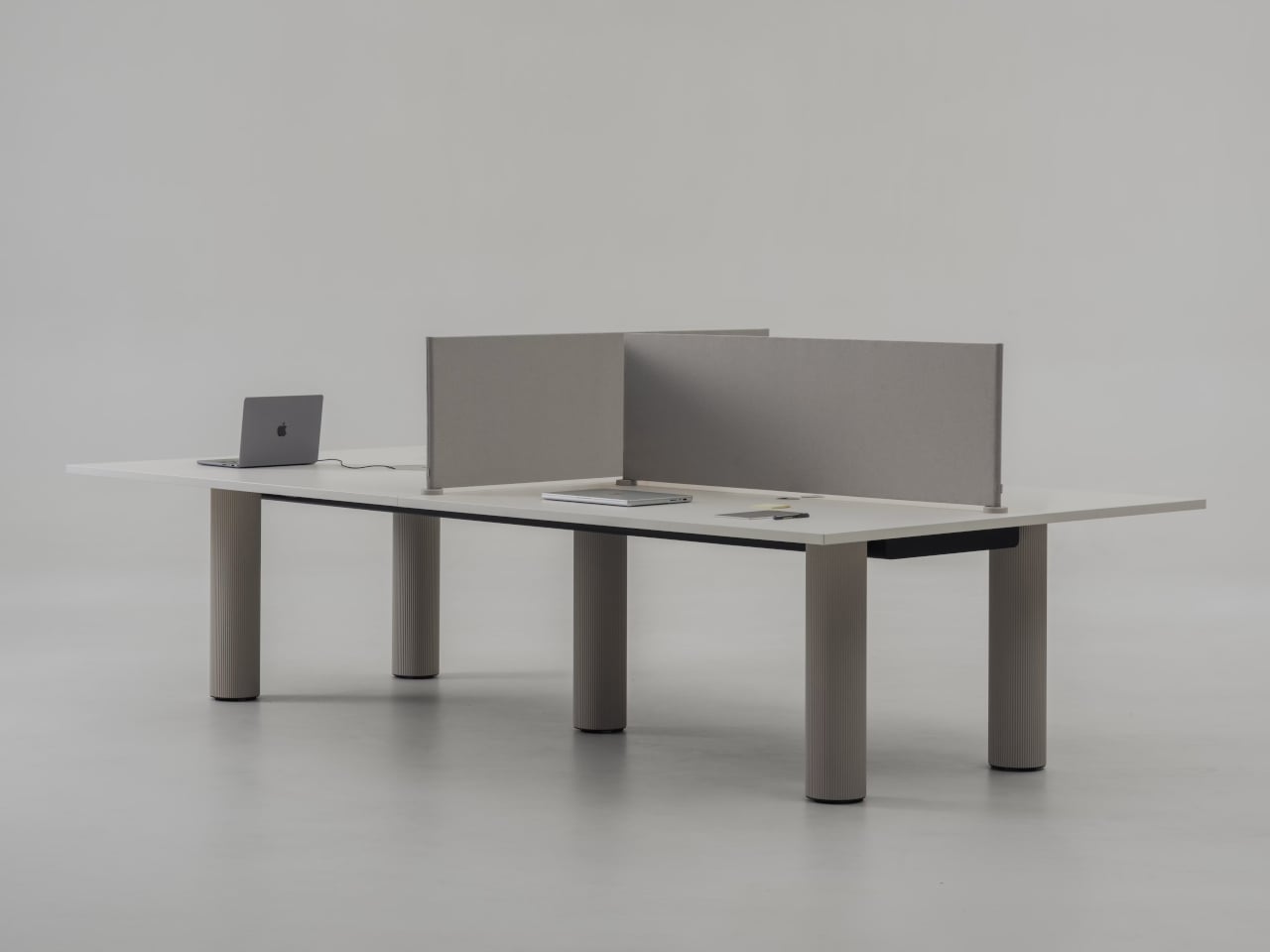

The thick, fluted legs beneath Kettal’s Area tables do more than give the furniture a sculptural presence. They also make room for the power, data, and lighting infrastructure that a shared workspace needs. Launched as a modular collection, Area brings those practical requirements into the table’s structure, rather than treating them as an untidy problem to deal with after everyone has moved in.
Those aluminum columns come in diameters of approximately 3.5, 6.3, and 17.7 inches, giving different configurations, either slender supports or a substantial central pedestal. Fine vertical grooves give the rounded surfaces texture without adding separate decoration. Anodized and powder-coated finishes offer different treatments, with burgundy making a particularly convincing argument that office furniture doesn’t have to spend its life dressed in gray.
Designer: Foster + Partners for Kettal
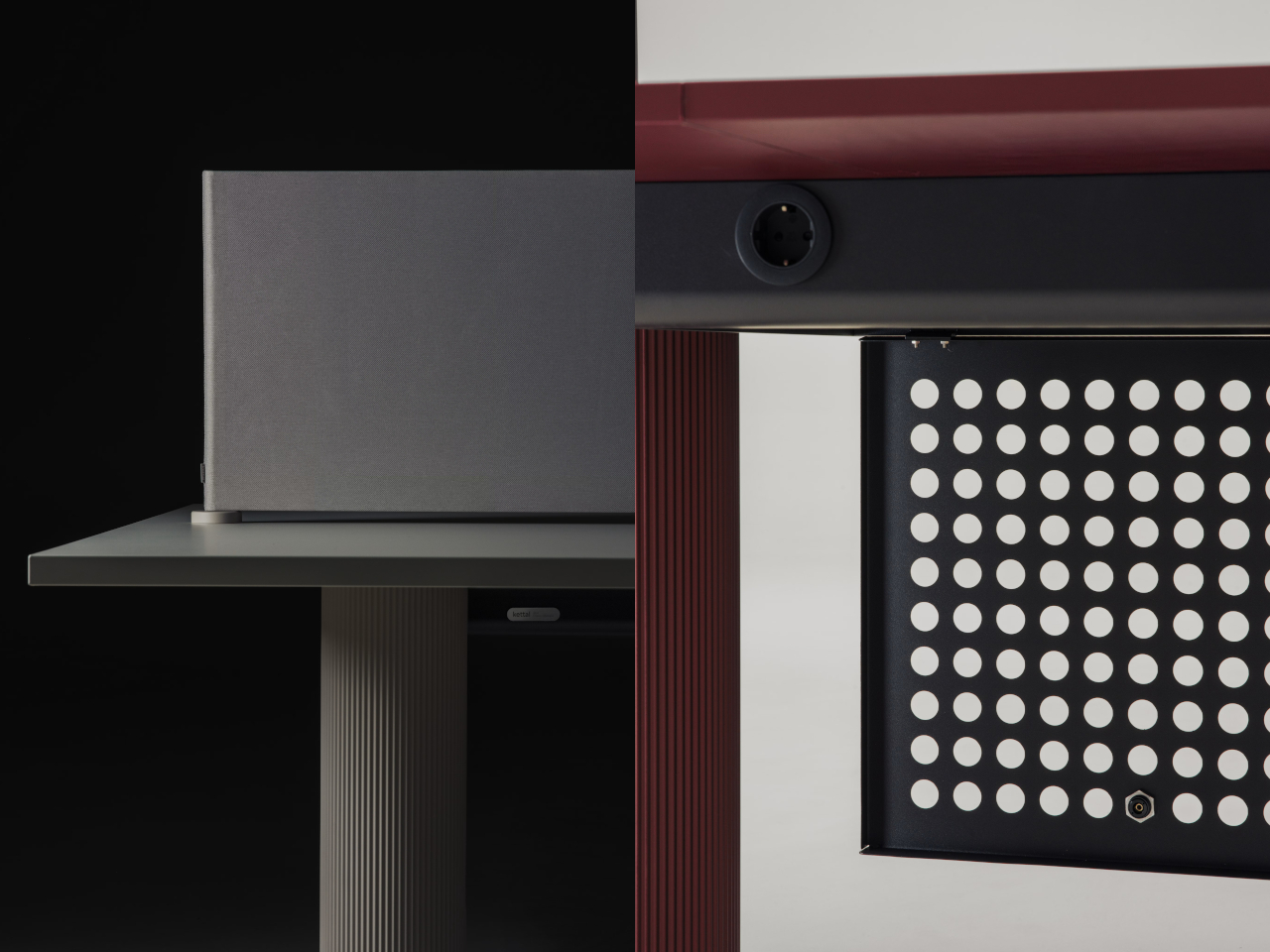
Underneath the tabletop, a concealed J-profile aluminum beam supports the surface and provides a continuous route for cables. Optional power equipment brings sockets and USB-C connections within reach through discreet access covers. Arriving with a laptop would mean finding a connection at the table, rather than exploring the floor underneath it. Your charging cable won’t disappear, but it has somewhere sensible to go.
Fabric dividers give neighboring workstations a boundary without turning the whole arrangement into a bank of cubicles. They attach magnetically at designated points, so the screens belong to the system rather than arriving as unrelated desk accessories. That’s visual separation, of course, not a promise of soundproofing. A colleague’s video meeting won’t politely stop at the edge of a piece of fabric.
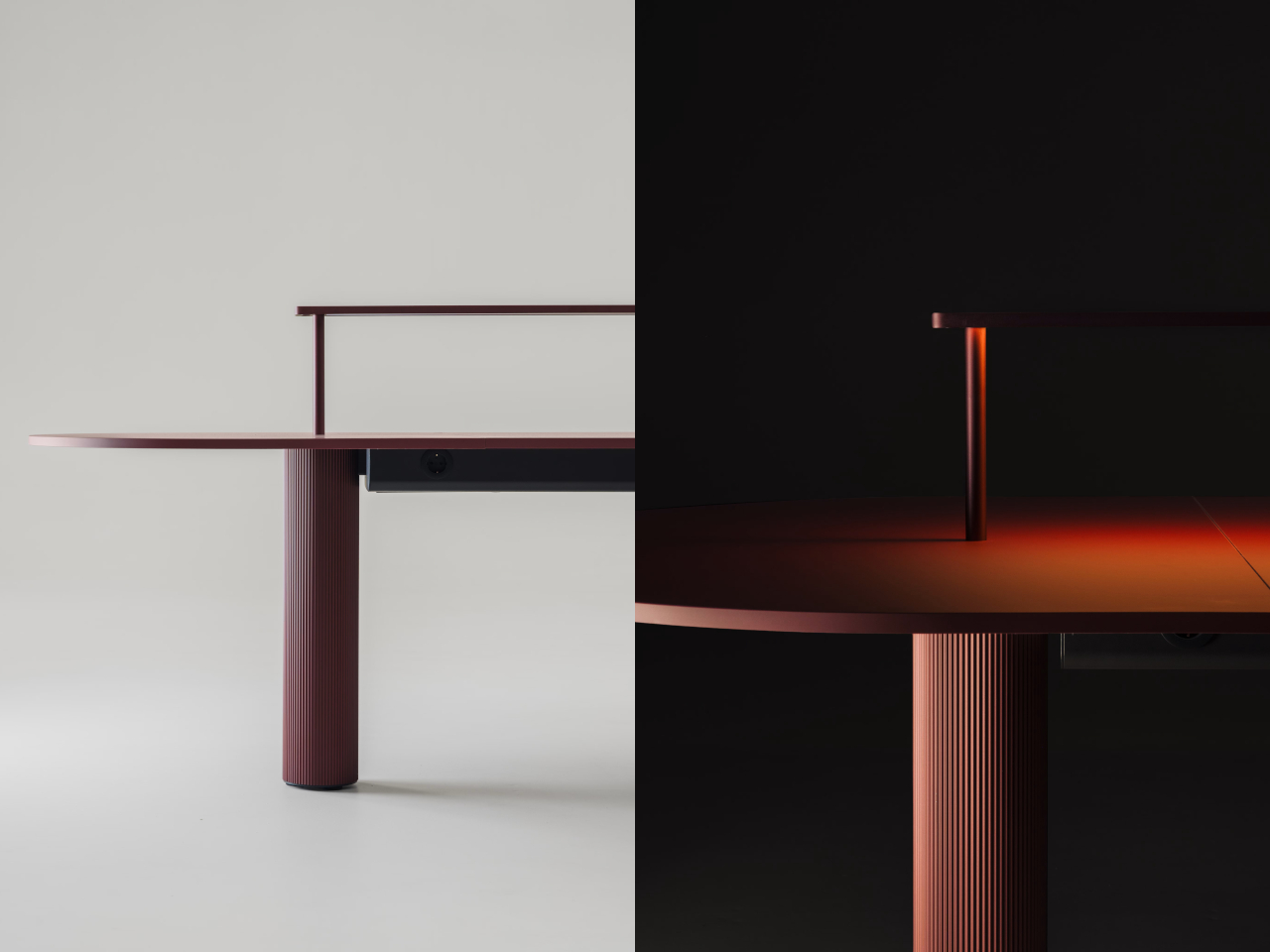
Lighting can work with those screens or stand independently, giving an open communal table its own source of illumination. The narrow horizontal fittings rise on slim stems, repeating the tabletop’s long lines without adding the visual bulk of several separate lamps. Rather than squeezing a desk lamp between everyone’s open laptops, you could gather beneath one fitting that belongs to the table itself.
The tabletops come in round, triangular, and rhomboid forms, with different module sizes supporting individual workstations and larger meeting arrangements. Seated and standing configurations extend that range beyond the conventional desk. A café could specify smaller gathering points, while a library could use longer shared surfaces, keeping the same family of components without making every room follow precisely the same floor plan.
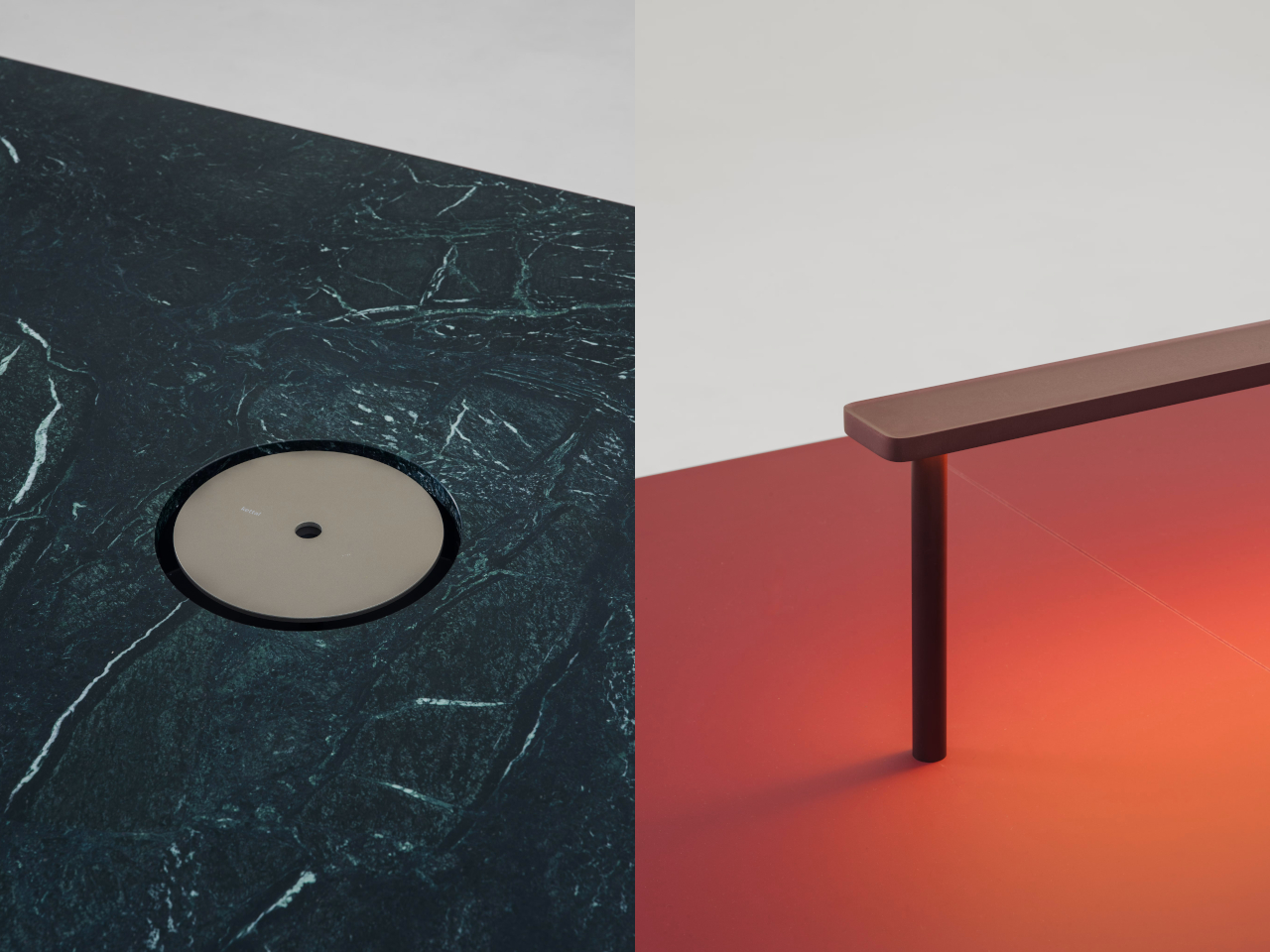
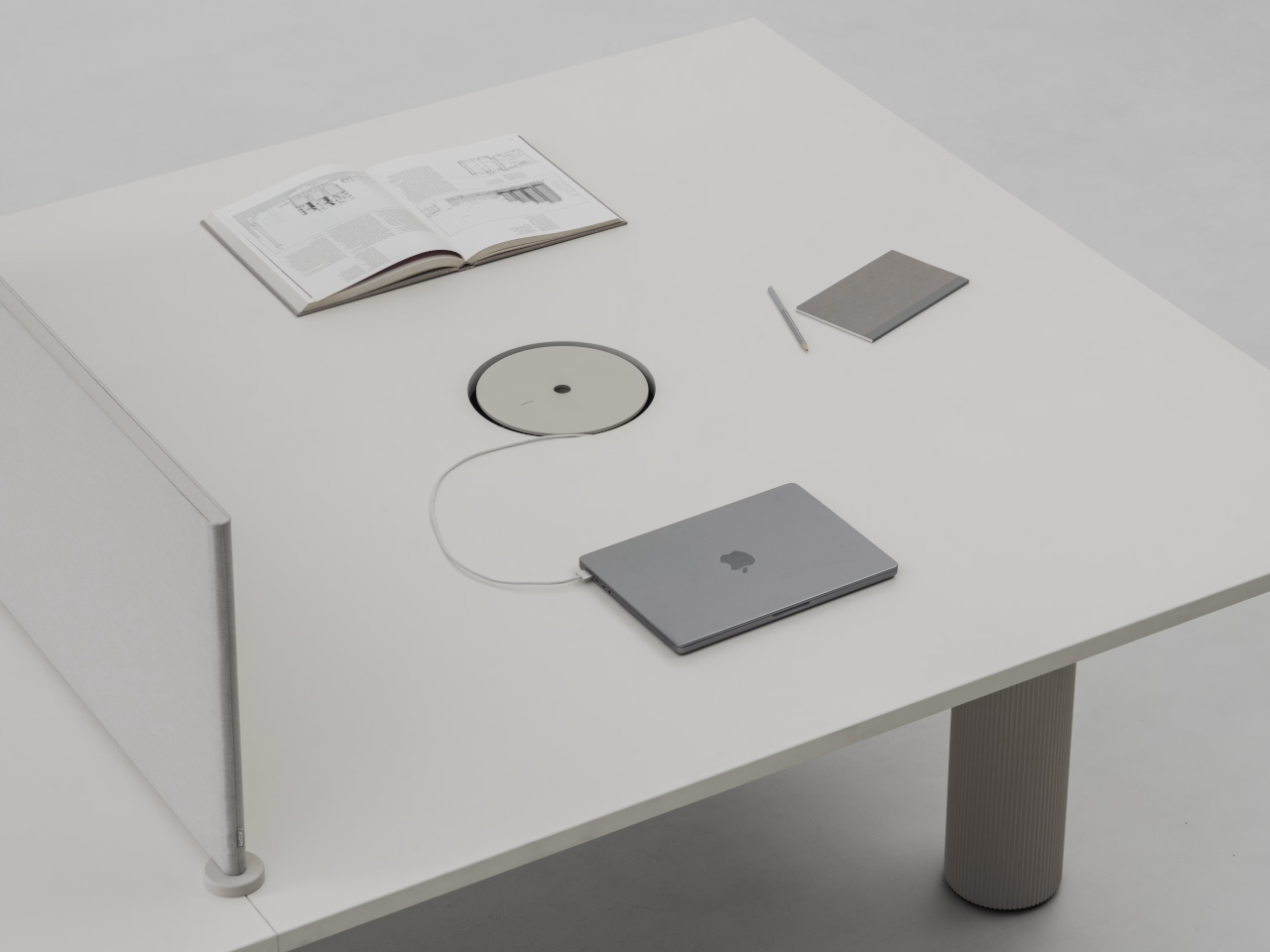
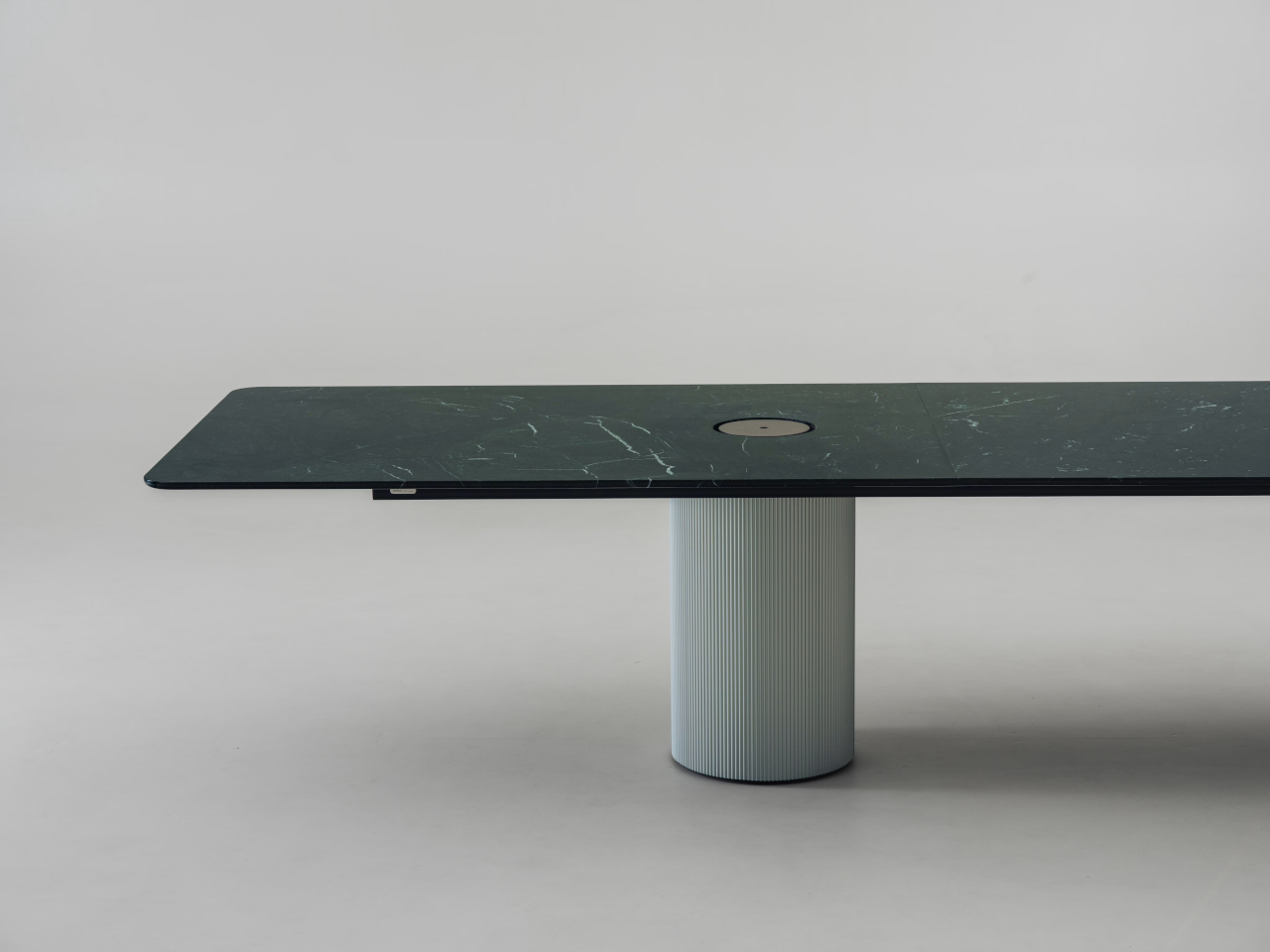
Material choices change the atmosphere just as much as the layout. Timber, linoleum, melamine, and Fenix are joined by terrazzo and marble options for larger conference or feature tables. Pale surfaces and gray fabric screens give the workstations a quieter character, while a dark green stone top with pale veining contrasts with a broad silver-colored pedestal, bringing boardroom formality to the broader collection.
Area is already listed in Kettal’s collection, although pricing and delivery details need a separate inquiry. The more useful question for an office planner is how the system connects to the room: concealed cables still have to reach the building’s power supply. A flexible table layout only stays flexible if rearranging the furniture doesn’t leave the next workstation stranded beyond an outlet.