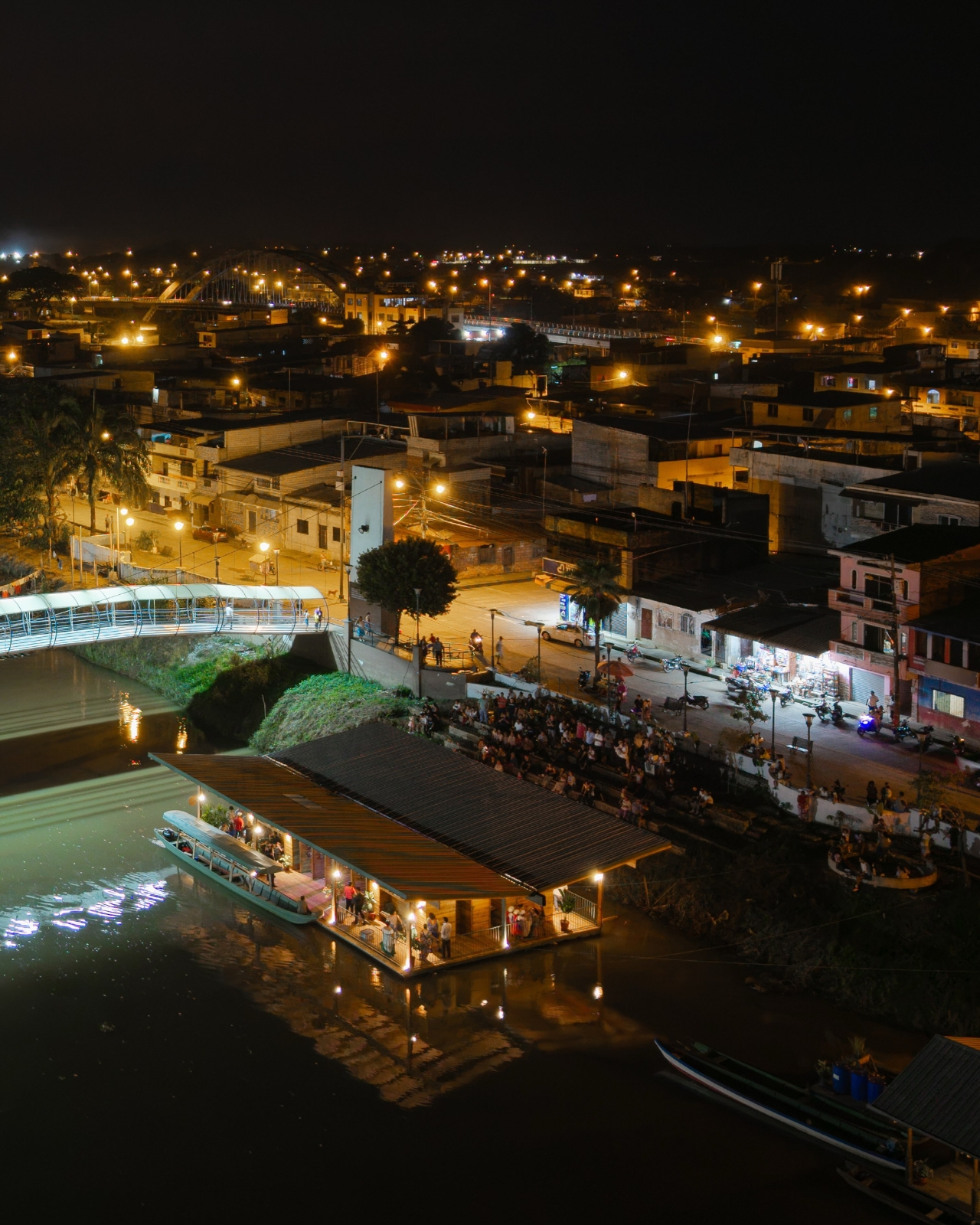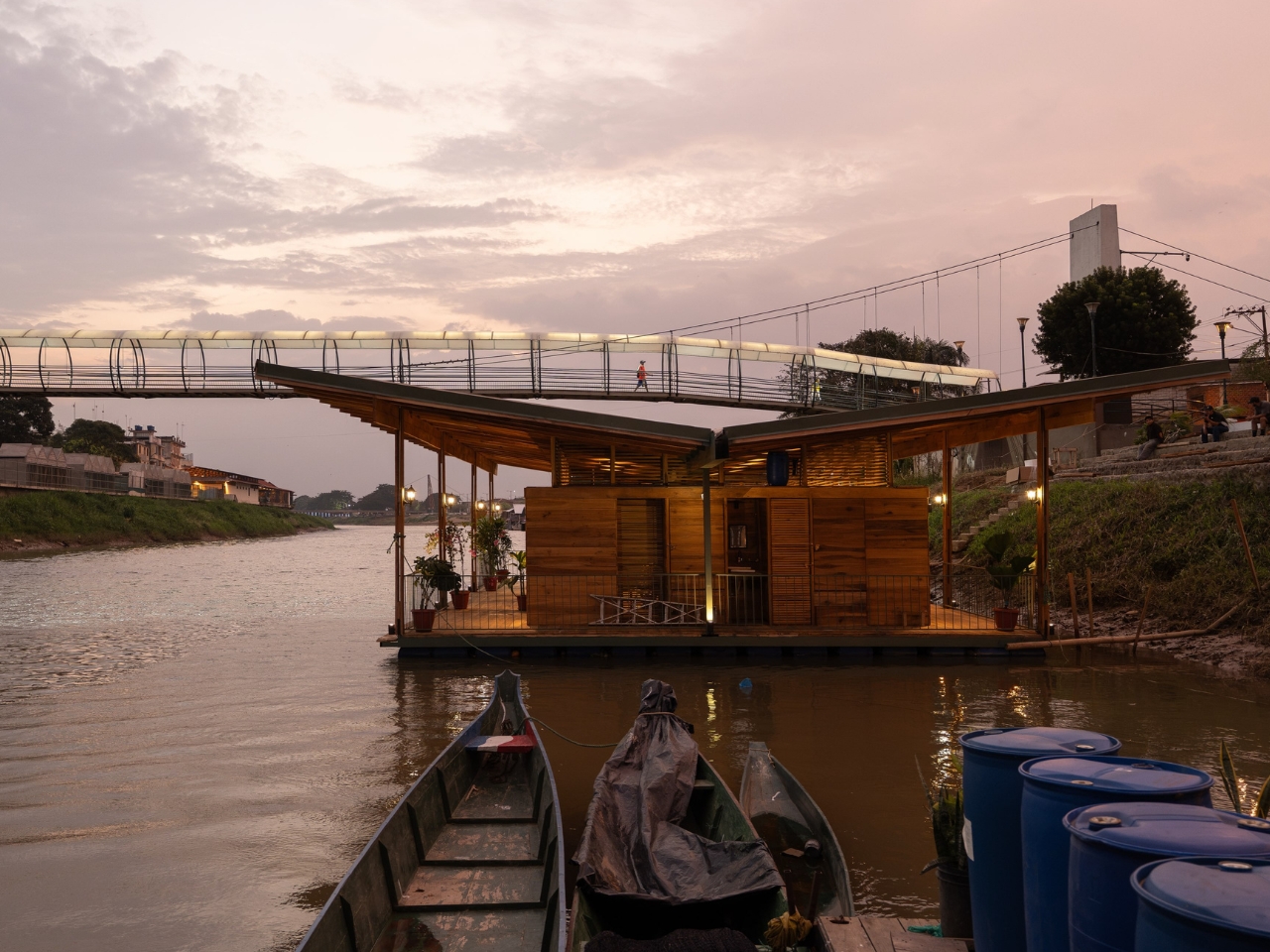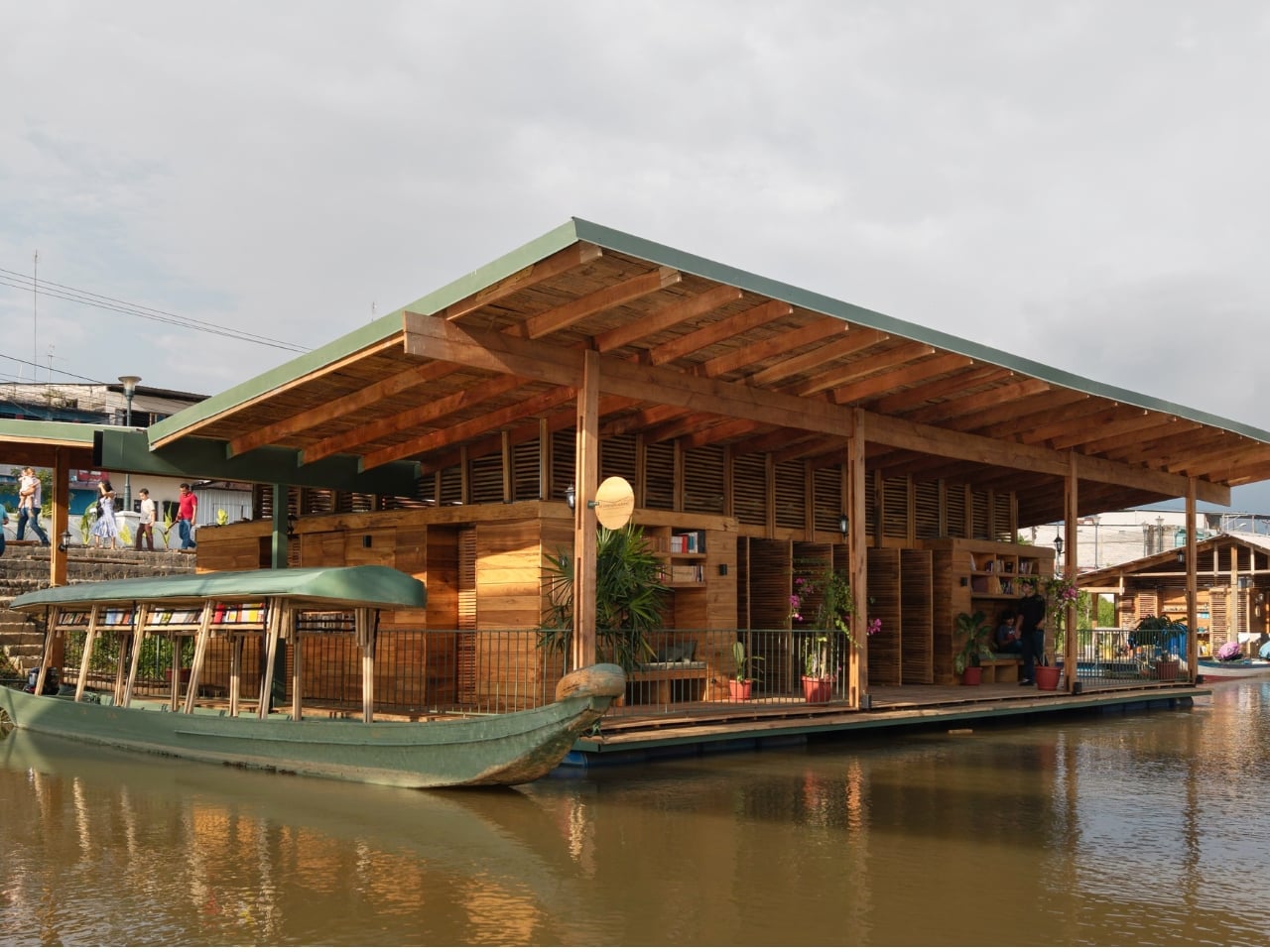

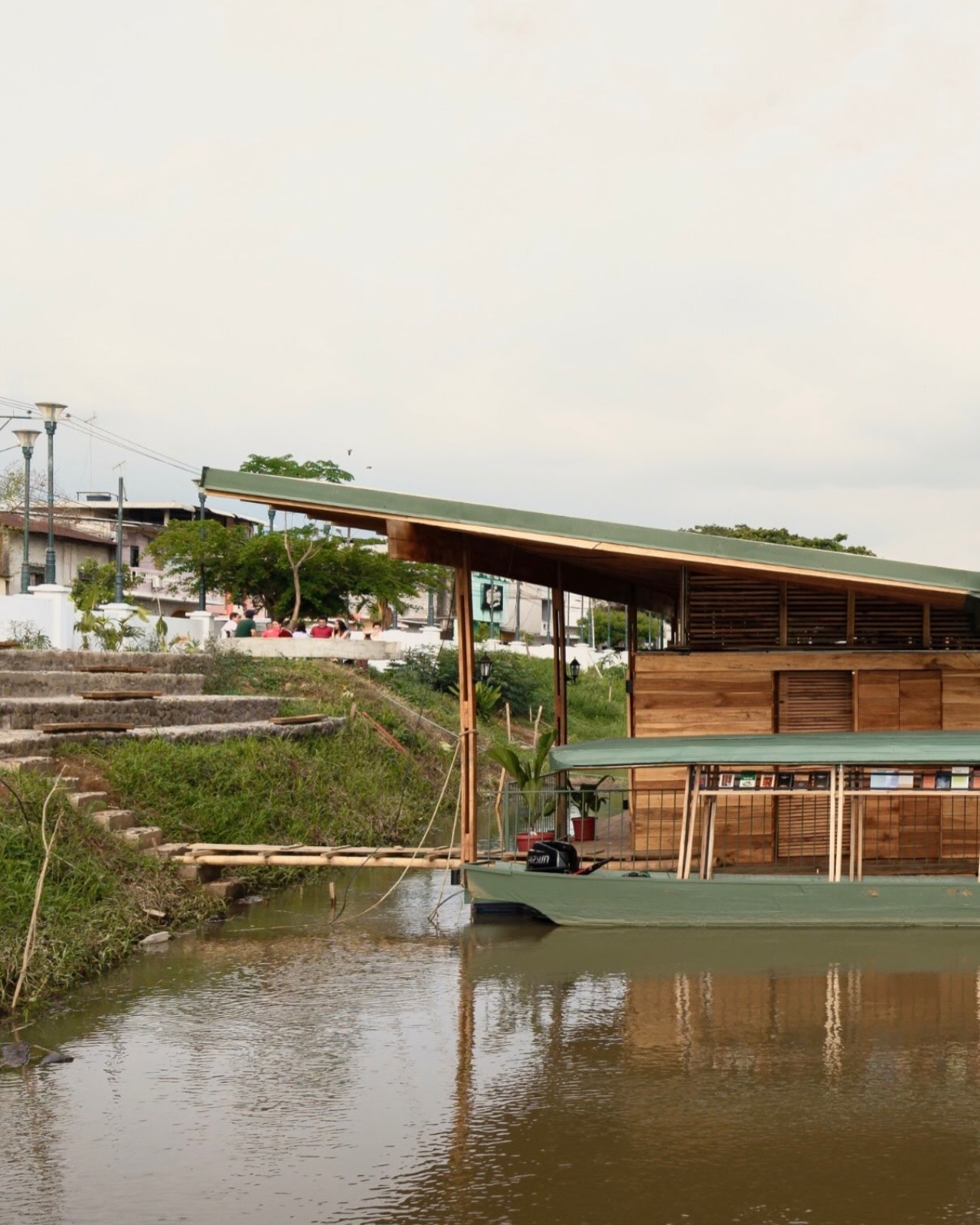
A broad roof, a wooden porch, and lights reflected in the water: El Embarcadero looks more like a neighborhood gathering spot than a grand cultural institution. That feels right. Designed by Natura Futura in Babahoyo, Ecuador, the completed floating cultural center addresses a basic absence. According to the architects, its Barreiro neighborhood lacks public educational, cultural, and social spaces. The river is where they’ve chosen to make room.
Water also complicates the brief. The architects say seasonal rises reduce local accessibility for roughly 25–30% of the year. El Embarcadero responds with a floating structure and mooring systems designed for fluctuating water levels, alongside amphitheater steps that can flood. I like that the design accepts changing conditions without treating the neighborhood’s relationship with the river as something to eliminate.
Designer: Natura Futura
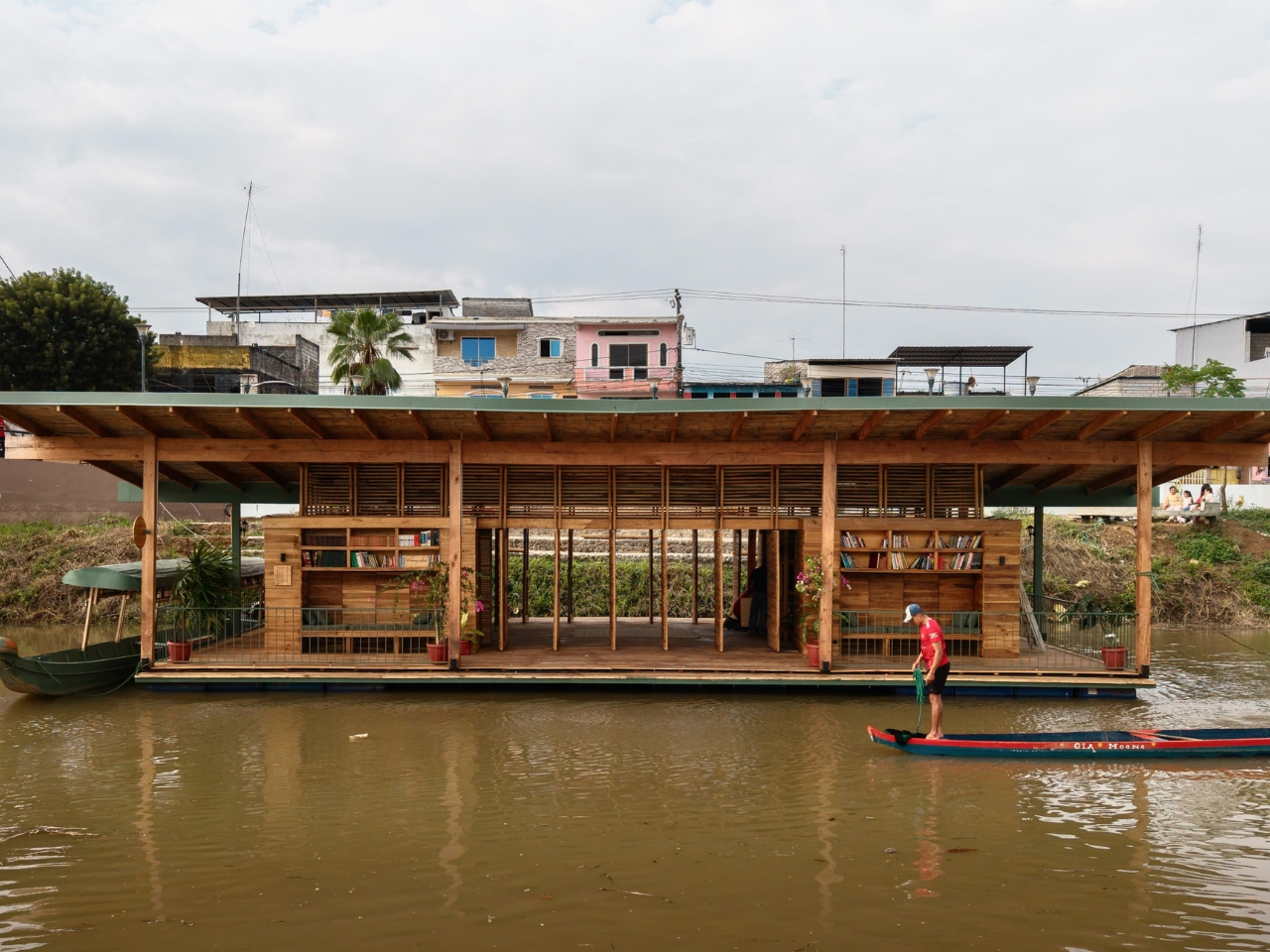
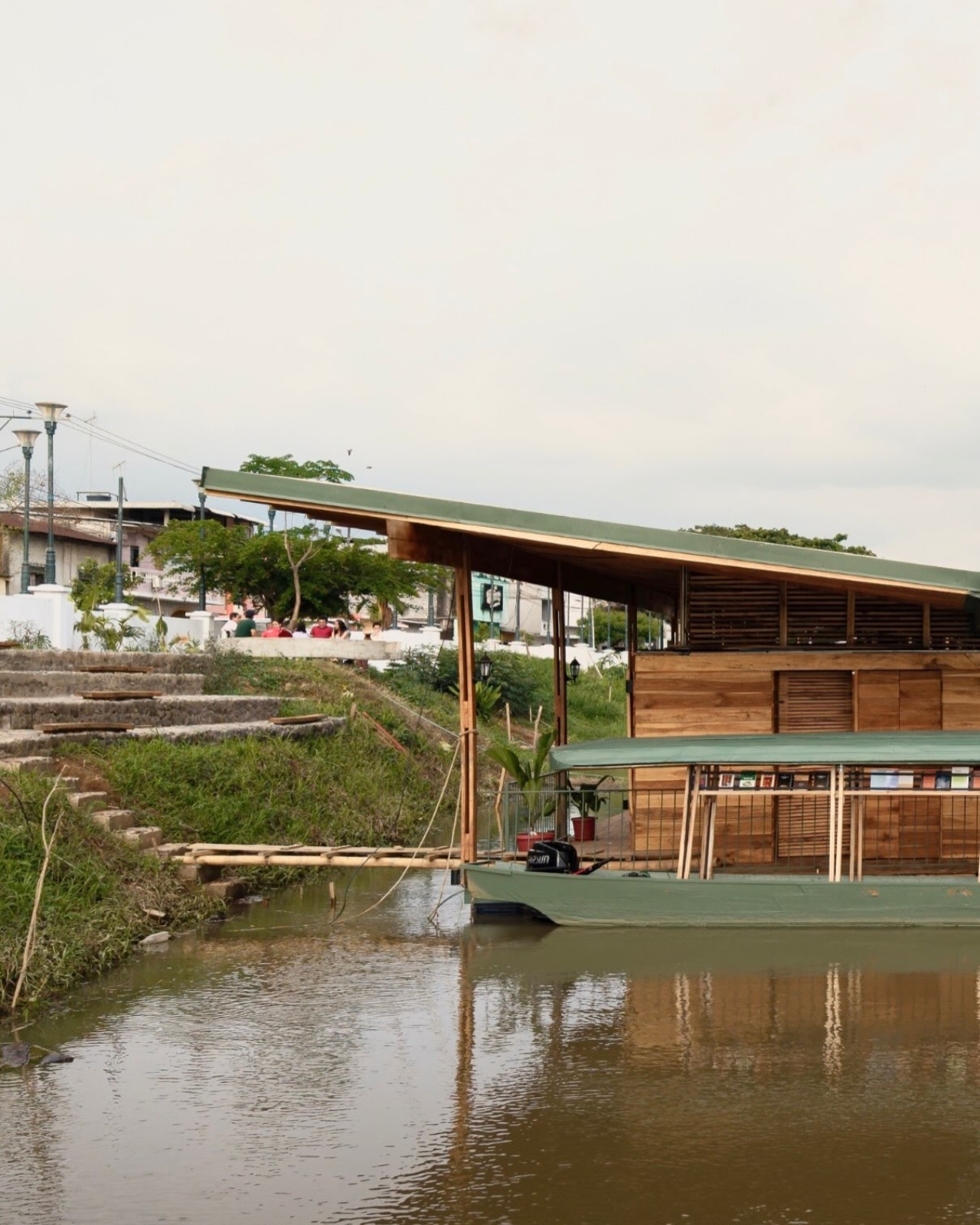

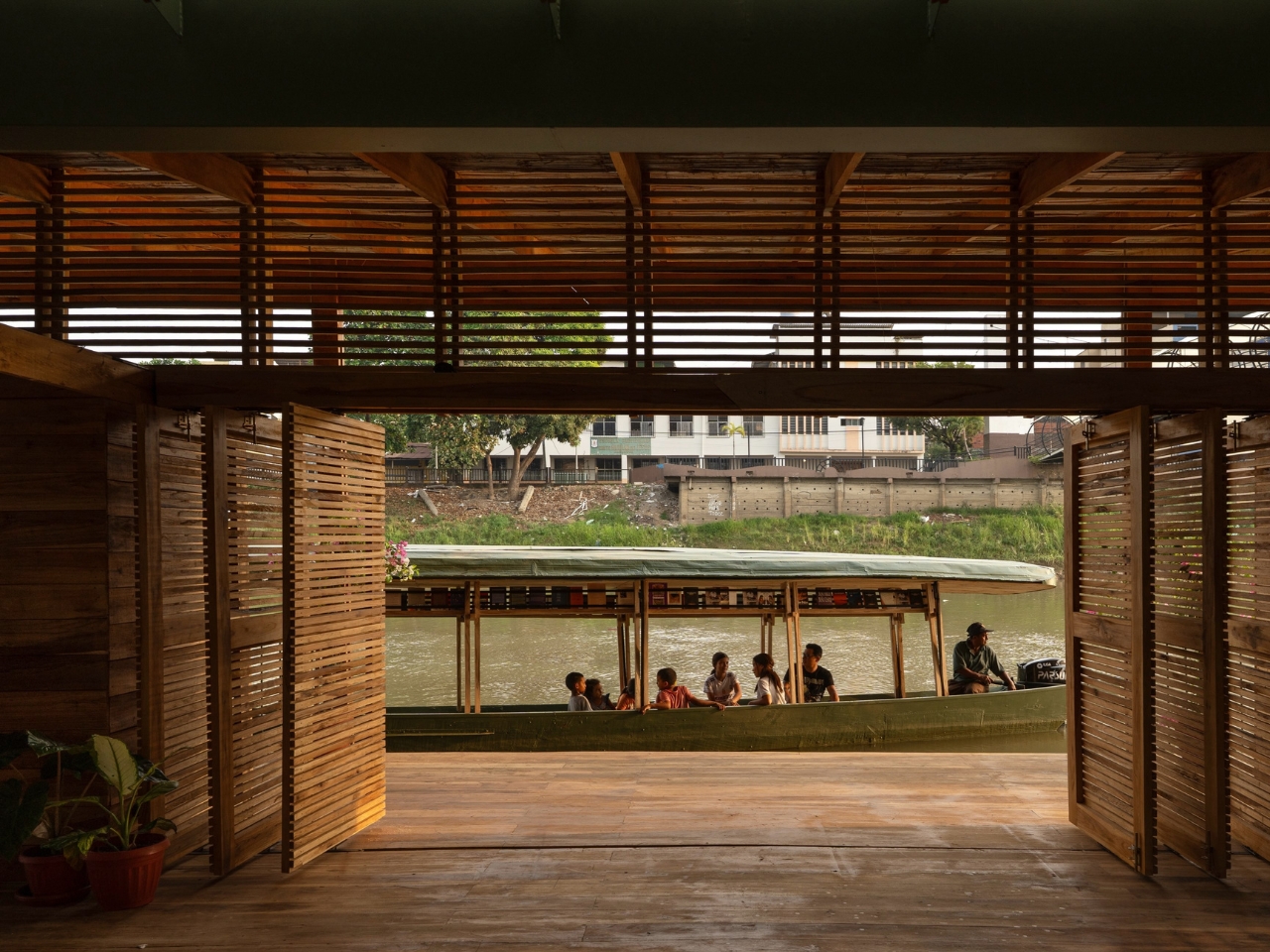
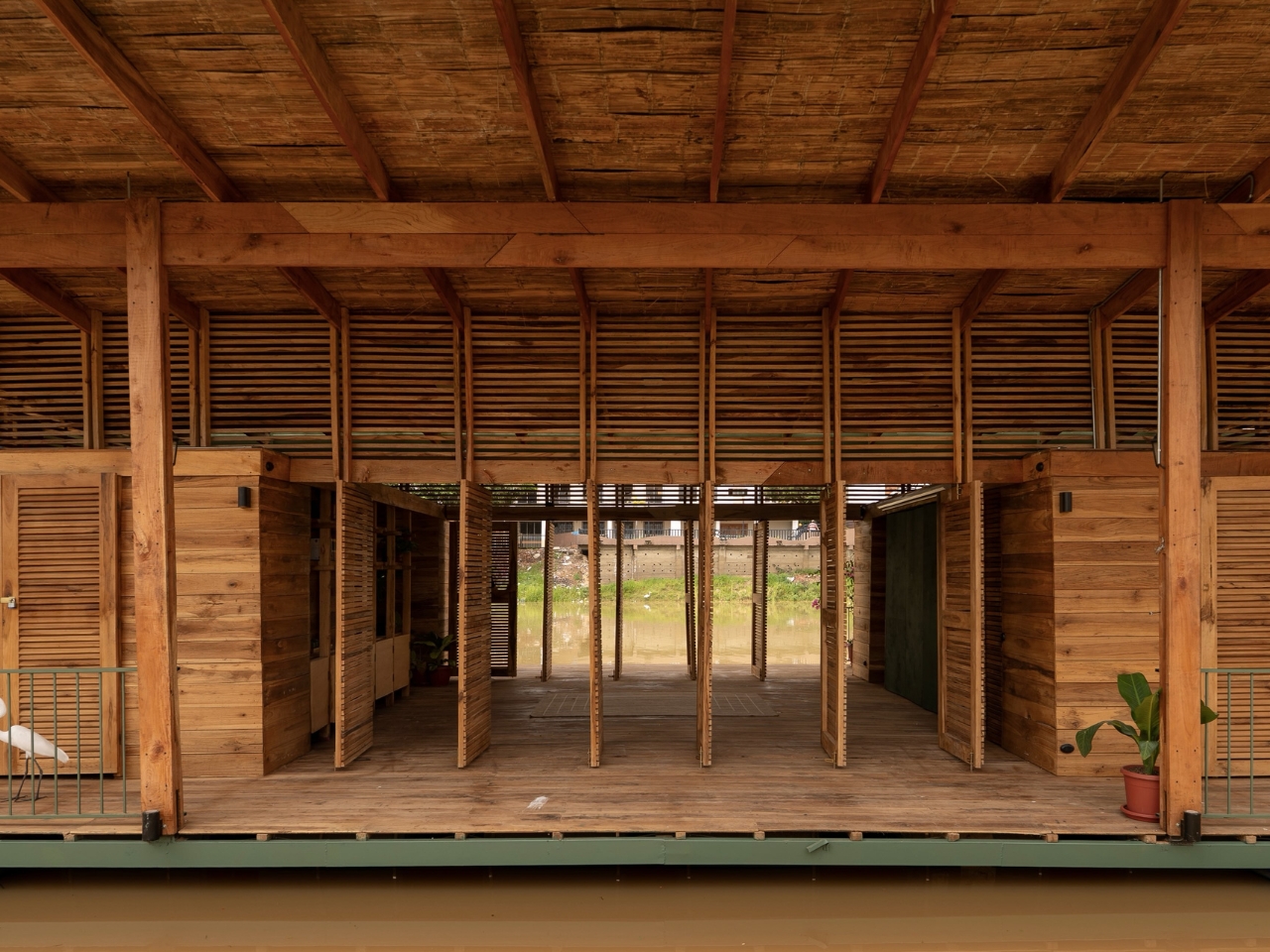
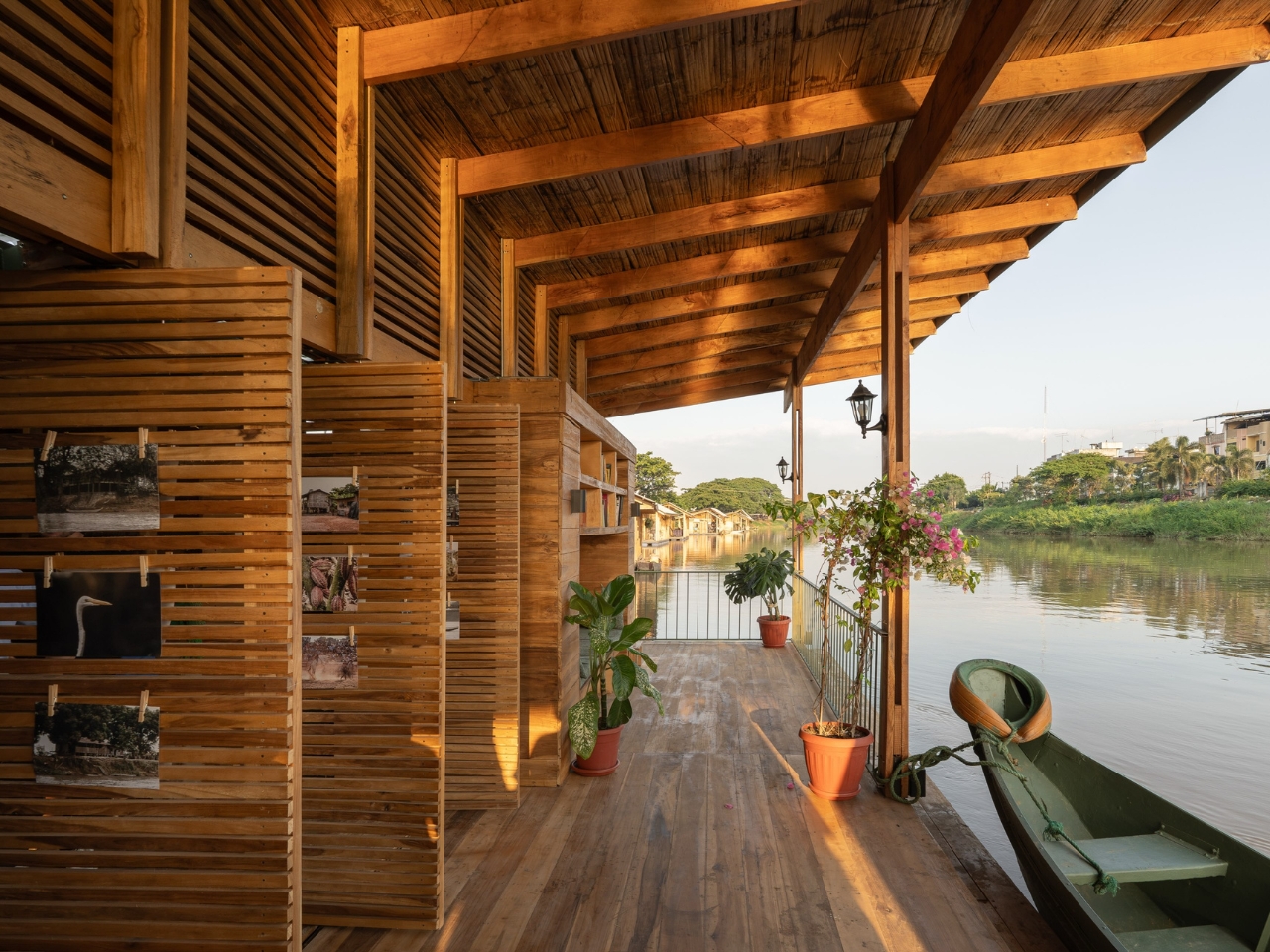
The building’s appearance supports that sense of belonging. Photographs show timber walls and a generous covered deck, with a broad roof projecting beyond the enclosed rooms. It has the visual familiarity of a porch, somewhere you might pause before deciding to go inside. For a cultural center, I’d take that approachable presence over an entrance designed primarily to make visitors feel small. The building looks connected to everyday life along the bank.
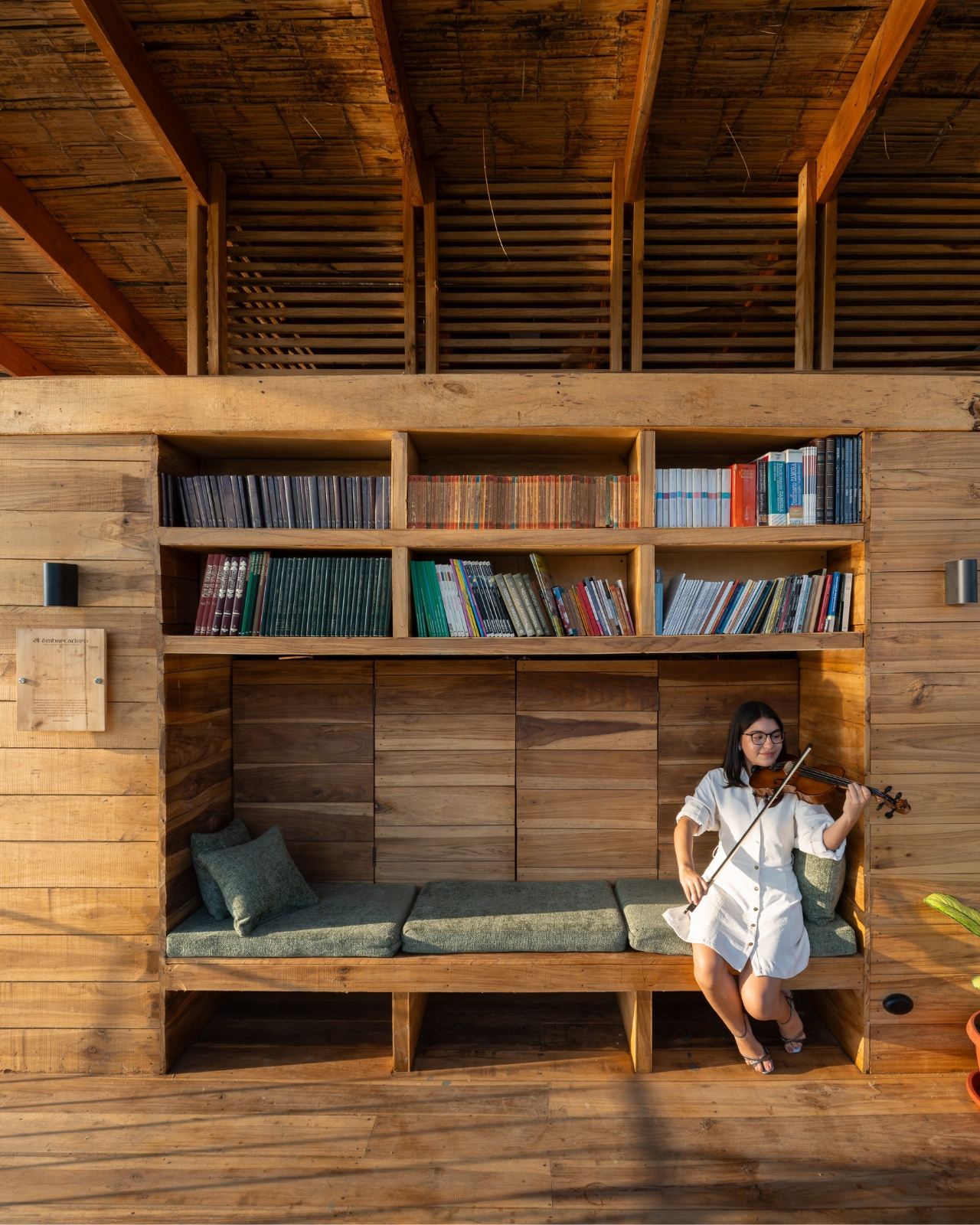
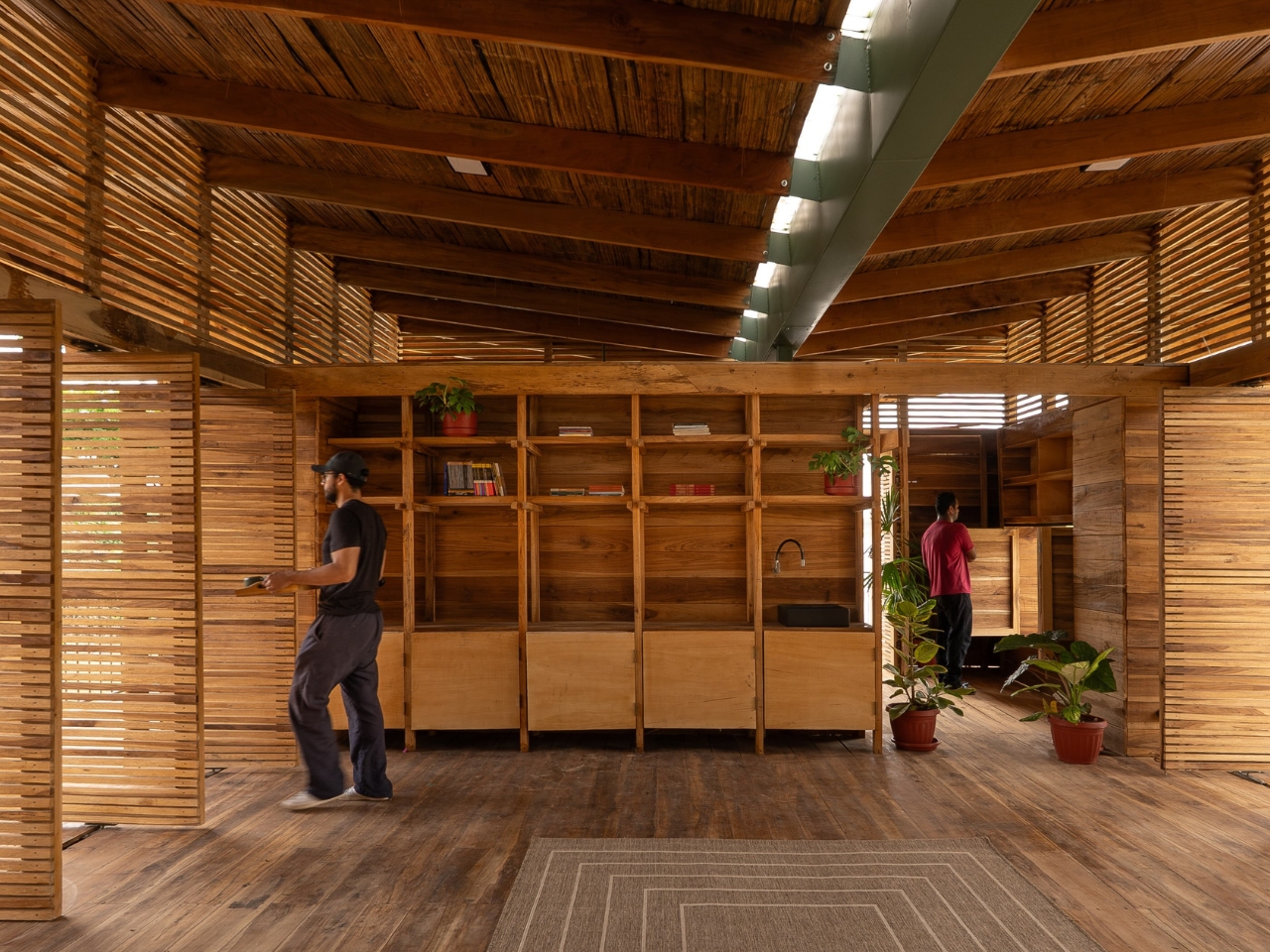
Its approximately 33-by-52-foot platform accommodates a library, community kitchen, educational spaces, offices, and shared areas. Blackboard-and-mirror panels and furniture that doubles as book storage allow the interior to change with different activities. Those choices make sense to me at this scale. A neighborhood building shouldn’t need a separate, permanently designated room for every possible use. The useful question is how much can happen within the space without making each activity feel like an awkward accommodation.
The library’s reach extends beyond that platform. A companion Library Canoe is designed to carry books and workshops to more distant riverfront homes and communities, using El Embarcadero as its base. It’s my favorite element because it changes the question of access. Providing a room full of books matters, but so does considering who can reach that room. Here, a familiar vessel becomes part of the cultural infrastructure, rather than something parked outside it.
That familiarity has a history. Project supporter rearc institute documents a local floating-house tradition sustained by fishing, boatbuilding, and river trade, as well as Natura Futura’s work with river residents since 2019. El Embarcadero belongs to the broader Huellas del Agua initiative, which includes neighborhood regeneration and floodable public landscapes. That context matters. I read the center as an extension of knowledge already present in Babahoyo, not an imported architectural idea looking for an interesting waterfront site.
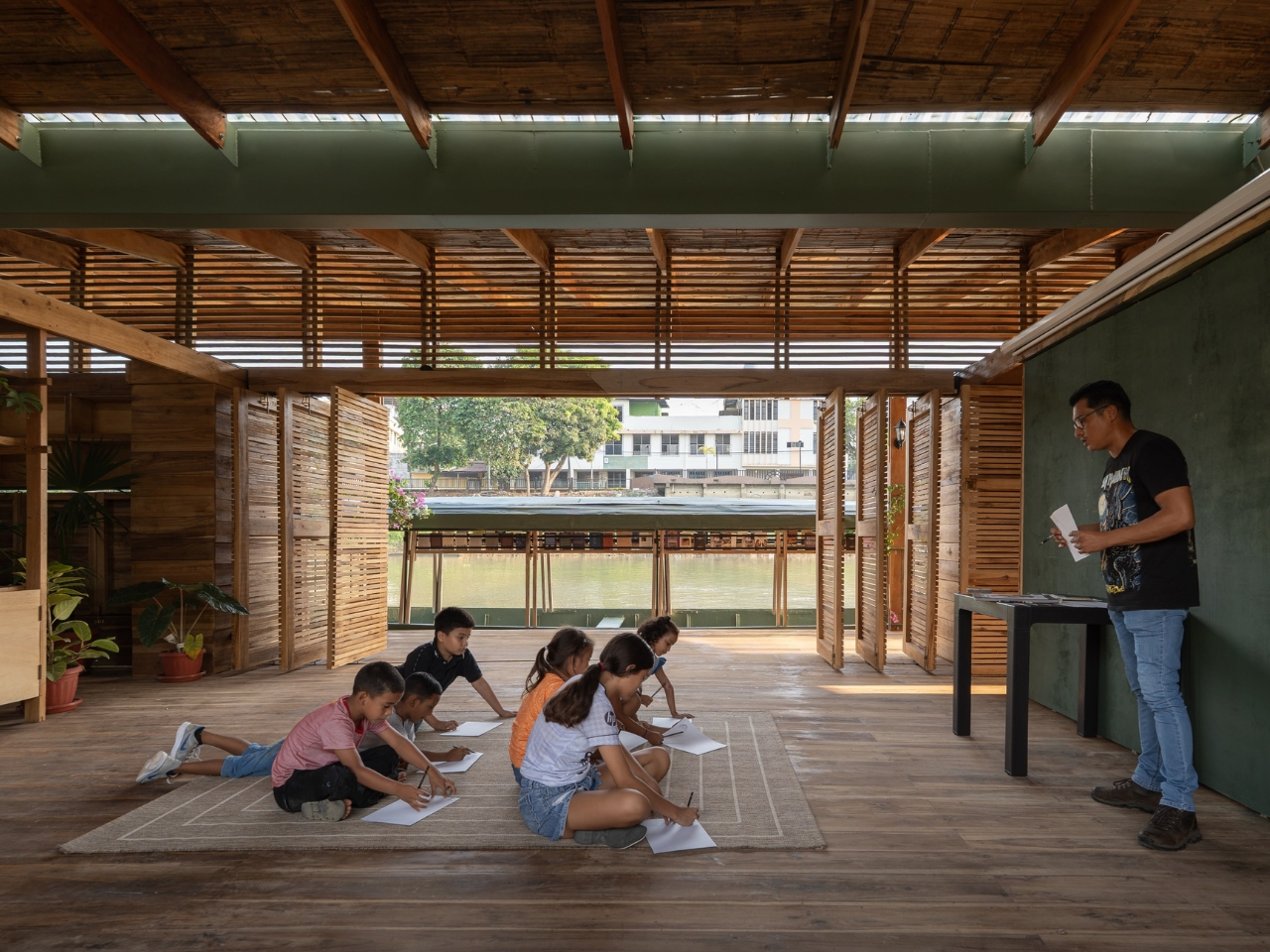
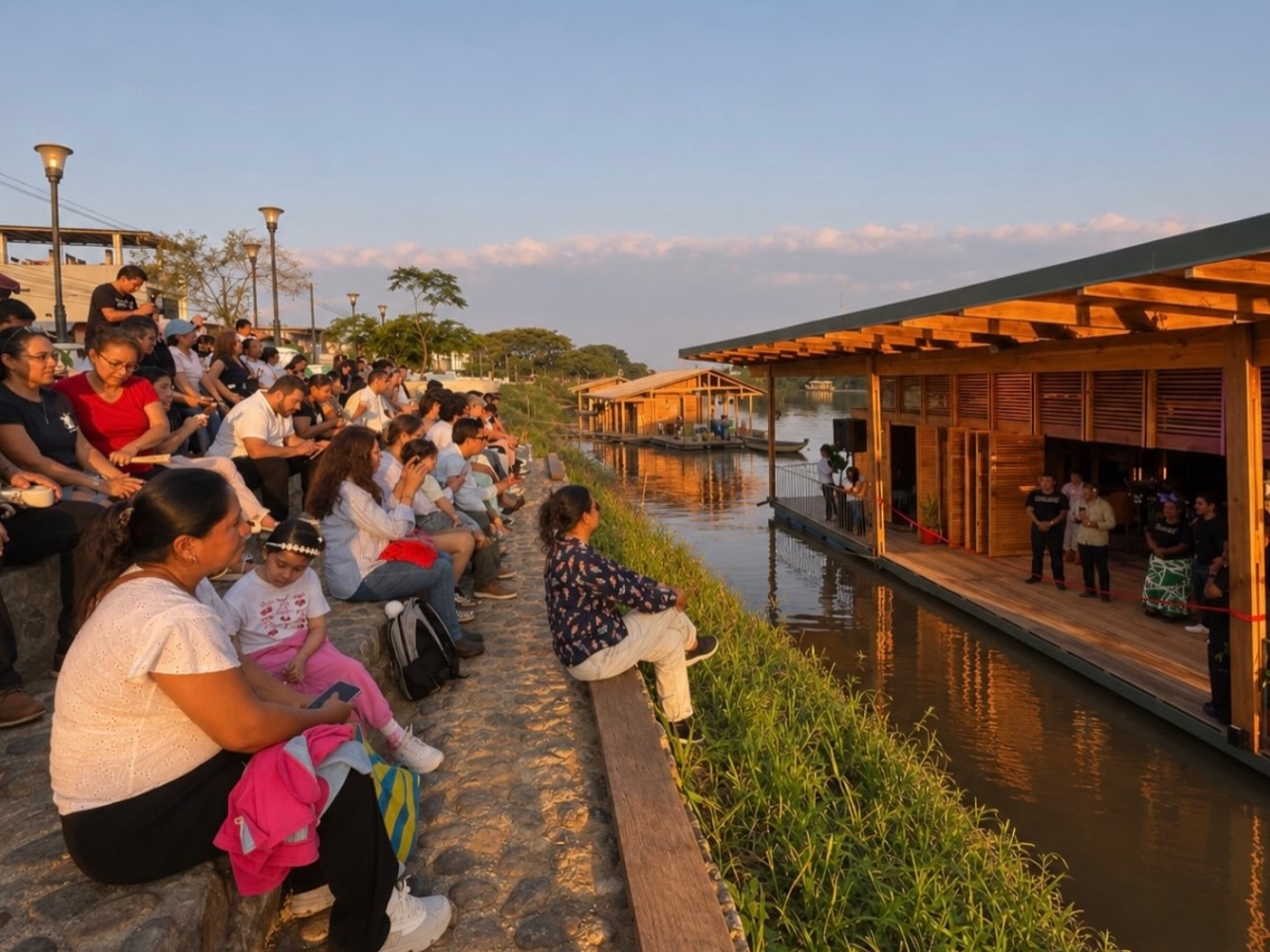
The programming gives that interpretation some substance. Reporting on the opening, Ecuadorian newspaper EXTRA described a library collection of more than 400 volumes and plans for free weekly cultural activities. Cultural manager Lincoln Meza discussed making room for artists, writers, organizers, and residents with knowledge to share. That’s an appealing definition of a cultural center: somewhere local people can contribute to the program, rather than simply arrive to watch someone else perform.
Of course, a building’s opening doesn’t establish how well it will serve people over time. I’d want to know how consistently the workshops run, how the canoe service develops, and how the spaces work through changing river conditions. Those are fair questions for a project whose value depends on repeated use. The architecture provides a framework, but a full calendar and dependable stewardship will give that framework its purpose.
Still, El Embarcadero offers a persuasive idea of what a public building can look like when its starting point is the neighborhood around it. I’m drawn to the modesty of that ambition. There’s room for reading, cooking, teaching, and gathering, with a canoe intended to take some of those activities farther. The measure of success I’d care about is whether residents begin treating the center as an ordinary, dependable part of their week.