
I have never been on a surfboard in my life and will probably never really be on one, given my fear of open water. One thing that might convince me to at least try it is getting a great view of the ocean (and if you can guarantee that I will not drown or get swallowed by any large sea creature). However, most surfboards are designed primarily for riding waves, so ocean sightseeing is not really their main design function.
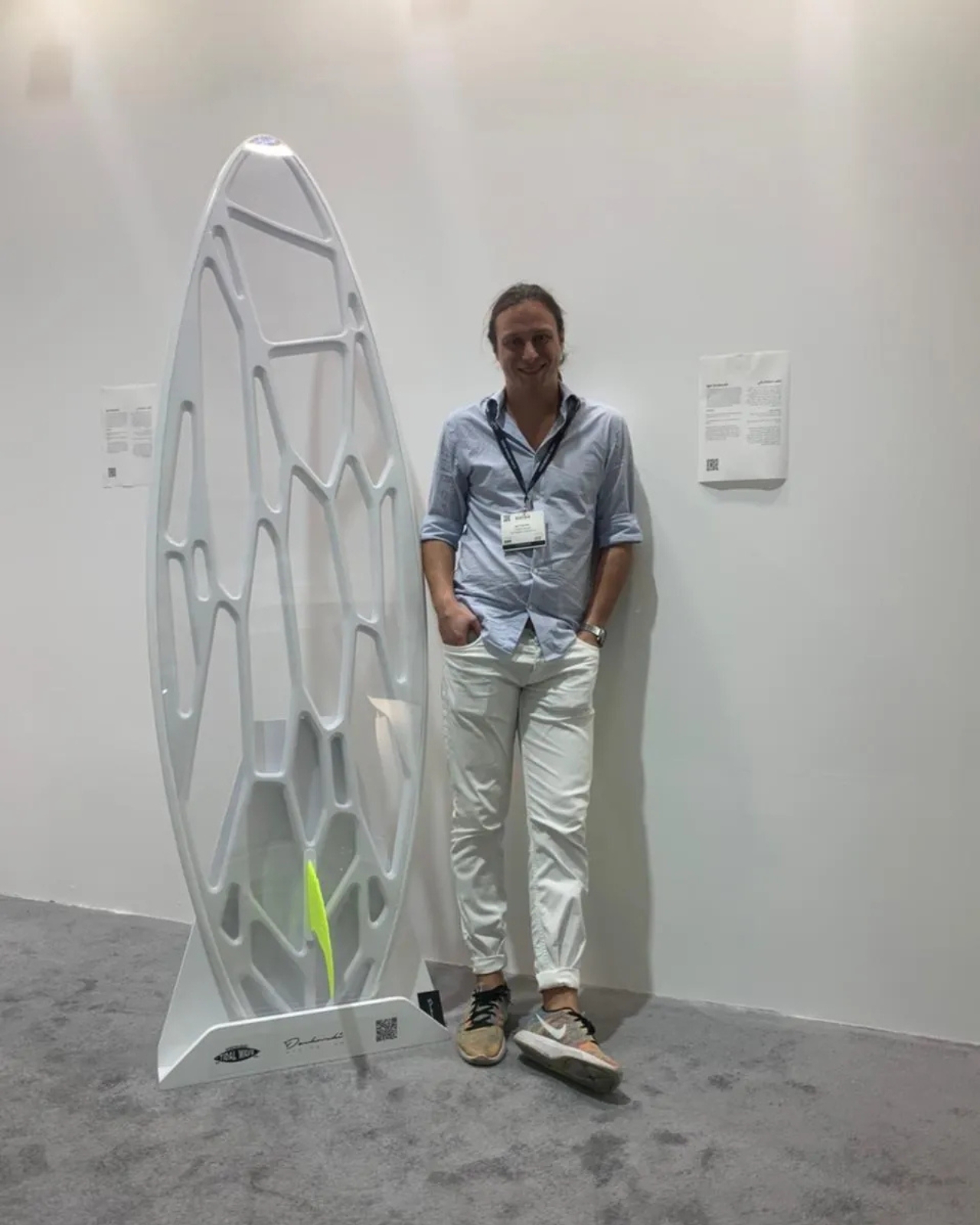
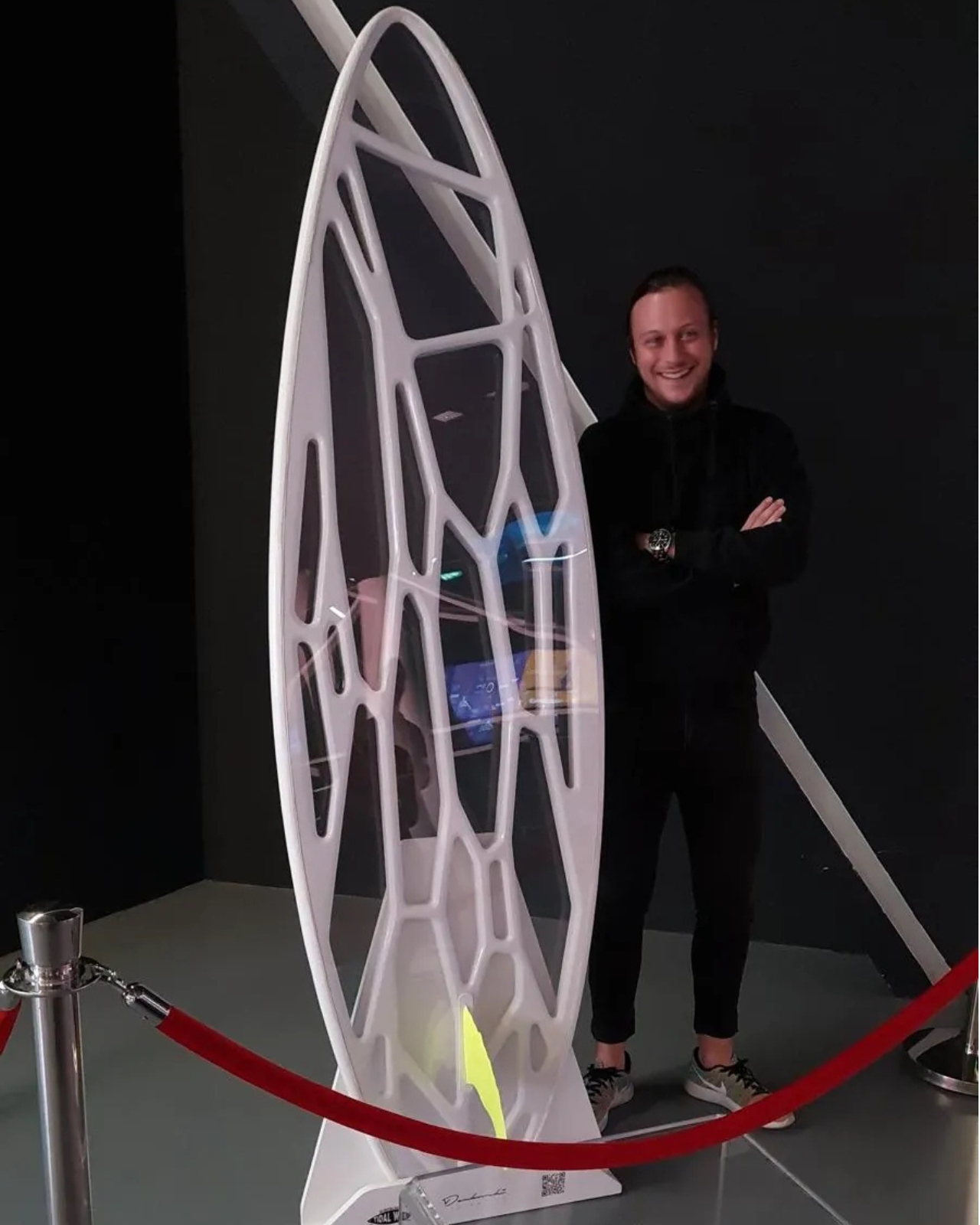
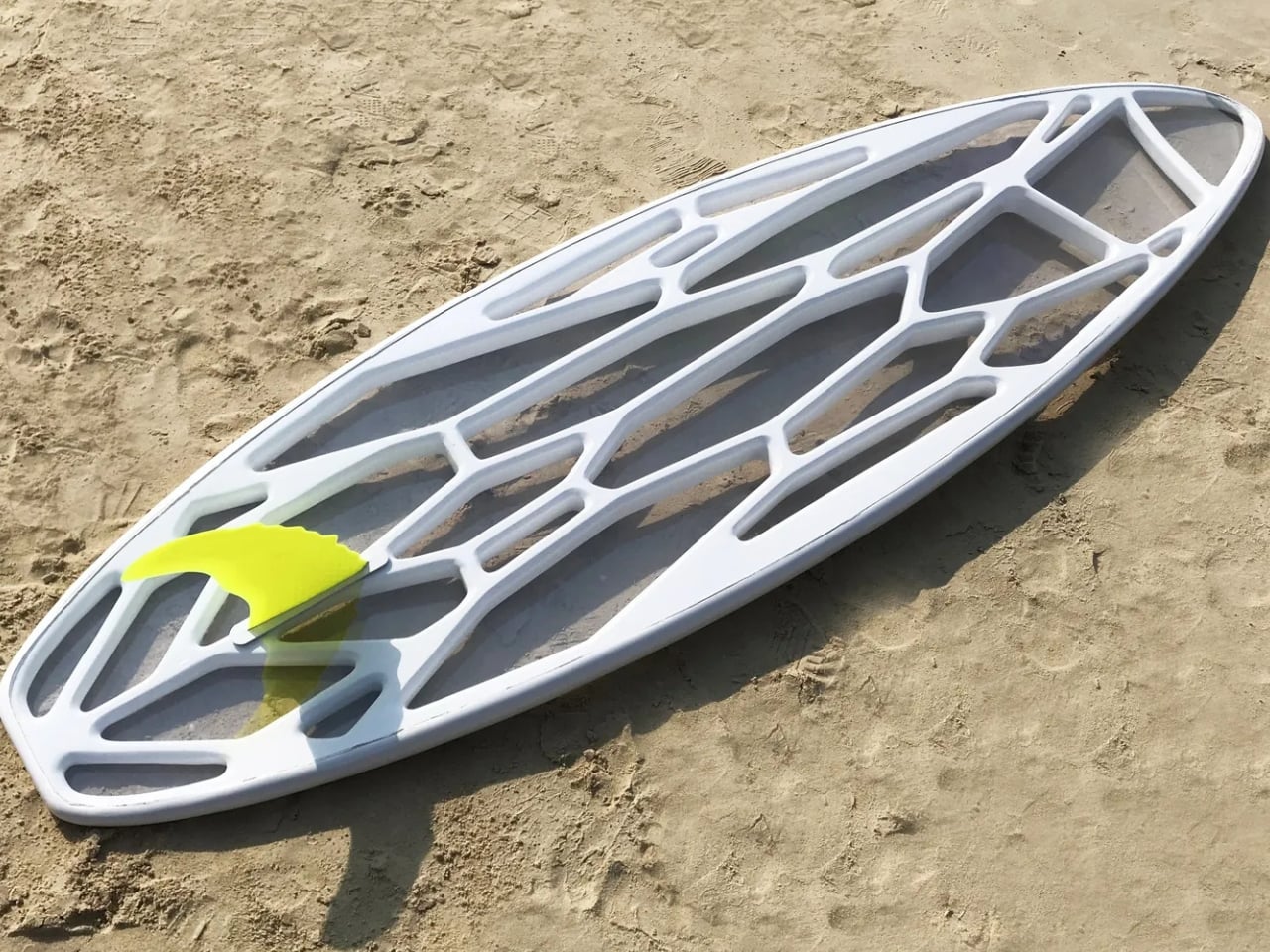
This experimental surfboard prototype called Tidal Wave, designed by Igor Dzukovski, takes a different approach. It becomes more than just a surface that you stand on or lie on in the ocean. With its carbon-fiber lattice and transparent outer surfaces, it’s intended to become a window into the water below, adding another sensory element to the surfing experience.
Designer: Igor Dzukovski
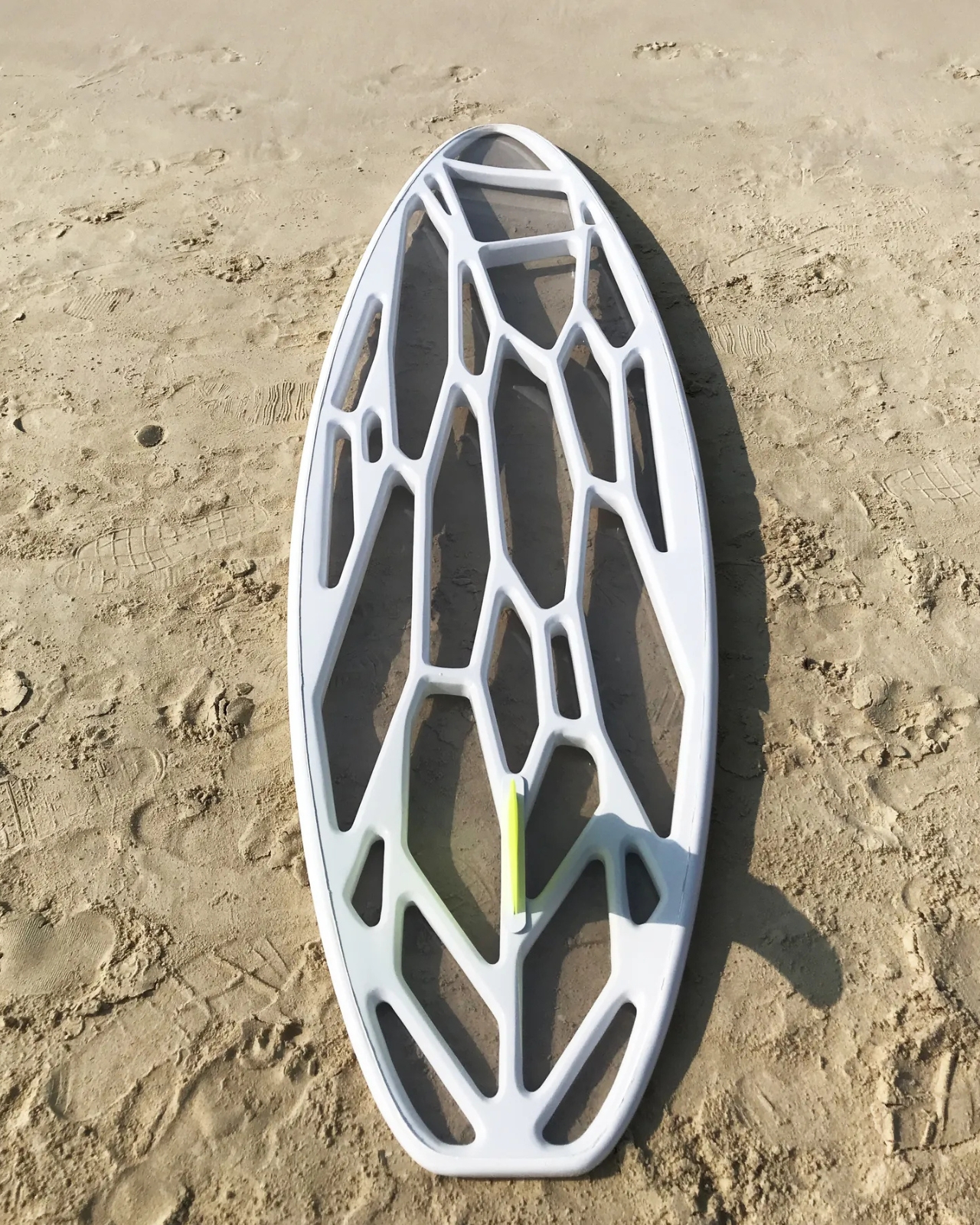

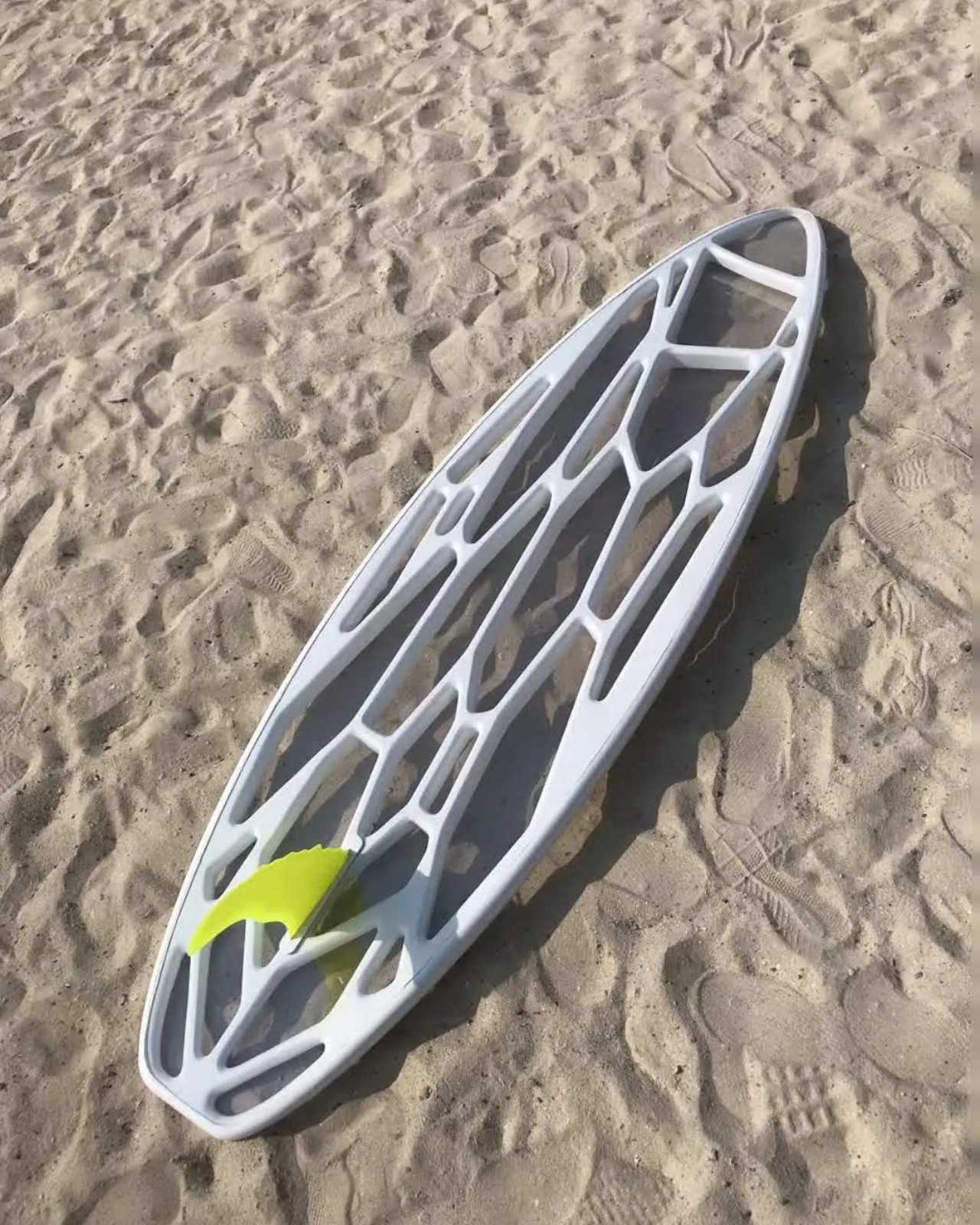
Dzukovski treats the surrounding environment as part of the surfboard’s appearance, since it would look different resting on the sand, floating in sunlit shallows, or sitting in darker water. Its white-finished carbon-fiber framework surrounds clear panels, allowing the setting to supply some of the color and movement that might otherwise come from graphics on the board.
The inspiration actually came from a swimming pool rather than a dramatic encounter with a wave. On his project page, Dzukovski explains that he noticed sunlight reflecting on the water one morning and wondered how to bring those reflections into a surfboard. Instead of reproducing them as a printed graphic, he explored how the materials and structure could give surfers a different perspective. That makes the transparency feel connected to the original idea rather than an arbitrary visual trick.
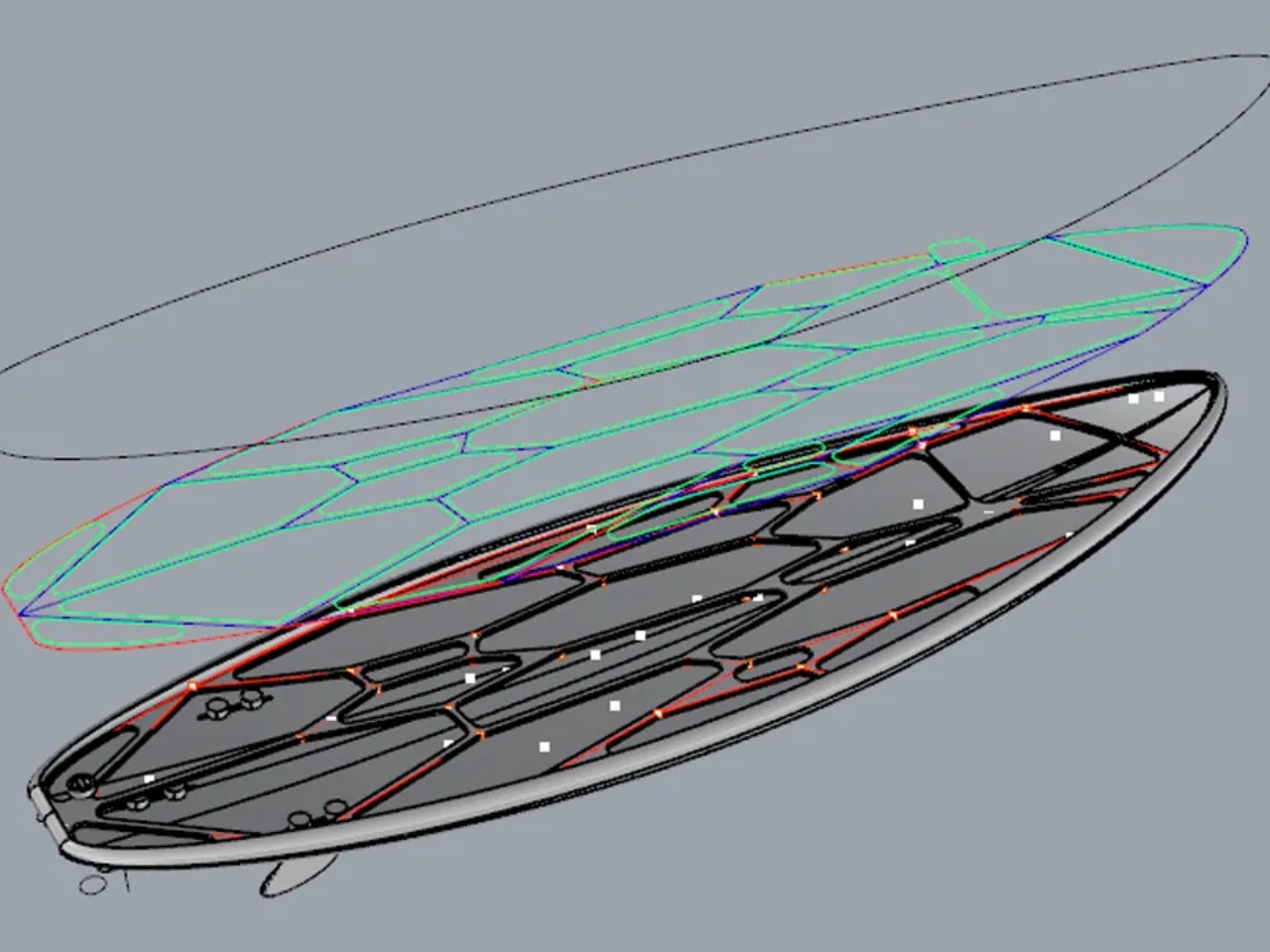
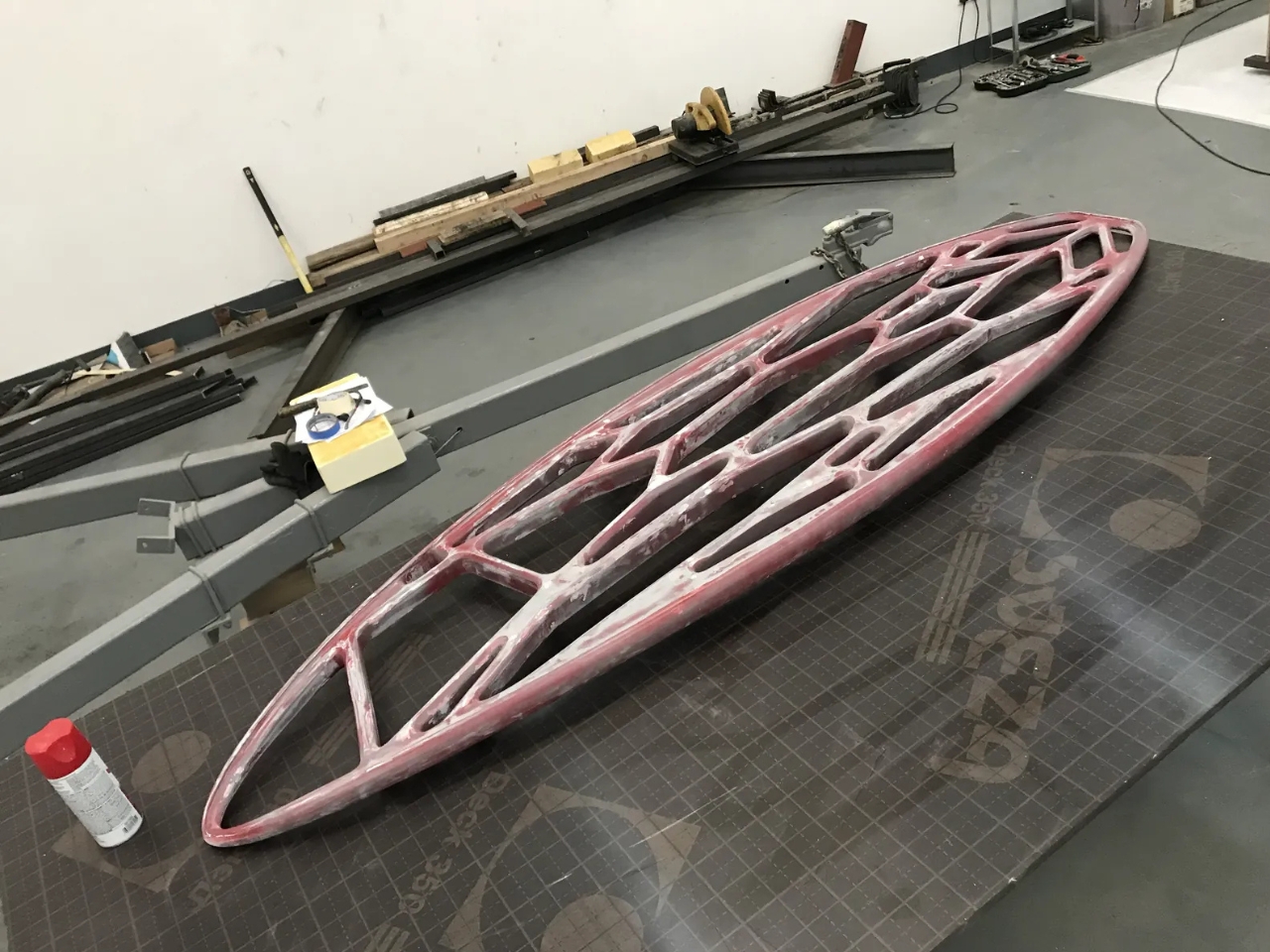
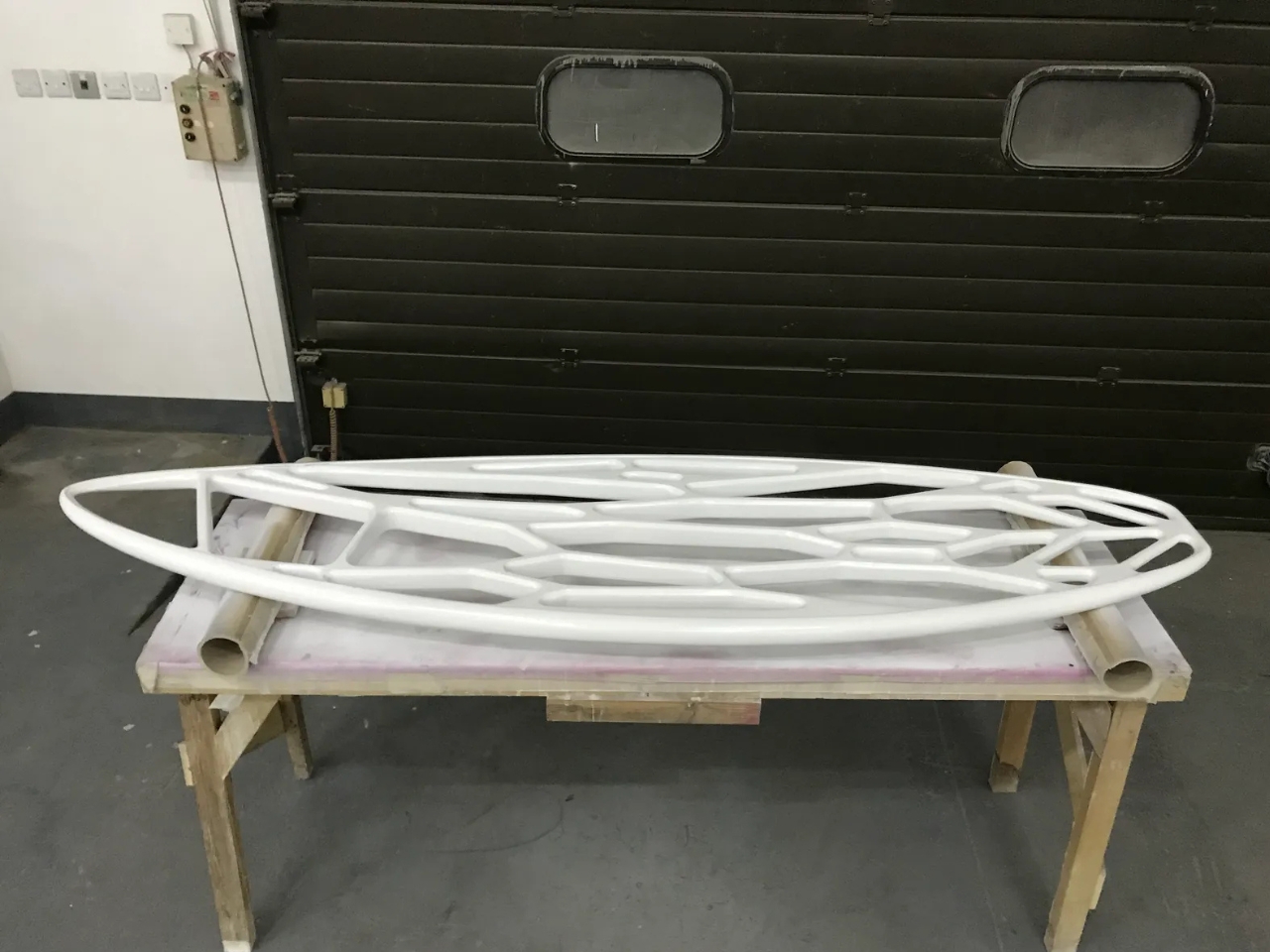
The designer describes the board as having a transparent “sandwich” construction, with the intention of letting users see plants and animals beneath the surface. The main reason for this design choice is to give you the chance to look through the board at the environment below. Under favorable conditions, that could make paddling or waiting between waves more exciting and engaging, particularly for surfers who value exploring the ocean as much as actually riding the waves.
Of course, I wouldn’t expect a perfect underwater view every time. Water clarity, lighting, surface reflections, and your position on the board would all affect what you could see. Your body would also cover some of those transparent areas while you’re lying down. But if the conditions cooperate, the possibility of seeing something beneath you gives those quieter moments on the water an additional appeal.
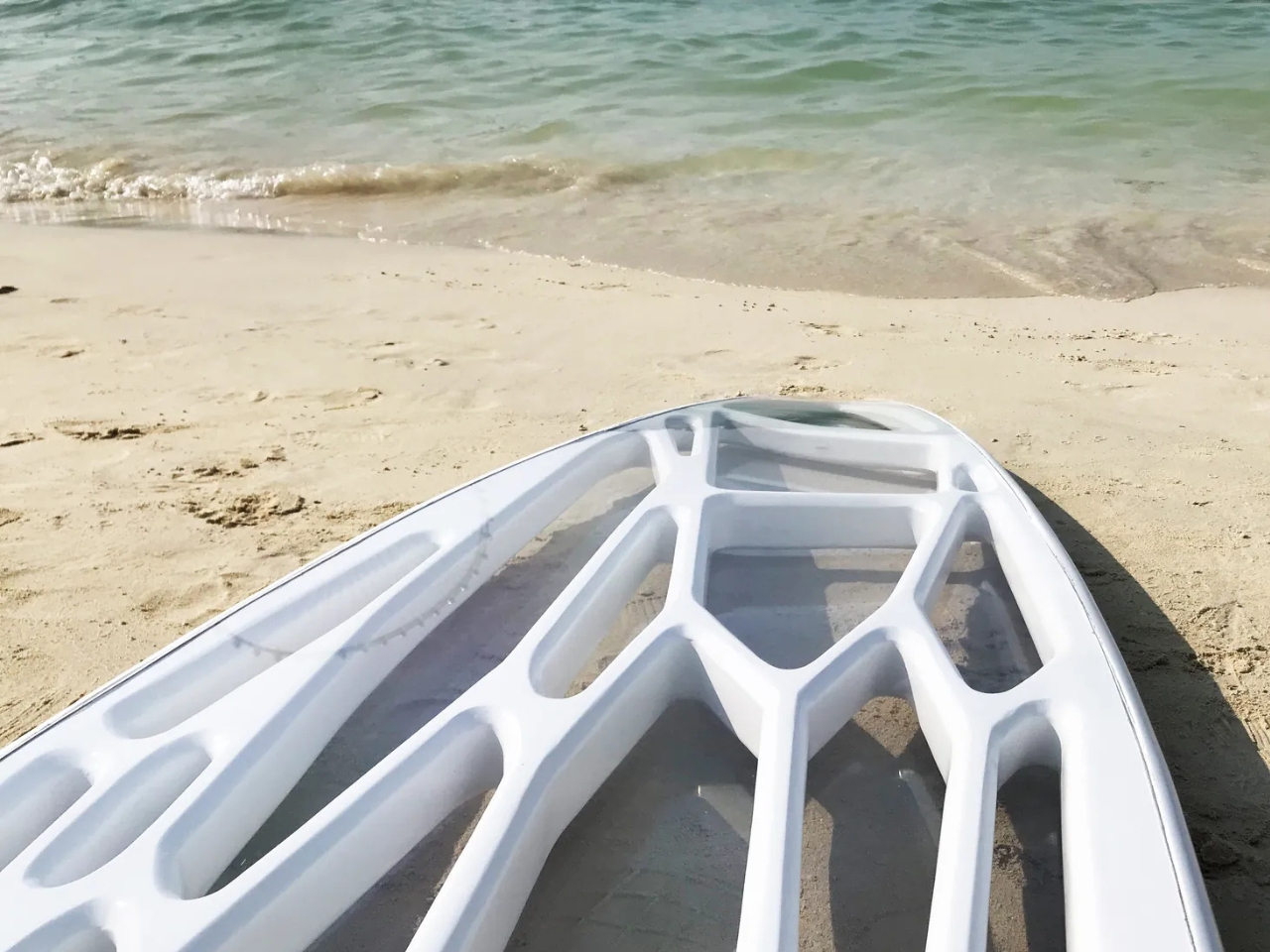
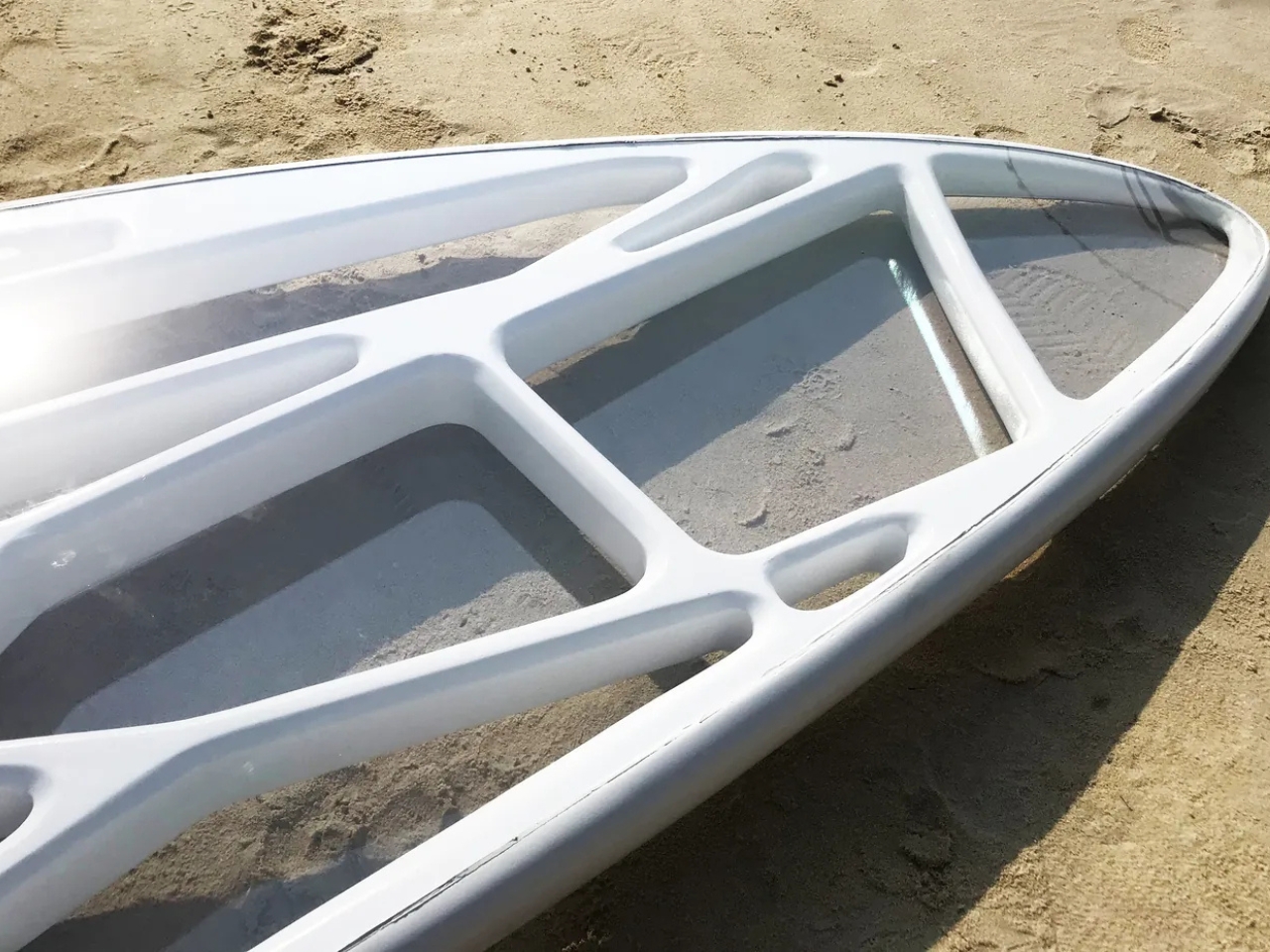
There’s also something interesting about leaving the board’s framework visible. Designboom describes its carbon-fiber ribs as fluid and organic, framing the transparent sections rather than disappearing beneath an opaque surface. To me, that makes the structure part of the decoration. The lines dividing the clear areas are essential to its visual identity, so the board doesn’t need a busy graphic to give you something to look at.
Still, the appeal of the idea shouldn’t be confused with proof that it’s a better surfboard. A carbon-fiber framework alone doesn’t tell us how the completed board handles, how comfortable it is to paddle, or how well its transparent surfaces hold up over time. I’d want those practical questions answered before treating it as an alternative to a conventional board, especially for someone choosing their first one.
For now, Tidal Wave is best understood as an experiment in what a surfboard can let you notice. The designer’s project page explains the intended experience but doesn’t provide a retail price or ordering information. That leaves me admiring the possibility rather than planning a purchase. I’m still not volunteering for open water, but I can appreciate a design that gives the time between waves some attention. Watching the world beneath the board sounds like a lovely way to spend that pause, as long as nothing down there decides to watch me back.