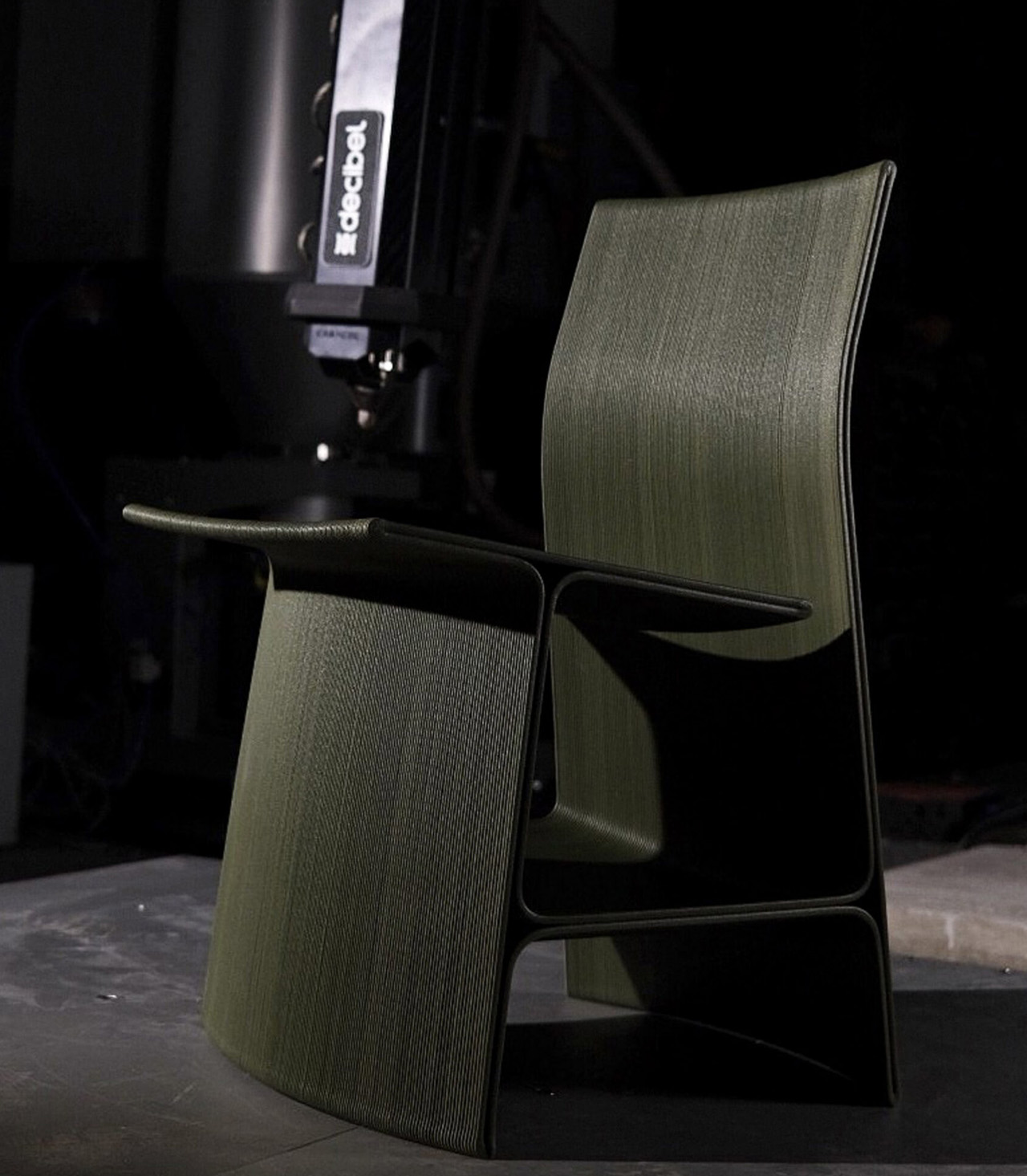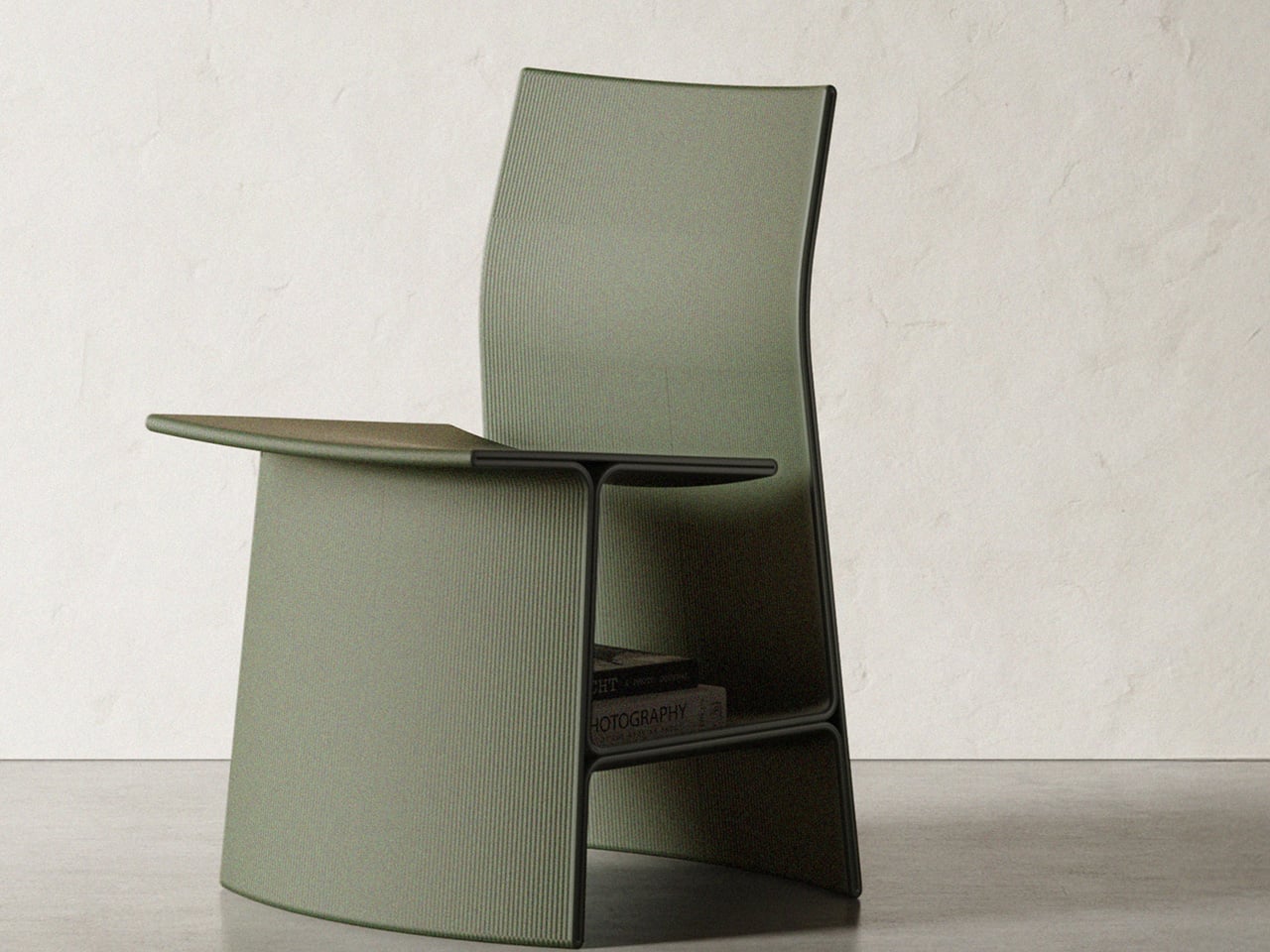

The Kino Chair has a useful surprise below its seat: a shelf built into the structure. Designed by Barcelona-based Pablo Castillo and produced by Decibel in New Jersey, the chair pairs a cantilevered seat with a lower surface for books and everyday objects. It’s a made-to-order piece of furniture, manufactured using large-format robotic 3D printing, rather than a concept waiting for a production partner.
Seen from the side, Kino’s construction becomes particularly readable. Broad, blade-like supports replace the familiar arrangement of four separate legs. The seat projects forward, while the lower shelf bridges the structure beneath it, framing an opening between the two horizontal surfaces. A gently curved back rises above this compact arrangement. The silhouette remains recognizable as a chair, even as the space underneath becomes a defining part of its appearance.
Designer: Pablo Castillo for Decibel
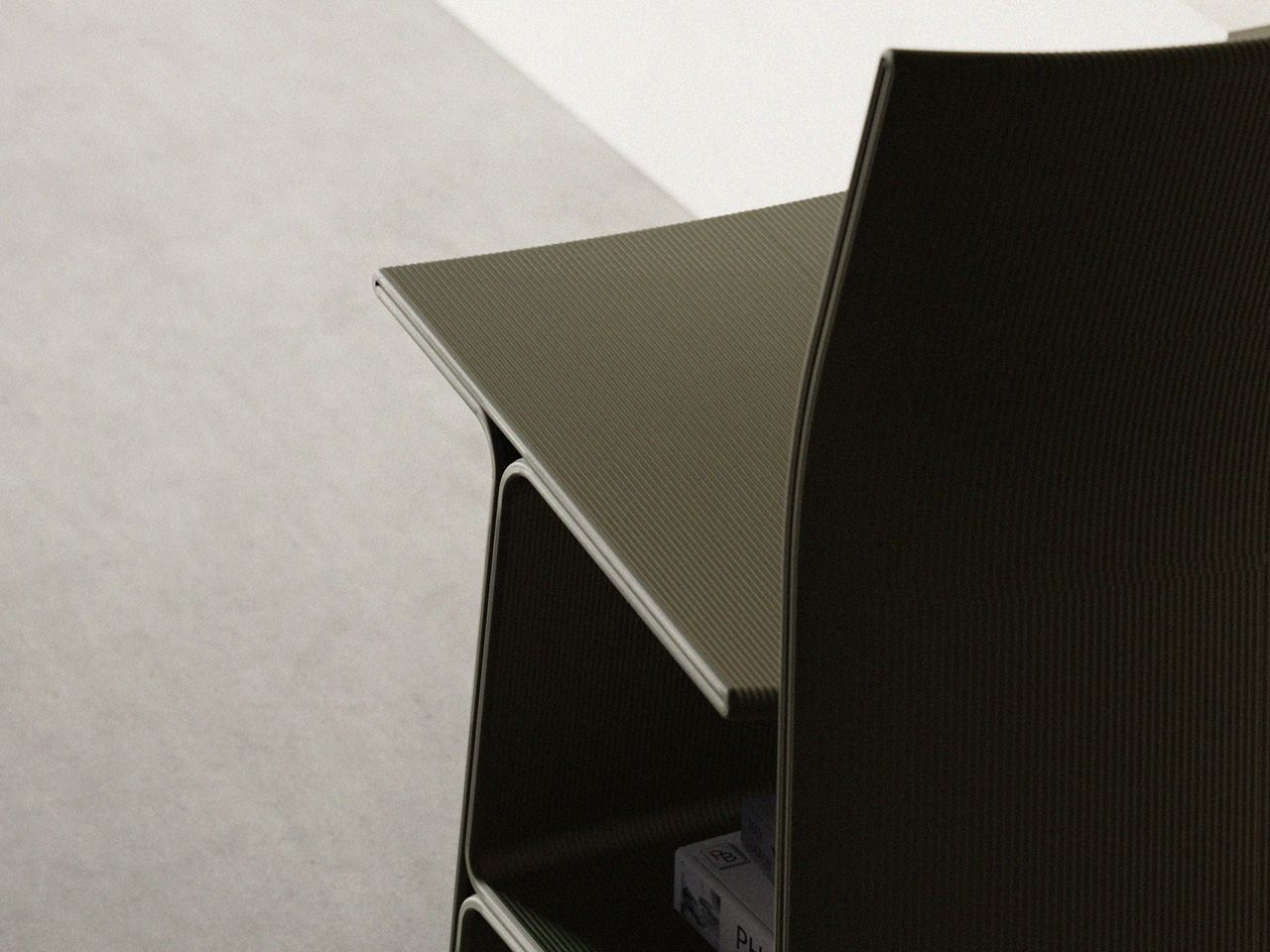
Decibel describes the lower shelf as part of the chair’s structure, giving it a job beyond storage. That integration is what makes Kino interesting. There’s no basket suspended under the seat or separate compartment attached afterward. Seat, shelf, and back emerge as one continuous form, with the extra surface following the same visual language as the rest of the chair.
For a reader, that shelf suggests somewhere to leave a paperback without surrendering the seat itself. It could also accommodate a small collection of objects when the chair isn’t occupied. Its position makes it more of a secondary perch than a substitute for accessible side-table storage. Reaching beneath a seat is a different interaction from placing something beside you, and Kino’s appeal depends partly on whether that tradeoff suits your habits.
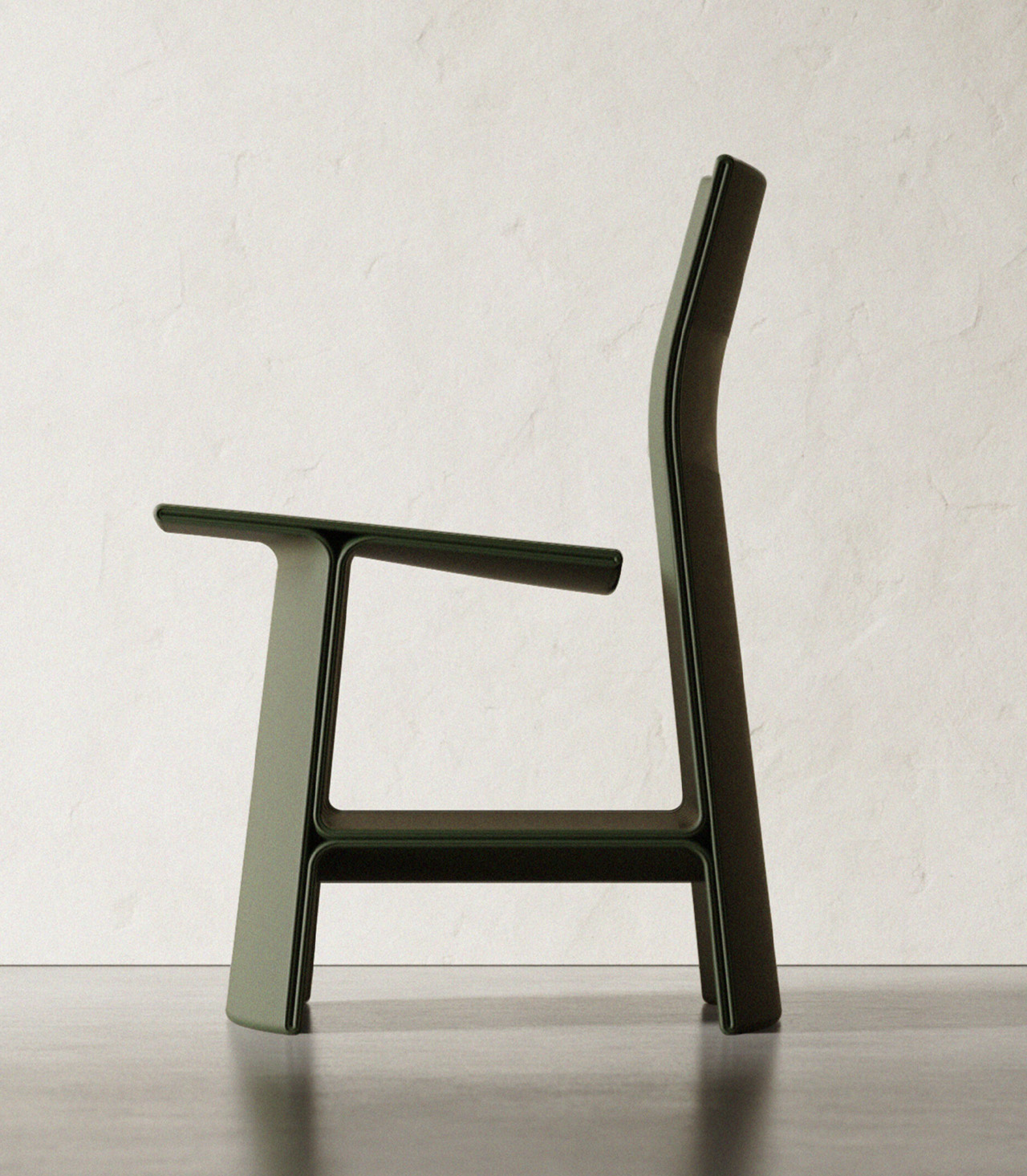

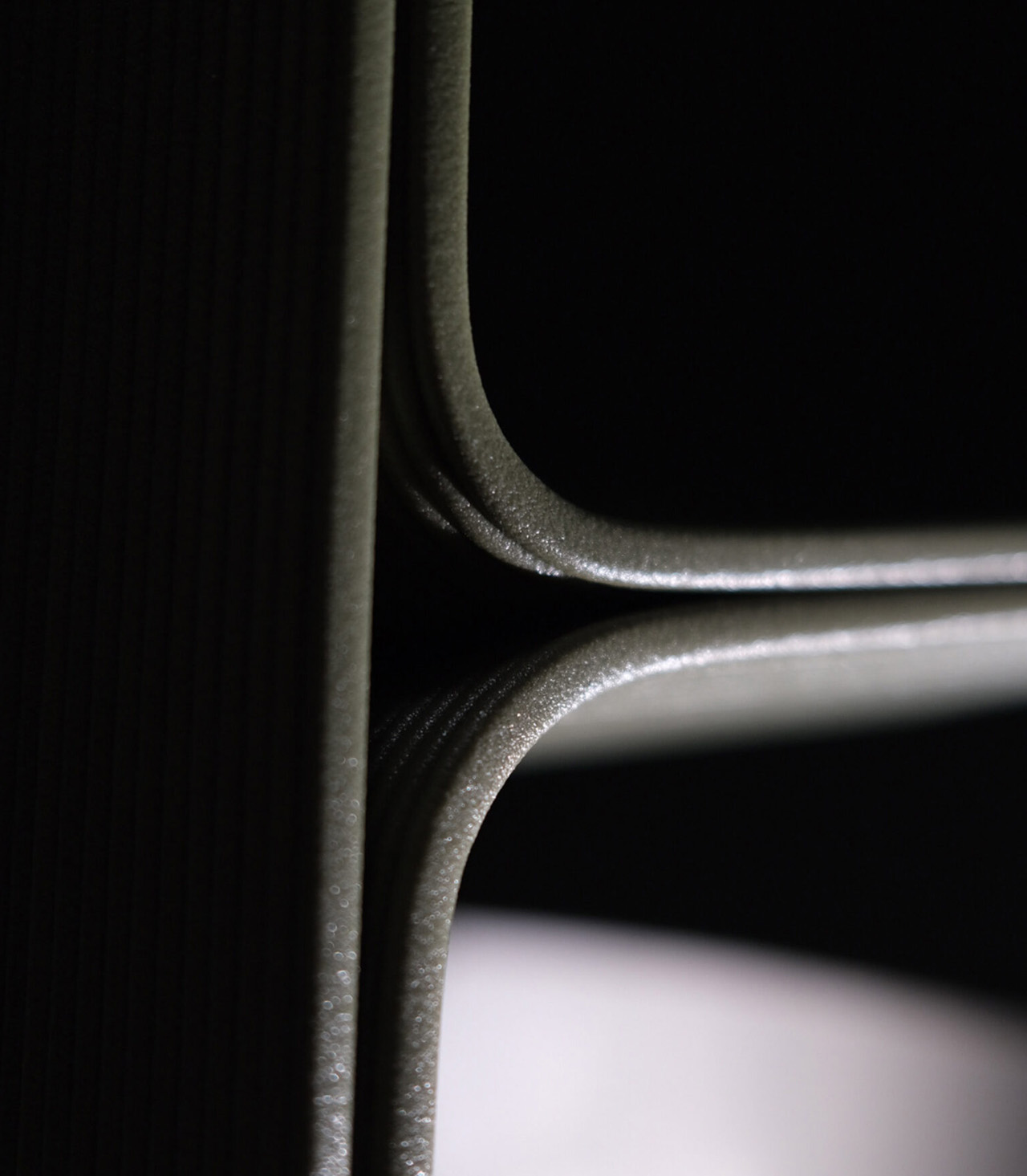
Decibel’s manufacturing process uses a robot to deposit melted polymer or composite pellets along a programmed path, building the object layer by layer. On Kino, fine parallel ridges remain visible across the broad surfaces. Those lines give the otherwise restrained form a close-range texture, letting the manufacturing method register without requiring an elaborate shape to advertise it. The workshop photographs show that texture on a physical chair beside the production equipment.
Material choice needs attention when ordering. Decibel’s Editions page specifies Cellulose PLA for indoor use and lists recycled PETG as an outdoor option. Moss and Sand are the listed colors, with pricing at $950. Buyers should confirm the formulation for their intended setting rather than assume every version has the same exposure requirements.
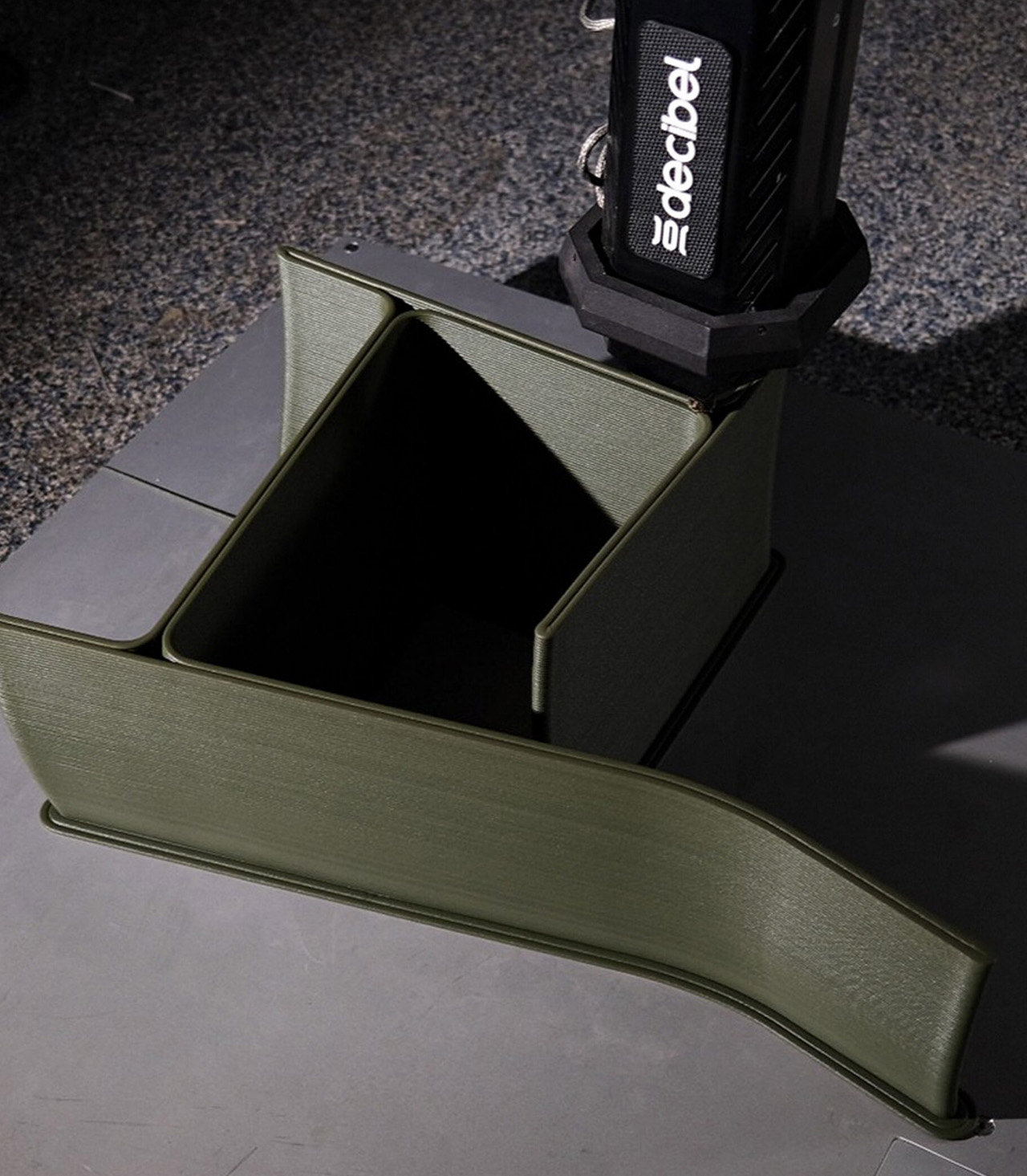
Decibel also asks customers to request seat height, dimensioned drawings, and load ratings before specifying Kino. Those details matter more than its sculptural outline when fitting it to a dining table. The strongest design move remains straightforward: making the chair’s supporting structure useful even when nobody is sitting on it.