
Every viral video now comes with a free side of doubt. You see a cat dancing to that Nicole Kidman song, or a deepfake meme of Jensen Huang with his Asian baddie girlfriend, and before you even laugh, your brain wonders whether the rest of the world can genuinely tell the difference between the real world and AI. Josh Cowell got tired of wondering. His startup, Caimera, built CAIM1, a prototype camera that cryptographically signs every photo and 4K clip the moment you hit record. The name stands for Counter Artificial Intelligence Machine 1, and its whole job is proving you were actually there.
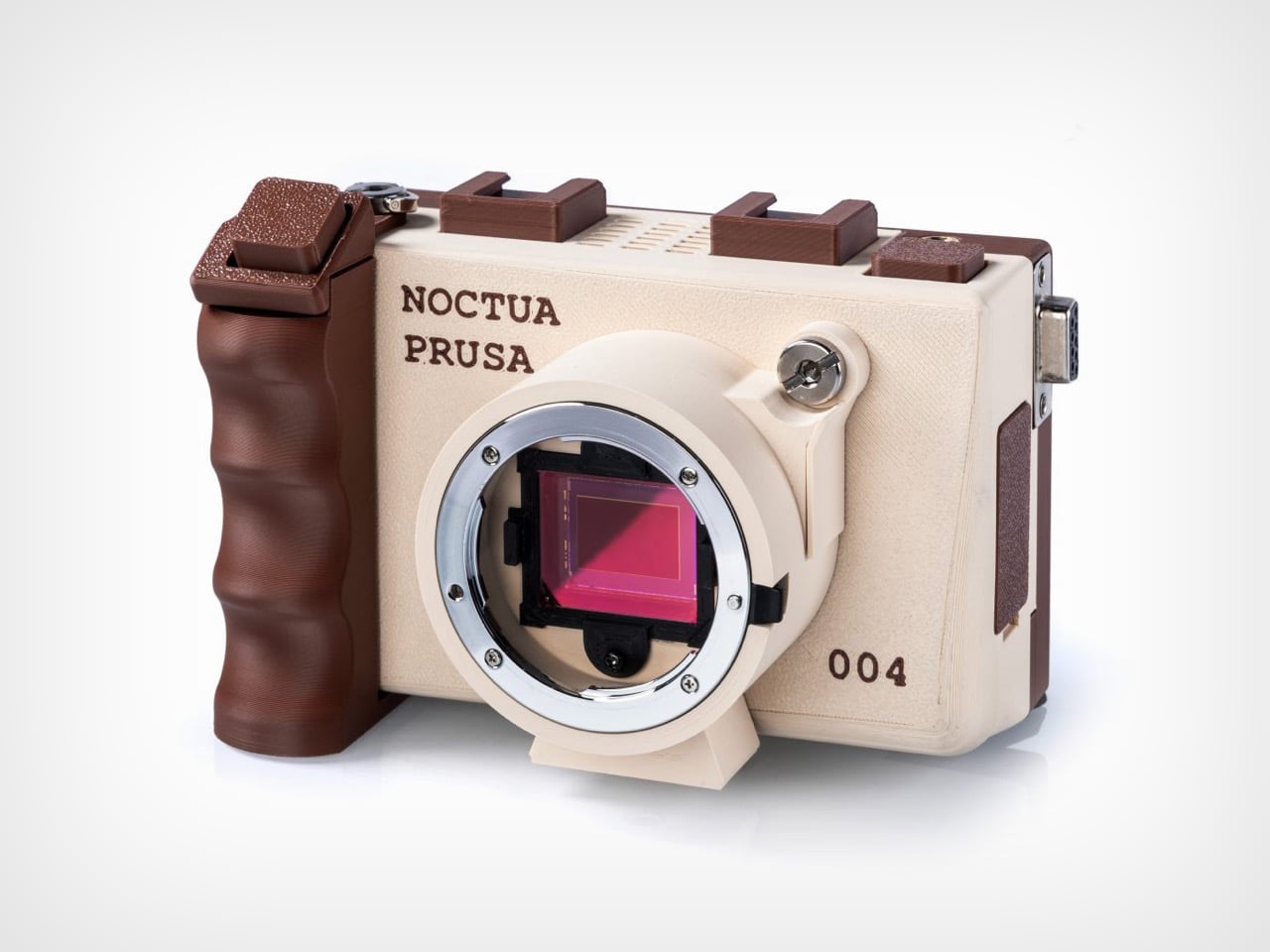
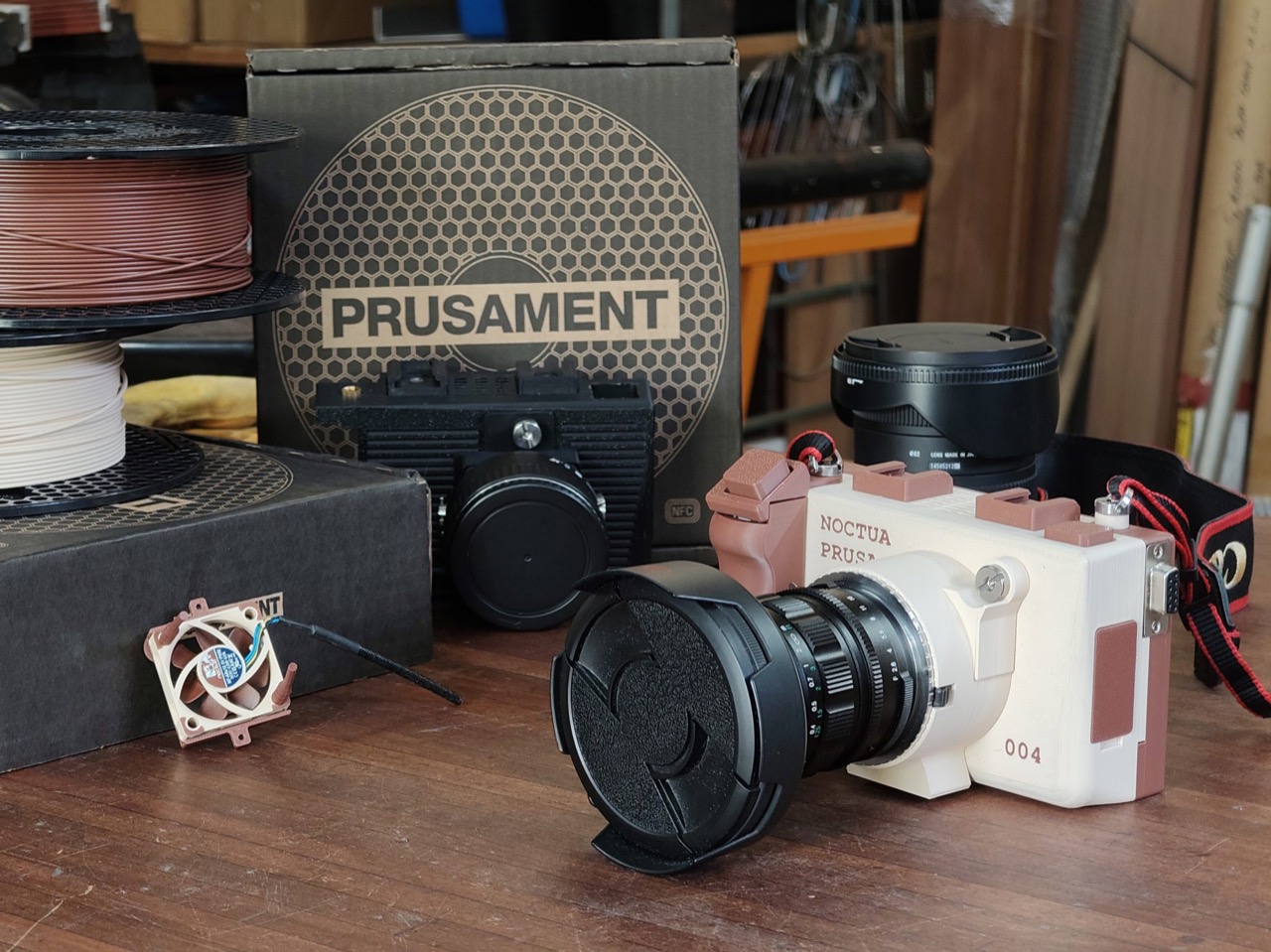
It also looks like a chocolate bar that took up photography. The beige and brown shell is 3D printed in Prusament PETG using Noctua’s signature colors, a nod to the Austrian fan maker whose tiny 40mm NF-A4x10 keeps the internals from overheating. A Micro Four Thirds sensor sits behind a native Sony E-mount, and an auditable TROPIC01 security chip from Prague’s Tropic Square handles the signing. Want proof you can hold? CAIM1 can print a paper receipt for your verified footage, and the first batch is targeted for early 2027, with pricing still under wraps.
Designer: Josh Cowell (Caimera)
One Tiny Noctua Fan Keeps CAIM1 From Cooking Itself
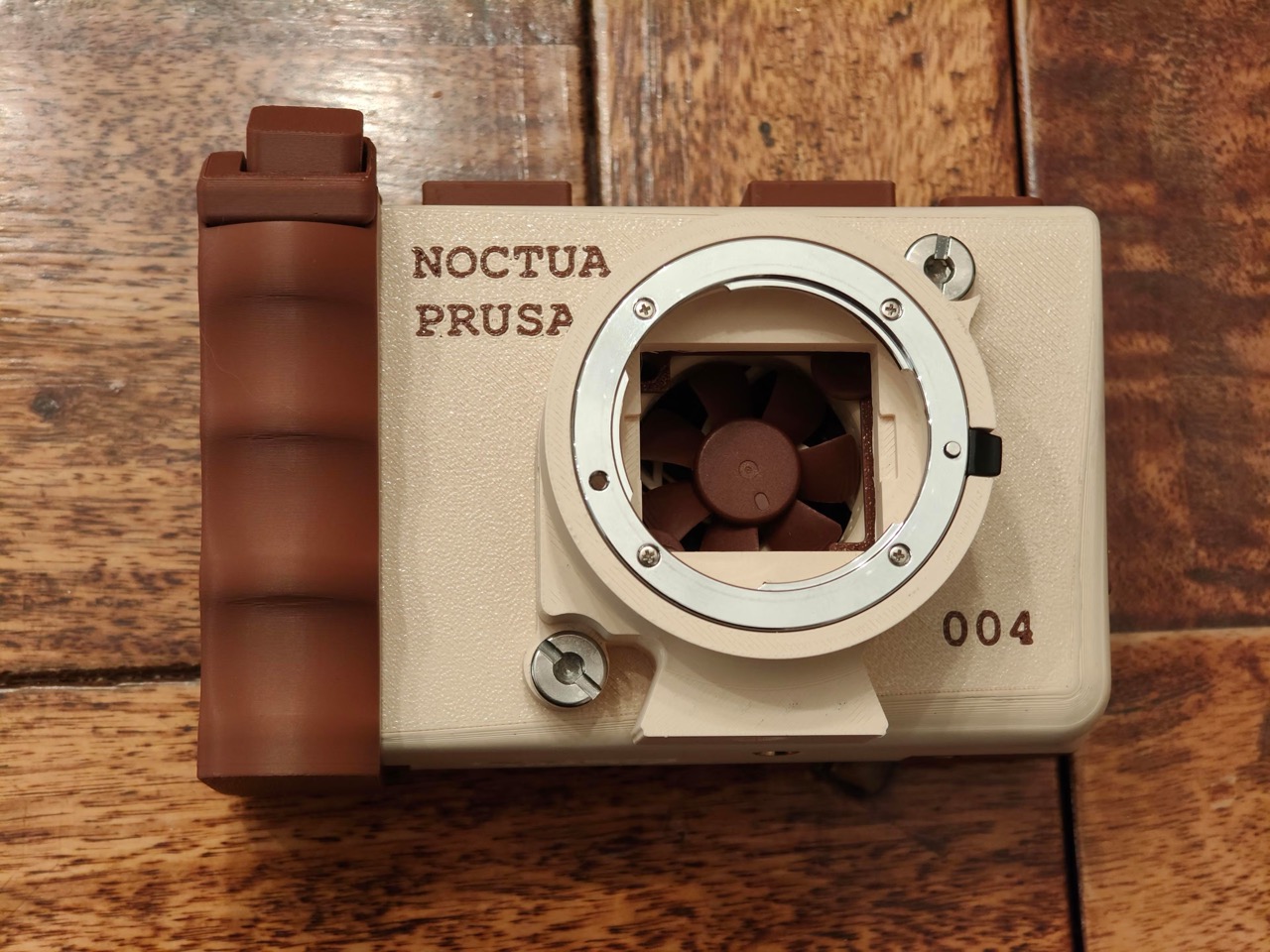
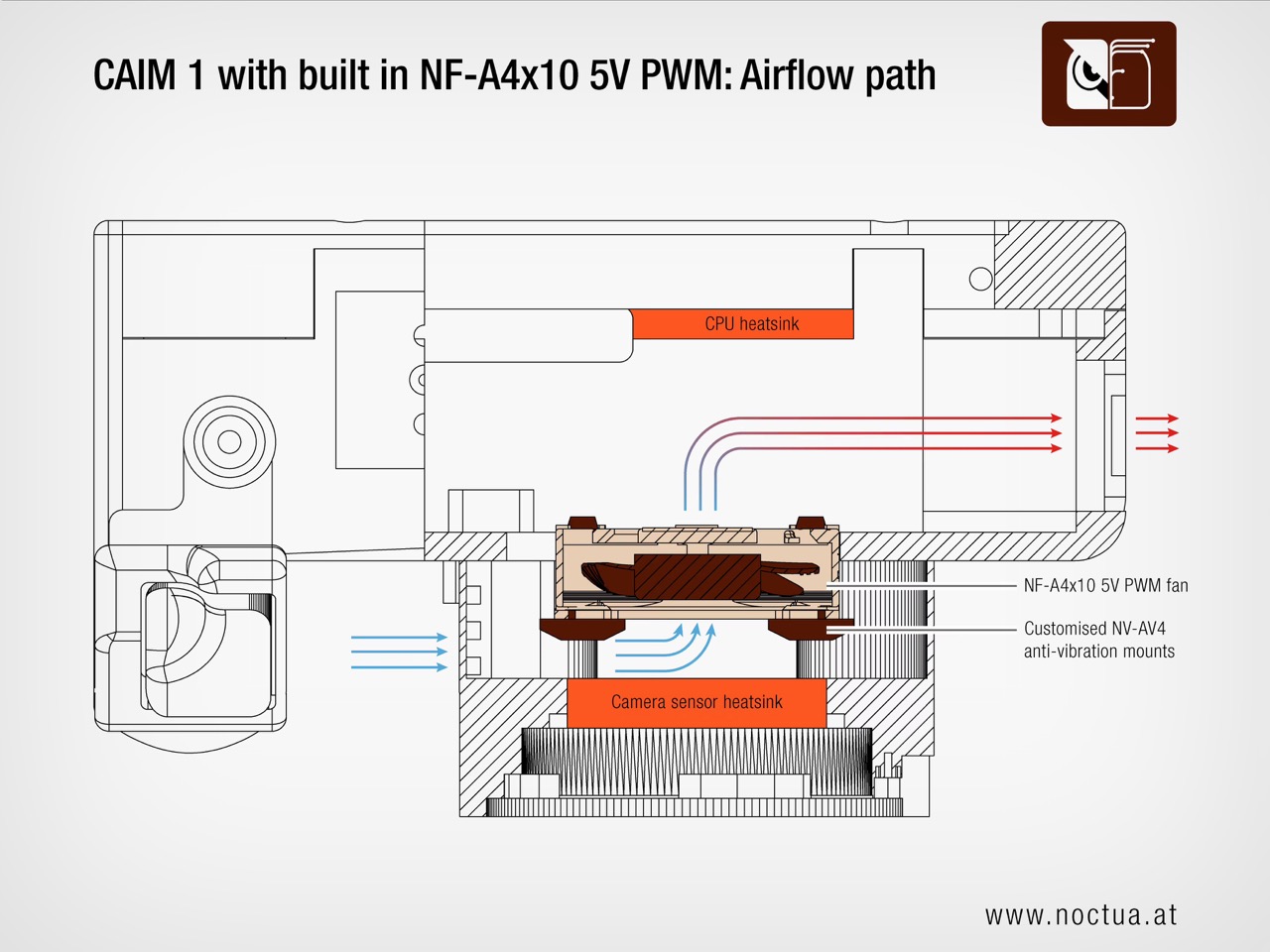
Recording 4K at a targeted 60fps while generating cryptographic proofs on the fly pushes CAIM1’s processors hard, and passive heatsinks alone couldn’t keep up. Without active airflow, the chips would throttle and start dropping frames. The fix is a single Noctua NF-A4x10 5V PWM, roughly 1.6 x 1.6 x 0.4 inches (40 x 40 x 10mm), sitting directly behind the sensor on anti-vibration mounts. Air enters through front vents, crosses the sensor’s alloy backplate, passes through the fan, then sweeps over the CPU heatsinks before exiting the side. One fan handling both heat sources saves space, saves battery, and removes a second part that could rattle.
Picking the 5V version spared the team a step-up converter, which would have eaten board space, drained the battery, and injected electrical noise right next to the image sensor. Cowell went further and redesigned the entire main circuit board around the Noctua, relocating major components to make it fit. The fan also had to stay quiet enough to keep its hum off the onboard audio, and smooth enough that micro-vibrations wouldn’t smear footage with motion blur or rolling-shutter wobble. The setup got a brutal exam at the Nürburgring in June, where a heatwave pushed temperatures to 100°F (38°C). CAIM1 held up better than the team’s phones, which kept quitting video recording from the heat.
Bring Your Own Lens, Print Your Own Body
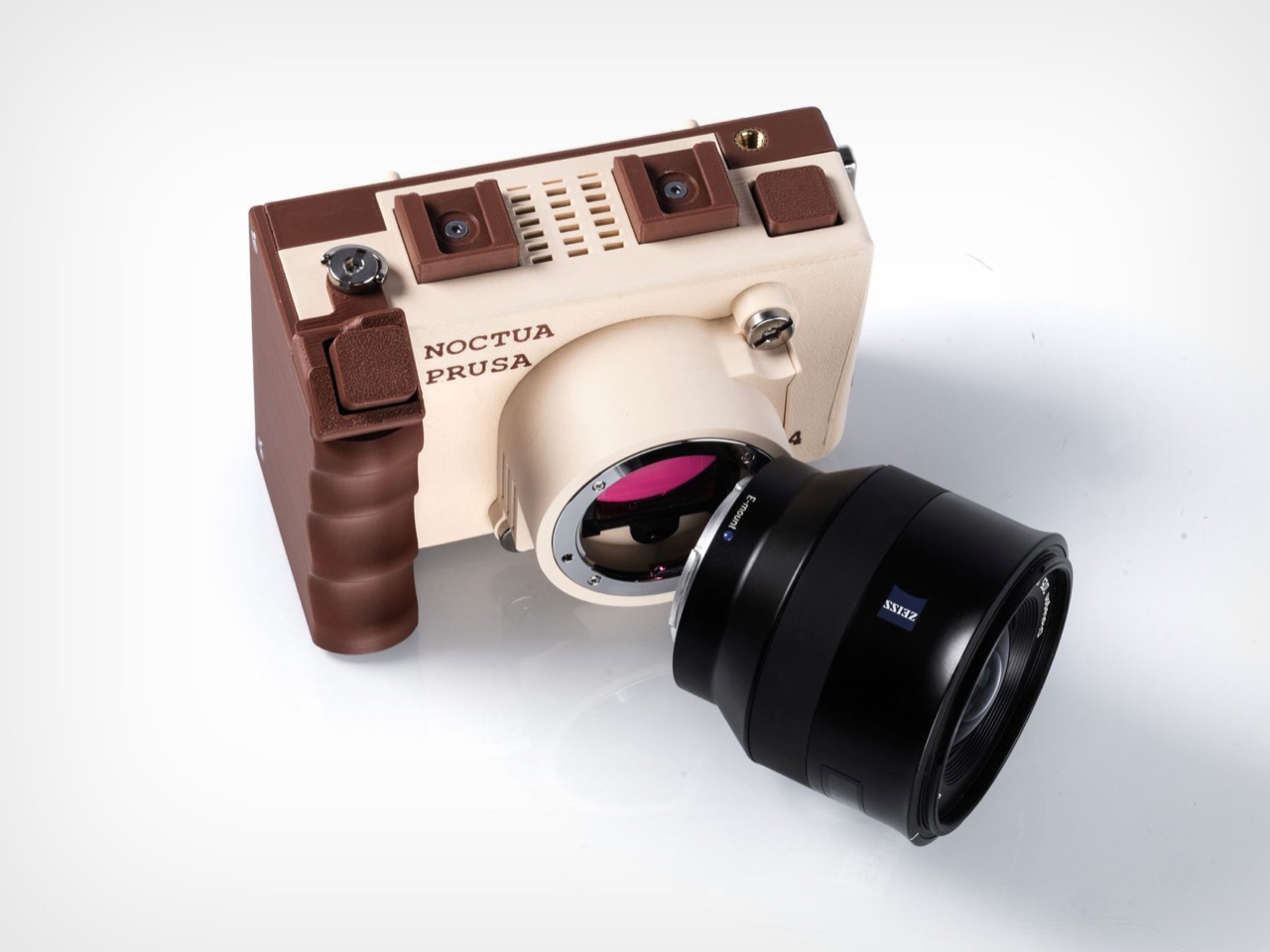
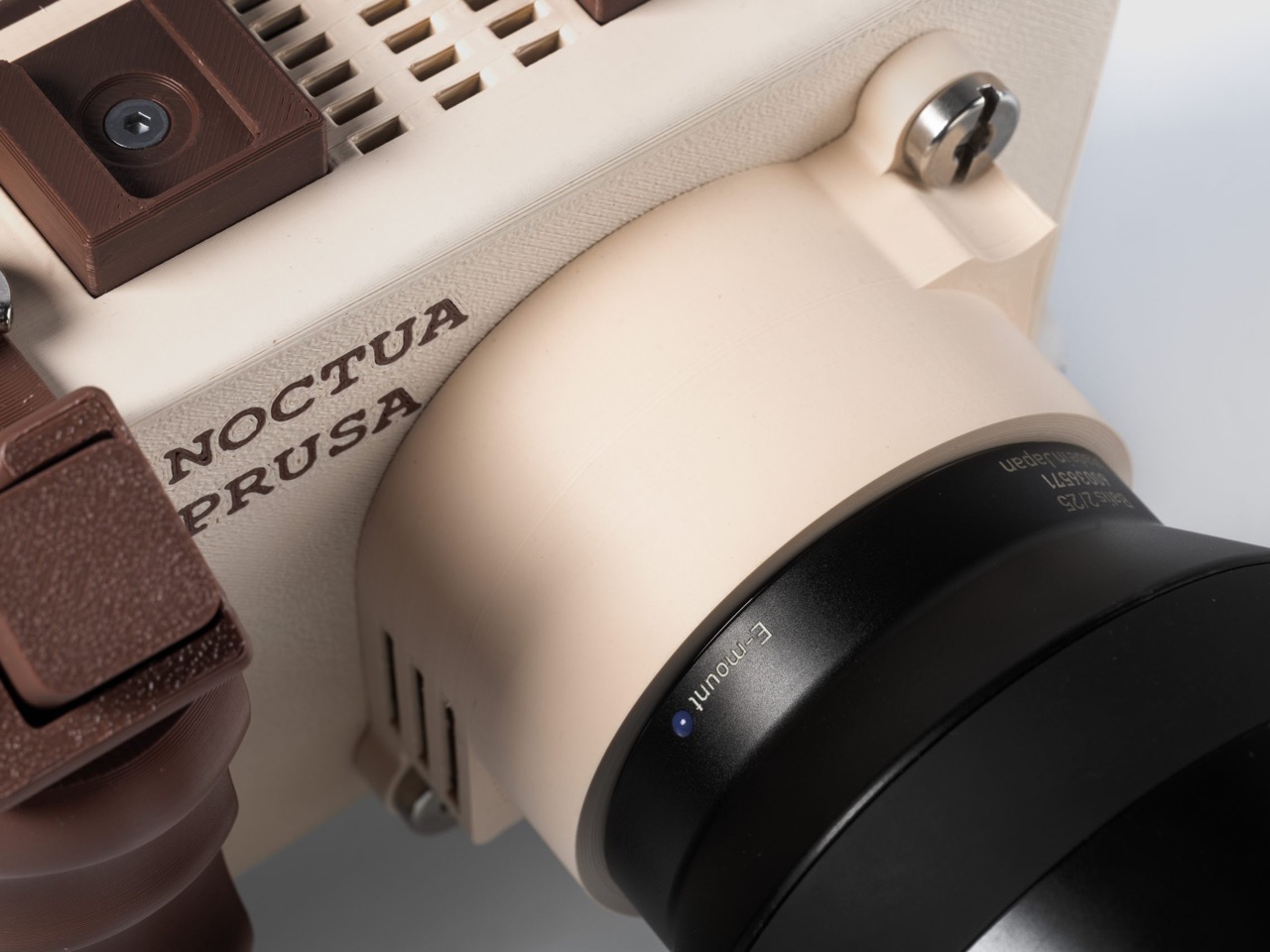
A Sony E-mount bolted in front of a Micro Four Thirds sensor sounds like a mismatch until you check the flange distance, the gap between a lens mount and the sensor. E-mount uses 18mm and Micro Four Thirds uses 19.25mm, so the two systems are practically neighbors. Every E-mount lens throws an image circle sized for a larger sensor, so it covers Micro Four Thirds easily at a 2x crop. The Zeiss Batis 25mm seen on the prototype frames like a 50mm on full frame, the classic walk-around field of view. Caimera has also shot through Kowa machine vision lenses and an adapted Cosmicar 25mm f/1.4, a vintage TV camera lens.
PETG beat PLA for the shell because PLA softens near hot exhaust, while PETG holds its shape up to roughly 154 to 167°F (68 to 75°C). Injection molding would have locked the design into steel tooling before the thermals were proven, so printing lets the team rework panels and ducting overnight. Cowell says a field shooter’s feedback can become a freshly printed replacement part within a couple of hours. You can spot that philosophy all over the body, from the ribbed grip and slotted cooling gills to the brass threaded insert and faint layer lines. The “004” stamped on the front reads like a serial number from a small prototype fleet, worn proudly.
Open Silicon in a Category That Asks You to Trust It

Leica got here first with the M11-P in 2023, a $9,195 rangefinder that signs photos with C2PA Content Credentials, the industry standard for tamper-evident image metadata. Nikon added the same feature to the Z6III through firmware in August 2025, then revoked every certificate after a researcher got the camera to sign images it never took. Canon announced its own authenticity system in May 2026, and Google’s Pixel 10 ships with Content Credentials built in. Cowell argues that closed security chips, Apple’s secure enclave included, ask you to take one corporation’s word for it. Tropic Square publishes TROPIC01’s design instead, so researchers and the public can audit it themselves.
That chip already guards the keys inside Trezor’s Safe 7 crypto wallet, and Ledger’s Donjon security team has audited it publicly. CAIM1 anchors each proof to decentralized storage, so verification lives on a public record instead of a single company’s servers. Caimera hasn’t announced pricing or US availability, and the first production batch is targeted for Q1 2027, with early access signups open now at caimera.one. The big camera makers bolted authenticity onto existing flagships, while Caimera built an entire beige and brown body around it. For over a century, a photograph served as its own receipt, and CAIM1 simply prints one out for you.