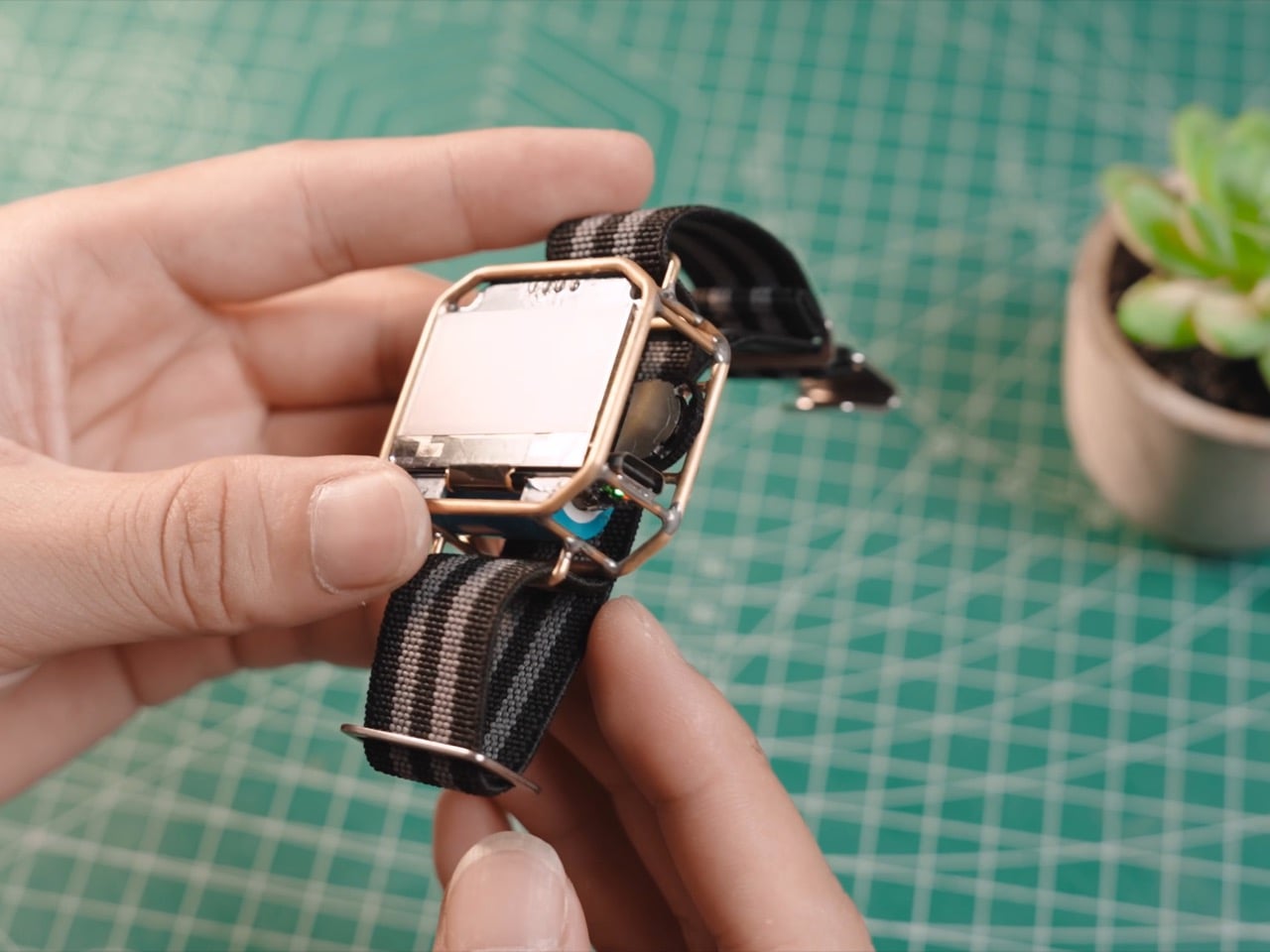
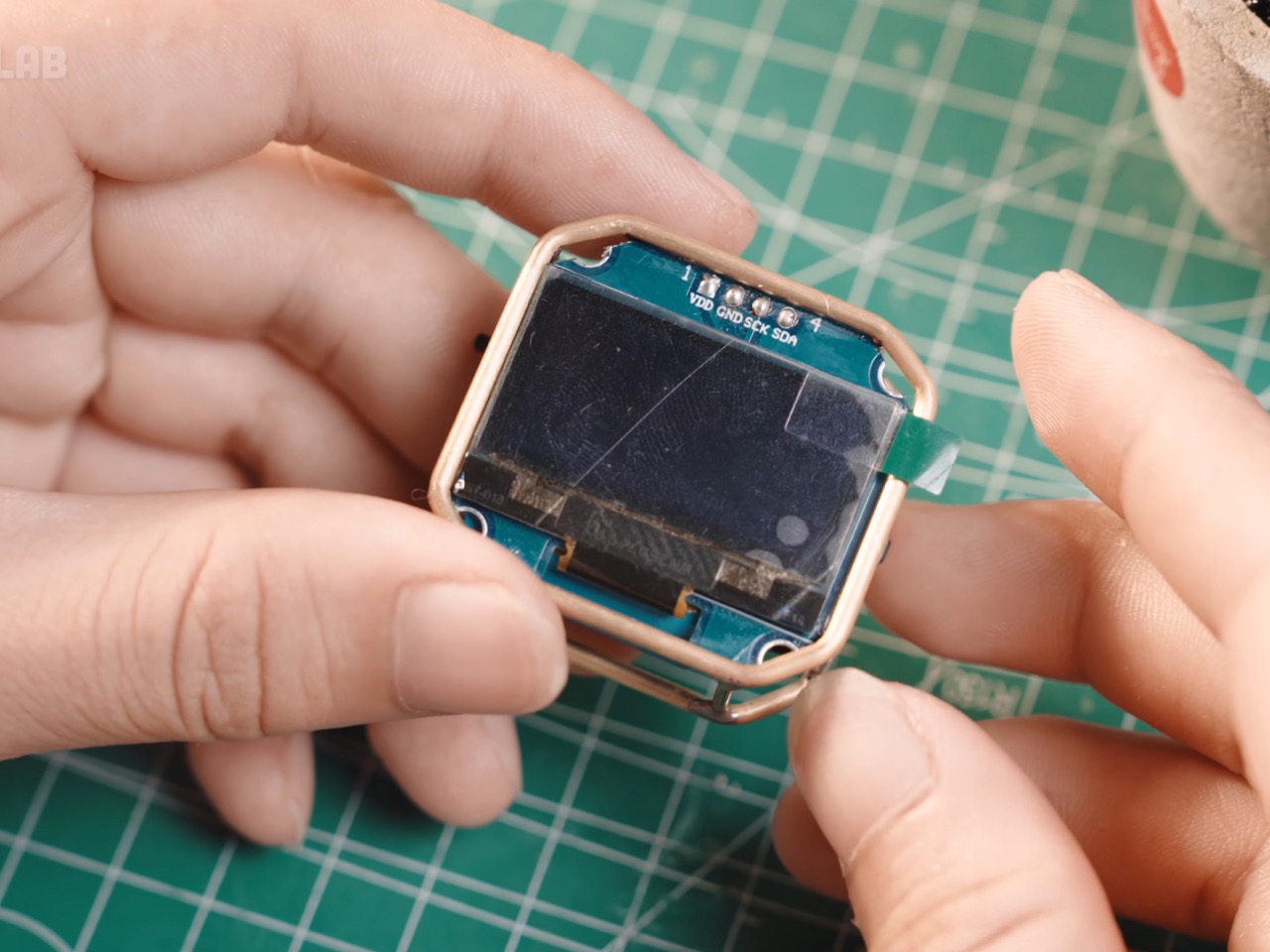
Somewhere along the way, smartwatches turned into sealed little appliances. You pay a few hundred dollars, you get a glued-shut slab of glass and aluminum, and when the battery fades in a couple of years, the company would very much like to sell you the next one. Huy Vector, the maker behind the HVT Lab YouTube channel, took the opposite route and built his own smartwatch by hand, caged in brass tubing and looking like it fell out of a Victorian airship. It tells time, pulls iPhone notifications over Bluetooth, and flips between watch faces. Every wire, board, and solder joint is out in the open, and you can build the exact same thing yourself.
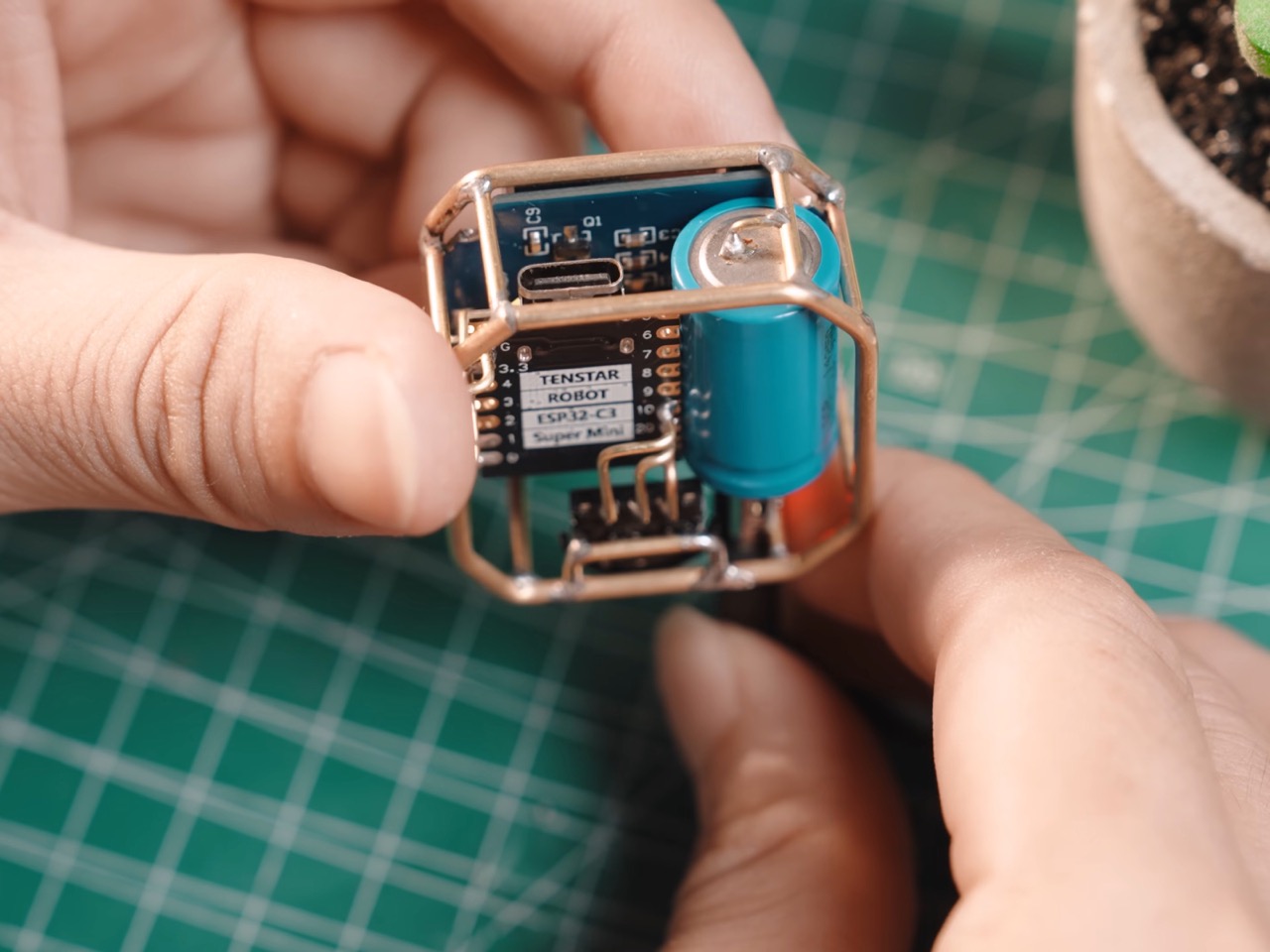
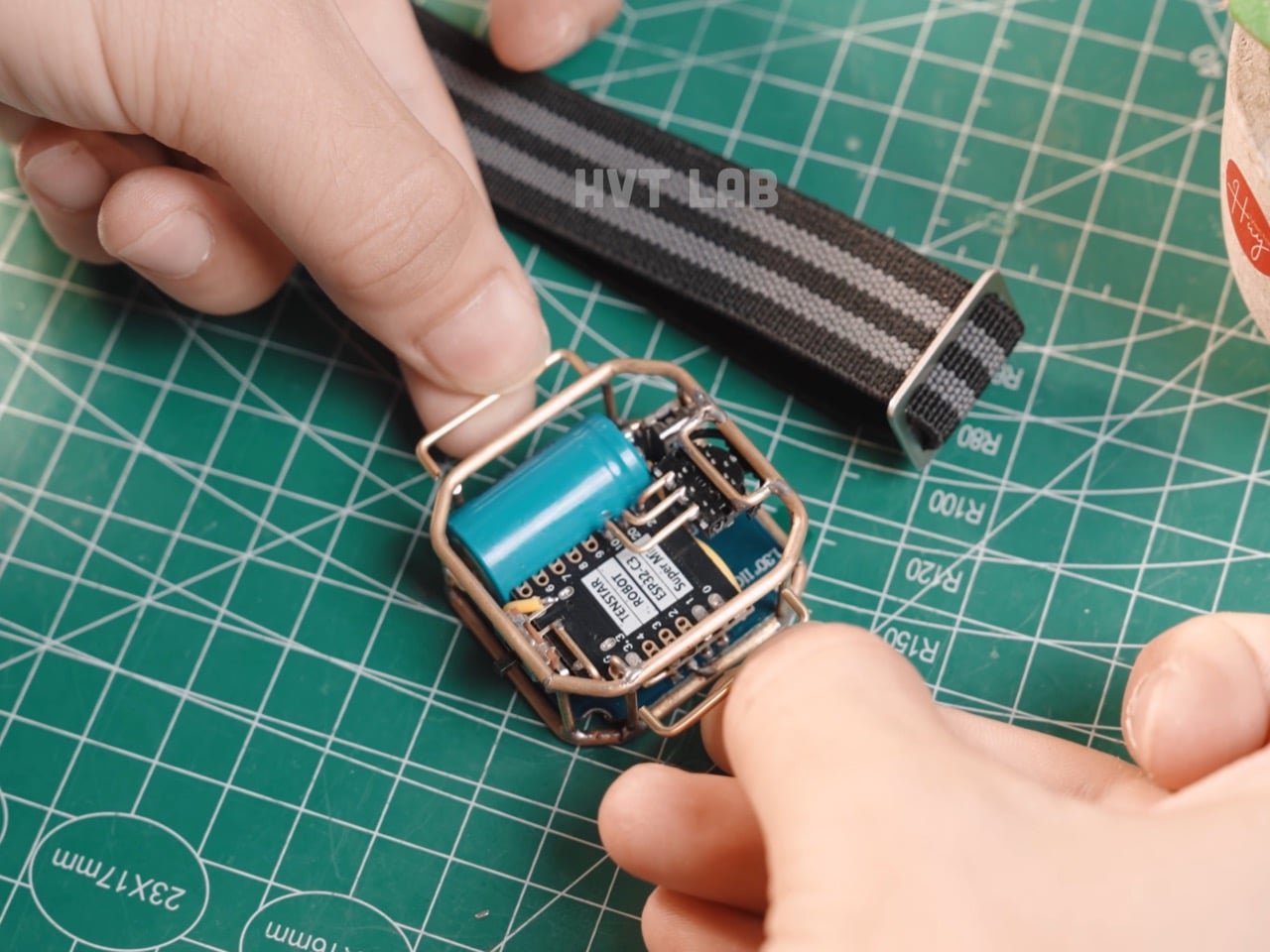
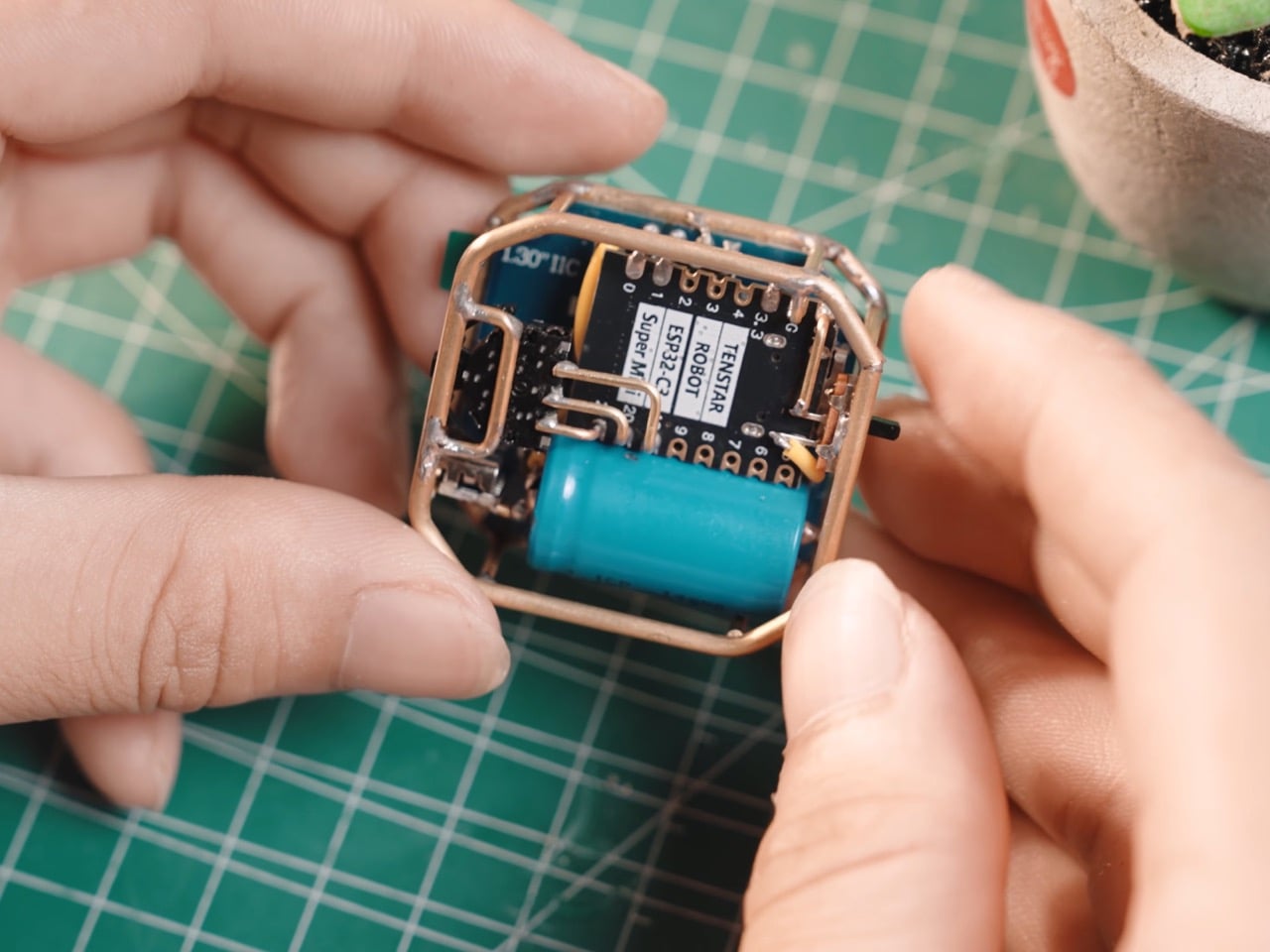
Steampunk got its name from science fiction writer K.W. Jeter, who coined the word in a 1987 letter to Locus magazine, and the aesthetic has spent decades gluing decorative gears onto things that never needed gears. Huy’s watch gets the look honestly. The brass frame holds the whole thing together and also works as the electrical ground for the electronics, so the metal is doing real engineering work. Inside sit an ESP32-C3 microcontroller, a 1.3-inch OLED display, a clock module, and a small rechargeable battery, all visible through the cage. The firmware and wiring diagrams are free on his project page, which turns a cool YouTube video into an open invitation.
Designer: Huy Vector (HVT Lab)
How Brass Tubing Becomes Both the Case and the Circuit
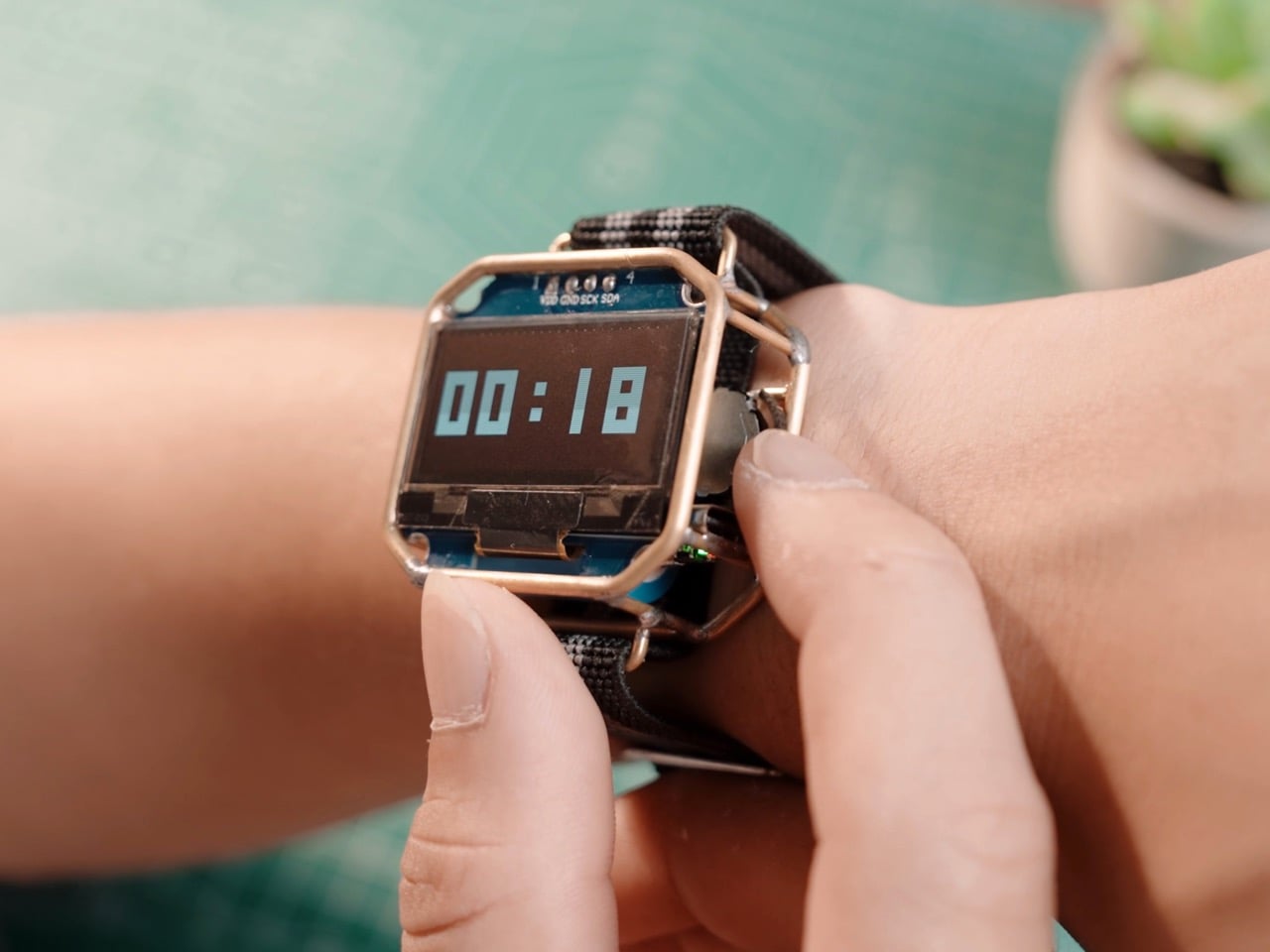

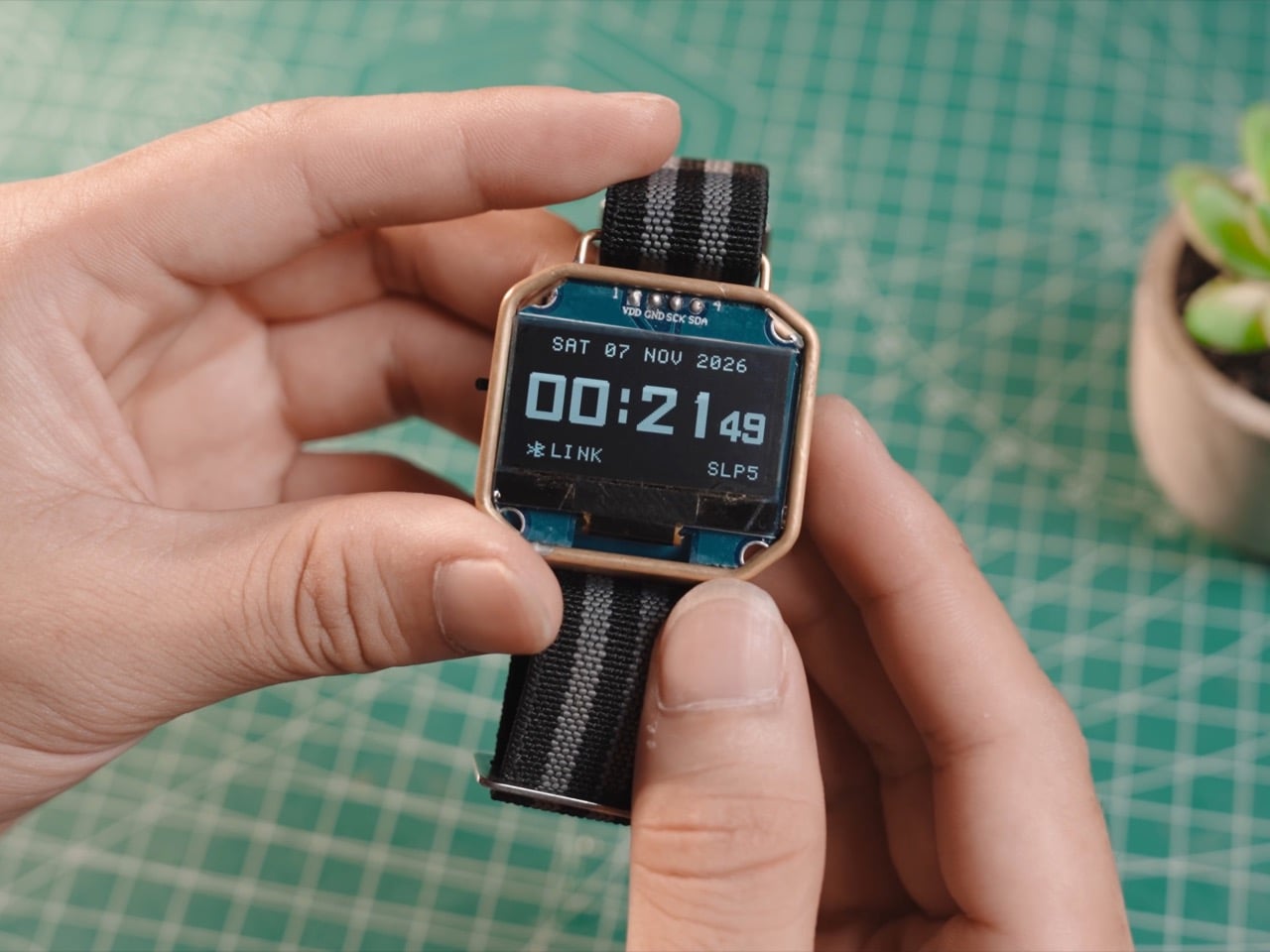
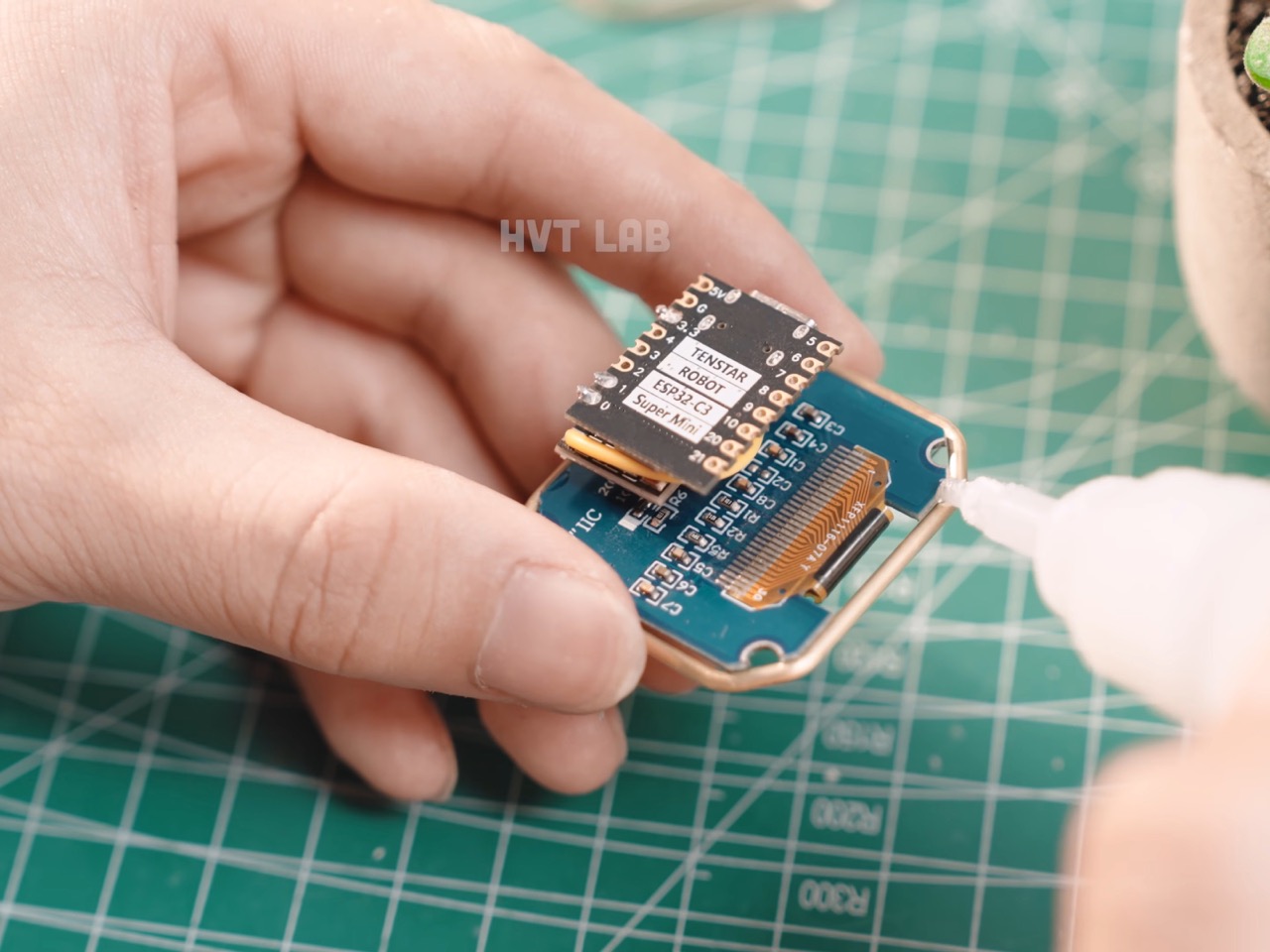
Huy starts with the display, trimming the four corners off the OLED’s circuit board so it nests inside the frame and swapping its pin headers for 0.04-inch (1mm) copper wire. Next, he bends 0.08-inch (2mm) brass tubing into two matching frames, solders each one closed, and links front to back with thinner 0.06-inch (1.5mm) tubes. The battery’s negative terminal and the ESP32-C3’s ground pin both solder straight onto the brass, turning the entire cage into one big ground connection. A slide switch sits between the battery’s positive terminal and the board’s 5V pin, so powering down takes one flick. Wiring diagrams on the project page spell out every connection, so you never have to guess where a lead goes.
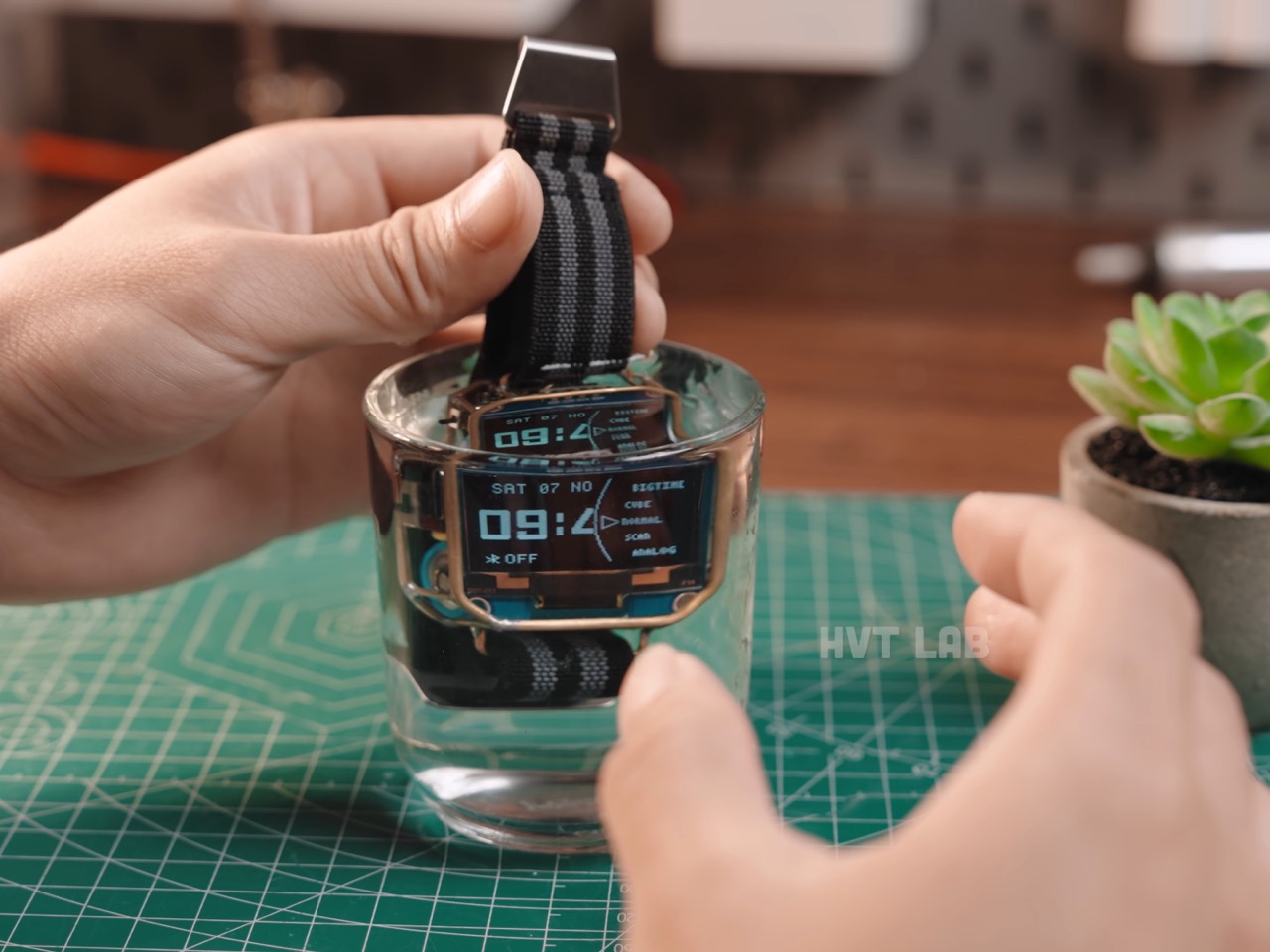
The ESP32-C3 Super Mini running the show measures roughly 0.89 by 0.71 inches (22.5 by 18mm), with a 160MHz RISC-V processor, 4MB of flash storage, and Bluetooth 5 built in. The display and the DS3231 clock module share two data lines, which keeps the wiring compact enough for a watch case. That clock module keeps time even when the watch is switched off, so you never wake up to a blinking 12:00. The USB-C charging board grounds itself through its connector shell, meaning only its positive lead needs a separate wire. Finish it with a water-resistant coating and a 0.79-inch (20mm) strap, and you’ve got a watch that survived a dunk in a glass of water.
A 2013 Open-Source Watch Finally Gets Its Case
Huy’s firmware is a rebuilt version of the N|Watch, an open-source DIY wristwatch that Zak Kemble published back in September 2013. Kemble’s original squeezed animated menus, alarms, games like Breakout, and a flashlight mode into an ATmega328P chip with just 32KB of program space. It used a 1.3-inch OLED too, after Kemble found that a 0.96-inch screen left too little room for everything underneath. His list of future improvements ended with a very honest line: “A case of some sort?” He also joked that the watch was waterproof down to 0m, which converts neatly to 0 feet. Thirteen years later, a brass cage and a water-resistant coating have answered both notes.
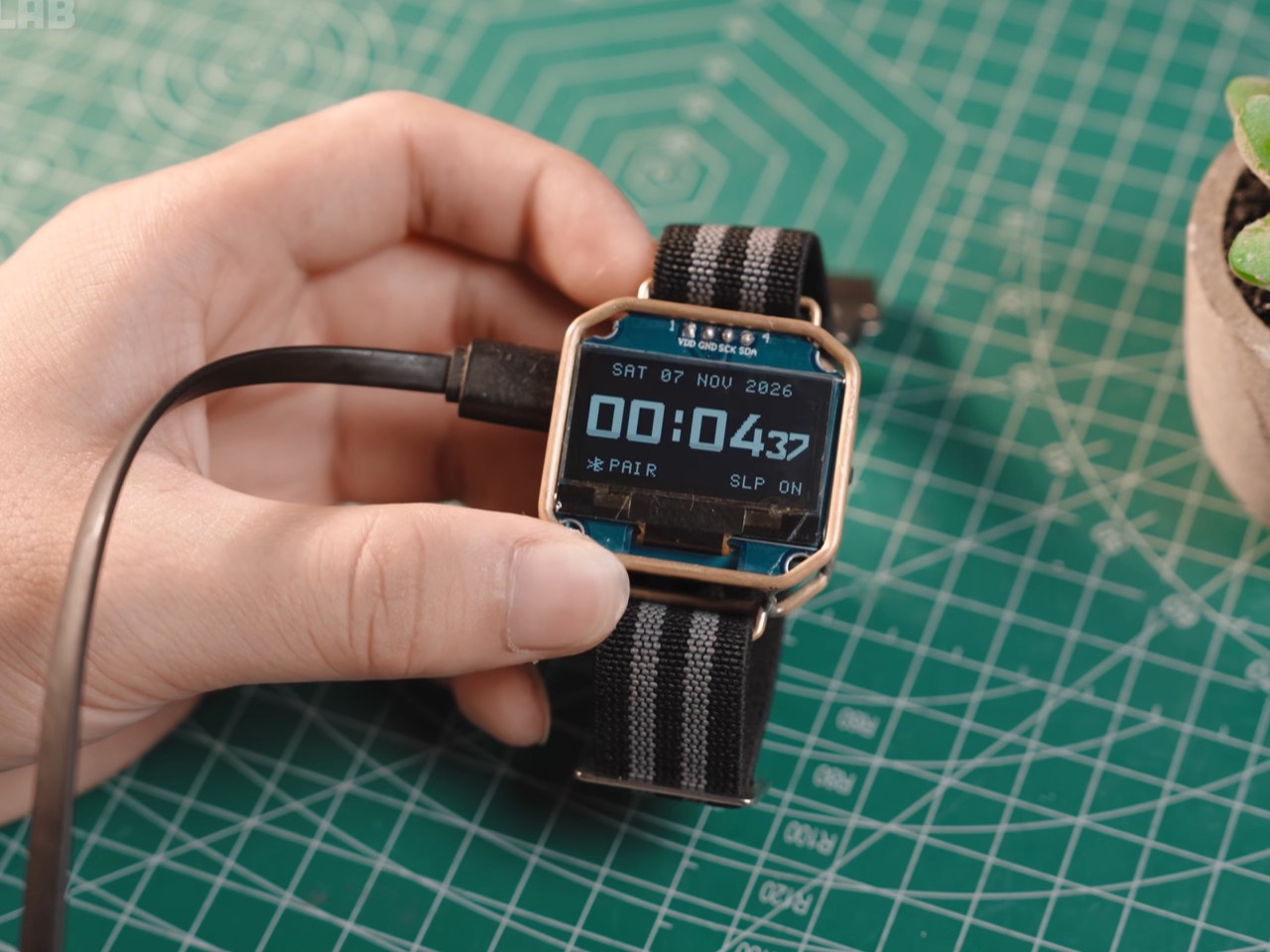
Huy’s NWatch C3 port moves the code onto hardware with a lot more elbow room, since the ESP32-C3’s 4MB of flash is roughly 125 times the old chip’s program space. The port adds iPhone notifications over Bluetooth via Apple’s Notification Center Service. Installing it requires zero coding, because the firmware flashes straight from Chrome or Edge over a USB cable. The full source code is downloadable too, so anyone who wants a new watch face or a different button layout can open it up and start tinkering. Watch faces already include RAIN, MATRIX, BIGTIME, CUBE, and an analog CLOCK, and the “SLP” readout on screen looks like the sleep timeout Kemble built into the original.
Why Your Next Gadget Should Be One You Solder Yourself
Huy’s Pocket AI Assistant packs an ESP32-C3, a 0.96-inch OLED with animated eyes, a microphone, and a speaker into a brass frame about the size of two fingers. It runs on Xiaozhi, an open-source chatbot project whose server handles speech recognition and replies, so the little chip only has to stream audio over Wi-Fi and animate the eyes on its screen. His portable music player swaps brass for a CNC-machined aluminum body topped with a brass rotary knob. It plays songs off a microSD card through a 3.5mm headphone jack, and a Bluetooth mode lets that brass knob control your phone. He even drafted the enclosure with SpeakCAD, an AI tool that turns text descriptions into 3D models.
Huy posts materials lists and wiring diagrams for his builds on his website, so each video doubles as a recipe you can actually follow. Building your own gadget permanently changes how you look at the ones you buy. Owning the schematic, the source code, and every solder joint also means no company can brick your watch with a firmware update or shut down its companion app. The watch’s project page hosts the materials list and the browser-based installer, and the full build video is up on HVT Lab. Grab some brass tubing and make the next smartwatch on your wrist one that answers to you.