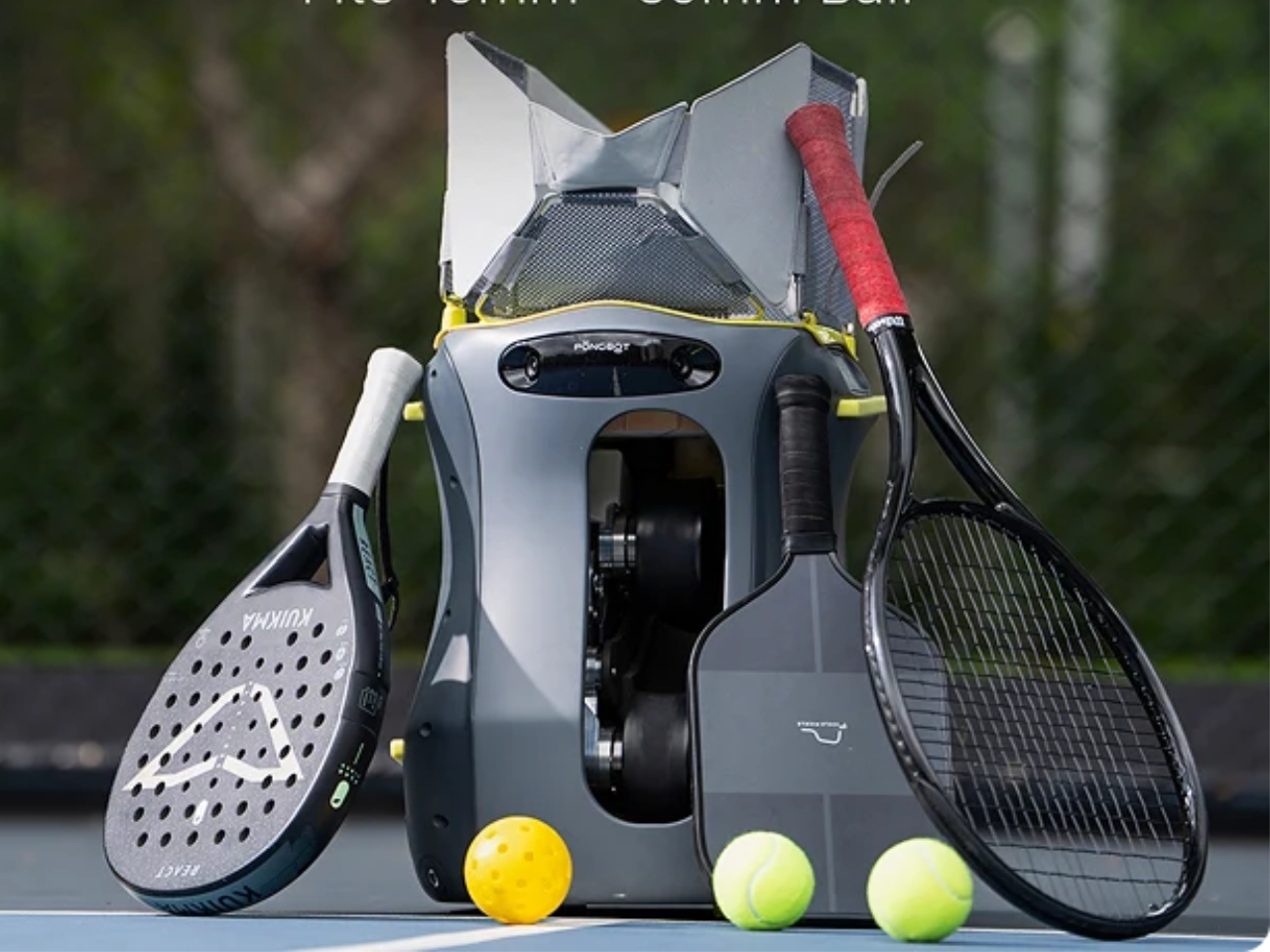
A free hour and an empty court can still leave you short of one essential ingredient: someone to hit with. That’s the problem Pongbot is tackling with Aura, a portable ball machine designed for tennis, pickleball, and padel. I like the premise because it addresses an ordinary obstacle to getting better. Wanting to practice and finding someone available to help you practice are two different things.
Currently offered for preorder, Aura approaches that scheduling problem with hardware you can carry to the court. Pongbot lists the machine at around 15 pounds, with an interchangeable battery rated for up to five hours of training. Its hopper accommodates up to 120 tennis or padel balls, or 100 pickleballs. Those are manufacturer figures, but they establish the intended routine: bring it along, fill it up, and work through a session on your own schedule.
Designer: Pongbot
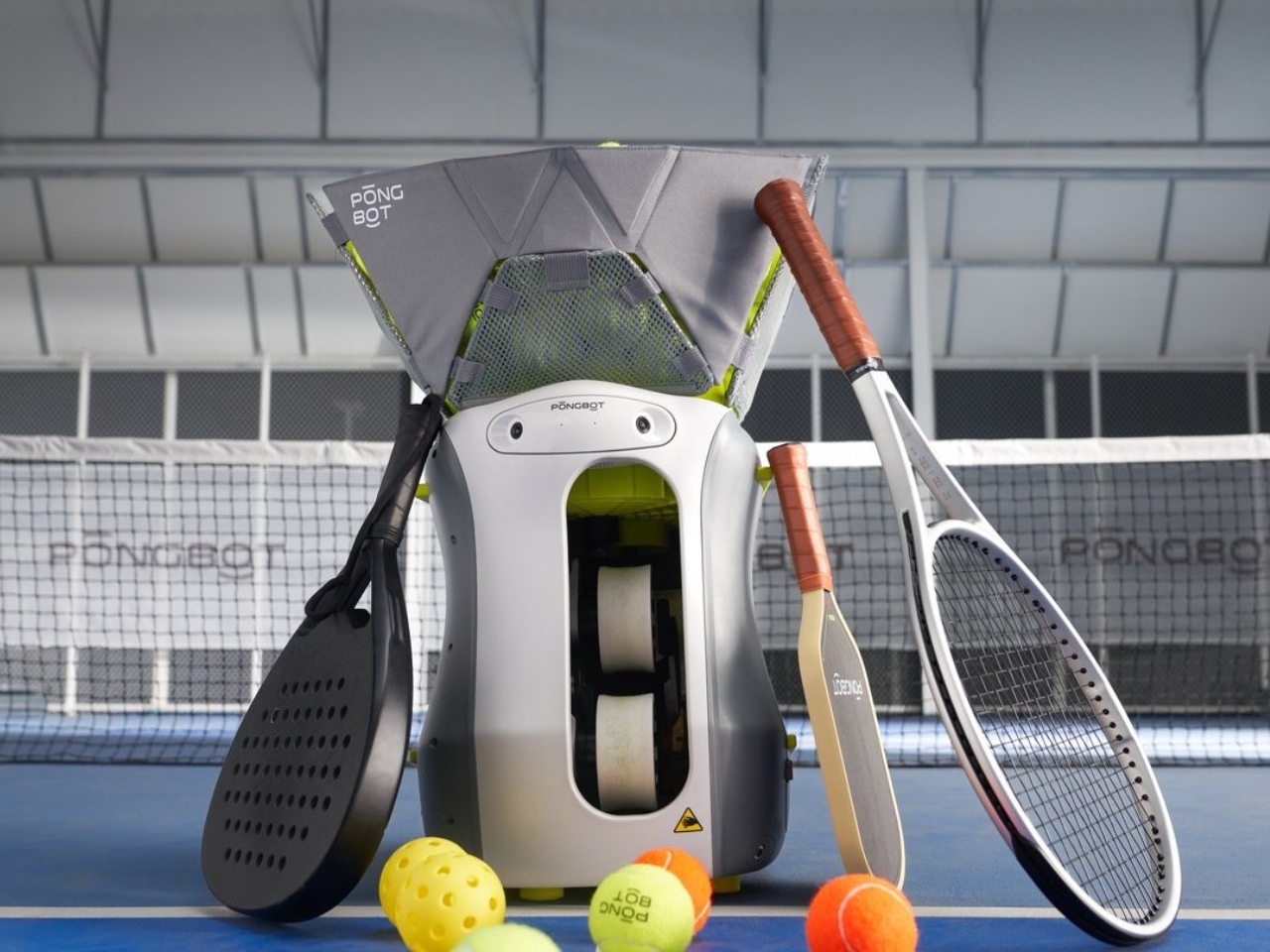

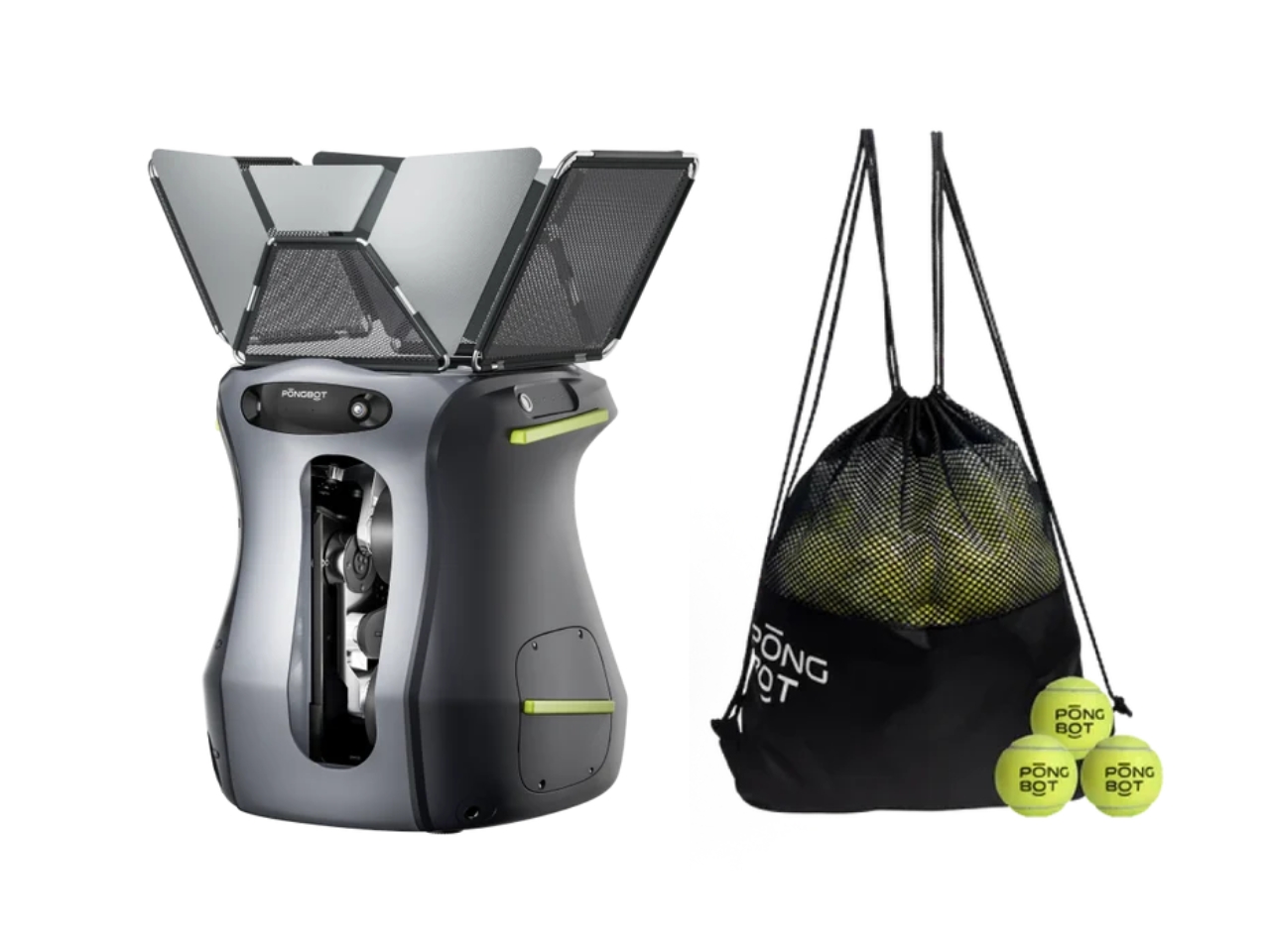
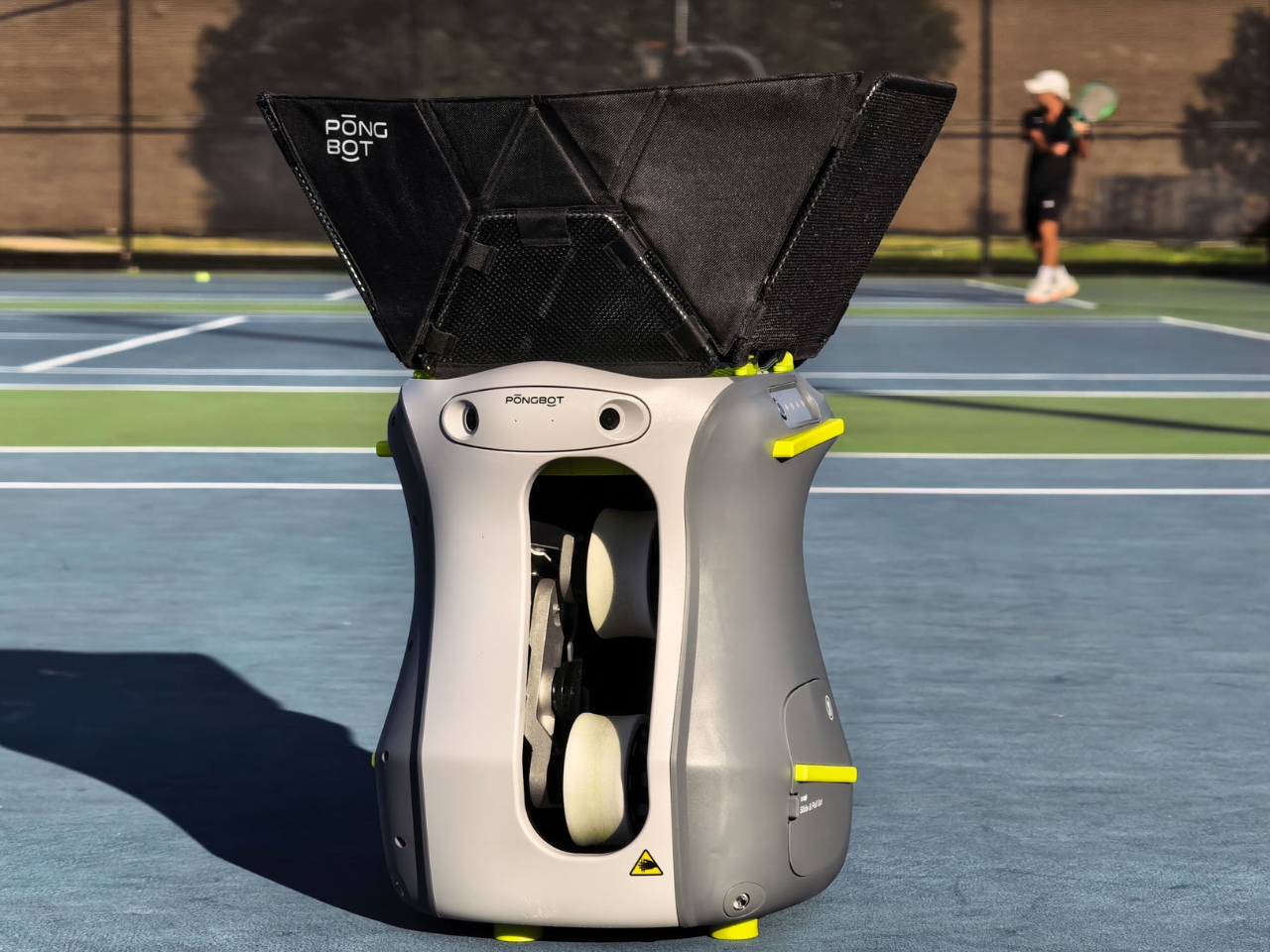
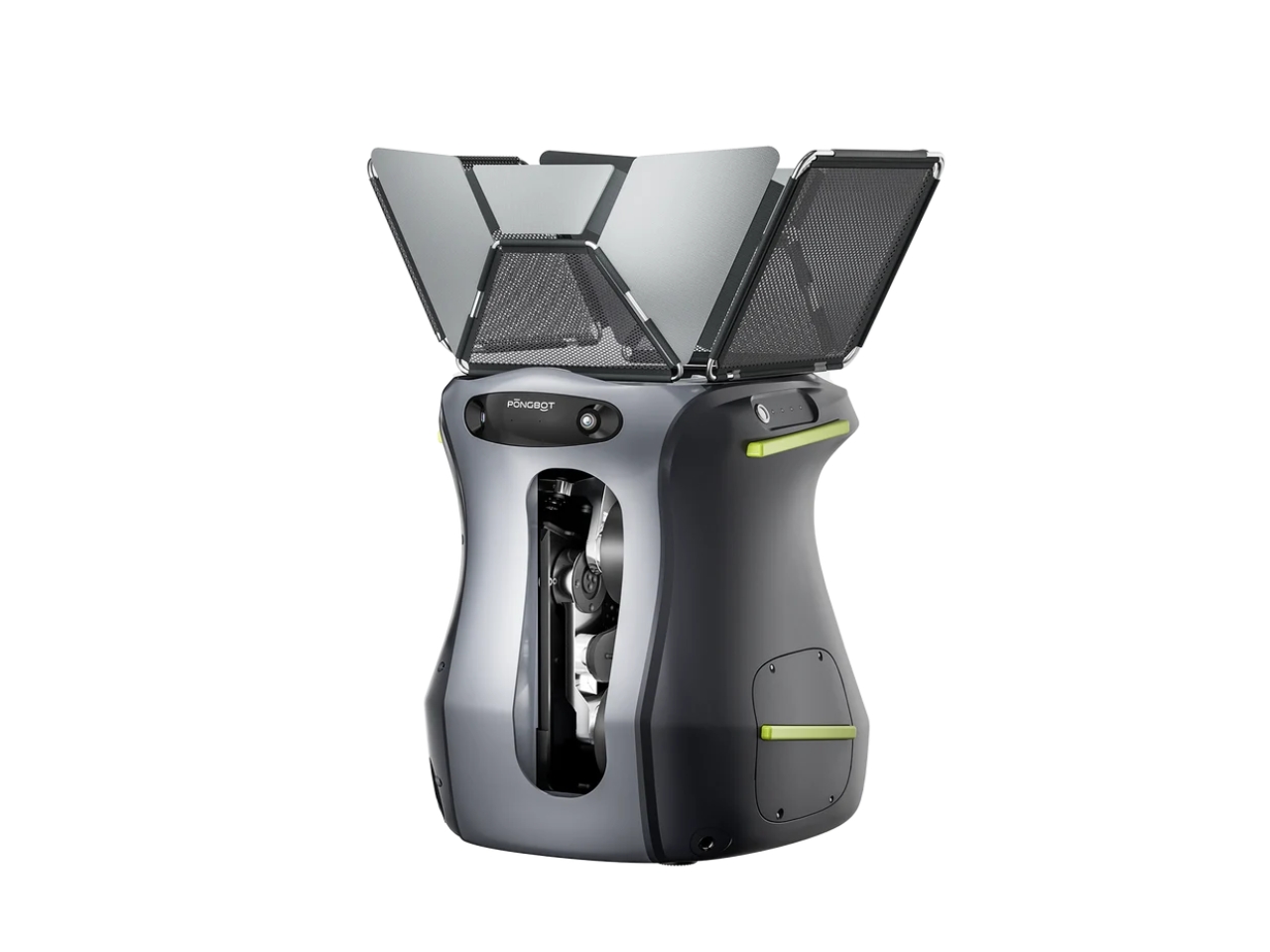
Visually, Aura has more personality than I’d expect from equipment whose main responsibility is throwing balls. The rounded, dark body has a contrasting front panel, a narrow vertical launch opening, and bright yellow-green accents. Above it, angular hopper panels flare outward to contain the balls. The proportions give it a slightly animated appearance without resorting to a cartoon face. I appreciate that restraint. A training robot doesn’t need eyebrows to feel approachable.
The more consequential design choice is inside. Pongbot describes an adaptive wheel-track system that adjusts for different ball diameters, allowing the same feeding hardware to serve all three sports. Selecting a sport in the app changes the machine’s setup. That matters because a perforated pickleball and a felt-covered tennis ball aren’t interchangeable projectiles. Supporting both asks something of the mechanism, not merely the interface. For a household with overlapping racket-sport interests, sharing one machine sounds considerably more sensible than storing two.
Aura also lets players customize placement, speed, spin, and feeding frequency. That’s where I see its clearest everyday appeal. You might want repeated backhands rather than a full simulated match, or a predictable sequence while learning a particular shot. Being able to narrow the assignment makes the machine easier to understand as a useful tool. The point isn’t to exhaust every setting. It’s to get enough repetition on the thing you actually came to practice.
The more ambitious features arrive through Spotter, the dual-camera vision module included with Aura S. Pongbot says its 120-frame-per-second cameras support tracking and AI coaching. One particularly thoughtful feature is Recovery Trigger, which waits for the player to return to a preset position before sending another ball. On paper, that’s a meaningful improvement over an indifferent countdown. Practice should challenge your movement, but being ready for the next shot is different from simply surviving the machine’s schedule.
I’m more cautious about treating automated feedback as the equivalent of a coach. Pongbot promises stroke analysis and voice guidance, but those claims don’t establish how perceptive the advice will be for an individual player. The simpler voice-control idea feels easier to appreciate: request a change without walking over to a screen. I haven’t tested either function, so my interest is in the interaction design, not a claim that Aura can diagnose your backhand better than a person.
There is a purchasing wrinkle worth understanding. Although the hardware supports three sports, the standard package activates only one; additional sports require paid unlocks or a three-sport bundle. At the time of writing, Pongbot lists Aura at $599.99 and Aura S, which adds Spotter, at $799.99. The respective three-sport packages are $649.99 and $849.99. Shipping is estimated at four to five weeks after order confirmation, rather than immediate dispatch.
That software gate makes the multi-sport pitch less generous than it initially sounds, although the bundle pricing makes the choice clear enough. I’d judge Aura primarily on whether it makes regular practice easier to arrange, carry out, and repeat. The cameras and coaching features can earn their place after that. A machine that helps turn an available hour into useful court time already has a worthwhile job, without needing to pretend it replaces everything a human partner brings.