
In 1970, an inventor in Princeton, New Jersey, put a vacuum-cleaner motor to an unlikely new use: launching tennis balls. Bob McClure’s “Little Prince” became the starting point for Prince’s tennis-equipment business, and the basic ball machine format stayed remarkably familiar for decades afterward. You park a box on the baseline, it feeds balls from one spot, and you supply the imagination. More than half a century later, solo practice poses a different design question: how do you move beyond feeding balls to create more of the rhythm and responsiveness of a hitting partner? AceiiLab’s A1, a moving AI tennis robot, answers that question with wheels, cameras, and a lot of repositioning.
First introduced on Kickstarter in 2025 under the name Aceii One, the AceiiLab A1 approaches that question through movement. Its wheeled base can reposition for subsequent feeds, bringing changing angles and footwork into a solo session. Founder Liu Liqian previously built robots at DJI and KUKA, and that robotics background shows in how much of the product revolves around motion. For players fitting tennis around work, family, and someone else’s calendar, the appeal is practical: training on their own schedule, with more of the rhythm of playing across from someone. Launch speed tops out at a brisk 80 mph, though the real workout comes from what its movement asks the player to do next.
Designer: AceiiLab
Click Here to Buy Now: $1949 $2599 ($650 off, use coupon code “YKD50”). Hurry, deal ends in 48-hours!
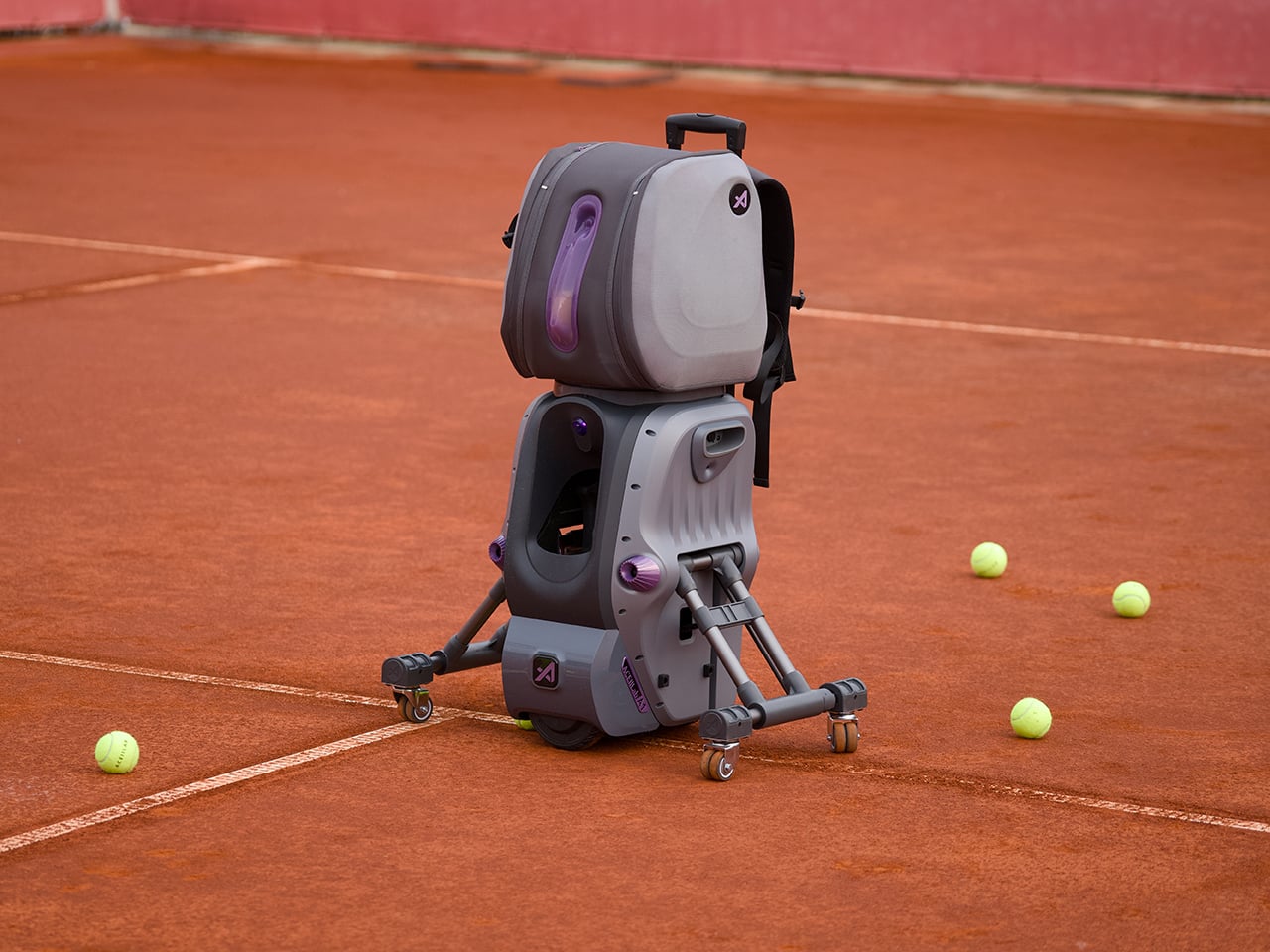

Movement Is The Main Event
In tennis, the shot is only part of the exchange. You adjust your feet, recover your position, read the other side of the court, and prepare again. Changing pace and placement is one part of that practice, and changing where the next feed originates adds another spatial variable. The A1 makes that variable central to its design, giving solo players more to respond to than a stream of balls arriving from one stationary source. It moves at up to 13.1 feet per second (about 4 meters per second), which is quick enough that standing still to admire your last shot stops being an option.
AceiiLab pairs 4K binocular vision, which judges depth the way your eyes do, with a wheeled base that tracks the player and ball and repositions for each feed. Baseline, sideline, and service-line modes offer different setups, with the sideline and service-line options echoing how coaches feed beginners from the same side of the net. Adjustable timing, from 0.5 to 15 seconds between balls, lets players shape a session around one drill. Each feed uses a fresh ball from the bag, while the robot’s changing position and timing give the player a more varied sequence to respond to. Topspin, backspin, and lobs up to 26.2 feet (8 meters) over the net add spice, especially for anyone with a shaky overhead.
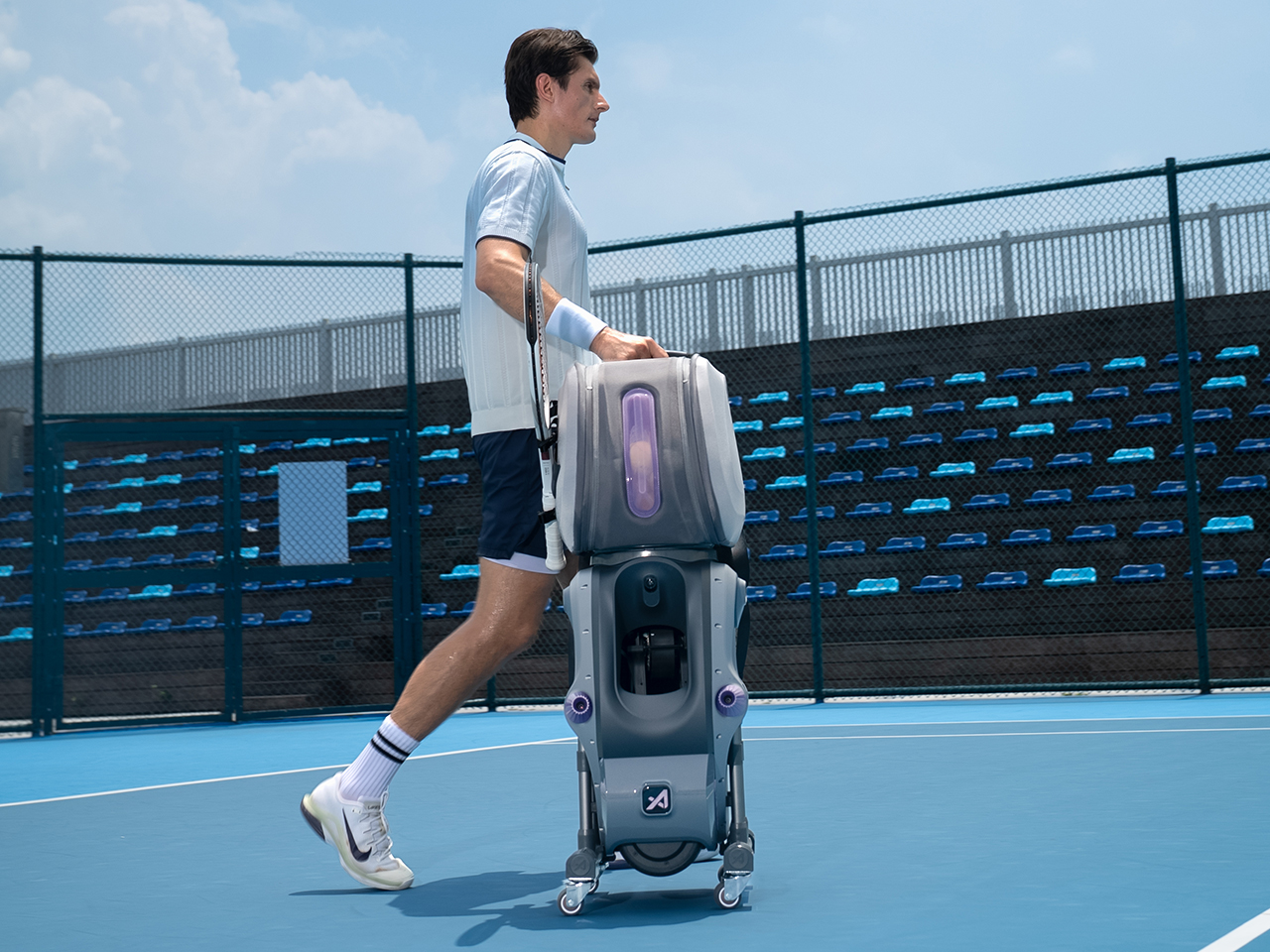
Rolls In Like Luggage, Fits Into Your Routine
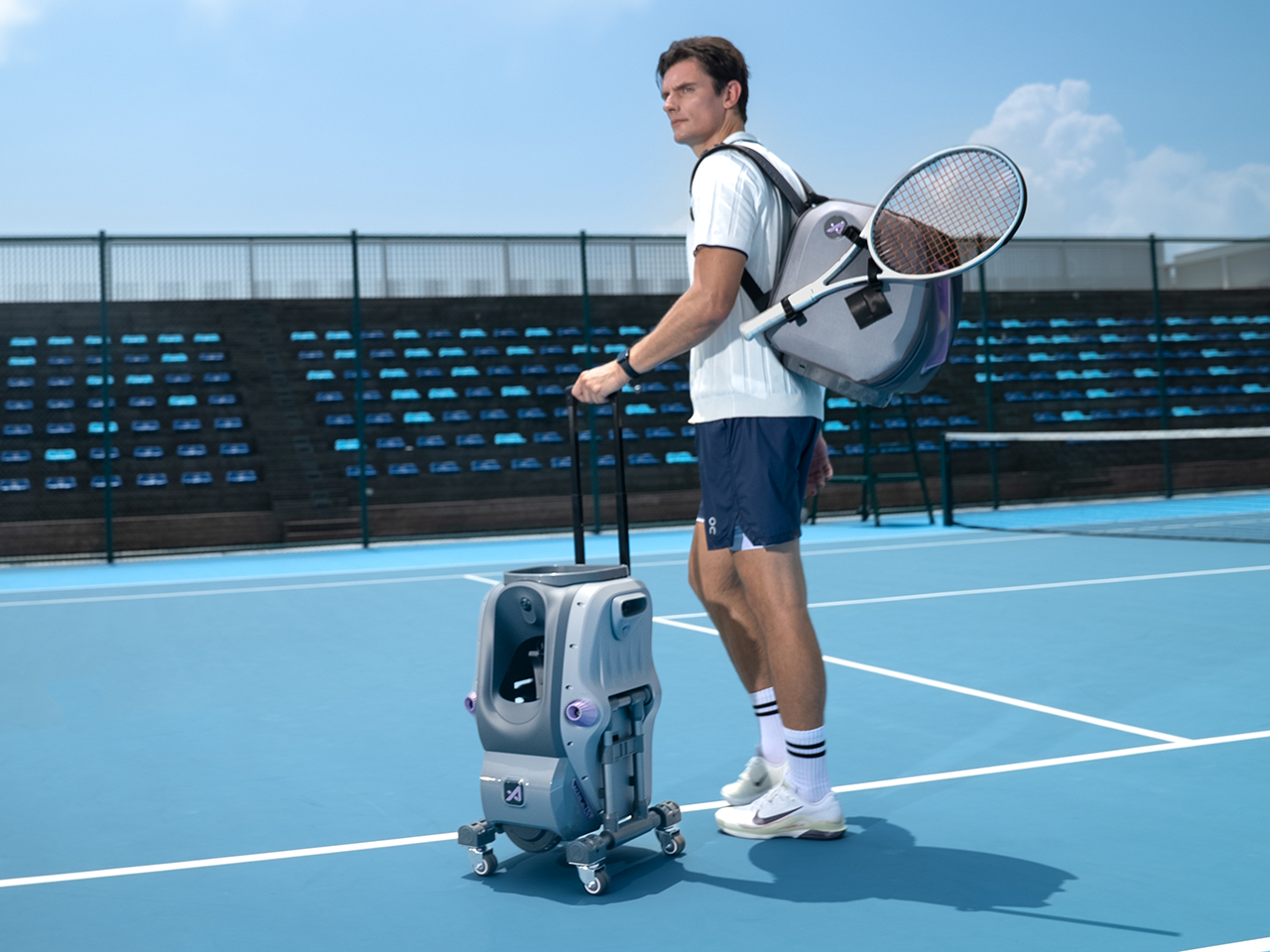
A responsive session is useful only if getting the equipment onto court isn’t its own workout. Folded down, the A1 has a suitcase-style body, roughly the size of a checked bag, with a pull rod and wheels for the trip from car to court. Its detachable bag holds up to 120 balls, while a racket holder, cup holder, and built-in storage bring more of the practice kit into one unit. At 52.5 pounds (23.8 kg) without the battery, the A1 still takes some planning to load into a car. The suitcase-style layout makes the rest of the journey more manageable.
The removable battery serves the same practical purpose, rated by AceiiLab for up to eight hours of static feeding or two hours of dynamic training from its 36V 7Ah pack. Two hours of moving rallies will tire out most players well before the robot. A charged spare offers a straightforward way to stretch a session into a full weekend of drills. The A1 also works on hard, clay, and grass courts, so it adapts to whatever surface your local club happens to have. Together, the folding body, storage, and swappable power source address the parts of ownership that sit between the product photo and the first ball.
Less Interruption, More Time on Court
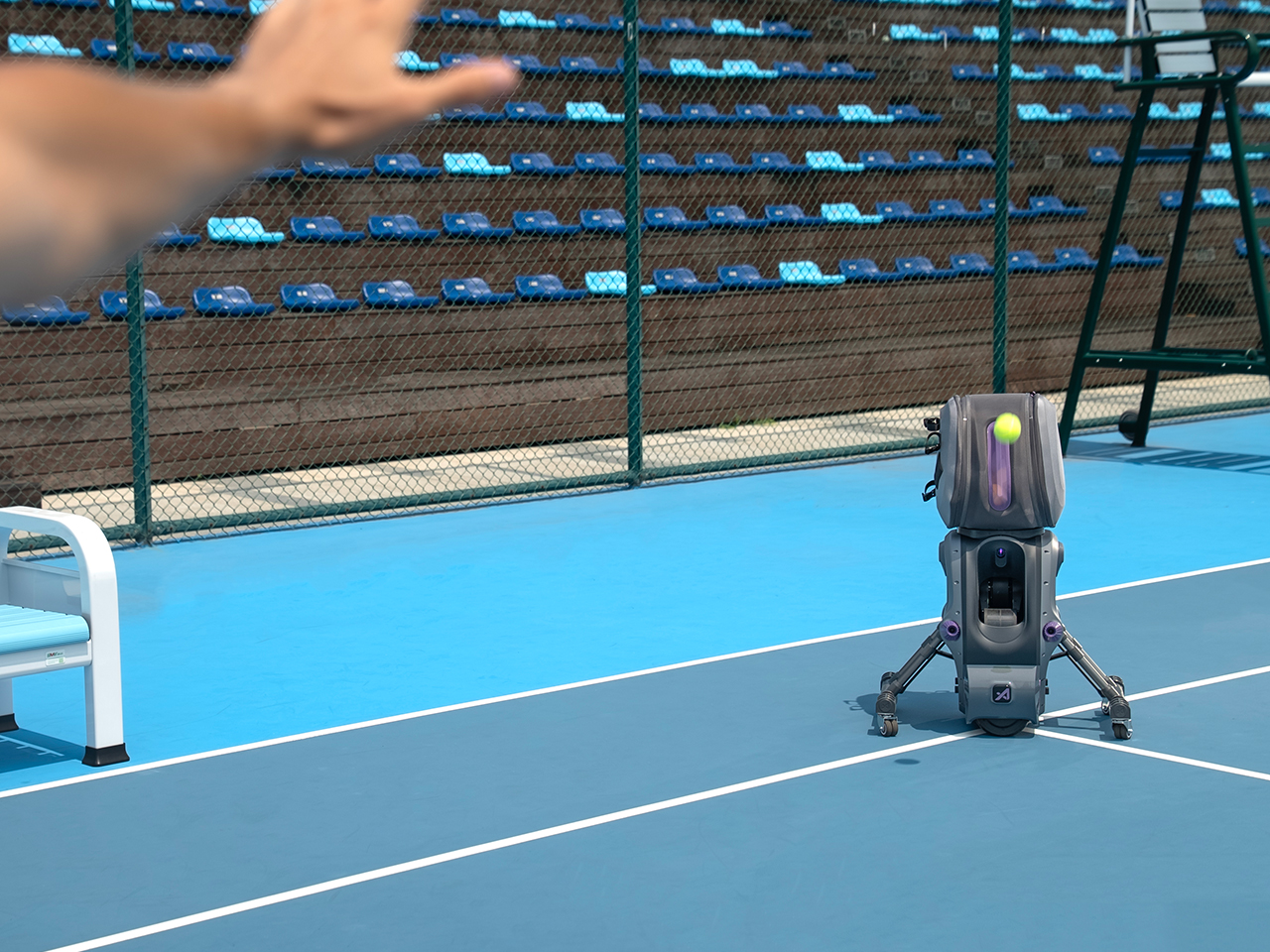
The A1 uses the AceiiLab app on iPhone and Android for training controls, including preset drills, custom sessions, and more competitive Challenge and Ranking modes. Apple Watch support adds wrist-based control, while gestures offer a way to start or pause practice without walking back to the machine. That keeps the player in position and spares a lot of trips across the court, which nobody counts as cardio anyway. AceiiLab’s AI Coach turns session data, such as landing points, pace, and consistency, into training suggestions that help players spot weak areas and track progress over time. The technology stays in the background of the practice, rather than becoming another thing to practice operating.
The A1’s place in a player’s routine is straightforward: a way to keep practicing when a hitting partner is unavailable, with movement and variation built into the session. It’s rated for NTRP 1.0 to 5.0, the US recreational rating scale, which covers everyone from first-timers to strong club players. The A1 is currently available for $1,999 as part of its Black Friday 2026 promotion, down from a $2,599 list price, with savings of up to $1,360 on selected Black Friday offers. Extra-battery and accessory bundles, along with purchase terms, are listed on AceiiLab’s website. Bob McClure gave tennis players a way to practice alone, and the A1 makes sure a canceled plan no longer has to mean a canceled practice.
Click Here to Buy Now: $1949 $2599 ($650 off, use coupon code “YKD50”). Hurry, deal ends in 48-hours!