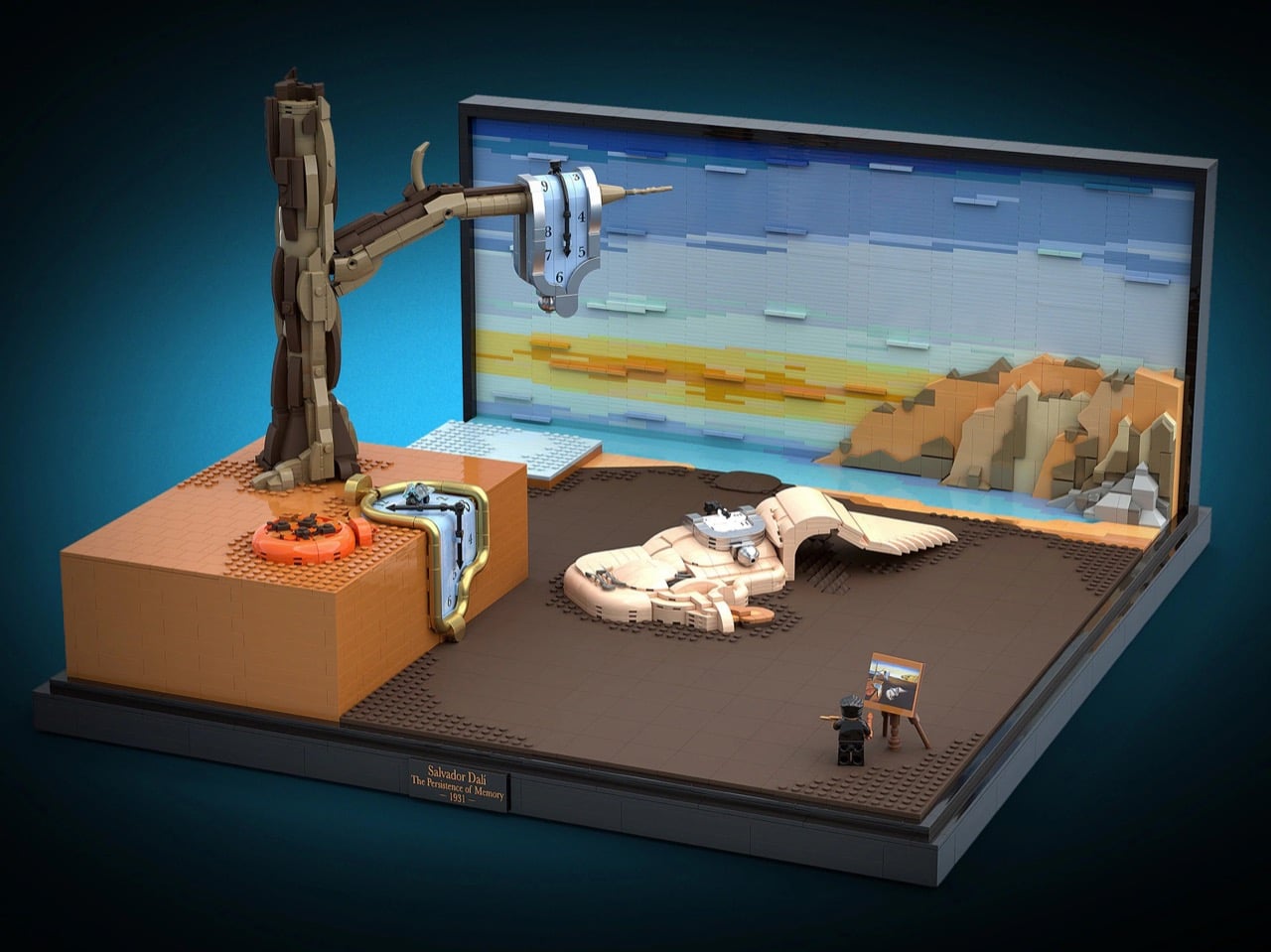

MoMA owns The Starry Night, The Persistence of Memory, and a set of LEGO bricks designed by Godtfred Kirk Christiansen in the 1950s. The museum brought two of those together in 2022, when it partnered with LEGO on the Starry Night set that grew out of a LEGO Ideas submission. A new Ideas project wants to complete the triangle. BrickRelativity has rebuilt Salvador Dalí’s 1931 painting of melting clocks as a 3D brick diorama, complete with the dead tree, the ant-covered watch, and the weird sleeping figure sprawled across the beach. If MoMA wanted a sequel, it wouldn’t even need to leave the building.
Dalí’s original is tiny, just 9.5 by 13 inches (24 by 33 cm), which catches plenty of first-time visitors off guard. The brick version spreads the scene across a black display base with a gallery plaque and a sky built from horizontal bands of blue, aqua, and sunset-yellow plates. BrickRelativity says the central blob was one of the toughest challenges, since soft, shapeless forms and rigid LEGO elements get along about as well as cats and bathtubs. The clocks came a close second, their faces rebuilt from tile grids that warp along with the melt. LEGO Art has already worked through Hokusai, Van Gogh, and Monet, so Surrealism feels overdue.
Designer: BrickRelativity
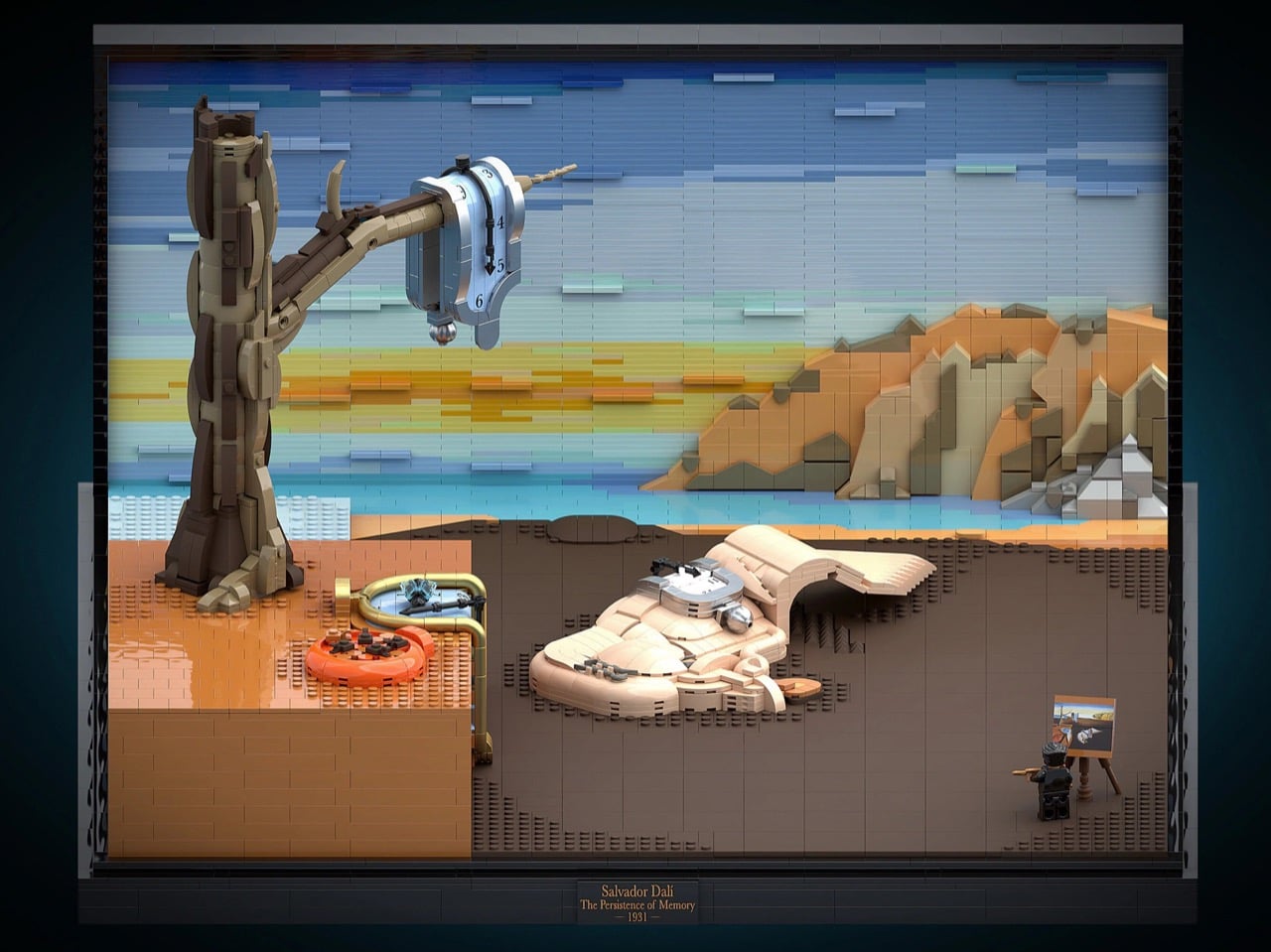
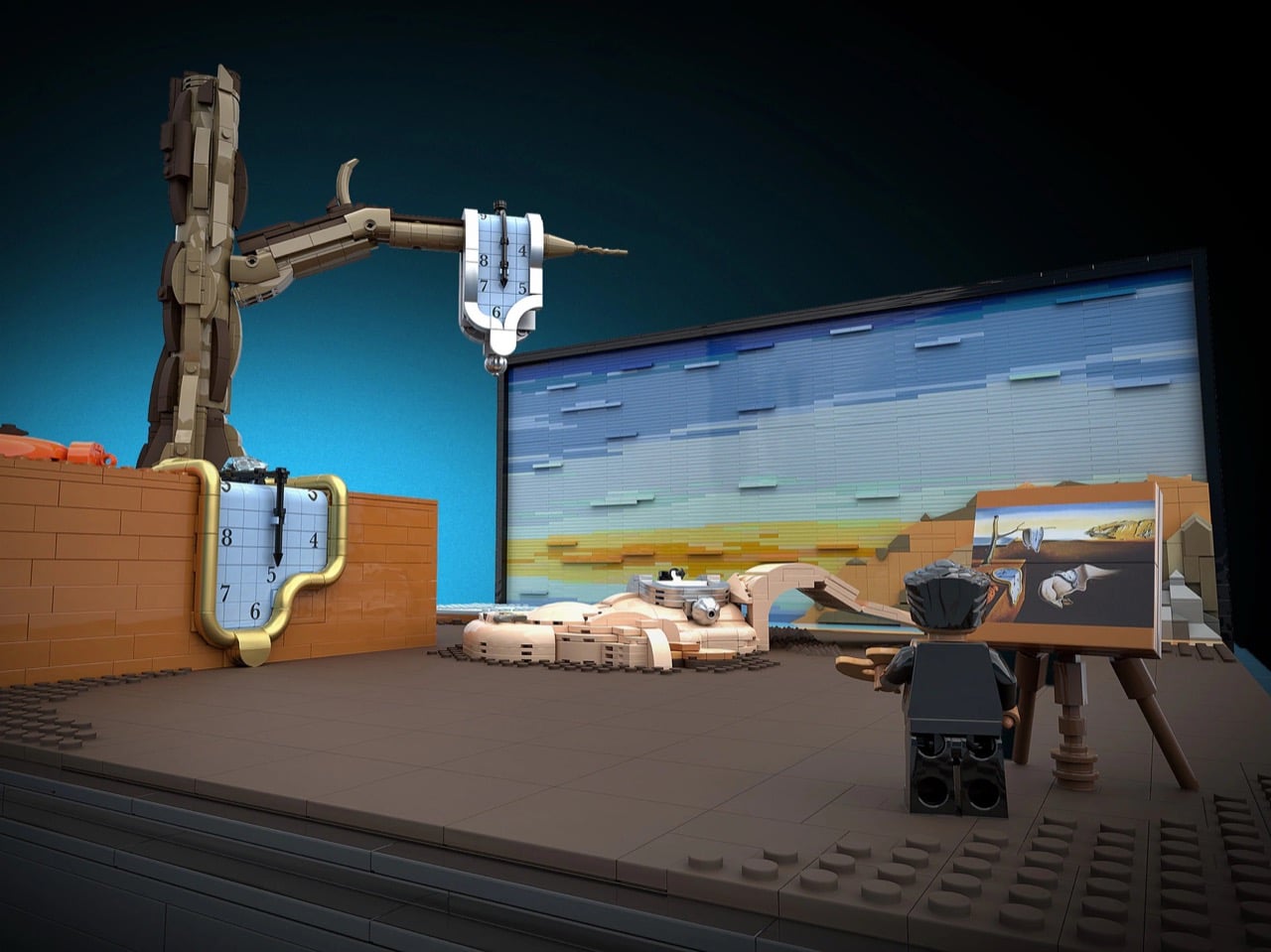
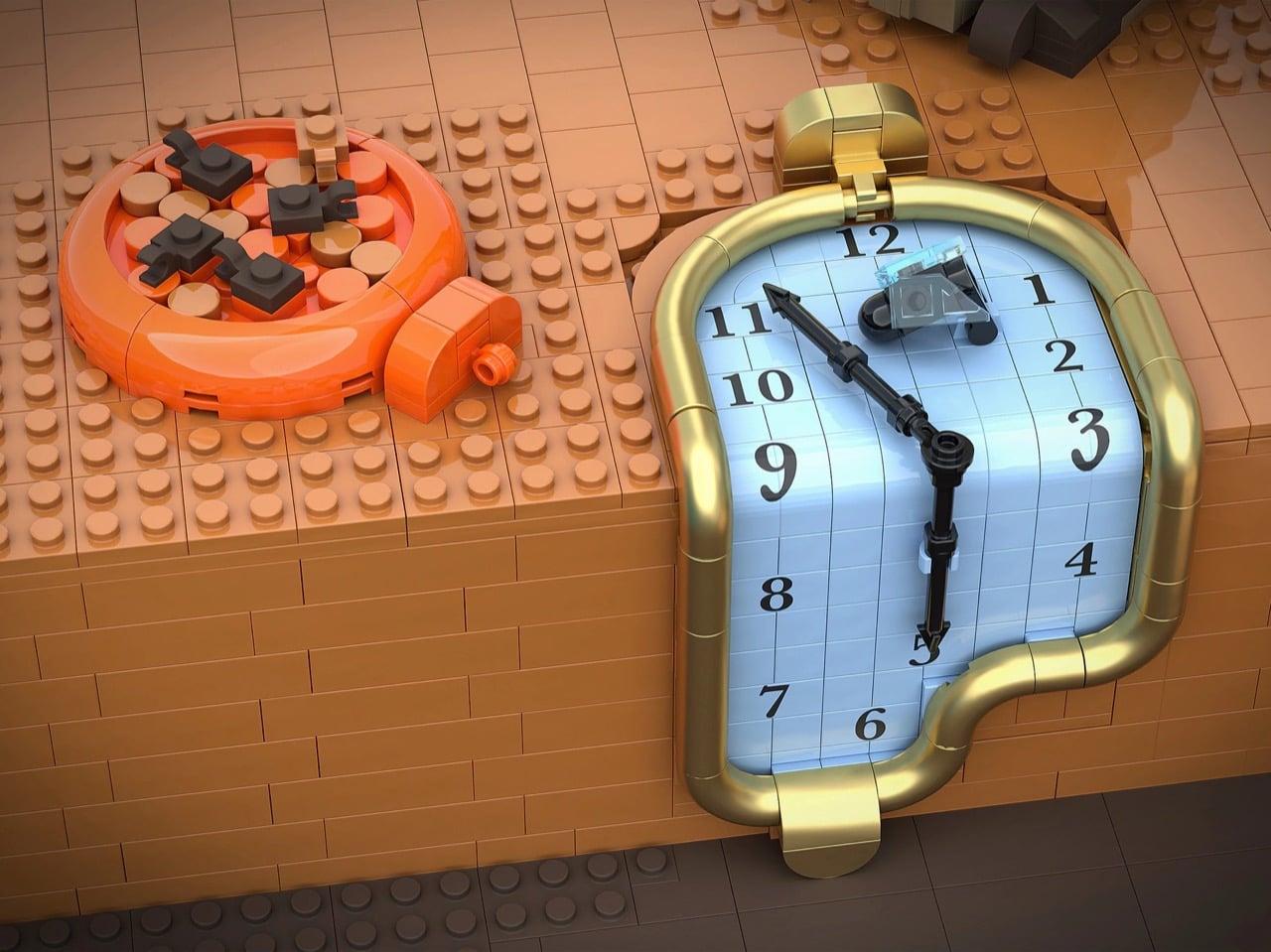
Three clocks melt across the scene, and each gets its own construction trick. The one hanging off the tree branch wears a pearl-silver bezel that folds over the wood, with a small silver ball at its lowest point standing in for the drip. The pocket watch sliding off the orange ledge swaps silver for pearl-gold tube elements that kink around corners, with a transparent fly perched on its face. The third clock drapes over the sleeping figure in the middle, following the curve of the body underneath it. Numerals were applied as decals directly to the curved surfaces, while every clock hand is built from LEGO elements.
My favorite detail, though, is the face of that gold pocket watch. BrickRelativity built it from a grid of light-blue tiles, and as the face slumps over the ledge, the seams between them bend with it. The result looks like graph paper caught in a heat wave. The grid also gives the numerals a place to sit and recalls the stud-by-stud mosaics of LEGO Art, now visibly coming apart. A warped coordinate system feels very Einstein, which is funny, because Dalí insisted his soft watches came from cheese rather than relativity.
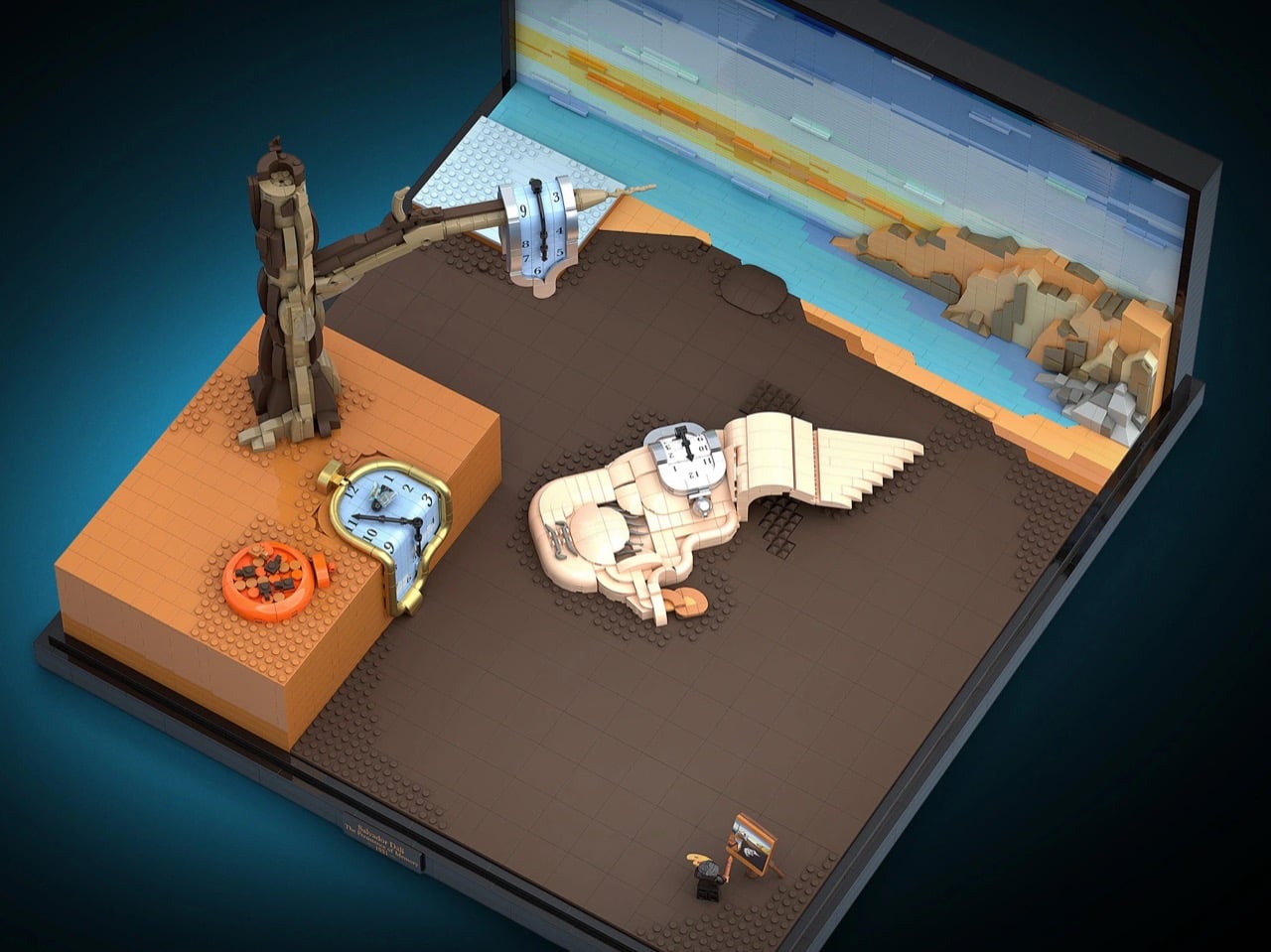
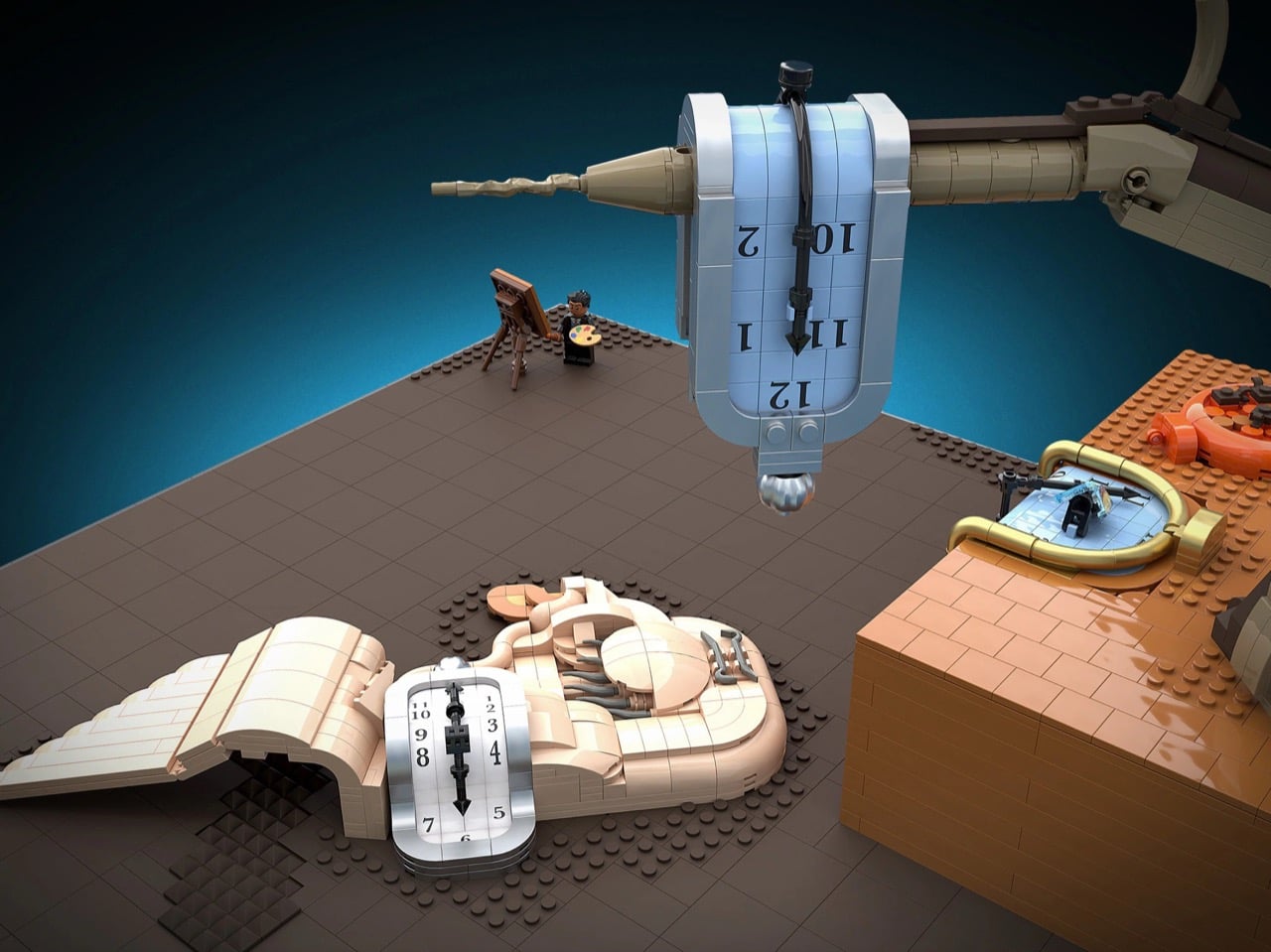
Dalí reportedly based the sleeping figure on a rock formation at Cap de Creus, and it’s generally read as a squashed self-portrait. BrickRelativity layered curved slopes in tan and pale flesh tones until the blob looked properly boneless. Dark gray bars and curves form a closed eye with long lashes, and a wing-like membrane of stacked plates trails off behind it. Back on the ledge, the closed orange pocket watch is a ring of curved elements with a little crown nub. A cluster of tiny ants made from dark clip plates swarms its lid, turning Dalí’s recurring symbol of decay into a minifig-scale infestation.
The landscape skips a printed backdrop entirely. Horizontal bands of blue, aqua, pale yellow, and orange plates build up the sunset sky. The Cap de Creus cliffs on the right use stepped wedges and slopes in tan, dark tan, orange, and gray, placed at different depths to make the coastline recede. Dark brown tiles cover the beach, with patches of exposed studs breaking up the flat surface like scrubby ground. Viewed head-on, that depth collapses back into the painting’s flat composition. BrickRelativity has some practice with perspective tricks: previous Ideas projects turned M.C. Escher’s impossible staircases into bricks.
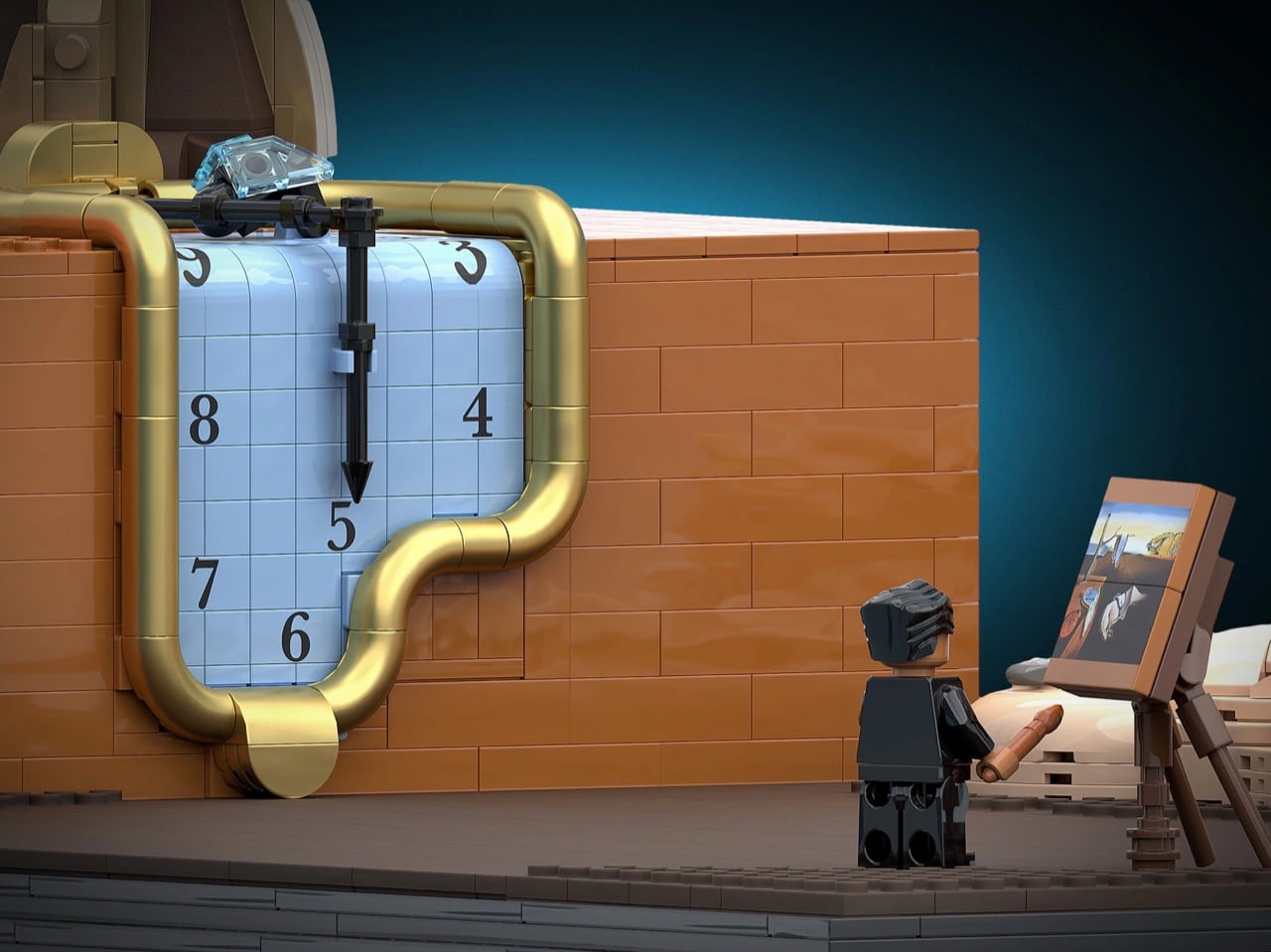
Down in the front corner, a tiny Dalí minifig with swept gray hair, a patterned tie, and that famous upturned mustache paints at an easel holding a miniature copy of the painting. It’s a direct callback to the Van Gogh minifig and easel that shipped with the Starry Night set. A black base and a small plaque bearing the artist’s name, the title, and the year finish the gallery look. Fan builders have been chasing this museum energy all year, from a 1,117-piece Picasso portrait to a Brick Dangerous melting clock that just qualified for LEGO’s third 2026 review. Dalí’s copyright is managed by the Fundació Gala-Salvador Dalí, so any official version would need the estate’s blessing.
The project currently sits at 1,849 supporters, with 602 days left to hit the next milestone of 5,000. LEGO Ideas lets fans submit builds and rack up supporters, and projects that reach 10,000 move on to LEGO’s official review for a shot at becoming a real set. You can head to the LEGO Ideas page and give BrickRelativity your vote, which costs nothing but a LEGO account. Dalí already turned this painting into floating bricks once, in his 1954 sequel The Disintegration of the Persistence of Memory. Seems only fair to let someone finish the job properly, with clutch power this time.